
Drawer vs two-piece vs magnetic jewelry boxes: which style fits your brand?
Short answer: Choose slide-out drawer custom jewelry boxes for e-commerce brands that want a ribbon-pull reveal and a sleeve that stays shut in transit. Choose two-piece lift-off lids for fast boutique counter packing, shoulder-neck boxes for a stepped two-tone reveal, and magnetic closure boxes for multi-piece sets.
On this page
- How do the main custom jewelry box structures compare side by side
- Why do direct-to-consumer jewelry brands prefer slide-out drawer boxes
- Two-piece lift-off lid vs shoulder-neck rigid box: what is the difference
- When should I choose a magnetic closure box or a folding paperboard carton
- How do jewelry brands pair two structures across everyday and fine collections
- Common mistakes
- FAQs
Request a custom quoteFree dieline & 3D mockup
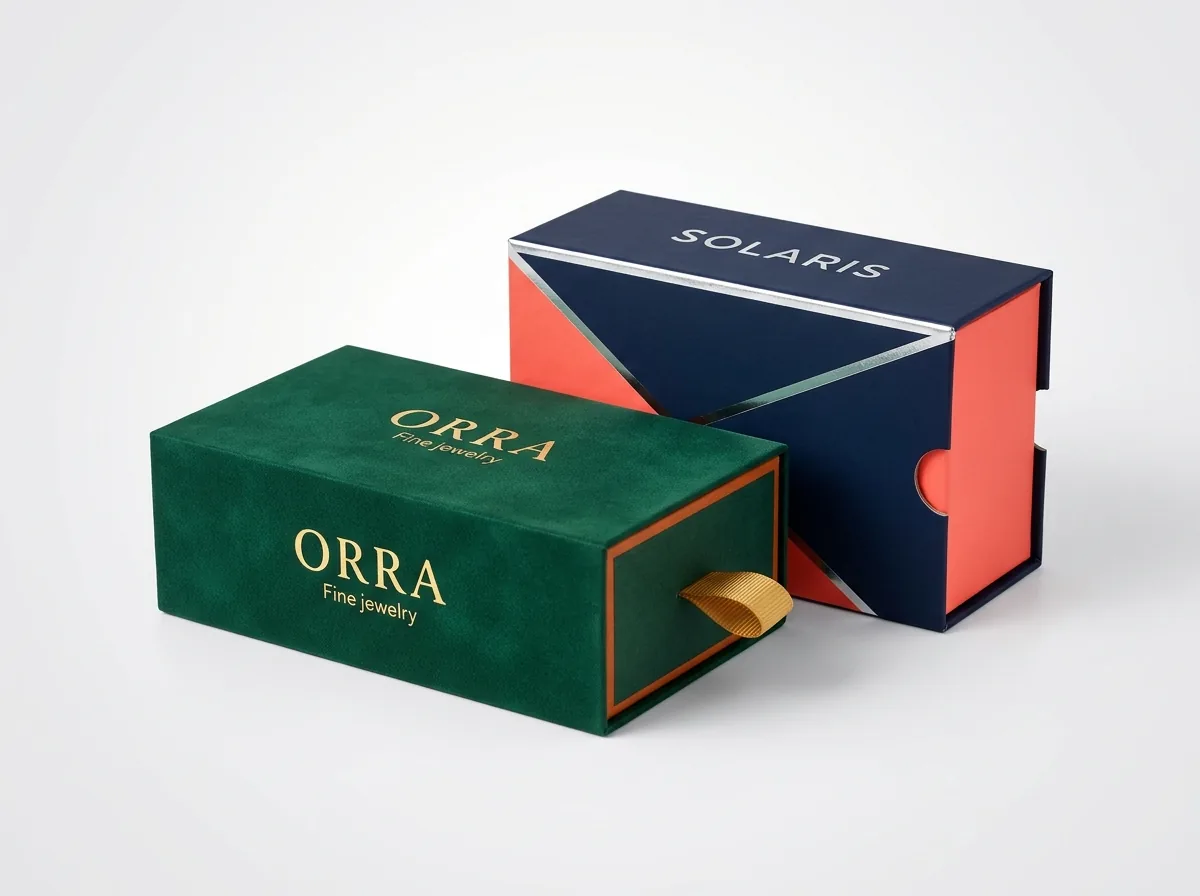
All four rigid jewelry box structures start at 50 units at CubitPack and use the same rigid chipboard (gray board) core, yet they create completely different unboxing mechanics and fulfillment workflows. A slide-out drawer box wraps a four-walled outer sleeve around an inner tray pulled by a satin or grosgrain ribbon tab; because friction around all four walls holds the tray inside the sleeve, the box never pops open inside a shipping mailer without needing an outer belly band. A classic two-piece telescoping box lifts straight upward in two hands, making it the fastest structure for retail associates to open and close at a jewelry counter. A shoulder-neck rigid box adds a stepped inner collar between the base and lid for a crisp two-color accent, while a hinged magnetic closure box opens like a hardcover book for statement necklaces and bridal suites.
How do the main custom jewelry box structures compare side by side?
When selecting a structure for custom printed jewelry boxes, consider three moments in the life of the package: how fast your fulfillment team packs each piece, how the lid stays closed inside a parcel mailer, and whether the customer keeps the box on a vanity tray to store their jewelry. Use the comparison matrix below to weigh the five primary structures we manufacture - four set-up rigid constructions starting at 50 units and one folding paperboard option starting at 1,000 units. Because every style is cut to order with no die fees, you can pick the exact silhouette that matches your price point and shipping channel.
| Structure | Opening motion | Stays shut in mail without band? | Best jewelry match | Minimum |
|---|---|---|---|---|
| Slide-out drawer box | Pull ribbon tab horizontally | Yes (4-wall sleeve friction) | DTC pendants, hoops, studs, chain bracelets | 50 rigid |
| Two-piece lift-off lid | Lift telescoping lid vertically | Needs snug fit, ribbon or pouch | Boutique retail lines, cuffs, earrings, charms | 50 rigid |
| Shoulder-neck rigid | Lift lid off stepped inner neck | Yes (tight neck friction fit) | Fine gold, diamonds, signet rings, heirlooms | 50 rigid |
| Magnetic book box | Flip hinged magnetic front flap | Yes (concealed magnet snap) | Bridal suites, statement collars, VIP press kits | 50 rigid |
| Pillow / tuck carton | Pop curved ends or tuck flap | Yes (tuck tab locks) | Fashion charms, anklets, gift card bundles | 1,000 card |
Why do direct-to-consumer jewelry brands prefer slide-out drawer boxes?
Walk through the fulfillment station of almost any modern online demi-fine jeweler and you will see stacks of 3.5 × 3.5 × 1.25 inch custom drawer boxes with short grosgrain or satin ribbon pull tabs. That preference is driven by both social unboxing video ergonomics and transit physics. First, a customer filming an unboxing on their phone can hold the outer sleeve in one palm and pull the ribbon tab with two fingers, sliding the jewelry into the light in a smooth horizontal motion. Second, because the outer rigid sleeve encloses the top, bottom and two sides of the inner drawer tray, the tray cannot lift off vertically if the parcel is tumbled upside down by a courier. Third, customers actually reuse drawer boxes on their bedroom dressers as modular mini storage drawers - keeping your foil-stamped logo in view every morning.
Two-piece lift-off lid vs shoulder-neck rigid box: what is the difference?
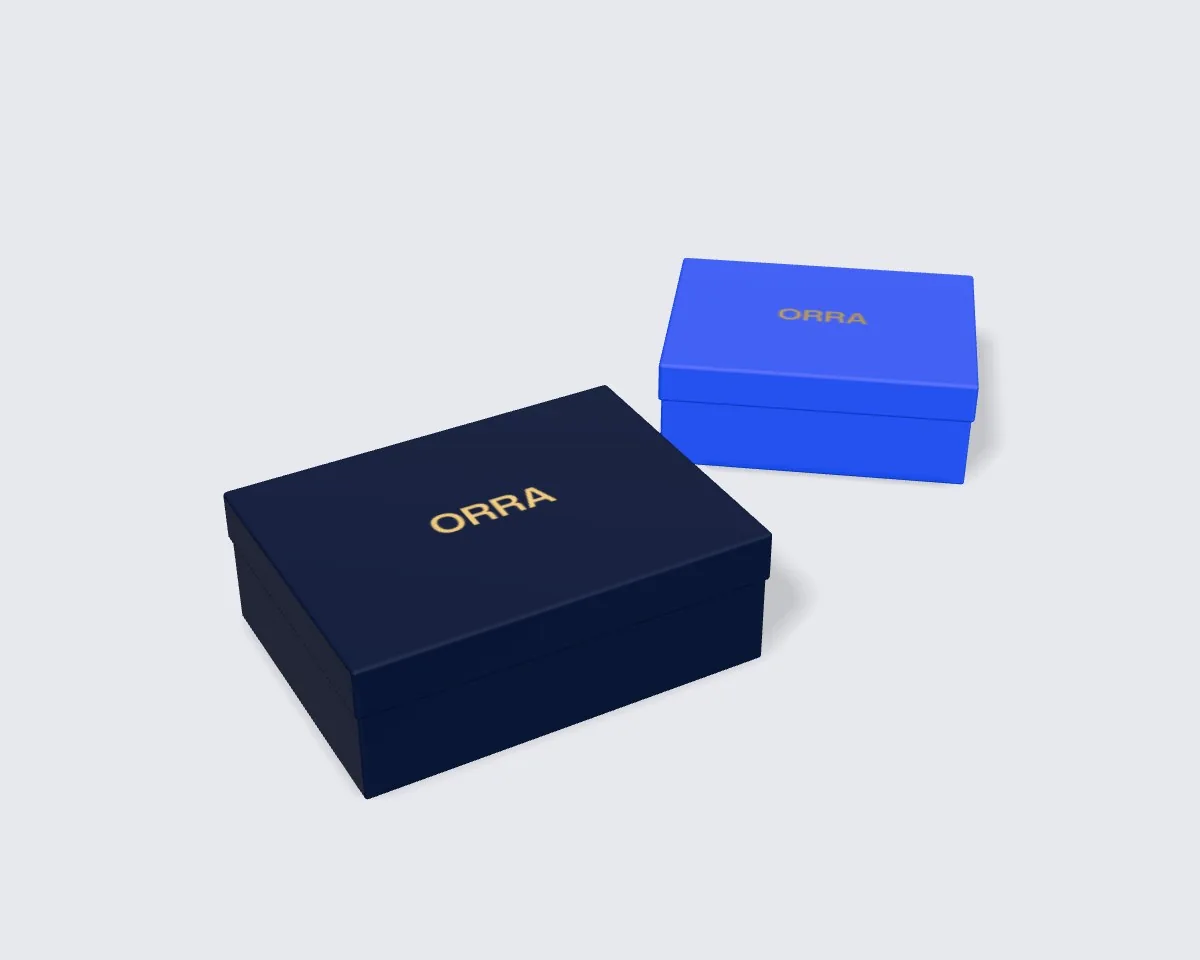
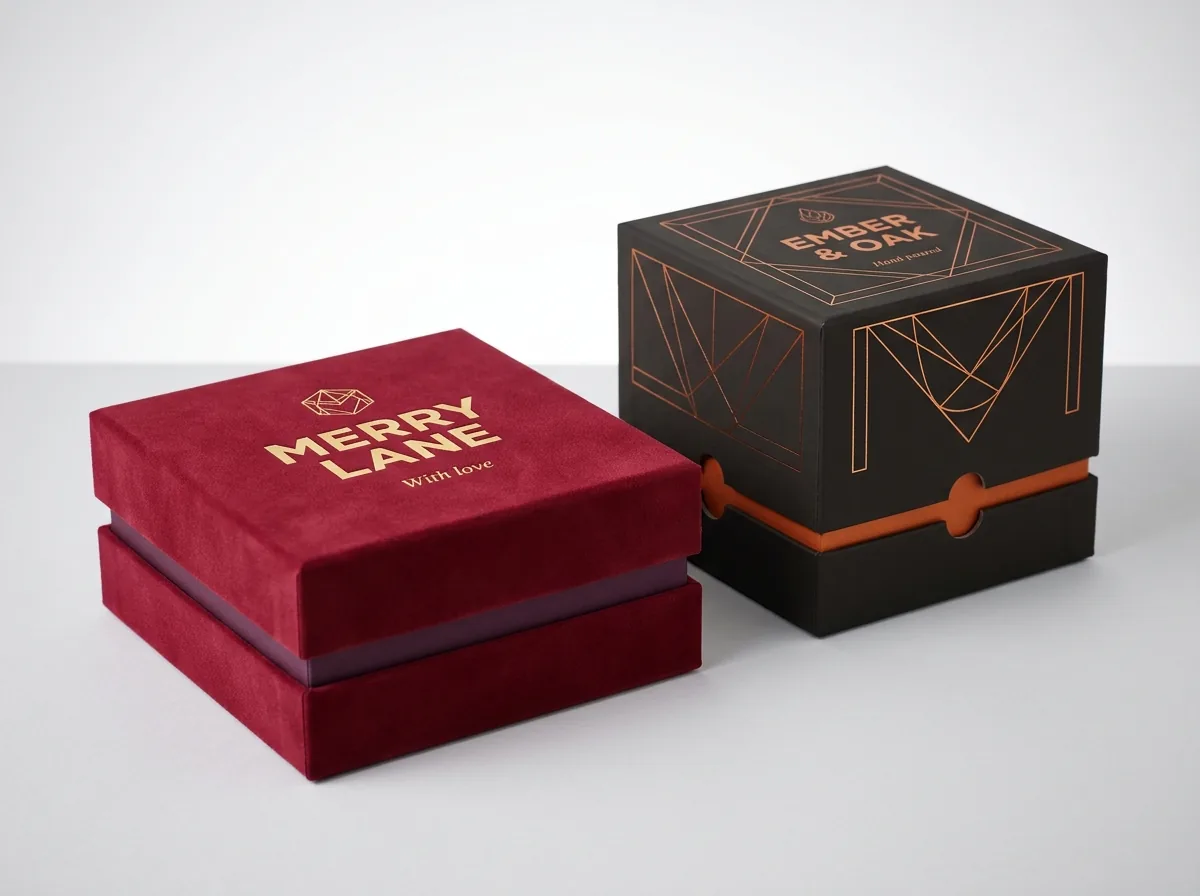
At first glance, both custom two-piece rigid boxes and custom shoulder-neck boxes open by lifting the top cover straight upward. The structural difference lies in how the lid meets the base wall. On a standard two-piece telescoping box, the top lid is slightly wider than the base tray so the lid walls slide all the way down over the outside of the base walls. That simple two-part build is the most economical rigid jewelry box structure and lets you vary the visual look by choosing a full-telescope lid (covering the entire base) or a partial-telescope lid (leaving ¼ inch of the base showing at the bottom). A shoulder-neck box adds a third rigid component: an inner neck glued inside the base tray that rises ½ inch above the base rim. The top lid has the exact same outer width as the base and slides down over that inner neck until the lid rim meets the base rim flush, often leaving a ⅛ inch reveal band of contrasting color (such as gold foil or deep green) around the waist of the box.
Know your size? Compare pricing across up to 3 quantities.
Request a Quote →When should I choose a magnetic closure box or a folding paperboard carton?
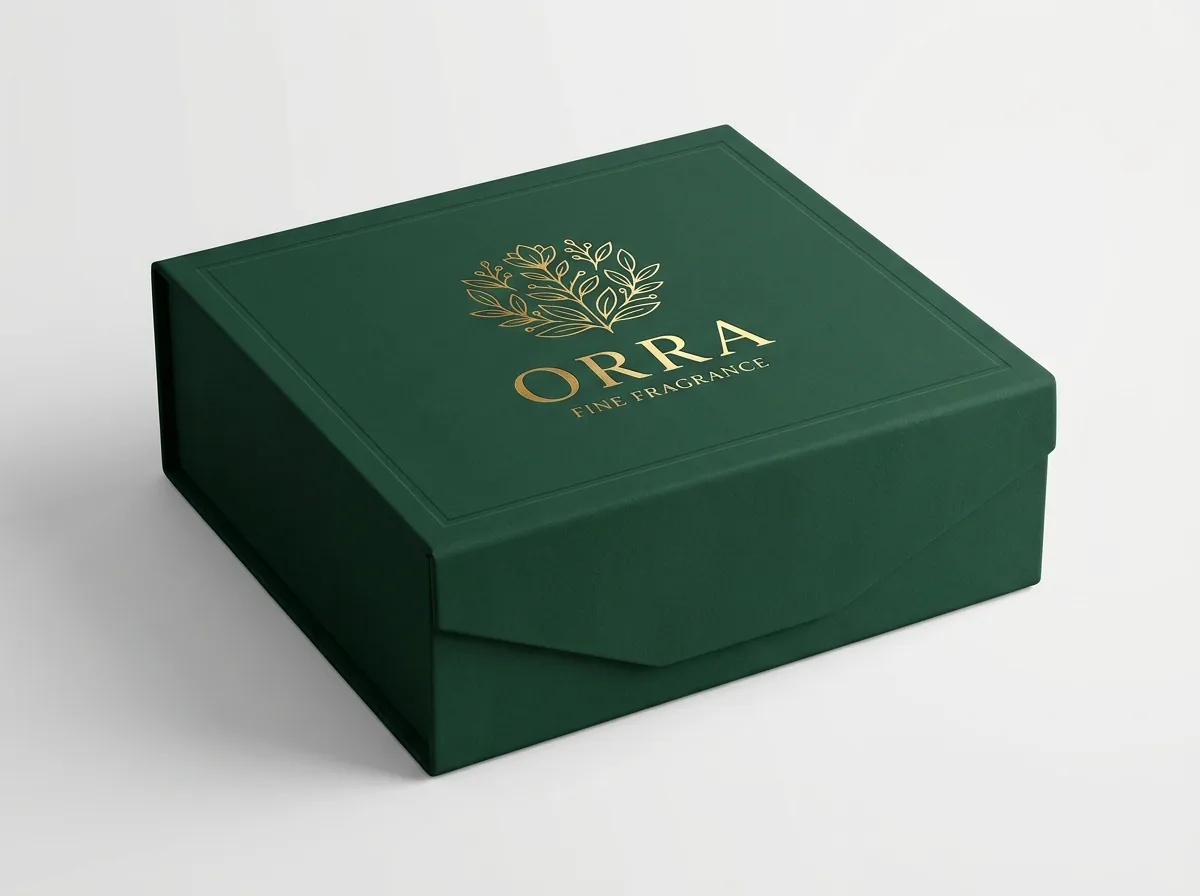
Two specialized structures sit at the top and entry tiers of a jewelry line: custom magnetic closure boxes for high-ticket multi-piece sets, and thin folding paperboard cartons (such as custom pillow boxes or straight tuck boxes) for high-volume fashion accessories. In a magnetic closure jewelry box, the lid is permanently hinged to the back spine like a book cover and wraps around the front edge where two concealed neodymium magnets click shut. Because the inside of the hinged lid stays attached and faces the buyer at a 100-degree angle when opened, it provides a natural billboard for a foil-stamped brand story, certificate pocket or mirror, while the wide base holds a necklace, earring and bracelet set side by side. Conversely, if you sell lightweight fashion charms, friendship bracelets, hair clips or festival jewelry in runs of 1,000 to 10,000 units and want the lowest unit cost and flat storage, a 16 pt to 20 pt folding card pillow box or tuck carton ships flat and pops into shape in seconds.
- Choose a drawer box when: you ship single pieces direct-to-consumer and want a one-handed ribbon-pull reveal.
- Choose a two-piece box when: you want the classic jeweler lift-off lid at the lowest 50-unit rigid setup cost.
- Choose a shoulder-neck box when: you want flush outer walls, a snug friction click and a contrasting middle reveal stripe.
- Choose a magnetic box when: you are packaging a multi-piece bridal suite, statement collar necklace or VIP influencer seeding kit.
- Choose a folding carton when: you are ordering 1,000+ units of lightweight fashion accessories and want flat-pack storage.
How do jewelry brands pair two structures across everyday and fine collections?
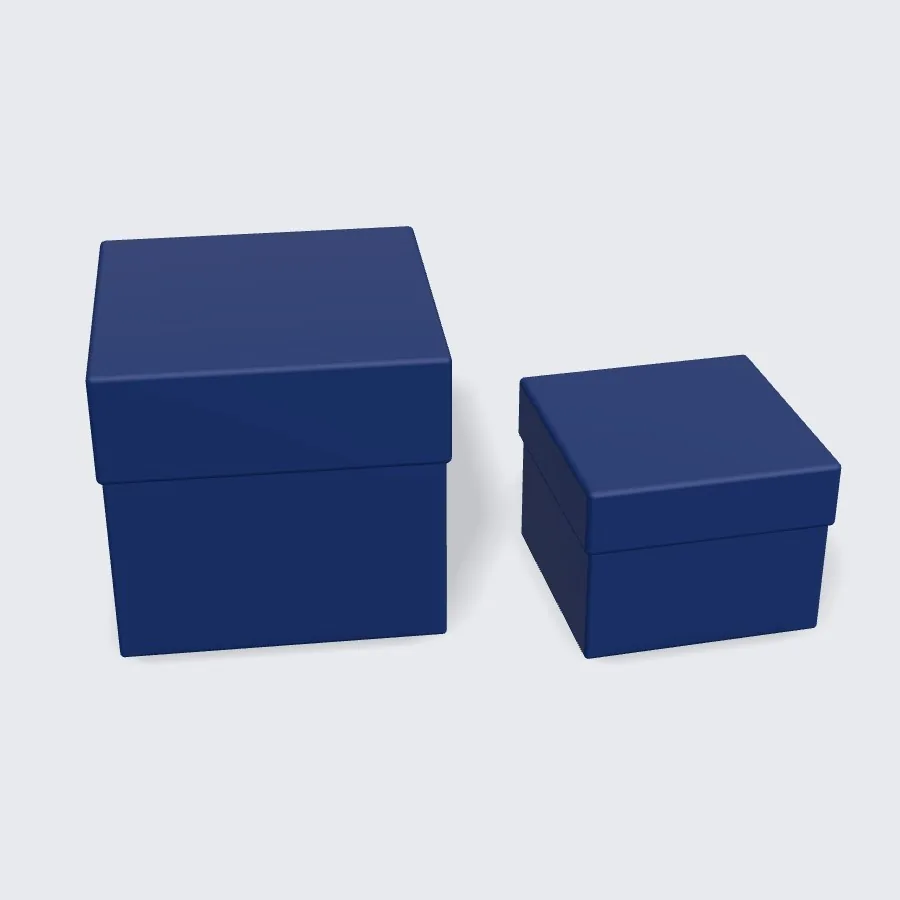
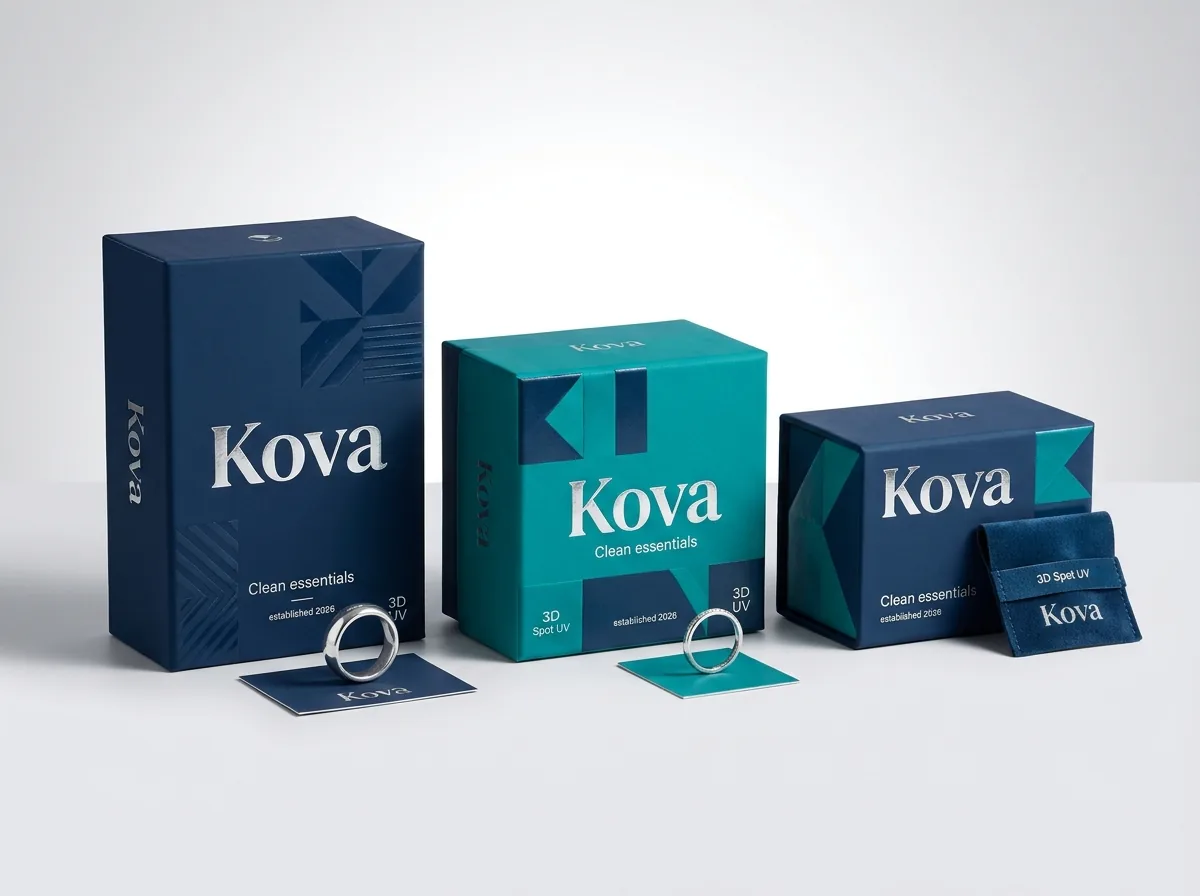
You do not have to use a single box style for both a demi-fine silver stud and a solid 18k gold diamond pendant. Many growing jewelry houses establish a two-tier packaging architecture that shares the same wrap paper color, typography and Pantone ink across two structures. For their core everyday collection, they order 3.5 × 3.5 × 1.25 inch slide-out drawer boxes with a universal multi-cut EVA foam pad. For their fine gold, bespoke or bridal capsule, they order 3 × 3 × 2 inch shoulder-neck rigid boxes or 8 × 6 × 2 inch magnetic closure boxes wrapped in soft-touch paper with metallic foil stamping inside the lid. If you also sell entry-level gift cards, polishing cloths or festival charms at events, you can add a matching 1,000-unit run of folding card pillow boxes printed in the exact same Pantone shade so every price point feels cohesive. In Step 2 of the CubitPack quote form, select 2 designs or 3+ designs and list both styles in the notes so your dedicated account manager coordinates the paper stocks and Pantone colors across the entire family. Every order includes free structural design help, a 2D digital dieline proof and a 3D mockup before you pay.
What are the most common mistakes when choosing a jewelry box style?
Picking a box structure without testing how it travels in the mail or opens on camera causes avoidable fulfillment headaches. Avoid these five mistakes
- Shipping a loose-fitting two-piece lift-off lid box inside a padded envelope without a pouch or band, allowing the lid to lift off in transit.
- Using an oversized magnetic closure box for a tiny pair of stud earrings, which inflates both unit box cost and parcel shipping weight.
- Skipping the ribbon pull tab or thumb notch on a tight slide-out drawer box, leaving customers struggling to grip the inner tray.
- Ordering set-up rigid boxes for a 5,000-unit run of entry-level fashion charms where a flat-packed folding pillow box would save 80% of warehouse shelf space.
- Making the telescoping lid of a two-piece box the exact same width as the base without an inner shoulder neck (a standard lid must be slightly wider to telescope).
Find your size
Suggested inside size: 2 × 2 × 1.5 in
A starting point. Your account manager confirms the size with you before the proof.
Quote this size →Packaging for this

Ready to order jewelry boxes? Compare up to 3 quantities with a free 3D mockup.
Request a Quote →Questions about jewelry boxes
Which custom jewelry box style is the most affordable at the 50-box minimum?
Among rigid setups starting at 50 boxes, a two-piece lift-off lid box and a slide-out drawer box are the two most cost-effective structures because they require fewer assembly steps than a three-part shoulder-neck box or a magnet-embedded hinged book box.
Do slide-out drawer jewelry boxes need an outer belly band to stay closed?
No. Because the four walls of the rigid outer sleeve surround the inner drawer tray with calibrated friction, a slide-out drawer box stays closed inside an e-commerce shipping mailer or microfiber pouch without needing a separate belly band or sticker.
What is a shoulder-neck jewelry box and why do fine jewelers use it?
A shoulder-neck box has an inner rigid collar glued inside the base tray that extends upward so the top lid slides over the collar and meets the base wall flush. It gives a firm friction closure and lets you show a contrasting color band around the middle.
Do rigid jewelry boxes ship flat or pre-assembled?
Drawer, two-piece and shoulder-neck rigid jewelry boxes ship fully pre-assembled with the custom foam or card insert already fitted inside, so your fulfillment team can pack jewelry immediately with zero box-folding labor. Larger magnetic boxes are also available in collapsible fold-flat styles.
Can I get a custom ribbon color on a slide-out drawer jewelry box?
Yes. You can choose a satin, grosgrain or cotton twill ribbon pull tab matched to your brand palette, and even print or foil-stamp your logo on the outer sleeve and inside the drawer wall.
How can I feel the difference between drawer, two-piece and magnetic boxes before ordering?
You can order our $50 sample kit to inspect rigid board weights, paper wraps, laminations and foil finishes in your hands, or request a paid custom pre-production sample of your exact box design whose cost is credited to your full order.
Still have a question? Ask a packaging specialist.
Request a Quote →Request your jewelry boxes quote
Tell us your size and quantities, and one dedicated account manager prepares pricing for each tier.
- Free design & AI-to-print studio + 3D mockup
- No die or plate charges · 4–5 day rush available
- Free shipping to all 50 states
- 10% off your first order
The structural comparisons in this guide are based on rigid chipboard (gray board) assembly mechanics, e-commerce parcel transit behavior and CubitPack's decided minimums and services in our published product specifications. A CubitPack packaging specialist verified every comparison row. Spot something wrong? Tell us and we will fix it.
Sources
What changed
- October 22, 2026: First published.
- October 22, 2026: Updated specifications, terminology, and verified source links.
More guides
New packaging guides by email
Sizes, materials and design tips. Unsubscribe anytime.