
Two-piece lift-off lid vs hinged lid shoe boxes: which should you choose?
Short answer: Choose one-piece hinged corrugated boxes (from 250 units) for athletic sneakers, running shoes and casual footwear that ship flat and assemble fast. Choose two-piece lift-off lid or pull-out drawer custom shoe boxes in rigid board (from 50 units) for leather dress shoes, bridal heels, boots and collector releases.
On this page
- How do the four main custom shoe box structures compare
- Why do athletic and streetwear sneaker brands favor one-piece hinged boxes
- When is a two-piece lift-off lid shoe box the better investment
- When should you upgrade to a slide-out drawer or collapsible rigid box
- How do these shoe box styles perform in stockrooms and parcel mail
- Common mistakes
- FAQs
Request a custom quoteFree dieline & 3D mockup
Footwear packaging splits into two classic silhouettes: the one-piece hinged lid box popularized by athletic sneaker makers, and the two-piece telescoping lid-and-base box used by dress shoe houses and designer heel boutiques. A one-piece hinged shoe box is die-cut from a single sheet of E-flute or B-flute corrugated board (starting at 250 units): it ships flat, folds into double-thick side walls without glue, and keeps the lid attached so store clerks never lose a lid during try-ons. A two-piece shoe box pairs a separate base tray with a removable lid (starting at 50 units in rigid chipboard or 250 in corrugated), delivering a slow, ceremony-style boutique reveal and double wall thickness wherever the lid overlaps the base. At CubitPack, we manufacture both structures plus slide-out collector drawers and flat-folding magnetic rigid boxes with free design help and free shipping across all 50 states.
How do the four main custom shoe box structures compare?
When footwear founders and production managers compare structures for custom printed shoe boxes, the decision comes down to five operational realities: minimum order quantity, inbound freight volume from the box plant to the shoe assembly line or 3PL warehouse, folding time on the packing bench, vertical crush resistance on stockroom racks, and how the customer reuses the box in their closet. Many emerging brands start with a 50-unit run of rigid two-piece or collapsible boxes for their press seeding kits and boutique pop-up launches, then add a 250-unit run of flat-packed corrugated hinged sneaker boxes once daily online order volume ramps up. Use the table below to compare two-piece lift-off lid boxes, one-piece hinged sneaker boxes, slide-out drawer boxes and collapsible magnetic rigid boxes side by side.
| Comparison factor | One-piece hinged sneaker box | Two-piece lift-off lid box | Drawer or collapsible rigid box |
|---|---|---|---|
| Minimum order at CubitPack | 250 corrugated boxes | 50 rigid / 250 corrugated / 1,000 card | 50 rigid / 250 corrugated drawer |
| Board material | E-flute or B-flute corrugated board | Paper-wrapped rigid board or corrugated | Thick rigid chipboard or corrugated |
| Inbound shipping & storage | Ships 100% flat in strapped bundles | Rigid arrives set up; corrugated folds flat | Collapsible ships flat; set-up drawer arrives built |
| In-store try-on convenience | Attached lid never gets misplaced or swapped | Detached lid rests beneath base during try-on | Slides open without unstacking closet column |
| Vertical stacking strength | High (rolled double-thick side walls) | Very high (especially full-telescope lids) | Highest on rigid outer sleeves |
| Primary footwear category | Sneakers, runners, skate, everyday casual | Dress shoes, heels, loafers, ankle boots | Collector drops, bridal heels, tall boots |
Why do athletic and streetwear sneaker brands favor one-piece hinged boxes?
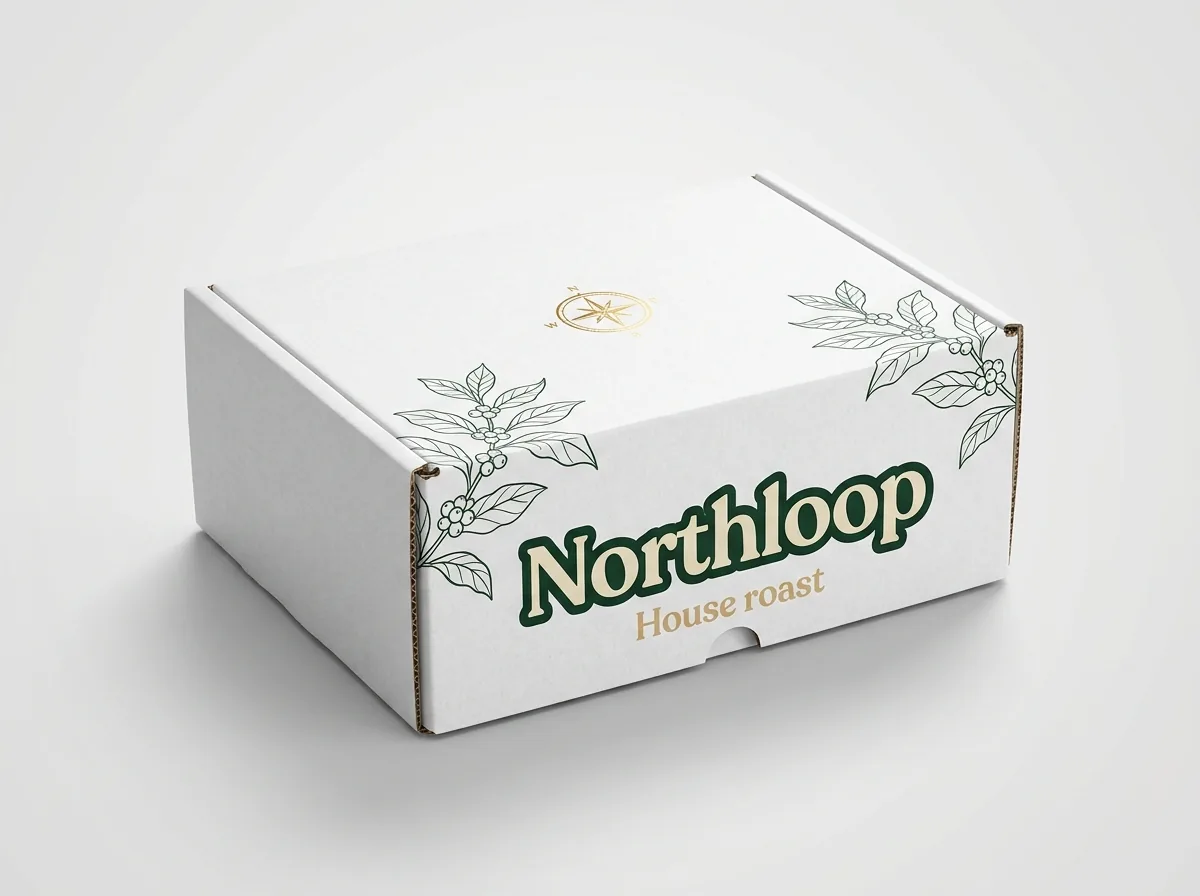
Open any closet filled with running shoes, basketball trainers or skate shoes and almost every box is a one-piece hinged corrugated container. Because the top lid, back wall, base and double-rolled side walls are cut from one contiguous sheet of fluted board, there is zero risk of a factory worker or retail associate pairing a size 9 lid with a size 10 base during a busy Saturday rush. From a unit-economics standpoint, one-piece hinged custom mailer boxes and sneaker boxes require only one die-cutting pass and ship completely flat on pallets. When the packer folds the side flaps over, the vertical walls lock into two or three layers of corrugated fluting, creating an I-beam column at all four corners that supports tall stockroom stacks without paying for heavy rigid chipboard.
- Starts at 250 units, ideal for independent sneaker launches, running clubs and seasonal colorway drops.
- One-piece dieline eliminates lid-to-base color mismatch and cuts flat pallet volume by 80% vs set-up boxes.
- Attached flip lid makes inside-lid storytelling and collaboration graphics immediately visible when opened.
- Can include a die-cut half-moon thumb notch on the front lip for effortless one-handed opening.
When is a two-piece lift-off lid shoe box the better investment?
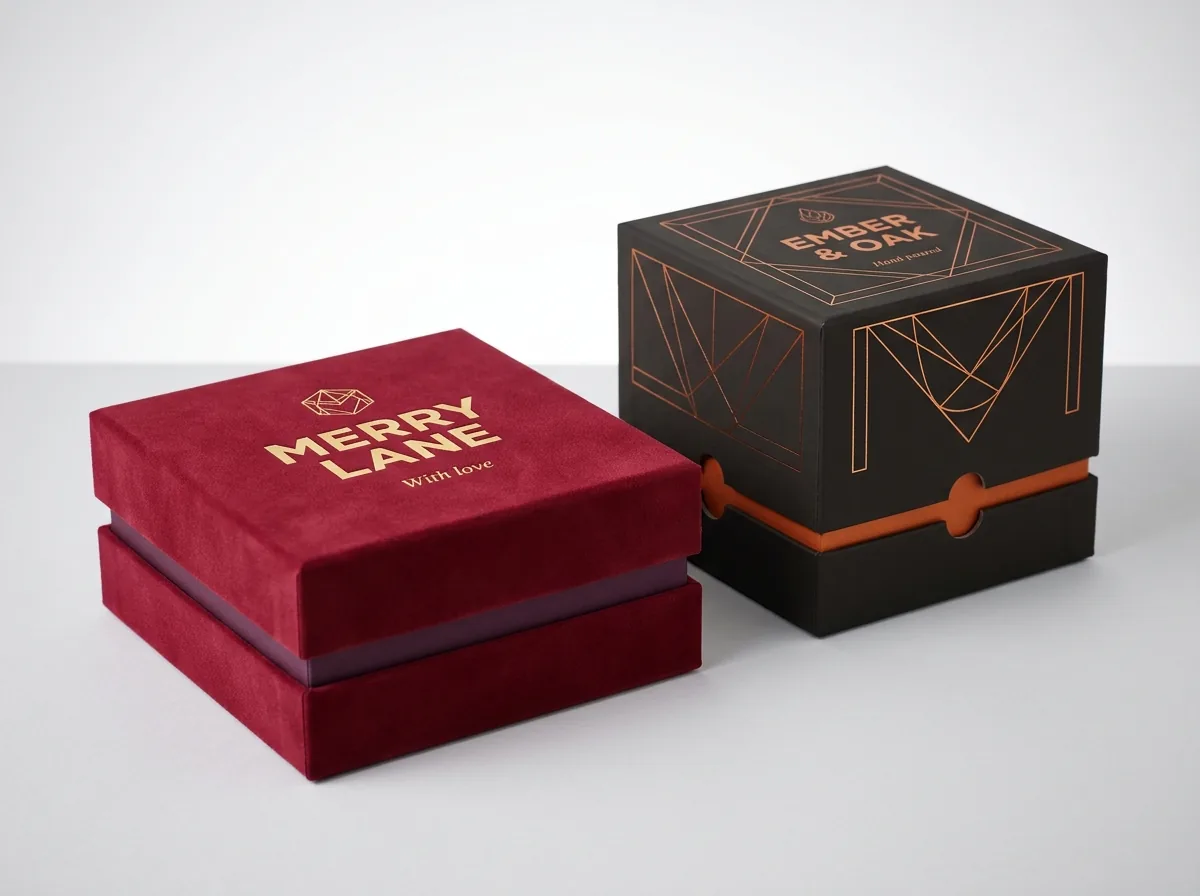
Traditional shoemakers, Italian leather dress shoe labels, bridal footwear designers and western boot brands overwhelmingly choose custom two-piece rigid boxes or folding two-piece boxes. Lifting a separate telescoping lid off a rigid base with both hands feels deliberate and unhurried, and it allows a boutique associate to place the base tray directly inside the lid on the fitting stool while presenting the shoes to the client. Two-piece shoe boxes also let you contrast two different textures or colors: for example, a cream linen-textured base paired with a deep forest green soft-touch lid stamped in gold foil. If you choose a full-telescope lid that slides all the way down to the bottom edge of the base tray, you double the vertical wall thickness around all four sides, giving exceptional crush resistance for heavy Goodyear-welted leather oxfords and boots.
- Starts at 50 boxes in rigid chipboard or 250 boxes in folding corrugated board.
- Partial-telescope lids (1.5 to 2 in deep) leave the base end panel exposed so size labels stay visible with the lid on.
- Full-telescope lids cover the full height of the base tray, doubling corner compression strength for heavy footwear.
- Allows contrasting lid and base wraps, ribbon ties, thumb notches and custom dust bag compartments.
Know your size? Compare pricing across up to 3 quantities.
Request a Quote →When should you upgrade to a slide-out drawer or collapsible rigid box?
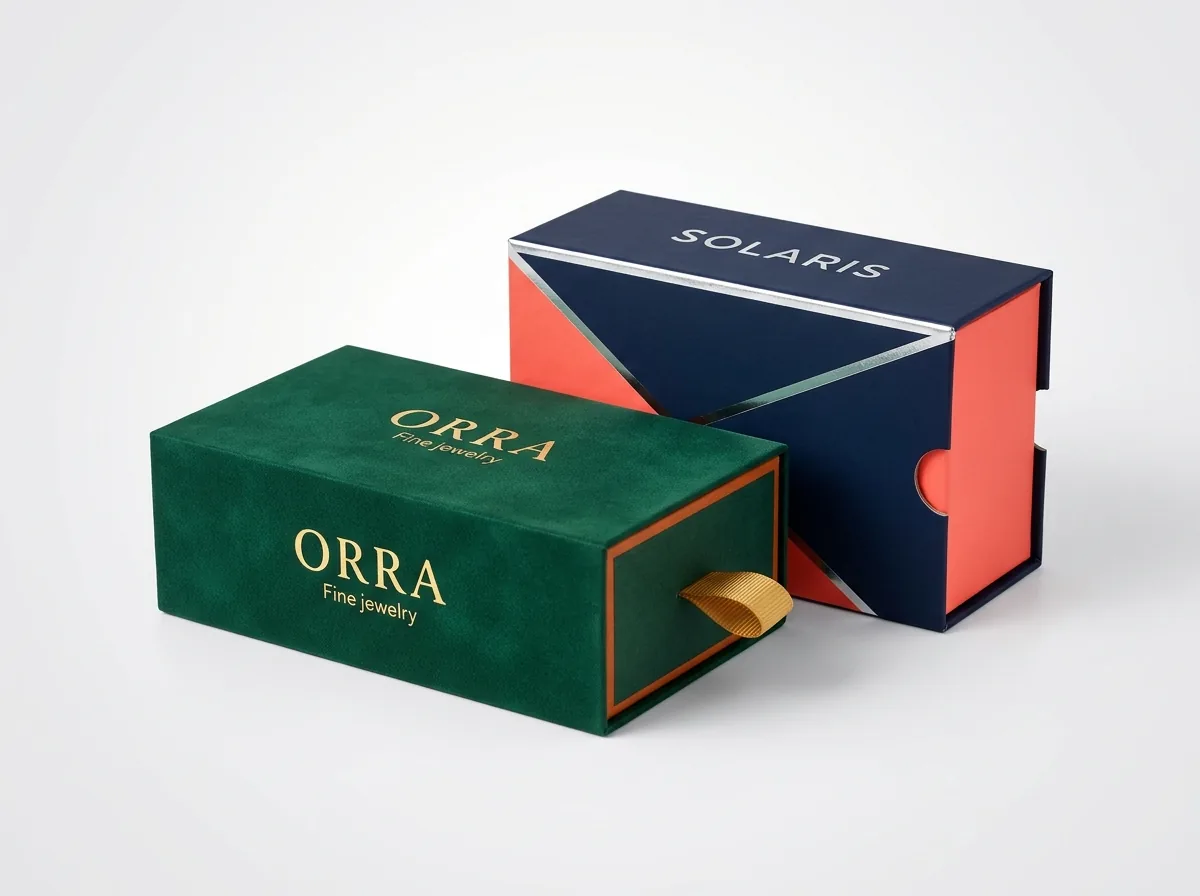
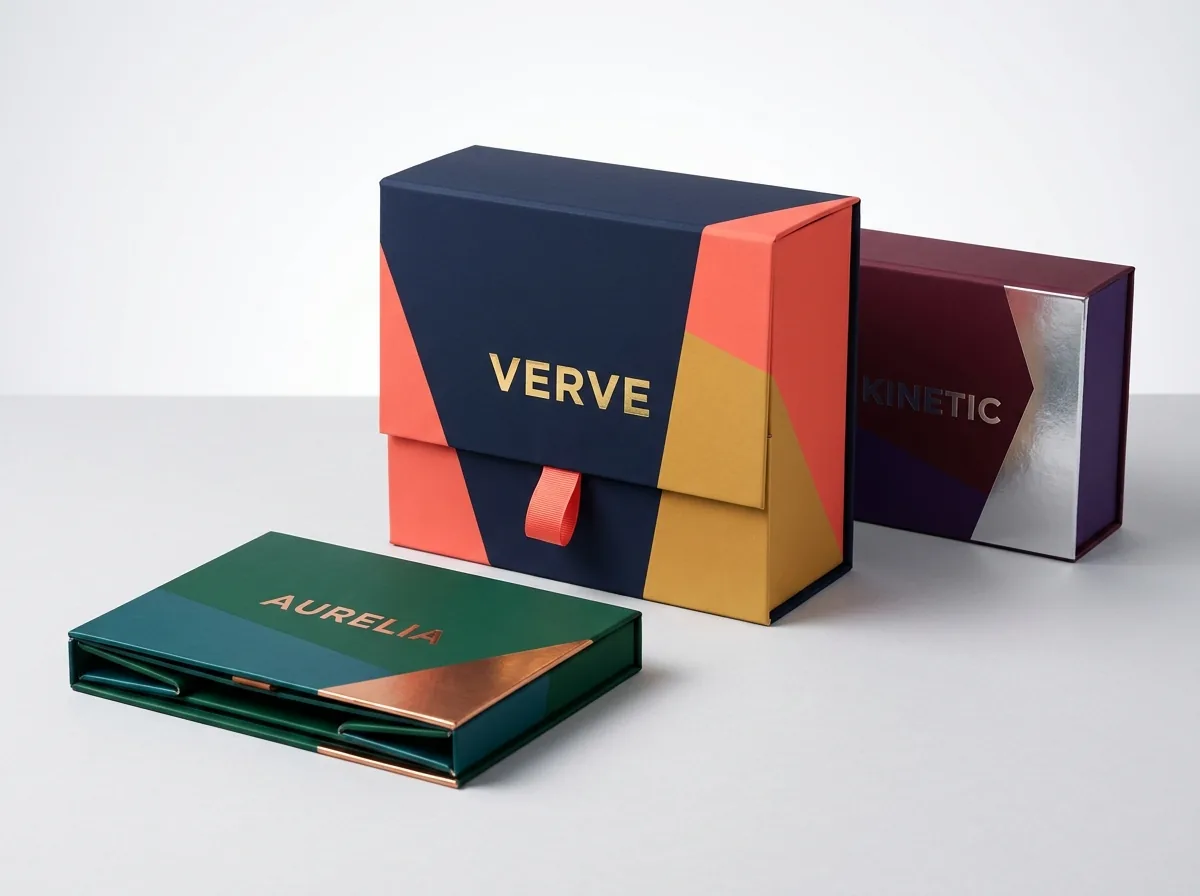
Sneaker collectors and luxury heel buyers frequently keep their shoes inside the original boxes stacked floor-to-ceiling in their closets. With a standard hinged or lift-off lid box, pulling a pair from the bottom of a six-box stack requires lifting the five boxes above it. A custom drawer box solves that problem: the outer sleeve stays in the stack while the inner tray slides forward with a tug on a grosgrain ribbon tab or finger hole. Meanwhile, if you sell tall riding boots, western boots or bulky platform heels and want rigid chipboard walls without paying to ship and store pallets of empty air, custom collapsible rigid boxes give you the best of both worlds. They arrive flat in stacked cartons and pop into a rigid magnetic-closure box in seconds when your packer peels the corner adhesive strips.
- Slide-out drawer box: keeps the outer shell fixed in a closet stack while the inner footwear tray glides forward.
- Collapsible magnetic rigid box: reduces inbound freight and stockroom storage volume by up to 75% vs set-up rigid boxes.
- Both luxury styles start at just 50 boxes at CubitPack, with zero die or plate charges.
How do these shoe box styles perform in stockrooms and parcel mail?
In a retail stockroom, boxes are stacked on their flat bases with the short end panel facing the aisle. Both double-wall rolled corrugated hinged boxes and paper-wrapped rigid boxes handle 8-to-10-high vertical stacks cleanly, especially when adjacent sizes share the same horizontal footprint. If you stack boxes in humid coastal warehouses, laminated or kraft-wrapped corrugated and rigid boards hold their corner stiffness better than thin unlaminated folding card. For direct-to-consumer parcel shipping through USPS, UPS or FedEx, remember that footwear buyers treat the shoe box as part of the product they bought, and returns require an intact shoe box. Even though a corrugated hinged sneaker box is strong enough to survive the mail taped shut, most footwear brands slide both hinged sneaker boxes and rigid two-piece boxes inside an outer corrugated shipping box or poly mailer so carrier labels and conveyor marks never touch the branded shoe box.
- Retail stockroom stacking: align footprints across core sizes so vertical stacks distribute weight straight down the corner columns.
- Direct-to-consumer shipping: place collector sneaker boxes and two-piece rigid boxes inside a fitted corrugated shipper or poly bag.
- Return readiness: using an outer shipping box keeps the primary shoe box clean so exchanged pairs can return to inventory without re-boxing.
What are the most common mistakes when picking a shoe box structure?
Matching the wrong lid mechanism to your sales channel or shoe weight creates headaches on the factory floor and in the stockroom. Avoid these five mistakes
- Ordering set-up pre-assembled rigid boxes for a 2,000-pair boot production run without calculating pallet freight and warehouse cubic footage first.
- Making a two-piece telescoping lid too tight with zero air relief, creating a vacuum seal that forces shoppers to shake the lid off.
- Using a thin single-wall folding paperboard carton for heavy men's sneakers or leather boots instead of fluted corrugated or rigid board.
- Putting the SKU barcode and size sticker on the removable lid of a two-piece box instead of the base tray wall, risking mixed-up sizes if lids are swapped.
- Skipping an outer shipping box or poly bag when mailing luxury rigid or collector sneaker boxes to online customers.
Find your size
Suggested inside size: 8.5 × 5.5 × 3.5 in
A starting point. Your account manager confirms the size with you before the proof.
Quote this size →Packaging for this
Ready to order shoe boxes? Compare up to 3 quantities with a free 3D mockup.
Request a Quote →Questions about shoe boxes
Should the size sticker go on the lid or the base of a two-piece shoe box?
Always place the SKU, barcode and shoe size label on the short end panel of the base tray, not on the removable lid. On partial-telescope two-piece boxes, keep the lid depth above the label zone so the size remains visible even when the lid is closed.
How do you stop a two-piece rigid shoe box lid from sticking due to air suction?
Our structural designers calibrate the lid-to-base tolerance so the lid glides down smoothly over the base in about two seconds, or we add two small die-cut thumb notches along the lower edges of the lid so fingers can lift it easily.
Can a slide-out drawer shoe box be made from corrugated board instead of rigid board?
Yes. Corrugated tray-and-sleeve drawer boxes start at 250 units, ship completely flat, and fold together without glue while still giving sneaker and heel buyers a pull-out closet drawer experience at a lower unit cost than rigid chipboard.
What is the minimum order quantity for hinged corrugated vs rigid two-piece shoe boxes?
At CubitPack, rigid shoe boxes (two-piece, drawer or collapsible magnetic) start at 50 units, corrugated hinged or two-piece shoe boxes start at 250 units, and thin folding paperboard cartons for sandals or slippers start at 1,000 units.
Can I order a physical sample to test stacking strength before full production?
Yes. Every order includes a free 2D digital proof and 3D mockup before payment, and we offer physical structural prototypes, paid custom printed samples (credited to your order), and drop and crush testing to verify vertical stacking performance.
How long does production take for custom hinged or rigid shoe boxes?
Both corrugated and rigid custom shoe boxes take 10 to 14 business days after you approve your proof and complete payment, with 4 to 5 business day rush production available when you are working against a release date.
Still have a question? Ask a packaging specialist.
Request a Quote →Request your shoe boxes quote
Tell us your size and quantities, and one dedicated account manager prepares pricing for each tier.
- Free design & AI-to-print studio + 3D mockup
- No die or plate charges · 4–5 day rush available
- Free shipping to all 50 states
- 10% off your first order
This structural comparison is grounded in CubitPack's decided minimums, materials and turnaround policies in our published product specifications alongside ASTM D642 box compression principles and footwear stockroom workflows. A CubitPack packaging specialist reviewed every section. Spot something wrong? Tell us and we will fix it.
Sources
What changed
- October 22, 2026: First published.
- October 22, 2026: Updated specifications, terminology, and verified source links.
More guides
New packaging guides by email
Sizes, materials and design tips. Unsubscribe anytime.