
What size shoe box do I need for sneakers, heels and boots?
Short answer: Lay both shoes on their sides heel-to-toe in the nested 69 position, measure total length, nested width and lying height, and add ½ inch of clearance. Typical custom shoe boxes measure 11.5 × 6.5 × 4 in for women's flats, 12.5 × 8 × 4.5 in for heels, and 13.5 × 8.5 × 5 in for men's sneakers.

On this page
- How do I measure a pair of shoes in the nested 69 position
- What are the standard shoe box dimensions for men's, women's and kids' shoes
- How do footwear brands cover US sizes 5 through 14 with only 2 or 3 box sizes
- How do you size a box for stiletto heels, ankle boots and tall riding boots
- How does shoe box size affect outer shipping cartons and parcel rates
- Common mistakes
- FAQs
Request a custom quoteFree dieline & 3D mockup
Every footwear box is sized around a pair of shoes lying on their sides in the nested heel-to-toe (69) position, never standing upright on their soles. When you place the left and right shoes on their sides facing opposite directions with the soles pushed against the outer box walls, the narrow arch and toe of one shoe tuck into the space beside the heel counter of the other. That simple geometry trims 1.5 to 2.5 inches off the box width and lowers the box height to the width of a single sole. After nesting the largest shoe size in each group with a sheet of tissue paper between the uppers, measure the overall length, nested width and vertical height, then add ½ inch on all three axes. At CubitPack, we cut every box to your exact inside dimensions with no die or plate charges.
How do I measure a pair of shoes in the nested 69 position?
If you place a pair of US size 11 running shoes upright side by side on a table, they span nearly 13 inches long, 9.5 inches wide and 5.5 inches tall, leaving a huge triangle of empty air above the toes. Instead, footwear factories and retail brands always pack pairs on their sides in the heel-to-toe 69 arrangement before sizing custom printed shoe boxes. Set the pair on a flat table on their outer sides with the rubber outsoles facing outward toward the left and right walls and the uppers facing each other in the center. Slide the toe box of the right shoe next to the heel counter of the left shoe, place a folded sheet of tissue paper between the two uppers so hardware or eyelets cannot touch, and measure the three axes in inches.
- Length (L): measure from the heel curve of one shoe to the toe tip of the other along the longest horizontal axis, then add ½ inch.
- Width (W): measure across the nested pair from the bottom of the left outsole to the bottom of the right outsole, then add ½ inch.
- Height (H): measure from the tabletop to the highest point of the side-lying shoe (usually the widest part of the outsole or heel), then add ½ inch.
- Always write your dimensions in the order inside Length × Width × Height in inches so the dieline matches your pair.
What are the standard shoe box dimensions for men's, women's and kids' shoes?
Because CubitPack builds every order to your custom inside dieline with zero die charges, you are never locked into an ill-fitting stock box. Still, most footwear lines fall close to seven benchmark footprints that fit standard 12-inch and 16-inch deep retail stockroom shelving. Compare your nested footwear measurements against the benchmark table below. Notice how height stays between 4 and 5.5 inches across almost all adult footwear because the shoes lie on their sides, while length and width step up from flats to heels, athletic trainers, high-tops and tall boots.
| Footwear category & US size range | Typical inside size (L × W × H) | Usual box construction |
|---|---|---|
| Toddlers' & children's shoes (US Kids 4C–3Y) | 8.5 × 5.5 × 3.5 in | Hinged corrugated or briefcase handle box |
| Women's flats, sandals, slides & loafers (US 5–10) | 11.5 × 6.5 × 4 in | Two-piece lift-off lid or hinged box |
| Women's high heels, pumps, wedges & runners (US 5–10) | 12.5 × 8 × 4.5 in | Two-piece rigid or corrugated sneaker box |
| Men's athletic sneakers, oxfords & loafers (US 7–12) | 13.5 × 8.5 × 5 in | Hinged one-piece sneaker box or two-piece rigid |
| High-top basketball shoes, chunky trainers & US 13–15 | 14.5 × 10 × 5.5 in | Slide-out drawer box or heavy corrugated box |
| Ankle boots, Chelsea boots & leather work boots | 14.5 × 10.5 × 5.5 in | Two-piece rigid or reinforced corrugated box |
| Tall knee-high boots, western & riding boots | 18 × 12 × 5.5 in or 20 × 12 × 6 in | Two-piece or collapsible magnetic rigid box |
How do footwear brands cover US sizes 5 through 14 with only 2 or 3 box sizes?
A unisex sneaker or boot release often spans 14 to 18 half-sizes from US 5 up to US 14. Ordering 18 different box dielines would splinter a 1,000-pair production run into tiny batches of 50 boxes per size and complicate warehouse pallet stacking. Instead, footwear operations teams group their size curve into two or three shared box footprints. You size each box around the largest shoe in its bracket, and packers use an extra fold of custom tissue paper or a paper toe plug to keep the smaller sizes in that bracket from shifting.
- Bracket 1 (Small / Women's & Youth, e.g., US Men's 4–7.5 / Women's 5.5–9): sized around the 7.5M / 9W pair, typically 12 × 7.5 × 4.5 in.
- Bracket 2 (Core Medium-Large, e.g., US Men's 8–11.5 / Women's 9.5–13): sized around the 11.5M pair, typically 13.5 × 8.5 × 5 in.
- Bracket 3 (XL & High-Volume, e.g., US Men's 12–15 or high-top silhouettes): sized around the 15M pair, typically 14.5 × 10 × 5.5 in.
Know your size? Compare pricing across up to 3 quantities.
Request a Quote →How do you size a box for stiletto heels, ankle boots and tall riding boots?
High heels and boots introduce two extra geometry checks beyond outsole length: heel spike clearance and shaft height. On a 3.5-inch or 4-inch stiletto pump, the heel extends perpendicular to the upper. When you nest two heels in the 69 position, turn the heels slightly inward toward the arch of the opposite shoe (separated by tissue paper or a satin dust bag) so the total nested width stays around 7.5 to 8 inches. On ankle boots and Chelsea boots, the rigid ankle shaft prevents the uppers from overlapping as tightly as low-top sneakers, which pushes the width out to 10 or 10.5 inches. On tall knee-high, western or equestrian boots, never fold the leather shaft in half to force it into a standard sneaker box, which leaves a permanent crease across the ankle. Use an 18 × 12 × 5.5 inch or 20 × 12 × 6 inch boot box with cardboard boot shapers inside the shafts.
How does shoe box size affect outer shipping cartons and parcel rates?
If you ship e-commerce footwear inside an outer custom shipping box so the branded shoe box arrives unscuffed, add ½ inch to ¾ inch to the outside dimensions of your shoe box to find the inside dimensions of your outer shipper. For example, a 13.5 × 8.5 × 5 inch sneaker box has an outside footprint of roughly 14 × 9 × 5.25 inches, which slides cleanly into a 14.5 × 9.5 × 5.75 inch corrugated overbox. Watch the 1,728 cubic inch (1 cubic foot) dimensional weight threshold on large boot boxes and double-pair orders. A 14.5 × 10 × 5.5 inch high-top box is only 797 cubic inches (under half a cubic foot), so two pairs can even ship together in a 15 × 11 × 11 inch master carton (1,815 cubic inches) with minimal dimensional weight impact. However, an oversized 22 × 14 × 7 inch tall boot carton (2,156 cubic inches) is billed by volume rather than scale weight on every shipment. Keeping your boot box length at 18 inches and height at 5.5 inches keeps the outer shipping carton comfortably below the 1 cubic foot mark.
- Single pair overbox: add ½ to ¾ inch to the outside length, width and height of your closed shoe box.
- Under 1 cubic foot rule: keep outer shipping cartons below 1,728 cubic inches whenever possible to avoid DIM weight penalties.
- Kids' and sandal boxes: smaller 8.5 × 5.5 × 3.5 in and 11.5 × 6.5 × 4 in footprints qualify for compact parcel tiers when shipped in a fitted poly mailer or mailer box.
- Multi-pair wholesale master cartons: stack 6, 10 or 12 shoe boxes in a double-wall corrugated master carton sized to standard 48 × 40 inch pallets.
What are the most common shoe box sizing mistakes?
Almost every ill-fitting shoe box comes from measuring a small sample size or forgetting how shoes nest on their sides. Avoid these five errors
- Measuring the US size 7 sample pair and using that dimension for US size 11 and 12 orders, where the toes crush against the end walls.
- Measuring shoes standing upright on their soles instead of lying on their sides in the 69 position, adding 2 inches of wasted width and height.
- Folding a tall leather boot shaft in half to fit a 13.5 inch sneaker box instead of using an 18 inch full-length boot box.
- Forgetting to leave ¼ inch of vertical clearance for satin shoe dust bags, molded tissue inserts or extra lace packets.
- Sizing an outer e-commerce shipping box to the inside dimensions of the shoe box without accounting for the thickness of the telescoping lid.
Find your size
Suggested inside size: 8.5 × 5.5 × 3.5 in
A starting point. Your account manager confirms the size with you before the proof.
Quote this size →Packaging for this

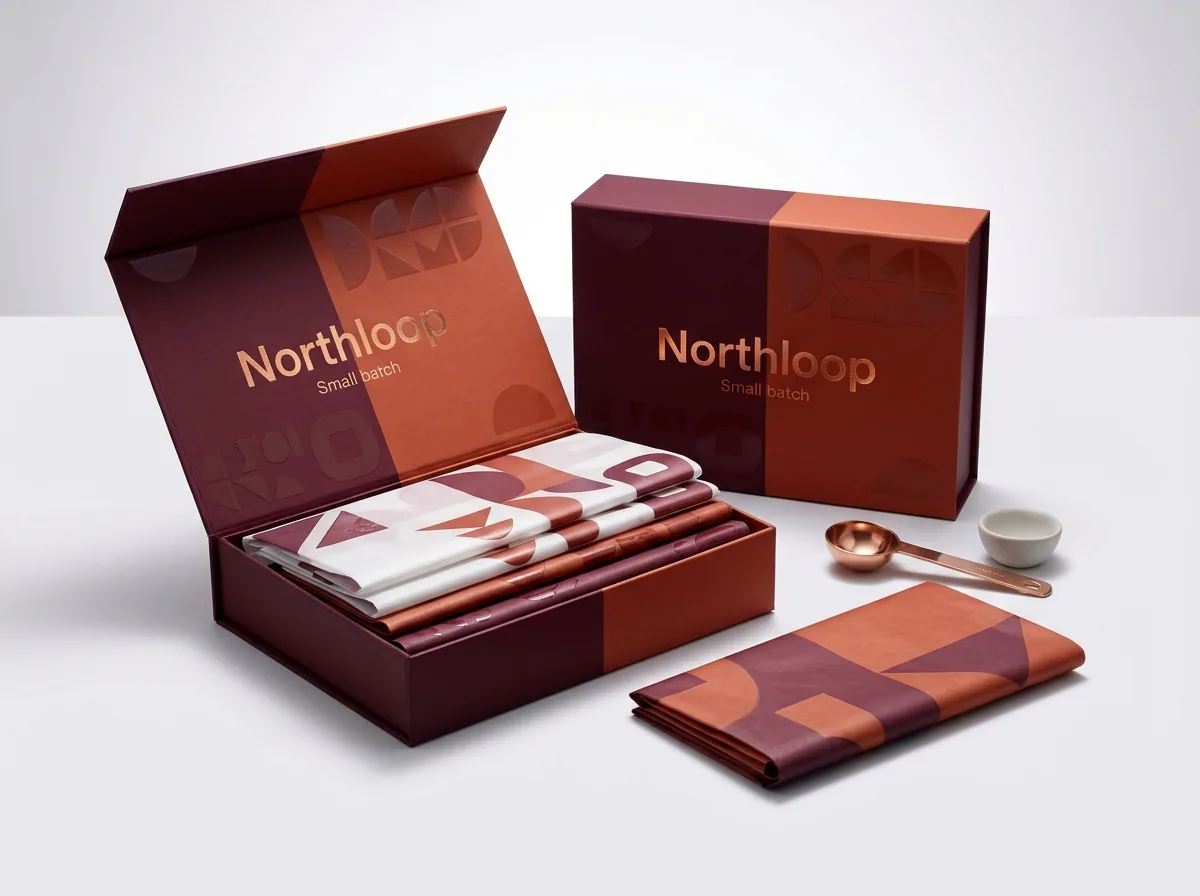
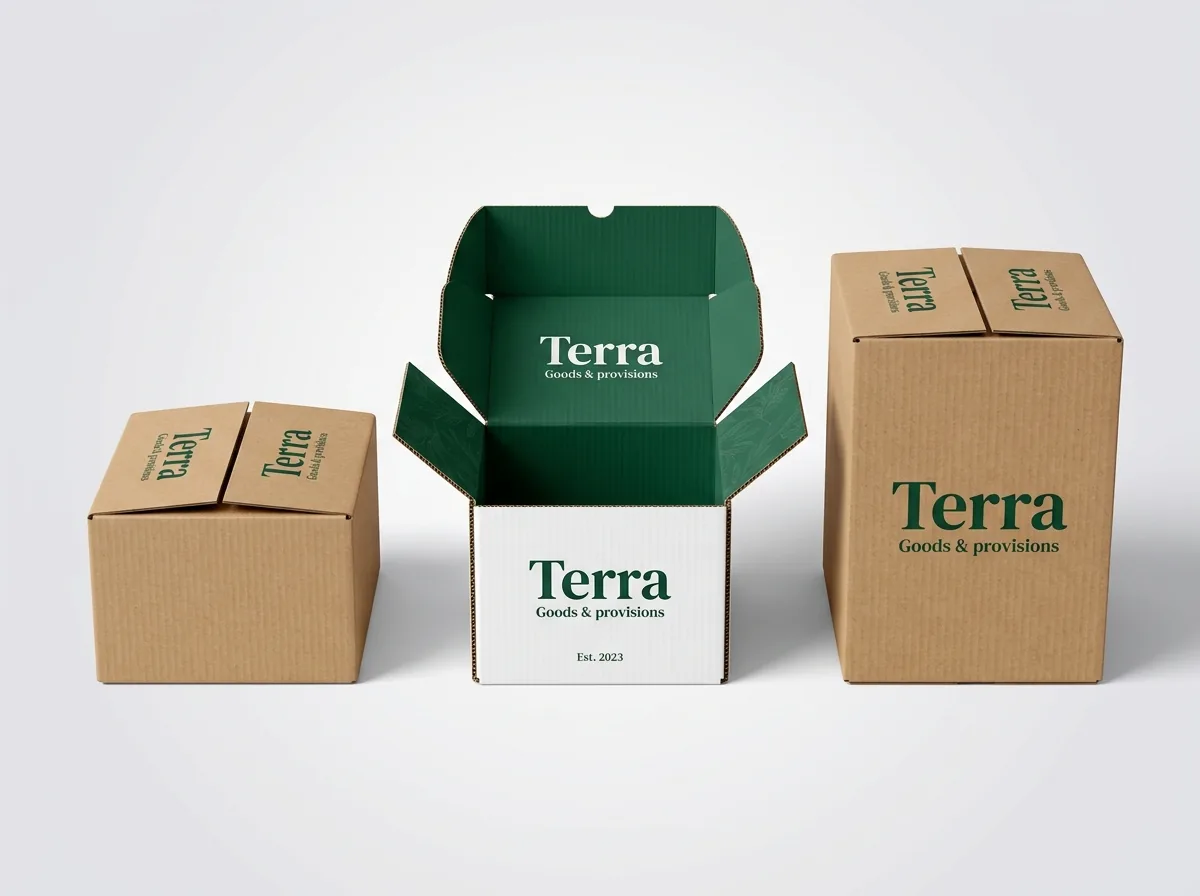
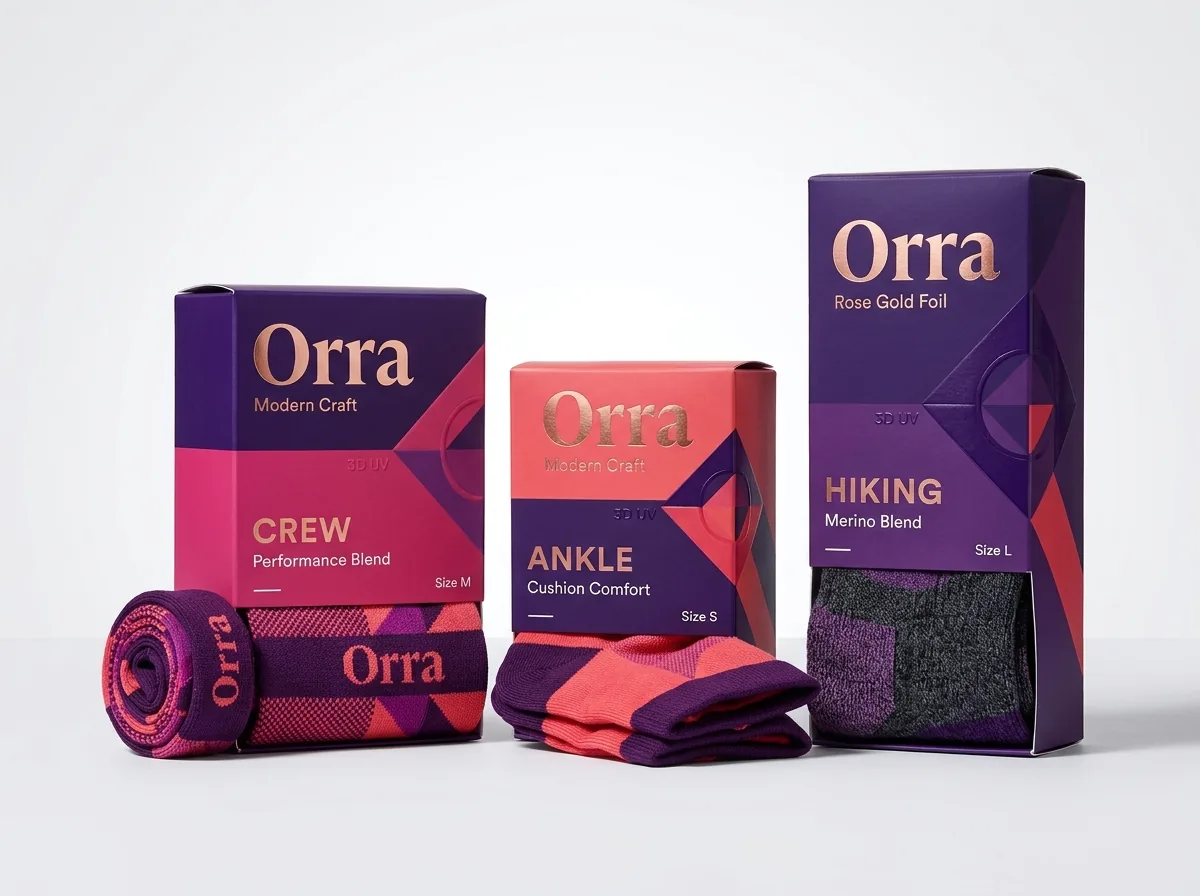
Ready to order shoe boxes? Compare up to 3 quantities with a free 3D mockup.
Request a Quote →Questions about shoe boxes
What is the standard size of a men's sneaker box in inches?
A standard men's athletic sneaker box measures 13.5 × 8.5 × 5 inches on the inside, which fits low-top and mid-top sneakers up to US Men's size 12 when nested heel-to-toe. For high-top basketball sneakers or US sizes 13 to 15, step up to 14.5 × 10 × 5.5 inches.
What is the standard size of a women's shoe box for heels vs flats?
Women's ballet flats, sandals and low-profile loafers typically use an 11.5 × 6.5 × 4 inch box. Women's stiletto pumps, block heels, wedges and running trainers require more nested width for the heel extension and typically use a 12.5 × 8 × 4.5 inch box.
Do I give inside or outside dimensions when requesting a shoe box quote?
Always give inside dimensions (Length × Width × Height in inches). CubitPack engineers every dieline from the usable interior cavity outward so your nested footwear fits properly regardless of whether you pick E-flute corrugated board or thick rigid chipboard.
Can I order two or three shoe box sizes in one combined order?
Yes. In Step 2 of the quote form, select 2 designs or 3+ designs and list your Small/Medium, Large and XL/Boot dimensions in the notes box. Your account manager will structure the run and show you the price breaks for each size.
What is the minimum order quantity for custom sized shoe boxes?
Rigid shoe boxes (two-piece lift-off lid, slide-out drawer or collapsible magnetic) start at 50 boxes, corrugated hinged sneaker boxes start at 250 boxes, and thin folding paperboard cartons start at 1,000 boxes, all cut to your exact size with no die fee.
How can I verify my pair fits the box before approving full production?
Every order includes a free 2D digital dieline proof and 3D mockup before payment. If you want to test physical nesting and lid clearance with your actual footwear sample first, you can order a custom structural prototype or printed sample.
Still have a question? Ask a packaging specialist.
Request a Quote →Request your shoe boxes quote
Tell us your size and quantities, and one dedicated account manager prepares pricing for each tier.
- Free design & AI-to-print studio + 3D mockup
- No die or plate charges · 4–5 day rush available
- Free shipping to all 50 states
- 10% off your first order
The footwear box sizes in this guide come from nested heel-to-toe footwear geometry, US/EU shoe last lengths, parcel cubic-foot rules and CubitPack's decided policies in our published product specifications. A CubitPack packaging specialist verified every benchmark row. Spot something wrong? Tell us and we will fix it.
Sources
What changed
- October 22, 2026: First published.
- October 22, 2026: Updated specifications, terminology, and verified source links.
More guides
New packaging guides by email
Sizes, materials and design tips. Unsubscribe anytime.