
What size apparel box do I need?
Short answer: Fold your garment on a flat table, measure its length, width and relaxed stack height, then add ¼ to ½ inch to length and width for finger room. Most brands pack folded shirts in 11.5 × 8.5 × 2 in and hoodies in 14 × 11 × 4 in custom apparel boxes.
On this page
- How do I measure folded clothes for a custom box
- What are the standard apparel box sizes by garment type
- How do T-shirt box sizes differ from hoodie and outerwear boxes
- How can one box size fit XS through XXL garments without wrinkling
- How does box size affect USPS, UPS and FedEx shipping rates
- How do I size an apparel box for outfits, kits and accessories
- Common mistakes
- FAQs
Request a custom quoteFree dieline & 3D mockup
The right apparel box dimension starts with your folding method rather than the flat garment measurements on your tech pack. A men's extra-large tee and a women's small tee can share the exact same box footprint when both are folded around a standard 9 × 11 inch or 8 × 10 inch acrylic folding board. Once the garment is folded the way your warehouse packs it, measure the horizontal length, the front-to-back width, and the natural vertical loft without pressing down on the fabric. Add ¼ to ½ inch to the length and width so packers can slide the tissue-wrapped garment inside without catching sleeves on the side flaps. Keep the interior height within ¼ inch of the relaxed fabric loft so the clothing cannot shift and wrinkle during parcel delivery. Every box at CubitPack is cut to your exact inside length × width × height with no die fee.
How do I measure folded clothes for a custom box?
Unlike glass jars or rigid electronics that have fixed outer walls, clothing changes shape depending on how many times you fold the sleeves and body. Before you request a dieline for custom printed apparel boxes, decide whether your fulfillment team folds garments in half, in thirds around a folding board, or rolls them into compact cylinders. Always pull the heaviest, largest garment in the SKU range, typically an XL or XXL size, and fold it on a flat table. Measure the folded rectangle from left to right (length), top to bottom (width), and table surface to top fold (height). Let knitted sweaters, fleece hoodies and quilted jackets sit for a minute before reading the height so the fibers rebound to their natural loft. Write your box size in inches as inside Length × Width × Height, because packaging quotes always reference usable interior space rather than outside board edges.
- Pull the largest garment size in the run (XL or XXL) so the box never bulges on bigger orders.
- Fold the item over a rigid folding board so every unit leaves the packing table with the same length and width.
- Measure the relaxed vertical loft from the tabletop to the highest collar, button placket or hood seam.
- Add ¼ inch to ½ inch to length and width for smooth hand insertion and tissue paper wrap.
- Keep interior box height equal to or at most ¼ inch taller than the relaxed garment loft.
What are the standard apparel box sizes by garment type?
While CubitPack cuts every order to your custom inside dimensions with zero die or plate charges, most clothing categories cluster around seven proven footprints. Department stores have used the 11.5 × 8.5 inch shirt footprint and the 17 × 11 inch robe and sweater footprint for decades because they match standard retail folding boards and stack neatly on 24-inch deep stockroom shelves. Direct-to-consumer clothing brands often trim ½ inch to 1 inch off those legacy department store footprints so their corrugated mailers stay compact and avoid parcel dimensional weight surcharges. Use the benchmark chart below to pick your starting dimensions before testing your own folded samples.
| Garment category | Typical inside size (L × W × H) | Recommended box style |
|---|---|---|
| Compact T-shirt, bodysuit, swimwear, lingerie | 9 × 6.5 × 2 in | Straight tuck end carton or small mailer |
| Retail folded T-shirt, polo, dress shirt, blouse | 11.5 × 8.5 × 2 in | Two-piece pop-up box or roll-end mailer |
| Two-shirt bundle, light crew knit, folded jeans | 12 × 10 × 3 in | Roll-end tuck-front corrugated mailer |
| Heavyweight hoodie, sweatshirt, jogger set | 14 × 11 × 4 in | Corrugated mailer or collapsible rigid box |
| Puffer jacket, wool coat, multi-piece outfit kit | 15 × 12 × 5 in | Corrugated mailer or magnetic rigid box |
| Department store robe, cardigan, evening dress | 17 × 11 × 2.5 in | Two-piece lid and base garment box |
| Necktie, silk scarf or dress belt | 14 × 4.5 × 1 in or 6 × 6 × 2 in | Two-piece rigid or sleeve box |
How do T-shirt box sizes differ from hoodie and outerwear boxes?
A single combed-cotton T-shirt weighs 5 to 7 ounces and folds down to a flat 1.25 to 1.75 inch stack, whereas a 450 GSM French terry hoodie weighs over 24 ounces and builds a 3.5 to 4.25 inch stack because of the double-lined hood, kangaroo pocket and ribbed cuffs. If you try to force a heavyweight hoodie into a shallow 2.5 inch shirt box, the center of the lid domes upward and pops the front locking tabs open during transit. If your streetwear or athleisure brand sells both tees and hoodies, you do not need two completely unrelated footprints. Many brands standardize on a 12 × 10 inch or 13 × 10 inch length and width for their folding boards, then order a 2 inch depth for custom t-shirt boxes and a 4 inch depth for custom hoodie boxes. Sharing the horizontal footprint keeps your packing table organized and lets both box sizes stack cleanly on the same warehouse pallet.
Know your size? Compare pricing across up to 3 quantities.
Request a Quote →How can one box size fit XS through XXL garments without wrinkling?
Stocking a separate box size for XS, S, M, L, XL and XXL complicates inventory and splits your order across too many SKUs. Instead, retail fulfillment teams use a fixed acrylic folding board (for example, 10 × 12 inches). Whether a packer folds a size Small shirt or a size XXL shirt around that 10 × 12 inch board, the finished length and width come out to the exact same 10 × 12 inch rectangle. The only dimension that changes between XS and XXL is a slight increase in vertical thickness because the XXL garment has more fabric tucked behind the back panel. Designing your box height for the L or XL garment and wrapping smaller sizes in a crisp sheet of custom tissue paper sealed with a sticker keeps every size snug and wrinkle-free inside one shared box.
How does box size affect USPS, UPS and FedEx shipping rates?
Apparel is relatively light compared with its volume, which means parcel carriers often bill clothing shipments by dimensional (DIM) weight rather than scale weight once a package passes 1 cubic foot (1,728 cubic inches). You calculate cubic volume by multiplying outside Length × Width × Height in inches. For example, a 14 × 11 × 4 inch hoodie mailer has an interior volume of 616 cubic inches, well below the 1,728 cubic inch threshold. Even a 15 × 12 × 5 inch outerwear mailer sits at 900 cubic inches. However, if you pick an oversized 18 × 14 × 7 inch box (1,764 cubic inches) for a jacket that could fold into 15 × 12 × 5 inches, you cross the 1 cubic foot mark and trigger dimensional weight pricing on every shipment. Trimming just one inch off height or length across a 1,000-box run can save far more in postage than the cost of the box itself.
How do I size an apparel box for outfits, kits and accessories?
When you pack a complete outfit, such as a jersey top, joggers, crew socks and a cap, lay the widest folded garment flat to set the length and width of the box, or place two smaller stacks side by side like a bento grid. Side-by-side layouts look dramatic when the customer lifts the lid because every item is visible at once instead of buried at the bottom of a deep stack. If you combine heavy items like a belt buckle, sunglasses case or footwear with delicate knitwear in one custom mailer box, add a scored card divider so hard accessories cannot slide into the fabric. You can list multi-piece kit contents in the quote notes and our structural team will calculate the exact interior dimensions and divider slots for free.
- Stacked bundle: use one garment footprint (such as 12 × 10 in) and sum the individual stack heights plus ¼ inch.
- Side-by-side grid: place folded shirt and folded accessories next to each other for a wide, shallow presentation.
- Mixed accessory kits: separate hard items (belts, caps, pins) from knitwear with a custom card partition.
What are the most common apparel box sizing mistakes?
Almost every garment fit problem comes from measuring flat unfolded clothing or ignoring vertical loft. Check these five before approving your dieline
- Measuring the Small sample instead of the XL or XXL garment, which leaves larger sizes bulging out of the lid.
- Adding 2 inches of extra vertical height 'just in case,' which lets folded shirts slide to one side and crease in transit.
- Confusing outside shipping dimensions with usable inside dimensions on corrugated roll-end mailers, where double side walls take up ⅜ inch.
- Crossing the 1,728 cubic inch (1 cubic foot) parcel threshold on winter outerwear boxes when a tighter fold would stay under.
- Forgetting to account for tissue paper, lookbook booklets or hangtag thickness when sizing slim folding shirt cartons.
Find your size
Suggested inside size: 9 × 6.5 × 2 in
A starting point. Your account manager confirms the size with you before the proof.
Quote this size →Packaging for this
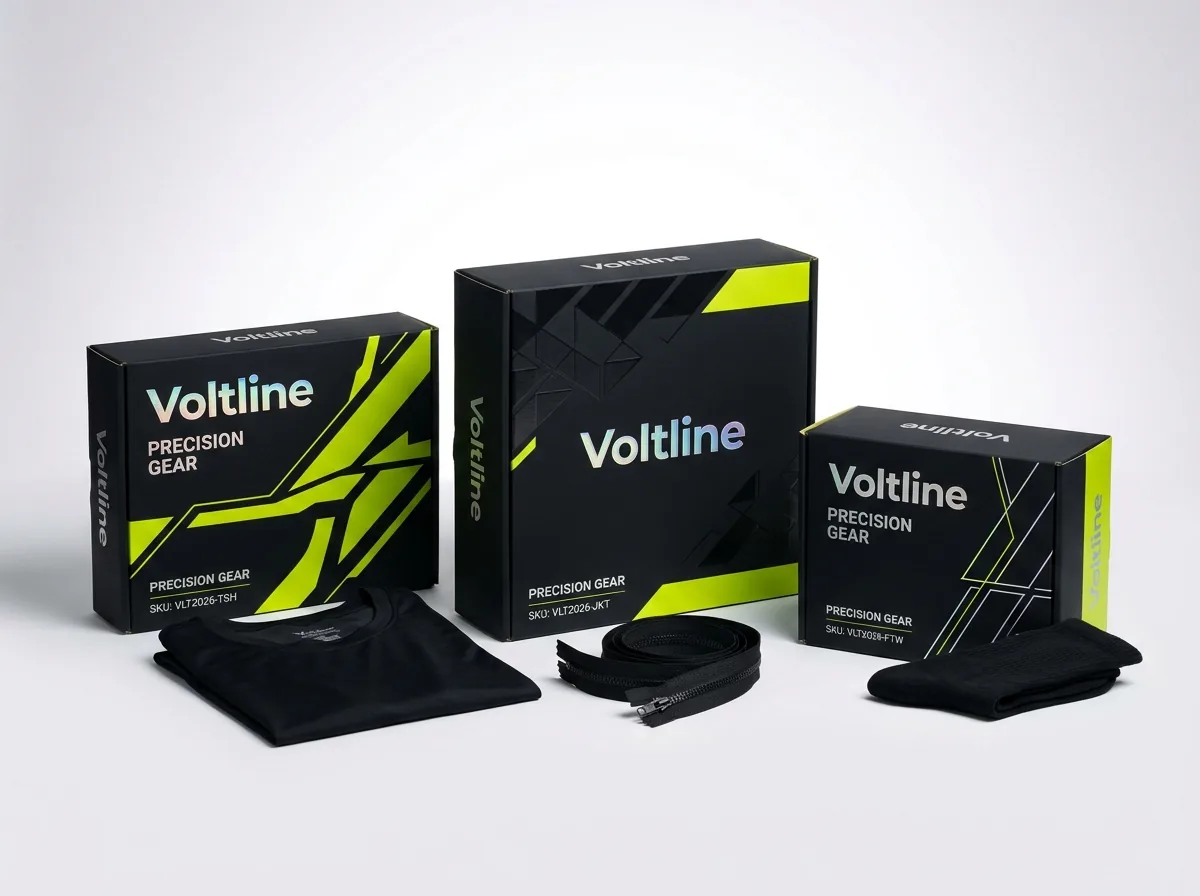
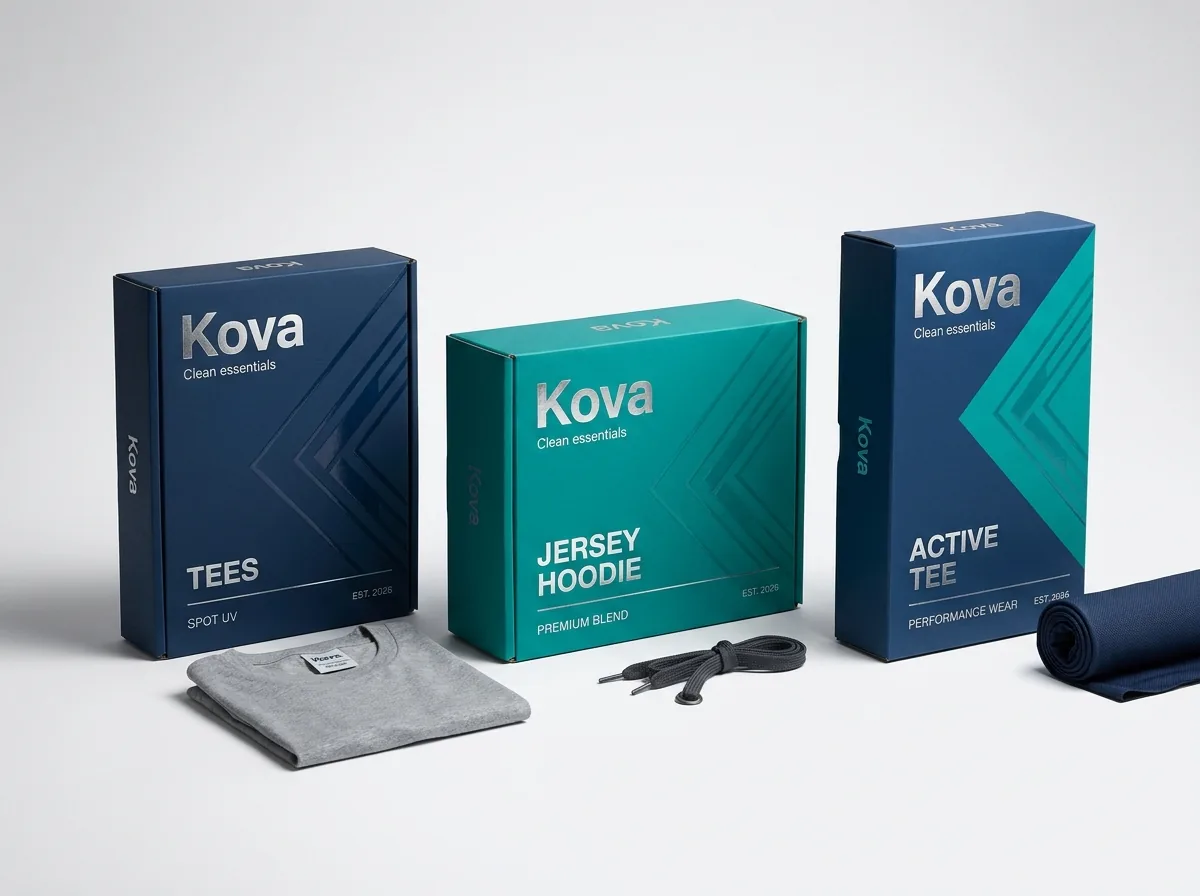
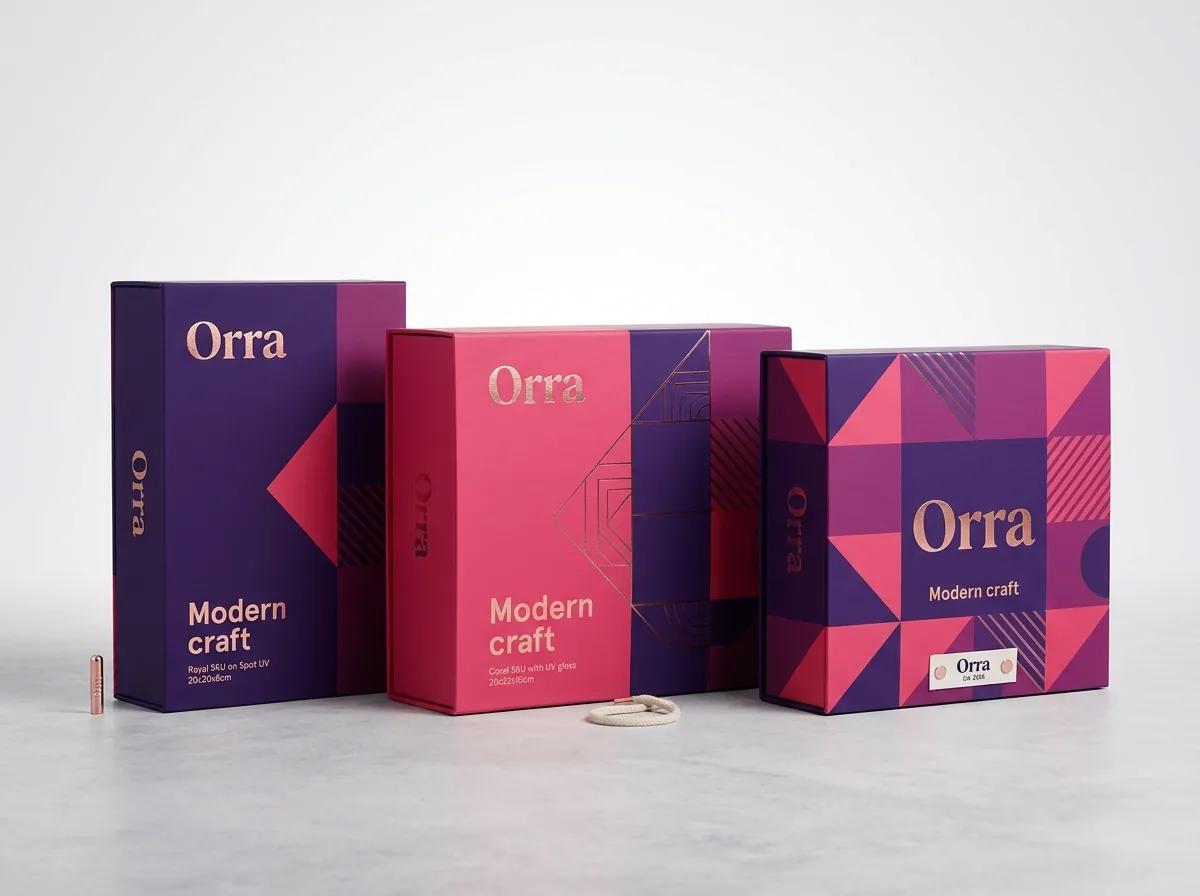
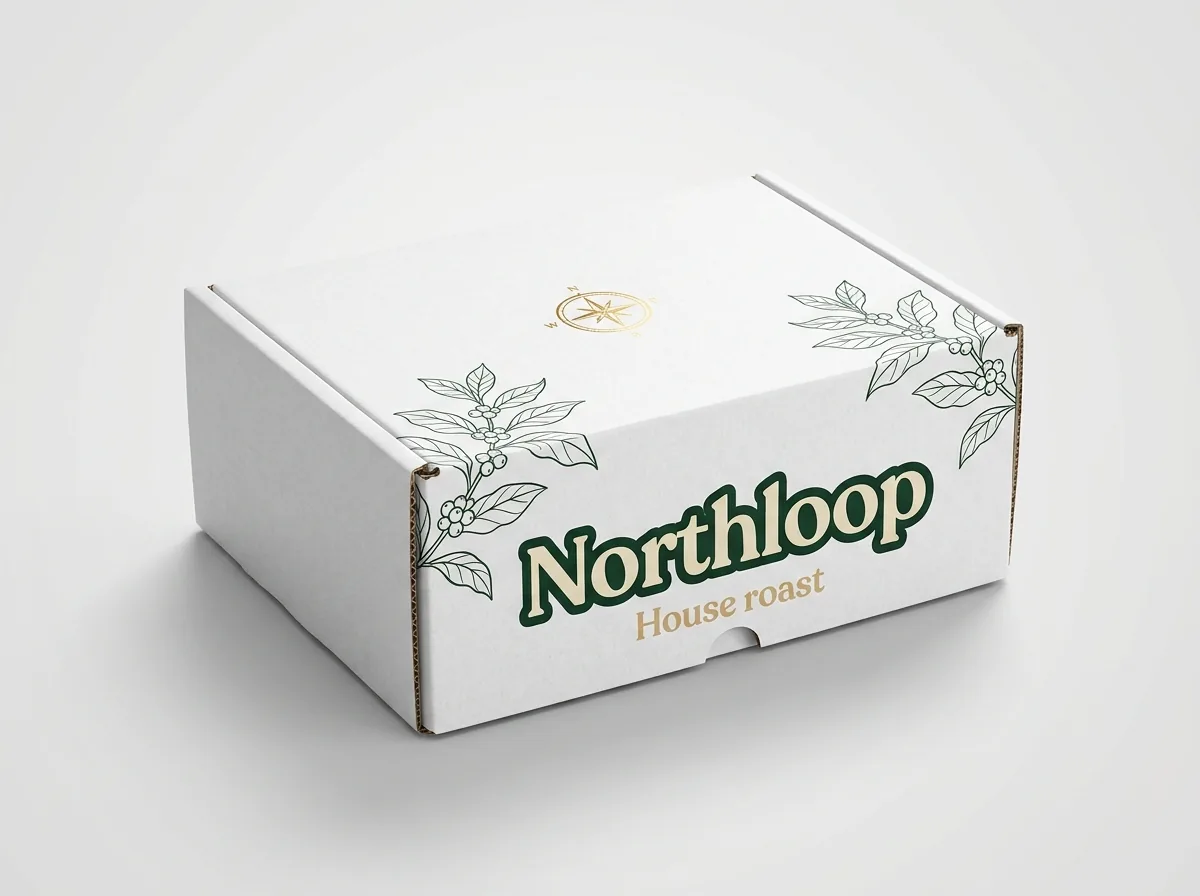
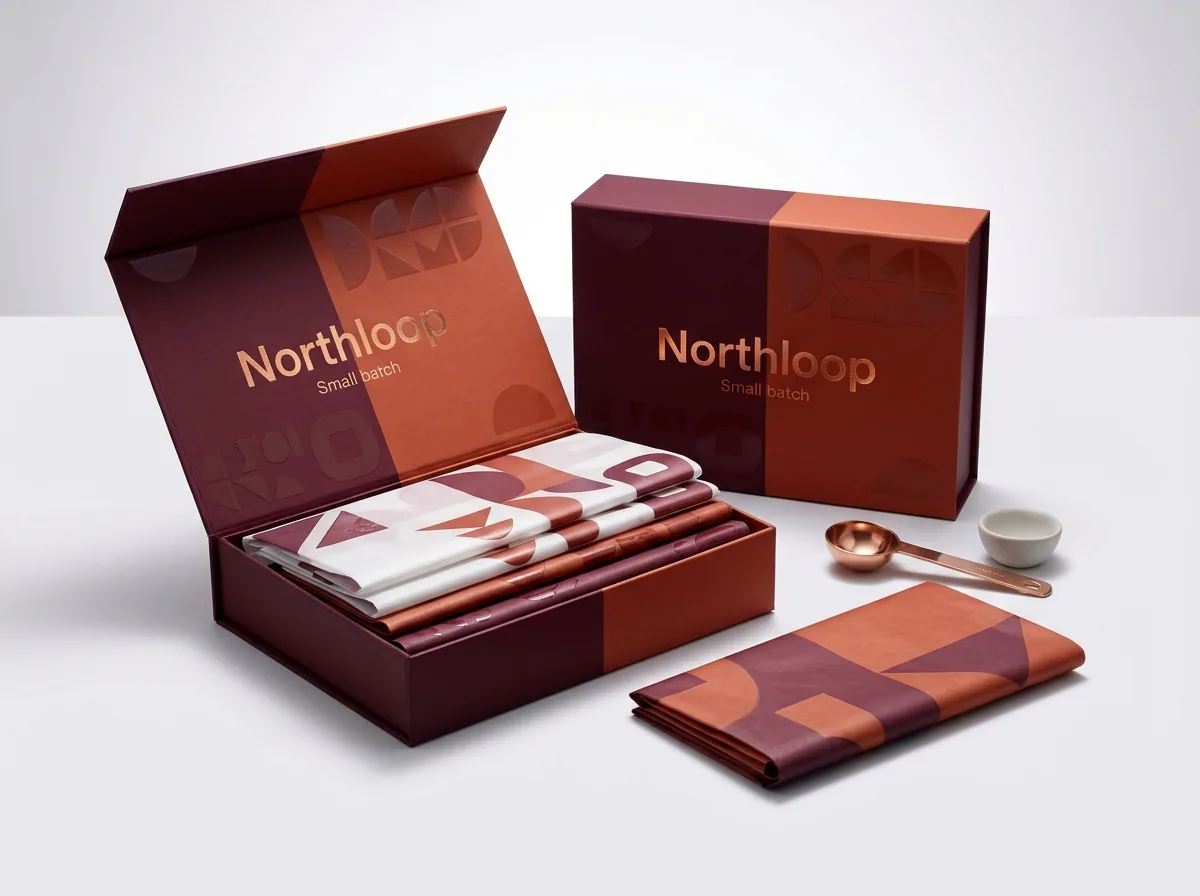
Ready to order apparel boxes? Compare up to 3 quantities with a free 3D mockup.
Request a Quote →Questions about apparel boxes
In what order should I write length, width and height for an apparel box?
Always write inside dimensions as Length × Width × Height in inches. Length is the longest horizontal opening from left to right as you face the front of the box, width is the front-to-back depth from your chest away from you, and height is the vertical depth from base to lid.
Do your apparel box dimensions refer to inside or outside measurements?
Every custom box quote and dieline at CubitPack uses inside dimensions so you know for certain your folded garment will fit. On corrugated roll-end mailers, the outside footprint is roughly ¼ to ½ inch larger than the inside dimension because the side walls fold over twice.
What size folding board should I use for an 11.5 × 8.5 × 2 inch shirt box?
Use an 8 × 11 inch or 8.25 × 11 inch folding board. That leaves ¼ to ½ inch of breathing room on all four sides inside an 11.5 × 8.5 inch box, allowing packers to wrap the shirt in tissue paper and place it flat without pinching the sleeves.
Can I order a custom apparel box size that is not listed in the chart?
Yes. Because CubitPack makes every order to your specification with no die or plate charges, you can request any exact fraction of an inch, such as 12.5 × 9.5 × 2.75 inches, for the exact same price as a standard size.
What is the minimum order quantity if I need two different apparel box sizes?
Corrugated mailer boxes start at 250 units, folding paperboard cartons start at 1,000 units, and rigid boxes start at 50 units. If you need both a shirt box and a hoodie box, select 2 designs in the quote form and list both sizes so we can quote them together.
How can I test my apparel box size before printing the full run?
Every order includes a free 2D dieline proof and 3D mockup before payment. You can also fold your garment onto a sheet of paper cut to your planned length and width, or order a physical prototype or custom printed sample credited toward your order.
Still have a question? Ask a packaging specialist.
Request a Quote →Request your apparel boxes quote
Tell us your size and quantities, and one dedicated account manager prepares pricing for each tier.
- Free design & AI-to-print studio + 3D mockup
- No die or plate charges · 4–5 day rush available
- Free shipping to all 50 states
- 10% off your first order
The garment box dimensions in this guide are based on standard retail folding-board footprints, parcel cubic-foot rules and CubitPack's decided policies in our published product specifications. A CubitPack packaging specialist verified every table row. Spot something wrong? Tell us and we will fix it.
Sources
What changed
- October 22, 2026: First published.
- October 22, 2026: Updated specifications, terminology, and verified source links.
More guides
New packaging guides by email
Sizes, materials and design tips. Unsubscribe anytime.