
How do I design custom apparel boxes for a memorable unboxing?
Short answer: Build your clothing unboxing in three layers: a clean outside lid that survives transit, an inside-lid print with your brand story or care note, and a sheet of custom tissue paper sealed with a sticker over the folded garment. You can apply all three on custom apparel boxes with zero die or plate fees.
On this page
- How does the 3-layer fashion unboxing sequence work
- Which finishes protect dark fashion boxes and white fabrics
- How do I match my box color to hangtags, woven labels and lookbooks
- What drives the price of custom apparel boxes (and how can I save)
- Can I print an AI-generated pattern or illustration on my clothing box
- Common mistakes
- FAQs
Request a custom quoteFree dieline & 3D mockup
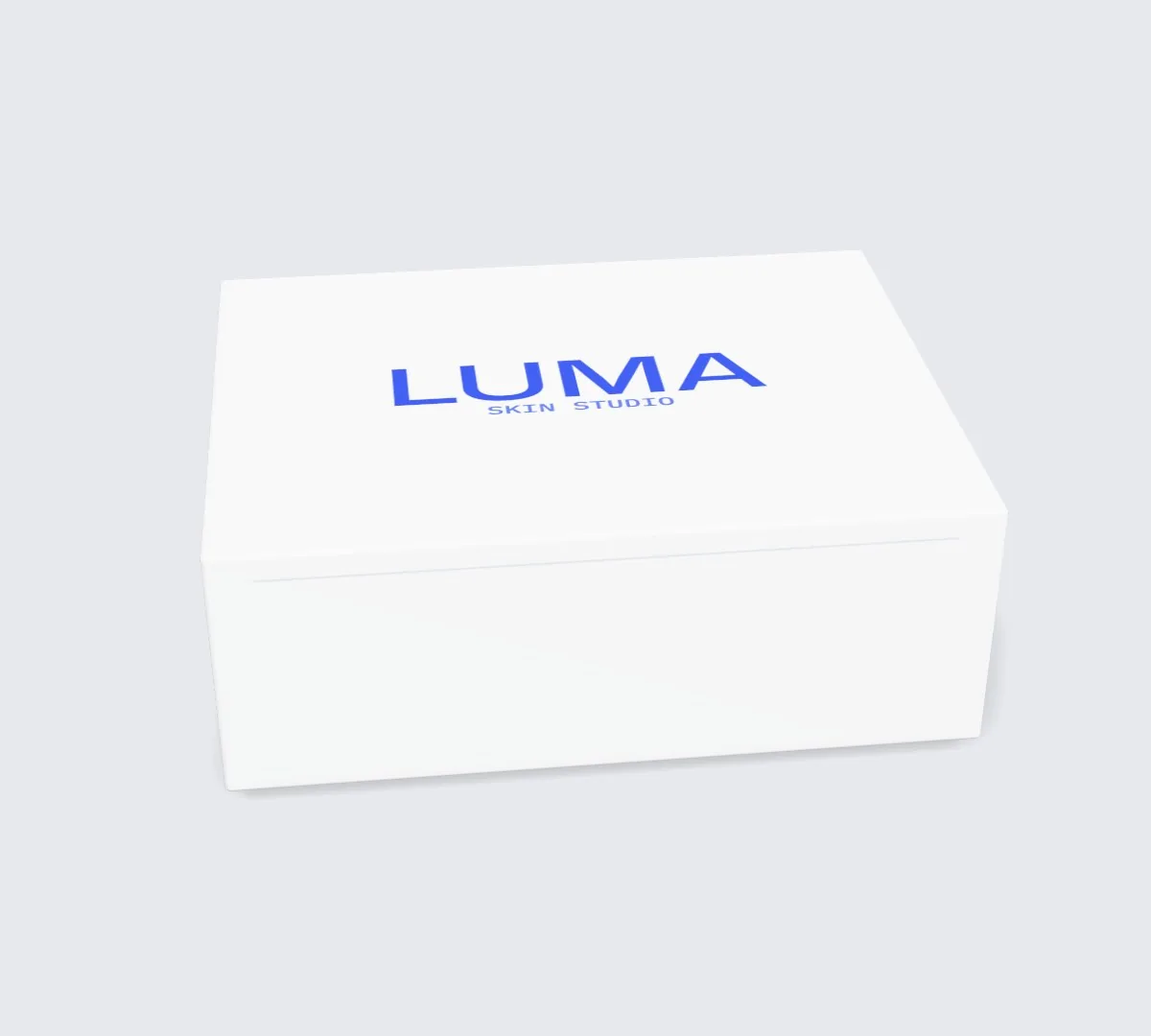
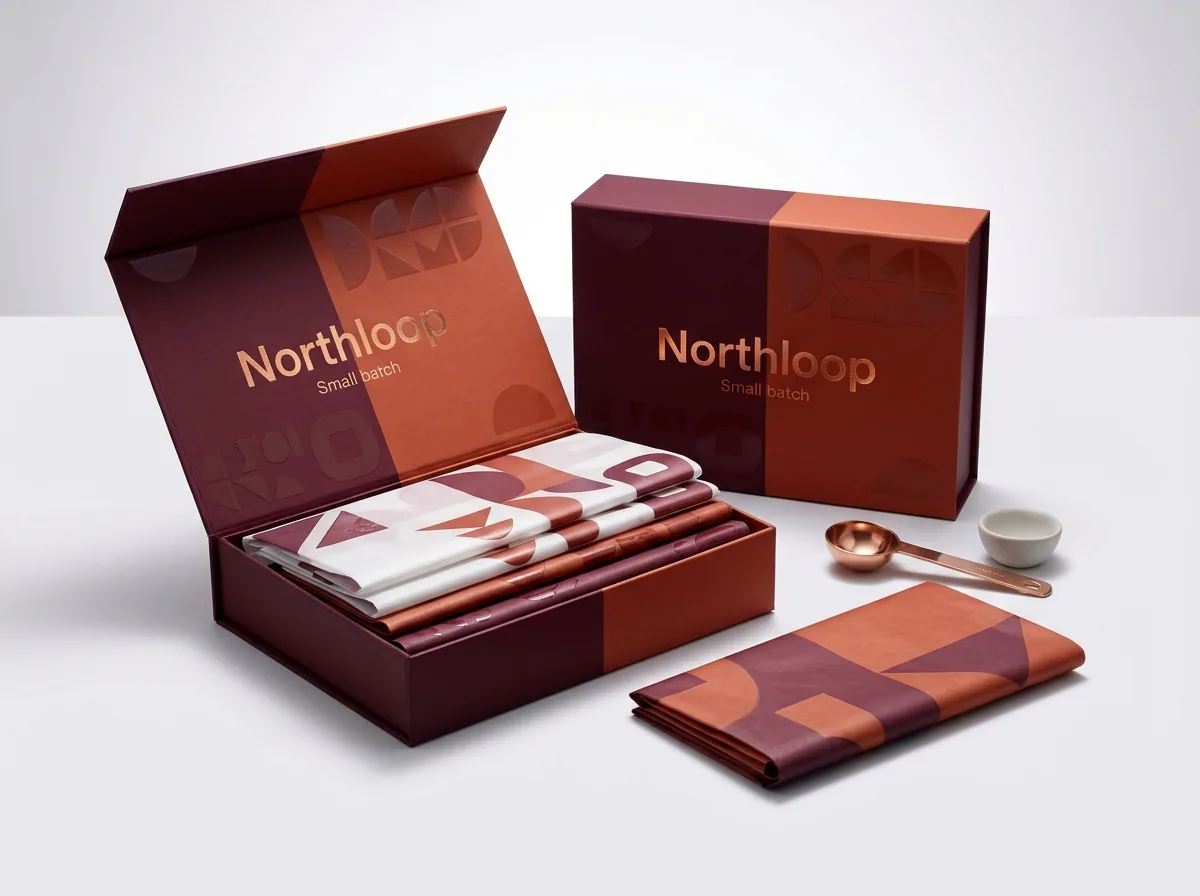
A great fashion unboxing works like a boutique dressing room: it reveals the garment step by step while keeping the fabric clean and uncreased. Instead of crowding every inch of the outside box with loud graphics, most clothing labels place a crisp centered wordmark or monogram on the top lid, then use the inside of the lid for a bold Pantone flood, a lookbook illustration or washing instructions. Beneath the lid, wrapping the folded shirt, dress or sweater in custom printed tissue paper fastened with a logo sticker keeps the garment from unfolding in transit and gives the buyer a second tactile layer to open. When you order through CubitPack, our designers help set up outside and inside dielines, match your Pantone hangtag colors, and convert AI artwork into print-ready files for free, with no die or plate charges and free shipping to all 50 states.
How does the 3-layer fashion unboxing sequence work?
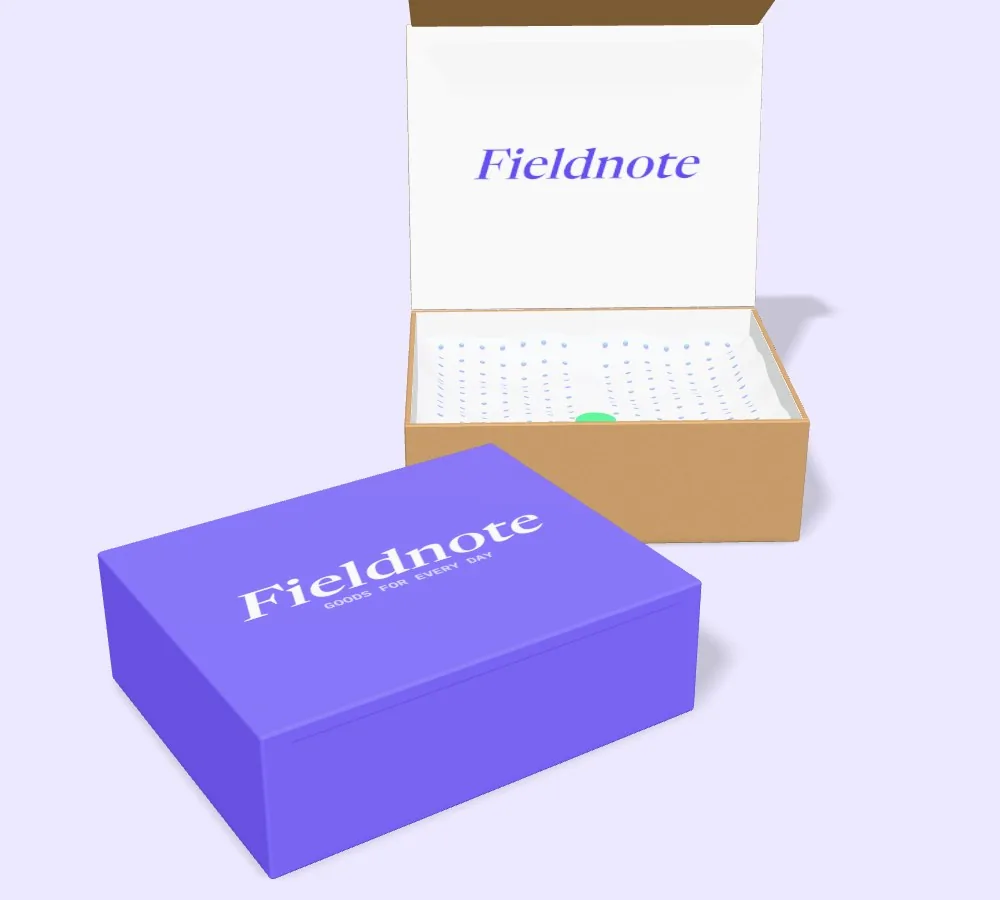
When a shopper opens an online clothing order, their eyes move from the top lid to the underside of the opened flap and straight down to the folded fabric. Designing custom printed apparel boxes around those three distinct sightlines gives even a simple 250-unit corrugated mailer the pacing of a luxury boutique gift. Rather than putting every graphic element on the front cover, spacing your visual story across the outside lid, the inside lid and the tissue wrap creates a deliberate reveal. Layer one is the exterior shell, which sets the tone on the doorstep and protects the parcel through sorting facilities. Layer two is the interior lid panel, which swings upward to frame the clothes like a stage backdrop. Layer three is the inner wrap, typically a sheet of custom tissue paper held closed by a custom seal sticker and topped with a thank-you or styling card.
- Outer shell: keep essential branding centered on the top lid and leave a clean 4 × 6 inch zone on the bottom or side for the carrier shipping label.
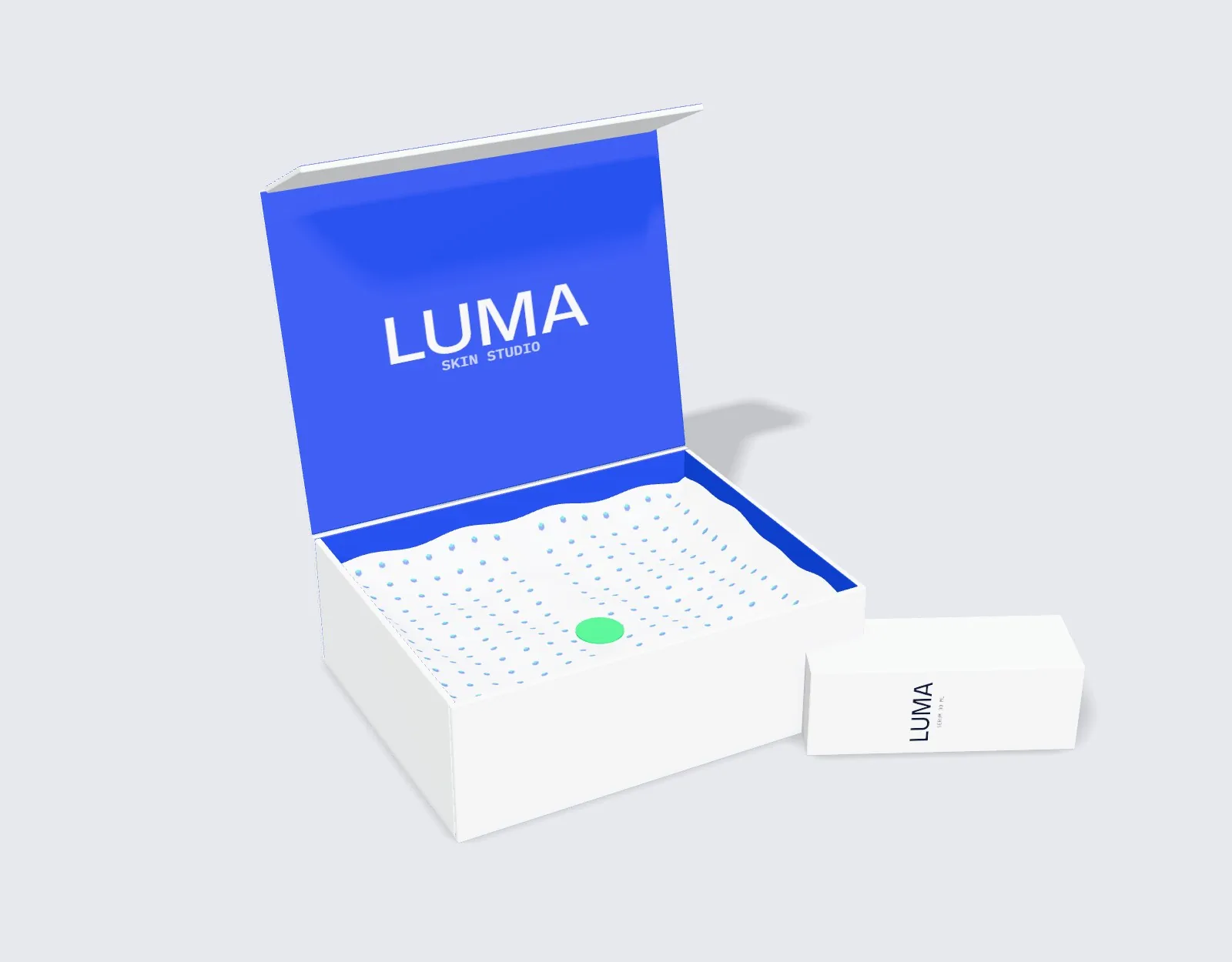
- Inside lid panel: print a short brand manifesto, garment care symbols, a return QR code or a seasonal pattern where the buyer looks first.
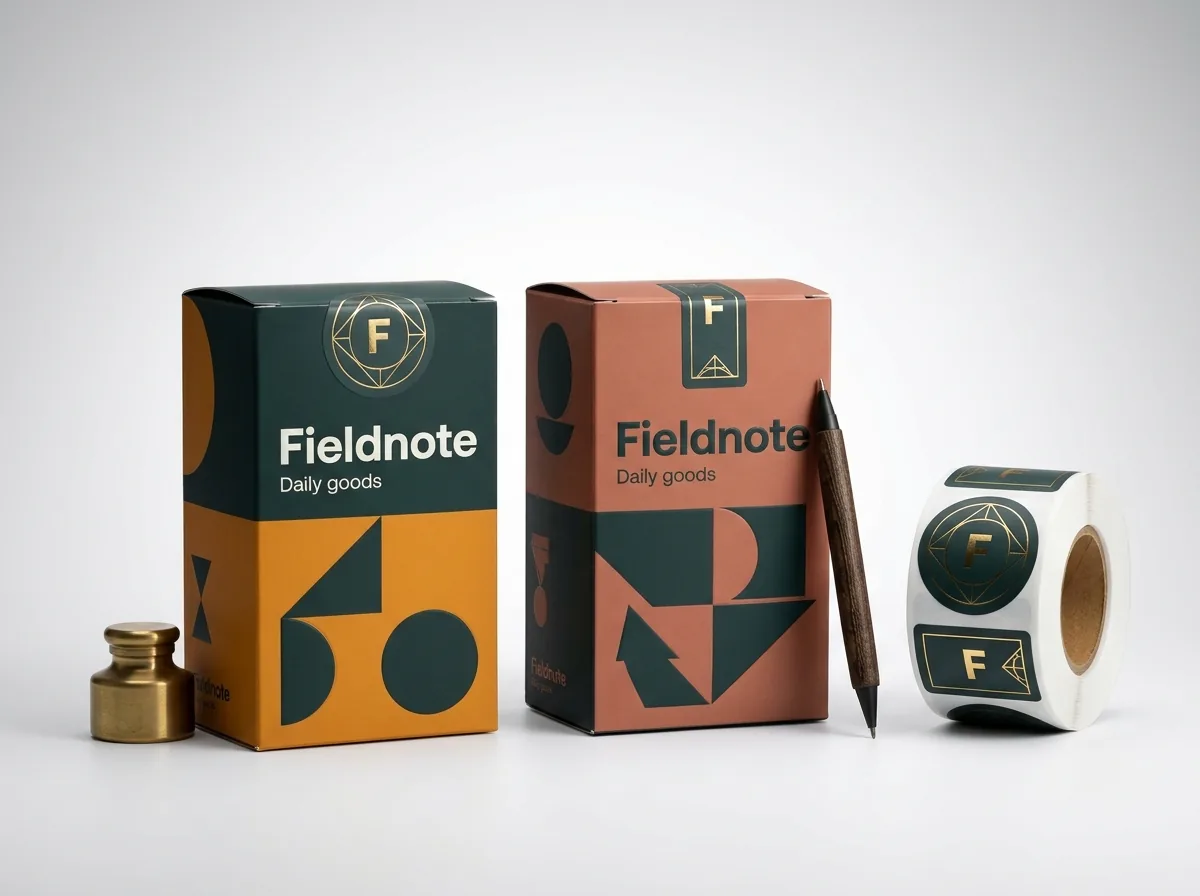
- Inner garment wrap: fold branded tissue paper around the clothing and secure the overlap with a 2 inch round or rectangle logo sticker.
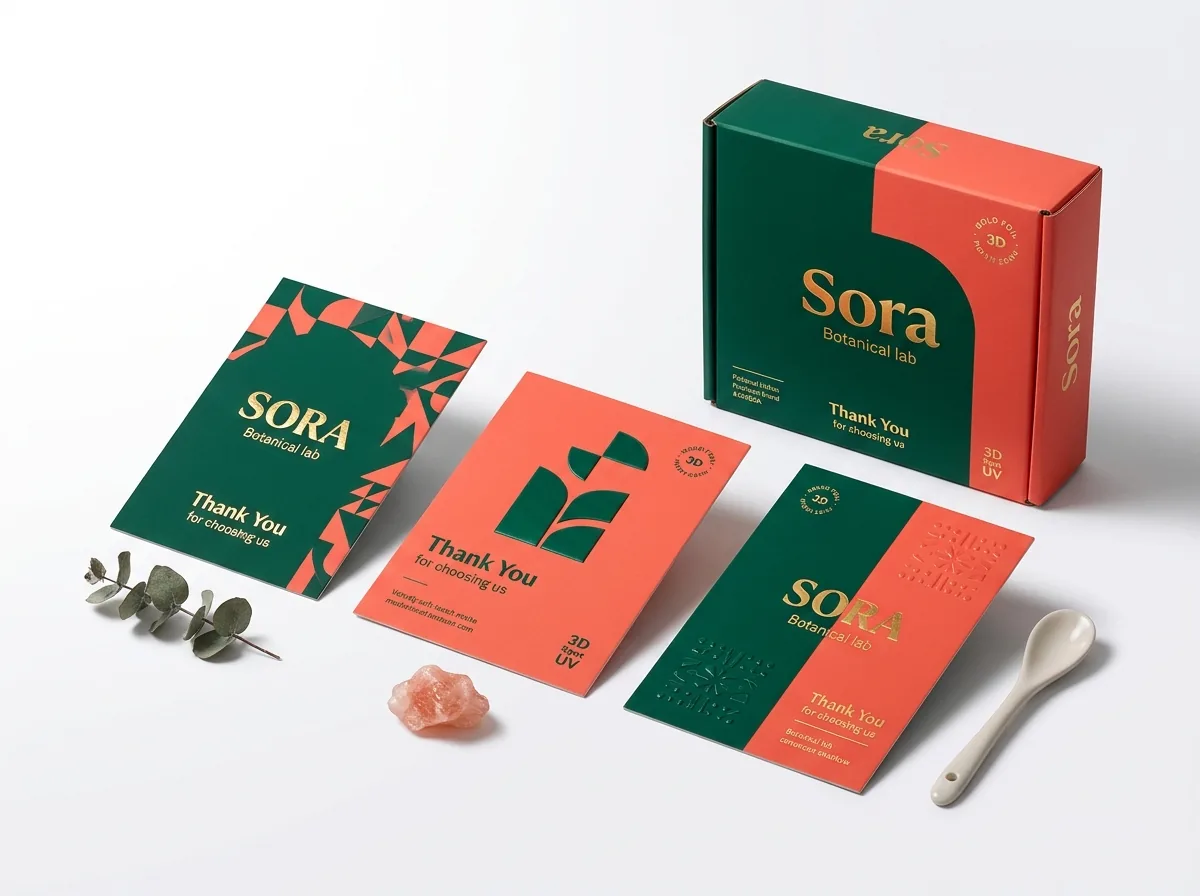
- Insert card: rest a postcard-sized lookbook card or washing guide on top of the tissue seal before closing the box.
Which finishes protect dark fashion boxes and white fabrics?
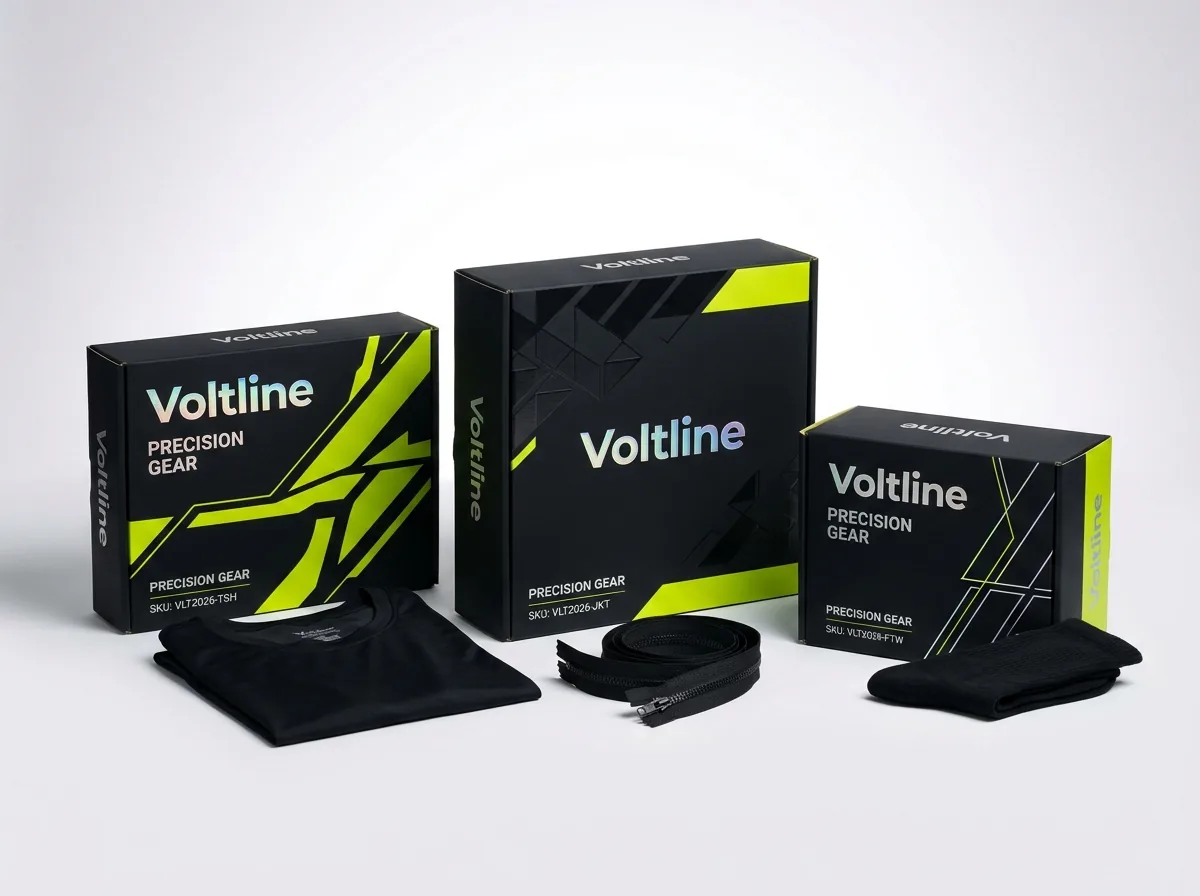
Fashion brands love deep charcoal, jet black, espresso brown, burgundy and midnight navy packaging. However, heavy dark ink coverage on uncoated board faces two hazards: conveyor belts can scuff the outside lid during shipping, and unsealed interior ink can transfer (crock) onto a white cotton tee or cream silk blouse if the garment rubs against the box wall. Pairing your print choice with the right protective lamination or specialty finish solves both problems while matching the texture of your clothing line. Use the table below to choose the right surface treatment for your collection.
| Finish or print option | Visual & tactile feel | Best fashion use & fabric protection |
|---|---|---|
| Matte lamination | Smooth, low-glare satin surface | Stops scuffing and fingerprints on solid black, navy or dark green boxes |
| Soft-touch lamination | Velvety peach-skin texture | Lingerie, cashmere, bridal and boutique boxes where hand feel matters |
| Hot foil stamping | Metallic gold, silver, copper or rose gold shine | House crests and monograms on two-piece and rigid gift boxes |
| Blind embossing / debossing | Raised or pressed relief without ink | Minimalist quiet-luxury labels using textured or kraft boards |
| White ink on natural kraft | Opaque crisp white over unbleached brown fiber | Denim, workwear, surf and organic cotton brands |
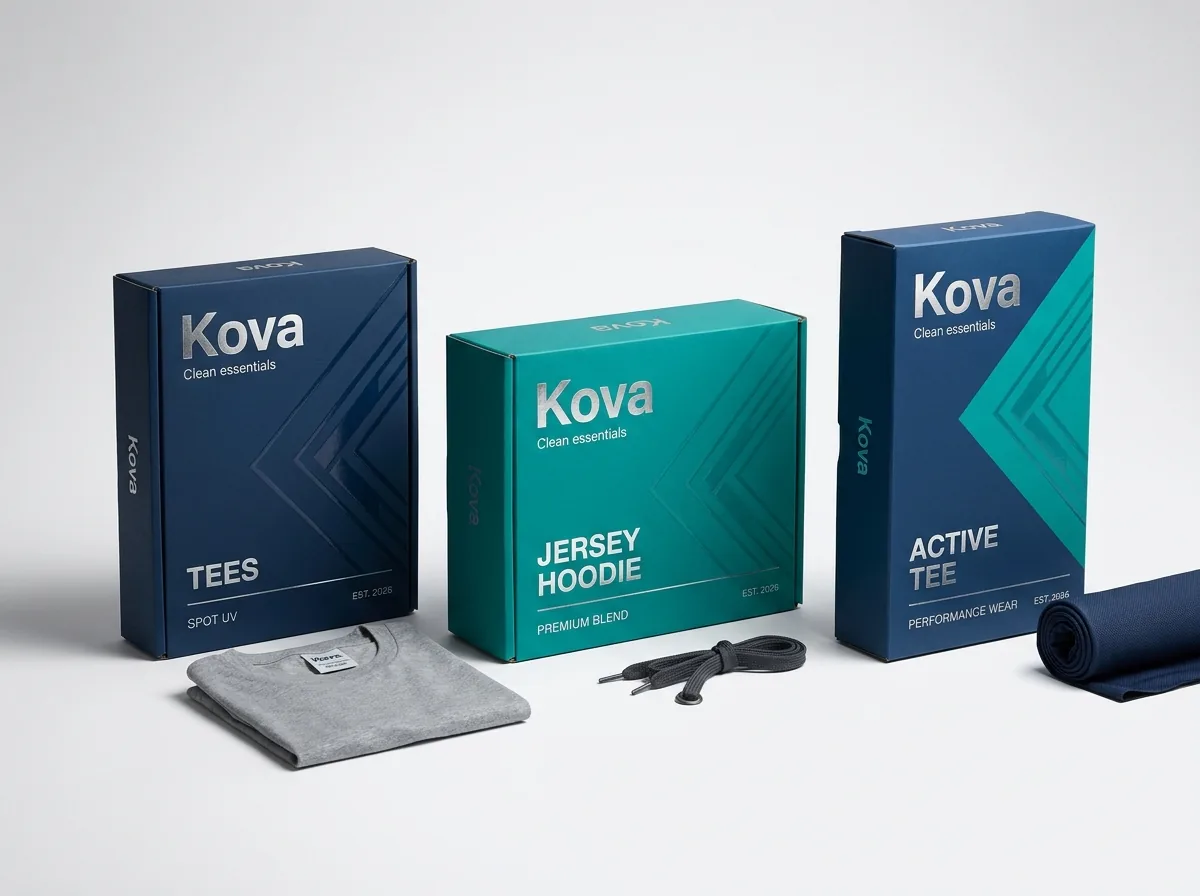
| Spot UV over matte | Glossy tone-on-tone pattern on a flat lid | Monogram repeats and streetwear graphics that catch light |
How do I match my box color to hangtags, woven labels and lookbooks?
Nothing breaks a cohesive fashion presentation faster than a signature sage green or burgundy that looks warm on the garment hangtag, cool on the tissue paper, and muddy on the box lid. Standard four-color process printing (CMYK) blends tiny dots of cyan, magenta, yellow and black on press, which can shift slightly between uncoated kraft, coated white card and corrugated board. When your clothing brand owns a signature color, specify its exact Pantone (PMS) code in the quote form. CubitPack prints true spot Pantone inks and backs every order with a Pantone match guarantee: if a printed Pantone color is clearly off from the approved specification, we reprint at no charge. Use full-color CMYK when your box features editorial photography, multi-color illustrations or gradients.
Know your size? Compare pricing across up to 3 quantities.
Request a Quote →What drives the price of custom apparel boxes (and how can I save)?
Because every clothing box is built to order, four main choices control your unit cost: box structure, flat board area, print sides, and specialty finishes. A shallow 11.5 × 8.5 × 2 inch box uses much less board per unit than a deep 15 × 12 × 5 inch coat box, and a one-color outside print runs faster than two-sided full-color printing with foil and soft-touch lamination. If you are launching a new clothing line or managing tight seasonal margins, you can capture a high-end boutique look without stacking every upgrade onto the box itself. For example, printing a clean one-color logo on the outside of a mailer and wrapping the garment in printed tissue paper inside often costs less than printing full-color graphics on both sides of the board. Plus, CubitPack never charges die or plate fees, gives 10% off your first order, and beats written US competitor quotes for the same specs.
- Standardize horizontal length and width across tees and sweaters so you can pool quantities into higher price breaks.
- Use one-color Pantone printing on natural kraft or white board for a clean minimalist look.
- Order seasonal holiday sleeves or stickers to dress up your year-round white or kraft apparel box.
- Compare three quantity tiers side by side in your free quote to see how fast the unit price drops.
Can I print an AI-generated pattern or illustration on my clothing box?
Yes. Many indie streetwear founders and boutique owners generate toile patterns, botanical illustrations, vintage crests or abstract textures using AI tools, only to discover that raw AI exports are low-resolution RGB files that blur when scaled up to a 14 × 11 inch hoodie box. Traditional print shops often reject those files unless you hire an outside graphic designer to redraw them. With CubitPack's free print your AI design service, you can upload your raw AI image alongside your box dimensions. Our prepress designers upscale and vectorize the artwork, convert colors to CMYK or Pantone, add the required ⅛ inch bleed across every flap crease, and send you a 2D digital proof and interactive 3D mockup to rotate and inspect before you pay. We also check that fine lines, QR codes and garment care icons sit safely inside the fold scores so nothing cracks when the box is assembled.
- Upload your raw AI illustration, sketch or moodboard image in Step 2 of the quote form.
- Our designers rebuild blurred edges into crisp vectors and extend repeating patterns cleanly across the dieline flaps and side walls.
- We convert screen RGB tones into print-ready CMYK or spot Pantone inks matched to your woven garment labels and hangtags.
- You inspect and approve the flat 2D proof and interactive 3D box mockup before paying a cent, with unlimited design revisions before proof approval.
What are the most common apparel box design and prepress mistakes?
A box that looks great on a flat monitor can run into trouble on a folding table or against pale clothing. Watch out for these five pitfalls
- Printing heavy unlaminated black or navy ink inside the box where it can rub directly against white or pastel garments.
- Placing small typography or a crest right across the front score line where the lid folds down into the tuck flap.
- Designing the inside lid artwork upside down relative to how the hinged lid opens toward the customer.
- Forgetting to leave a clear 4 × 6 inch unprinted zone on an e-commerce mailer for the carrier shipping label.
- Approving a screen color without specifying a Pantone code when matching existing garment hangtags or woven neck labels.
Find your size
Suggested inside size: 9 × 6.5 × 2 in
A starting point. Your account manager confirms the size with you before the proof.
Quote this size →Packaging for this
Ready to order apparel boxes? Compare up to 3 quantities with a free 3D mockup.
Request a Quote →Questions about apparel boxes
Does inside printing cost a lot more on custom apparel boxes?
Inside printing adds a second pass on press, so it increases the unit cost slightly compared with outside-only printing. You can ask your account manager to quote your apparel box both ways (outside only vs outside plus inside) so you can compare the exact difference.
How do I orient artwork on the inside lid of a hinged apparel mailer?
When the customer opens a roll-end tuck-front mailer, the hinged top lid swings away from them and stands upright at the back of the box. Our prepress team orients inside-lid text so it reads right-side up when the lid is open, and you verify it on the 3D mockup.
What file format do I need to submit for custom apparel box printing?
Vector files (AI, PDF, EPS or SVG) with outlined fonts and 300 DPI linked images give the sharpest result. If you only have a PNG, JPEG, sketch or AI-generated image, our design team prepares the print-ready dieline for free.
How much bleed and safe margin should I leave on an apparel box dieline?
Extend background colors and patterns ⅛ inch (0.125 in) past the outer cut lines for bleed, and keep logos, text and QR codes at least ⅛ inch to ¼ inch inside all cut lines and fold scores so nothing clips or bends.
Can I combine foil stamping and embossing on the same apparel box lid?
Yes. Registered foil embossing presses metallic foil and raises the lettering in one combined focal point on folding cartons, mailers and rigid apparel boxes. Because CubitPack charges no die or plate fees, adding specialty finishes is straightforward.
Can I order matching custom tissue paper and seal stickers with my apparel boxes?
Yes. CubitPack produces custom printed tissue paper, logo seal stickers and thank-you cards alongside custom apparel boxes so our prepress team can align your Pantone ink colors across the entire unboxing kit.
Still have a question? Ask a packaging specialist.
Request a Quote →Request your apparel boxes quote
Tell us your size and quantities, and one dedicated account manager prepares pricing for each tier.
- Free design & AI-to-print studio + 3D mockup
- No die or plate charges · 4–5 day rush available
- Free shipping to all 50 states
- 10% off your first order
This design guide combines CubitPack's decided printing, finish and guarantee rules from our published product specifications with TAPPI ink rub-resistance practices and prepress dieline standards. A packaging specialist checked every recommendation. Spot something wrong? Tell us and we will fix it.
Sources
What changed
- October 22, 2026: First published.
- October 22, 2026: Updated specifications, terminology, and verified source links.
More guides
New packaging guides by email
Sizes, materials and design tips. Unsubscribe anytime.