
How do I design custom ring boxes, H-slit foam inserts and inside-lid foil?
Short answer: Match your EVA foam slot geometry to your ring shank width: use a 22 mm I-slit for delicate 1.5–2.5 mm bands, an H-slit for 3–5 mm wedding rings, and a relieved slot for 6–10 mm men's bands or signets. Pair custom ring boxes with low-sulfur velvet and 0.4 pt minimum vector foil lines.
On this page
- How do I choose between an I-slit, H-slit, wide-band slot or traditional velvet roll
- How do you prevent sterling silver and gold vermeil rings from tarnishing in the box
- What exterior wraps and inside-lid foil finishes photograph best in macro shots
- How do I set up vector artwork for a tiny 2 × 2 in ring box dieline
- How should I test my ring samples in the foam slot before full production
- Common mistakes
- FAQs
Request a custom quoteFree dieline & 3D mockup
Engineering a custom ring box comes down to three details that buyers touch and photograph within five seconds of opening the lid: how firmly the velvet EVA foam slot grips the ring shank, how crisp the metallic foil logo looks inside the 2 × 2 inch top lid pillow, and whether the interior fabrics and adhesives keep sterling silver or gold vermeil bright over months of storage. A generic stock ring box uses one narrow knife slit that either lets a thin 1.5 mm pavé band tip sideways or forces an 8 mm men's band to pop right out of the foam. By specifying the exact die-cut slot geometry, low-sulfur anti-tarnish interior linings and vector foil line weights on your dieline, your ring stays upright from fulfillment table to proposal moment. At CubitPack, we include custom EVA foam die-cuts and free pre-press artwork checks from 50 rigid boxes.
How do I choose between an I-slit, H-slit, wide-band slot or traditional velvet roll?
When you order custom printed ring boxes, the interior holder is almost always precision die-cut from high-density 38 to 45 kg/m³ closed-cell EVA foam laminated with plush velvet, microsuede or faux leatherette, or built from twin parallel foam cylinders wrapped in velvet (traditional ring rolls). If you choose a die-cut EVA foam pad, the shape of the steel-rule knife cut determines how your ring sits. A straight single knife cut works only for thin women's bands; wider wedding bands, heavy signets and double bridal sets require perpendicular relief cuts or narrow rectangular notches so the foam compresses evenly without bowing the pad upward.
| Insert slot style | Best ring band width & style | Die-cut geometry & grip behavior |
|---|---|---|
| Single knife slit (I-slit) | 1.5 mm to 2.5 mm petite solitaire & pavé bands | 20–22 mm straight knife cut; tight elastic grip on thin shanks |
| Universal H-slit | 2.5 mm to 5 mm solitaire, halo & classic wedding bands | 24 mm center slit with 5 mm end relief cuts so foam hinges inward |
| Relieved wide-band notch | 6 mm to 10 mm men's bands, cigar bands & chunky signets | 26–28 mm × 2.5 mm open rectangular slot that prevents upward ejection |
| Dual parallel H-slits | Bridal engagement + wedding band sets or ceremony pairs | Two H-slits spaced 10–12 mm apart (side-by-side or front-to-back) |
| 45-degree angled clip slot | 1.25 in shallow drawer boxes & 0.75 in slim pocket cases | Beveled knife cut that tilts the ring back so high prongs clear the lid |
| Twin velvet ring rolls | Boutique showroom displays & mixed-width ring collections | Two plush velvet-wrapped foam cylinders that flex to any band thickness |
How do you prevent sterling silver and gold vermeil rings from tarnishing in the box?
Solid 14k or 18k yellow gold and platinum rings are chemically inert, so they can sit in almost any packaging material without discoloring. However, 925 sterling silver, 14k gold vermeil over sterling silver, brass and plated demi-fine rings react quickly with trace sulfur compounds, chlorine bleaches and acidic animal-hide glues found in unbleached kraft board or low-grade adhesives. If a sterling silver ring sits inside a sealed rigid box made with high-sulfur paperboard or pungent solvent glue during humid summer transit, it can develop a dull yellow or brown sulfide haze before the customer ever opens the parcel. Specify neutral-pH exterior papers, water-based neutral adhesives and low-sulfur flocked velvet or microsuede interior linings whenever you package silver or vermeil rings.
- Specify low-sulfur velvet or microsuede: ask for synthetic microfiber suede or low-sulfur flocked velvet on the EVA foam face and inner lid pillow.
- Use neutral-pH water-based laminating glue: prevents acidic off-gassing inside the closed 2 × 2 inch micro-environment.
- Add a discreet anti-tarnish tab: tuck a 1 × 1 inch activated carbon or intercept anti-tarnish paper tab underneath the removable foam pad.
- Avoid raw unbleached rubber bands: never loop sulfur-vulcanized rubber bands around ring boxes in warehouse storage.
What exterior wraps and inside-lid foil finishes photograph best in macro shots?
Engagement and wedding ring boxes appear in more close-up macro photographs than almost any other consumer package on earth: wedding photographers shoot the ring resting inside the open box for flat-lay bridal albums, and buyers film close-up proposal reveals on smartphones. Under a macro camera lens, glossy lamination reflects harsh white hot-spots and shows every thumbprint. Instead, luxury ring brands pair matte non-reflective outer wraps (soft-touch matte laminated art paper, woven bookbinding linen, textured faux leatherette or plush velvet) with a metallic hot-foil logo stamped either on the top exterior lid or centered on the satin pillow inside the top lid. Adding blind debossing on woven linen or leatherette creates a tactile recessed emblem on the outside lid while letting the metallic gold, silver or rose gold foil inside the lid catch the light right above the stone.
Know your size? Compare pricing across up to 3 quantities.
Request a Quote →How do I set up vector artwork for a tiny 2 × 2 in ring box dieline?
Designing artwork for a 2 × 2 × 1.75 inch ring box requires tighter typographic discipline than designing an 8 × 6 inch mailer box. When your entire lid face is only 2 inches square, a logo scaled down to 1 inch wide can turn delicate serif hairlines or tiny taglines into unreadable specks. Even more importantly, hot foil stamping onto woven linen, pebbled leatherette or a cushioned satin inside-lid pillow requires slightly heavier vector strokes and wider letter tracking than printing ink on smooth paper. Follow the pre-press rules below so your brass foil die stamps razor-sharp edges without bridging or filling in.
- 100% vector foil layer: supply your logo as outlined vector paths (AI, PDF or EPS) on a dedicated spot-color layer named FOIL.
- Minimum foil stroke weight: keep positive metallic foil lines at 0.4 pt (0.14 mm) or thicker on smooth matte paper, and 0.6 pt (0.21 mm) on textured linen, leatherette or satin pillows.
- Generous letter tracking: add +20 to +40 tracking on small uppercase wordmarks under 7 pt so metallic foil never bridges between letters like M, N and E.
- Bleed and wrap-around turn-in: extend background colors 0.125 in (3 mm) past cut lines, and allow 0.5 in (12 mm) of wrap-around turn-in margin on rigid chipboard (gray board) wraps.
How should I test my ring samples in the foam slot before full production?
Before running 50 to 5,000 custom ring boxes, always test three physical ring samples across your size and style spectrum: your thinnest petite band (such as a 1.5 mm size 5 pavé ring), your tallest solitaire setting (such as a size 7 high-cathedral diamond ring), and your widest band (such as a 7 mm size 10 wedding band or signet ring). Insert each ring into the EVA foam slot, close the lid completely, and give the closed box a firm five-second shake test. Open the lid and inspect three things: did the ring stay upright at its intended angle, did the highest prong leave any indentation on the inside-lid satin pillow, and did the wide band bow the foam pad upward? Our design team adjust the steel-rule slit length and foam thickness until all three pass.
- Vertical shake test: confirm thin bands do not tilt sideways and heavy signets do not pop out of the H-slit.
- Lipstick or chalk prong check: dab a tiny dot of chalk on the top solitaire prong, close the lid, and verify zero transfer onto the inside lid.
- Ribbon pull tension check: on slide-out drawer boxes, verify the grosgrain ribbon tab glides smoothly without catching on the outer sleeve.
- Start at 50 rigid units: order a single 50-box run or split across two foam slot variations with zero die charges.
What are the most common custom ring box design and insert mistakes?
Small pre-press or foam-cut oversights show up immediately when a customer films an unboxing or a wedding photographer shoots a macro flat-lay. Avoid these five mistakes
- Using a narrow 20 mm straight I-slit for a 7 mm wide men's wedding band or signet ring, which compresses the foam and pushes the ring out of the slot.
- Stamping ultra-fine 0.15 pt hairline serifs or tiny 4 pt text in metallic foil onto textured linen or satin pillows, causing letters to fill in.
- Packing 925 sterling silver or gold vermeil rings inside high-sulfur kraft board or solvent-glued boxes without anti-tarnish protection.
- Choosing high-gloss film lamination on a dark ring box, which reflects harsh camera flashes and captures fingerprints during unboxing.
- Placing the inside-lid foil logo too low on the lid pillow so it hides behind the upright diamond setting when the box is open.
Find your size
Suggested inside size: 1.75 × 1.75 × 1.5 in
A starting point. Your account manager confirms the size with you before the proof.
Quote this size →Packaging for this
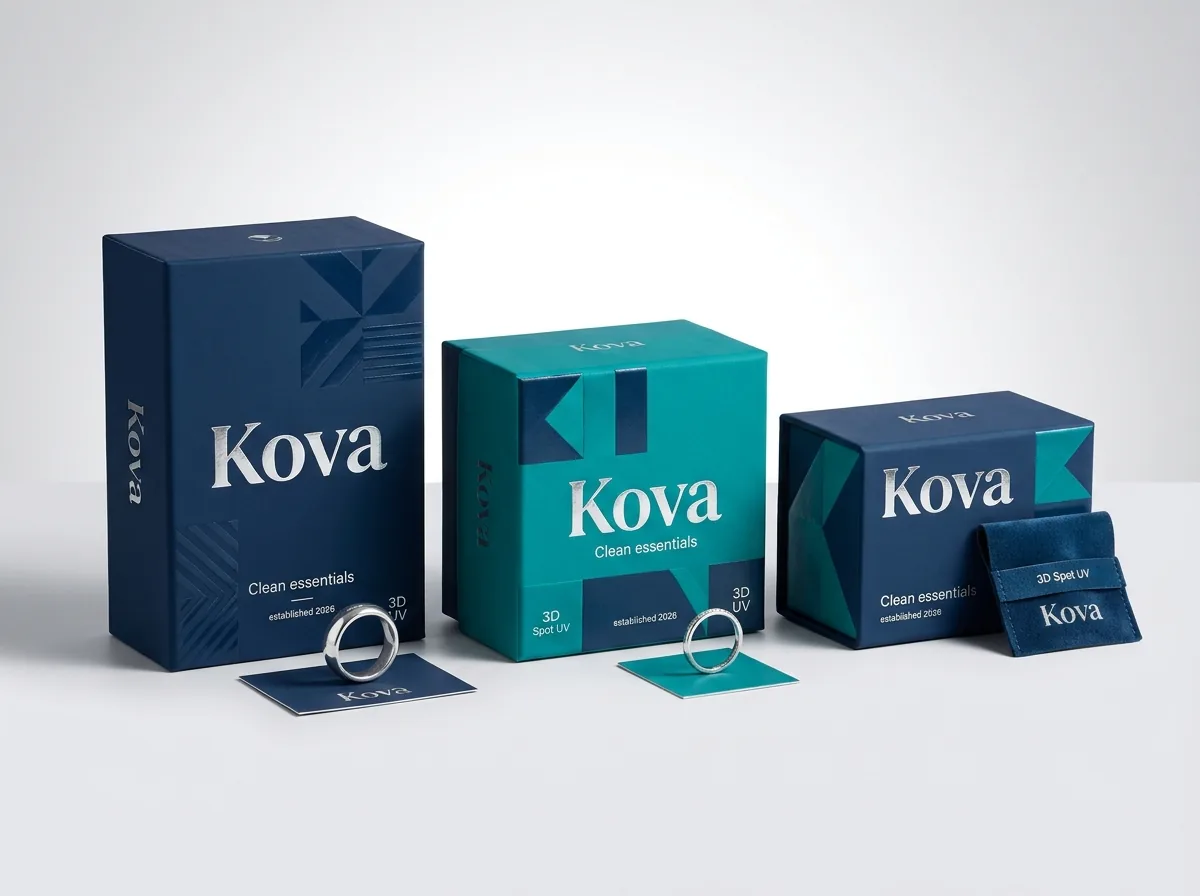
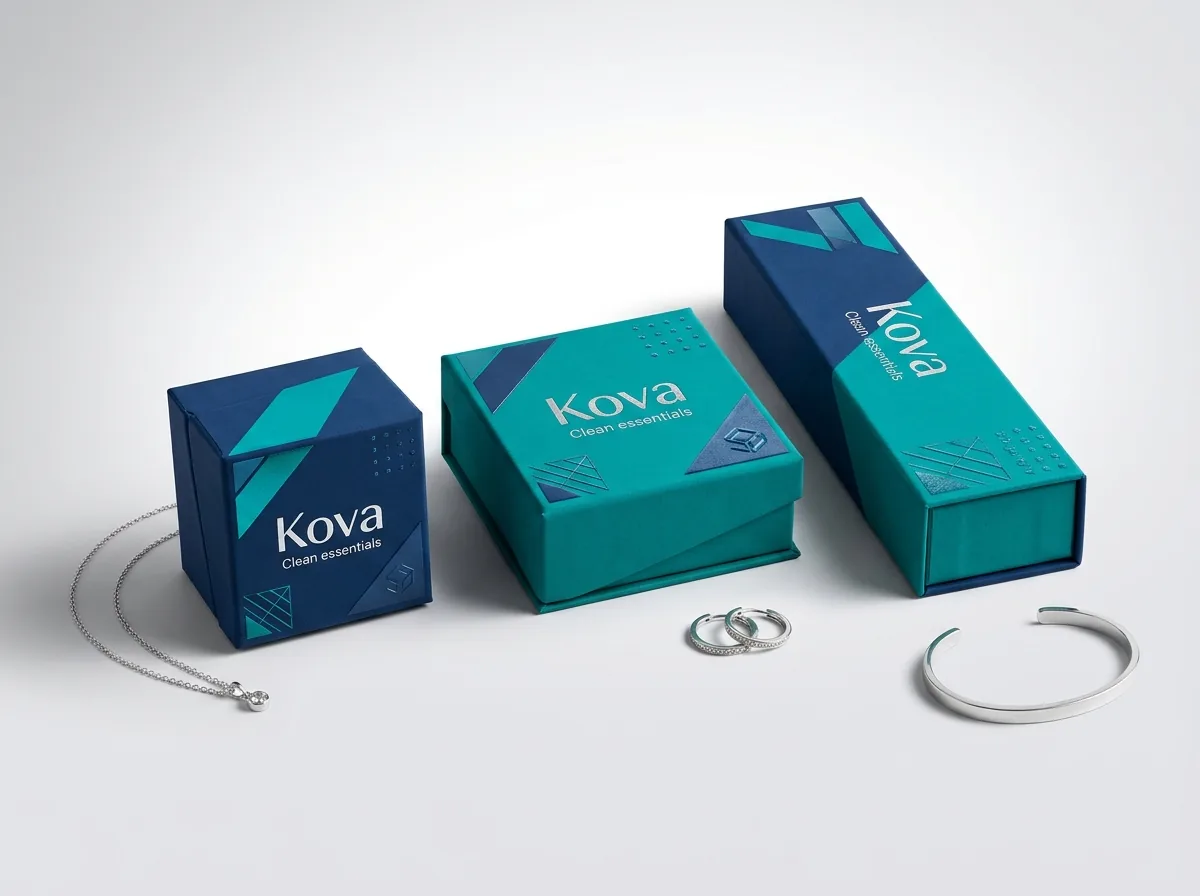
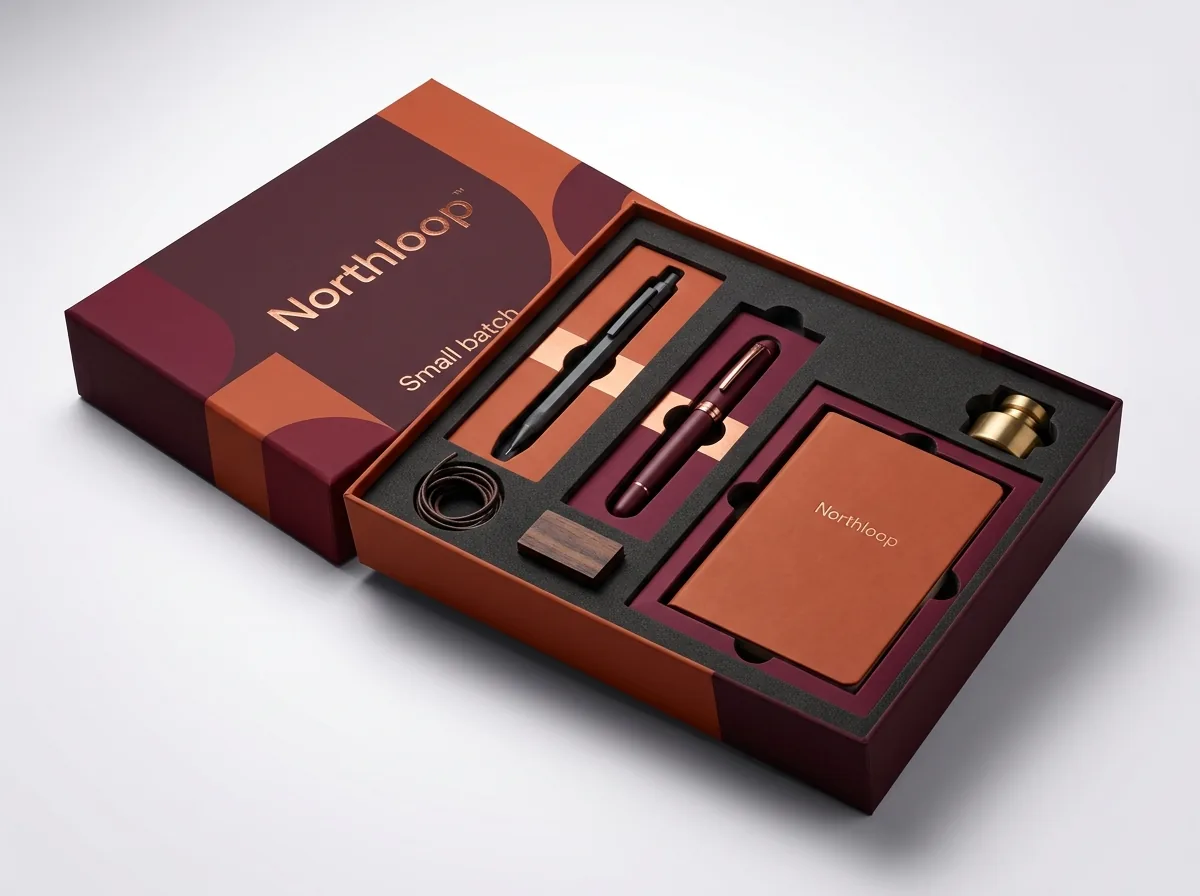
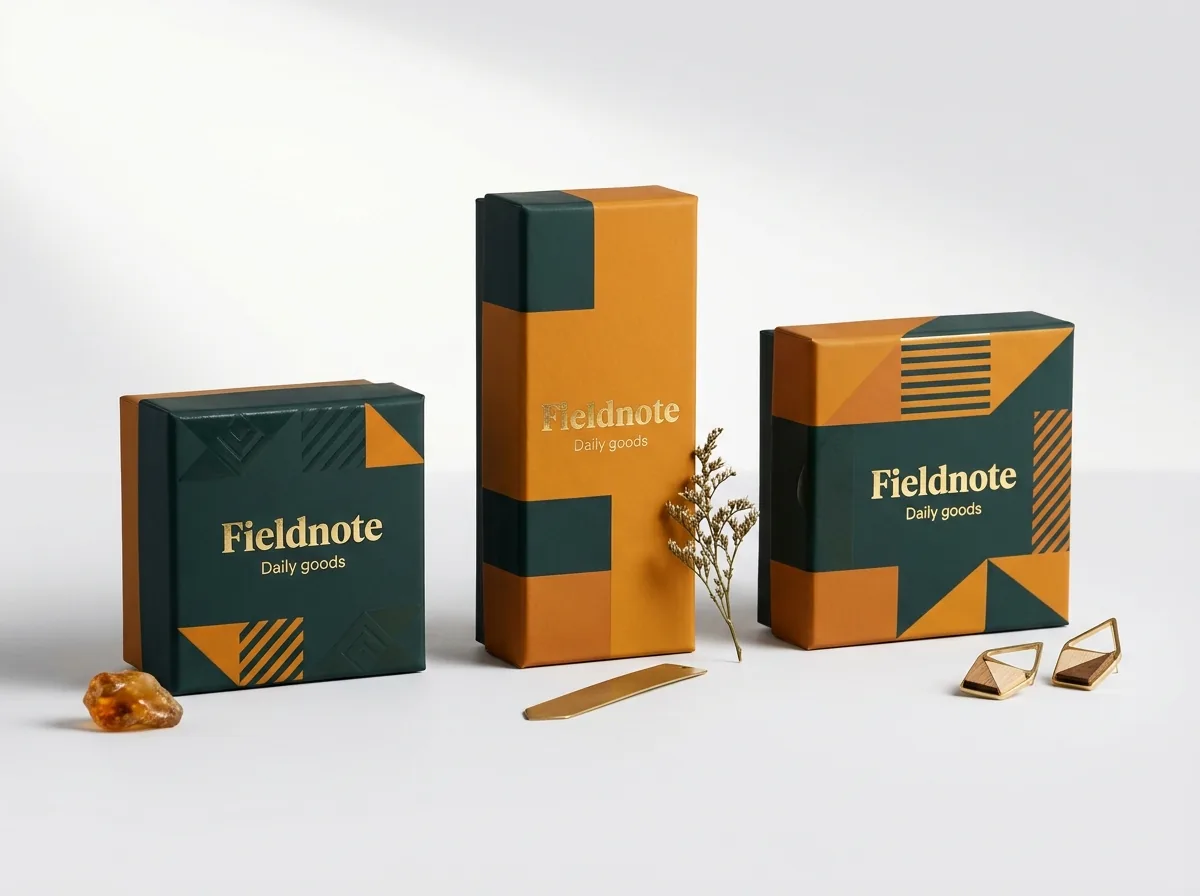
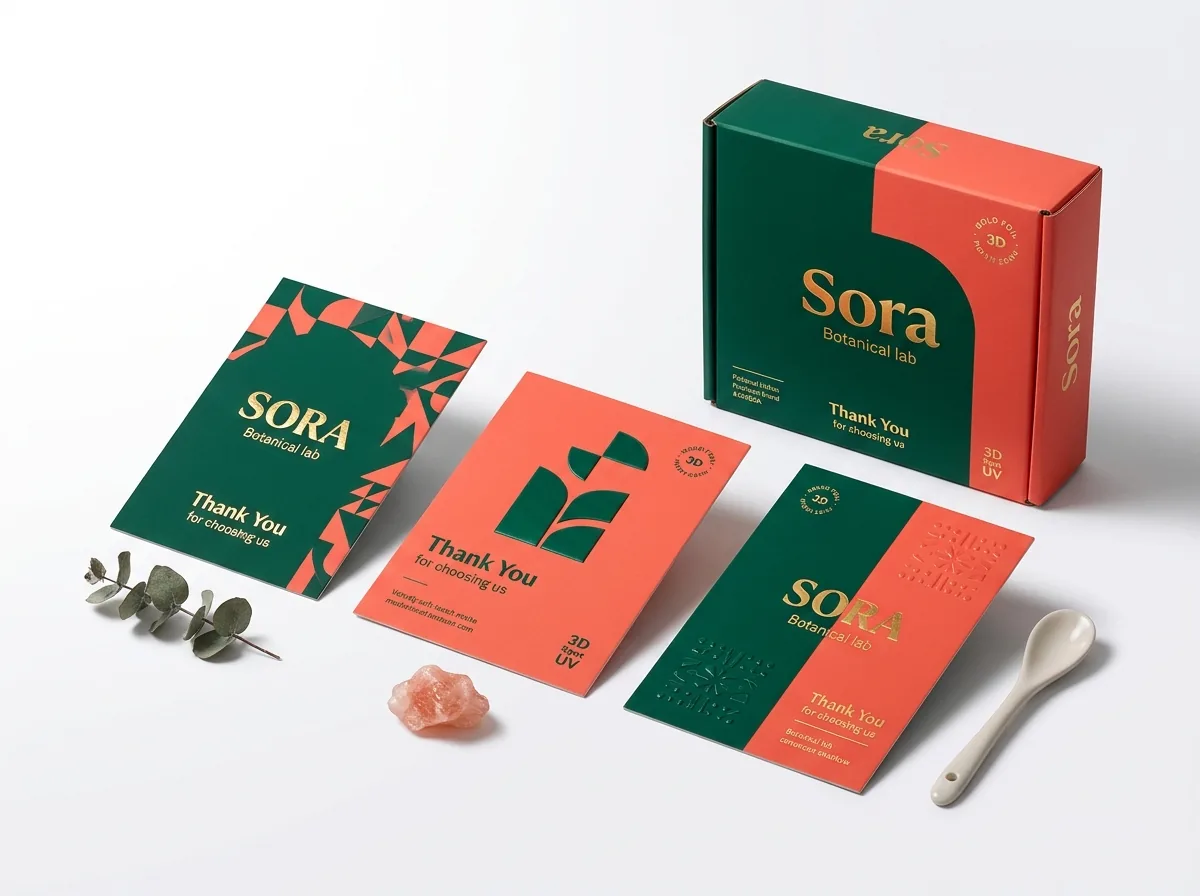
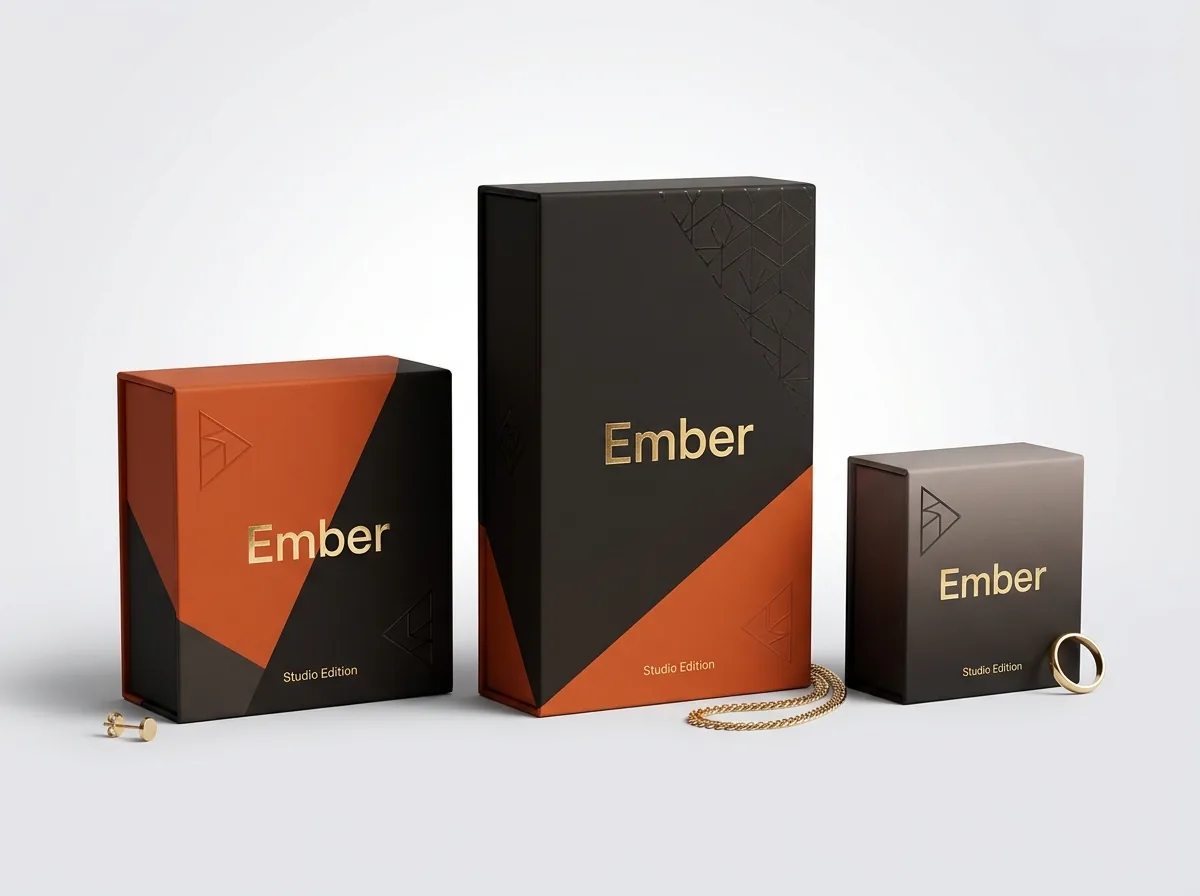
Ready to order ring boxes? Compare up to 3 quantities with a free 3D mockup.
Request a Quote →Questions about ring boxes
What is the best foam slot cut for an engagement ring box?
A 24 mm universal H-slit (a center horizontal knife cut with short 5 mm vertical relief cuts at both ends) is the most versatile choice. It grips delicate 1.8 mm solitaire bands securely while flexing open for 4 mm wedding bands.
How do you keep a wide men's wedding band or signet ring from popping out of the foam?
Wide bands between 6 mm and 10 mm displace too much foam in a single knife slit. Instead, we die-cut a 26 × 2.5 mm relieved rectangular notch or use twin velvet ring rolls so the wide shank sits deep without upward spring pressure.
What makes a custom ring box anti-tarnish for sterling silver?
Anti-tarnish ring packaging combines low-sulfur microfiber suede or velvet linings, neutral-pH water-based laminating adhesives and an optional activated-carbon anti-tarnish tab tucked beneath the EVA foam pad to absorb ambient sulfides.
Can I print or foil stamp my logo on the inside lid of a ring box?
Yes. Hot foil stamping your logo in metallic gold, rose gold or silver onto the satin or velvet inside-lid pillow is the signature branding placement for engagement ring boxes because it frames the ring in every open-box photo.
What file format do I need for custom ring box foil stamping?
Supply a vector PDF, AI or EPS file with all fonts converted to outlines and your metallic foil artwork on a separate 100% K spot-color layer. Keep positive foil lines at least 0.4 pt thick (0.6 pt on textured linen or satin). No vector file yet? Our team can help.
Do you charge extra die fees for custom EVA foam ring slots?
No. CubitPack charges zero die or plate fees on custom ring boxes and their die-cut EVA foam inserts, starting from 50 rigid boxes per order.
Still have a question? Ask a packaging specialist.
Request a Quote →Request your ring boxes quote
Tell us your size and quantities, and one dedicated account manager prepares pricing for each tier.
- Free design & AI-to-print studio + 3D mockup
- No die or plate charges · 4–5 day rush available
- Free shipping to all 50 states
- 10% off your first order
The slot dimensions, EVA foam density specs, anti-tarnish guidelines and foil stroke tolerances in this guide come from structural packaging standards, precious-metal storage best practices and CubitPack's decided policies in our published product specifications. A CubitPack packaging specialist verified every row. Spot something wrong? Tell us and we will fix it.
Sources
What changed
- October 22, 2026: First published.
- October 22, 2026: Updated specifications, terminology, and verified source links.
More guides
New packaging guides by email
Sizes, materials and design tips. Unsubscribe anytime.