
Front wrap vs separate back ingredient labels: which setup fits your line?
Short answer: Choose a single full-wrap label for straight-sided round jars and bottles with fixed recipes applied in one rotary pass. Choose a separate back or bottom custom ingredient label for stand-up pouches, tapered jars, luxury skincare bases, or multi-SKU lines sharing universal front packaging from 500 pieces.
On this page
- How do single full-wrap labels and separate back ingredient labels compare
- When does a universal front package plus a back ingredient sticker save money
- Which finish and stock work best for separate back and bottom ingredient panels
- Should I order separate ingredient labels on rolls or flat kiss-cut sheets
- When is a single full-wrap label still the better choice
- Common mistakes
- FAQs
Request a custom quoteFree dieline & 3D mockup
Choosing between a single full-wrap label and a separate back or bottom ingredient sticker comes down to container geometry, SKU count, and how often your recipes or allergen lines change. A single full-wrap band combines your front brand artwork and your side information panel onto one continuous strip, making it fast to apply on straight-walled round bottles and jars when your formula stays fixed. A separate back or bottom ingredient sticker splits the package into two functional components: a high-impact front brand container (or universal pre-printed pouch/box) paired with a high-contrast matte white back rectangle or bottom circle for each SKU. That two-part setup works on every container shape, including flexible stand-up pouches, clamshells, and tapered jars, and lets you launch or update flavors starting at 500 printed ingredient labels without scrapping front packaging.
How do single full-wrap labels and separate back ingredient labels compare?
Every retail food, beverage, supplement, or cosmetic package has to balance two opposite design jobs. The principal display panel (PDP) on the front needs clean space, bold branding, and decorative finishes like metallic foil or clear film to stop shoppers in three seconds. The information panel on the back, side, or base needs maximum contrast, zero glare, crisp 5.5 pt typography, a scannable barcode, and a blank lot box. Brands can merge both jobs onto one wrap-around band (where the right flank of the label holds the ingredient list) or split them into a front brand piece and a separate custom ingredient label on the back or base. Use the comparison table below to match the setup to your container and production line.
| Decision factor | Single full-wrap label (all-in-one) | Separate back or bottom ingredient sticker |
|---|---|---|
| Compatible containers | Straight-walled round cylinders and 3-panel square jars only | Stand-up pouches, gusset bags, clamshells, cartons, tapered jars, bottle backs, jar bases |
| Application equipment | Single-head rotary wrap-around belt | Dual-head front/back labeler, or 1-head pass onto pre-printed master pouches/boxes |
| Multi-SKU packaging inventory | Every flavor, roast, or scent requires its own dedicated full-wrap roll | Buy universal front-printed pouches or jars in bulk; apply 500-piece back stickers per SKU |
| Recipe or allergen change risk | Entire full-wrap roll (front + back artwork) must be reprinted | Only the compact back or bottom ingredient sticker is reprinted or covered over |
| Stock & finish pairing | Front and back panels must share the exact same label stock and finish | Pair a foil, clear, or custom-shaped front crest with a glare-free matte white back sticker |
When does a universal front package plus a back ingredient sticker save money?
Using a universal master package on the front plus a modular back ingredient sticker saves money whenever you manage five or more flavors, roasts, scents, or seasonal batches, or whenever your container cannot accept a horizontal wrap band. Consider a specialty coffee roaster, snack company, or supplement brand selling 12 varieties in flexible bags. Ordering 12 separate custom-printed pouches means meeting a pouch minimum for every single flavor and warehousing 12 slow-moving bag inventories. Instead, brands order one bulk run of custom stand-up pouches or master cartons printed with their universal logo crest on the front, then order 500-piece runs of custom rectangle labels for the back of each flavor. The same modular strategy works on glass jars and cosmetic bottles. A skincare brand can apply one universal metallic gold custom foil label or die-cut crest on the front of a frosted cream jar while placing a 1.5 inch matte white custom circle label underneath the base to carry the SKU-specific 40-ingredient INCI list and batch number.
- Launch seasonal or limited-edition flavors from 500 units: Test a holiday peppermint, single-origin roast, or small-batch jam without committing to thousands of dedicated pouches.
- Isolate regulatory and supplier revisions: When a sub-ingredient changes (such as switching sunflower oil to soybean oil), you only reprint the compact back sticker.
- Rescue existing printed bags with cover-up stickers: If you already hold pre-printed pouches or imported cartons with outdated ingredient copy, an opaque cover-up sticker goes directly over the old text block.
Which finish and stock work best for separate back and bottom ingredient panels?
One of the biggest practical advantages of separating your front brand label from your back or bottom ingredient sticker is that the two pieces do not have to share the same material or finish. Your front label is engineered for shelf emotion; your back ingredient sticker is engineered for 5 pt legibility, barcode scanning, and lot-code stamping. For the back or bottom ingredient panel, matte lamination over a high-contrast white stock is the everyday workhorse across food, bakery, supplement, and cosmetic lines. Matte lamination diffuses harsh overhead supermarket LED glare so tiny 5 pt to 6 pt ingredient text and bold allergen lines stay effortless to read from any angle, and retail laser or camera scanners read UPC-A barcodes on the first pass. Matte surfaces also accept thermal-transfer ribbons, hot-stamp foils, and quick-dry rubber ink stamps cleanly inside an unprinted lot and expiration box. When your container lives in wet cold-chain environments (such as refrigerated deli clamshells, cold-pressed juice bottles, or shower products), pair your container with gloss lamination or a clear film back label backed by a 100% opaque white ink flood behind the text block.
Know your size? Compare pricing across up to 3 quantities.
Request a Quote →Should I order separate ingredient labels on rolls or flat kiss-cut sheets?
CubitPack supplies custom ingredient labels in three formats: roll labels, flat kiss-cut sticker sheets, and individual die-cut stickers. Matching the supply format to your packing bench saves hours of labor on every production run. Order custom roll labels whenever you run automatic inline front-and-back labeling machines, semi-automatic benchtop rollers, or handheld trigger dispensers, or when a commercial kitchen crew peels stickers off a tabletop dispenser bar. If you use machine application, include your required core diameter and unwind direction in your quote notes so rolls mount directly onto your spindle. Order custom sticker sheets when bakery teams, cottage-food makers, or fulfillment crews apply back ingredient stickers by hand across multiple tables without dispensers. Kiss-cut sheets stack flat in labeled drawers by flavor name and let a packer pull one sheet for a 20-bag batch.
When is a single full-wrap label still the better choice?
A single full-wrap label remains the smartest choice when three conditions line up: first, your container is a straight-walled round glass jar, cylindrical bottle, or four-sided French square jar with zero vertical taper; second, your front brand label and back ingredient panel use the exact same stock and finish; and third, you apply labels on a single-head rotary wrap belt where applying one continuous strip cuts labeling labor in half. Even on a single full-wrap label, design the right-hand information flank as a clean, high-contrast white or opaque-backed column with 100% K black 5.5 pt type, bold allergens, and a quiet-zone barcode box so your wrap band performs just as reliably at checkout as a dedicated back sticker.
What are the most common front-and-back ingredient labeling mistakes?
Mismatched finishes, locked pouch inventory, and missing stamp boxes cause the most rework on multi-SKU lines. Avoid these five mistakes
- Ordering thousands of fully printed pouches for untested seasonal flavors instead of pairing a universal front pouch with 500-piece back ingredient stickers.
- Printing 5.5 pt back ingredient text directly on unbacked clear film or metallic foil without a solid white ink block underneath the text panel.
- Trying to wrap a single continuous rectangular band around a tapered jar or flexible stand-up pouch where geometry causes wrinkling.
- Forgetting to leave an unprinted white box at the bottom of the back ingredient sticker for lot numbers and best-by date stamps.
- Changing the physical rectangle dimensions from flavor to flavor on the same pouch size, forcing packers to reset alignment jigs between batches.
Find your label size
Suggested label size: 9⅛ × 2¾ in (width × height)
A typical starting point. Your account manager confirms the size on the proof.
Quote this size →Packaging for this
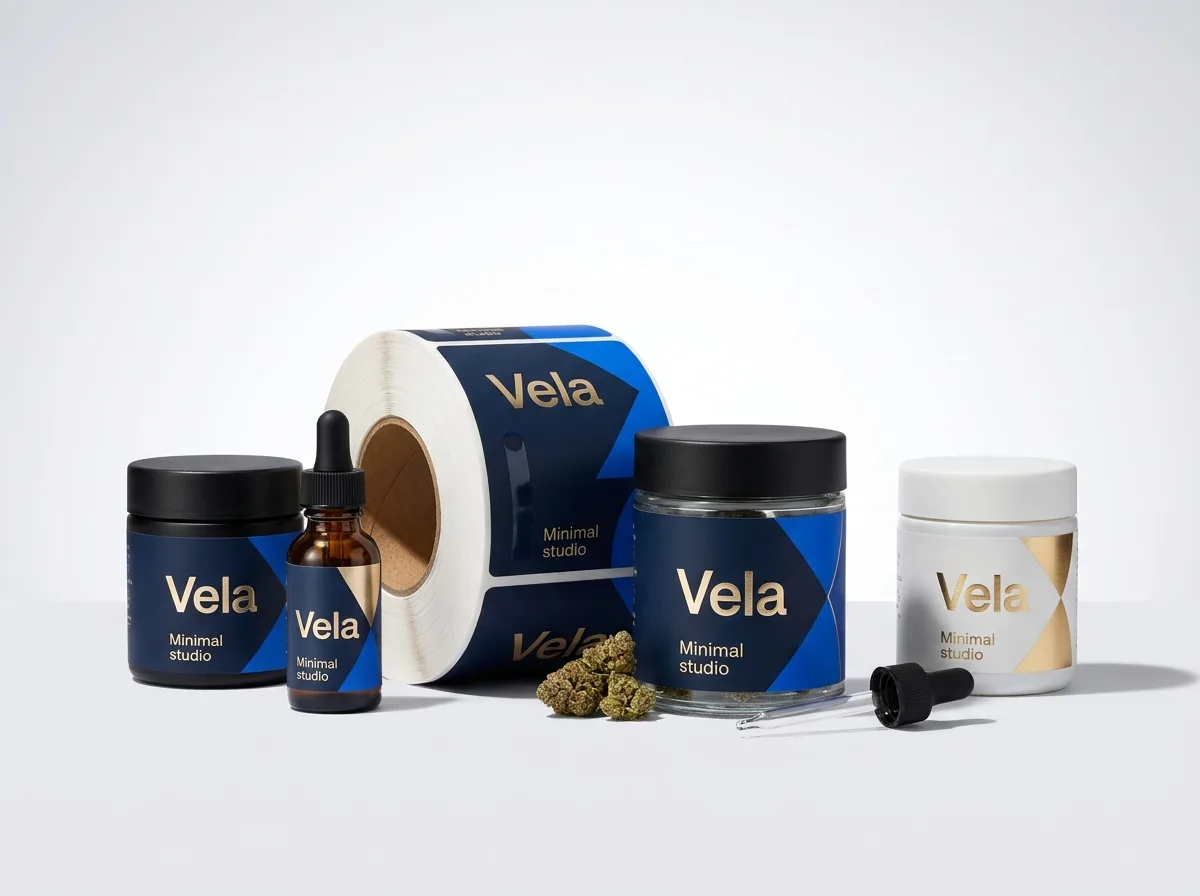
Ready to order ingredient labels? Compare up to 3 quantities with a free 3D mockup.
Request a Quote →Questions about ingredient labels
Can I order both my front brand labels and back ingredient labels from CubitPack?
Yes. Select 2 designs or 3+ designs in Step 2 of the quote form and note your front brand label specs alongside your back or bottom ingredient sticker specs so both arrive together.
Is it legal to put the FDA ingredient list on a separate back or bottom sticker?
Yes. Under FDA food (21 CFR 101.2) and cosmetic (21 CFR 701.3) rules, mandatory ingredient, allergen, and distributor statements may appear on a separate back or bottom information panel sticker provided it stays attached and meets type-height and contrast rules.
Can I use a matte white back ingredient sticker with a foil or clear front label?
Yes. Splitting the front and back labels lets you use metallic foil or clear film on the front display panel while using a glare-free matte white sticker on the back or base for crisp 5.5 pt text and barcode scanning.
What if I need to stick a new ingredient label over an existing printed pouch?
Tell us on your quote that you are applying the sticker over existing print. We will help you size the sticker 1/16 to 1/8 inch larger than the old text block and match an opaque cover-up stock.
Should I order back ingredient labels on rolls or flat sheets?
Choose rolls for automatic inline labelers, semi-automatic benchtop applicators, or tabletop dispensers. Choose flat kiss-cut sheets when kitchen or fulfillment teams apply stickers by hand across multiple packing tables.
How fast do custom ingredient labels ship?
Standard production is 10 to 14 business days after you approve your free 2D digital proof and 3D mockup, with 4 to 5 business day rush production available. Standard US shipping is free across all 50 states.
Still have a question? Ask a packaging specialist.
Request a Quote →Request your ingredient labels quote
Tell us your size and quantities, and one dedicated account manager prepares pricing for each tier.
- Free design & AI-to-print studio + 3D mockup
- No die or plate charges · 4–5 day rush available
- Free shipping to all 50 states
- 10% off your first order
This comparison draws on multi-SKU flexible pouch and rigid jar labeling workflows, FDA 21 CFR 101.2 and 701.3 information panel placement rules, and prepress finish testing for barcode scannability. Checked by a CubitPack packaging specialist. Spot an error? Tell us and we will fix it.
Sources
What changed
- October 22, 2026: First published.
- October 22, 2026: Updated specifications, terminology, and verified source links.
More guides
New packaging guides by email
Sizes, materials and design tips. Unsubscribe anytime.