
What size ingredient label do I need?
Short answer: A 2.0 × 3.0 inch vertical rectangle fits 8 oz jars and bakery bags, a 2.5 × 3.5 inch or 3.0 × 4.0 inch rectangle fits 8 oz to 16 oz stand-up pouches, and a 1.25 inch or 1.5 inch circle fits under 2 oz and 4 oz cosmetic jars. Order custom ingredient labels from 500 pieces.
On this page
- How do I measure a stand-up pouch vs a jar for a back ingredient panel
- What are the standard ingredient label sizes by container type
- What size circle ingredient sticker fits the bottom of cosmetic and food jars
- How do I size fold-over bakery clamshell and cover-up ingredient labels
- How much space do barcodes and lot-code boxes add to an ingredient label
- Common mistakes
- FAQs
Request a custom quoteFree dieline & 3D mockup
To size a custom ingredient label, measure the dead-flat back panel or inner bottom recess of your container and subtract 0.25 inches on flexible stand-up pouches (to clear heat welds and zipper tracks) or 0.125 inches inside the raised foot ring on glass and cosmetic jars. Across North American food, supplement, and skincare lines, five workhorse sizes cover nearly every container: 1.25 inch and 1.5 inch bottom circles for 2 oz and 4 oz cream jars and balm tins; 1.5 × 2.5 inch vertical rectangles for 1 oz to 4 oz dropper and sauce bottles; 2.0 × 3.0 inch rectangles for 8 oz mason jars and cookie bags; 2.5 × 3.5 inch rectangles for 8 oz to 12 oz stand-up pouches; and 3.0 × 4.0 inch rectangles for 12 oz to 16 oz coffee bags and supplement tubs. Every order of printed ingredient labels at CubitPack is cut to order with zero die fees.
How do I measure a stand-up pouch vs a jar for a back ingredient panel?
Most food, beverage, coffee, and skincare brands size their back or bottom ingredient sticker around the flat printable zone left after the front brand label or master bag print is applied. Because descending ingredient lists, allergen callouts, net weights, distributor lines, and UPC barcodes stack vertically, vertical rectangles and bottom circles are the two workhorse shapes across retail packaging. To size a back panel for a stand-up pouch, flat barrier bag, or gusseted coffee bag, measure only the smooth film area between the perimeter heat-seal seams, resealable zipper track, and bottom gusset fold, then subtract 0.25 inches from both width and height. Always test your paper cutout on a filled pouch rather than an empty flat bag: once filled with 8 oz of granola or coffee beans, the bottom gusset expands outward and pulls the lower third of the back face into a tight curve. Keeping your custom ingredient label above the gusset fold line prevents edge buckling.
- Clear the tear notch and zipper track: Start the top edge of a pouch ingredient label at least 0.375 in below the zipper track so buyers never tear through the ingredient list when opening the bag.
- Stay above the bottom gusset crease: Stop the bottom edge of the sticker at least 0.50 in above the horizontal gusset fold line on stand-up pouches.
- Measure inside side heat-seal ribs: Flexible pouches have 0.25 in to 0.375 in vertical side welds; measure between the inner seam edges so adhesive stays on flat film.
- Leave a blank lot and best-by box: Reserve a 1.0 × 0.375 in unprinted white rectangle at the bottom of the sticker if your packing team stamps batch codes or expiration dates.
What are the standard ingredient label sizes by container type?
When you order custom rectangle labels or custom circle labels from CubitPack, you are never restricted to fixed sheet templates. We cut every order to your exact width and height in inches with zero die fee, supplied on rolls, flat kiss-cut sheets, or individual die-cut stickers starting at 500 pieces. Use the reference chart below to benchmark your container before taping a 100% scale paper cutout onto a filled sample. Remember that in packaging notation, Width (horizontal left-to-right) always comes first and Height (vertical top-to-bottom) comes second.
| Container type | Typical label size (W × H) | Recommended shape & copy fitted |
|---|---|---|
| 2 oz & 4 oz cosmetic jar or balm tin base (1.5–1.85 in inner ring) | 1.25 in or 1.50 in diameter | Circle base sticker: INCI list, distributor line, batch code |
| 1 oz – 4 oz dropper bottle, hot sauce bottle, or spice jar | 1.50 × 2.50 in | Vertical back rectangle: ingredients, allergens, 80% UPC barcode |
| 8 oz mason jar, honey jar, candle box, or bakery cookie bag | 2.00 × 3.00 in | Vertical rectangle: ingredients, allergens, net weight, stamp box, UPC |
| 8 oz – 12 oz stand-up snack, granola, or pet treat pouch | 2.50 × 3.50 in | Vertical back panel: Nutrition + ingredients, allergens, UPC |
| 12 oz – 16 oz gusseted coffee bag or supplement powder tub | 3.00 × 4.00 in | Vertical back panel: Supplement/Nutrition Facts, ingredients, lot box |
| Hinged bakery clamshell (top-to-side tamper fold-over seal) | 2.00 × 3.50 in or 2.00 × 4.00 in | Extended rectangle or L-seal across lid hinge and side wall |
| Wholesale pastry carton, meal-prep tray, or bulk food bucket | 4.00 × 5.00 in | Large vertical rectangle: multi-component bakery ingredients & GTIN |
What size circle ingredient sticker fits the bottom of cosmetic and food jars?
Skincare, candle, confection, and gourmet condiment brands often keep their front jar panel minimalist by placing the mandatory INCI botanical and chemical ingredient list onto a round sticker tucked underneath the container base. To size a bottom circle label accurately, flip your jar or tin upside down, measure the flat inner recess inside the raised bottom bearing ring (also called the push-up or stipple foot ring), and subtract 0.125 inches (1/8 inch). Never use the outside diameter of the jar body as your bottom sticker diameter. Glass and thick-walled cosmetic jars rest on a raised outer foot ring so the vessel sits stably on a vanity or shelf. If a round bottom sticker is cut too wide and overlaps that raised ring, the outer perimeter scrapes against shelves, picks up dust, and bridges across the air step between the ring and the recessed center. On standard 2 oz low-profile cream jars (roughly 2.15 inches outside diameter), a 1.25 inch or 1.375 inch circle sits cleanly inside the recess; on 4 oz jars and 6 oz to 8 oz gourmet jars, a 1.50 inch to 1.75 inch circle fits flat.
Know your size? Compare pricing across up to 3 quantities.
Request a Quote →How do I size fold-over bakery clamshell and cover-up ingredient labels?
Fold-over bakery clamshell seals and opaque cover-up re-labeling stickers follow two special sizing rules because one bridges a 90-degree hinged plastic rim while the other must completely conceal existing printed text underneath. For clear PET bakery clamshells, grab-and-go deli containers, and pastry boxes, a single rectangular or custom L-shaped sticker often serves as both the top brand band and the front or side ingredient panel while acting as a tamper-evident hinge seal. Measure the flat top lid recess where the label starts, add the vertical drop over the front snap flange, and allow at least 0.75 inches to 1.0 inch of flat contact below the rim so the sticker does not pop open when cold plastic flexes in a refrigerated case. For cover-up ingredient labels (used when a recipe or allergen statement changes or an imported food pouch needs US English ingredient and distributor disclosures), measure the exact width and height of the outdated text block on the existing package and add 0.0625 to 0.125 inches (1/16 to 1/8 inch) on all four sides. That slight overhang absorbs normal hand or machine placement tolerance so old copy never peeks out along an edge. Note cover-up use on your quote so we match an opaque blockout stock.
How much space do barcodes and lot-code boxes add to an ingredient label?
If your back ingredient sticker also carries your retail UPC-A barcode and a blank lot or best-by stamp window, budget that vertical height before ordering. An 80% magnification UPC-A barcode (the smallest size recommended for reliable first-pass grocery checkout scanning) requires a quiet-zone footprint of roughly 1.18 × 0.82 inches, or about 1.18 × 0.45 inches if you truncate the bar height vertically on a compact jar. Adding a dedicated white lot and date stamp box takes another 1.0 × 0.375 inches. When combining a descending ingredient list, bold allergen summary, distributor address, lot box, and 80% UPC barcode onto one sticker, stepping up from a 1.5 × 2.5 inch rectangle to a 2.0 × 3.0 inch or 2.5 × 3.5 inch rectangle gives every element clean breathing room without squeezing your font below the FDA 1/16 inch lowercase 'o' minimum.
What are the most common ingredient label sizing mistakes?
Pouch gusset curves, raised jar foot rings, and tight cover-up margins cause most back-panel fit problems. Avoid these five sizing mistakes
- Measuring the outer diameter of a cosmetic or food jar base instead of the flat inner recess inside the raised glass bearing ring.
- Sizing a stand-up pouch back label on an empty flat bag without checking how the lower third curves once the bottom gusset is filled.
- Cutting a cover-up re-labeling sticker the exact same width and height as the outdated printed text instead of adding 0.0625 to 0.125 in per side.
- Stopping a fold-over bakery clamshell tamper sticker only 0.25 in below the snap rim, where cold PET flex pops the short tail loose.
- Locking in a compact sticker size before laying out the full ingredient and allergen text at the mandatory 1/16 in (0.0625 in) lowercase 'o' height.
Find your label size
Suggested label size: 9⅛ × 2¾ in (width × height)
A typical starting point. Your account manager confirms the size on the proof.
Quote this size →Packaging for this
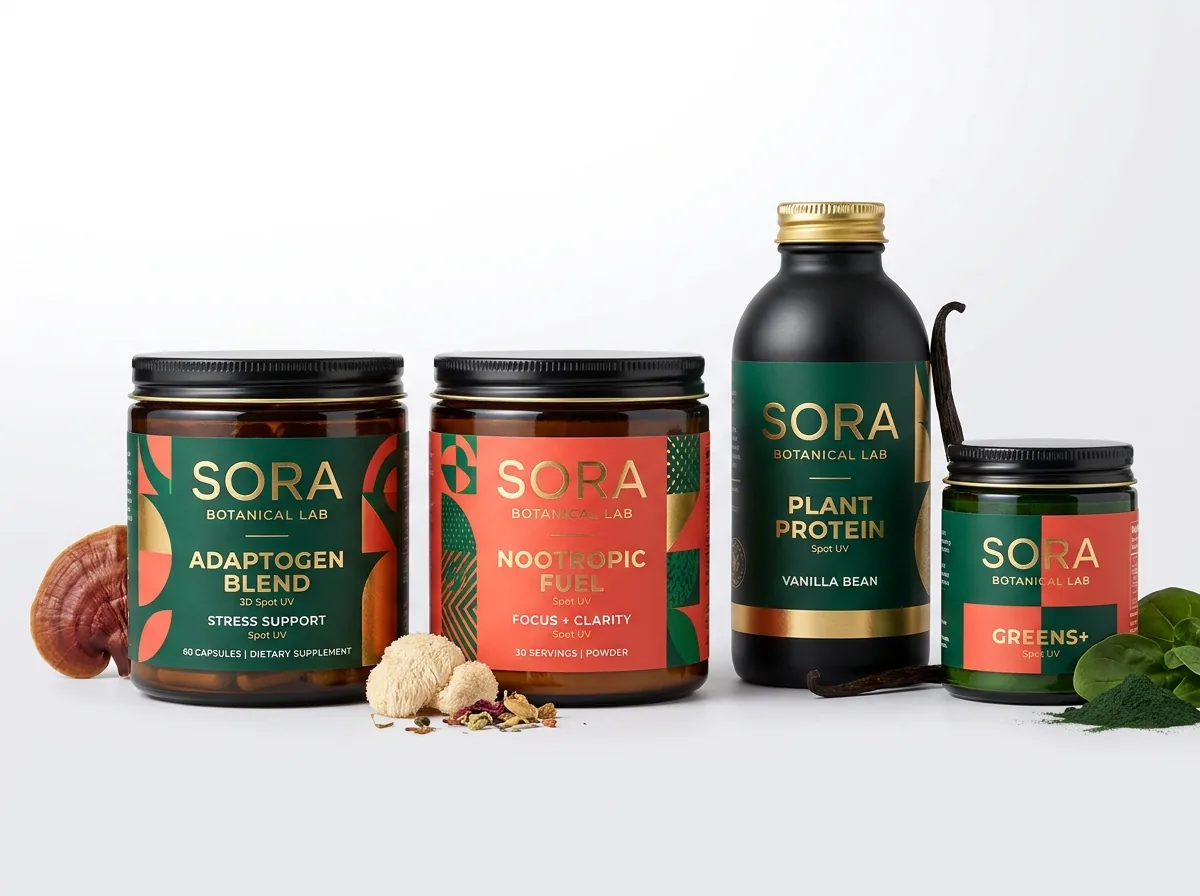
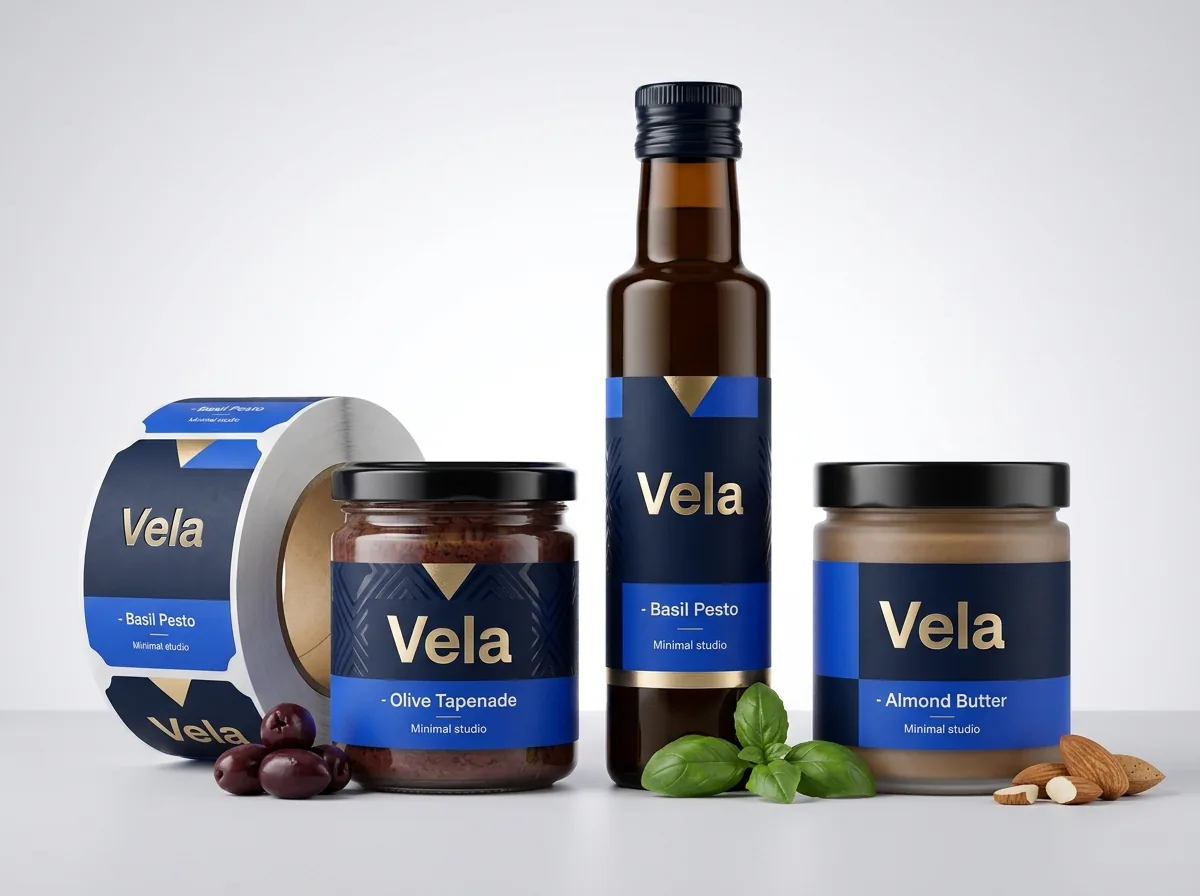
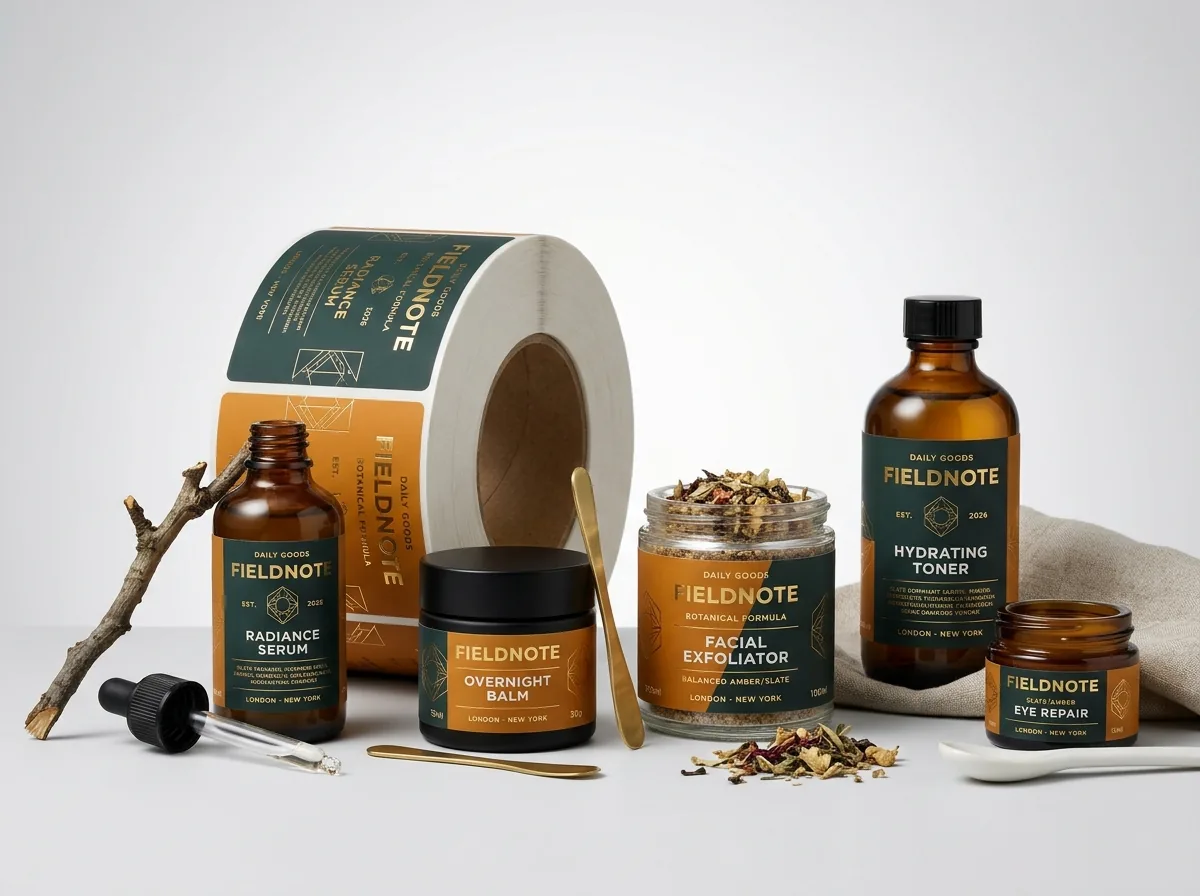
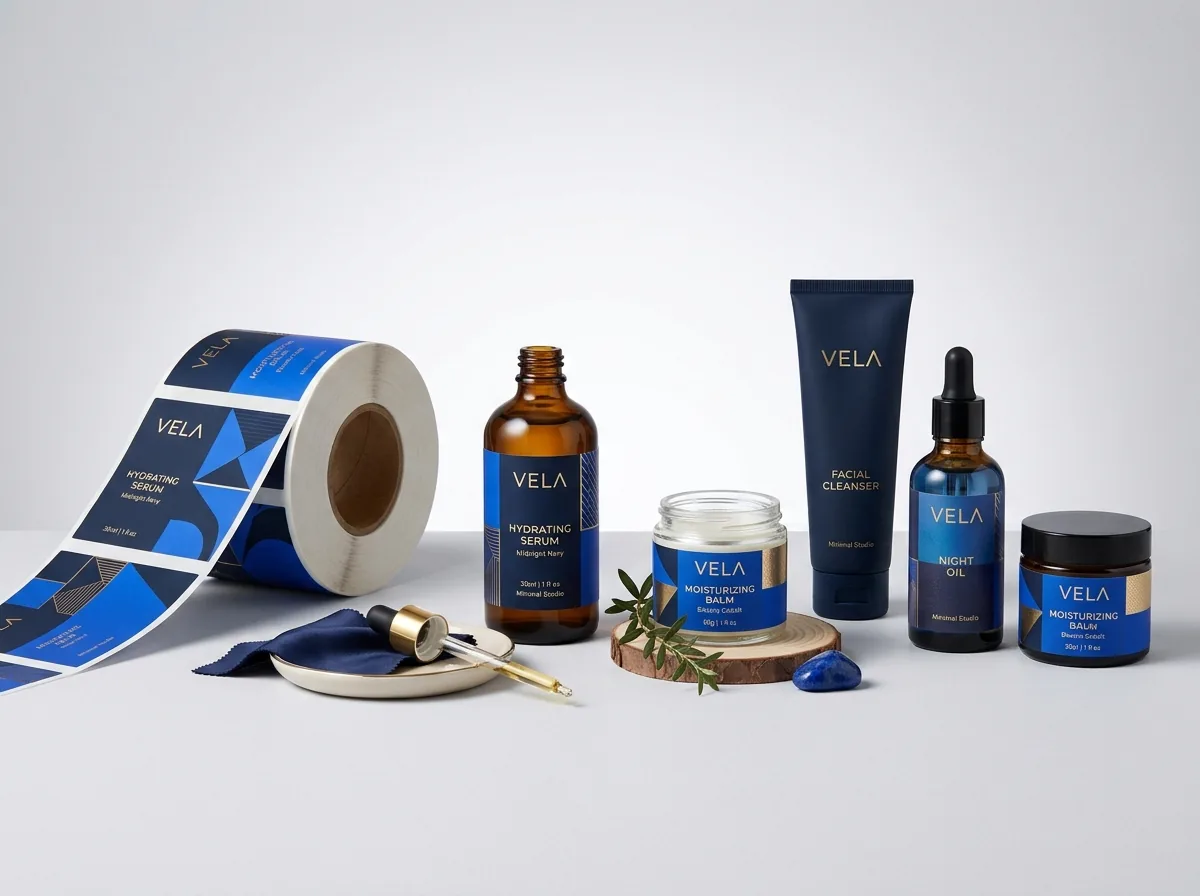
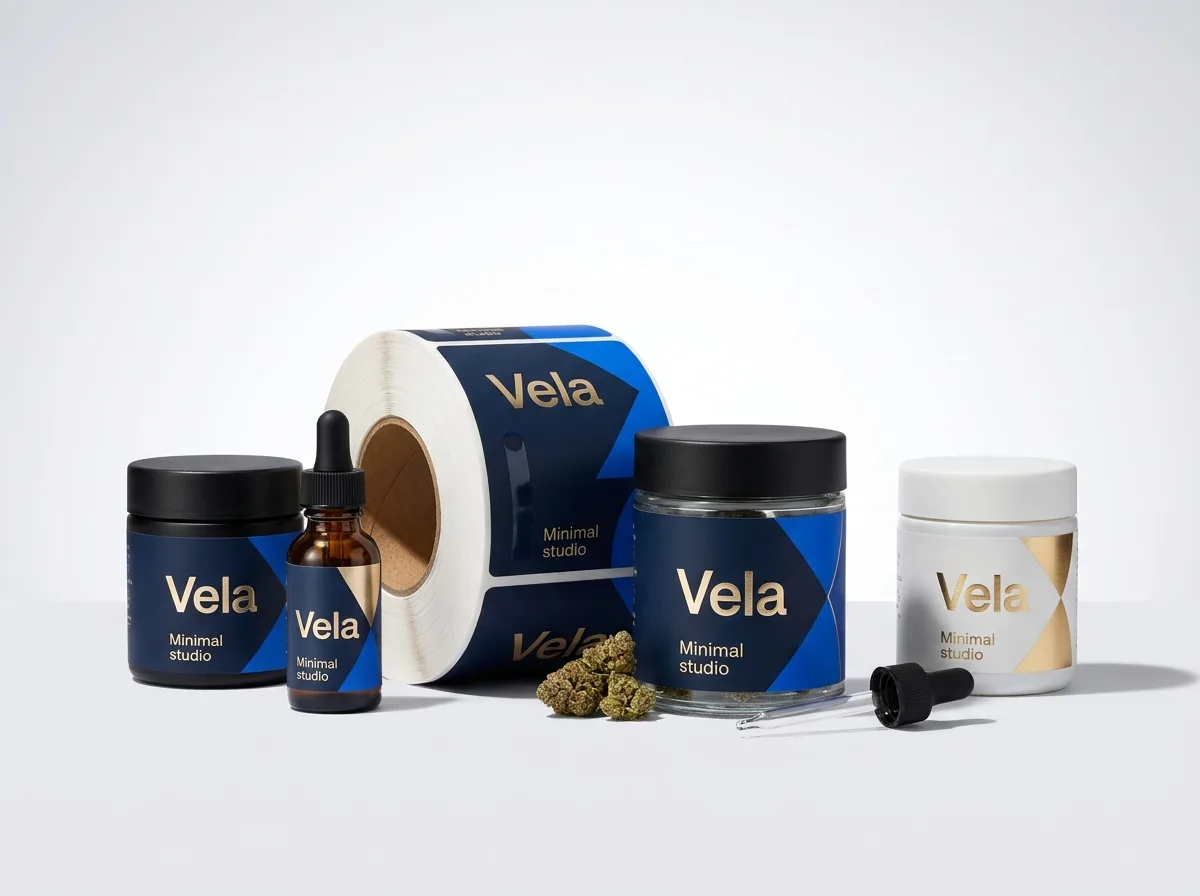
Ready to order ingredient labels? Compare up to 3 quantities with a free 3D mockup.
Request a Quote →Questions about ingredient labels
What is the most common back ingredient label size for stand-up pouches?
An 8 oz to 12 oz stand-up pouch typically takes a 2.5 × 3.5 inch vertical rectangle on the flat back panel between the zipper track and bottom gusset crease, while a 12 oz to 16 oz coffee or supplement pouch takes a 3.0 × 4.0 inch rectangle.
What size round ingredient sticker fits under a 2 oz or 4 oz cosmetic jar?
Most 2 oz cosmetic jars take a 1.25 inch or 1.375 inch bottom circle inside the raised foot ring, and most 4 oz straight-sided jars take a 1.5 inch or 1.75 inch bottom circle.
How much larger should a cover-up ingredient label be than the old text?
Add 0.0625 to 0.125 inches (1/16 to 1/8 inch) on all four sides past the outdated text block so normal hand or machine placement variance never leaves old letters peeking out.
Do you charge extra for custom ingredient label dimensions or L-shaped seals?
No. Every order at CubitPack is cut to your exact width and height, circle diameter, or custom fold-over tamper shape with zero die or plate charges, and our prepress team sets up your vector dieline and 3D mockup for free.
How much space should I leave for a barcode on an ingredient label?
An 80% magnification UPC-A barcode needs a white quiet-zone box of roughly 1.18 × 0.82 inches (or about 1.18 × 0.45 inches if bar height is truncated on a small bottle).
What is the minimum order quantity for custom-sized ingredient labels?
Our standard minimum order is 500 labels, with smaller trial runs considered case by case. You can also pool multiple flavors or formulas that share the same label size in one quote.
Still have a question? Ask a packaging specialist.
Request a Quote →Request your ingredient labels quote
Tell us your size and quantities, and one dedicated account manager prepares pricing for each tier.
- Free design & AI-to-print studio + 3D mockup
- No die or plate charges · 4–5 day rush available
- Free shipping to all 50 states
- 10% off your first order
The dimensions in this guide use flat-film seam and gusset deductions for flexible stand-up pouches, inner foot-ring recession measurements for 2 oz to 8 oz jars, and standard ±1/16 in registration overhangs for cover-up re-labeling. Checked by a CubitPack packaging specialist. Spot an error? Tell us and we will fix it.
Sources
What changed
- October 22, 2026: First published.
- October 22, 2026: Updated specifications, terminology, and verified source links.
More guides
New packaging guides by email
Sizes, materials and design tips. Unsubscribe anytime.