
Roll vs sheet nutrition labels: which fits your food packaging line?
Short answer: Choose roll nutrition labels when labeling more than 250 to 500 containers per session, using a tabletop dispenser, or sending inventory to a co-packer. Choose flat kiss-cut sticker sheets for small kitchen batches, farmers market runs or multi-flavor meal prep. Both formats of custom nutrition labels start at 500 pieces.
On this page
- How do roll nutrition labels and flat sticker sheets compare side by side
- When should food and beverage brands choose roll nutrition labels
- When are flat kiss-cut sticker sheets better for kitchen and bakery teams
- Which finish and stock work best on roll and sheet nutrition labels
- How do you split multi-flavor orders and verify print legibility
- Common mistakes
- FAQs
Request a custom quoteFree dieline & 3D mockup
The choice between roll-fed nutrition stickers and flat kiss-cut sticker sheets comes down to how your team peels, stamps and applies labels on packing day. Roll labels wind single-file around a cardboard core so a worker can pull the backing liner across a sharp dispenser edge, popping each Nutrition Facts panel forward in one second, or feed the roll directly into a semi-automatic bottle or pouch applicator. Flat sticker sheets place multiple kiss-cut panels side by side on a flat card that stores neatly in kitchen binders and lets multiple staff members peel labels simultaneously without clamping equipment to prep tables. Both formats use the exact same high-resolution printing, crisp 100% black 6 pt type and 500-label minimum at CubitPack, with 10 to 14 business day turnaround. Customers supply their nutrition panel text and we check print legibility on the proof before payment.
How do roll nutrition labels and flat sticker sheets compare side by side?
Whether you pack artisanal granola in a shared commercial kitchen or run 10,000 cold-pressed juice bottles on a conveyor line, matching the supply format to your workflow saves hours of manual peeling. In both formats, the blade cuts cleanly through the label face and adhesive (a kiss cut) while leaving the release liner intact so rectangular corners lift without tearing. If your brand sells across both farmers markets and regional grocery distributors, knowing when to switch from flat sheets to rolls keeps your labor cost per unit predictable as batch sizes climb. Review the comparison table below to see how custom printed nutrition labels on rolls, flat kiss-cut sheets and individual die-cut stacks differ across application speed, storage, date coding and machine compatibility.
| Packaging factor | Roll nutrition labels | Flat sticker sheets |
|---|---|---|
| How they arrive | Wound single-file on a cardboard core | Multiple kiss-cut panels per flat sheet |
| Ideal batch size | 500 to 50,000+ units per flavor run | 500 to 1,500 units or split multi-flavor runs |
| Hand-peeling speed | Very fast with a manual tabletop dispenser | Moderate; peeled directly by hand at a table |
| Labeling machine use | Compatible with semi-auto and inline applicators | Not compatible with roll-fed labeling machines |
| Lot & best-by coding | Works with inline thermal/inkjet roll coders | Easy to hand-stamp or write across a flat sheet |
| Storage in kitchen | Stacked on spindles or inside roll dispenser boxes | Stored flat in file drawers or recipe binders |
| Minimum order | From 500 labels (10-14 business days) | From 500 labels (10-14 business days) |
When should food and beverage brands choose roll nutrition labels?
Once your team labels more than a few hundred pouches, jars or bottles in one shift, peeling stickers off flat sheets with your fingernails becomes a major bottleneck. Winding your panels onto custom roll labels lets you drop the core into an inexpensive tabletop dispenser: pulling the waste liner pulls the next Nutrition Facts sticker halfway off the backing with its leading edge sticking straight out toward the operator's hand. Roll labels are also mandatory if you use a semi-automatic benchtop bottle roller, a flatbed pouch tamp applicator, or an outside contract packager (co-packer). Co-packers require single-file rolls wound to a specific core diameter and unwind direction so the Nutrition Facts box lands right-side up on the back of every jar or bag without slowing down the filling conveyor.
- Benchtop dispensers cut hand-application time roughly in half compared with peeling from flat sheets.
- Single-file rolls keep waste liners contained on one take-up spool instead of leaving loose paper scraps on food prep tables.
- Inline date coders can print lot numbers and expiration dates onto roll labels right before the sticker hits the container.
- Tell us your applicator's core size and unwind direction in the quote notes.
When are flat kiss-cut sticker sheets better for kitchen and bakery teams?
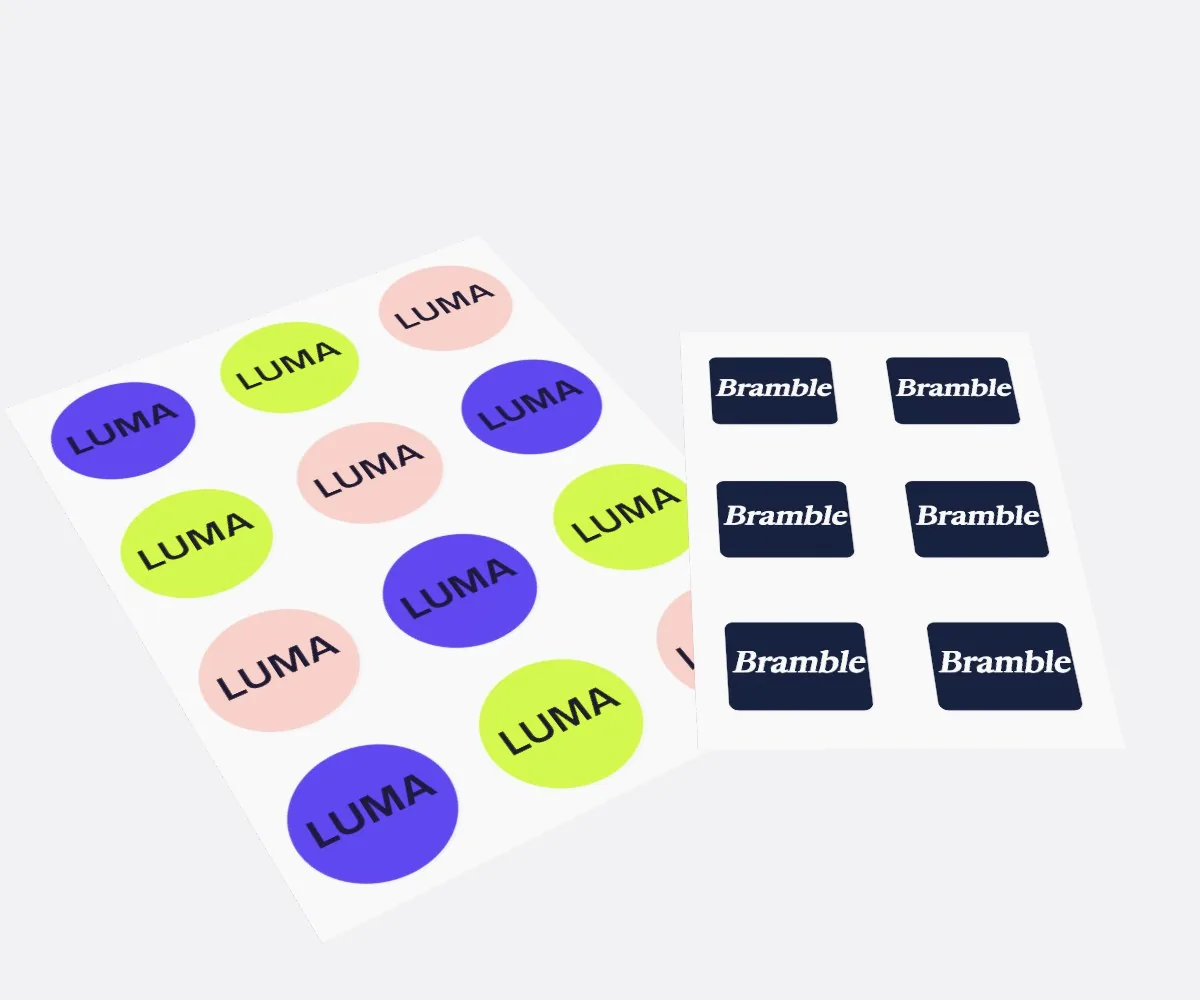
Flat custom sticker sheets shine in commissary kitchens, retail bakeries, meal-prep services and specialty food startups that pack small daily batches across ten or twenty recipes. Instead of storing twenty bulky rolls on a shelf, a chef can keep a labeled folder of flat sheets right next to the scale and grab five stickers for almond croissants, ten for blueberry muffins and twelve for chia pudding cups. Because each flat card holds multiple panels face up on one page, two or three team members can pull sheets from the stack and label containers side by side without sharing a single roll dispenser. Sheets also make pre-marking best-by dates simple for small teams. A worker can lay a flat sheet of twelve nutrition panels on a desk, stamp Tuesday's batch code into the open white date box on all twelve stickers in ten seconds, and then peel and stick them onto clear clamshells or custom bakery boxes as trays come out of the kitchen.
Know your size? Compare pricing across up to 3 quantities.
Request a Quote →Which finish and stock work best on roll and sheet nutrition labels?
Both roll and sheet nutrition labels can be paired with matte or gloss finishes, clear or metallic foil stocks, and application-specific adhesives. For a dedicated black-and-white Nutrition Facts and barcode sticker, matte is almost always the smarter finish: it eliminates harsh overhead lighting reflections so shoppers can read 6 pt vitamin percentages easily and checkout laser or camera scanners can read the UPC barcode on the first pass. Gloss finish works well when your Nutrition Facts box is integrated into a full-color wraparound jar or bottle label where you want fruit photography or sauce colors to stand out on the shelf. If your nutrition panel sits on a cold-pressed juice bottle, a refrigerated meal-prep tray, a frozen pint tub or an oil-rich condiment jar, mention those storage conditions in your quote notes. And if you are relabeling imported food cartons or covering an outdated panel on pre-printed pouches, ask about an opaque cover-up stock to hide old text and barcodes underneath.
How do you split multi-flavor orders and verify print legibility?
Most food brands launch with at least three to six flavors (such as Original, Sea Salt and Barbecue) where the outer container is identical and only the Nutrition Facts numbers, ingredient list and UPC barcode change. At CubitPack, our minimum order is 500 labels, and you can combine multiple flavors in one quote by selecting 2 designs or 3+ designs in Step 2 of the quote form and keeping every SKU on the exact same width × height. Sharing one die-cut dimension across your entire recipe lineup keeps setup simple whether you choose rolls or flat sheets. Before any roll or sheet goes to press, remember how regulatory wording works: customers supply their nutrition panel or state warning text and we check print legibility on the proof, never claiming legal compliance or nutritional certification ourselves. You receive a free digital proof and 3D mockup to verify every number, rule weight and barcode digit before you pay.
- Keep the exact same label width × height across all flavors so your entire product line shares one cutting setup.
- Use color-coded top bars or SKU initials on each panel so packing staff can tell flavors apart at a glance.
- Verify every calorie figure, allergen line and UPC digit on your free digital proof before approving production.
- Standard production takes 10 to 14 business days (rush in 4 to 5 days) with free shipping to all 50 US states.
What mistakes should food brands avoid when choosing rolls vs sheets?
Ordering the wrong label format can stall a co-packing run or slow down kitchen prep during a seasonal launch. Watch out for these five common production mistakes
- Sending flat sticker sheets to an automated co-packer whose labeling line only accepts single-file rolls wound on standard cores.
- Ordering machine roll labels without checking whether the applicator unwinds top-first, bottom-first, left-first or right-first.
- Peeling 2,000 labels by hand from flat sheets without a dispenser when a roll in a tabletop dispenser would cut labor time in half.
- Choosing a high-glare finish over a small UPC barcode or glossy varnish over the box where staff need to rubber-stamp expiration dates.
- Forgetting to mention refrigerator condensation, freezer storage or cover-up relabeling on the quote request.
Find your label size
Suggested label size: 9⅛ × 2¾ in (width × height)
A typical starting point. Your account manager confirms the size on the proof.
Quote this size →Packaging for this
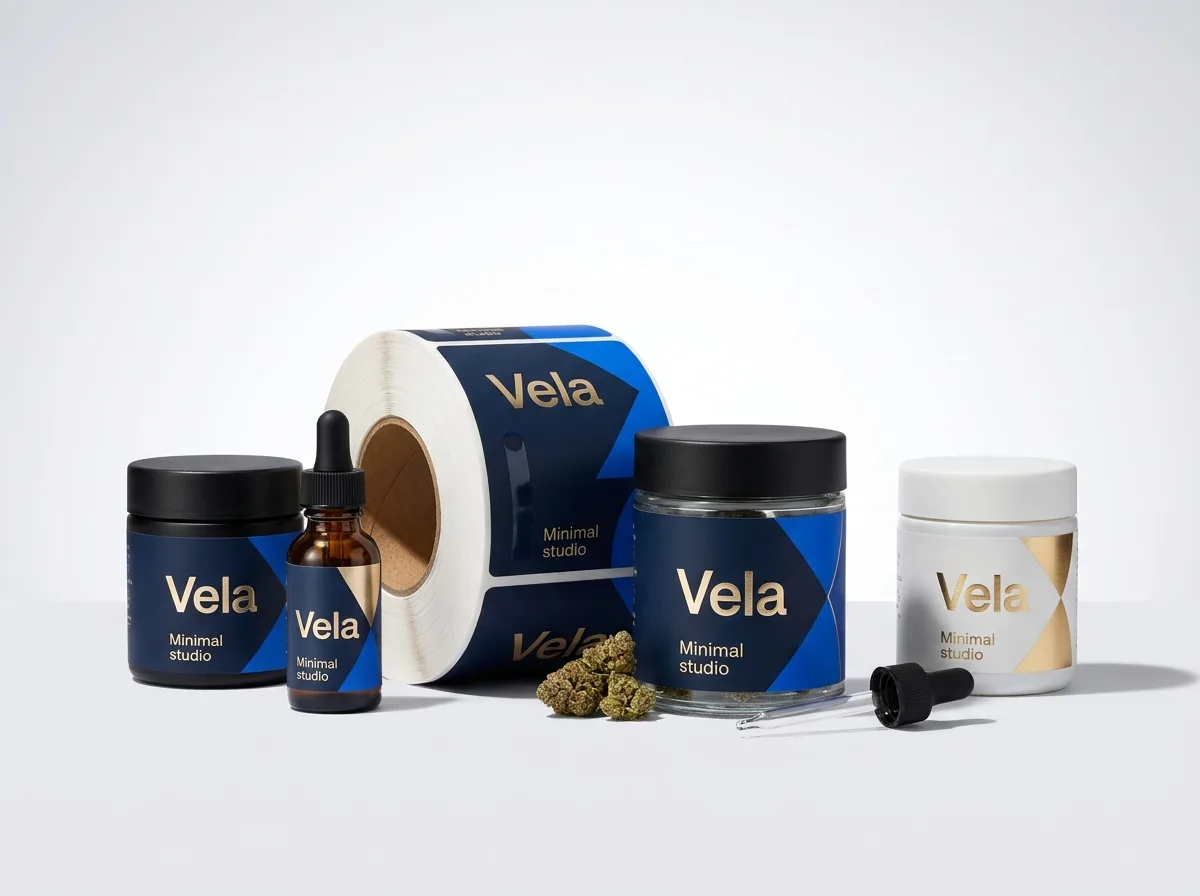
Ready to order nutrition labels? Compare up to 3 quantities with a free 3D mockup.
Request a Quote →Questions about nutrition labels
Are roll nutrition labels cheaper than flat sticker sheets?
Your quote shows the price for rolls or sheets, and unit cost drops as your quantity grows, with roll-fed dispensing speeding up application on larger runs.
Can I apply roll nutrition labels by hand without buying a machine?
Yes. You can peel roll labels directly by hand from the roll carton or place the roll into a simple manual tabletop dispenser. Pulling the liner forward pops each label up ready to stick onto a pouch, jar or clamshell.
What is roll unwind direction and when do I need to specify it?
Unwind direction describes which edge of the Nutrition Facts panel feeds off the roll first (top, bottom, left or right) and whether the printing faces outward or inward. It only matters if you use a labeling machine; for hand peeling, any direction works.
How many nutrition labels fit on one flat sticker sheet?
The number of labels per sheet depends on your panel width and height. For example, six to eight 2.0 × 3.5 inch vertical nutrition panels or four 3.0 × 4.0 inch combined back panels typically fit on one standard flat sheet.
Can I write or stamp best-by dates on matte nutrition labels?
Yes. Matte surfaces accept permanent marker, rubber stamp ink and thermal transfer ribbons much better than high-gloss coats. Tell us in the quote notes if you stamp dates so we keep your date box clear.
Who checks that the nutrition text on my roll or sheet labels is readable?
Customers supply their nutrition panel or state warning text and we check print legibility on the proof. We never claim legal compliance ourselves, and you approve a free digital proof and 3D mockup before payment.
Still have a question? Ask a packaging specialist.
Request a Quote →Request your nutrition labels quote
Tell us your size and quantities, and one dedicated account manager prepares pricing for each tier.
- Free design & AI-to-print studio + 3D mockup
- No die or plate charges · 4–5 day rush available
- Free shipping to all 50 states
- 10% off your first order
This comparison draws on CubitPack's decided label specifications (500-label minimum, 10 to 14 business day turnaround, roll, sheet and die-cut formats) and standard co-packing line practices, reviewed by a packaging specialist. Customers supply their nutrition panel text and we check print legibility on the proof.
Sources
What changed
- October 22, 2026: First published.
- October 22, 2026: Updated specifications, terminology, and verified source links.
More guides
New packaging guides by email
Sizes, materials and design tips. Unsubscribe anytime.