
Folding carton vs corrugated pet food boxes: which board holds heavy kibble and cans?
Short answer: Use paperboard folding cartons for pet food products under 2 pounds (such as freeze-dried raw toppers, dental chews and 12-count 3 oz pouch dispensers) paired with an auto-lock or seal-end base, and switch to E-flute or B-flute corrugated custom pet food boxes for 2.5 lb+ kibble, wet-can multipacks and parcel shipping.
On this page
- How do paperboard folding cartons, E-flute and B-flute corrugated compare by weight
- Why does bottom closure style matter as much as board thickness
- When should a retail pet food carton step up to E-flute corrugated board
- How do white card, natural kraft and barrier liners handle animal fats
- How can I test folding paperboard vs corrugated board before a full run
- Common mistakes
- FAQs
Request a custom quoteFree dieline & 3D mockup
Choosing between folding paperboard and corrugated board for pet food comes down to two numbers: total filled weight and how the box travels to the pet owner. Single-ply paperboard (white card or natural brown kraft) folds into crisp, compact shelf cartons for lightweight freeze-dried diets, dehydrated toppers and single-serve pouch packs sold in retail aisles, provided you reinforce loads over 12 ounces with a pre-glued auto-lock bottom or a full glue-sealed base. Once a carton carries more than 2 to 2.5 pounds of dense kibble, multiple metal cans of wet stew, or ships individually through parcel couriers, single-ply paperboard can bow or crush at the corners. Stepping up to E-flute or B-flute corrugated board adds a fluted structural arch between the liners while still accepting bright CMYK and Pantone printing. At CubitPack, custom printed pet food boxes start at 1,000 units (250 for mailer boxes) with free design help and no die fees.
How do paperboard folding cartons, E-flute and B-flute corrugated compare by weight?
Pet food spans one of the widest weight ranges in consumer packaged goods, from a 4-ounce box of freeze-dried cat treats to a 25-pound cold-chain box of frozen dog meals. Matching your board grade and bottom closure to the exact weight inside prevents split seams on the co-packer line and crushed corners on pet-store shelves. Use the comparison table below to select the right board family and base structure for your pet food SKU.
| Board & structure | Safe filled weight range | Best pet food applications & base style |
|---|---|---|
| Standard paperboard + reverse tuck end | Up to 10 oz (0.6 lb) | Light freeze-dried cat treats, single pouch sleeves, meal toppers |
| Heavy paperboard + auto-lock bottom | 10 oz to 2.5 lb | 1 lb freeze-dried raw bags, 12-count 3 oz gravy pouch dispensers |
| Heavy paperboard + full seal end | 1 lb to 3 lb | Dry kibble, baked biscuit cartons, bird seed and small-animal pellets |
| E-flute corrugated + auto-lock / carrier | 2.5 lb to 8 lb | 6-pack & 8-pack wet cans, 24-pouch pantry boxes, 4 lb kibble cartons |
| B-flute corrugated mailer / RSC shipper | 5 lb to 25+ lb | 12-pack 13 oz dog cans, weekly DTC fresh/frozen pet meal subscriptions |
Why does bottom closure style matter as much as board thickness?
Many pet startups assume that if a box bottom pops open under a 2-pound bag of kibble, the paperboard itself was too thin. In reality, 90% of bottom bursts happen because the box used a friction reverse-tuck bottom instead of a locked or glued base. A standard reverse tuck end box relies on a small friction slit to hold the bottom flap closed; when a dense bag of kibble drops into the box during packing or gets lifted off a shelf, downward gravity flexes the flap and slips it right out of the slit. For any pet food carton over 10 to 12 ounces, switch the base to either an auto lock bottom box (also called a crash-lock base) or a seal end box. On an auto-lock bottom, our folding-gluer pre-glues the overlapping diagonal bottom flaps at the factory so your packing crew simply squeezes the flat carton open and the floor snaps into a locked load-bearing cradle in one second. On high-speed automated filling lines for dry kibble or bird seed, a seal-end carton glues all four bottom flaps shut with hot-melt adhesive for a permanent, sift-proof floor.
When should a retail pet food carton step up to E-flute corrugated board?
Standard B-flute shipping cardboard has thick ⅛ inch flutes that look industrial on a boutique pet-store shelf. E-flute corrugated boxes solve that trade-off: with 90 flutes per linear foot and a slim 1/16 inch profile, E-flute is thin enough to die-cut into retail dispenser cartons, gable-handle carriers and window boxes while delivering far higher vertical stacking strength and puncture resistance than single-ply paperboard. Step up to litho-laminated E-flute corrugated whenever your retail pet food package holds metal cans (such as a 6-pack or 8-pack of 5.5 oz cat cans), 24 single-serve wet gravy pouches, or 3 to 5 pounds of dense kibble. In a litho-laminated E-flute box, we print your full-color breed photography, Pantone brand colors and small 6-point nutrition tables onto a smooth white clay-coated top sheet first, laminate it with matte, gloss or soft-touch film, and mount that sheet onto the fluted board so the outside looks identical to a luxury folding carton.
- Folding paperboard (white card or kraft): best for 4 oz to 2 lb bagged dry diets and 6 to 12 pouch cartons on store shelves.
- E-flute corrugated (1/16 in flute): best for 2.5 lb to 8 lb loads, multi-can carriers, 24-pouch pantry boxes and club-store PDQ trays.
- B-flute corrugated (1/8 in flute): best for DTC fresh/frozen subscription mailers, 12-can master packs and parcel shipping.
- Double-wall corrugated: best for heavy 20 lb+ bulk kibble cases and multi-week frozen meal boxes packed with dry ice.
Know your size? Compare pricing across up to 3 quantities.
Request a Quote →How do white card, natural kraft and barrier liners handle animal fats?
Unlike human cereal or crackers, dry dog kibble, baked biscuit treats and freeze-dried raw diets are rich in animal tallow, poultry fat and omega-rich salmon oil (often 14% to 28% crude fat). If high-fat food contacts unlined paperboard or natural kraft board directly, lipids migrate into the paper fibers within days and create dark translucent grease blotches across your front artwork. You have two proven ways to stop grease wicking. Most brands seal freeze-dried nuggets or kibble inside a high-barrier inner poly bag or custom pet treat pouch first, then place that sealed bag inside a standard printed folding carton. That setup keeps oxygen and moisture out of the food while letting you use standard unlined white or kraft board on the outer carton. If you pack baked biscuits, chews or dry pellets directly into the carton without an inner bag, tell your account manager when requesting your quote: food-safe and grease-resistant barrier materials are available on request through our certified partner facilities.
How can I test folding paperboard vs corrugated board before a full run?
If your pet food product sits right on the 2-pound borderline between heavy folding paperboard and E-flute corrugated, you do not have to guess from a screen. Start by ordering our $50 sample kit to feel white paperboard, kraft board, E-flute corrugated and matte/gloss laminations in your hands. When you request a quote on our custom pet food boxes page, ask your account manager to price both a heavy auto-lock folding carton and an E-flute corrugated version at 1,000, 2,500 and 5,000 units. Before you commit to full production, you get a free digital proof and 3D mockup, and you can order a paid physical prototype of your exact box to fill with your actual kibble bag or cans and drop-test in your warehouse, with the prototype cost credited toward your production order. During your prototype test, pack the carton to its full target weight, stack four filled cartons vertically for 24 hours in your storage room, and drop one filled box from waist height (30 inches) onto a concrete floor. If the bottom corners stay square and the auto-lock flaps remain seated, your chosen caliper is ready for retail distribution.
What mistakes do pet brands make when picking carton board and bases?
Choosing a board or bottom flap that is under-built for your net weight leads to split cartons in transit. Avoid these five structural mistakes
- Using a friction reverse-tuck bottom on cartons holding more than 12 oz of kibble or pouches, which pops open when lifted.
- Packing high-fat freeze-dried raw diets or salmon treats directly into unlined paperboard without an inner bag or grease barrier.
- Using single-ply folding paperboard for 6-pack or 12-pack metal wet food cans where sharp can rims puncture the corners.
- Shipping a thin retail folding carton through parcel carriers without an outer corrugated mailer or shipping box.
- Choosing unlaminated uncoated paperboard for heavy wire-rack pet store shelves where metal dividers scuff the bottom edge.
Find your size
Suggested inside size: 5 × 2.5 × 7 in
A starting point. Your account manager confirms the size with you before the proof.
Quote this size →Packaging for this
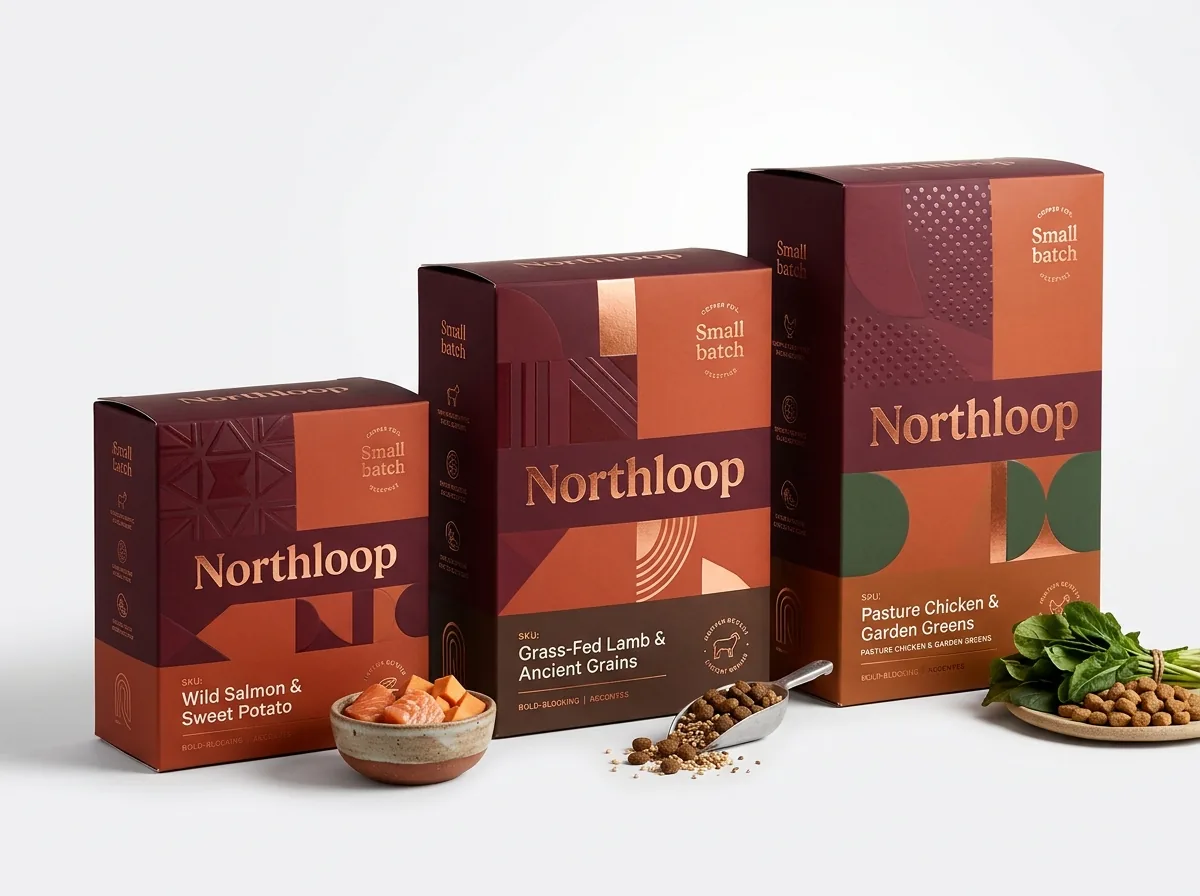
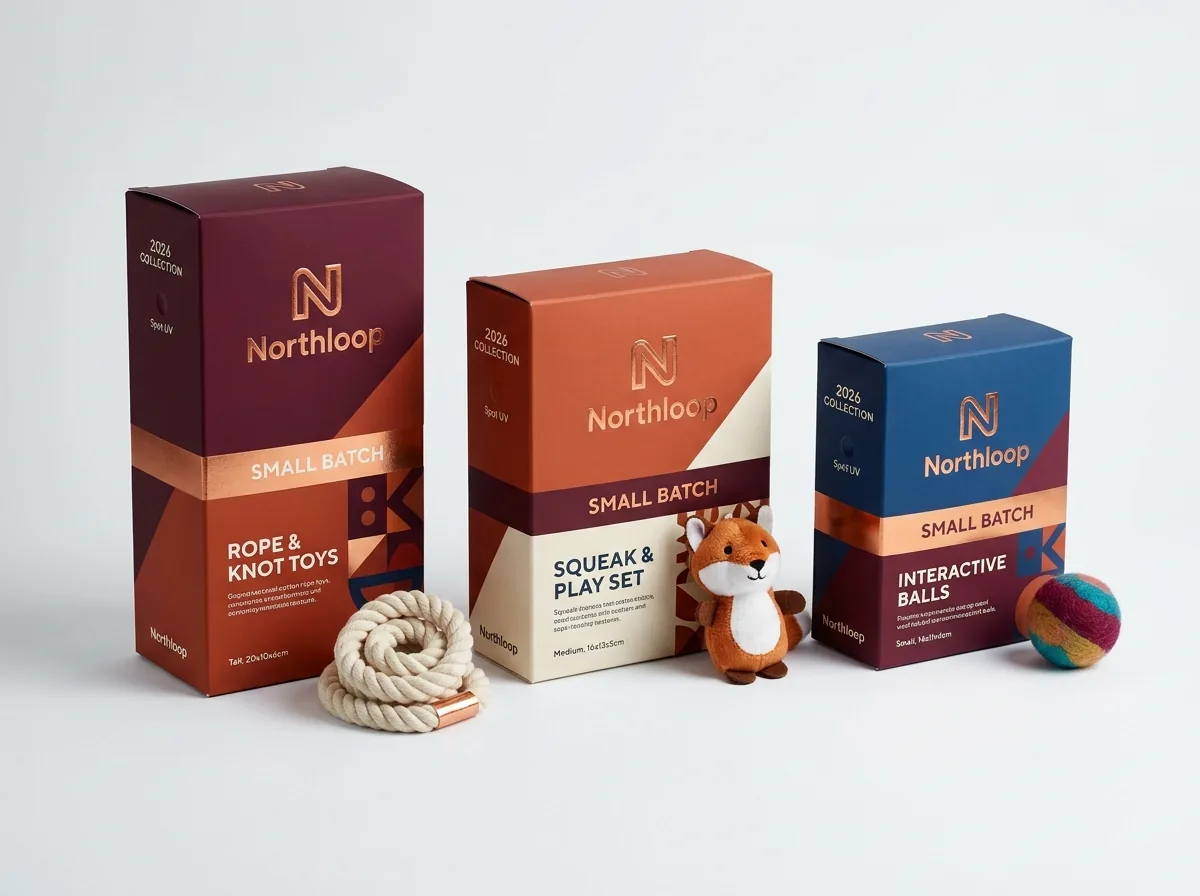
Ready to order pet food boxes? Compare up to 3 quantities with a free 3D mockup.
Request a Quote →Questions about pet food boxes
What is the minimum order quantity for folding carton and corrugated pet food boxes?
Both custom folding paperboard pet food cartons and custom corrugated shipping or E-flute carrier boxes start at 1,000 units. If you need custom corrugated mailer boxes for DTC pet subscription kits, minimums start at 250 units.
Does an auto-lock bottom box ship flat to your warehouse or co-packer?
Yes. Auto-lock bottom boxes are folded and pre-glued along the side seam and bottom diagonal flaps during production, then collapsed flat into master shipping cartons. Your packing team pops each box upright in one second without tape.
Can E-flute corrugated pet food boxes have a clear window or perforated chute?
Yes. E-flute corrugated board is only 1/16 inch thick, so it die-cuts cleanly for front viewing windows, perforated single-serve pouch dispenser chutes and built-in top carry handles.
Are food-safe and grease-resistant barrier boards available on request?
Yes. When your dry pet food or baked treats touch the board directly without an inner pouch, request food-safe and grease-resistant materials on your quote. We produce those orders in a certified partner facility and share certificates on request.
Which finish holds up best on metal wire shelving in pet stores?
Matte lamination or gloss lamination adds a thin protective polypropylene film over the printed ink, preventing dark scuff marks when cartons slide across metal pet-store shelves or ride in multi-unit cases.
Can CubitPack run drop and crush testing on our pet food carton?
Yes. We offer structural design and drop and crush testing services to verify that your carton base, corrugated flute and internal can partitions survive parcel shipping and pallet stacking before full production.
Still have a question? Ask a packaging specialist.
Request a Quote →Request your pet food boxes quote
Tell us your size and quantities, and one dedicated account manager prepares pricing for each tier.
- Free design & AI-to-print studio + 3D mockup
- No die or plate charges · 4–5 day rush available
- Free shipping to all 50 states
- 10% off your first order
This board and base comparison draws on standard folding carton load limits, E-flute and B-flute corrugated crush characteristics, and CubitPack's decided minimums and material offerings in our published product specifications. A packaging specialist checked every recommendation. Spot something wrong? Tell us and we will fix it.
Sources
What changed
- October 22, 2026: First published.
- October 22, 2026: Updated specifications, terminology, and verified source links.
More guides
New packaging guides by email
Sizes, materials and design tips. Unsubscribe anytime.