
How do I lay out guaranteed analysis and feeding panels on custom pet food boxes?
Short answer: Divide your custom pet food boxes dieline by function: place the brand, product name, target species (dog or cat) and net weight on the front Principal Display Panel; put the Guaranteed Analysis, ingredient list and nutritional adequacy statement on the right side panel; and place the daily feeding chart on the back or left panel.
On this page
- Which information belongs on each panel of a custom pet food box dieline
- What must appear on the front Principal Display Panel (PDP)
- How do I format the Guaranteed Analysis, ingredients and feeding chart for readability
- Why do co-packers require an unvarnished knockout box for lot and best-by dates
- How can I design multiple protein flavors on one shared box dieline to save cost
- Common mistakes
- FAQs
Request a custom quoteFree dieline & 3D mockup
Designing a retail pet food box requires balancing shelf appeal with dense mandatory nutrition disclosures. Unlike a plain pouch where curved gussets cramp small text, a rectangular folding carton gives you four flat vertical walls plus top and bottom flaps to separate marketing copy from regulatory tables. Under FDA Center for Veterinary Medicine (CVM) rules and AAFCO model pet food guidelines, shoppers and state feed control officials look for specific blocks in predictable places: the front Principal Display Panel (PDP) identifies the brand, formula name, intended animal species and net quantity of contents in the lower third, while the adjacent Information Panels hold the Guaranteed Analysis table, descending ingredient deck, calorie content statement, daily feeding directions and guarantor address. When you order custom printed pet food boxes from CubitPack, our prepress team maps your copy onto a free custom dieline starting at 1,000 units.
Which information belongs on each panel of a custom pet food box dieline?
When our designers set up a pet food dieline, we treat the six faces of the box as a guided reading sequence. A pet parent walking down the aisle first reads the front face from 4 feet away, then picks up the carton and turns it 90 degrees to check crude protein, crude fat and the first five ingredients, and finally checks the back panel for how many cups or pouches to feed per day. Use the panel-by-panel map below to organize your copy before sending artwork to prepress. Keep all text at least ⅛ inch (0.125 in) inside every fold score and cut line so nothing gets creased on the folding-gluer.
| Carton panel on dieline | Required & recommended elements | Prepress layout rule |
|---|---|---|
| Front panel (Principal Display Panel) | Brand logo, product/flavor name, species ('for Dogs' / 'for Cats'), net weight | Place net weight in the bottom 30% of the front panel parallel to the base |
| Right side panel (Information Panel) | Guaranteed Analysis table, ingredient list (by weight), AAFCO adequacy statement | Use 6 pt to 8 pt sans-serif black text on white or light background; no busy photos behind text |
| Back panel (Story & Feeding Guide) | Daily feeding chart by pet weight, transition instructions, brand story, icons | Draw a clean 2-column feeding table (Pet Weight in lbs vs Cups/Pouches per Day) |
| Left side panel (Calorie & Storage) | Calorie content (kcal/kg and kcal/cup or pouch), storage tips, manufacturer address | Include 'Manufactured for / Distributed by' city, state and zip code |
| Top flap | Brand logo + color-coded protein flavor bar + life stage ('Adult' / 'Puppy') | Lets shoppers spot the flavor when cartons are stacked in low bins or drawers |
| Bottom flap | UPC-A barcode (80%–100% scale) + unvarnished lot/expiry knockout rectangle | Keep barcode bars black on white; leave a 1.5 × 0.75 in coating-free box for date coding |
What must appear on the front Principal Display Panel (PDP)?
The front face of your carton is legally defined as the Principal Display Panel. Regardless of whether you sell freeze-dried raw dog toppers, air-dried kibble or a 12-pouch cat gravy dispenser, three pieces of information must be immediately visible on the front panel without turning the box: the product identity name, the specific animal species the food is intended for (such as 'Complete & Balanced Dog Food' or 'Complementary Cat Food Topper'), and the net quantity of contents. Place your net weight statement (expressed in both US avoirdupois ounces/pounds and metric grams/kilograms, such as 'NET WT 16 OZ (1 LB) 454 g') in the lower 30% of the front panel. If your carton includes a die-cut viewing window or a perforated pouch dispenser chute at the bottom of the front face, position the net weight statement cleanly beside or just above the die-cut opening with at least ¼ inch of breathing room so the die rule never clips the letters.
How do I format the Guaranteed Analysis, ingredients and feeding chart for readability?
The narrow side panel to the right of the front face is the standard home for your Guaranteed Analysis table and ingredient deck. Under AAFCO conventions, nutrient guarantees must be listed in a fixed order: minimum percentage of Crude Protein, minimum percentage of Crude Fat, maximum percentage of Crude Fiber, and maximum percentage of Moisture (followed by ash, taurine, omega fatty acids or glucosamine if guaranteed). Because a narrow 2.5 inch or 3.5 inch side panel has to hold 150 to 300 words of technical copy, typography and contrast are critical. Avoid printing white 5-point text reversed out of a 4-color CMYK background: even a tiny 0.1 mm press registration shift can make thin white letters look blurry. Instead, place your Guaranteed Analysis and ingredient list in solid black or dark Pantone ink inside a clean white or cream panel box, and use a clear tabular grid for your daily feeding chart on the back panel.
- Minimum font size: aim for 6.5 pt to 8 pt for ingredients and feeding tables (never drop below 6 pt).
- Contrast rule: print small regulatory text in 100% black (K) or a dark spot Pantone color over a light solid background.
- Calorie statement: list metabolizable energy (ME) both in kcal/kg and in familiar household units (kcal per cup, can or pouch).
- Transition guide: include a simple 7-day graphic showing 25%, 50%, 75% and 100% new food mixing ratios to reduce buyer returns.
Know your size? Compare pricing across up to 3 quantities.
Request a Quote →Why do co-packers require an unvarnished knockout box for lot and best-by dates?
Every commercial pet food carton needs a batch or lot number and a 'Best By' expiration date stamped onto the box after filling so any batch can be traced. Co-packers apply these codes at high speed using either continuous inkjet (CIJ) printers, thermal transfer overprinters or laser coders. If you finish your carton with matte lamination, gloss lamination or UV varnish across 100% of the outside surface, inkjet droplets can bead up and smear when cartons rub together in the master case. To prevent smeared dates, tell our prepress team where your co-packer's printhead sits: we create a 1.5 × 0.75 inch 'varnish and lamination knockout' window on the bottom or side flap exposing bare white paperboard that absorbs date-coder ink instantly. Right next to it, we place your UPC barcode printed in 100% black bars on white with a ¼ inch quiet zone.
How can I design multiple protein flavors on one shared box dieline to save cost?
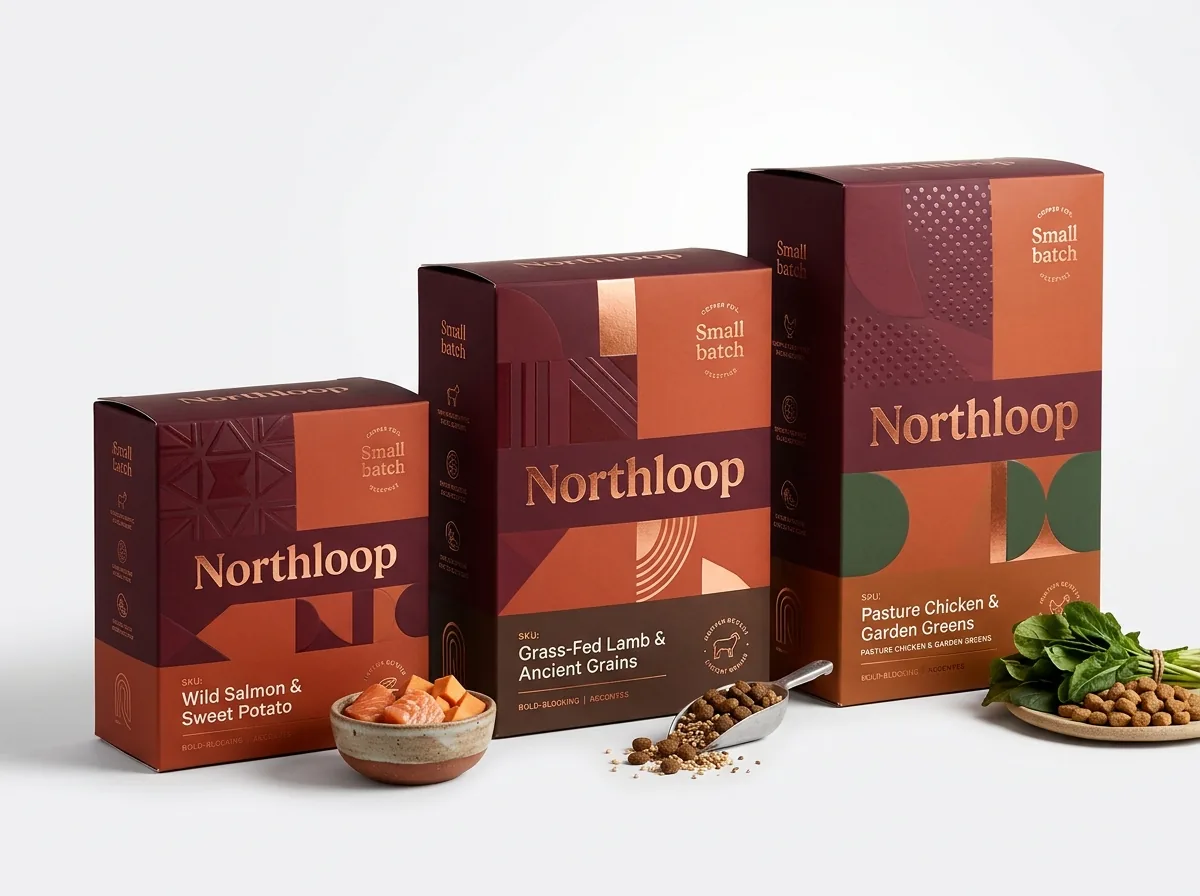
Most pet brands launch with three to five protein recipes (such as Beef & Liver, Cage-Free Chicken, Wild Salmon and Pasture-Raised Lamb) plus separate Adult and Puppy/Kitten formulas. Building a different box size for every recipe splits your purchasing volume and complicates case packing. Instead, standardize your inner bag or pouch count so all recipes share the exact same custom pet food boxes dieline. Keep 75% of the layout grid identical across the line (logo position, window cutout, feeding chart grid, barcode box and date-code knockout) and swap only the recipe-specific Pantone color band, protein illustration and Guaranteed Analysis numbers. In our quote form, select 2 designs or 3+ designs to combine your flavor quantities into one production run with free design help and zero die or plate charges. If you also sell pouches or jars alongside cartons, you can carry the exact same Pantone palette onto matching custom food labels and custom pet treat pouches. Before your artwork goes to press, our prepress specialists run a 10-point check on every SKU: verifying ⅛ inch outer bleed, ⅛ inch inner safe margin away from fold scores, 300 DPI image resolution, 100% black barcode bars and the unvarnished date-code rectangle.
What are the most common pet food box artwork and panel mistakes?
A great-looking front panel can still be held up at the co-packer or retailer if technical panels are missing or unreadable. Avoid these five prepress mistakes
- Laminating or varnishing over the lot number and expiration date zone, which causes co-packer inkjet codes to smudge.
- Setting the ingredient list or Guaranteed Analysis table in tiny white text over a dark 4-color photo where ink spread blurs the letters.
- Placing the net weight statement too close to a lower die-cut window or perforated pouch dispenser tear line.
- Printing a UPC barcode in low-contrast colors (like red or light green bars, which red laser scanners cannot read) instead of black on white.
- Forgetting to review your final panel text with your regulatory specialist before approving the print proof.
Find your size
Suggested inside size: 5 × 2.5 × 7 in
A starting point. Your account manager confirms the size with you before the proof.
Quote this size →Packaging for this
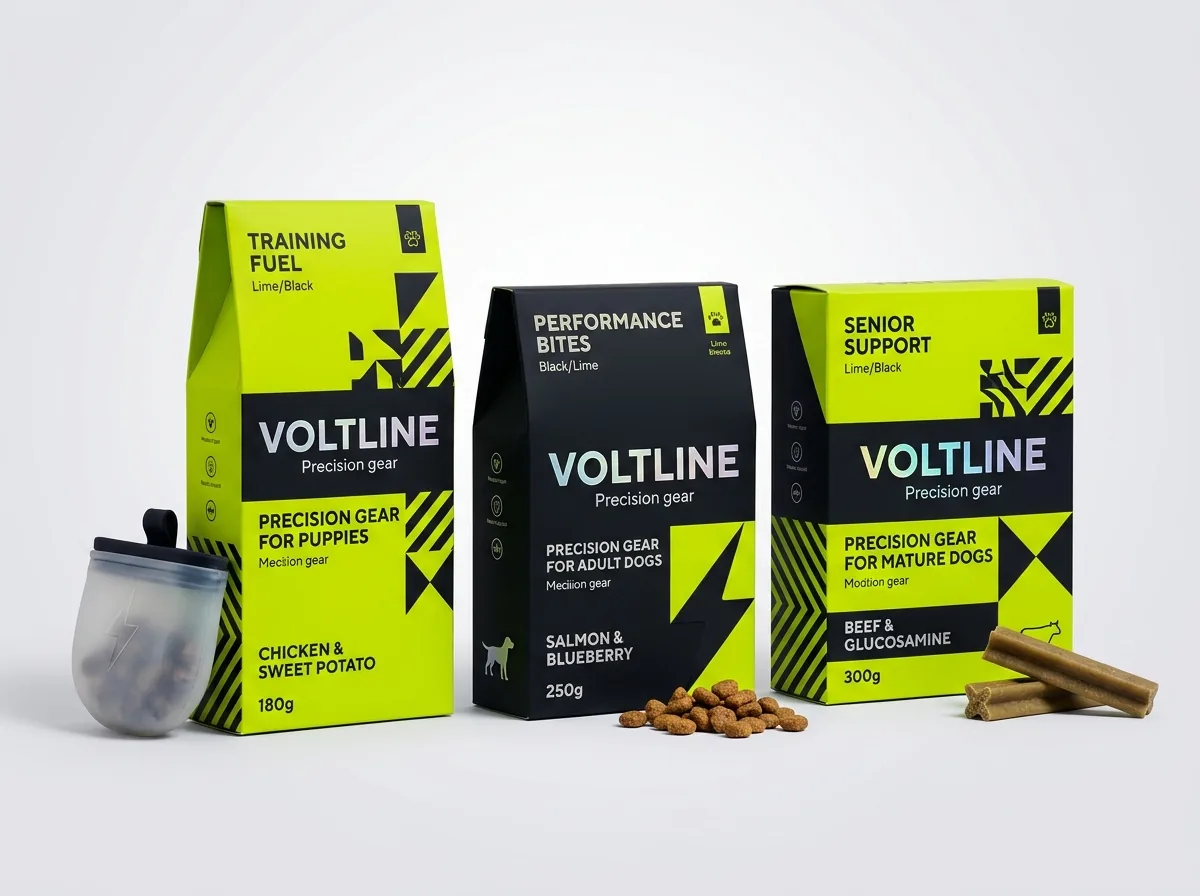
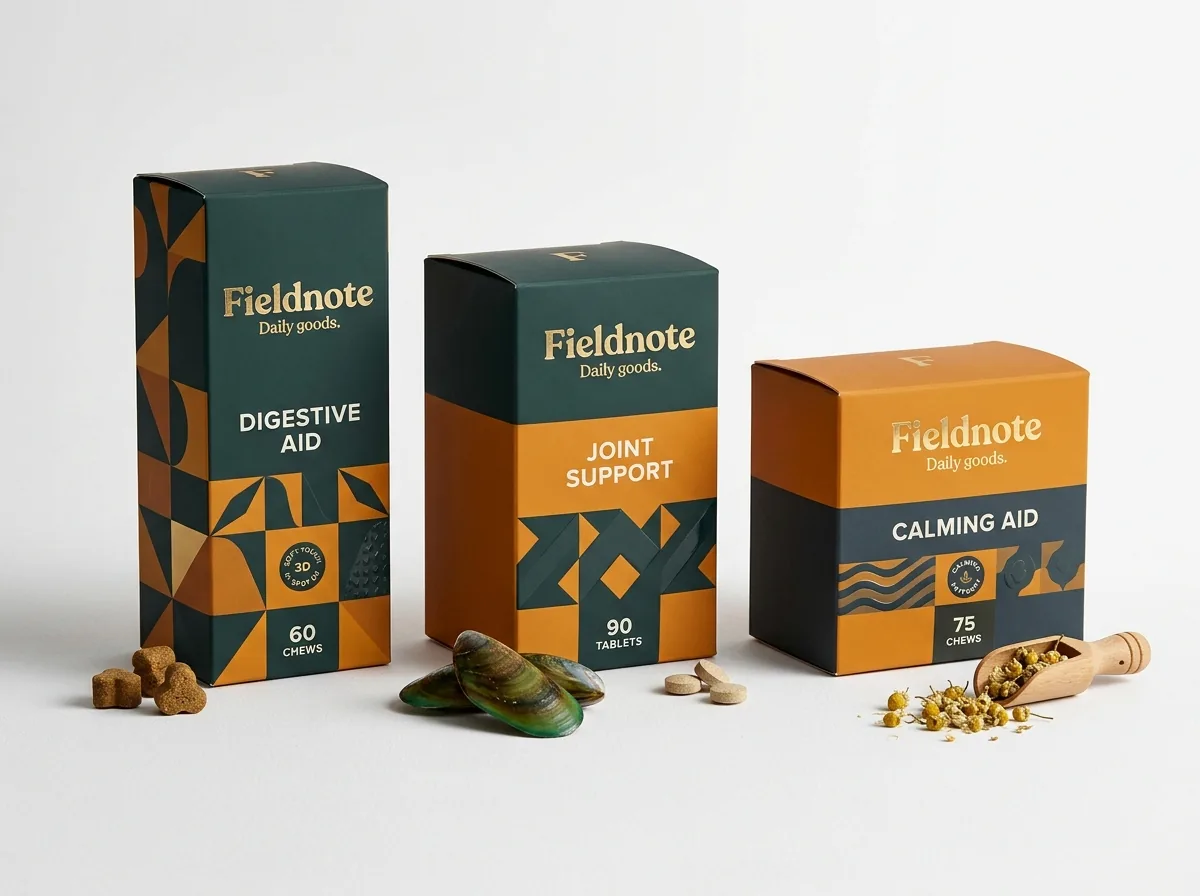
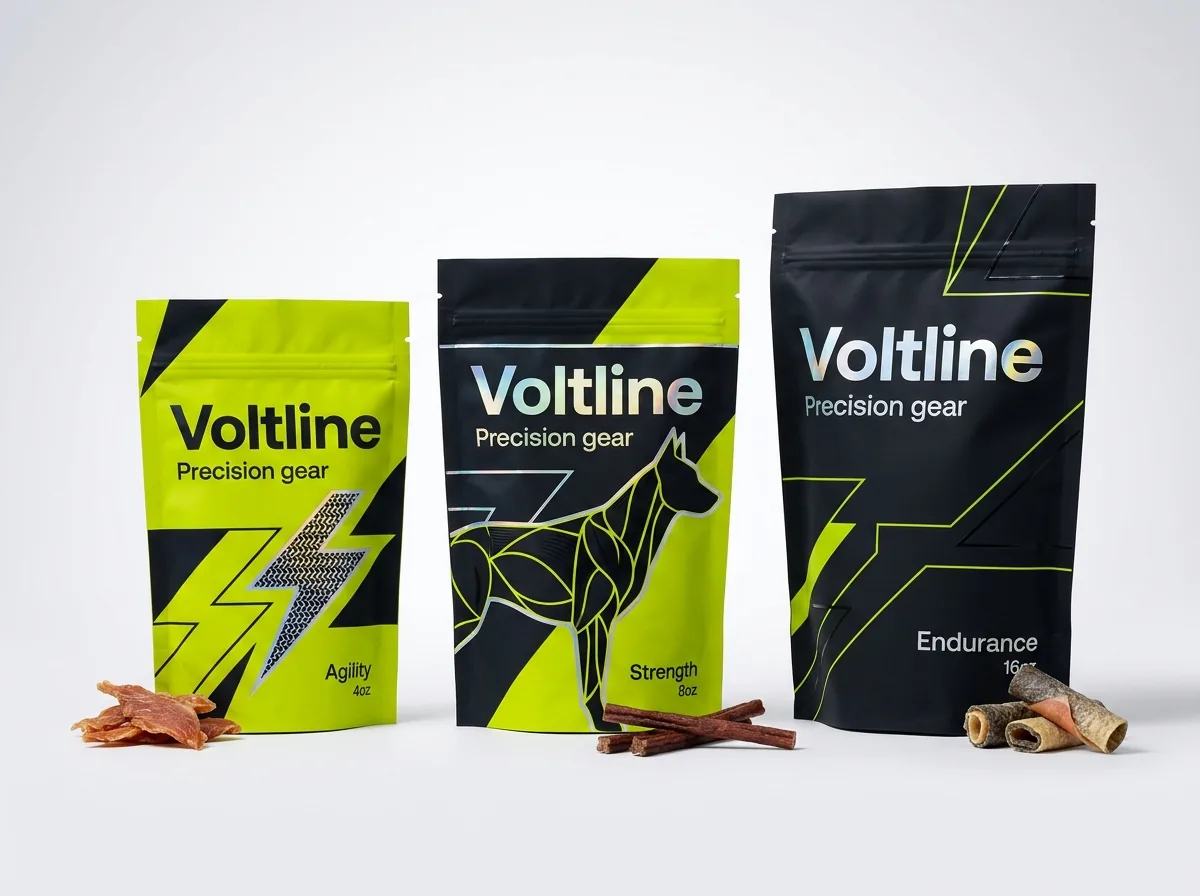
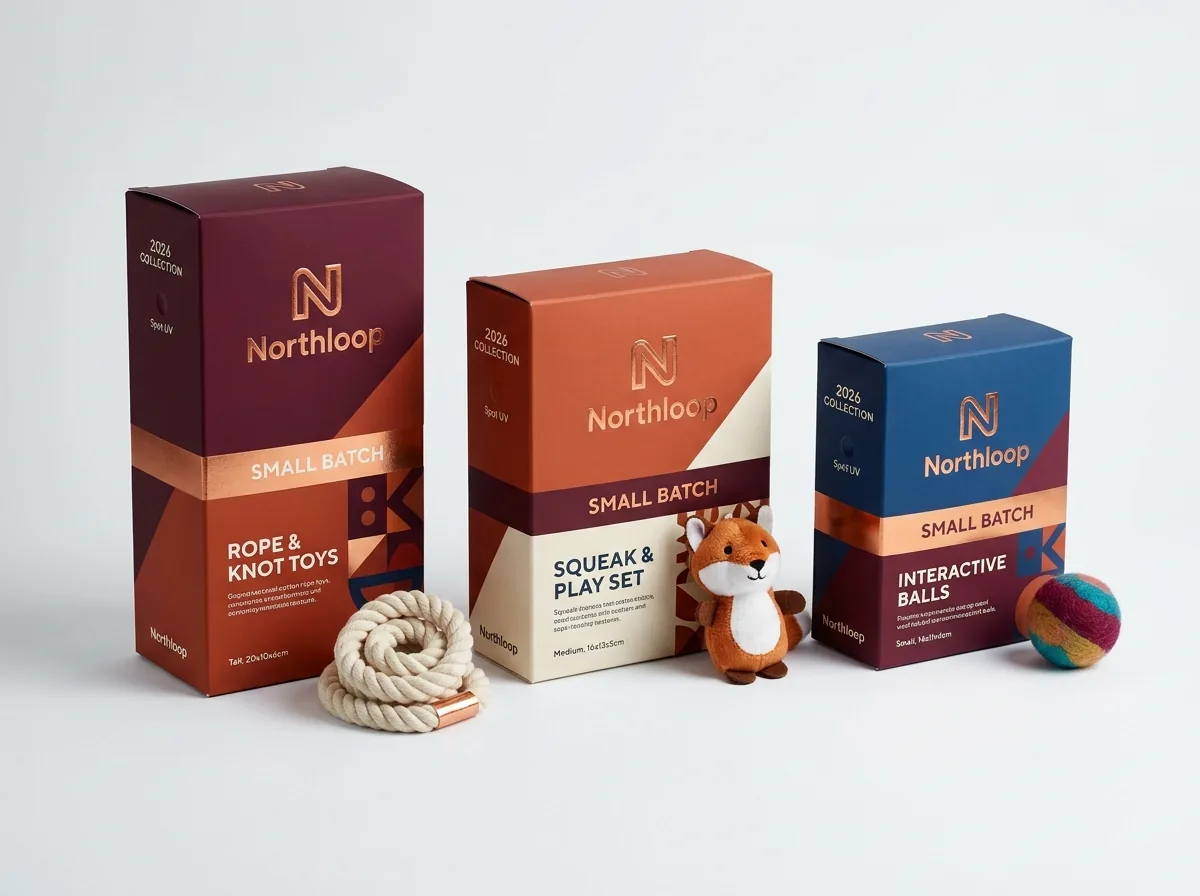
Ready to order pet food boxes? Compare up to 3 quantities with a free 3D mockup.
Request a Quote →Questions about pet food boxes
Does CubitPack provide a free custom dieline template for our pet food box?
Yes. Tell us your inside length, width and height (plus whether you want an auto-lock bottom, window or perforated pouch chute) and our design team will send you a flat vector dieline template for free.
Can your design team help lay out our Guaranteed Analysis and feeding chart?
Yes. Design help is free on every order. Send us your logo, brand colors and the nutrition text approved by your formulation or regulatory specialist, and we will typeset the tables onto your dieline and build a 3D mockup.
Does CubitPack certify that our pet food label text meets state AAFCO laws?
No. While our prepress team ensures your panels, font sizes, barcodes and date-code knockouts print cleanly, your brand or regulatory consultant is responsible for verifying your specific AAFCO and FDA CVM nutritional claims.
How do you keep brand colors consistent across Beef, Chicken and Salmon boxes?
We print with both full-color CMYK and exact Pantone (PMS) spot colors, and our Pantone color match is guaranteed. Your signature brand color and flavor bands will match across folding cartons, corrugated shippers and labels.
Can I print a transition feeding guide or QR code on the inside of the box?
Yes. Inside printing is available on both folding cartons and corrugated mailer boxes. Many pet brands print a 7-day food transition chart, scoop guide or reorder QR code inside the top lid so the outer panels stay uncluttered.
Can I use an AI-generated dog or cat illustration on my pet food box?
Yes. Send us your AI-generated pet illustration or pattern and our prepress designers will upscale the resolution, add the required ⅛ inch bleed, set up vector typography and show you a digital proof and 3D mockup before payment.
Still have a question? Ask a packaging specialist.
Request a Quote →Request your pet food boxes quote
Tell us your size and quantities, and one dedicated account manager prepares pricing for each tier.
- Free design & AI-to-print studio + 3D mockup
- No die or plate charges · 4–5 day rush available
- Free shipping to all 50 states
- 10% off your first order
This panel layout guide references FDA Center for Veterinary Medicine (21 CFR Part 501) and AAFCO model pet food label panel conventions alongside CubitPack's prepress, Pantone matching and dieline standards from our published product specifications. A packaging specialist checked every section. Spot something wrong? Tell us and we will fix it.
Sources
What changed
- October 22, 2026: First published.
- October 22, 2026: Updated specifications, terminology, and verified source links.
More guides
New packaging guides by email
Sizes, materials and design tips. Unsubscribe anytime.