
Folding carton sleeves vs rigid magnetic golf ball boxes: which fits pro shops and tournaments?
Short answer: Choose folding paperboard 3-ball sleeves and 12-ball dozen cartons (starting at 1,000 units) for pro shop retail, DTC golf ball brands and high-volume corporate promos, or choose rigid magnetic and two-piece custom golf ball boxes (starting at 50 units) for charity scrambles, member-guest tournaments and VIP sponsor welcome kits.
On this page
- How do 3-ball sleeves, folding dozen boxes and rigid tournament boxes compare
- Hinged tuck-top dozen box vs two-piece lift-off lid dozen box: which should golf brands pick
- Why do golf tournaments and corporate outings choose rigid magnetic boxes
- When should you use an EVA foam caddy versus a cardboard ball tray
- How can a golf brand combine folding sleeves and rigid boxes across its line
- Common mistakes
- FAQs
Request a custom quoteFree dieline & 3D mockup
Golf ball packaging splits into two distinct structural families depending on how the balls are distributed and what else goes in the box. Folding carton sleeves and dozen boxes are die-cut from 18 pt to 24 pt white or kraft paperboard, ship completely flat to save warehouse space, and pop open to hold 2, 3 or 12 golf balls at the lowest possible per-unit cost from 1,000 units. Rigid golf ball boxes are built around thick 1.5 mm to 2.5 mm non-bending chipboard (gray board) wrapped in soft-touch, linen or metallic-stamped paper and fitted with concealed magnets or a lift-off lid. Because rigid boxes start at just 50 units and hold custom EVA foam caddies for divot tools, ball markers and tees, they are the standard choice for 72-player or 144-player golf outings. At CubitPack, both families of custom printed golf ball boxes include free design help and no die fees.
How do 3-ball sleeves, folding dozen boxes and rigid tournament boxes compare?
Whether you are launching a direct-to-consumer urethane tour ball or organizing an annual charity golf tournament for 120 executives, comparing minimum order quantities, unit cost, storage footprint and accessory options side by side makes the structural choice clear. Golf ball buyers typically fall into two camps: ongoing pro-shop and online inventory where flat-folding cartons keep warehousing and shipping lean, or dated tournament and sponsor events where a low-minimum rigid box with a custom foam insert creates a memorable registration table gift. Review the four-way comparison table below before selecting your box style in the quote form.
| Feature | Folding 3-ball sleeve & hinged dozen | Rigid two-piece & magnetic tournament box |
|---|---|---|
| Minimum order quantity | 1,000 boxes (or 1,000 dozens + 4,000 sleeves) | 50 boxes (ideal for single tournaments & VIP gifts) |
| Board construction | 18–24 pt SBS/C1S paperboard or E-flute corrugated | 1.5–2.5 mm rigid chipboard (gray board) wrapped in printed art paper |
| Ships & stores flat? | Yes (ships 100% flat; fast hand or machine folding) | No (ships pre-assembled set-up, or collapsible magnetic) |
| Holds tees, divot tool & marker? | Balls only (or simple paperboard divider) | Yes (custom die-cut EVA foam caddy holds full accessory kit) |
| Closure mechanism | Reverse/straight tuck flaps or hinged thumb-tab lid | Concealed snap magnets, lift-off telescope lid or ribbon drawer |
| Relative unit cost | Lowest unit cost for retail and volume promos | Higher unit cost for luxury presentation & keepsake use |
| Best use case | DTC golf brands, pro shop pegboards, trade show giveaways | Charity scrambles, member-guest gifts, executive sponsor kits |
Hinged tuck-top dozen box vs two-piece lift-off lid dozen box: which should golf brands pick?
When packaging a 12-ball dozen (four 3-ball sleeves laid side by side), golf brands choose between two classic dozen structures: a one-piece hinged tuck-top carton or a two-piece box with a separate lift-off telescoping lid. A hinged tuck-top dozen carton is die-cut from a single sheet of paperboard, with the top lid hinged along the back wall and a front flap that tucks into the front rim. Because it is one piece, it ships flat in a single stack, sets up in seconds, and gives you a connected inside lid billboard that pops up behind the four sleeves when opened on a pro shop counter. A two-piece telescoping dozen box uses a separate lid tray and base tray (either as a folding paperboard two-piece box from 1,000 units or a set-up two-piece rigid box from 50 units). Lifting the full-depth lid straight off the base gives the classic tour-ball unboxing experience and makes the walls double-thick when closed, adding extra crush resistance when dozen boxes are stacked high on pro shop tables.
Why do golf tournaments and corporate outings choose rigid magnetic boxes?
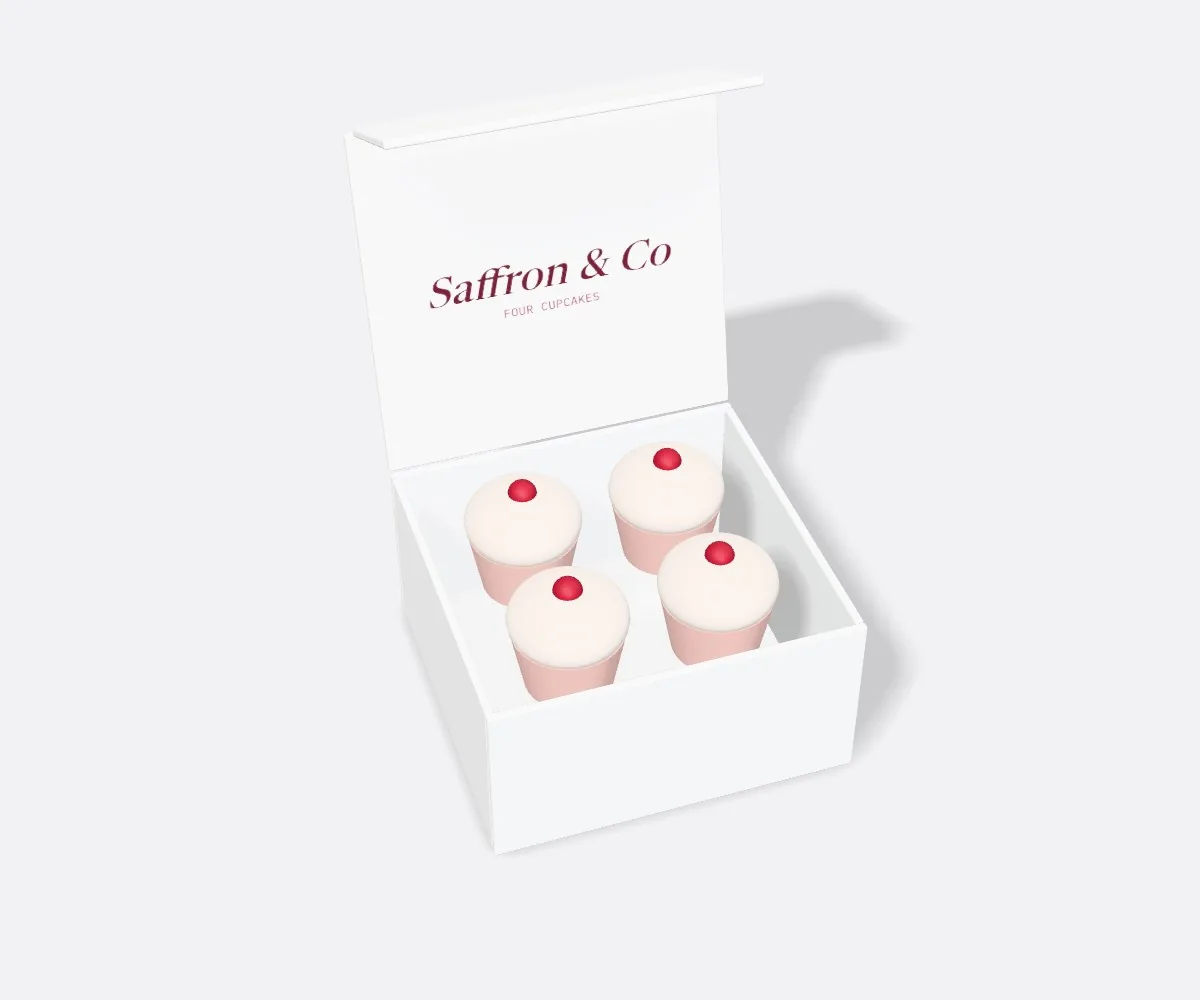
A typical 18-hole charity golf scramble or country club member-guest tournament hosts 72 to 144 golfers (18 to 36 foursomes). Ordering 1,000 folding cartons for a 100-player event leaves 900 leftover boxes sitting in a closet. Because CubitPack's rigid magnetic closure boxes and drawer boxes start at just 50 units, event organizers can order the exact quantity needed for their player field plus a few extra boxes for tournament sponsors and auction prizes. Rigid magnetic boxes also solve the presentation challenge of multi-item welcome kits. Instead of handing golfers a plastic goodie bag at the registration table, each player flips open a soft-touch navy, forest green or matte black book-style box with the tournament crest stamped in metallic foil on the cover, revealing custom-logoed golf balls, a brushed metal divot tool, a hat-clip ball marker and wooden tees nested cleanly in a die-cut foam bed.
- 100-player charity scramble: order 100 to 125 rigid magnetic boxes (starts at 50 minimum) with custom EVA foam inserts.
- Country club pro shop crest program: order 1,000+ folding 3-ball window sleeves or 2-ball hang-tab boxes for year-round member sales.
- DTC golf ball brand launch: order 1,000 hinged or two-piece dozen boxes paired with 4,000 matching 3-ball sleeves.
- Trade show conference booth: order 1,000 compact 2-ball reverse-tuck sleeves with a QR code printed on the back panel.
Know your size? Compare pricing across up to 3 quantities.
Request a Quote →When should you use an EVA foam caddy versus a cardboard ball tray?
Inside a gift or dozen box, you have three ways to immobilize golf balls: individual 3-ball paperboard sleeves, a die-cut custom cardboard insert, or a closed-cell custom EVA foam insert. If your box holds golf balls only (such as a 6-ball or 12-ball pack) and you want 100% paperboard curb-recyclable packaging, a folded cardboard grid or die-cut cradle tray holds each 1.68-inch ball in place at a fraction of the cost of foam. As soon as you combine heavy golf balls with dense metal accessories (like a zinc-alloy divot repair tool, a magnetic enamel ball marker, a metal bag tag or a stainless tumbler), step up to high-density EVA foam. Metal tools can tear through thin paperboard partitions during shipping and scratch the urethane cover of the golf balls. EVA foam grips each item in its own shock-absorbing pocket so nothing shifts even if the parcel is dropped.
How can a golf brand combine folding sleeves and rigid boxes across its line?
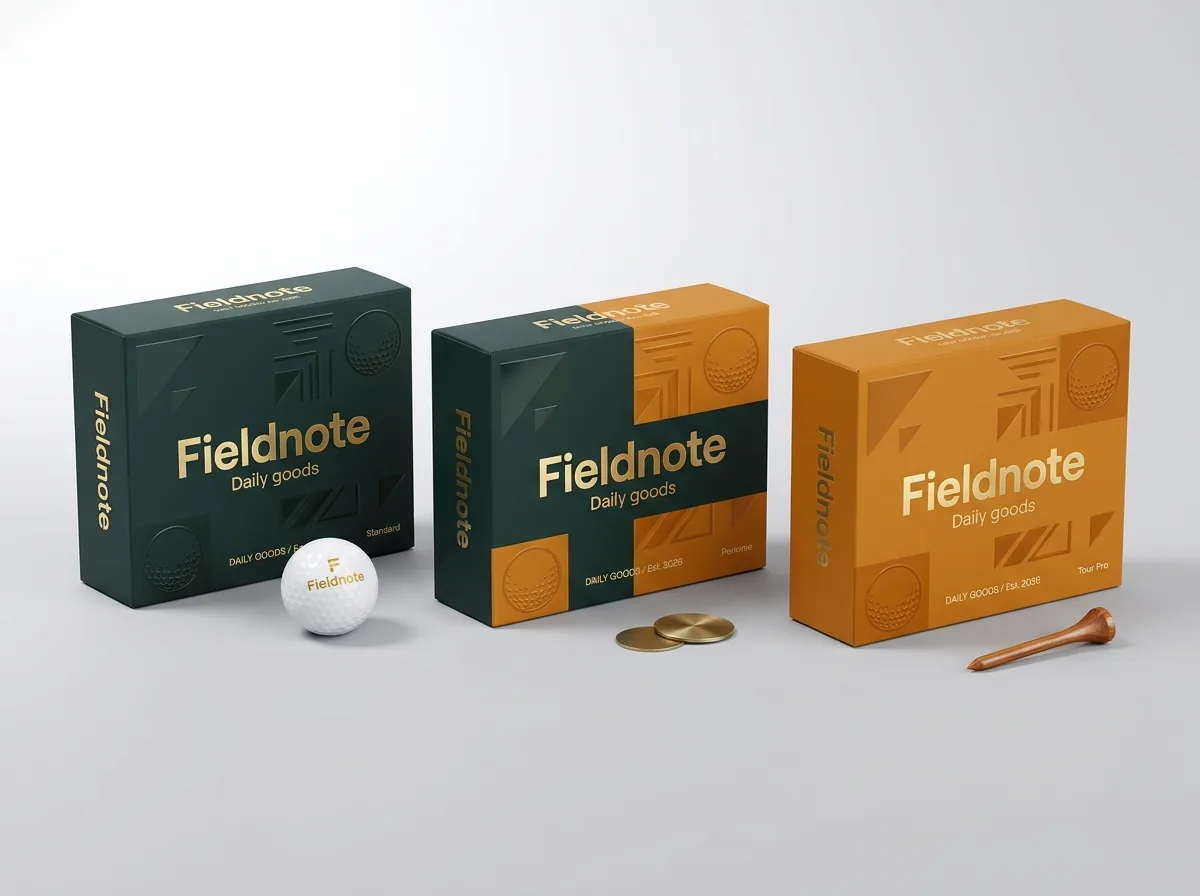
Many golf brands use both structures side by side to serve retail golfers and high-margin gift buyers. Keep your everyday 3-ball sleeves and 12-ball dozen cartons in 20 pt white paperboard with soft-touch lamination and an open ball window so repeat players can restock their golf bags affordably. For Father's Day, Q4 holiday gift sets, influencer seeding kits and corporate tournament orders, place two of your existing printed 3-ball sleeves inside a 50-unit run of rigid magnetic boxes alongside a branded divot tool and marker. Because you can request both quotes on our custom golf ball boxes page and our Pantone color match is guaranteed, your brand green, navy or gold foil will match across every sleeve, dozen box and rigid gift case. Reusing your standard printed 3-ball sleeves inside a seasonal rigid presentation box also simplifies inventory planning. Instead of forecasting how many balls will sell as individual pro-shop dozens versus corporate gift sets months in advance, your fulfillment team pulls from one master inventory of 3-ball sleeves and packs them into either flat-folding dozen cartons or rigid magnetic tournament boxes on demand. You get a free digital proof and 3D mockup of every structure before you pay, plus 10% off your first CubitPack order and free shipping to all 50 US states.
What mistakes do buyers make when choosing golf ball box styles?
Mismatching the box structure to your event size or accessory weight can blow your budget or damage gifts in transit. Avoid these five mistakes
- Ordering unprinted stock boxes for a 100-player golf tournament because you assumed custom rigid magnetic boxes required a 1,000-unit minimum (they start at 50).
- Putting a heavy metal divot tool and loose golf balls inside a thin paperboard box without an EVA foam or partitioned insert.
- Choosing set-up rigid boxes for a 5,000-unit retail dozen run when flat-shipping folding dozen cartons cut storage space by 85%.
- Ordering 1,000 dozen boxes and forgetting to order 4,000 inner 3-ball sleeves (four sleeves per dozen).
- Skipping a thumb cutout or ribbon pull on tight-fitting two-piece boxes and foam trays, making balls and divot tools hard to lift out.
Find your size
Suggested inside size: 1.75 × 1.75 × 1.75 in
A starting point. Your account manager confirms the size with you before the proof.
Quote this size →Packaging for this
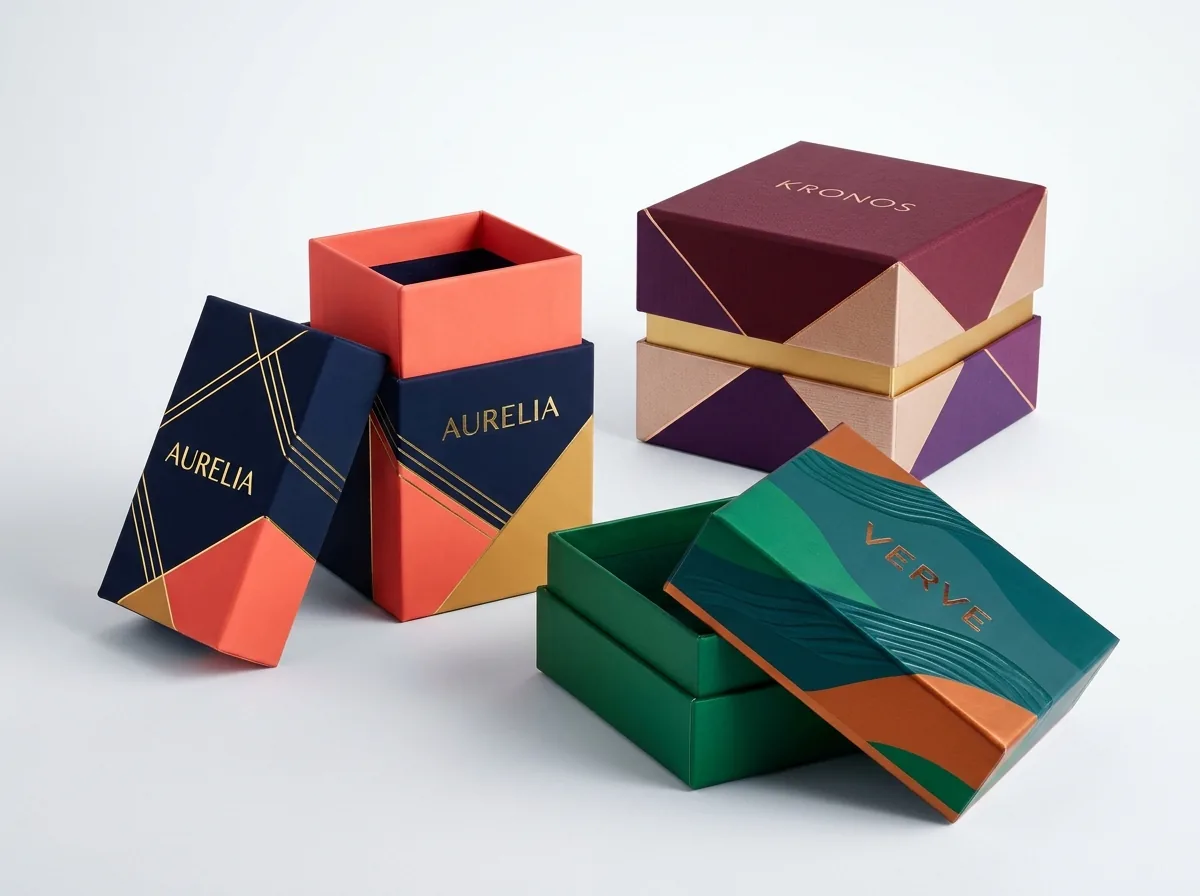
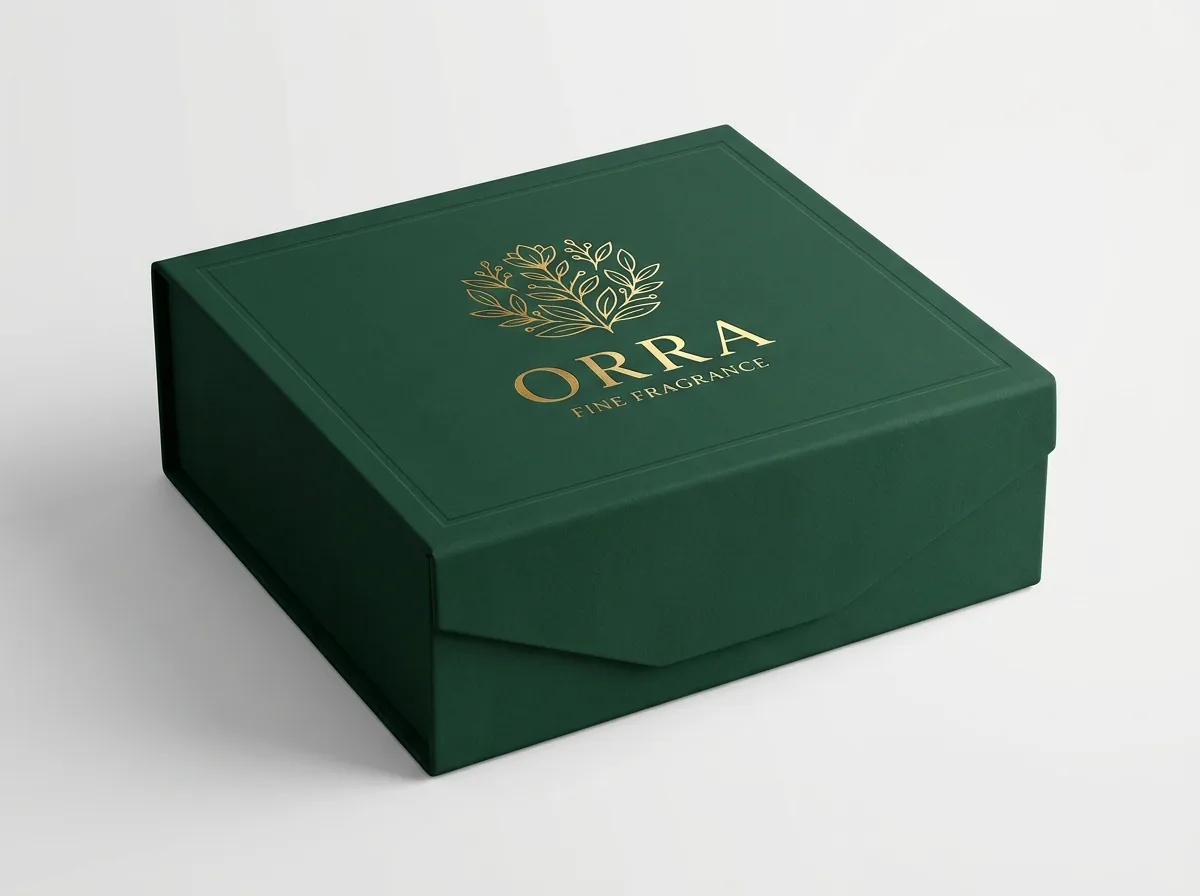
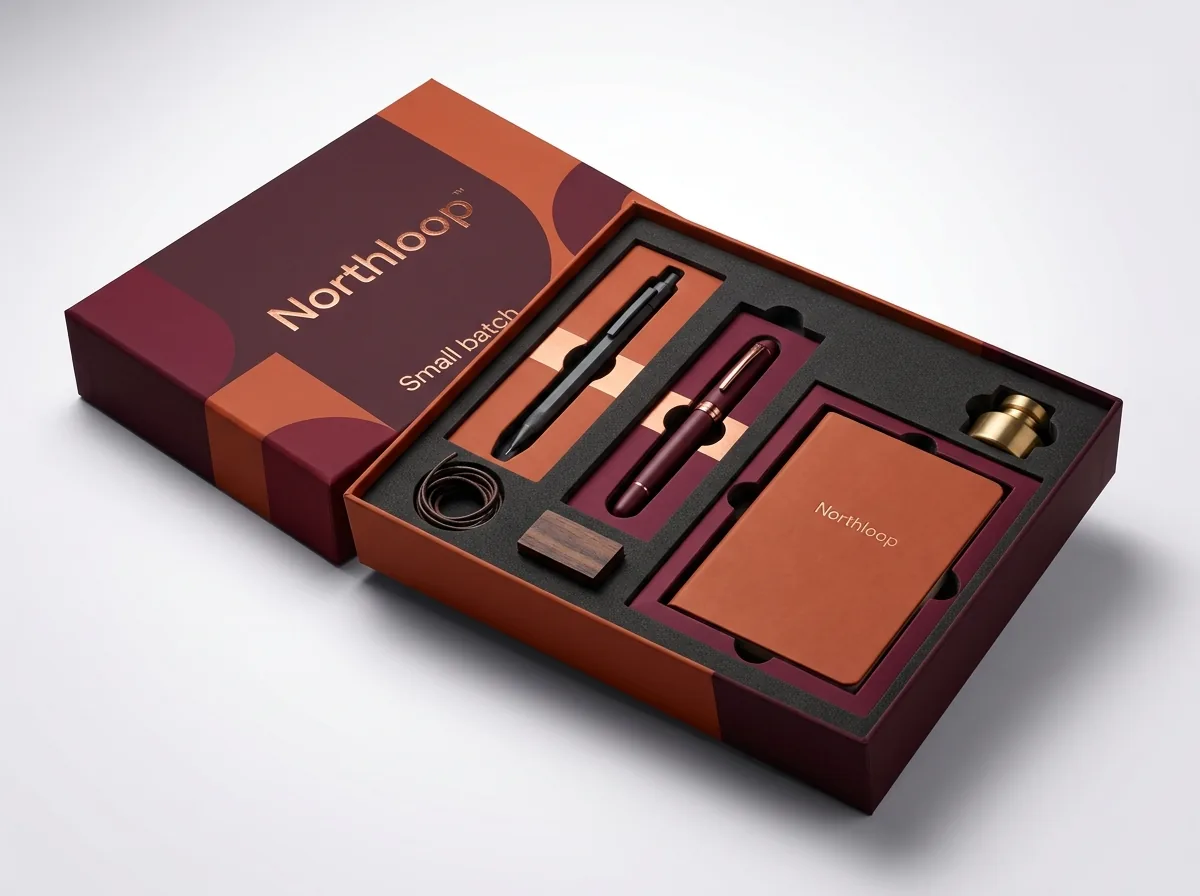
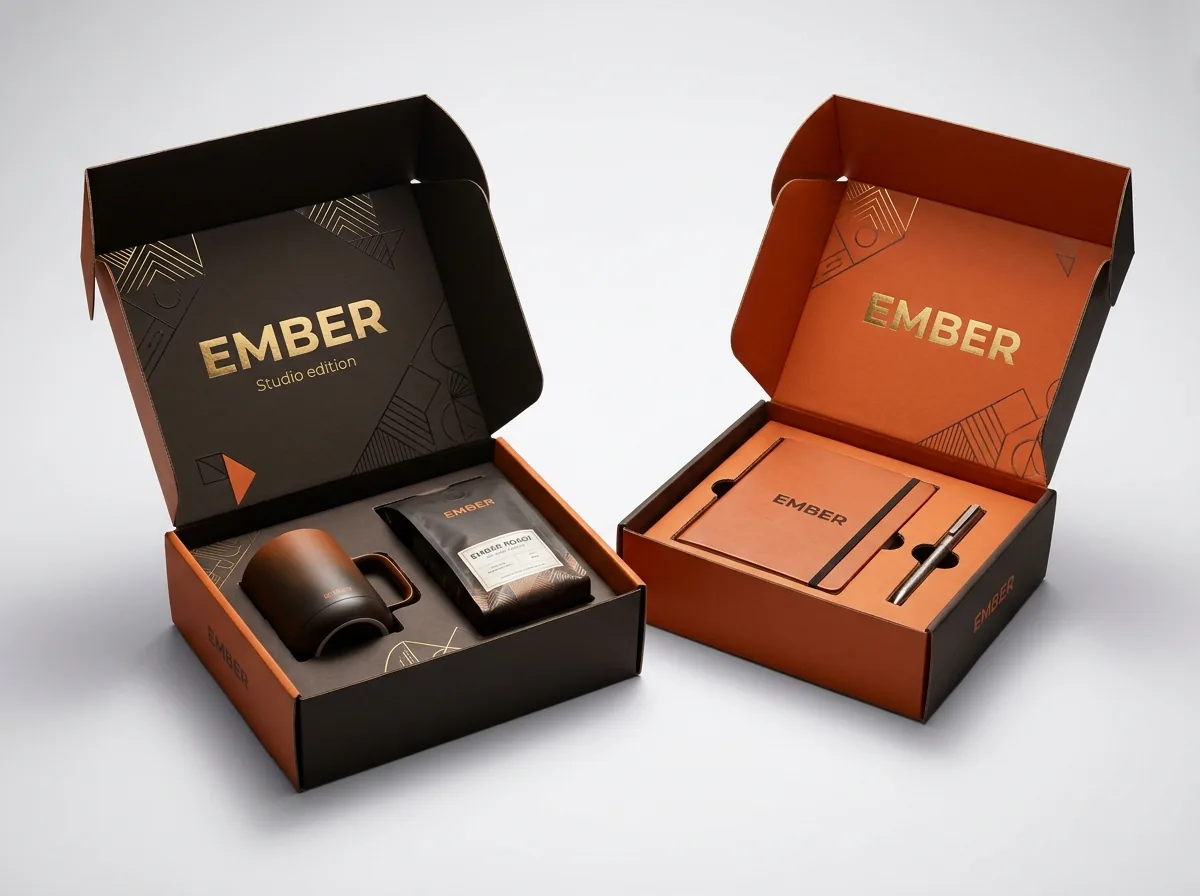
Ready to order golf ball boxes? Compare up to 3 quantities with a free 3D mockup.
Request a Quote →Questions about golf ball boxes
Can I order just 50 or 100 custom golf ball boxes for a single charity tournament?
Yes. Custom rigid golf ball boxes (including magnetic closure book-style boxes, two-piece lift-off lid boxes and drawer boxes with EVA foam inserts) start at just 50 units. Folding paperboard 3-ball sleeves and dozen cartons start at 1,000 units.
Are collapsible magnetic boxes available if we want rigid luxury without bulky storage?
Yes. We offer collapsible (foldable) rigid magnetic boxes that ship flat to your club or office and assemble in seconds with pre-applied corner tape, combining rigid chipboard (gray board) strength with flat storage.
Can you print a hole-by-hole course map or sponsor list inside the lid?
Yes. Both hinged folding dozen boxes and rigid magnetic tournament boxes support full-color inside lid printing, ideal for printing the tournament schedule, sponsor logos, course map or ball compression specs.
Do you supply the golf balls and divot tools, or just the custom packaging and inserts?
CubitPack manufactures the custom printed boxes, sleeves, EVA foam inserts, cards and labels. We size the foam cavities to your exact golf balls, divot tool, marker and tees, and can ship the finished boxes directly to your ball printer or golf club.
How fast can we get custom golf tournament boxes if our event is in three weeks?
Standard production takes 10 to 14 business days after proof approval and payment, and our 4 to 5 business day rush service handles tight tournament deadlines. Shipping across all 50 US states is free.
Can we see a 3D mockup showing our tournament logo and foam layout before paying?
Yes. Every order includes free design help, a flat dieline proof and a 3D mockup of your box and insert before you pay. You can also order a paid physical sample credited toward your full order.
Still have a question? Ask a packaging specialist.
Request a Quote →Request your golf ball boxes quote
Tell us your size and quantities, and one dedicated account manager prepares pricing for each tier.
- Free design & AI-to-print studio + 3D mockup
- No die or plate charges · 4–5 day rush available
- Free shipping to all 50 states
- 10% off your first order
This comparison of folding paperboard sleeves, hinged dozen cartons and rigid magnetic tournament boxes is built from CubitPack's decided minimums (1,000 folding carton, 50 rigid), turnaround times and insert capabilities in our published product specifications. A packaging specialist verified every row. Spot something wrong? Tell us and we will fix it.
Sources
What changed
- October 22, 2026: First published.
- October 22, 2026: Updated specifications, terminology, and verified source links.
More guides
New packaging guides by email
Sizes, materials and design tips. Unsubscribe anytime.