
Flat tie boxes vs rolled tie boxes: which protects silk neckties better?
Short answer: Choose a 14 × 4.5 × 1 in flat two-piece box for retail counters, bridal gifts and unboxing where seeing the full silk blade matters. Choose a 4.5 × 4.5 × 3.25 in rolled-tie cube or drawer box for e-commerce shipping, where rolling eliminates center fold creases in custom tie boxes.
On this page
- How do flat tie boxes and rolled tie cubes compare at a glance
- Does folding or rolling protect bias-cut silk and wool interlinings better
- Which tie box format creates a stronger retail and gift presentation
- How do flat and rolled tie boxes compare for e-commerce shipping and 3PL storage
- When should my brand choose flat tie boxes, rolled cubes, or both
- Common mistakes
- FAQs
Request a custom quoteFree dieline & 3D mockup
Both flat 14-inch tie boxes and compact 4.5-inch rolled-tie cubes protect silk, wool and knit neckwear, but they serve different sales channels and fabrics. A classic 14 × 4.5 × 1 inch two-piece telescoping box folds a 58-inch necktie once at the narrow mid-blade and displays 13.5 inches of continuous pattern when the lid lifts off. That wide visual reveal makes flat boxes the gold standard for haberdashery counters, department store gift tables and groomsmen proposals. A 4.5 × 4.5 × 3.25 inch cube or tray-and-sleeve drawer box houses a necktie loosely rolled around a tissue core. Because a gentle roll distributes curvature across the entire bias-cut wool interlining instead of concentrating pressure at one fold line, rolled-tie boxes prevent transit creases and resist crushing inside small parcel mailers. CubitPack produces both styles to order from 1,000 folding cartons or 50 rigid boxes with free US shipping.
How do flat tie boxes and rolled tie cubes compare at a glance?
When menswear founders ask our structural team to quote printed tie boxes, the first decision is almost always geometry: the traditional 14-inch oblong box or the modern 4.5-inch square cube. Both can be engineered as pop-up folding paperboard cartons (from 1,000 units), set-up rigid chipboard gift boxes (from 50 units), or corrugated mailers (from 250 units). The practical difference comes down to four variables: how the wool or silk interlining reacts during weeks of storage, how much visual surface area the customer sees upon opening the lid, how easily a parcel carrier can bend the package in transit, and how many units fit on a stockroom shelf. Compare both formats across every operational metric in the table below.
| Comparison factor | Flat tie box (14 × 4.5 × 1 in) | Rolled tie cube / drawer (4.5 × 4.5 × 3.25 in) |
|---|---|---|
| How the tie sits inside | Folded once in half with tail tucked under | Loosely rolled around a tissue or card core |
| Crease resistance in transit | Good if depth >= 1 in and keeper tab holds tie | Superior; zero horizontal fold lines on interlining |
| Visual reveal when opened | Shows 13.5 in of uninterrupted blade and tip | Shows a compact spiral coil of the silk weave |
| Parcel crush & bend resistance | Long 14 in span needs a rigid mailer or overbox | Compact cube resists bending in small mailers |
| Board area & unit cost | Uses more board surface area per unit | Uses less board surface area in folding card |
| Popular structural styles | Two-piece lid & base, straight tuck, window box | Cube carton, tray & sleeve drawer, rigid cube |
| CubitPack minimums | 1,000 folding cartons · 50 rigid boxes | 1,000 folding cartons · 50 rigid · 250 mailers |
Does folding or rolling protect bias-cut silk and wool interlinings better?
A fine necktie is constructed from three parts: the outer shell (usually woven Mulberry silk, grenadine, wool challis or cashmere cut at a 45-degree angle to the warp and weft), a resilient wool or wool-cotton interlining that gives the knot its body, and a tipping fabric at the back of the blades. Because the outer silk is cut on the bias, it stretches and rebounds naturally along curves, but it can develop a visible horizontal ridge if pinched tightly along a straight crease under heavy stacking weight. In a flat 14 × 4.5 × 1 inch box, the single fold sits right near the narrow center neckband where the tie is thinnest, and a sheet of custom tissue paper inside the fold cushions the bend so no sharp crease forms. However, if a tie stays packed for months in a warehouse or tumbles inside a parcel network, rolling the tie loosely from the narrow tail toward the wide blade distributes tension evenly across every turn of the spiral. When the customer unrolls the tie, the wool interlining relaxes flat on the first hang.
Which tie box format creates a stronger retail and gift presentation?
On a menswear boutique table, under a Christmas tree or inside a groomsmen proposal suite, the 14 × 4.5 × 1 inch custom two-piece box remains unmatched for dramatic ceremony. Lifting a long telescoping lid off a navy or British racing green base reveals the entire proportion of the necktie at once: the wide pointed tip, the diagonal regimental stripe or heraldic motif, and the woven maker's label across the back. Department store buyers and corporate gift planners also favor the 14-inch footprint because it stacks neatly on display tables and signals a traditional tailored accessory before the ribbon is untied. Flat boxes also give you a 14 × 4.5 inch interior lid canvas (63 square inches of print space) where you can print your brand story, fabric provenance or a step-by-step Windsor knot illustration. Rolled-tie cubes offer a very different, modern jewelry-like reveal: pulling a ribbon tab on a 4.5 × 4.5 × 3.25 inch tray and sleeve box slides out a neat silk cylinder that feels like opening a luxury watch box. Customers often keep a rigid drawer cube on their closet shelf as a permanent travel case for their favorite tie.
Know your size? Compare pricing across up to 3 quantities.
Request a Quote →How do flat and rolled tie boxes compare for e-commerce shipping and 3PL storage?
If 80 percent of your neckties ship one at a time through USPS Ground Advantage, UPS or FedEx, parcel geometry matters just as much as aesthetics. A 14 × 4.5 × 1 inch flat paperboard tie box is long and slender; if you slip it into an unpadded poly mailer, automated conveyor diverters and heavy parcels can bend the 14-inch span in the middle. To mail a flat tie box safely, you must either upgrade to a rigid chipboard box or pack the carton inside a corrugated outer mailer. A 4.5 × 4.5 × 3.25 inch rolled-tie cube has short, compact walls that naturally resist bending and corner crushing. It drops into a small 6 × 6 × 4 inch custom shipping box or corrugated mailer with lower dimensional volume and lower postage. In a fulfillment warehouse, flat folding tie cartons ship and store completely flat before assembly, while pop-up cube cartons also store flat and pop into shape in three seconds at the pack station. If you choose pre-assembled rigid boxes (minimum 50 units), rolled-tie cubes occupy roughly 45 cubic inches of shelf space per box compared with 63 cubic inches for a 14 × 4.5 × 1 inch rigid flat box.
When should my brand choose flat tie boxes, rolled cubes, or both?
You do not have to guess which format suits your collection. Match the box structure to your weave weight, your primary sales channel and whether the tie travels alone or alongside accessories like a pocket square and tie bar. Because CubitPack allows multiple designs or sizes in one order with zero die or plate charges, you can even split your packaging across both silhouettes. For example, heritage silk and wedding brands often place their core 1,000-unit folding carton run in the 14 × 4.5 × 1 inch pop-up two-piece format for store shelves, then add a 50-unit run of magnetic rigid boxes for groomsmen sets or drawer cubes for VIP press kits. Every quote includes a free digital proof and 3D mockup so you can compare the proportions before production starts.
- Choose a 14 × 4.5 × 1 in flat two-piece box when selling on department store tables, haberdashery shelves, or as formal holiday and bridal gifts.
- Choose a 4.5 × 4.5 × 3.25 in rolled cube or drawer box when shipping single ties direct to consumers by mail or selling travel-ready knit and grenadine ties.
- Choose a 14 × 6.5 × 1.25 in or 8 × 6 × 2 in partitioned gift box when bundling a necktie with a pocket square, tie clip and cufflinks.
- Choose a 5.5 × 3.25 × 1.25 in windowed collar-card box for pre-tied and self-tie tuxedo bow ties.
What mistakes should brands avoid when choosing between flat and rolled tie boxes?
Whether you pick the classic 14-inch flat box or the 4.5-inch rolled cube, avoid these five common structural missteps
- Mailing a thin 14-inch folding tie carton inside an unpadded poly bag, where parcel sorting rollers can bend the long box in half.
- Rolling a tie too tightly into a tiny 3 × 3 inch cube, which stretches the bias-cut silk shell against the wool interlining.
- Forgetting an internal keeper band in a flat tie box, allowing the folded tie to slide into a crumpled heap when stood on end.
- Using a rolled-tie cube for stiff pre-tied bow ties or clip-on uniform ties that must lie flat on a collar card.
- Skipping a smooth interior lamination or tissue liner, which lets raw paperboard fibers rub against delicate woven silk.
Find your size
Suggested inside size: 5.5 × 3.25 × 1.25 in
A starting point. Your account manager confirms the size with you before the proof.
Quote this size →Packaging for this
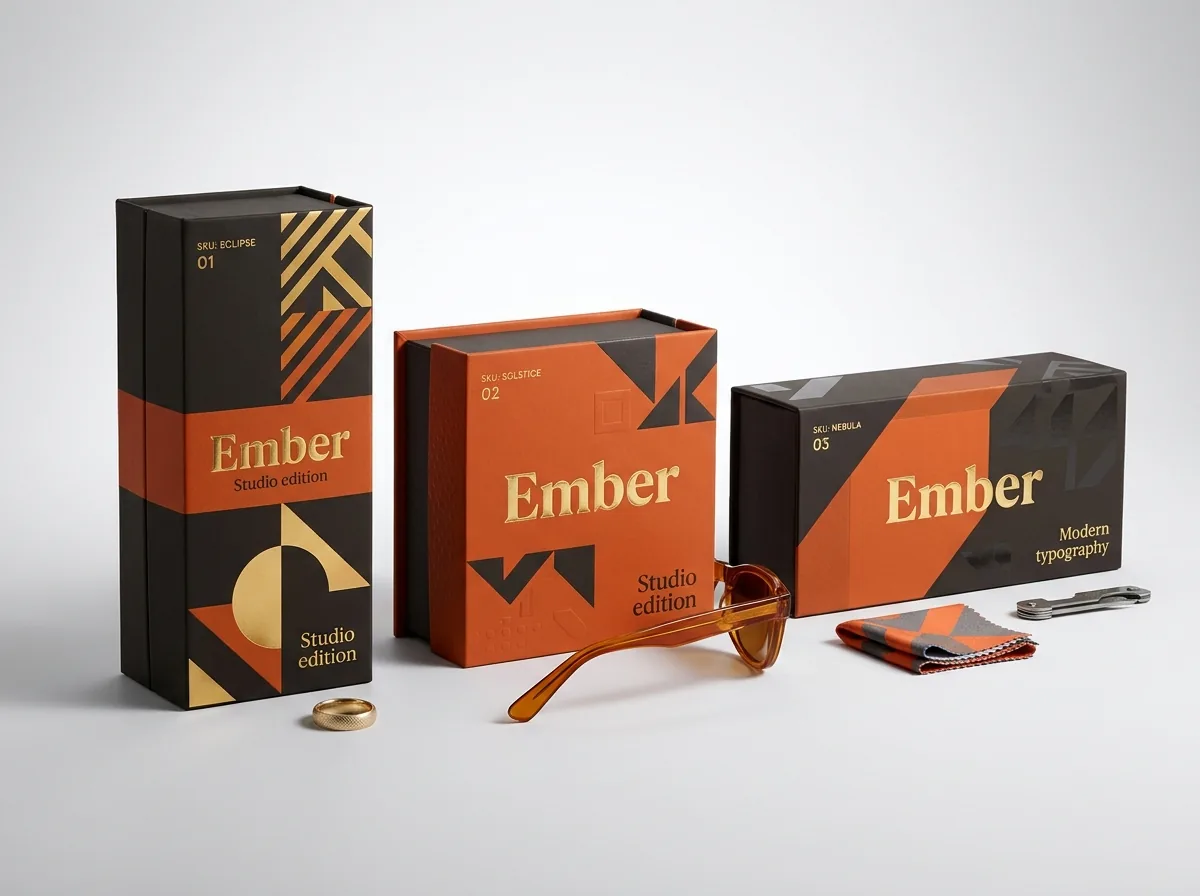
Ready to order tie boxes? Compare up to 3 quantities with a free 3D mockup.
Request a Quote →Questions about tie boxes
Does rolling a silk tie damage the fabric or interlining?
No, as long as the tie is rolled loosely around two fingers or a soft tissue core inside a 4.5 × 4.5 × 3.25 inch box. Loose rolling follows the natural curve of the wool interlining and avoids any horizontal fold line across the silk blade.
Why do traditional menswear shops still prefer 14-inch flat tie boxes?
A 14-inch flat two-piece box displays almost half the length of the necktie as soon as the lid is lifted, letting shoppers and gift recipients admire the full stripe, paisley or jacquard scale without unrolling the tie first.
Which tie box is cheaper to produce at 1,000 units: flat or rolled cube?
In folding paperboard, a 4.5 × 4.5 × 3.25 inch tuck-end cube uses slightly less board surface area than a 14 × 4.5 × 1 inch two-piece lid-and-base set. Request both dimensions in your quote notes to compare exact pricing side by side.
Can a flat 14-inch tie box be shipped in the mail?
Yes, when you either choose a rigid chipboard two-piece box packed in a padded mailer or place your folding paperboard tie carton inside a corrugated outer mailer box so the 14-inch span cannot bend in parcel sorting.
Can I order both flat tie boxes and rolled tie cubes in one CubitPack order?
Yes. Select 2 designs in Step 2 of the quote form and list both your 14 × 4.5 × 1 inch flat box and your 4.5 × 4.5 × 3.25 inch cube box in the notes. Neither style carries any die or plate charges.
Can I test both flat and rolled tie box samples before ordering?
Every order includes a free 2D dieline proof and 3D mockup before payment. You can also order our $50 sample kit to feel our boards and laminations, or request a custom prototype credited toward your production order.
Still have a question? Ask a packaging specialist.
Request a Quote →Request your tie boxes quote
Tell us your size and quantities, and one dedicated account manager prepares pricing for each tier.
- Free design & AI-to-print studio + 3D mockup
- No die or plate charges · 4–5 day rush available
- Free shipping to all 50 states
- 10% off your first order
This comparison draws on bias-cut silk and wool interlining behavior, USPS parcel handling guidelines and CubitPack's decided minimums and turnaround in our published product specifications. A packaging specialist reviewed every row. Spot something wrong? Tell us and we will fix it.
Sources
What changed
- October 22, 2026: First published.
- October 22, 2026: Updated specifications, terminology, and verified source links.
More guides
New packaging guides by email
Sizes, materials and design tips. Unsubscribe anytime.