
Drawer boxes vs tuck-end cartons: which suits custom sunglasses packaging?
Short answer: Choose a tray-and-sleeve drawer box or two-piece rigid box for optical boutiques and designer sunglasses where crush protection, false-bottom cloth storage and keepsake reuse matter. Choose a straight-tuck folding carton for high-volume resort and pouch eyewear in custom sunglasses boxes from 1,000 units.
On this page
- How do drawer boxes, two-piece boxes and tuck-end cartons compare
- Why is the tray-and-sleeve drawer box the signature optical boutique style
- When does a two-piece or collapsible rigid box beat a drawer box
- When is a straight-tuck-end paperboard carton the smartest choice
- How should each sunglasses box style be packed for parcel delivery
- Common mistakes
- FAQs
Request a custom quoteFree dieline & 3D mockup
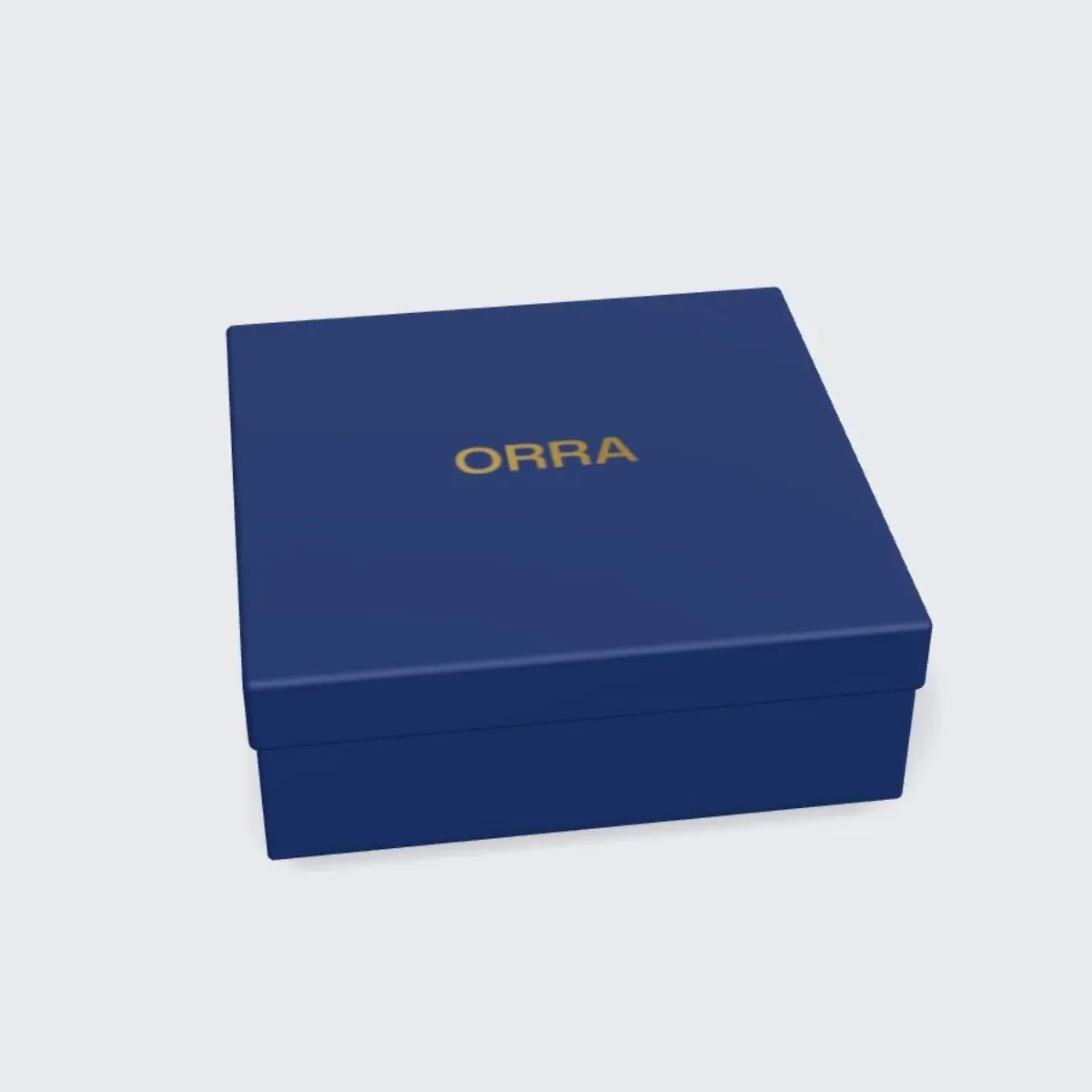
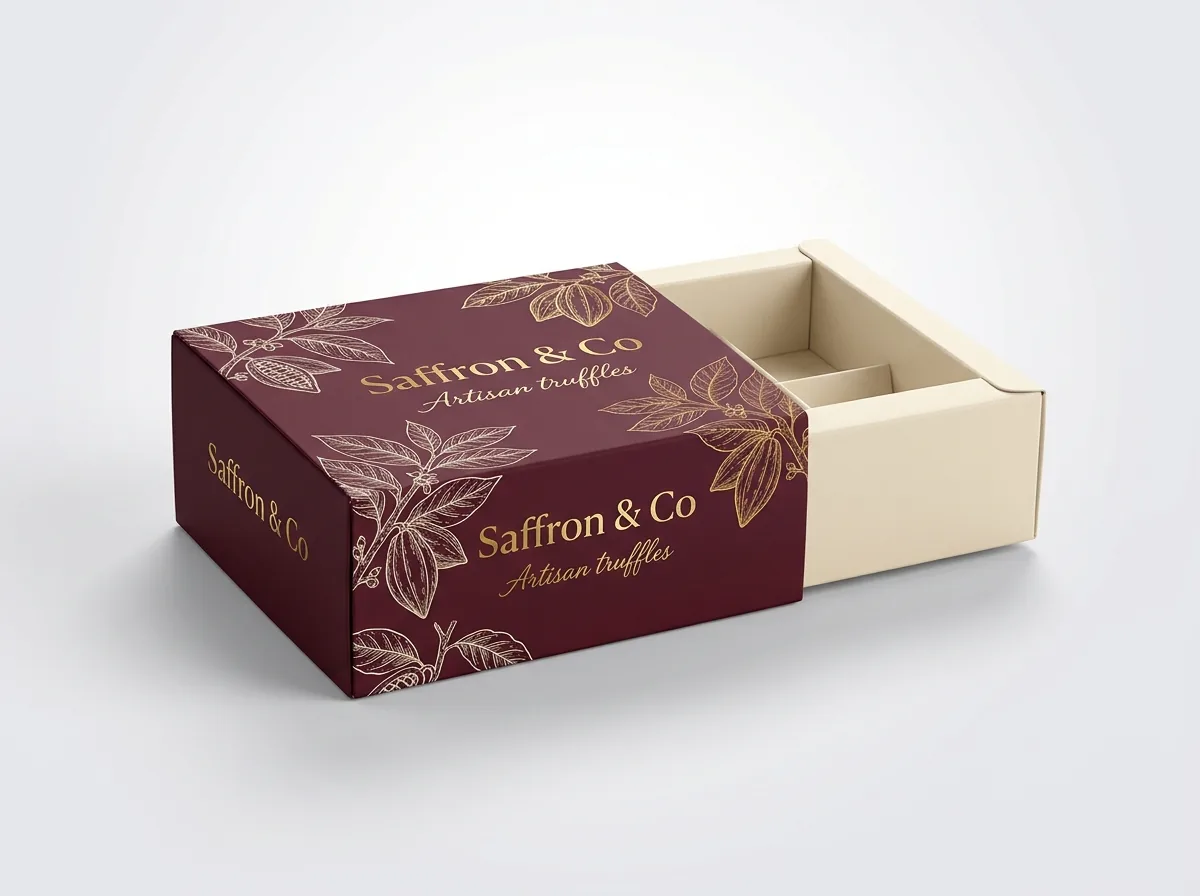
Eyewear brands rely on three primary structural families: tray-and-sleeve drawer boxes, two-piece telescoping boxes, and straight-tuck-end folding cartons. A tray-and-sleeve drawer box pairs an open-ended outer sleeve with a sliding inner tray, often accented by a grosgrain ribbon pull tab and a false bottom that hides the microfiber cloth and booklet underneath the sunglasses case. It can be engineered in folding paperboard (minimum 1,000 units) or rigid chipboard (minimum 50 units). A two-piece lid-and-base rigid box offers the classic luxury optical counter lift-off reveal over a hard clamshell or foldable triangular case. A straight-tuck-end paperboard carton (minimum 1,000 units) ships completely flat, pops open in seconds, and keeps unit cost low for beachwear, reading glasses and festival sunglasses packed in soft pouches. Every structure at CubitPack includes free design help, zero die charges, and free delivery across all 50 US states.
How do drawer boxes, two-piece boxes and tuck-end cartons compare?
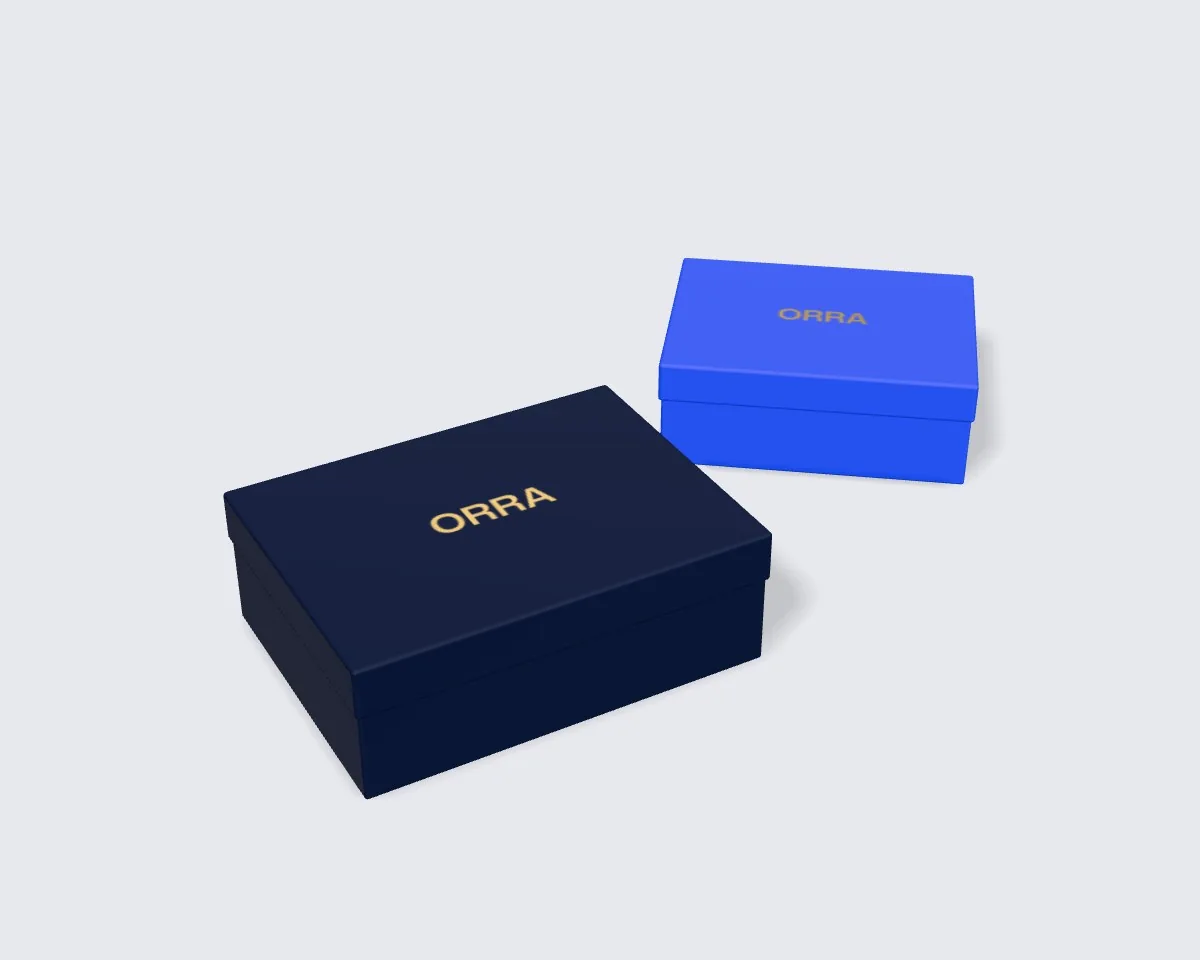
When eyewear founders request a quote for printed sunglasses packaging, the right structural choice depends on whether the frame already sits inside a hard clamshell case, how the box is displayed at retail, and how much warehouse space you have for packaging inventory. A rigid drawer box acts as a protective case in its own right, whereas a thin straight-tuck paperboard carton is a lightweight dust and branding shell. Many emerging optical labels start with a 1,000-unit run of folding tray-and-sleeve drawer cartons or pop-up two-piece boxes so they get the double-walled boutique feel while storing flat cartons in a small studio. Established eyewear houses and limited-edition collaborations often add a 50-unit or 250-unit run of paper-wrapped rigid drawer boxes for flagship stores and press kits. Compare the most popular eyewear box constructions side by side across protection, unboxing, warehouse footprint and CubitPack minimum order quantities in the table below.
| Feature | Tray & sleeve drawer box | Two-piece lid & base | Straight tuck end carton |
|---|---|---|---|
| Opening motion | Inner tray slides out via ribbon tab or notch | Telescoping lid lifts straight off base | Top end flap tucks into front wall |
| Hinge & lens crush resistance | High in double-wall card; maximum in rigid board | Maximum in rigid board; medium in pop-up card | Light; pairs with hard case or outer mailer |
| False bottom for cloth & booklet | Easy to build into inner drawer tray | Easy to build into base tray | Requires separate insert card |
| Warehouse storage footprint | Folding stores flat; rigid stores set up | Pop-up card stores flat; rigid stores set up | Ships and stores 100% flat |
| Best eyewear applications | Boutique acetate frames, polarized sun, DTC drops | Designer optical, hard clamshell cases, sport kits | Resort eyewear, readers, kids' frames in pouches |
| CubitPack minimum order | 1,000 folding card · 50 rigid boxes | 1,000 folding card · 50 rigid boxes | 1,000 folding cartons |
Why is the tray-and-sleeve drawer box the signature optical boutique style?
Walk into any independent optical studio in Soho, Tokyo or Paris and you will see walls of compact 6.5 × 2.5 × 2 inch or 7 × 3.25 × 2.5 inch custom tray and sleeve boxes stacked like miniature file drawers. Opticians love drawer boxes for a practical reason: when five boxes are stacked on a display shelf, a salesperson can pull the ribbon tab on the bottom box to slide out the frames without lifting the four boxes stacked on top of it. You can also print the model name, colorway and temple dimensions on the narrow front end of the drawer so every frame SKU is readable while stacked. From a structural standpoint, a tray-and-sleeve box also doubles the wall thickness along the two long sides where the inner tray walls sit inside the outer sleeve walls. Even when made from folding paperboard (starting at 1,000 units), those doubled side walls resist squeezing much better than a single-wall tuck carton. When upgraded to wrapped rigid chipboard (gray board) (starting at 50 units), the drawer becomes a permanent bedside dresser case that customers keep for years.
When does a two-piece or collapsible rigid box beat a drawer box?
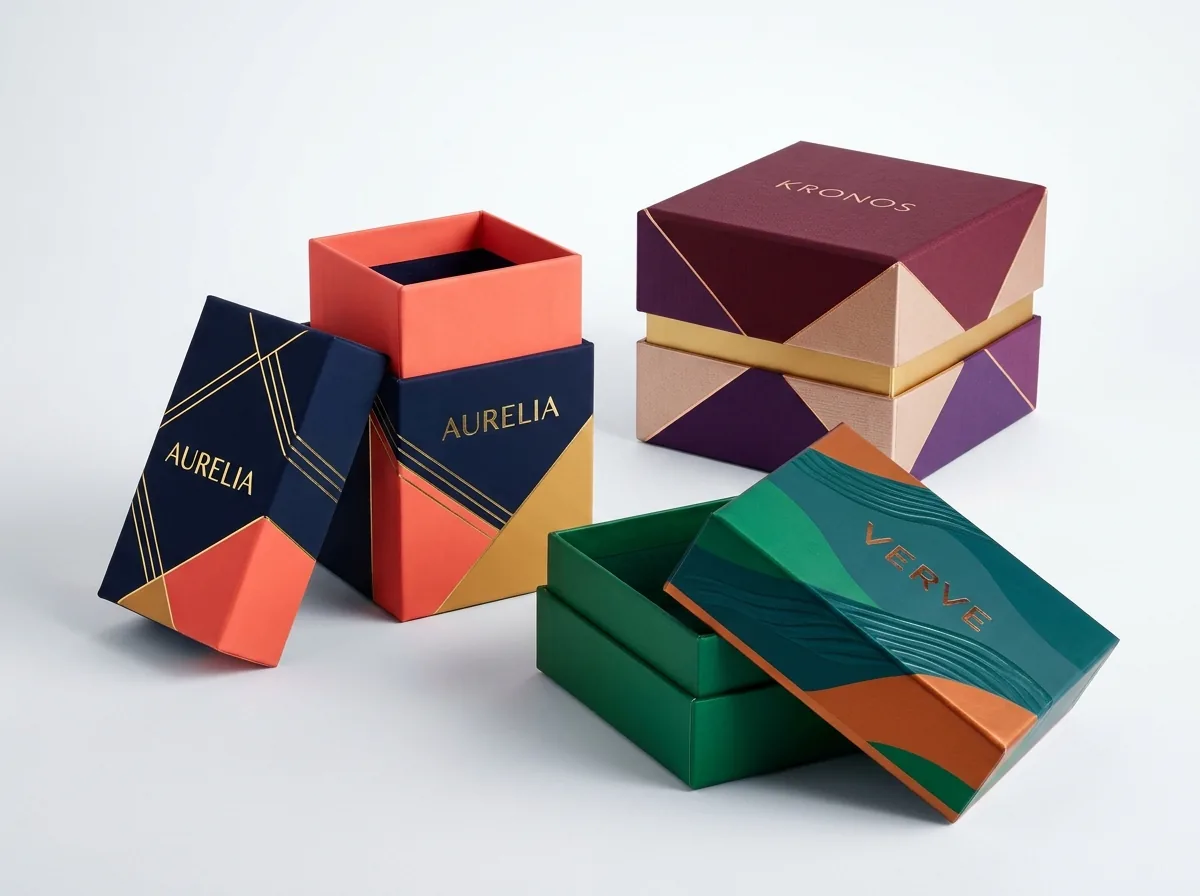
If your sunglasses ship inside a tall spring-hinged clamshell case, a cork triangle case, or a contoured EVA zipper case, sliding that bulky case horizontally out of a tight sleeve can sometimes catch on the fabric lip of the case. A custom two-piece box solves that by lifting straight upward off the base, giving the customer wide finger access to lift the hard case out from above. We can engineer the lid as a full-depth telescope that covers the entire base wall for maximum corner strength, or as a neck-and-shoulder box that reveals a contrasting inner accent band. Two-piece boxes are also the standard choice for deep 7.5 × 3.5 × 3 inch sport shield boxes and multi-cavity spare-lens kits where an EVA foam insert holds the frame and extra lenses face up. If you want the heavy chipboard feel of a rigid box for bulky triangular cases without dedicating pallets of warehouse space to empty set-up boxes, a custom collapsible rigid box ships completely flat and folds into a rigid box in seconds.
Know your size? Compare pricing across up to 3 quantities.
Request a Quote →When is a straight-tuck-end paperboard carton the smartest choice?
Not every pair of sunglasses needs a rigid chipboard monument. If you sell polarized beach sunglasses, festival frames, blue-light computer glasses, kids' UV eyewear or pharmacy reading glasses at high volume, a custom straight tuck end box delivers full-color branding at the lowest unit cost and smallest storage footprint. Ten thousand flat-shipped straight-tuck sunglasses cartons fit on a fraction of a single warehouse pallet and pop open by hand at your fulfillment station. Because both the top and bottom tuck flaps hinge from the same rear panel, the front face of a straight-tuck carton shows clean, uninterrupted artwork from edge to edge with no raw cut board edge visible at the top seam. You can add a clear patched window on the front panel so shoppers can inspect the tortoise pattern or mirror lens tint without opening the flap, or add an integrated hang tab for retail pegboards at zero extra die cost.
How should each sunglasses box style be packed for parcel delivery?
Sunglasses have two vulnerable points during USPS, UPS and FedEx transit: the metal barrel hinges joining the temples to the frame front, and the anti-reflective or mirror coating on the convex center of the lenses. Neither a folding paperboard carton nor a luxury rigid presentation box is meant to carry a raw shipping label through automated parcel chutes on its own. When shipping a straight-tuck folding carton with pouch-only frames inside, always place the carton inside a small corrugated mailer box rather than a soft poly bag so heavy parcels cannot crush the hinges. Rigid drawer boxes and rigid two-piece boxes already provide strong crush resistance and can travel inside a padded bubble mailer or a compact corrugated shipper. If you run an optical home try-on program where customers mail three or four frames back and forth, build the outer box directly as a roll-end corrugated mailer (starting at 250 units) with a scored card divider inside.
- Straight-tuck carton + microfiber pouch: ship inside a small corrugated outer mailer for crush protection.
- Folding tray-and-sleeve drawer + hard case: can ship in a padded mailer or compact corrugated box.
- Rigid drawer or two-piece box: wrap in tissue paper inside a corrugated mailer to keep soft-touch corners pristine.
- Multi-pair home try-on kit: build directly as a corrugated roll-end mailer with interior card dividers.
- Sport shield + spare lenses: use a rigid two-piece or magnetic box with a die-cut EVA foam insert inside an outer shipper.
What mistakes should eyewear brands avoid when choosing a box structure?
Picking the wrong structure for your case type or shipping method leads to stuck drawers or bent temples. Avoid these five mistakes
- Shipping a thin single-wall tuck carton with pouch-only sunglasses inside an unpadded poly mailer, where sorting rollers crush the frame.
- Forcing a wide triangular hard case into a narrow drawer sleeve without finger cutouts, making the case difficult to pull out.
- Ordering reverse-tuck cartons instead of straight-tuck cartons for retail counters, which leaves a raw flap seam across the front face.
- Forgetting to account for ribbon knot thickness at the front of a drawer tray, which can create a bump inside the sleeve.
- Choosing set-up rigid boxes for a 5,000-unit run without checking 3PL pallet storage space, when folding drawer cartons or collapsible rigid boxes would store flat.
Find your size
Suggested inside size: 6 × 2.25 × 1.5 in
A starting point. Your account manager confirms the size with you before the proof.
Quote this size →Packaging for this
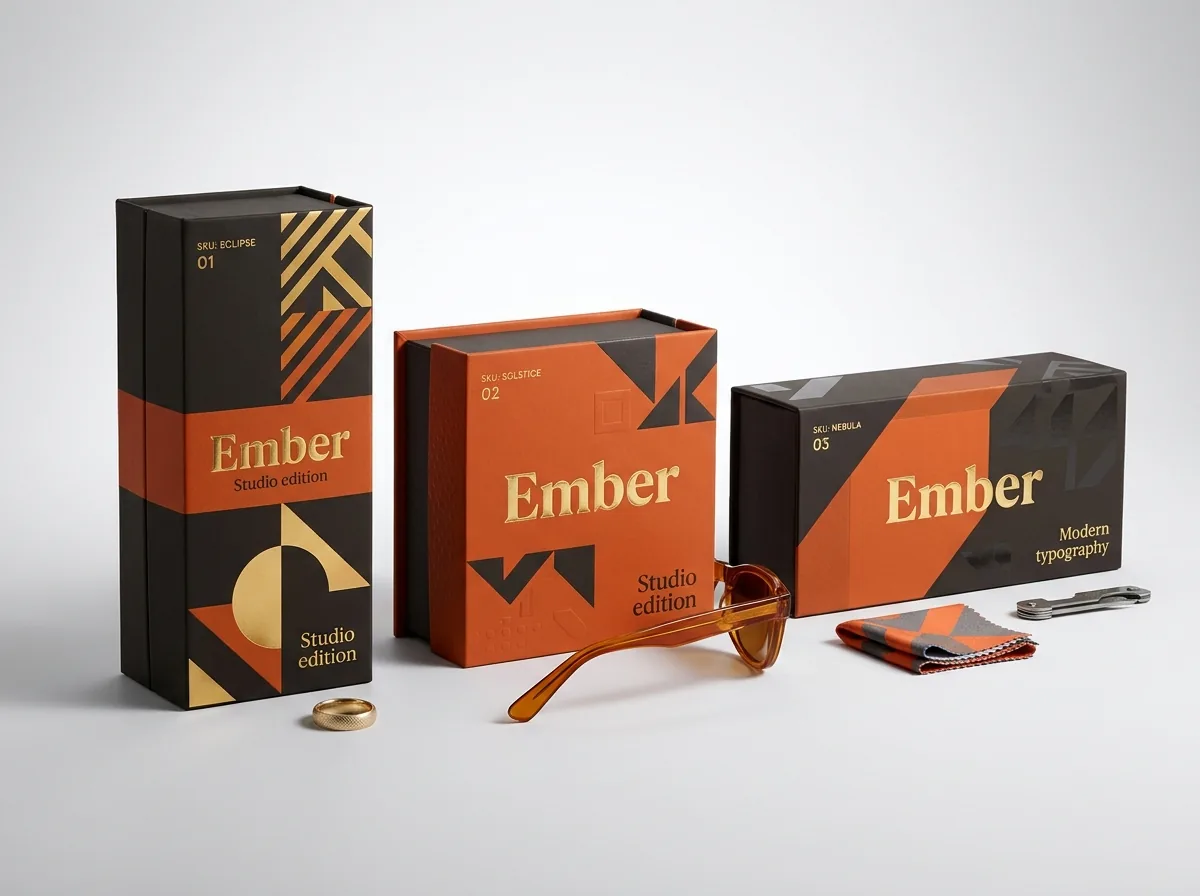
Ready to order sunglasses boxes? Compare up to 3 quantities with a free 3D mockup.
Request a Quote →Questions about sunglasses boxes
Can tray-and-sleeve sunglasses drawer boxes be made in folding paperboard as well as rigid board?
Yes. Folding paperboard tray-and-sleeve boxes start at 1,000 units, ship completely flat to save warehouse space, and fold into a double-walled drawer and sleeve at your packing table. Rigid chipboard drawer boxes arrive pre-assembled and start at 50 units.
Which sunglasses box style has the lowest minimum order quantity?
Rigid two-piece boxes, rigid drawer boxes, collapsible rigid boxes and magnetic closure boxes have our lowest minimum at 50 units. Corrugated e-commerce mailers start at 250 units, and folding paperboard cartons start at 1,000 units.
What is the difference between a straight tuck end and a reverse tuck end sunglasses carton?
On a straight tuck end carton, both the top and bottom flaps hinge from the back panel and tuck into the front panel, leaving the front face smooth. On a reverse tuck carton, one flap hinges from the front, showing a seam line.
Can I add a ribbon pull tab or thumb notch to a sunglasses drawer box?
Yes. We can attach a satin, grosgrain or cotton twill ribbon pull to the front wall of the inner drawer tray, or die-cut half-moon thumb notches into the ends of the outer sleeve with no die fee.
Can I order both a retail drawer box and a corrugated shipping mailer together?
Yes. Many direct-to-consumer optical brands order a branded inner drawer box alongside a matching corrugated outer mailer sized to fit it snugly. Mention both in your quote notes so your account manager prices them as a matched set.
Can I compare samples of a drawer box and a tuck carton before ordering?
Every order includes a free 2D dieline proof and 3D mockup before payment. You can also order our $50 sample kit to compare folding card and rigid structures in person, credited toward your first order.
Still have a question? Ask a packaging specialist.
Request a Quote →Request your sunglasses boxes quote
Tell us your size and quantities, and one dedicated account manager prepares pricing for each tier.
- Free design & AI-to-print studio + 3D mockup
- No die or plate charges · 4–5 day rush available
- Free shipping to all 50 states
- 10% off your first order
This comparison is based on CubitPack's minimums and structural options in our published product specifications along with optical retail and parcel transit practices. A packaging specialist checked every specification. Spot something wrong? Tell us and we will fix it.
Sources
What changed
- October 22, 2026: First published.
- October 22, 2026: Updated specifications, terminology, and verified source links.
More guides
New packaging guides by email
Sizes, materials and design tips. Unsubscribe anytime.