
How do menswear brands design custom tie boxes and groomsmen gift sets?
Short answer: Anchor the tie with a die-cut card keeper band or collar card, line the interior with smooth lamination or tissue so filament silk never snags, and pair an outside foil crest with an inside-lid knot diagram on custom tie boxes. Partitioned inserts hold pocket squares and tie bars.
On this page
- How do I keep a necktie, bow tie or pocket square centered inside the box
- Which board finishes and print combinations suit menswear tie boxes
- How can inside-lid printing and tissue paper upgrade the tie unboxing
- What drives the unit cost of custom tie boxes and how can I save
- What should I check on my tie box dieline and 3D proof before printing
- Common mistakes
- FAQs
Request a custom quoteFree dieline & 3D mockup
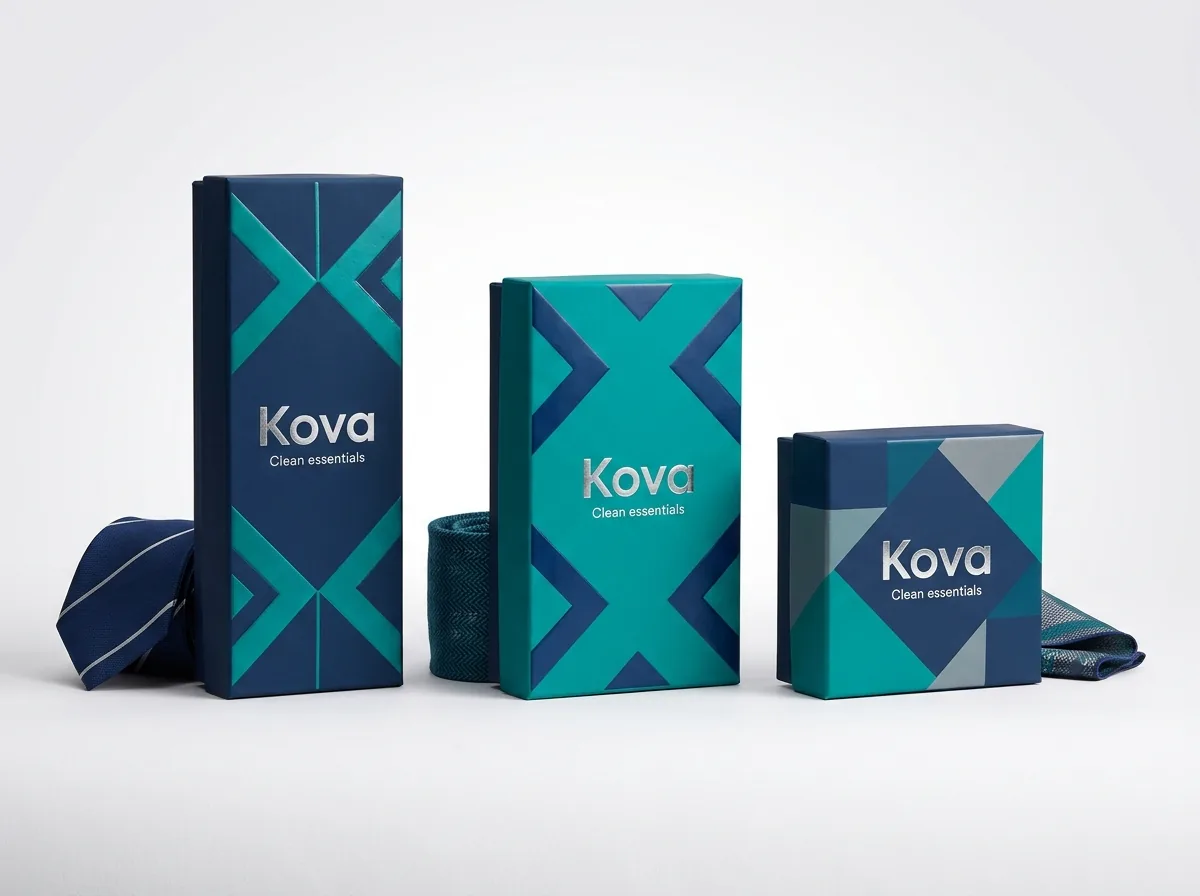
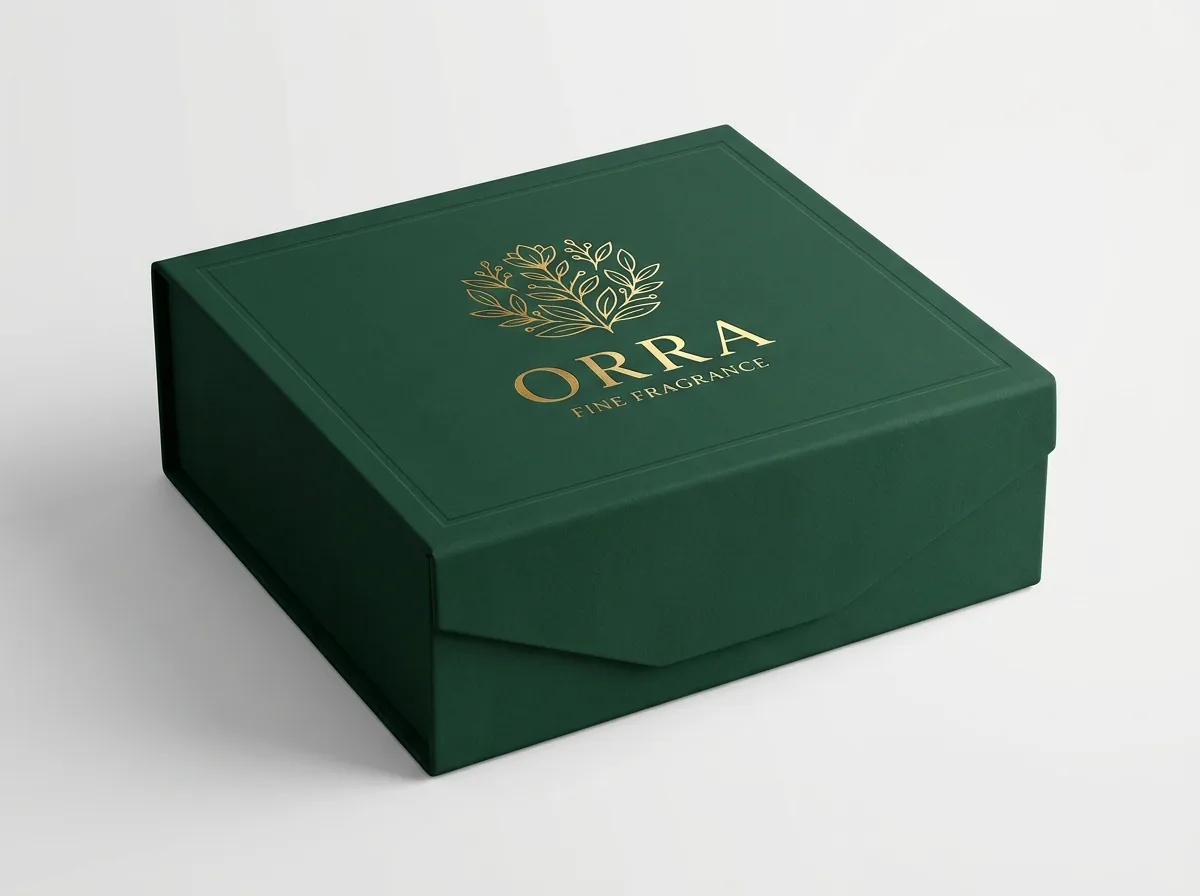
Designing a memorable custom tie box combines classic haberdashery restraint on the outside with practical garment engineering on the inside. Because woven Mulberry silk, grenadine and fine wool neckties snag easily on rough paper fibers and slump if stood upright on a retail wall, the interior of the box matters just as much as the lid artwork. Established menswear houses and bridal brands pair a deep Pantone solid (such as Oxford navy, burgundy or British racing green) with matte or soft-touch lamination and a metallic foil crest on the lid. Inside the base tray, a die-cut paperboard keeper strap, an elastic grosgrain loop or a multi-cavity insert keeps the necktie, pocket square and tie bar locked in place. At CubitPack, folding tie cartons start at 1,000 units and rigid presentation boxes start at 50 units, with free design help and no die charges.
How do I keep a necktie, bow tie or pocket square centered inside the box?
An empty 14 × 4.5 × 1 inch tray works fine when lying flat on a haberdashery counter, but the moment a store clerk stands the box upright on a display shelf or a courier tips a parcel on its side, an unanchored silk tie slides straight to the bottom end and bunches into a fold. Before finalizing your artwork on custom printed necktie boxes, choose the internal restraint that fits your packing workflow. For single flat neckties, the simplest restraint is a die-cut paperboard belly band or two side-wall keeper tabs that fold across the waist of the tie. A grosgrain or elastic ribbon threaded through two small slits in the base card adds a tailored Savile Row touch. For pre-tied and self-tie bow ties, a slotted collar card holds the adjustable neck strap hidden underneath while centering the butterfly knot below the window. When building wedding party or corporate gift sets, a partitioned card or EVA foam insert divides a 14 × 6.5 × 1.25 inch or 8 × 6 × 2 inch box into dedicated bays for the tie, a folded pocket square, a tie clip and cufflinks.
- Die-cut card keeper band: a scored paperboard strap across the center of a 14-inch base tray with zero extra tooling fee.
- Grosgrain or elastic loop: holds a half-fold silk tie gently against the base card without indenting the weave.
- Slotted bow-tie collar card: locks the neckband hardware behind the card so the bow knot stays centered under a window.
- Two-channel flat insert (14 × 6.5 × 1.25 in): separates a folded necktie on the left from a pocket square and tie bar on the right.
- Four-cavity rigid insert (8 × 6 × 2 in): holds a rolled tie, folded pocket square, cufflinks and lapel pin in a compact gift box.
Which board finishes and print combinations suit menswear tie boxes?
Menswear and formalwear packaging rarely relies on loud neon graphics; instead, it signals craftsmanship through deep heritage colors, tactile surface contrast and sharp metallic details. Whether you order 1,000 folding paperboard cartons or 50 rigid gift boxes, pairing the right board and protective finish ensures your dark inks never scuff or rub onto white dress shirts. Compare the six most requested menswear print and finish combinations in the table below. Each combination works across flat 14-inch two-piece boxes, compact 4.5-inch rolled-tie drawer cubes, and 5.5-inch windowed bow tie cartons.
| Menswear aesthetic | Board & ink setup | Recommended finish & accent |
|---|---|---|
| Savile Row & club heritage | White card flooded in Pantone navy or racing green | Matte lamination + gold foil stamped crest |
| Modern Italian silk boutique | Warm cream or stone gray paper-wrapped rigid board | Blind debossed border + copper or silver foil logo |
| Groomsmen & black-tie formal | Deep charcoal or jet black card / rigid board | Soft-touch lamination + tone-on-tone spot UV pattern |
| Scottish wool, tweed & knitwear | Unbleached natural brown kraft board | Opaque white ink + dark burgundy or forest Pantone |
| Department store counter display | Bleached white card with regimental stripe wrap | Gloss or matte lamination + clear patched window |
| DTC subscription & travel cube | Printed outer sleeve over contrast inner drawer tray | Matte sleeve + grosgrain ribbon pull tab |
How can inside-lid printing and tissue paper upgrade the tie unboxing?
When a customer lifts the lid off a 14 × 4.5 × 1 inch two-piece tie box, their eyes land on two surfaces at the exact same moment: the silk blade resting in the tray and the underside of the lid held in their other hand. Leaving that 63-square-inch interior lid blank misses the easiest storytelling space in menswear packaging. Many neckwear brands print a clean step-by-step knot guide inside the lid, such as the Four-in-Hand knot for casual knit ties, the Half-Windsor for business dress shirts, or the self-tie butterfly bow sequence for formalwear. Groomsmen and corporate gift boxes often print a wedding monogram, event date or presentation message under the lid, paired with a sheet of custom tissue paper and a foil custom seal sticker that folds neatly over the silk blade.
Know your size? Compare pricing across up to 3 quantities.
Request a Quote →What drives the unit cost of custom tie boxes and how can I save?
Every CubitPack order is custom quoted because unit price depends on construction, board area, order quantity and finishing steps. A folding paperboard straight-tuck carton or pop-up two-piece box starts at 1,000 units and ships flat, making it the most economical choice per box for retail and uniform runs. Set-up or collapsible custom magnetic closure boxes and rigid two-piece boxes start at 50 units and use thick chipboard walls wrapped in printed paper, which carries a higher per-unit cost suited to luxury seven-fold ties and groomsmen sets. To keep your cost per box low across dozens of silk patterns, keep the outer box artwork universal: print your brand crest in one Pantone color or foil stamp on the lid, then apply a small barcode or colorway sticker to the end panel for each SKU. You can also use our free Print your AI design service if you generated a vintage heraldic crest or woven pattern concept with an AI tool and want our prepress designers to convert it into clean vector print files at no charge.
- Consolidate SKUs into one outer box run and identify individual silk patterns with an end-panel label or window.
- Request quotes for three quantity tiers (such as 1,000, 2,500 and 5,000 cartons) to see where the volume price break lands.
- Use a die-cut card insert instead of multi-layer foam when building high-volume tie and pocket-square gift sets.
- Claim your 10% first-order discount and our US competitor price-beat guarantee on identical specifications.
What should I check on my tie box dieline and 3D proof before printing?
Before you pay for production, CubitPack sends a free 2D digital dieline proof and an interactive 3D mockup. On a two-piece telescoping tie box, check that your side-wall typography sits cleanly on the lid apron without getting clipped at the bottom edge, and verify that the base tray thumb notches line up on the long sides so the lid lifts off smoothly. If your box includes a clear patched window for a bow tie or patterned necktie, confirm that the window outline stays at least ⅜ inch inside all fold scores so the lid frame stays rigid. Once you approve the proof, standard production takes 10 to 14 business days with free shipping to all 50 states, or 4 to 5 business days with rush production.
What are the most common custom tie box design mistakes?
A great necktie box protects delicate silk threads while looking sharp on the counter. Avoid these five prepress and structural pitfalls
- Printing heavy unlaminated dark ink inside the tray where it touches pale silk or a white linen pocket square without tissue paper.
- Placing a die-cut window closer than ⅜ inch to a lid fold score, which causes the narrow frame to buckle when customers lift the lid.
- Designing a groomsmen tie and cufflink set without separate insert cavities, allowing metal cufflinks or tie bars to scratch the silk weave.
- Using tiny serif text under 6 pt in metallic foil stamping, where fine letter counters can fill in during hot stamping.
- Skipping thumb notches on a full-depth telescoping two-piece tie box lid, which makes the long lid difficult to lift off the base.
Find your size
Suggested inside size: 5.5 × 3.25 × 1.25 in
A starting point. Your account manager confirms the size with you before the proof.
Quote this size →Packaging for this
Ready to order tie boxes? Compare up to 3 quantities with a free 3D mockup.
Request a Quote →Questions about tie boxes
What is the minimum order quantity for custom groomsmen or luxury tie boxes?
Rigid two-piece, drawer and magnetic closure tie boxes start at just 50 units, making them ideal for wedding party suites, limited-edition seven-fold silk drops and executive gifts. Folding paperboard tie cartons start at 1,000 units.
Can you design a custom insert that holds a tie, pocket square and tie clip?
Yes. Our design team designs custom die-cut paperboard or EVA foam inserts at no extra tooling cost. Tell us the folded dimensions of your tie, pocket square, tie bar and cufflinks, and we build the multi-cavity dieline for free.
Do you charge extra for die-cut keeper tabs, collar cards or windows?
CubitPack never charges die or plate fees on custom tie boxes. Custom thumb notches, internal tie keeper straps, bow-tie collar cards and die-cut windows are engineered into your dieline without setup charges.
Can you convert an AI-generated crest or pattern into print-ready tie box art?
Yes. Choose AI image or Free design help in the quote form and upload your concept. Our designers redraw crests, monograms and repeating menswear patterns into sharp vector artwork laid out on your exact tie box dieline for free.
How do you guarantee our club or brand Pantone color on the box?
Specify your Pantone (PMS) color codes when requesting your quote. CubitPack guarantees Pantone color accuracy: if a printed Pantone shade on your tie boxes is clearly off from the approved specification, we reprint at no cost.
How fast can I get custom tie boxes for an upcoming wedding season or launch?
Standard turnaround is 10 to 14 business days after proof approval and payment, with free shipping across all 50 US states. If you have a tighter deadline, 4 to 5 business day rush production is available and quoted with your order.
Still have a question? Ask a packaging specialist.
Request a Quote →Request your tie boxes quote
Tell us your size and quantities, and one dedicated account manager prepares pricing for each tier.
- Free design & AI-to-print studio + 3D mockup
- No die or plate charges · 4–5 day rush available
- Free shipping to all 50 states
- 10% off your first order
This design guide is built from CubitPack's decided capabilities in our published product specifications and standard paperboard prepress, foil stamping and silk protection practices. A packaging specialist verified every recommendation. Spot something wrong? Tell us and we will fix it.
Sources
What changed
- October 22, 2026: First published.
- October 22, 2026: Updated specifications, terminology, and verified source links.
More guides
New packaging guides by email
Sizes, materials and design tips. Unsubscribe anytime.