
How do double wall box dielines, BC vs EB flutes, and reinforced H-taping work?
Short answer: A 5-ply double-wall RSC dieline requires wide 9–10 mm flap slots, deep crush-relief score channels, and progressive panel offsets so thick walls fold 180 degrees cleanly. Choose BC-flute (9/32 in) for maximum 45–100+ lb cushioning, EB-flute (3/16 in) for sharp retail graphics, and 3-inch fiberglass water-activated H-tape.
On this page
- What makes a 5-ply double-wall RSC dieline different from a single-wall template
- BC-flute vs EB-flute: which flute goes outside and which should you pick
- Why do 5-ply flaps pop open under plastic tape and require water-activated H-taping
- How do you prepare print-ready artwork on a custom 5-ply double-wall dieline
- Common mistakes
- FAQs
Request a custom quoteFree dieline & 3D mockup
Dropping artwork onto custom double wall boxes using a thin single-wall template causes crooked corners, cracked outer liners, and popped tape seams on the fulfillment bench. Because 5-ply combined board bonds two fluted corrugated mediums between three flat linerboards at 4.6 to 7.0 mm total thickness, every slot, score rule, panel progression, and side glue tab on a FEFCO 0201 Regular Slotted Container dieline must be scaled up so thick plies fold 180 degrees cleanly without binding. At the same time, choosing whether fine E-flute or medium B-flute faces outward controls flexo and offset litho print fidelity, while proper fiberglass-reinforced water-activated H-taping neutralizes the strong elastic springback of folded 5-ply flaps. CubitPack prepares your precision 5-ply CAD dieline free of charge with zero die or plate setup fees, shows a 3D mockup before payment, and ships free across all 50 US states.
What makes a 5-ply double-wall RSC dieline different from a single-wall template?
When a flat 5-ply corrugated sheet passes through a heavy-duty flexo folder-gluer or flatbed die-cutter, standard narrow slots and shallow single-point creases will pinch adjacent flaps and split kraft fibers along the fold. Because two stacked fluted mediums resist bending far more strongly than a single arch, the CAD blank must progressively widen alternating Length and Width body panels to compensate for inner-liner compression at all four vertical corners. Structural engineers modify four critical CAD geometries on every 5-ply double-wall dieline so cartons square up effortlessly on manual benches or automated case erectors
- Wide 9 to 11 mm flap slots prevent corner binding: When two 7 mm BC-flute minor dust flaps fold inward first, narrow single-wall slots force the outer major flaps to ride up over the corner shoulder, creating rounded 'fishtail' gaps that weaken stacking columns.
- Horizontal flap score offsets eliminate 'tenting': Shifting the outer major flap crease slightly outward relative to the inner minor dust flap crease lets the outer flaps lie completely flat over the thick inner flaps instead of peaking upward like a pitched roof.
- Extra-wide 45 to 50 mm manufacturer's joint: High-shear PVA adhesive (or heavy copper/galvanized stitches on industrial export cases) grips nearly 2 inches of crushed tab overlap so the side seam never shears open during 30-inch corner drops.
- 2-inch ink keep-out zones along seams: Keep barcodes, QR codes, and warning copy at least 50 mm (2.0 in) away from the center meeting seam and outer horizontal edges so 3-inch wide H-tape never covers scannable data.
| CAD dieline feature | 3-ply Single-Wall RSC | 5-ply EB-Flute Double-Wall | 5-ply BC-Flute Double-Wall |
|---|---|---|---|
| Flap slot width | 6 to 7 mm slot opening | 8 to 9 mm slot opening | 9 to 11 mm slot opening |
| Horizontal flap score offset | 2 to 3 mm crease relief | 4.5 to 5.5 mm crease relief | 6.5 to 8.0 mm crease relief |
| Manufacturer's glue joint | 32 to 38 mm (1.25–1.5 in) | 38 to 45 mm (1.5–1.75 in) | 45 to 50 mm (1.75–2.0 in) |
| Score wheel profile | Standard single-point rule | Wide 3-point channel score | Deep 3-point or 5-point crush score |
| Top/bottom H-tape keep-out | 38 mm (1.5 in) off center seam | 50 mm (2.0 in) off center seam | 50 mm (2.0 in) off center & edges |
BC-flute vs EB-flute: which flute goes outside and which should you pick?
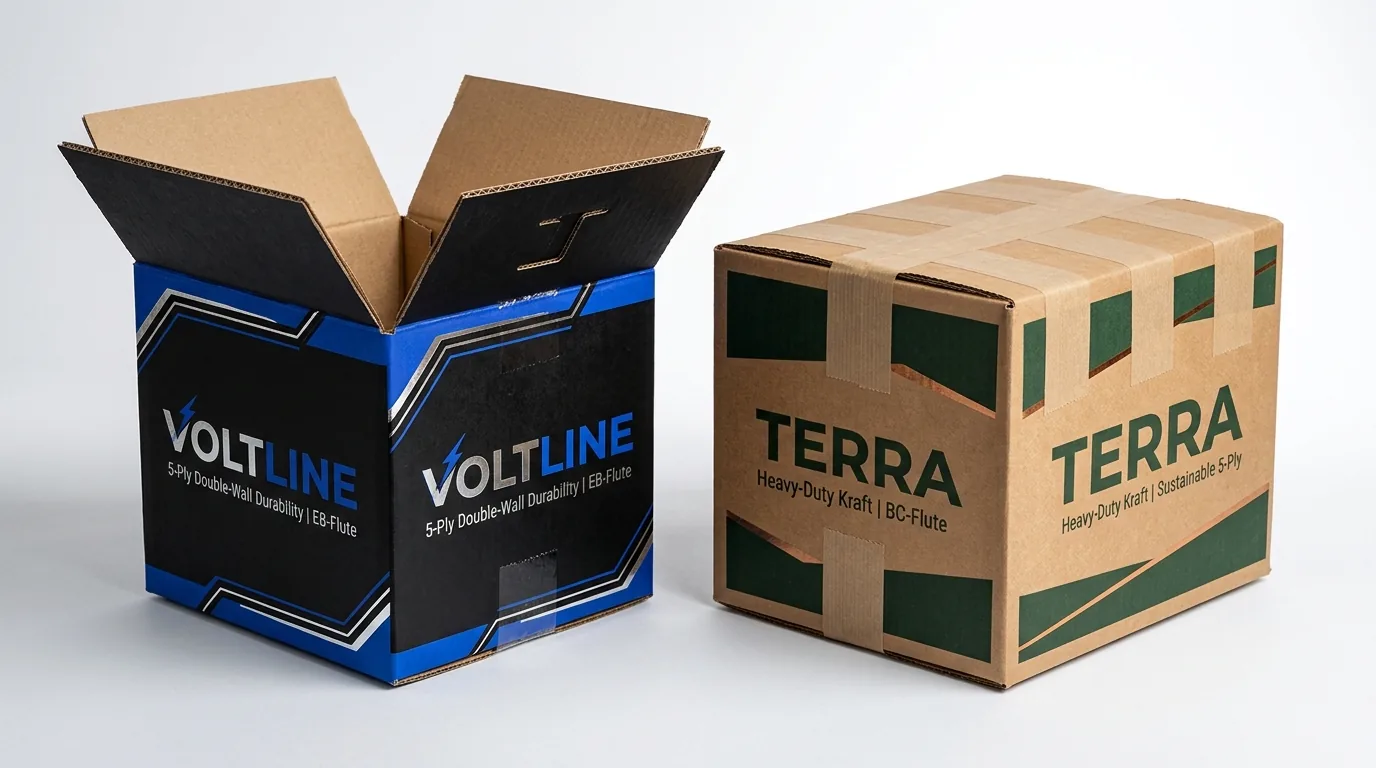
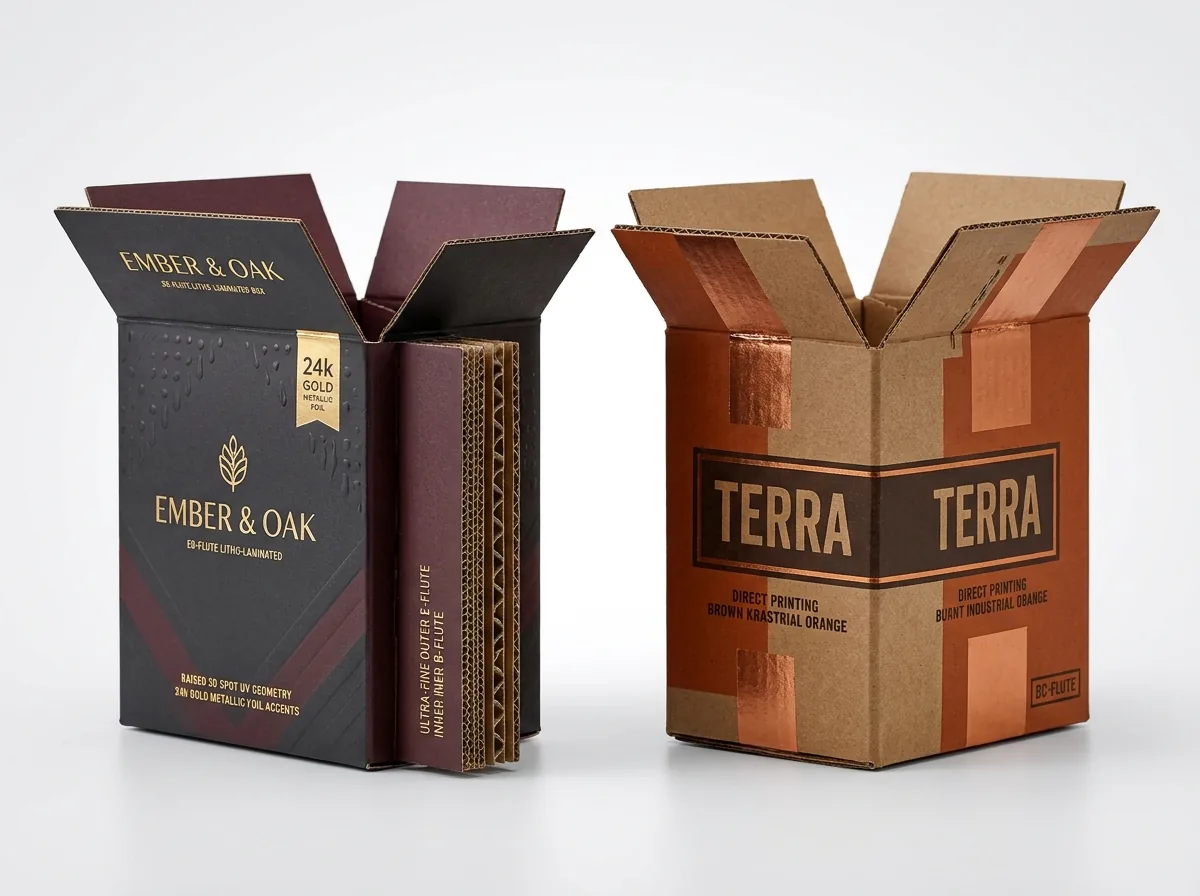
In corrugated board manufacturing, asymmetric double-wall combinations pair two different flute pitches so each layer performs a specialized job. Almost universally, converters position the finer, denser flute on the exterior print surface and the deeper, taller flute against the interior cavity. That exterior-to-interior pairing gives your brand crisp graphic registration and hard puncture resistance on the outside while keeping a deep, springy shock absorber right next to your product. Compare BC-flute and EB-flute across thickness, print quality, and payload performance
| Specification | BC-Flute (B outer + C inner) | EB-Flute (E outer + B inner) |
|---|---|---|
| Combined wall thickness | ~7.0 mm (9/32 in) | ~4.6 mm (3/16 in) |
| Outer print-side flute | B-flute (47 flutes/ft) resists surface puncture | E-flute (90 flutes/ft) ultra-flat print face |
| Inner cavity-side flute | C-flute (39 flutes/ft) deep shock cushion | B-flute (47 flutes/ft) stiff crush support |
| Best printing processes | 1–3 color direct flexo or digital CMYK | Offset litho-lamination, digital, Spot UV & foil |
| KDF pallet storage efficiency | Standard (~14 mm folded blank thickness) | Compact (~9.2 mm folded blank, +35% per pallet) |
| Primary product sweet spot | 45–100+ lb rotors, tools, 12-bottle wine, LTL | 20–55 lb electronics, espresso machines, cookware |
Why do 5-ply flaps pop open under plastic tape and require water-activated H-taping?
The most common fulfillment floor mistake with 5-ply double-wall RSC cartons happens right after the product is loaded into the cavity. Folding four 7 mm BC-flute flaps 180 degrees stores substantial elastic bending energy known in corrugated engineering as flap springback. Unlike thin single-wall flaps that relax quickly under light plastic tape, thick dual-flute plies push upward continuously throughout multi-day parcel and LTL trailer vibrations. Whether you ship custom kitchenware boxes, custom spirits boxes, custom wine boxes, custom hardware boxes, or custom electronics boxes, follow these ISTA 3A/3B sealing rules so cartons never arrive popped open
- Why standard clear polypropylene tape fails on 5-ply kraft: Thin 1.8 mil acrylic plastic tape sits superficially on top of coarse kraft fibers and loses tack below 45°F. In cold winter trucks or dusty warehouses, constant upward 5-ply flap springback slowly creeps under the plastic adhesive until the center seam splits wide open.
- Switch to 3-inch fiberglass-reinforced water-activated paper tape (WAT): Wetted starch adhesive penetrates deep into the outer kraft or white linerboard fibers, forming a permanent fiber-tearing weld within seconds while three-way crisscross fiberglass yarns prevent slit-seam tearing under corner drops.
- Always seal both top and bottom in a 6-strip H-pattern: Run one centered strip down the main meeting seam extending 3 inches (75 mm) down both vertical end walls, plus two crosswise edge strips sealing the open horizontal flap gaps against dust, moisture, and pilferage.
- Pre-break stiff 5-ply horizontal scores during packing: Pressing each minor and major flap briskly past 90 degrees before closing relieves initial crease memory so the meeting seam lies completely flush while water-activated starch adhesive cures.
- Print your brand logo right onto the paper H-tape or pair with custom shipping boxes: Custom-printed reinforced kraft or white paper tape turns your structural H-seal into tamper-evident brand security without busy warning labels.
Know your size? Compare pricing across up to 3 quantities.
Request a Quote →How do you prepare print-ready artwork on a custom 5-ply double-wall dieline?
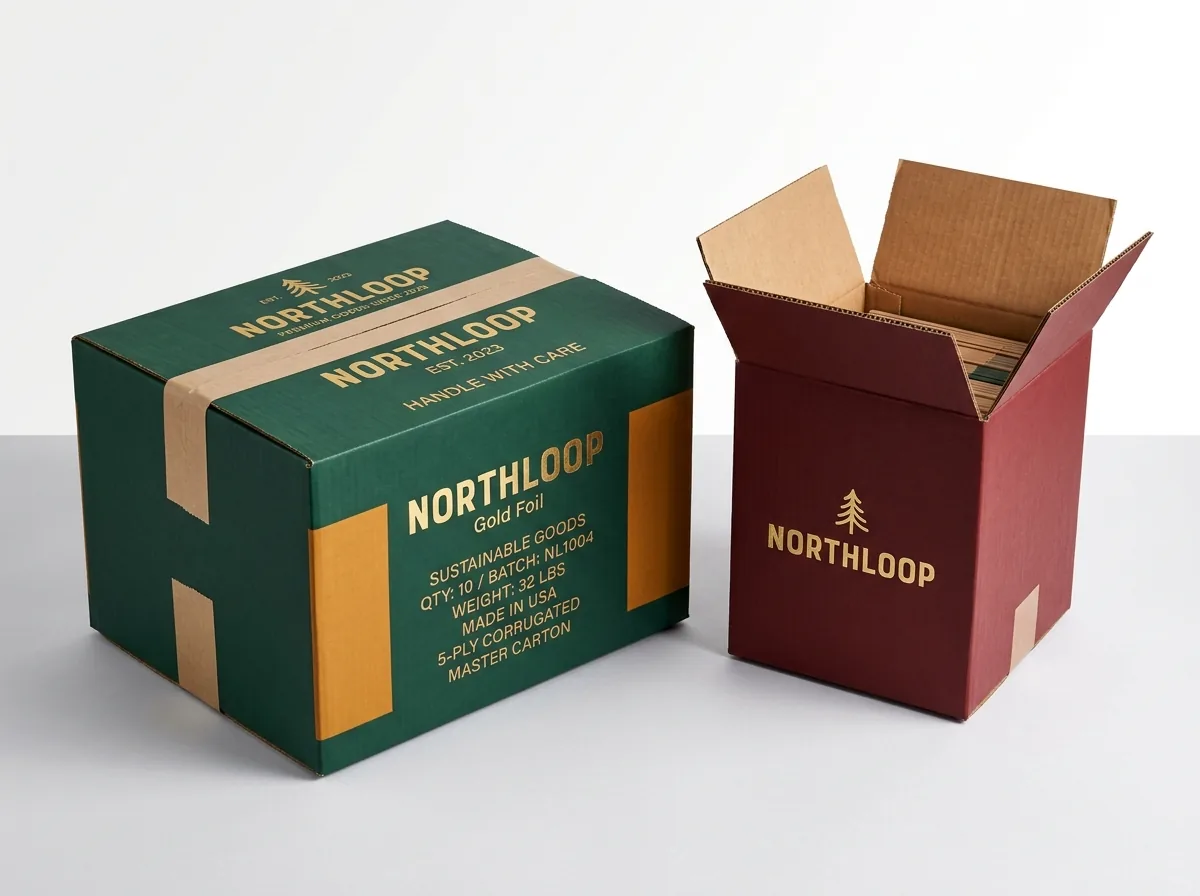
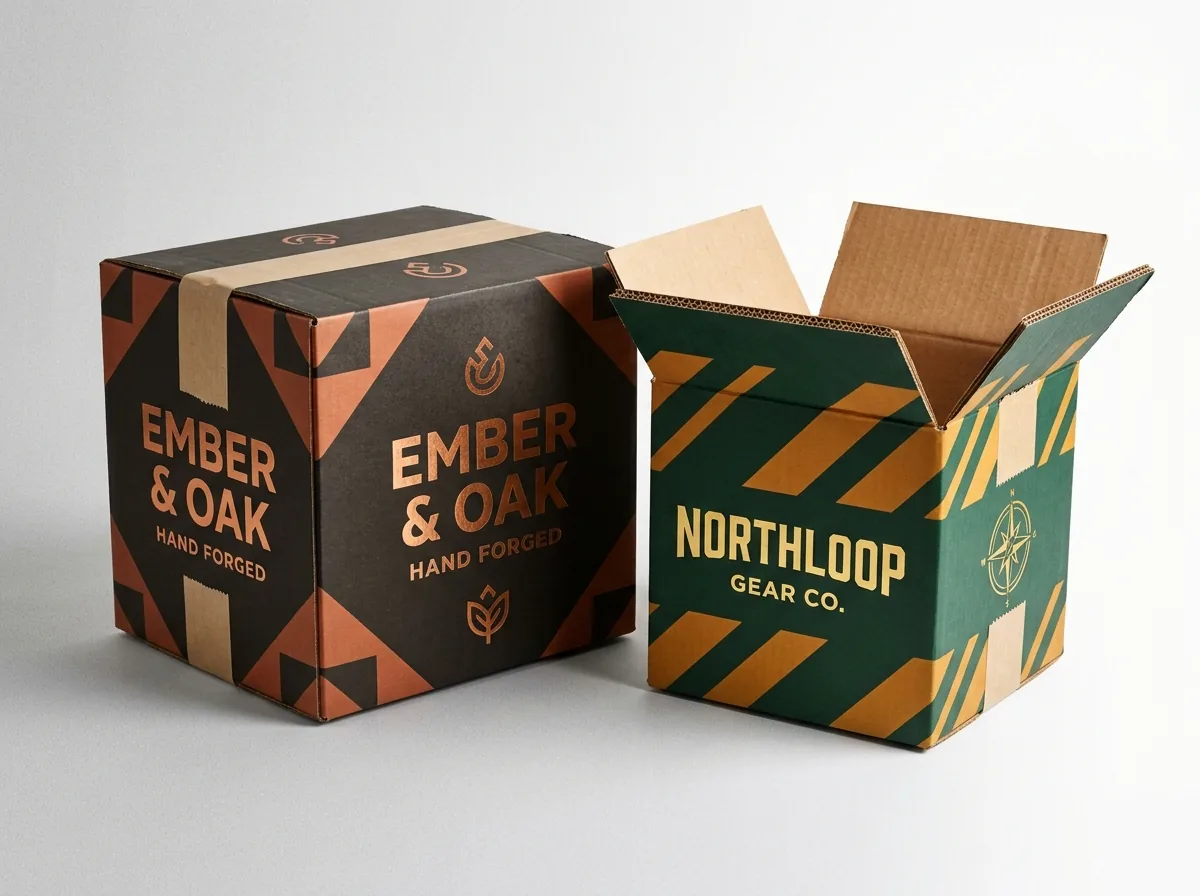
Review these five prepress steps alongside our companion guides on measuring and choosing ECT for double-wall boxes and double-wall boxes vs single-wall RSC and heavy-duty shippers before uploading your design files. Because 5-ply corrugated sheets travel through wide-nip pull rolls and deep score channels on press, leaving proper bleed margins, score offsets, and H-tape keep-out corridors ensures bold color-blocks, metallic foils, and scannable warehouse icons register crisply across every panel
- Step 1: Request your custom 5-ply vector CAD dieline from CubitPack first by entering usable inside L × W × H in the quote form rather than scaling an old single-wall PDF template.
- Step 2: Place dieline cut, score, and slot paths on a locked non-printing spot layer, extend full-bleed background colors 6 mm (0.25 in) past exterior cut edges, and convert typography to vector outlines in CMYK or Pantone spot swatches.
- Step 3: Respect the 50 mm (2.0 in) tape keep-out bands along the top and bottom center seams and outer flap edges, placing safe-unboxing graphics and QR codes centered cleanly in the middle of each major flap.
- Step 4: Add gross weight callouts, two-person team-lift icons (for 50+ lb SKUs), vertical orientation arrows on both end walls, and keep the bottom flap BMC stamp zone unobstructed for carrier certification.
- Step 5: Approve your free interactive 3D digital mockup before payment (with zero die or plate setup charges), or test a physical printed 5-ply sample alongside custom box inserts before launching your full run.
What dieline, flute, and taping mistakes cause 5-ply double-wall failures?
Check your structural proof and packing station SOPs against these five preventable double-wall errors
- Reusing a narrow-slot single-wall dieline on 7 mm BC-flute board, causing minor and major flaps to jam at the corners and tent upward.
- Applying a single strip of thin clear plastic tape across stiff 5-ply flaps that spring open inside cold parcel trailers.
- Printing fine 6 pt serif text via direct flexo onto coarse C-flute instead of choosing smooth outer E-flute (EB double-wall) or bold geometric typography.
- Placing SKU barcodes or logos across the center flap seam where 3-inch wide reinforced H-tape covers them completely.
- Skipping horizontal edge tape strips on heavy 60+ lb export or LTL cartons, allowing corner torque to rack the box out of square.
Packaging for this

Ready to order double wall boxes? Compare up to 3 quantities with a free 3D mockup.
Request a Quote →Questions about double wall boxes
Does CubitPack charge extra for creating a custom 5-ply double-wall CAD dieline?
No. Our structural packaging specialists engineer your custom 5-ply EB-flute or BC-flute RSC dieline (complete with wide flap slots, score offsets, and manufacturer's joint allowances) free of charge, with zero die or printing plate setup fees.
Which side of EB-flute or BC-flute double-wall board gets printed?
The finer flute always faces outward: E-flute forms the ultra-smooth outer print surface on EB-flute cartons, and B-flute forms the smooth puncture-resistant outer print surface on BC-flute cartons, while the deeper inner flute cushions your product.
Can we print inside the top flaps or interior walls of a double-wall RSC carton?
Yes. CubitPack prints both exterior walls and interior top flaps or inner liners, making it easy to display lift-out instructions, QR warranty codes, or bold brand flood colors the moment customers slice open the H-tape.
Why is water-activated paper tape stronger than plastic tape on double-wall boxes?
Water-activated starch adhesive soaks directly into corrugated kraft fibers to create a permanent paper-to-paper bond, while embedded fiberglass strands resist tearing across heavy seams. Attempting to peel cured water-activated tape rips the carton surface rather than lifting cleanly.
How fast do custom printed double-wall boxes ship across the US?
Standard production takes 10–14 business days after interactive 3D mockup approval and payment, with 4–5 business day rush production available for urgent launches. Every order ships knocked-down flat (KDF) in strapped bundles or palletized stacks with free shipping across all 50 US states and free reprints on verified transit damage.
Still have a question? Ask a packaging specialist.
Request a Quote →Request your double wall boxes quote
Tell us your size and quantities, and one dedicated account manager prepares pricing for each tier.
- Free design & AI-to-print studio + 3D mockup
- No die or plate charges · 4–5 day rush available
- Free shipping to all 50 states
- 10% off your first order
We verified 5-ply RSC slot widths, progressive flap score offsets, wide manufacturer's glue joints, BC-flute vs EB-flute exterior print orientation, and 3-inch fiberglass-reinforced water-activated H-taping rules against Fibre Box Association (FBA) corrugated handbooks, FEFCO 0201 standards, and ISTA 3A/3B closure guidelines. Spot something wrong? Tell us and we fix it.
Sources
What changed
- November 5, 2026: First published with 5-ply CAD dieline tolerance table, BC vs EB flute matrix, and reinforced H-taping closure guide.
More guides
New packaging guides by email
Sizes, materials and design tips. Unsubscribe anytime.