
Custom coffee bag labels vs pre-printed coffee bags: which should roasters choose?
Short answer: Choose custom coffee bag labels on blank stock pouches when you roast rotating single-origin lots, seasonal blends or under a few thousand bags per SKU. Switch high-volume year-round house blends to pre-printed bags once volume is steady, or combine both in a hybrid system.
On this page
- How do labeled stock coffee bags compare with pre-printed coffee bags
- When do custom coffee bag labels make more sense than printed bags
- How does the hybrid master-bag-plus-label system work
- Roll labels vs sticker sheets: which format speeds up roast-day bagging
- How do I keep colors consistent across labels, pouches and shipping boxes
- Common mistakes
- FAQs
Request a custom quoteFree dieline & 3D mockup
Specialty coffee roasters rarely use just one packaging method across their entire menu. Because green coffee harvests change every few months, ordering fully pre-printed pouches for twelve different single-origin coffees ties up cash and warehouse shelves in pouches you may never finish before a lot sells out. Applying custom coffee bag labels (starting at 500 pieces) onto blank matte black, white or kraft bags lets you buy one pallet of unprinted pouches and brand each farm lot, decaf roast or holiday release on demand in 10-14 business days. Once a flagship house blend or cold brew SKU has proven, predictable monthly volume and unchanging copy, moving that SKU to custom printed pouches removes hand-labeling labor. Many growing roasters combine both approaches: a custom-printed master bag carrying their logo and a color-coded origin label applied directly onto the front panel.
How do labeled stock coffee bags compare with pre-printed coffee bags?
The choice between applying labels to blank stock pouches and printing artwork directly onto the pouch film comes down to SKU count, harvest turnover and roast-day labor. A roastery with two unchanging dark and medium blends has very different inventory math than a third-wave roaster releasing three new micro-lots from Ethiopia, Colombia and Guatemala every month. When you buy unprinted stock pouches and apply labels, your pouch inventory is universal: every 12 oz bag in the warehouse can become an espresso blend on Monday, a washed Peruvian lot on Wednesday, or a decaf subscription pouch on Friday. Compare the two options side by side below, along with the hybrid approach that combines a pre-printed brand pouch with a smaller variable origin label.
| Factor | Custom labels on stock coffee bags | Fully pre-printed coffee bags |
|---|---|---|
| Starting minimum | From 500 labels per order | Confirmed per pouch style on quote |
| Multi-origin flexibility | High: one blank bag inventory serves 10+ origins | Low: every origin requires its own bag inventory |
| Artwork changes | Easy: update tasting notes or altitude on the next label run | Requires a new pouch print run if origin copy changes |
| Roast-day packing labor | Apply labels by hand, tabletop dispenser or flat-bag machine | Zero labeling step; fill and heat-seal immediately |
| Surface coverage | Front, back and fold-over panels inside heat seals | Edge-to-edge graphics across gussets, front and back |
| Best roastery fit | Single-origin lots, decaf, seasonal blends, wholesale 5 lb bags | High-volume flagship house blends with fixed year-round copy |
When do custom coffee bag labels make more sense than printed bags?
If your roastery menu rotates with the harvest calendar, printed coffee bag labels keep your packaging nimble and prevent leftover bag waste. Suppose you buy five bags of a washed Kenyan micro-lot that yields 600 retail 12 oz pouches. With custom labels starting at 500 pieces, you order the exact label quantity needed for that harvest, stick them onto your standard blank matte pouches, and never get stuck storing thousands of obsolete bags after the lot sells out. Labels also win for 5 lb wholesale cafe bags, 4 oz sampler flight pouches and private-label cafe accounts. Wholesale customers care about clear roast dates, blend names and hopper legibility rather than edge-to-edge gusset graphics. By keeping one stock of blank 5 lb gusseted bags and ordering 4 × 6 inch roll labels for each blend or private-label coffee shop, you can onboard a new cafe client in 10-14 business days (or 4-5 days with rush).
- Single-origin and micro-lot releases where green bean harvests change every 6 to 12 weeks.
- New roastery launches testing 4 to 8 different coffees before knowing which two blends will become bestsellers.
- Private-label and white-label roasting for local cafes, restaurants, offices and hotels.
- 5 lb wholesale bulk bags and 4 oz sampler flight pouches where full-bleed pouch printing adds unnecessary inventory.
- Seasonal holiday blends and limited-edition barrel-aged or co-fermented releases.
- Cold brew concentrate bottles, nitro cans and sampler flight boxes that share your main coffee pouch graphics.
How does the hybrid master-bag-plus-label system work?
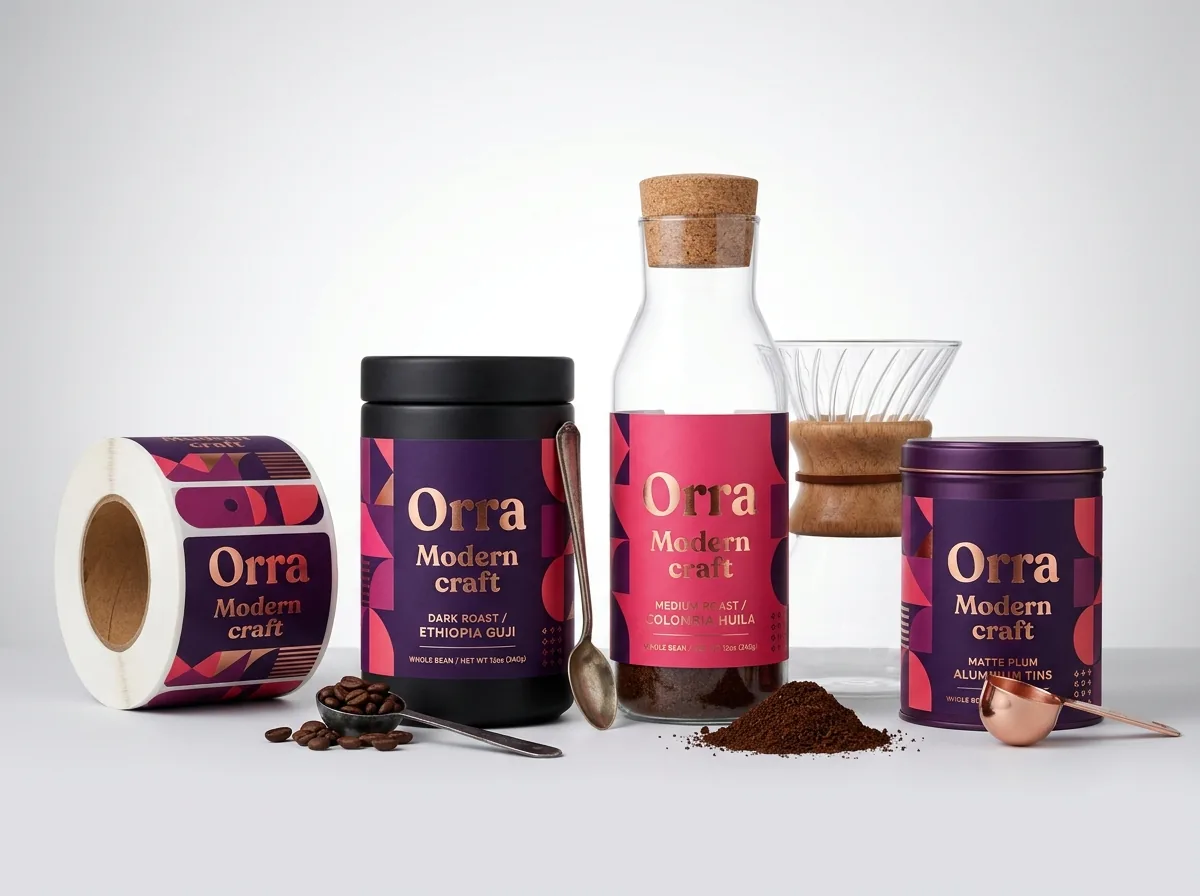
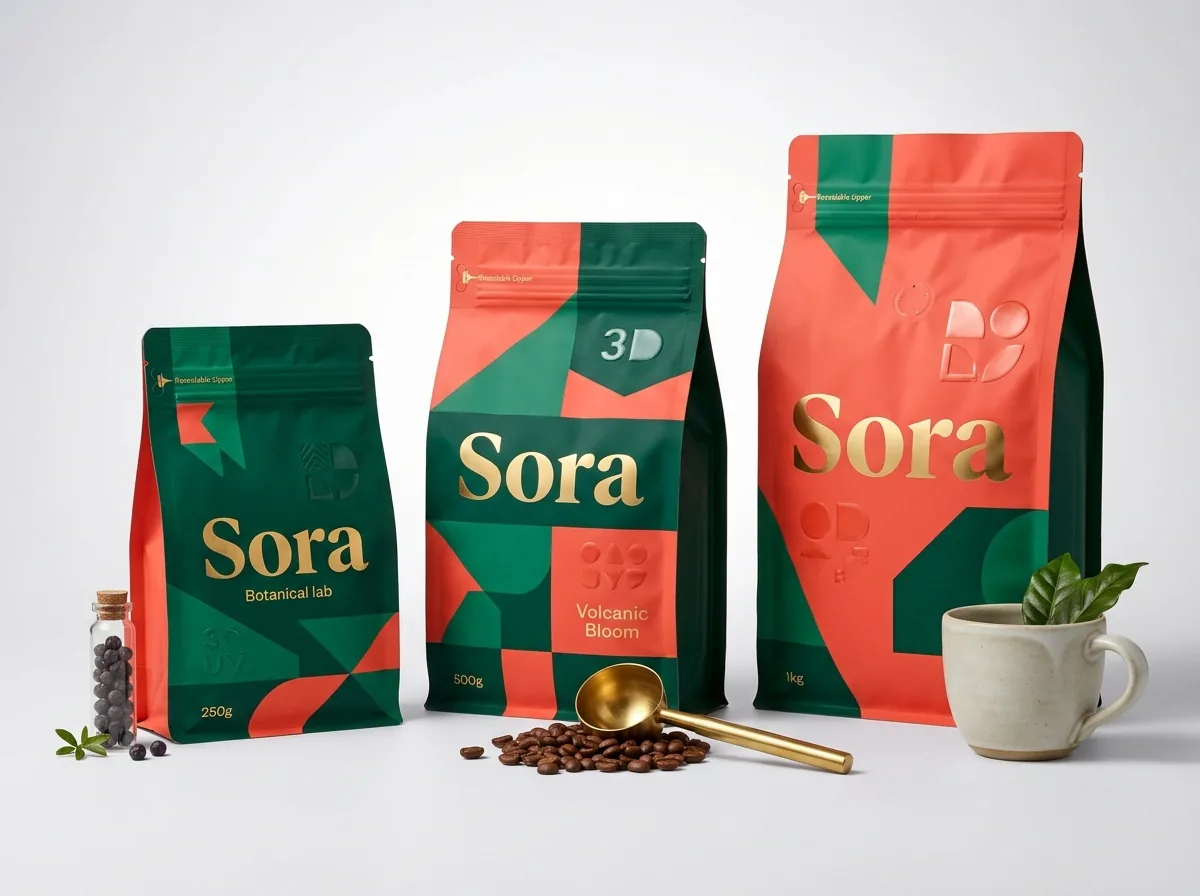
Once a roastery grows past its first year, the smartest move is rarely an all-or-nothing jump to pre-printed bags for every SKU. Instead, most specialty roasters adopt a two-part hybrid system. First, they order custom coffee bags or custom stand up pouches printed with their permanent brand elements: roastery logo, side-gusset pattern, social handles, brewing icons and story on the back, plus an open unprinted frame on the front panel. Second, they order smaller color-coded roll labels (such as 2.5 × 3 inches or 3 × 3 inches) for each specific coffee origin, process, tasting notes and altitude. On roast day, the crew applies the origin label right into the front frame of the master bag. Shoppers get the custom shelf presence of a printed gusseted pouch, while the roaster still enjoys the flexibility to launch a new single-origin lot with a 500-label run. This hybrid setup also simplifies grocery compliance and barcode updates: if a regional supermarket distributor asks for a specific UPC barcode, net weight placement or farm trace code on one single-origin coffee, you update only the front or back roll label rather than reprinting the entire master pouch.
Know your size? Compare pricing across up to 3 quantities.
Request a Quote →Roll labels vs sticker sheets: which format speeds up roast-day bagging?
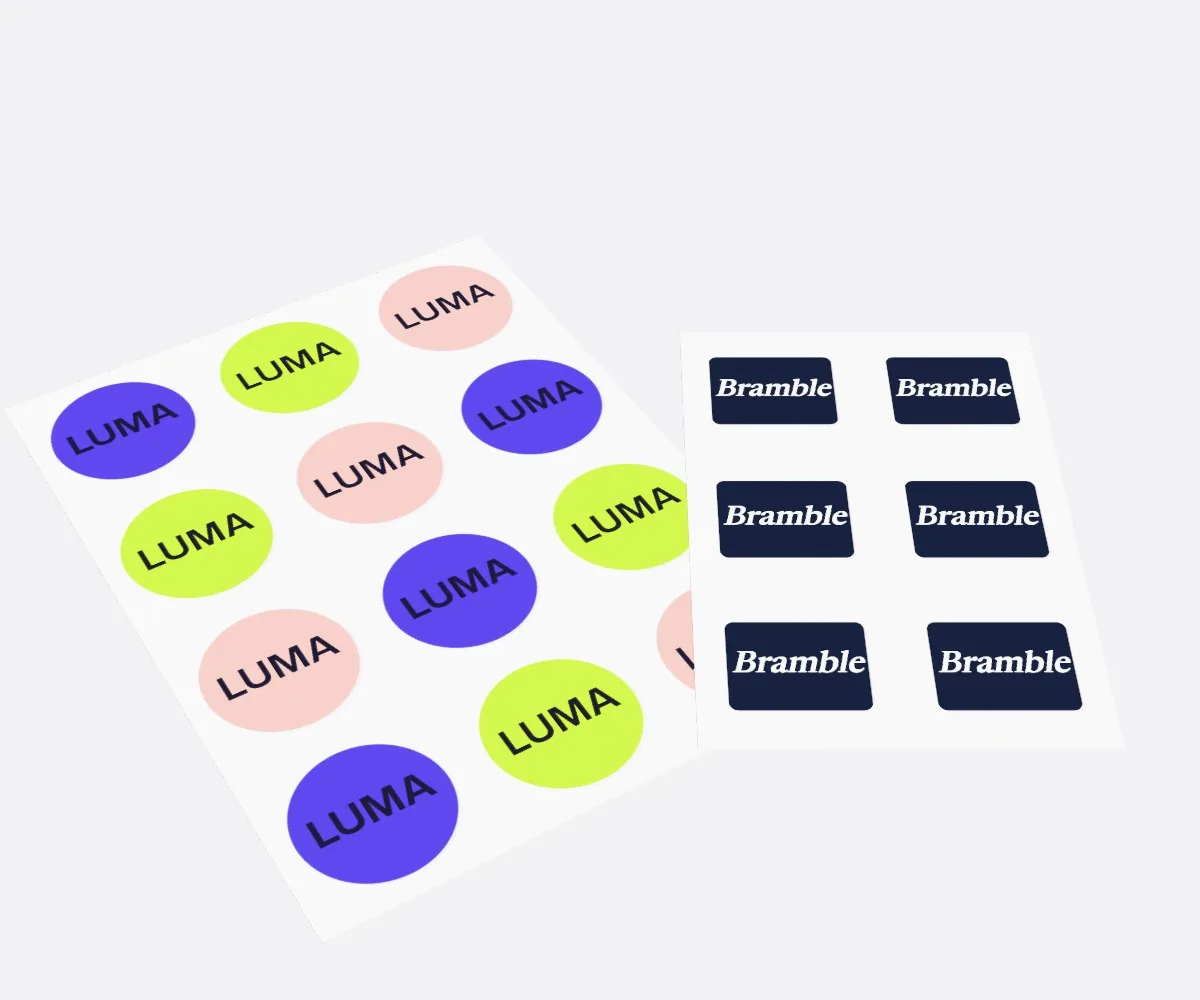
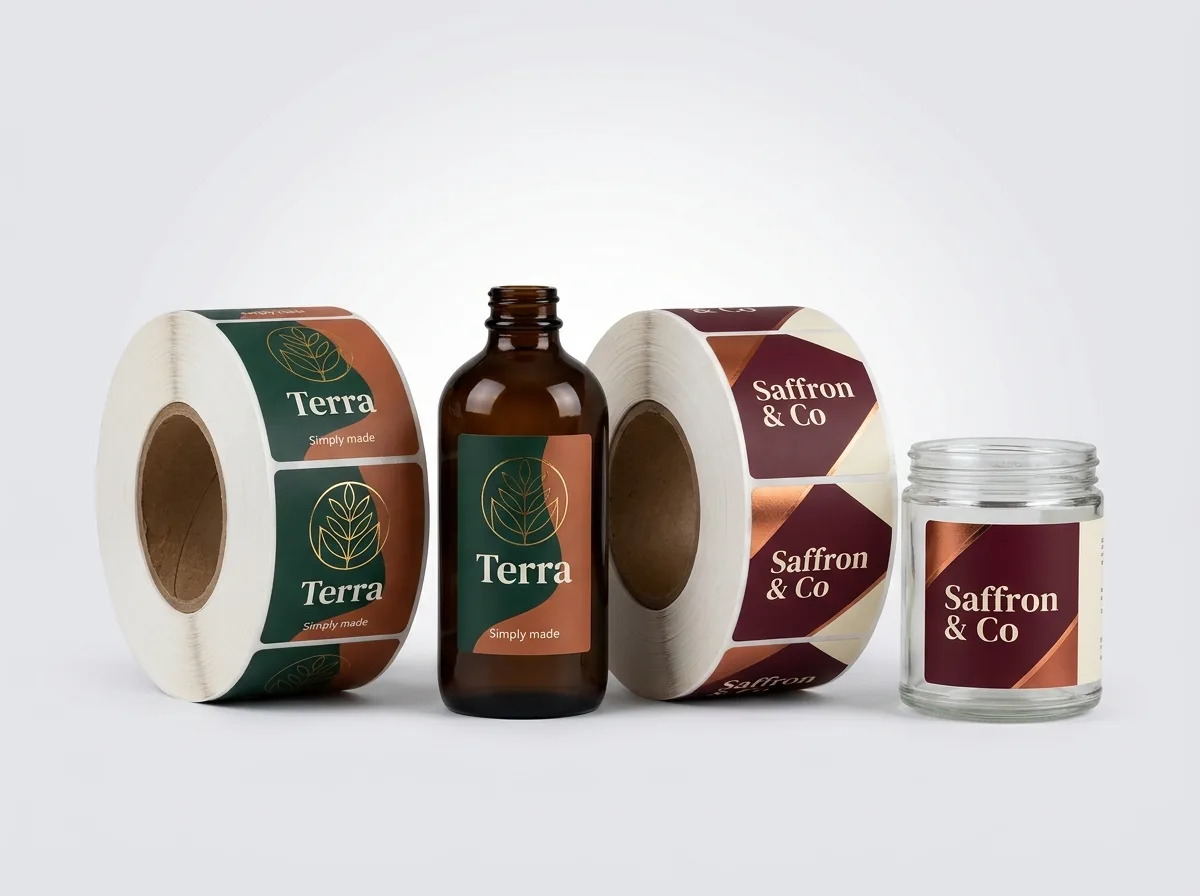
Within custom coffee bag labels, you also choose between custom roll labels and custom sticker sheets. Roll labels wind your labels single-file around a cardboard core so the backing liner pulls across a peeling edge, popping the leading edge of each label forward automatically. Even when applying labels by hand with a simple manual tabletop dispenser, roll labels are two to three times faster than picking corners off a flat sheet with fingernails. If you use a semi-automatic flat-pouch labeling machine, rolls are required. Flat kiss-cut sticker sheets still earn a spot on the roastery packing bench for two specific jobs: tiny micro-lot runs where you only bag 30 to 50 pouches per week, and small 1.5 inch or 2 inch circle badges used to color-code roast levels (Light, Medium, Dark, Decaf) or seal folded tin-tie tops. Sheets stack flat in labeled drawers by the scale so packers can grab a single sheet per roast batch.
How do I keep colors consistent across labels, pouches and shipping boxes?
A common headache when buying blank or printed bags from one vendor, roll labels from a second vendor, and custom coffee boxes or subscription mailers from a third is color drift: your signature terracotta or forest green looks different on every package. Because CubitPack produces custom labels, coffee bags, folding cartons and mailer boxes under one account manager, we lock your brand to a single Pantone color specification. Our Pantone color match is guaranteed: if a printed Pantone color on your labels or boxes is clearly off from the approved spec, we reprint it. You also receive a free digital proof and a 3D mockup before paying, and you can order our $50 sample kit to feel label finishes and board stocks in person before choosing your setup. When you are ready to transition a bestselling house espresso or breakfast blend from labeled stock bags to fully printed pouches, our prepress team already has your approved vector artwork, typography and Pantone formulas on file. That makes moving single SKUs up to printed bags while keeping seasonal micro-lots on roll labels completely straightforward, with free standard shipping across all 50 US states on every order.
What mistakes do roasters make when choosing between labels and printed bags?
Switching packaging formats too early or ordering the wrong label format can slow down roast-day fulfillment. Avoid these five mistakes
- Ordering thousands of fully pre-printed bags for a seasonal single-origin lot that sells out or changes farm notes after one harvest.
- Ordering flat sticker sheets for a high-volume house blend where peeling hundreds of labels by hand creates a roast-day bottleneck.
- Forgetting to leave a clean unprinted frame on a hybrid master bag where the variable origin label is meant to sit.
- Using different label dimensions for every coffee origin instead of standardizing on one 3 × 4 inch cut line across all 12 oz pouches.
- Splitting labels, pouches and subscription mailer boxes across separate printers with no shared Pantone color target.
Find your label size
Suggested label size: 9⅛ × 2¾ in (width × height)
A typical starting point. Your account manager confirms the size on the proof.
Quote this size →Packaging for this
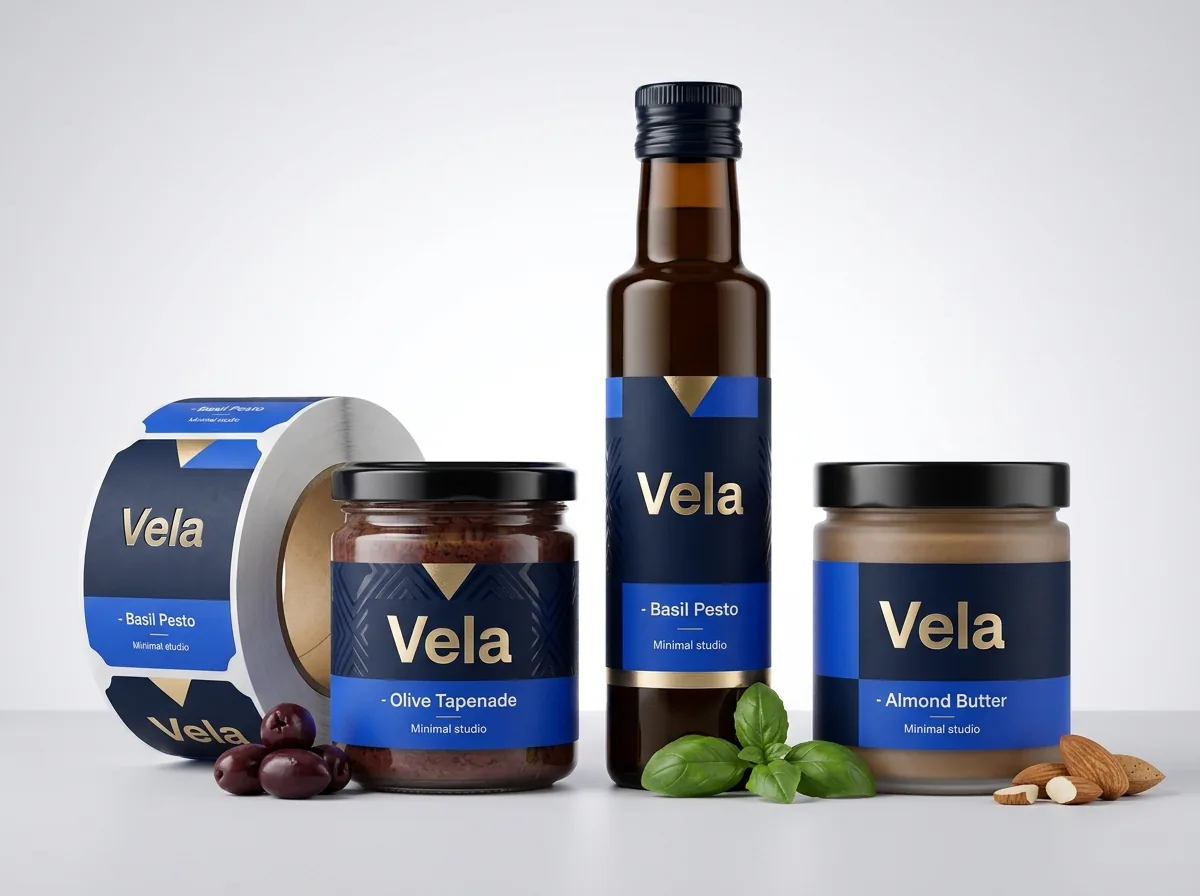
Ready to order coffee bag labels? Compare up to 3 quantities with a free 3D mockup.
Request a Quote →Questions about coffee bag labels
Can I start with custom coffee bag labels and move to printed bags later?
Yes, that is how most specialty roasters scale. You can launch your lineup with custom labels from 500 pieces on stock pouches, see which house blends become steady bestsellers, and later move those top blends to custom printed coffee bags while keeping single origins on labels.
How many designs can I combine in a 500-label order?
You can include multiple origins or blends in one order by selecting 2 designs or 3+ designs in Step 2 of the quote form and listing your SKU breakdown in the notes. Keeping the same size and material across all designs keeps your quote simple.
Do custom coffee bag labels look as professional as pre-printed pouches?
When paired with matte lamination, hot foil stamping or spot UV and sized cleanly inside the pouch face, custom labels on matte black, white or kraft bags look intentional and crisp on retail shelves. Many top third-wave roasters prefer the layered, tactile card-on-pouch look.
What is the turnaround time for custom coffee bag labels?
Standard production for custom coffee bag labels is 10-14 business days after you approve your digital proof and 3D mockup, and rush production in 4-5 business days is available when a new coffee harvest arrives early. Shipping to all 50 states is free.
Should I choose matte or gloss finish to match matte coffee pouches?
Matte finish is the most popular choice for specialty coffee because its low-glare surface blends naturally with matte stand-up and flat-bottom pouches. If you want your logo to catch light against that matte background, add hot foil stamping or spot UV.
Can you quote both custom coffee bag labels and custom printed coffee bags?
Yes. Ask your CubitPack account manager to quote both options side by side so you can compare the unit cost of labeled stock bags vs custom printed coffee bags for your flagship blends and seasonal micro-lots.
Still have a question? Ask a packaging specialist.
Request a Quote →Request your coffee bag labels quote
Tell us your size and quantities, and one dedicated account manager prepares pricing for each tier.
- Free design & AI-to-print studio + 3D mockup
- No die or plate charges · 4–5 day rush available
- Free shipping to all 50 states
- 10% off your first order
This comparison draws on CubitPack's decided offers (500-label minimum, 10-14 business day turnaround, 4-5 day rush, free design help and Pantone matching) and standard roastery fulfillment workflows. A packaging specialist reviewed every section. Spot something wrong? Tell us and we will fix it.
Sources
What changed
- October 22, 2026: First published.
- October 22, 2026: Updated specifications, terminology, and verified source links.
More guides
New packaging guides by email
Sizes, materials and design tips. Unsubscribe anytime.