
Corrugated mailer vs folding carton vs rigid sample boxes: which fits your kit?
Short answer: Choose an E-flute corrugated mailer (from 250 units) when mailing custom sample boxes directly to online shoppers, a folding paperboard or tray-and-sleeve carton (from 1,000 units) for lightweight retail discovery packs, or a magnetic or book-style rigid box (from 50 units) for heavy B2B architectural and showroom swatch kits.
On this page
- How do corrugated mailers, folding cartons and rigid sample boxes compare side by side
- When is an E-flute or B-flute corrugated mailer the smartest choice for samples
- When should you choose a folding carton or tray-and-sleeve sample box
- Why do B2B swatch kits and wholesale buyer pitches use rigid boxes
- How do you pick the right sample box structure in three quick questions
- Common mistakes
- FAQs
Request a custom quoteFree dieline & 3D mockup
Picking the right structure for a sample kit depends on three factors: how the samples travel to the buyer, how much the samples weigh, and whether the box is discarded after testing or kept on a desk as a permanent reference library. Corrugated sample mailers use 1/16-inch E-flute or 1/8-inch B-flute fluted board with double-folded side walls, allowing you to apply a postage label directly to the box and ship from 250 units without an outer carton. Folding paperboard cartons and tray-and-sleeve boxes use thin 16 pt to 24 pt card stock from 1,000 units, giving fragrance vials and mini tubes a sleek retail shelf profile that mails inside a poly bag or bubble mailer. Wrapped rigid boxes use thick chipboard (gray board) with magnetic or book-style lids starting at 50 units, providing the structural stiffness needed for heavy stone, tile, wood and B2B buyer kits.
How do corrugated mailers, folding cartons and rigid sample boxes compare side by side?
At CubitPack, we manufacture all three structural families under one roof of services with free design help, no die or plate charges, and free shipping to all 50 US states. Because each family has its own decided minimum order quantity and shipping behavior, matching the board structure to your distribution channel prevents crushed samples and wasted postage. Review the comparison table below before choosing the structure for your custom printed sample boxes. Notice how the minimum starts at 50 boxes for hand-wrapped rigid swatch kits, 250 boxes for corrugated sample mailers, and 1,000 boxes for die-cut folding paperboard cartons.
| Feature | Corrugated sample mailer | Folding / tray-and-sleeve carton | Rigid sample / swatch box |
|---|---|---|---|
| CubitPack minimum | 250 boxes | 1,000 boxes | 50 boxes |
| Board structure | E-flute or B-flute corrugated | Paperboard / kraft card | Thick chipboard (gray board) wrapped in paper |
| Mails without overbox? | Yes, self-locking postal walls | No, needs poly bag or outer mailer | No, needs fitted corrugated overbox |
| Ships flat to you? | Yes, stores flat before folding | Yes, ships flat in tight stacks | Usually ships assembled (or collapsible) |
| Best insert pairing | Card cradle, EPE or EVA foam | Fluted paperboard or light EVA tray | High-density stepped EVA foam |
| Best use case | DTC skincare, coffee & supplement trials | Fragrance vial sets & retail counter packs | B2B tile, flooring, stone & VIP buyer kits |
When is an E-flute or B-flute corrugated mailer the smartest choice for samples?
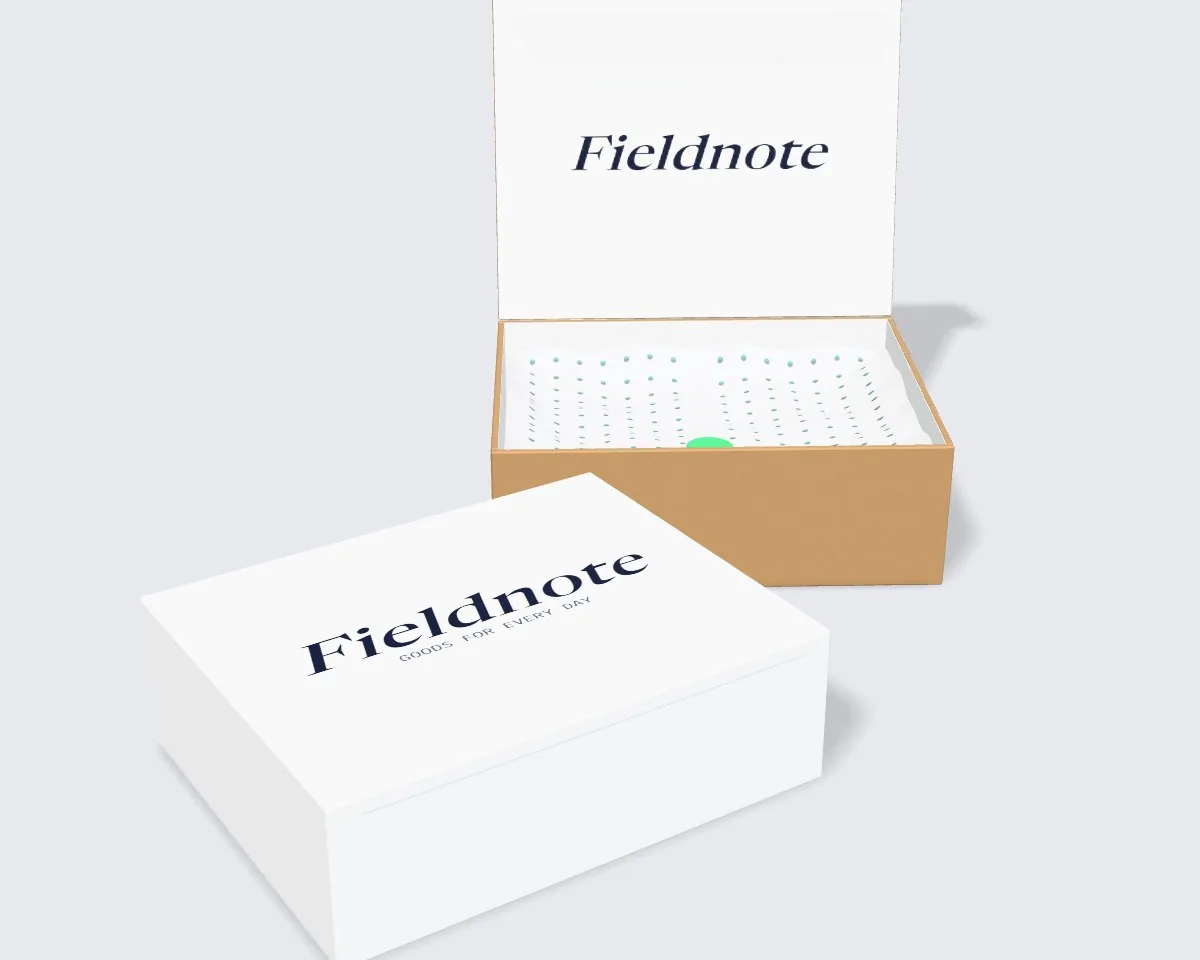
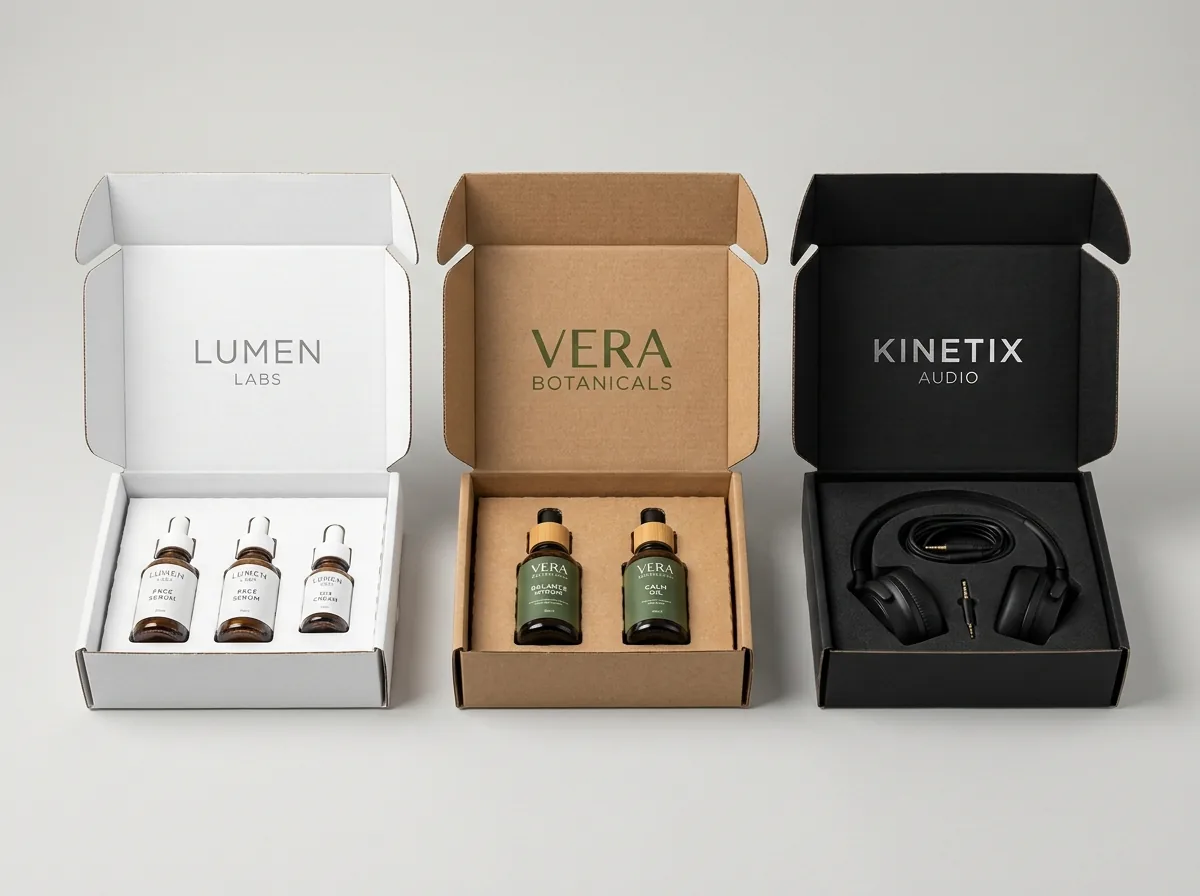
If customers order your discovery set on your website and it travels through USPS Ground Advantage, UPS or FedEx directly to their mailbox, a custom mailer box with insert is the workhorse option. Standard roll-end tuck-front (RETF) mailers fold two layers of corrugated board over the left and right side walls and lock the front dust flaps into the base. That double-wall perimeter stops sorting rollers from crushing glass serum droppers, mini beverage cans or supplement jars. For compact DTC trial kits (such as 6 × 4 × 2 in or 8 × 5 × 2 in), we recommend E-flute corrugated board. At roughly 1/16 inch thick with 90 flutes per foot, E-flute folds with razor-sharp corners like a retail carton and prints smooth CMYK and Pantone graphics inside and out, while still providing crush resistance in the mail. For heavier B2B food, beverage or industrial sample kits weighing over 2 pounds, stepping up to 1/8-inch B-flute corrugated adds extra cushioning.
- Starts at 250 boxes: low barrier to test a new DTC trial offer or seasonal discovery kit.
- No outer carton needed: stick a thermal shipping label right on the bottom panel or seal the front flap with a wafer tab.
- Full inside-lid real estate: open the top cover to reveal numbered routine instructions and a scannable reorder QR code.
When should you choose a folding carton or tray-and-sleeve sample box?
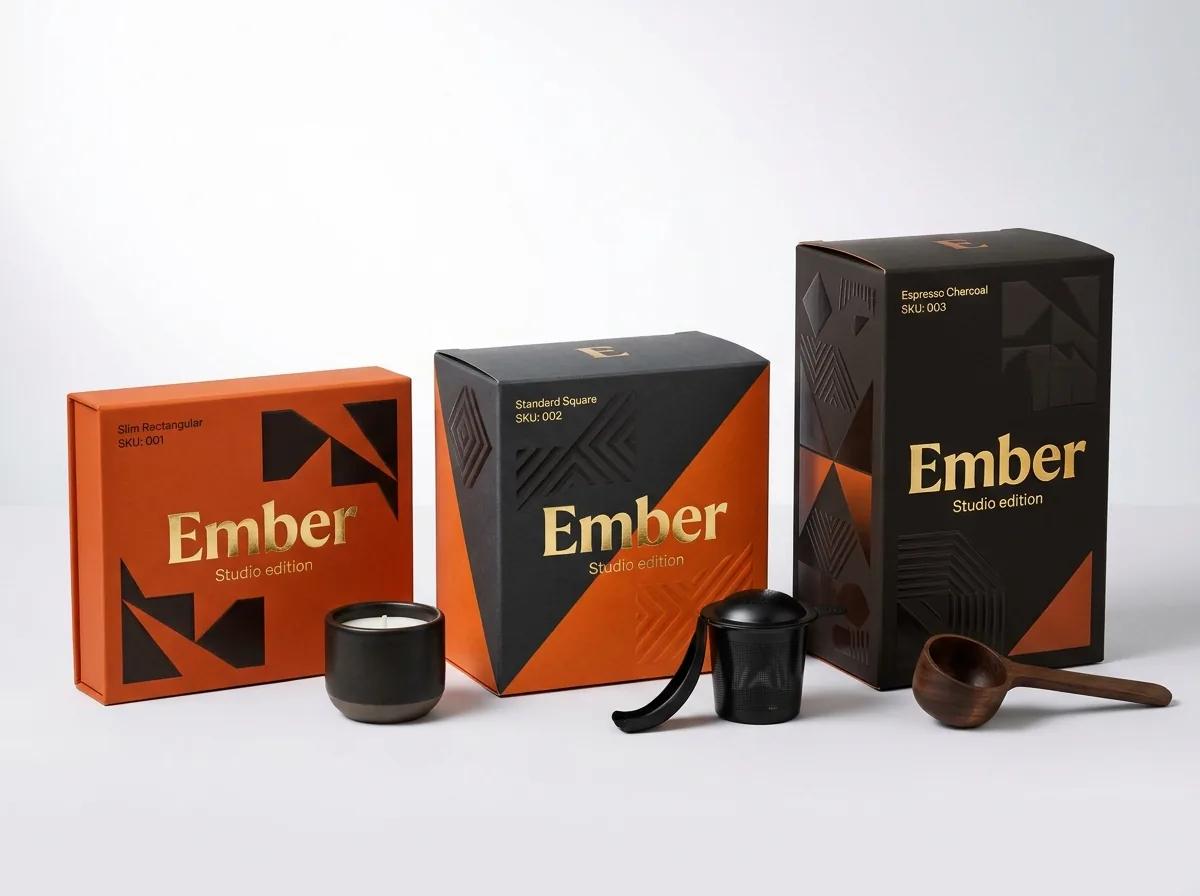
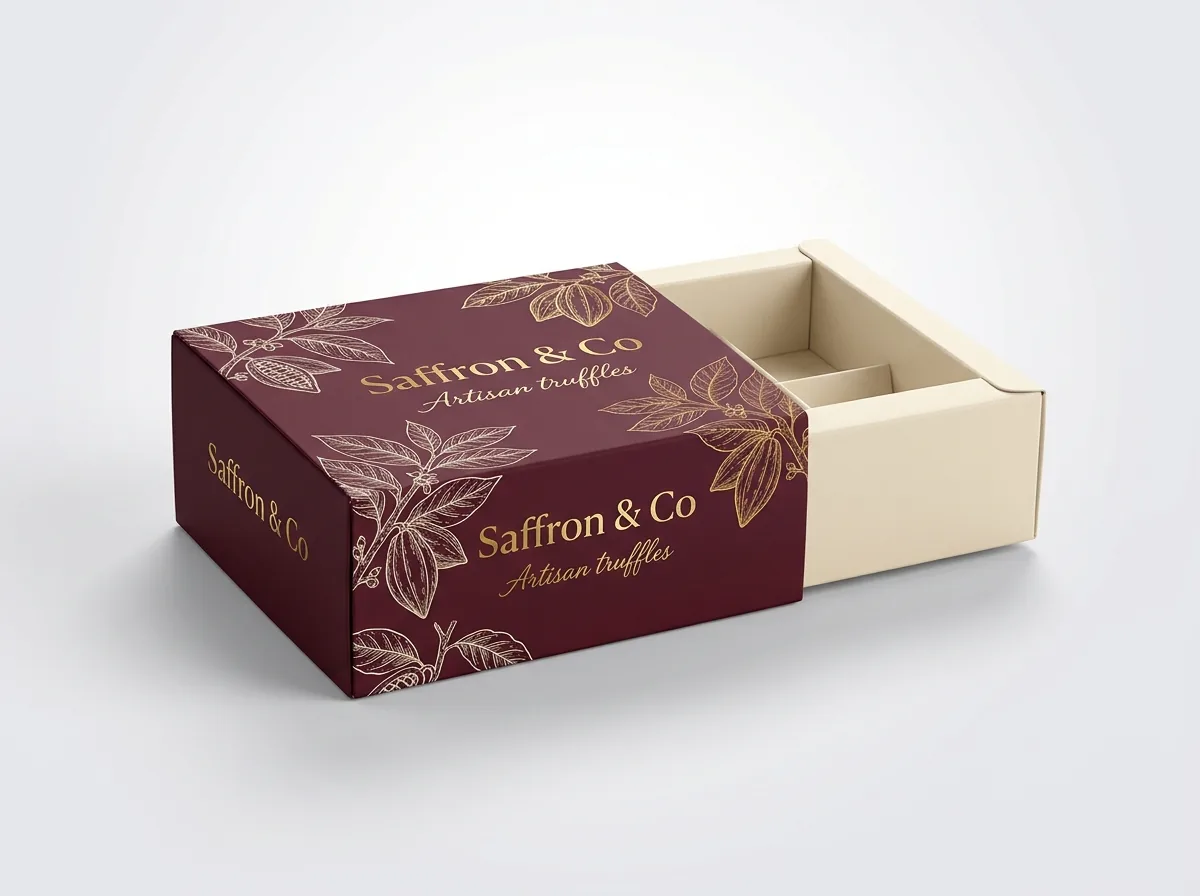
When your samples are small, lightweight and handed out at retail counters, pop-up shops, trade show booths, or slipped inside a padded mailer alongside a larger order, corrugated flute walls can feel overly bulky. Five 2 ml glass perfume atomizers weigh less than an ounce combined; placing them inside a slim paperboard custom tray and sleeve box or a straight-tuck folding carton creates a refined, pocket-sized discovery set. Paperboard sample cartons start at 1,000 units and use smooth white, kraft or recycled card stock that takes metallic foil stamping, embossing and high-resolution shade printing with pinpoint registration. Inside a tray-and-sleeve sampler, a single sheet of paperboard is die-cut and scored into spring-loaded flutes that cradle each 2 ml vial or lip gloss tube without any plastic blister tray. If you sell the discovery set online, your fulfillment team simply slips the finished sleeve box into a lightweight custom poly mailer for postage.
- Starts at 1,000 boxes: lowest unit cost once your discovery set or retail trial pack has steady volume.
- Drawer-like reveal: tray-and-sleeve construction lets buyers slide the sample tray out smoothly and slide it back after testing.
- All-paperboard build: pairing a paperboard sleeve with a folded paperboard flute insert keeps the entire sampler mono-material.
Know your size? Compare pricing across up to 3 quantities.
Request a Quote →Why do B2B swatch kits and wholesale buyer pitches use rigid boxes?
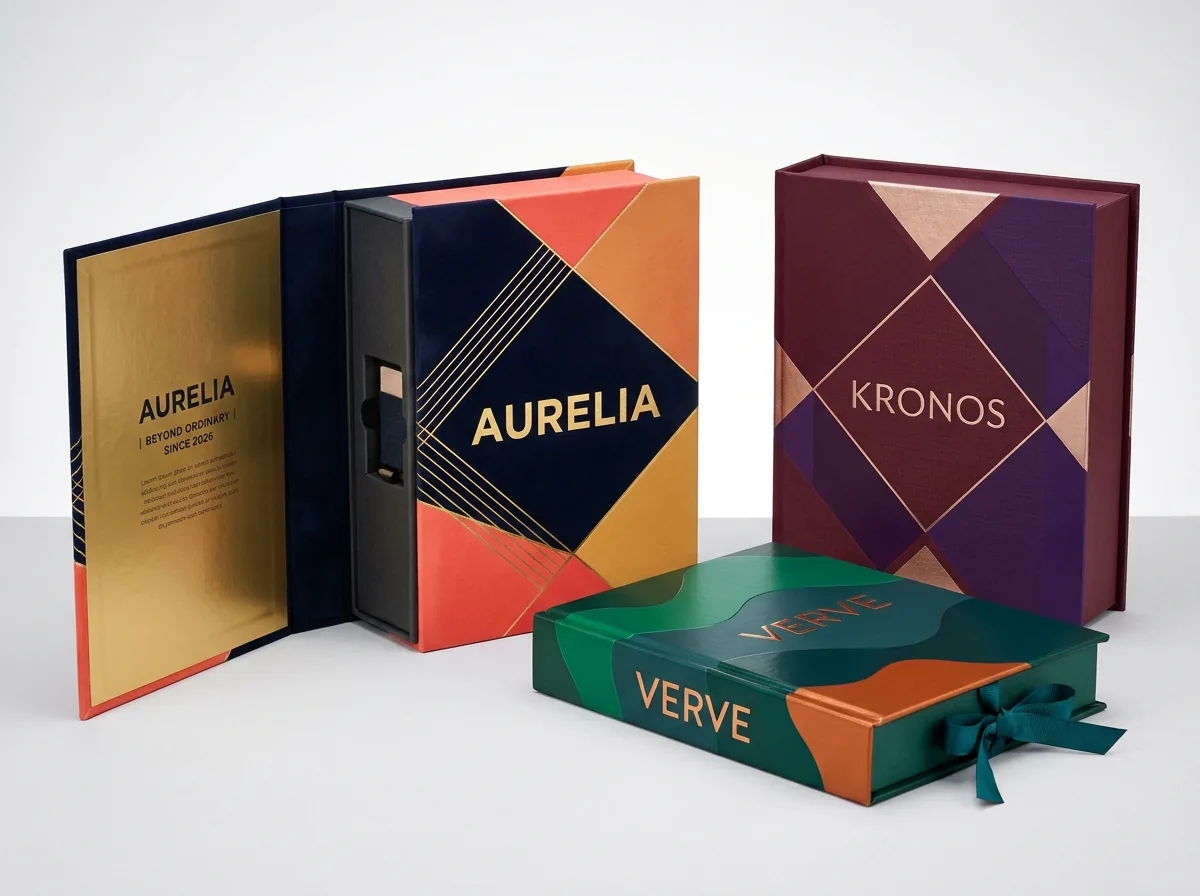
B2B manufacturers in flooring, ceramic tile, quartz countertops, architectural glass, textiles and commercial hardware face a completely different challenge than DTC beauty brands. Their samples are heavy, abrasive and expensive to produce, and the sample box is meant to sit on an architect's bookshelf or a retail buyer's conference table for two to three years without sagging or tearing. For permanent swatch libraries and high-stakes wholesale pitches, custom book style boxes and custom magnetic closure boxes starting at just 50 units are the industry standard. Built from thick rigid chipboard (gray board) wrapped in scuff-resistant laminated paper, a book-style swatch box opens flat like a hardcover binder. The left inner cover holds your technical specification table, fire or slip ratings, and sales rep contact card, while the right well houses a dense custom EVA foam insert with stepped slots and a top carry handle. When mailing a rigid swatch kit via parcel carrier, always pair it with a fitted plain corrugated outer shipping overbox so the presentation corners arrive pristine.
How do you pick the right sample box structure in three quick questions?
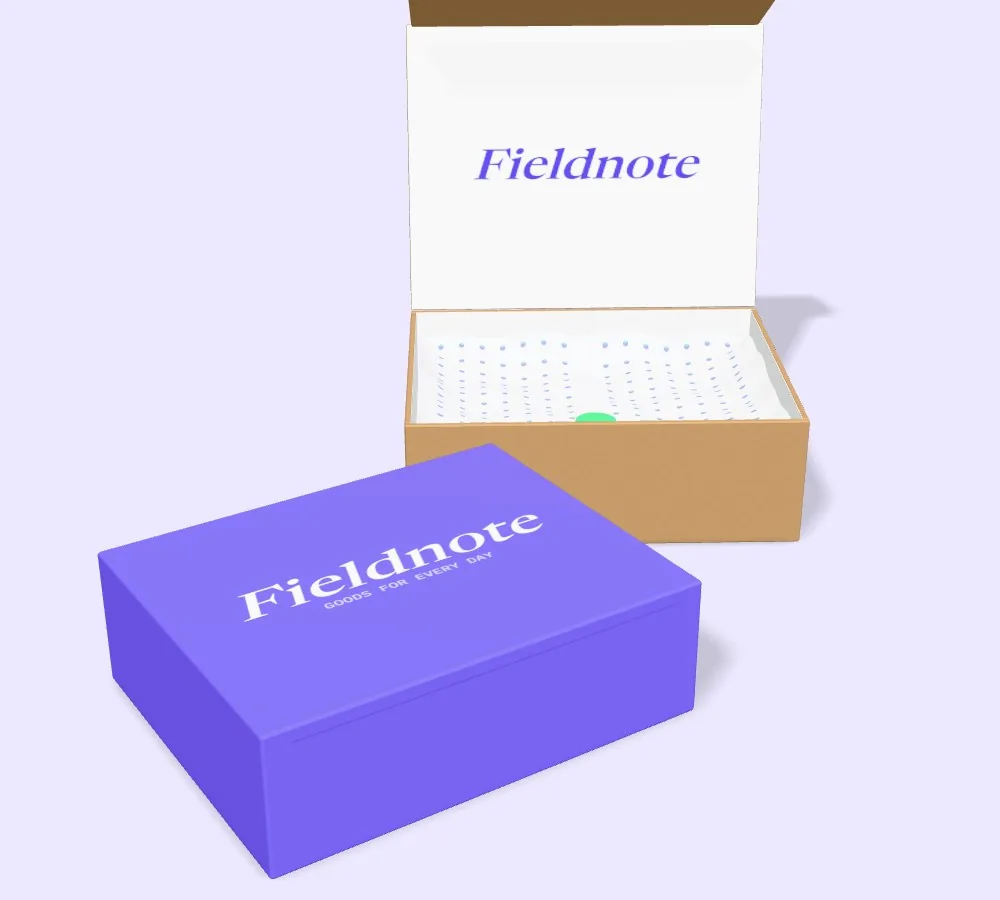
If you are torn between two structures, such as an E-flute printed-inside mailer versus a paperboard tray-and-sleeve box, or a B-flute corrugated mailer versus a magnetic rigid box, walk through the three operational questions below. Many growing brands also use two structures side by side: an E-flute corrugated mailer for online customer discovery sets and a 50-unit run of magnetic rigid boxes for retail category buyers and trade show meetings. You can also order our $50 sample kit (credited toward your first order) to compare corrugated, paperboard and rigid board swatches in your own hands before deciding.
- 1. How many kits do you need right now? For 50 to 249 high-end B2B or VIP kits, choose rigid (min 50). For 250 to 999 mailed trial kits, choose corrugated mailers (min 250). For 1,000+ compact retail or poly-bagged samplers, compare corrugated mailers and folding cartons.
- 2. Will the box travel bare in the mail? If yes, choose an E-flute or B-flute corrugated mailer. Folding cartons and rigid presentation boxes should travel inside a poly mailer or corrugated overbox.
- 3. How Long must the box last? If the customer tests the samples over one week and recycles the box, choose corrugated or paperboard. If an interior designer or retail buyer keeps the kit on a shelf for years, choose wrapped rigid.
What are the most common mistakes when choosing a sample box structure?
Mismatching the board structure to your sample weight or shipping method causes avoidable transit damage. Watch out for these five mistakes
- Mailing a thin folding paperboard carton bare through USPS without a poly mailer or outer corrugated box, resulting in crushed corners.
- Ordering a bulky B-flute corrugated carton for tiny 2 ml perfume vials when a crisp E-flute mailer or tray-and-sleeve box fits cleanly.
- Packing heavy ceramic tiles or stone slabs inside a lightweight folding carton whose bottom tuck flap bursts open under the weight.
- Shipping a soft-touch magnetic rigid swatch box without a fitted corrugated outer sleeve to protect the corners and keep barcode labels off the lid.
- Assuming you need 1,000 units to launch a sample program when corrugated sample mailers start at 250 boxes and rigid swatch kits start at 50.
Find your size
Suggested inside size: 5 × 4 × 1.25 in
A starting point. Your account manager confirms the size with you before the proof.
Quote this size →Packaging for this
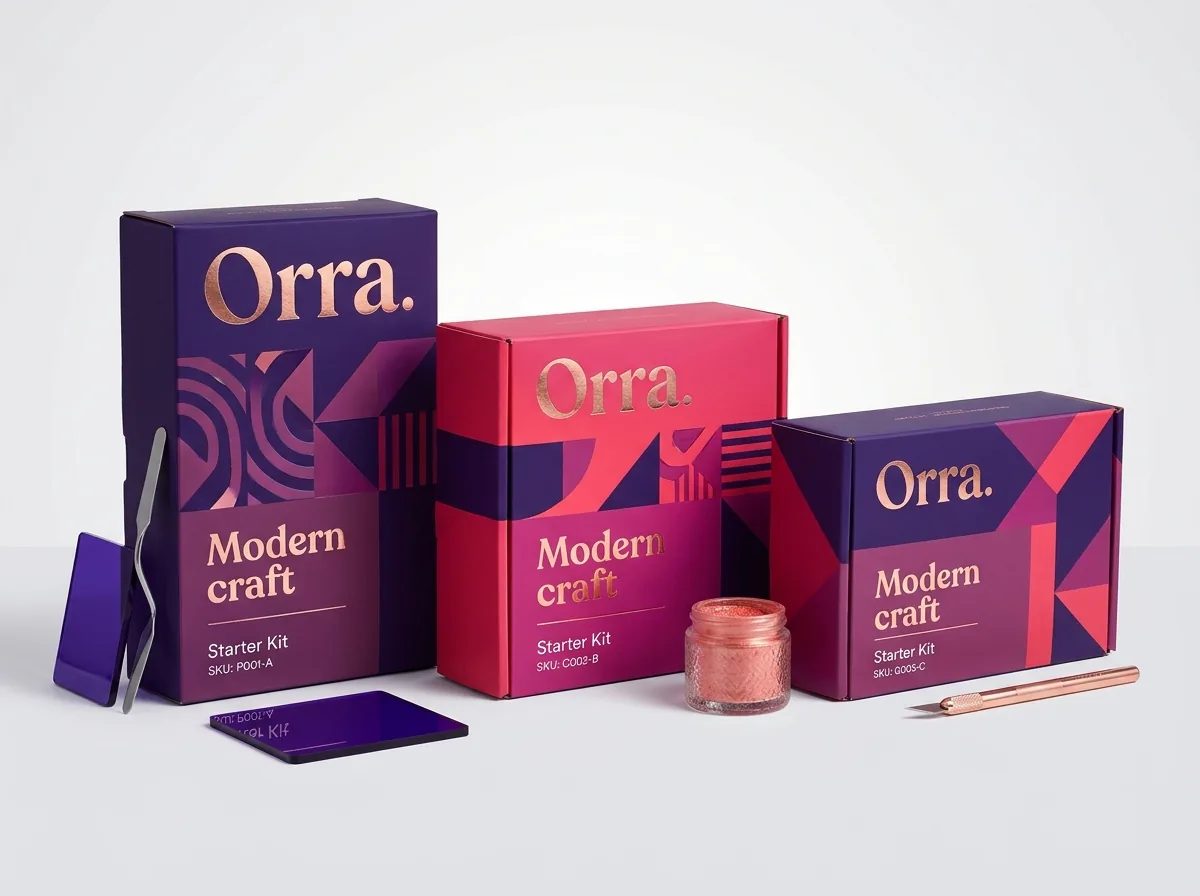
Ready to order sample boxes? Compare up to 3 quantities with a free 3D mockup.
Request a Quote →Questions about sample boxes
Can I request quotes for both a corrugated mailer and a rigid box to compare?
Yes. Tell your CubitPack account manager what samples go inside and mention in your quote notes that you want to compare an E-flute printed-inside mailer (from 250 units) against a book-style or magnetic rigid box (from 50 units). We reply within 5-7 minutes with clear options.
Which sample box structure ships flat to save warehouse space?
Both corrugated sample mailers and folding paperboard cartons (including tray-and-sleeve boxes) ship flat in compact strapped bundles and fold together in seconds without tape or glue. Standard rigid boxes ship fully assembled, though collapsible rigid boxes are also available.
Can a corrugated sample mailer look as refined as a retail carton?
Yes. When built from thin 1/16-inch E-flute white corrugated board and finished with matte or soft-touch lamination, full-bleed inside printing and a die-cut EVA foam or printed card insert, a corrugated sample mailer looks crisp and camera-ready while surviving parcel transit.
What insert works best inside a tray-and-sleeve sample box?
A die-cut paperboard flute cradle or a thin 3/8-inch EVA foam tray works best inside a sliding tray-and-sleeve box. Make sure the tops of the vials sit at least 1/16 inch below the upper rim of the inner tray so they never catch on the outer sleeve when sliding shut.
Do you offer food-safe board options for edible sample boxes?
Yes. If you are packing coffee, tea, chocolate, baked goods or spice samples, food-safe paperboard and barrier materials are available on request through certified partner facilities. Let us know whether the food is sealed in pouches or touches the board directly.
How long is production for corrugated vs folding vs rigid sample boxes?
All three structures follow our standard 10-14 business day production turnaround after proof approval and payment, with 4-5 business day rush production available for an extra cost quoted per order. Standard shipping across all 50 US states is always free.
Still have a question? Ask a packaging specialist.
Request a Quote →Request your sample boxes quote
Tell us your size and quantities, and one dedicated account manager prepares pricing for each tier.
- Free design & AI-to-print studio + 3D mockup
- No die or plate charges · 4–5 day rush available
- Free shipping to all 50 states
- 10% off your first order
The structural comparisons (250-box corrugated mailer minimum, 1,000-box folding carton minimum, 50-box rigid minimum, E-flute vs B-flute behavior and overbox rules) come from CubitPack's decided offers and TAPPI / ISTA packaging standards. Checked by a packaging specialist. Spot something wrong? Tell us and we will fix it.
Sources
What changed
- October 22, 2026: First published.
- October 22, 2026: Updated specifications, terminology, and verified source links.
More guides
New packaging guides by email
Sizes, materials and design tips. Unsubscribe anytime.