
Clear vs foil vs matte candle labels: which suits your vessel?
Short answer: Choose clear labels when you want the candle flame glow and colored glass or soy wax to show right through your label. Choose metallic foil labels or hot foil stamping for luxury gift sets and dark vessels, and choose matte or gloss opaque finishes when small scent notes need high-contrast readability on custom candle labels.
On this page
- How do clear, foil and matte or gloss candle labels compare
- When should you choose clear candle labels
- What is the difference between foil candle labels and hot foil stamping
- Should you choose matte, gloss or spot UV for candle jars
- How do warm wax and fragrance oils affect candle label choices
- Common mistakes
- FAQs
Request a custom quoteFree dieline & 3D mockup
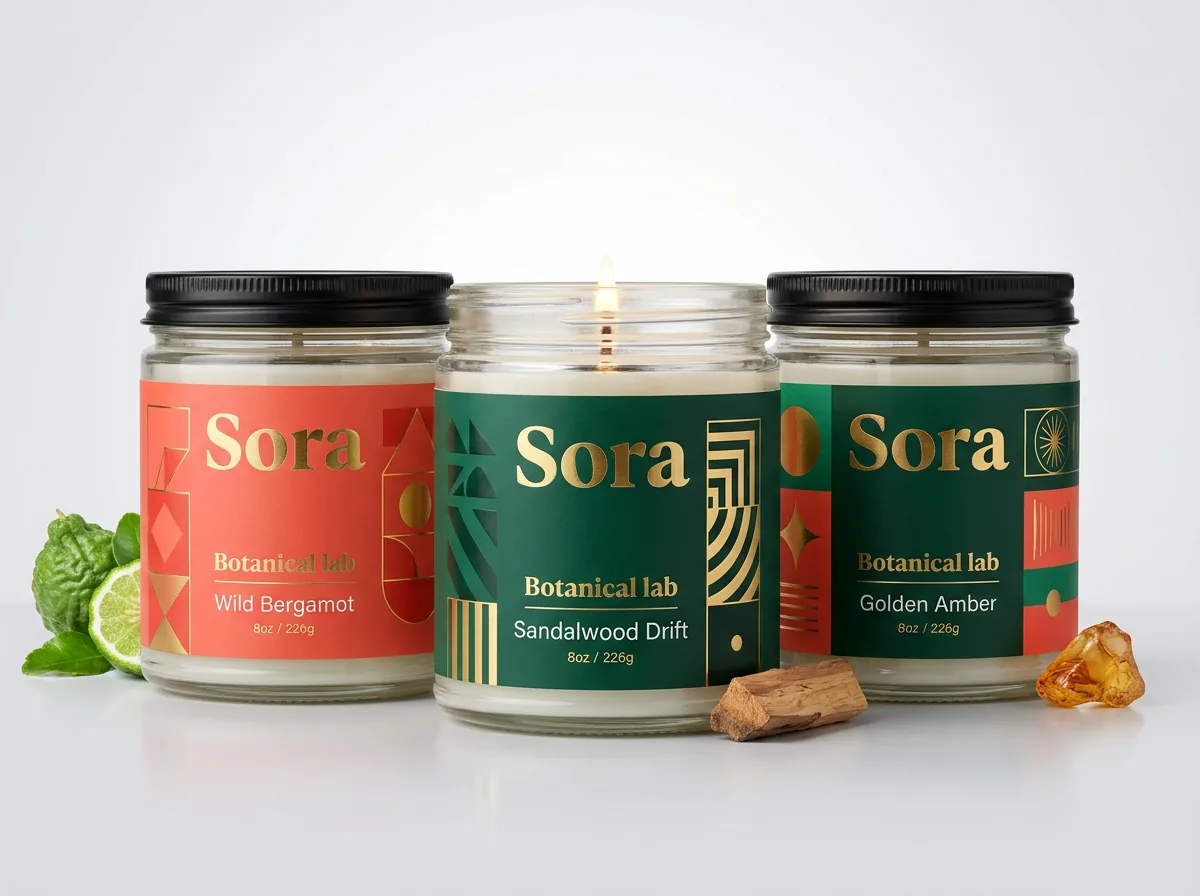
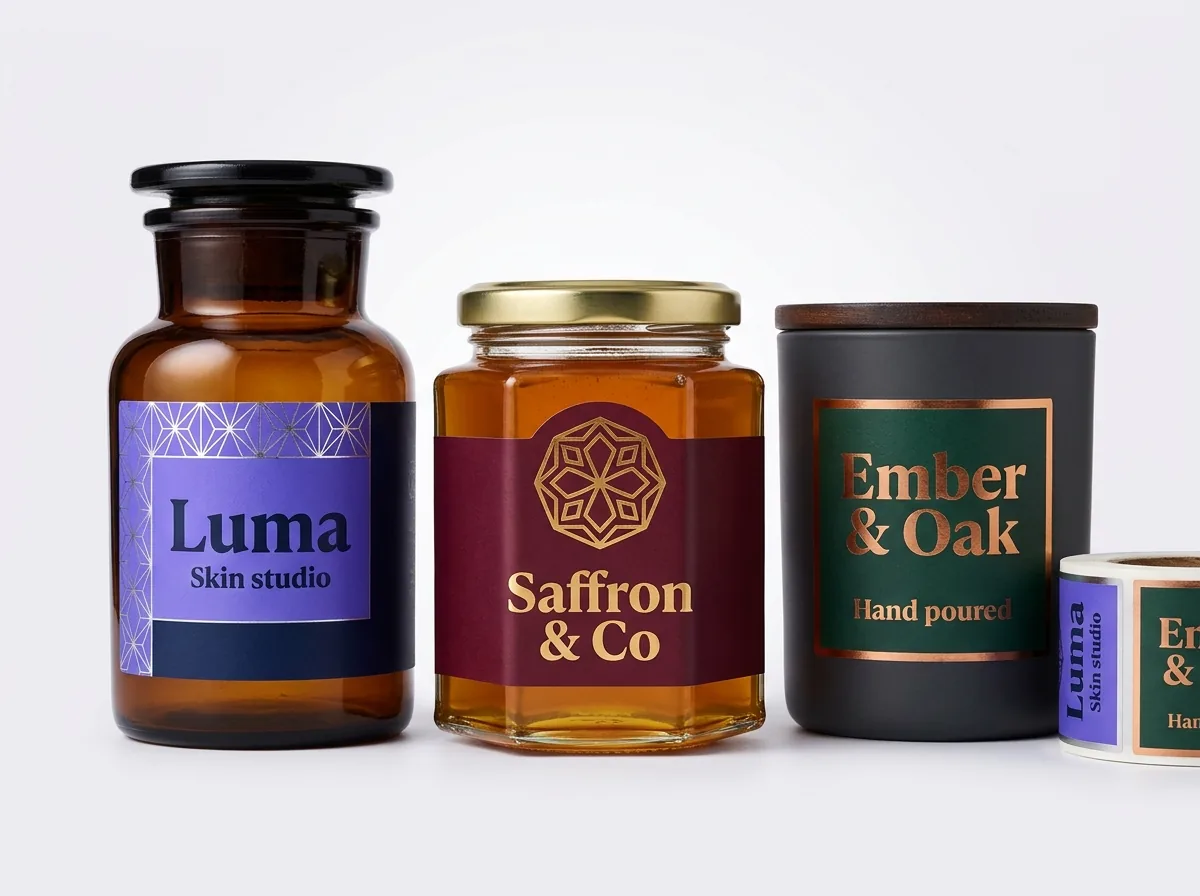
The stock and finish you pick for a candle label change how the vessel looks both unlit on a store shelf and lit on a customer's table at night. Transparent clear labels blend into frosted white, amber or smoky glass tumblers for a direct screen-printed look that lets warm candlelight shine right around your typography. Metallic foil stock and hot foil stamping reflect boutique spotlights, giving dark matte black jars, ceramic tumblers and holiday travel tins a refined metallic accent without paying for custom-printed glassware. Opaque stocks paired with matte or gloss finishes provide a crisp, high-contrast background that keeps fine serif scent notes, burn times and net weights sharp against any vessel color. At CubitPack, every option starts at 500 printed candle labels in 10 to 14 business days, with zero die fees, free design help and a 3D mockup rendered on your vessel before payment.
How do clear, foil and matte or gloss candle labels compare?
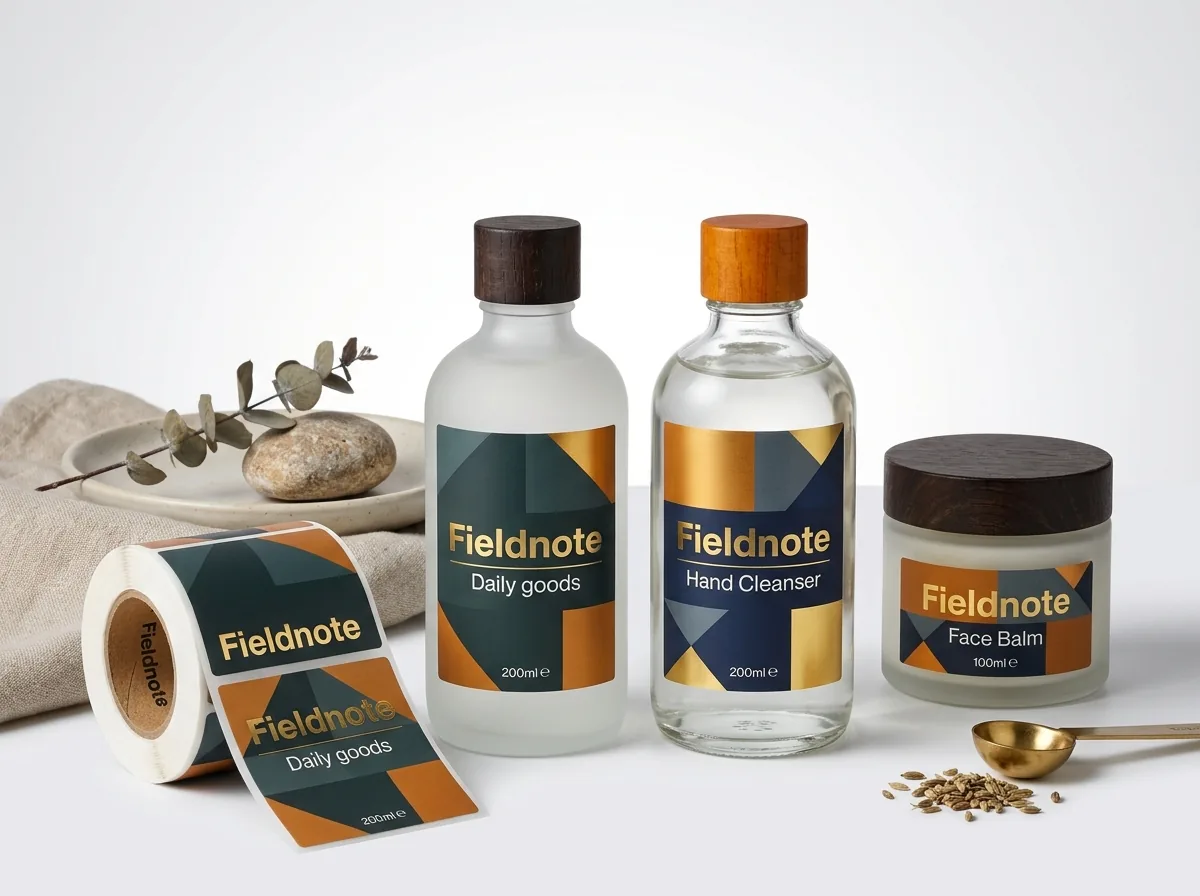
Before picking a label stock or finish, look at the color and surface of your candle vessel. A dark amber apothecary jar, a creamy soy wax tumbler and a brushed silver travel tin each reflect light differently. Use the comparison table below to match your vessel to the stock and finish that keeps your scent typography legible from three feet away on a boutique shelf. Keep in mind that you can also combine stocks and finishes across the same candle. Many brands pair a matte front square enhanced with gold foil stamping on the vessel wall with a clean, easy-to-read matte circle underneath the base for the fire-safety warning sticker.
| Label option | Visual effect on the candle | Best vessel match | Design tip |
|---|---|---|---|
| Clear labels | Transparent window; looks screen-printed on glass | Frosted tumblers, clear jars with colored wax, amber jars | Use bold dark ink on creamy wax or opaque white ink on dark glass |
| Metallic foil stock | Full gold or silver mirror sheen across the face | Matte black tumblers, holiday gift tins, apothecary bottles | Contrast dark text against brushed or bright metallic areas |
| Matte finish | Soft, zero-glare apothecary surface | Amber glass, ceramic vessels, minimalist white tumblers | Ideal for small serif scent notes under bright boutique spotlights |
| Gloss finish | Bright, high-shine coat that deepens rich colors | Botanical illustration wraps, wax melt clamshells | Wipes clean easily if soy wax or oil touches the surface |
| Matte + foil stamping | Velvety flat background with metallic logo highlights | Luxury boxed candles, hotel and wedding collections | Keep foil stamping on the crest or border away from tiny text |
| Matte + spot UV | Tone-on-tone raised gloss pattern over a flat base | Monochrome black-on-black or cream-on-cream tumblers | Use spot UV over monograms or botanical line art |
When should you choose clear candle labels?
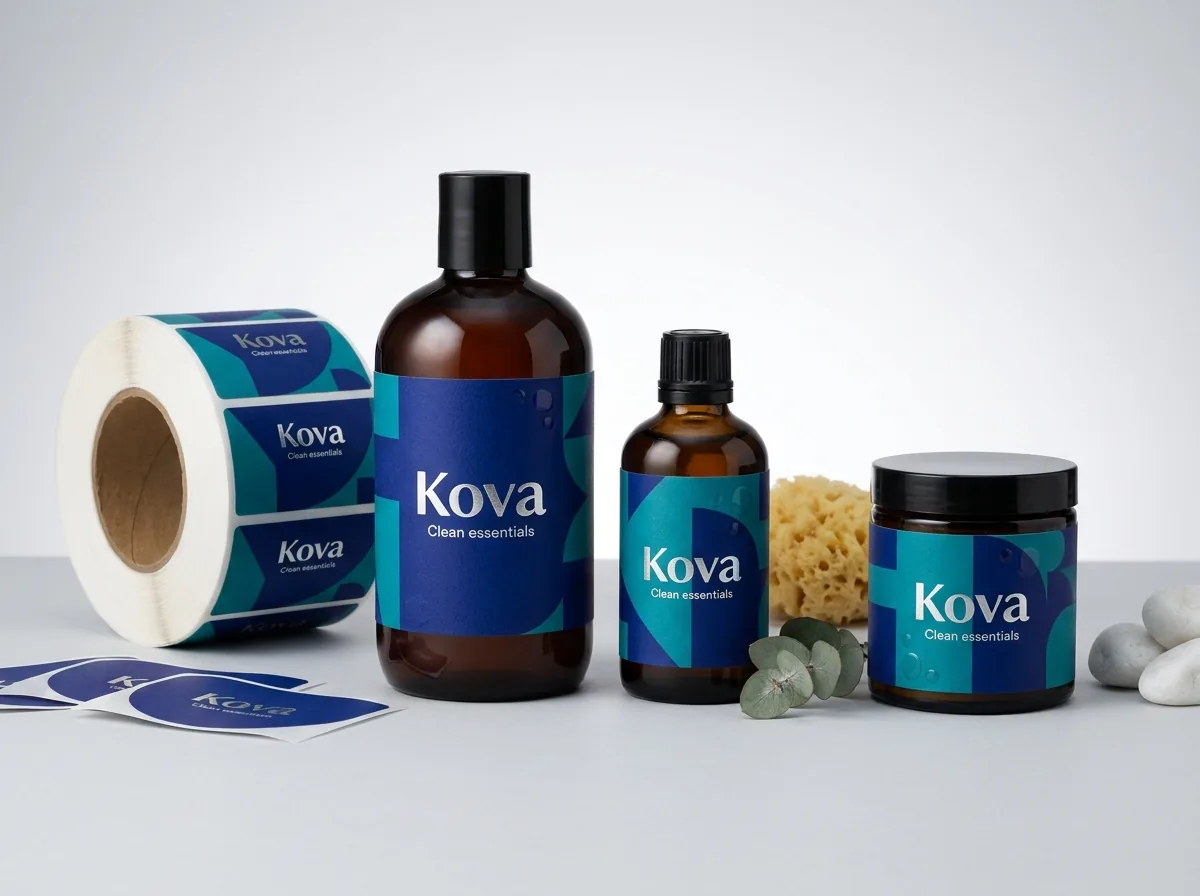
Transparent custom clear labels are the go-to choice when you want your candle jar to look like custom screen-printed glassware without paying high glassware printing minimums. Once smoothed onto a clean glass tumbler, the transparent film disappears against the wall, leaving only your brand mark, scent number and tasting notes floating over the wax. When designing for clear labels, always account for the color behind the glass. An unlit soy candle provides a warm ivory backdrop while the wax is solid, but as the melt pool deepens during a burn, the top half of the jar turns clear liquid and translucent. On dark amber, cobalt or matte black jars, dark ink alone will vanish into the glass, so ask our prepress team to set up a crisp white ink layer behind your typography.
- Frosted glass tumblers (8 oz and 9 oz): dark charcoal or forest green ink on a 2.75 × 2.75 in clear stock creates an etched-glass studio look.
- Clear glass with creamy soy or beeswax (4 oz to 14 oz): dark 8 pt to 14 pt lettering reads clearly against the solid wax column.
- Dark amber or black jars (4 oz, 8 oz and 9 oz): use 100% opaque white ink or metallic foil so lettering pops against the dark wall.
- Candlelight glow: clear margins of 0.25 in to 0.5 in around your text allow warm flame light to shine through the vessel during a 4-hour burn.
What is the difference between foil candle labels and hot foil stamping?
Candle makers have two ways to add metallic gold or silver to a vessel: printing on metallic custom foil labels stock, or adding foil stamping to a matte or gloss label. Metallic foil stock starts with a full silver or gold base layer across the entire sticker, allowing us to print CMYK colors and opaque inks on top while leaving unprinted areas gleaming like a brass plaque or vintage apothecary seal. Hot foil stamping, by contrast, presses a heated metallic ribbon onto specific vector elements (such as your candle brand crest, scent number or thin frame border) against a velvety matte cream, charcoal or forest green background. If you want an understated apothecary paper look with just a glint of gold on the logo, choose matte finish with hot foil stamping; if you want a full metallic medallion on a tin lid or holiday jar, choose foil label stock.
Know your size? Compare pricing across up to 3 quantities.
Request a Quote →Should you choose matte, gloss or spot UV for candle jars?
Overhead track lighting in gift shops and home goods boutiques creates strong reflections on cylindrical glass jars. A matte lamination finish diffuses those harsh spotlights so customers can read fine fragrance notes (such as bergamot, cedarwood and vetiver) from any angle without tilting the jar. Matte also pairs naturally with textured custom candle boxes and wooden lids. A gloss lamination finish acts like a protective window that saturates deep blacks, rich jewel tones and watercolor botanical illustrations. It is also very popular on 6-cavity wax melt clamshells and kitchen scents because any stray wax flake or fragrance smudge wipes right off the slick surface. For monochrome luxury lines, pairing a matte background with raised spot UV over your logo gives customers a tactile surprise when they pick the tumbler up to smell the cold throw.
How do warm wax and fragrance oils affect candle label choices?
Candle production benches are full of essential oils, synthetic fragrance oils and warm soy or coconut-apricot wax. If a drop of undiluted fragrance oil runs down the outside of a jar onto an unlaminated desktop paper sticker, it leaves a permanent translucent grease spot. Choosing a protective matte or gloss finish shields your printed ink from finger oils, wax dust and light splashes during pouring and curing. When testing a new vessel and label pairing, always run a full four-hour burn test on a labeled sample jar. Watch how the adhesive behaves as the melt pool reaches its widest depth along the upper glass wall, and confirm that the corners stay firmly seated once the tumbler cools back to room temperature. For the bottom fire-safety warning sticker underneath the base, skip metallic foil and heavy gloss so any stamped batch code stays smudge-free, and keep high-contrast black text on a clean white or light background so the ASTM F2058 safety pictograms remain unmistakable. Whether you pour five core fragrances year-round or rotate limited holiday collections, keeping your vessel wall clean before application and matching your finish to your glass color ensures every candle arrives at the boutique shelf looking sharp.
- Wipe every 8 oz or 9 oz tumbler with 70% to 90% rubbing alcohol after pouring and cooling so invisible fragrance oil mist does not weaken adhesive grip.
- Let freshly poured candles cool to room temperature before labeling so expanding warm glass does not shift the sticker.
- Use a protective matte or gloss finish on reed diffuser bottles where carrier oils frequently drip down the neck.
- Run a four-hour test burn on one labeled vessel whenever you switch glassware suppliers or wax blends.
What are the most common mistakes when choosing candle label materials?
Matching the wrong finish to your glass color can make your scent notes disappear on the shelf. Avoid these five material and finish errors
- Printing dark charcoal text on a clear label for an amber or black candle jar without a white ink layer or opaque backdrop.
- Putting tiny 6-point ingredient or burn-warning text in metallic foil stamping, where light reflection makes fine strokes harder to read.
- Applying clear labels over dusty or oil-smudged glass, which traps visible haze bubbles beneath the transparent film.
- Using unlaminated home-printed paper labels on reed diffusers or travel tins where essential oils stain the edge.
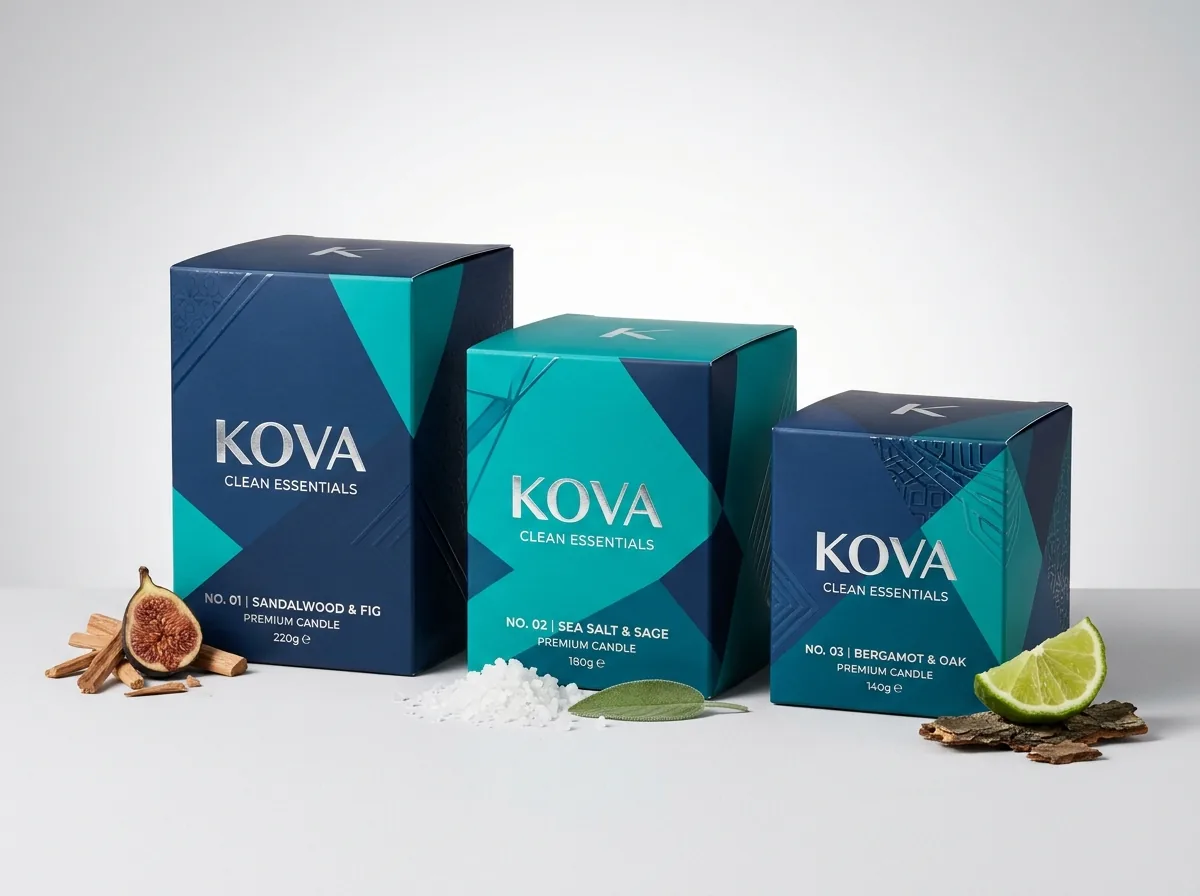
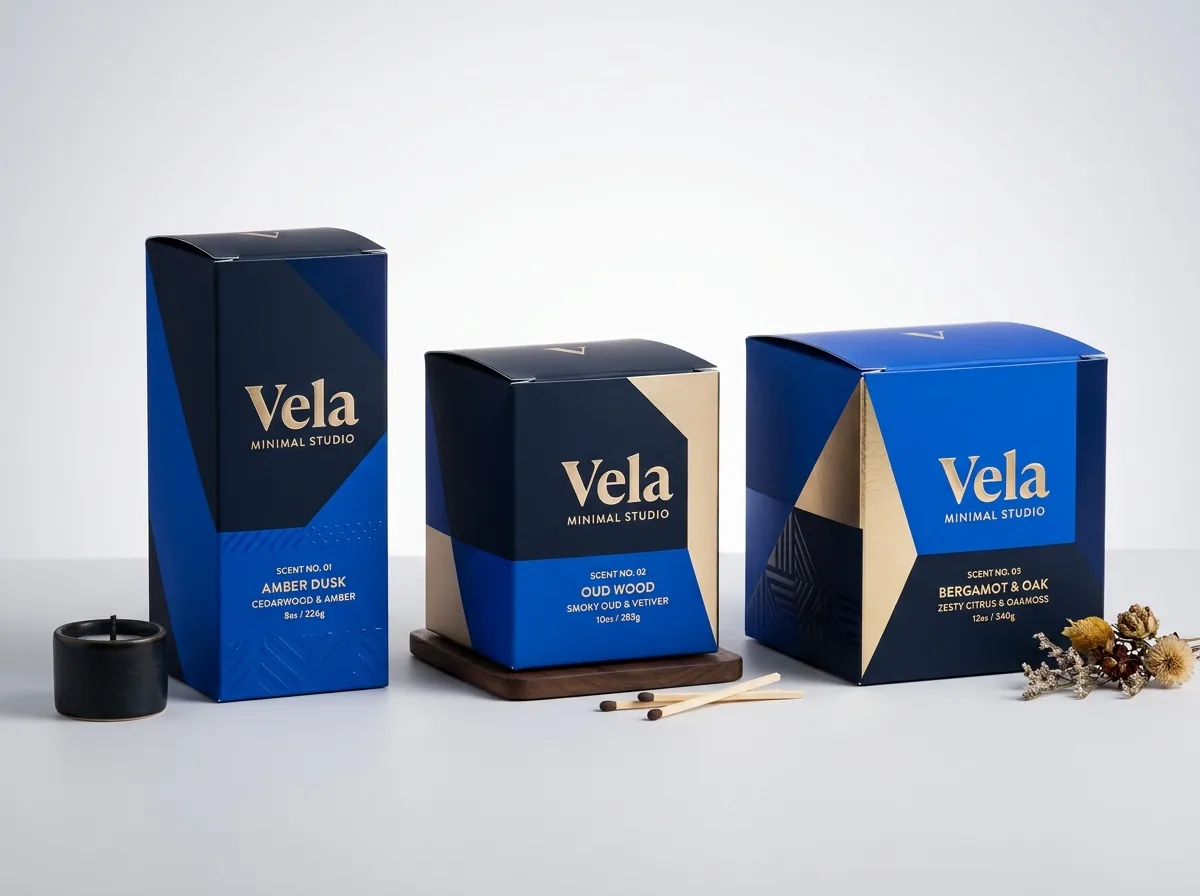
- Ordering mismatching colors between your jar label and outer candle box instead of specifying one shared Pantone code.
Find your label size
Suggested label size: 9⅛ × 2¾ in (width × height)
A typical starting point. Your account manager confirms the size on the proof.
Quote this size →Packaging for this
Ready to order candle labels? Compare up to 3 quantities with a free 3D mockup.
Request a Quote →Questions about candle labels
Do clear candle labels turn yellow when the candle burns?
Our clear label stock is built for retail containers and everyday candle vessels, and our complete thermal and stock specification sheet is being finalized. Tell us your vessel wall material and burn test conditions in the quote notes so we pair the right stock.
Can you print white ink on clear candle labels for dark amber jars?
Yes. When you order clear labels for amber, cobalt, green or matte black candle vessels, our prepress team can place an opaque white ink layer directly behind your text and logo so your design stands out sharply.
Can I combine matte lamination and gold foil stamping on the same candle label?
Yes. Matte finish paired with hot gold or silver foil stamping is one of our most requested setups for boutique candle tumblers. The matte base prevents store-light glare while the stamped logo catches the eye.
Are clear and foil candle labels available on both rolls and flat sheets?
Yes. Whether you choose clear stock, metallic foil stock, or matte and gloss finishes, we can supply your order wound on rolls for fast application or kiss-cut on flat sticker sheets starting at 500 labels.
How can I see how a clear or foil label will look on my candle jar before paying?
Every CubitPack quote includes a free digital proof and a 3D mockup rendered on your vessel shape before you pay. You can also order our $50 sample kit or a paid printed sample credited toward your production run.
Can you match my matte candle label color to my custom candle box?
Yes. Because we produce both custom labels and custom candle boxes under one roof with guaranteed Pantone matching, we can print your vessel label and folding carton or rigid box to the exact same Pantone code.
Still have a question? Ask a packaging specialist.
Request a Quote →Request your candle labels quote
Tell us your size and quantities, and one dedicated account manager prepares pricing for each tier.
- Free design & AI-to-print studio + 3D mockup
- No die or plate charges · 4–5 day rush available
- Free shipping to all 50 states
- 10% off your first order
This guide compares CubitPack's decided label stocks and finishes (Clear, Foil, Matte, Gloss, Foil stamping and Spot UV from our published product specifications) against common candle vessel surfaces. Checked by a packaging specialist. Spot something wrong? Tell us and we will fix it.
Sources
What changed
- October 22, 2026: First published.
- October 22, 2026: Updated specifications, terminology, and verified source links.
More guides
New packaging guides by email
Sizes, materials and design tips. Unsubscribe anytime.