
Brite can roll labels vs shrink sleeves: which fits craft breweries?
Short answer: Choose pressure-sensitive roll labels on brite cans for fast 10-14 day turnarounds, 500-label minimums, easy tabletop or inline application, and tactile matte or foil finishes. Choose shrink sleeves only when your artwork must cover the curved top neck chime. Compare custom beer labels options below.
On this page
- How do brite can roll labels, shrink sleeves and printed cans compare
- Why are pressure-sensitive roll labels easier to run on canning day
- How do clear, metallic foil and tactile finishes compare on the shelf
- How do roll labels and shrink sleeves affect aluminum can recycling
- When should a brewery use sticker sheets, roll labels or shrink sleeves
- Common mistakes
- FAQs
Request a custom quoteFree dieline & 3D mockup
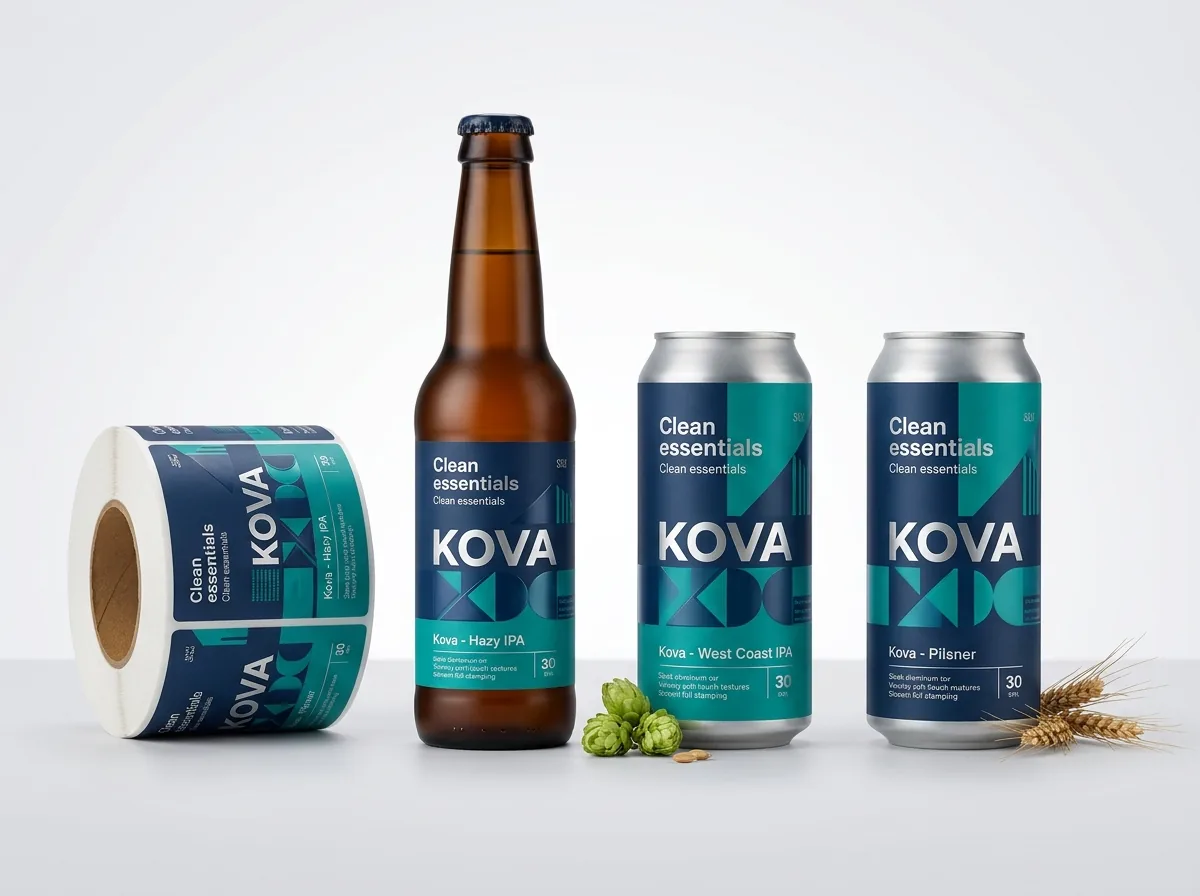
Craft breweries have three main ways to dress aluminum 12 oz and 16 oz cans: pressure-sensitive roll labels applied to blank silver brite cans, heat-shrink plastic sleeves steamed onto brite cans, or direct-printed cans ordered by the truckload from a can manufacturer. Pressure-sensitive roll labels are the standard workhorse for small and regional craft breweries because they start at 500 pieces, ship in 10-14 business days (rush in 4-5), apply on compact tabletop or inline rotary rollers without steam tunnels, and offer matte, gloss, hot foil stamping, spot UV, clear and metallic foil finishes. Shrink sleeves cover 360 degrees including the curved neck taper, but require steam or radiant heat tunnels and often complicate municipal aluminum can recycling unless perforated for removal. Direct-printed cans have the lowest unit cost at high scale but lock you into multi-pallet minimums per SKU.
How do brite can roll labels, shrink sleeves and printed cans compare?
When a growing craft brewery plans its packaging line, the choice between pressure-sensitive custom printed beer labels, heat-shrink sleeves and factory-printed cans comes down to SKU variety, warehouse floor space and canning-day equipment. A large production brewery that brews two flagship lagers year-round in high volume can afford to store pallets of direct-printed cans. By contrast, a taproom or regional brewery releasing rotational hazy IPAs, pastry stouts and fruited sours every two weeks needs to buy blank silver brite cans in bulk and label each batch on demand. Between the two brite-can decoration methods, pressure-sensitive roll labels run dry on mechanical wipe-down rollers right before or right after the seamer, whereas shrink sleeves must pass through a steam tunnel or infrared heat oven to shrink tightly around the aluminum body. Review the side-by-side table below to compare setup requirements across all three formats.
| Feature | Pressure-sensitive roll labels | Heat-shrink sleeves | Direct-printed cans |
|---|---|---|---|
| Minimum order per SKU | From 500 labels at CubitPack | Often several thousand sleeves per SKU | Multi-pallet or truckload minimums per SKU |
| Turnaround time | 10-14 business days (rush 4-5 days) | Typically 2-4 weeks plus cylinder setup | Weeks or months of can-mill scheduling |
| Canning line equipment | Tabletop roller or inline rotary labeler | Sleeve applicator plus steam or heat tunnel | None (delivered pre-printed on pallets) |
| Can coverage area | Straight wall (8.0 × 3.5 in or 8.0 × 4.75 in) | Full 360° body plus tapered top neck chime | Full 360° body up to the neck shoulder |
| Surface finishes | Matte, gloss, hot foil, spot UV, clear, foil | Gloss or matte film; limited tactile relief | Standard dry-offset can inks and overvarnish |
| Die & plate charges | Free at CubitPack (zero die or plate fees) | Often carries seaming and plate setup costs | Per-color printing plate charges per SKU |
Why are pressure-sensitive roll labels easier to run on canning day?
A pressure-sensitive roll labeler uses a peel plate and a soft drive roller to press the adhesive wrap onto the spinning aluminum can in a fraction of a second. Because the process is purely mechanical, a brewery can mount an inline labeler directly onto the outfeed conveyor of a compact canning line or run a semi-automatic tabletop applicator on a stainless prep table. There is no boiler, no steam exhaust hood, and no hot water condensate dripping onto the brewhouse floor. Heat-shrink sleeves require sliding a tubular PETG or PVC film sleeve over the can and conveying it through a tunnel heated to roughly 180°F to 200°F. When labeling filled cans of hop-forward IPA, breweries must carefully manage tunnel residence time and post-tunnel air knives so the heat does not warm the beer or leave water droplets trapped under the plastic rim before packing into custom beer boxes.
- Dry application: roll labels can be applied to empty dry brite cans before filling or to rinsed cans after seaming.
- Zero heat exposure: delicate hop aromatics never pass through a 190°F steam or radiant heat tunnel.
- Fast SKU changeovers: swapping from a flagship pale ale roll to a seasonal stout roll takes less than two minutes on a 3 inch core.
- Works with mobile canners: nearly every mobile canning truck carries an inline pressure-sensitive roll labeler on board.
How do clear, metallic foil and tactile finishes compare on the shelf?
In a crowded bottle-shop cooler, shoppers pick up cans with their hands as much as their eyes. Shrink sleeves are printed on reverse-side plastic film, so the outside surface always feels like smooth shrunk plastic even when a matte overcoat is used. Pressure-sensitive custom roll labels are printed on the top face stock, giving your designer access to true tactile finishes that you can feel the moment you grab the 4-pack. You can pair a velvety matte lamination with raised glossy spot UV over hop cones or water droplets, or press hot gold and copper foil stamping onto a dark imperial stout crest. If you love the industrial look of bare aluminum on direct-printed cans, you can achieve the exact same effect at 500-label minimums by printing on custom clear labels or custom foil labels and using selective white ink underbases.
Know your size? Compare pricing across up to 3 quantities.
Request a Quote →How do roll labels and shrink sleeves affect aluminum can recycling?
Aluminum beverage cans are one of the most recycled packaging formats in North America, but the decoration method affects how municipal material recovery facilities (MRFs) and aluminum smelters handle empty cans. Full-body heat-shrink sleeves wrap over the tapered neck shoulder in thick PETG or PVC plastic. During optical sorting at a recycling plant, infrared sensors can misread a fully sleeved aluminum can as a plastic bottle and eject it into the wrong stream unless the consumer tears the sleeve off first. Even when sleeved cans reach the eddy-current aluminum separator, excess plastic film increases dross and emissions in the delacquering kiln. Pressure-sensitive can labels cover less total surface area, leave the top neck shoulder and bottom rim of the aluminum exposed for optical and eddy-current sensors, and use thinner face stocks. Many craft retailers and bottle shops specifically favor pressure-sensitive brite can labels over unperforated shrink sleeves for this reason.
When should a brewery use sticker sheets, roll labels or shrink sleeves?
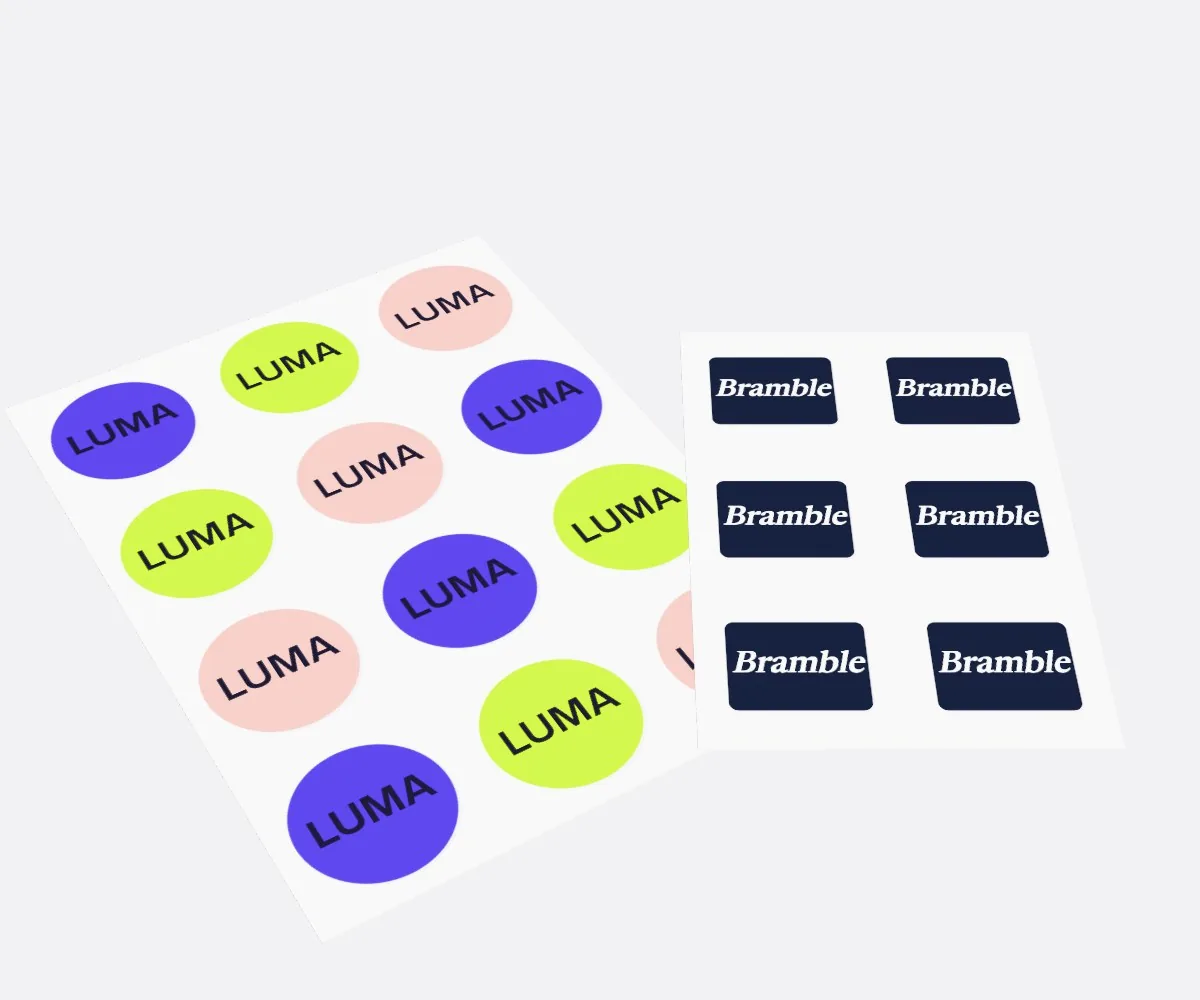
Most craft breweries use a mix of formats depending on batch size. For pilot batches under 20 cases, taproom-only 32 oz crowler fills, and 500 ml bottle-conditioned releases, flat custom sticker sheets let taproom staff peel and apply labels by hand without setting up a roller. Once a batch reaches 500 cans or more, switching to machine-wound rolls cuts labeling time to seconds per can. Shrink sleeves make sense primarily when your brand identity relies on artwork extending up over the curved top shoulder chime of the can, or when a co-packer already runs a dedicated steam-tunnel sleeving line and you are ordering tens of thousands of cans of a single SKU. For 90% of rotational craft releases, pressure-sensitive roll labels on brite cans deliver the fastest turnaround and lowest inventory risk.
- Under 500 units or taproom crowlers: order flat sticker sheets or a 500-label roll for hand application.
- 500 to 25,000+ cans across rotational SKUs: order pressure-sensitive roll labels on 3 inch cores for brite cans.
- Neck-chime 360° artwork on co-packed runs: consider perforated shrink sleeves if your co-packer runs a steam tunnel.
- Year-round flagship lagers in multi-truckload volume: transition to direct-printed aluminum cans once demand is steady.
What mistakes do breweries make when choosing between roll labels and sleeves?
Warehouse space, applicator compatibility and SKU counts change fast in a growing brewery. Avoid these five common mistakes when selecting your can format
- Ordering a full pallet of pre-printed cans or shrink sleeves for an experimental brew before testing taproom demand with a 500-label brite can run.
- Designing artwork that crosses the curved top neck chime when ordering pressure-sensitive roll labels, which only lie flat on the straight cylinder wall.
- Forgetting to check whether your mobile canner or co-packer runs a pressure-sensitive rotary labeler or a steam-tunnel sleever.
- Using unbacked CMYK inks on clear or foil brite-can labels under the UPC barcode, where metallic reflection stops retail scanners from reading the bars.
- Splitting a 5,000-can run across five seasonal beers with five slightly different label heights instead of sharing one 8.0 × 4.75 inch dieline.
Find your label size
Suggested label size: 9⅛ × 2¾ in (width × height)
A typical starting point. Your account manager confirms the size on the proof.
Quote this size →Packaging for this
Ready to order beer labels? Compare up to 3 quantities with a free 3D mockup.
Request a Quote →Questions about beer labels
What is the minimum order for pressure-sensitive beer can roll labels?
CubitPack prints custom beer labels starting at 500 labels, with trial orders considered case by case. That lets you label around 20 cases of 16 oz 4-packs or 12 oz 6-packs for a taproom release without storing leftover packaging.
Can I combine multiple beer flavors in one roll label order?
Yes. When you keep the same label width, height and material across your IPA, sour, stout and pilsner, you can select 2 designs or 3+ designs in the quote form and list each SKU quantity in the notes with zero plate or die fees.
How do I get a metallic aluminum can look with a pressure-sensitive label?
You can print on clear label stock so the actual brushed silver brite can shows through unprinted areas, or print on metallic foil label stock and add selective white ink behind the text and hop illustrations you want to keep opaque.
Do mobile canning services accept pressure-sensitive roll labels?
Yes, pressure-sensitive roll labels wound on a 3 inch core are the standard format used by mobile canning trucks across the US. Just note your canner's required unwind direction and maximum outer roll diameter in your quote request.
Why do some bottle shops and recyclers prefer roll labels over shrink sleeves?
Thick PETG or PVC shrink sleeves that cover the entire can body and neck taper can cause optical sorters at recycling plants to misidentify aluminum cans as plastic. Pressure-sensitive labels leave the aluminum neck and rim exposed for clean sorting.
How fast can I get custom beer can labels for a taproom release?
Standard production takes 10-14 business days after you approve your digital proof and 3D can mockup. If your brew finishes fermenting early or a festival deadline moves up, rush production in 4-5 business days is available.
Still have a question? Ask a packaging specialist.
Request a Quote →Request your beer labels quote
Tell us your size and quantities, and one dedicated account manager prepares pricing for each tier.
- Free design & AI-to-print studio + 3D mockup
- No die or plate charges · 4–5 day rush available
- Free shipping to all 50 states
- 10% off your first order
This comparison draws on CubitPack's decided label specifications (500-label minimum, 10-14 business day turnaround, zero die or plate charges) and standard North American craft canning workflows. A packaging specialist reviewed every section.
Sources
What changed
- October 22, 2026: First published.
- October 22, 2026: Updated specifications, terminology, and verified source links.
More guides
New packaging guides by email
Sizes, materials and design tips. Unsubscribe anytime.