
What size stationery box do I need?
Short answer: Always measure the envelope rather than the folded card, then add 3/16 to 1/4 inch to length and width so envelope corners never bend. Standard custom stationery boxes are 4.625 × 6 × 1 in for A2 card sets, 5.5 × 7.5 × 1.25 in for A7 cards, and 6.25 × 8.75 in for A5 journals.
On this page
- How do I measure note card sets, wedding suites and planners
- What are standard inside box sizes for US envelopes and journals
- How do paper weight, letterpress cotton and wax seals change box depth
- How do I size a box for a spiral-bound planner or hardcover journal
- How do I size multi-compartment boxes for stationery kits and pens
- Common mistakes
- FAQs
Request a custom quoteFree dieline & 3D mockup
The right stationery box size comes from the largest component in your paper set: the outer envelope on correspondence sets, or the spiral wire loop and tab dividers on a daily planner. A standard US A2 folded note card measures 4.25 × 5.5 inches, but its matching A2 envelope measures 4.375 × 5.75 inches. Sizing your box to the card instead of the envelope will crush every envelope flap. To find your inside box length and width, measure the envelope (or journal cover including the wire binding and pen loop) and add 3/16 to 1/4 inch of finger clearance. To find the inside depth, stack your exact count of cards and envelopes together, measure the physical stack height, and add 1/8 inch. Every CubitPack stationery box is cut to your exact inside dimensions with no die or plate charges.
How do I measure note card sets, wedding suites and planners?
Stationery items look flat on a screen, yet paper weight, envelope seams, wax seals and metal binding coils create big differences in real-world thickness. Gather a complete retail unit on your worktable (for example, 10 folded note cards, 10 envelopes, a tissue sheet and a belly band) before measuring anything. Measure length and width across the widest piece in the stack, which is almost always the envelope on card sets or the wire coil plus monthly index tabs on a dated planner. Next, stack all pieces in the exact order they will sit inside the box and measure the uncompressed vertical height with a ruler. Avoid pressing down hard on cotton letterpress cards or lined envelopes, because compressing the stack forces the lid of a two-piece box to tent upward. When you request a quote for printed stationery boxes, give those inside dimensions as length × width × depth in inches so our design team can size the base and lid.
- Length & width on card sets: measure the outer envelope, then add 3/16 to 1/4 inch so fingers can lift the stack.
- Length & width on planners: measure from the outside edge of the Wire-O coil to the fore-edge of the tab dividers.
- Stack depth on flat digital cards: 10 cards + 10 envelopes typically measure 0.625 to 0.875 inches tall.
- Stack depth on cotton letterpress or wax-sealed suites: measure the physical stack, often 1.25 to 1.75 inches tall.
- Ribbon lifter allowance: a satin pull ribbon anchored inside the base adds almost zero thickness but makes tight sets easy to lift.
What are standard inside box sizes for US envelopes and journals?
While CubitPack cuts every order to your exact fraction of an inch with zero die charges, US paper studios and planner brands build around standard announcement envelope sizes (4bar, A2, A6, A7, A9, No. 10) and international notebook sizes (A5, B5). Use the reference chart below to benchmark your inside dimensions before measuring your own paper stock. Notice how each inside box footprint adds roughly 1/4 inch to both the length and width of the matching US envelope. That 1/8 inch margin on all four sides prevents pointed euro-flap corners and deckled cotton edges from scraping against the box walls during hand packing and parcel shipping.
| Stationery item & envelope size | Typical inside box size (L × W × D) | Popular box style |
|---|---|---|
| 4bar enclosure / thank-you cards (3.625 × 5.125 in env) | 3.875 × 5.375 × 1 in | Window tuck or two-piece |
| A2 note card set, 10-12 ct (4.375 × 5.75 in env) | 4.625 × 6 × 1 in | Two-piece lid or window box |
| A6 card & envelope set, 12 ct (4.75 × 6.5 in env) | 5 × 6.75 × 1.25 in | Two-piece or tray and sleeve |
| A7 greeting card pack, 10-12 ct (5.25 × 7.25 in env) | 5.5 × 7.5 × 1.25 in | Two-piece or window carton |
| A7 luxury wedding invitation suite with wax seal | 5.625 × 7.625 × 1.75 in | Deep two-piece or magnetic box |
| No. 10 business monarch letterhead & envelope set | 4.375 × 9.75 × 1.5 in | Two-piece telescope box |
| A5 hardcover dot-grid journal (5.8 × 8.3 in) | 6.125 × 8.625 × 1.125 in | Tray and sleeve or drawer box |
| Wire-O spiral daily planner (7 × 9 in + coil) | 7.75 × 9.5 × 2 in | Ribbon drawer or magnetic box |
| Complete desk gift kit (journal, cards, pen, tape) | 9.5 × 11.5 × 2.5 in | Magnetic box or mailer with insert |
How do paper weight, letterpress cotton and wax seals change box depth?
Two boxes that hold the exact same A2 footprint often need completely different depths. A set of 10 smooth 100 lb digital thank-you cards with standard white envelopes compresses down to about 5/8 inch, fitting comfortably inside a 0.875 inch or 1 inch deep custom window box. Swap those digital cards for 220 lb double-thick cotton rag letterpress stock with hand-glued envelope liners, and the same 10-card count swells to 1.25 inches tall. Wedding invitation suites add even more loft. When a suite stacks a main invitation card, an RSVP card and envelope, a details card, a vellum jacket, a silk ribbon knot and a 3D wax seal, a single suite can stand 1/2 to 3/4 inch tall on its own. Always assemble one finished suite with its ribbon tied and wax seal adhered, measure the highest point of the knot or seal, and add 1/8 inch of headroom so the lid closes flat.
Know your size? Compare pricing across up to 3 quantities.
Request a Quote →How do I size a box for a spiral-bound planner or hardcover journal?
Case-bound A5 journals have flat spines, so sizing them is straightforward: add 1/4 inch to the cover width and height, and 1/8 inch to the spine thickness. Spiral-bound, Twin-Wire (Wire-O) and disc-bound planners behave differently because the metal or plastic binding ring has a wider diameter than the cover boards. Measure the planner's thickness right across the round wire coil rather than at the fore-edge of the pages. If your planner includes brass corner protectors, laminated monthly tabs that stick out 3/8 inch past the page block, or an elastic pen loop attached to the back cover, include every projection in your width measurement. A slide-out custom drawer box or a custom tray and sleeve box sized with 1/8 inch of clearance around the coil keeps the wire loops from snagging when the customer pulls the planner out.
How do I size multi-compartment boxes for stationery kits and pens?
Quarterly stationery subscription boxes, planner launch bundles and corporate welcome kits usually combine a flat notebook with three-dimensional items like fountain pens, brass clips, rolls of washi tape and sticker sheets. Instead of letting heavy pens roll across the journal cover, size the outer box around a partitioned custom box insert. Lay your items out on your desk with at least 3/8 inch to 1/2 inch of divider wall space between each piece. For example, an A5 journal (6 × 8.5 in) placed beside a 1.5 inch wide pen channel and a 2 inch wide washi tape cavity creates a clean 9.5 × 9.5 × 2 inch square box. If you also sell individual writing instruments, see our dedicated custom pen boxes page for single-pen and pen-set dimensions. You can also place flat sticker sheets, bookmarks and calendar cards in a bottom pocket directly underneath the journal tray to keep the outer box footprint compact.
- Leave 3/8 to 1/2 inch between adjacent cavities on a paperboard or EVA foam insert so divider walls stay rigid.
- Add finger-scoop cutouts on either side of a recessed journal or card cavity so customers can lift flat paper out easily.
- Size clear lid windows at least 3/8 inch smaller per side than the envelope inside so the card stack cannot push through.
- Test your layout on our free 3D mockup and optional physical sample before starting your full run.
What are the most common stationery box sizing mistakes?
Almost every crushed envelope corner or bowed planner lid comes from one of these five measurement errors. Check them before approving your dieline
- Measuring the folded greeting card (4.25 × 5.5 in for A2) instead of the larger A2 envelope (4.375 × 5.75 in).
- Stacking all envelope flaps on the same side when measuring depth, which creates a lopsided wedge inside the box.
- Measuring a spiral planner at the fore-edge of the pages instead of across the wider metal Wire-O binding coil.
- Forgetting to include protruding monthly divider tabs, brass corner hardware or elastic pen loops in the planner width.
- Cutting a clear display window all the way to the inner edge of a tuck box, leaving no lip to hold the top card inside.
Find your size
Suggested inside size: 4.625 × 6 × 1 in
A starting point. Your account manager confirms the size with you before the proof.
Quote this size →Packaging for this
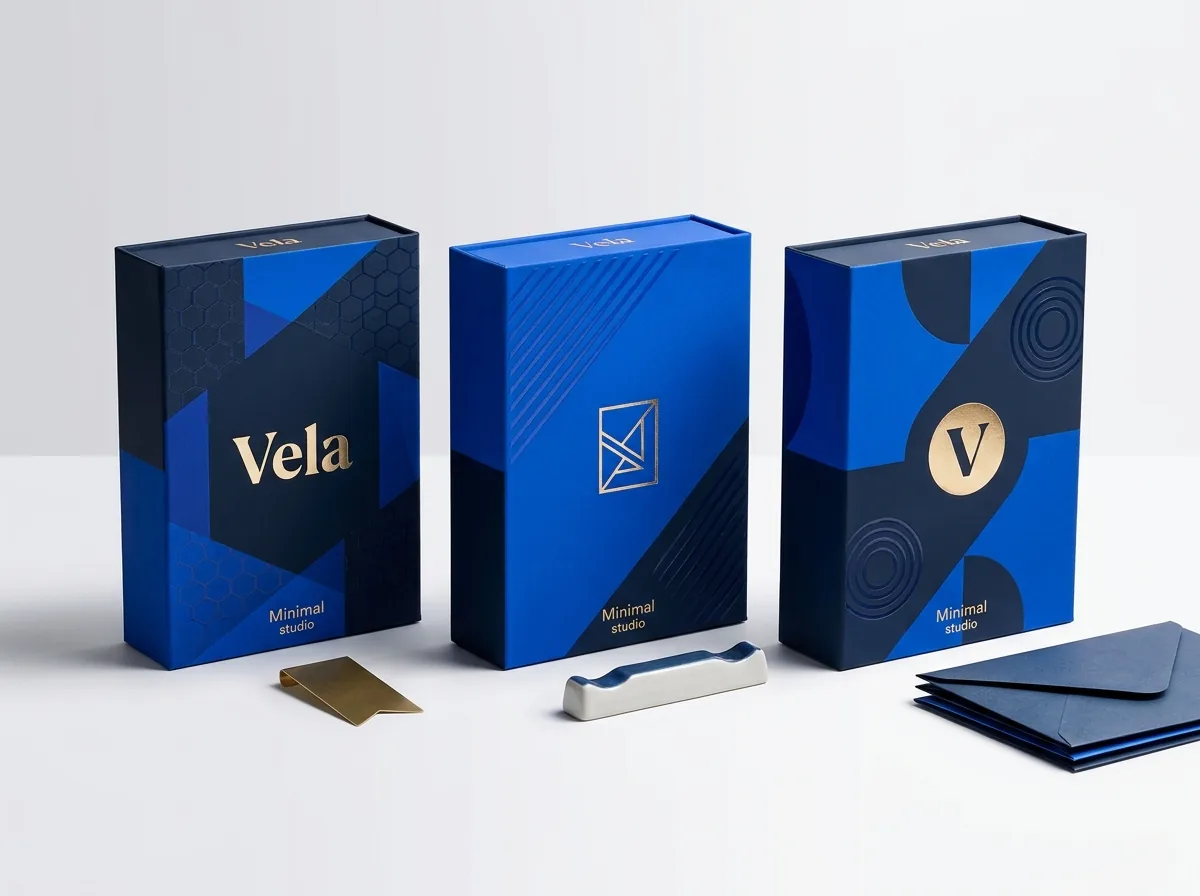
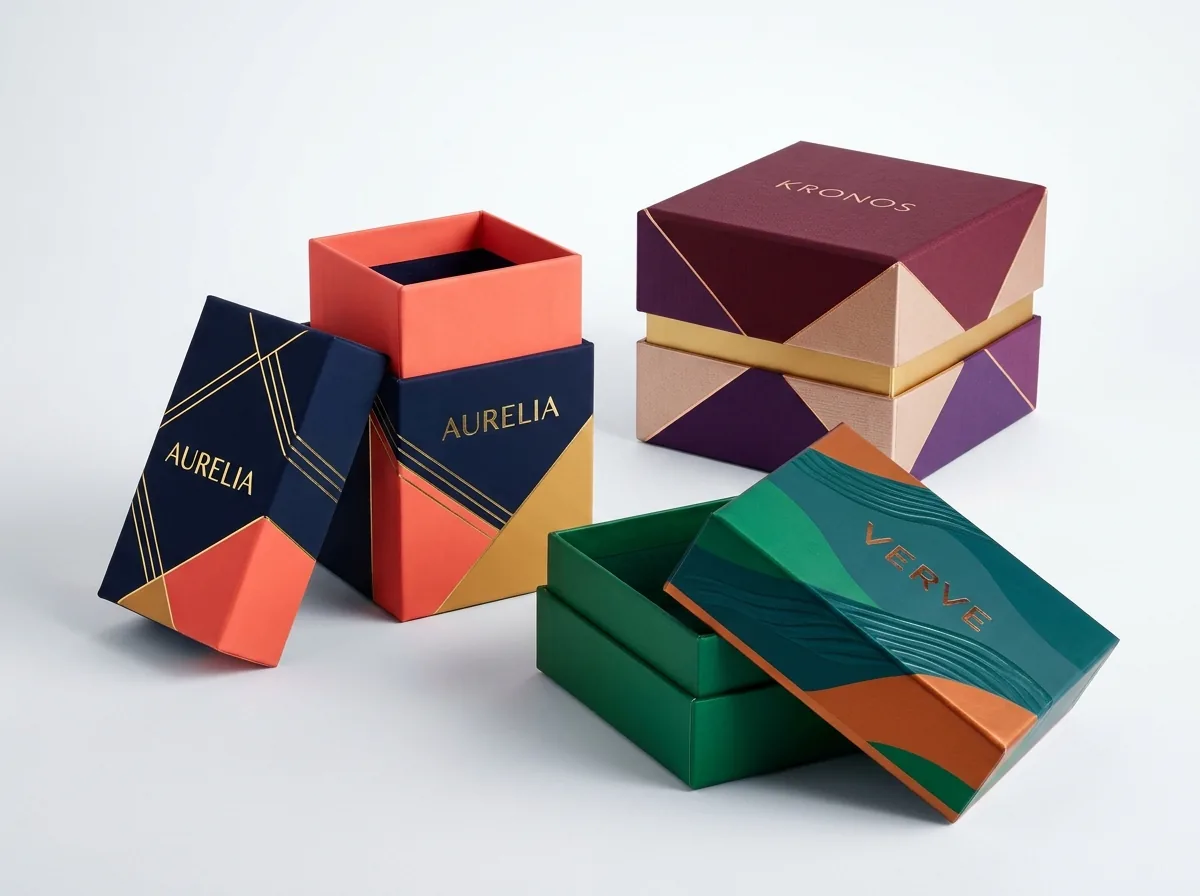


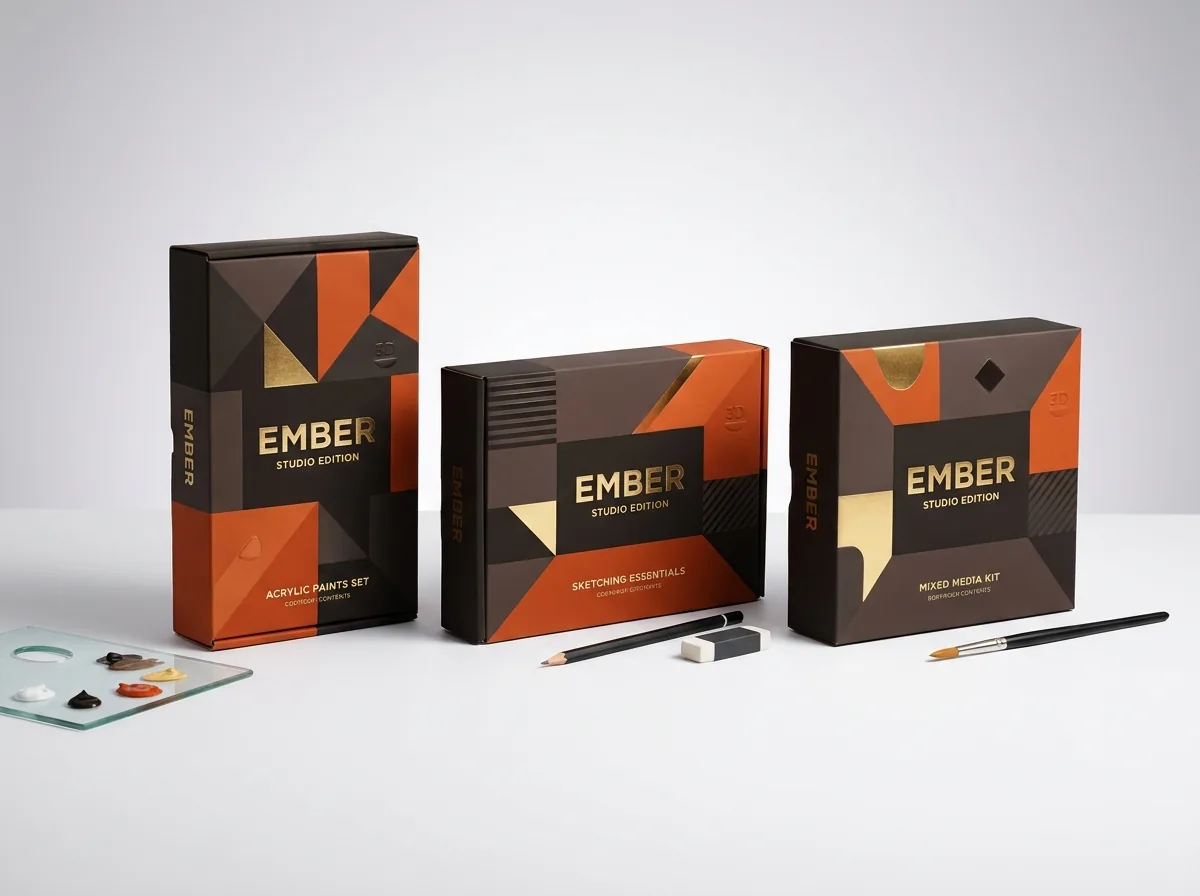
Ready to order stationery boxes? Compare up to 3 quantities with a free 3D mockup.
Request a Quote →Questions about stationery boxes
What size box fits a standard set of 10 A2 note cards and envelopes?
An inside box dimension of 4.625 × 6 × 1 inches is the standard choice for 10 to 12 A2 note cards and envelopes (4.375 × 5.75 in). That leaves 1/8 inch of clearance around all four edges of the envelopes so they lift out cleanly without bending.
What size box do I need for 5 × 7 (A7) greeting cards or wedding invitations?
A 5 × 7 inch card uses an A7 envelope measuring 5.25 × 7.25 inches, so your inside box footprint should be 5.5 × 7.5 inches. Use a 1.25 inch depth for 10 to 12 retail cards, or 1.5 to 2 inches for thick wedding invitation suites.
How much clearance should a two-piece telescope lid have over the base?
You only need to give us the inside length, width and depth of the base tray that holds your paper goods. Our design team automatically size the outer telescope lid slightly wider to account for the paperboard or rigid chipboard wall thickness.
How do I keep a flat stack of wedding invitations from sticking inside a deep box?
Add either a pair of half-moon thumb notches along the sides of the lid or a satin ribbon lifter glued under the interior base pad. Lifting the two ends of the ribbon raises the entire stack of invitations without touching the paper edges.
Can I order a non-standard square or long monarch stationery box size?
Yes. Every CubitPack stationery box is made to order with zero die or plate charges. Whether you sell 5.5 × 5.5 inch square cards, 4 × 9.25 inch No. 10 monarch sets or custom pocket notebooks, we cut the dieline to your exact size.
Can I test my note cards and envelopes inside a physical sample box first?
Yes. Every order includes a free 2D dieline proof and 3D mockup before payment, and you can request a custom physical prototype built to your exact dimensions; the sample cost is credited toward your full production order.
Still have a question? Ask a packaging specialist.
Request a Quote →Request your stationery boxes quote
Tell us your size and quantities, and one dedicated account manager prepares pricing for each tier.
- Free design & AI-to-print studio + 3D mockup
- No die or plate charges · 4–5 day rush available
- Free shipping to all 50 states
- 10% off your first order
The envelope and planner dimensions in this guide match standard US announcement sizes (4bar, A2, A6, A7, No. 10) and ISO A5 formats with tested clearance margins, checked by a CubitPack packaging specialist. Spot something off? Tell us and we will fix it.
Sources
What changed
- October 22, 2026: First published.
- October 22, 2026: Updated specifications, terminology, and verified source links.
More guides
New packaging guides by email
Sizes, materials and design tips. Unsubscribe anytime.