
What cardstock weight and finish is best for business thank you cards and packaging inserts?
Short answer: Choose 16pt (350 GSM) C1S paperboard - coated on the front for vibrant photography and uncoated on the back for smudge-free pen notes - for everyday custom thank you cards. Upgrade to 18pt (400 GSM) soft-touch card with foil for luxury boxes, or 14pt (300 GSM) uncoated stock for fully handwritten notes.
On this page
- How do 14pt, 16pt and 18pt cardstock weights compare in thickness and stiffness
- Why should you order C1S (coated one side) if your team signs thank you cards by hand
- Matte vs gloss vs soft-touch lamination: which finish works best inside product boxes
- How do you prepress QR codes, discount badges and typography on thank you insert cards
- How do you coordinate thank you card paperboard with your outer box and tissue paper
- Common mistakes
- FAQs
Request a custom quoteFree dieline & 3D mockup
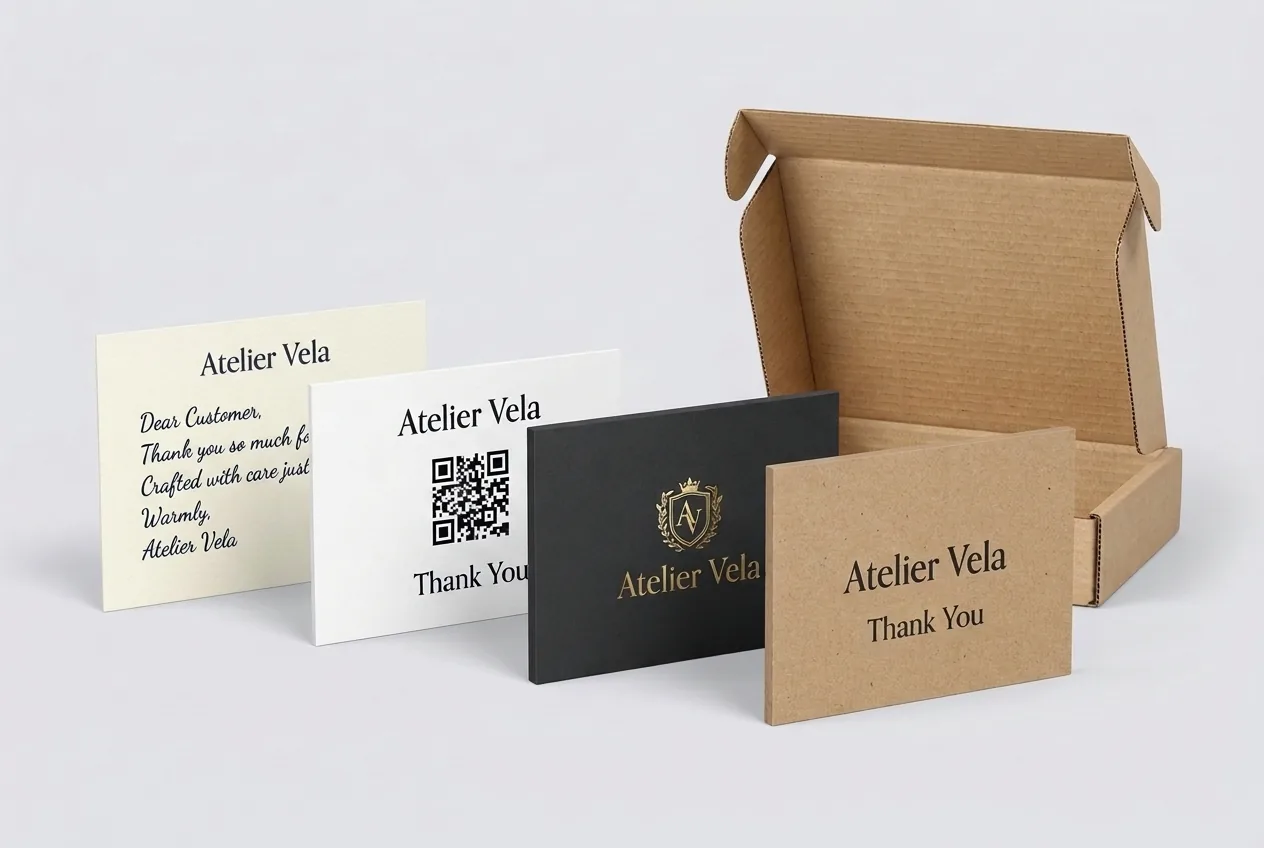
Selecting the right cardstock caliper and surface finish for business thank you cards determines whether your insert feels like a keepsake postcard or a flimsy flyer - and whether your fulfillment team can sign it without smearing ink across the customer's tissue paper. In commercial offset and digital packaging production, thickness is measured in points (1 pt equals 0.001 inch) and grams per square meter (GSM). Standard e-commerce brands rely on 14pt (300 GSM) uncoated cover stock when writing personal notes on both sides, 16pt (350 GSM) C1S or matte C2S cardstock for stiff 4 x 6 inch mailer inserts, and 18pt (400 GSM) paperboard paired with soft-touch lamination and metallic foil for rigid gift boxes. At CubitPack, custom thank you cards start at 250 standalone units (or match your paired box minimum) with 10 to 14 business day turnaround, 4 to 5 business day rush, zero die or plate charges, and free shipping to all 50 US states.
How do 14pt, 16pt and 18pt cardstock weights compare in thickness and stiffness?
When a customer lifts the lid of your custom mailer boxes, the thank you card is usually the very first piece they pick up with their fingertips. A thin 10pt or 12pt flyer bends under its own weight and curls inside humid delivery trucks, whereas a 14pt to 18pt paperboard insert stays flat on top of folded custom tissue paper. Use the engineering comparison table below - or convert between points, millimeters, and GSM with our paperboard thickness converter - to match your brand tier and packing workflow to the right caliper.
| Cardstock grade | Caliper (pt / mm) | Basis weight (GSM) | Pen writeability | Best packaging application |
|---|---|---|---|---|
| 14pt Uncoated Smooth | 14 pt (0.35 mm) | 300 GSM | Ballpoint, gel, rollerball & fountain pen on both sides | Hand-signed founder notes, batch-numbered apothecary cards & folded cards |
| 16pt C1S Hybrid Card | 16 pt (0.40 mm) | 350 GSM | Front coated/laminated; back uncoated for fast pen notes | DTC subscription mailers where packers write a quick first name on the back |
| 16pt Matte C2S Card | 16 pt (0.40 mm) | 350 GSM | Ballpoint & permanent marker (allow 10 sec dry time) | High-volume 4 x 6 in e-commerce packaging insert cards with QR codes |
| 18pt Soft-Touch + Foil | 18 pt (0.46 mm) | 400 GSM | Permanent marker only (or request C1S uncoated back) | Magnetic rigid gift boxes, jewelry, watches, cosmetics & VIP PR kits |
| 18pt Natural Brown Kraft | 18 pt (0.46 mm) | 350 GSM | All pens, pencils & rubber ink stamps on both sides | Organic skincare, artisan soap boxes, coffee roasters & eco mailers |
Why should you order C1S (coated one side) if your team signs thank you cards by hand?
One of the most frequent frustrations in fulfillment centers happens when a brand orders glossy or soft-touch laminated cards on both sides (C2S) and then asks packers to write the buyer's name and order number with a gel rollerball pen. Because clay coatings, UV varnishes, and BOPP laminations seal the microscopic pores of the paperboard, water-based gel ink sits on top of the film and smears the moment the card touches the product or custom insert cards. Specifying 16pt C1S (Coated One Side) paperboard solves this completely: the front cover receives a smooth clay coating (plus optional matte, gloss, or soft-touch lamination) so your brand photography, Pantone colors, and foil logo pop with razor-sharp contrast, while the back panel remains raw, porous uncoated paper fiber that drinks in ballpoint, rollerball, or rubber-stamp ink on contact.
Matte vs gloss vs soft-touch lamination: which finish works best inside product boxes?
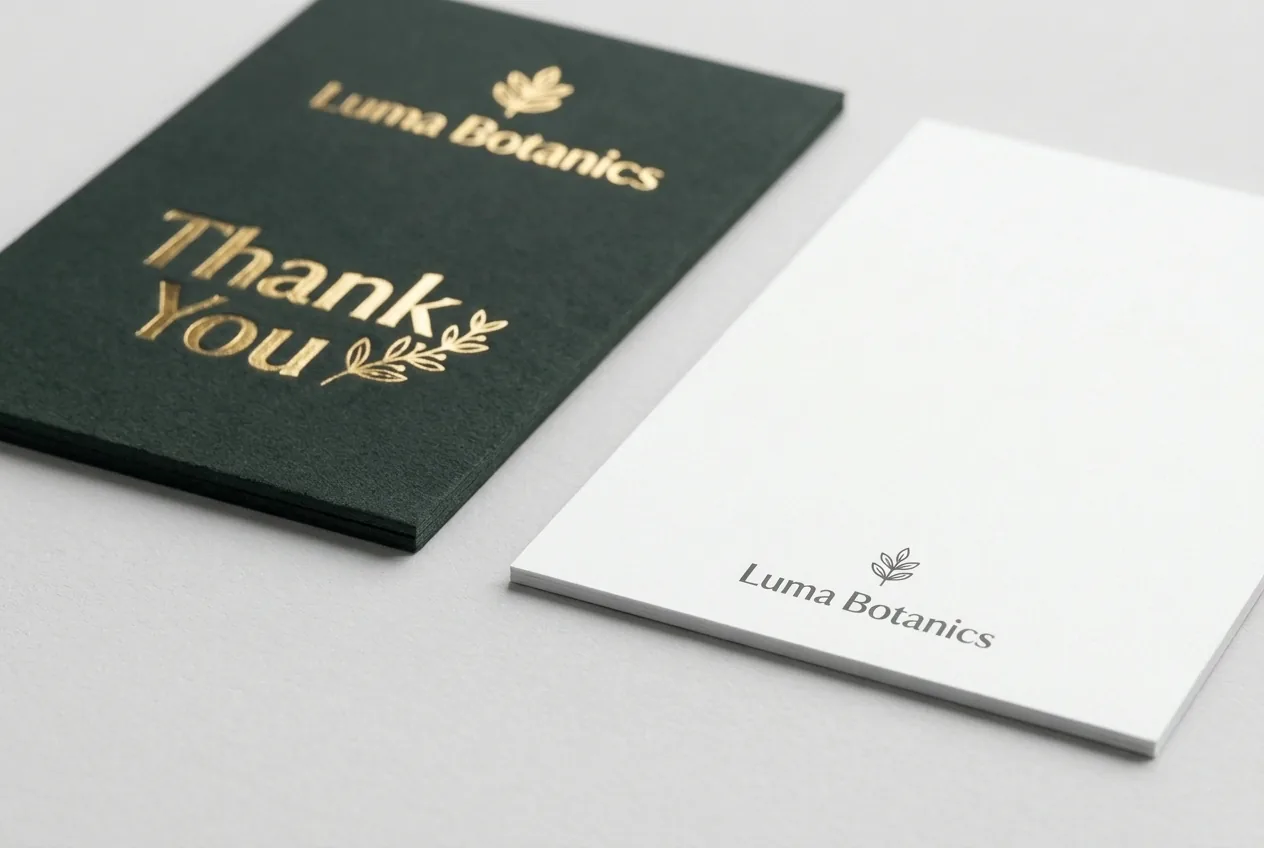
Unlike trade-show postcards that rely on high-gloss UV glare to grab attention from across a hallway, a packaging thank you card is read 12 inches from the buyer's eyes under indoor home lighting. Here is how the four main finishes perform inside custom folding cartons and rigid boxes: - Matte lamination or satin aqueous coating: Eliminates overhead kitchen and living-room light glare so 9pt to 11pt care instructions and QR codes remain effortless to read and scan. - Soft-touch (velvet) lamination: Adds a tactile suede-like film that resists scuffing during parcel vibration and pairs naturally with metallic gold, silver, or rose-gold hot foil stamping inside custom rigid boxes. - Spot UV over matte or soft-touch: Applies a raised or flush high-gloss clear polymer over your brand monogram or product silhouette while keeping the reading background glare-free. - Uncoated natural white or unbleached brown kraft: Delivers an authentic stationery texture ideal for botanical, bakery, candle, and clean-beauty brands.
Know your size? Compare pricing across up to 3 quantities.
Request a Quote →How do you prepress QR codes, discount badges and typography on thank you insert cards?
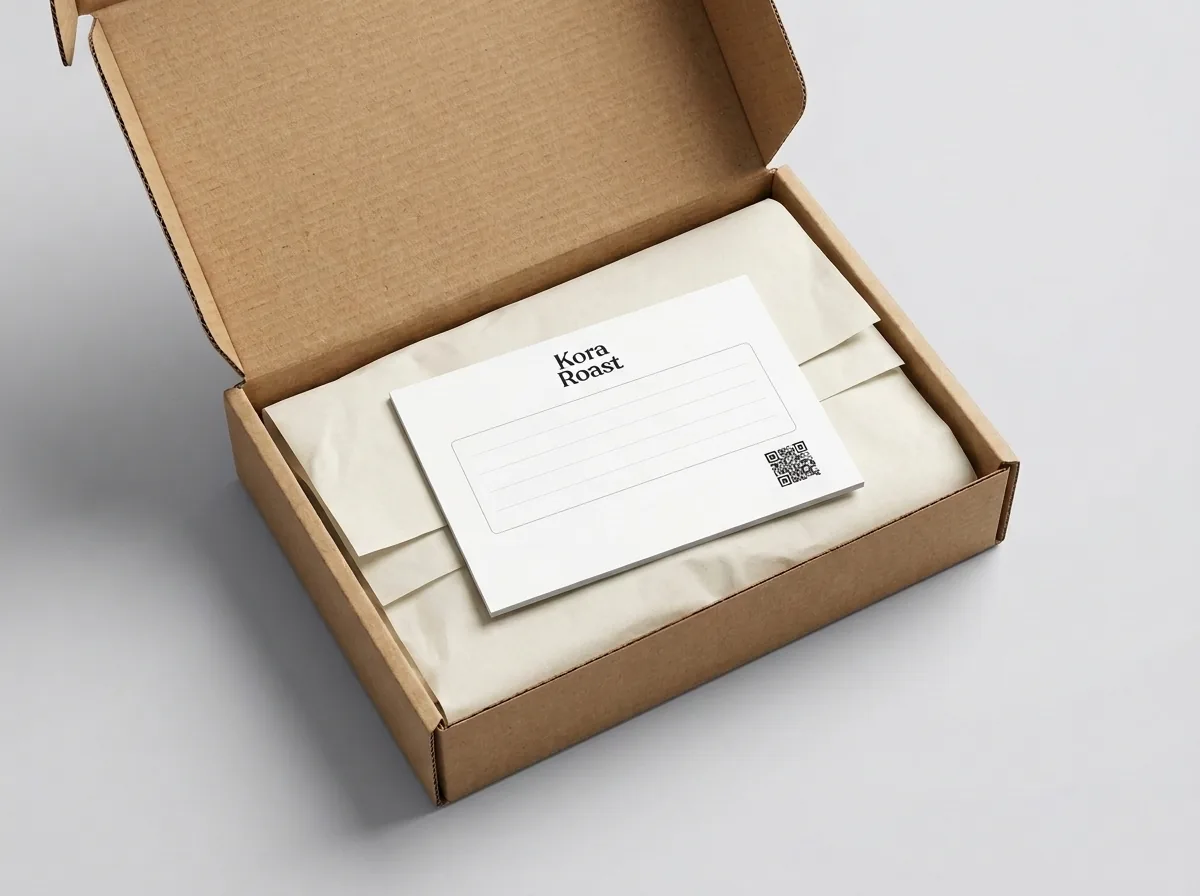
A business thank you card doubles as a retention and review channel when the back panel guides the buyer to a post-purchase action - such as registering a warranty, watching a setup tutorial, claiming a reorder code, or leaving a photo review. Before uploading your artwork or running it through our AI packaging prepress checker, lock in three prepress specifications: 1. QR code module size and matte quiet zone: Export your QR code as a vector SVG or EPS at a minimum printed size of 0.8 x 0.8 inches (20 x 20 mm) surrounded by a 0.1 inch (2.5 mm) solid white quiet zone. Never apply glossy Spot UV or metallic foil over the QR matrix, as specular reflections blind smartphone camera sensors. 2. Single-channel 100% K black for small body text: Set all body copy below 12pt to C:0 M:0 Y:0 K:100 rather than four-color rich black so fine serif and sans-serif strokes print with crisp edges. 3. Bleed and safety margins: Extend full-bleed background colors 0.125 inches (1/8 inch) past the cut line on all four sides, and keep all text, borders, and QR codes at least 0.125 inches inside the trim line.
How do you coordinate thank you card paperboard with your outer box and tissue paper?
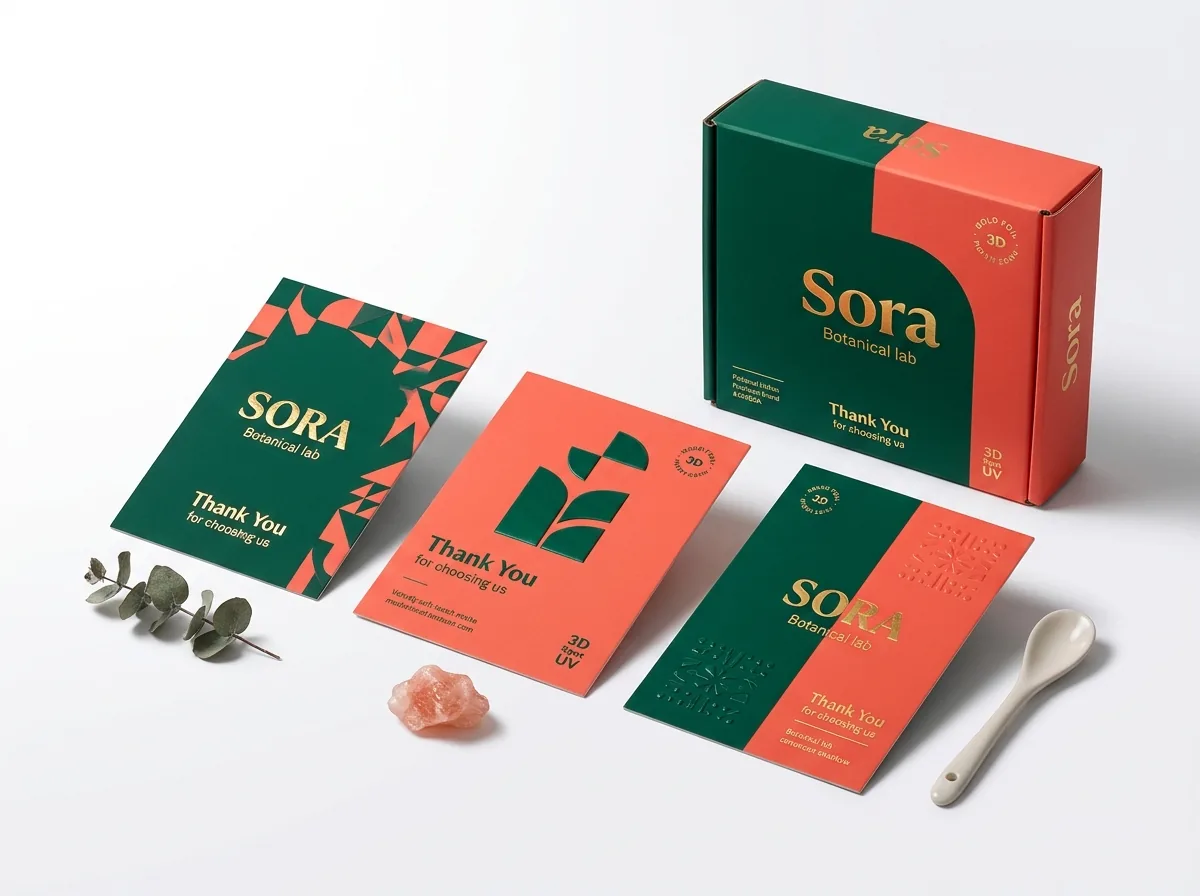
The highest-converting unboxing experiences treat the outer box, interior wrap, and thank you card as a single material system rather than three unrelated print orders. If you ship in natural brown custom kraft mailer boxes, either match the card on 18pt natural brown kraft with crisp black ink or create deliberate contrast with a warm cream 16pt uncoated card. If you ship cosmetics, supplements, or jewelry in soft-touch laminated custom magnetic closure boxes, matching the card in 18pt soft-touch stock with the same Pantone spot color and hot foil shade makes the insert feel like an integral certificate of authenticity. Dimensionally, always size your flat or folded card so it sits flat on top of your interior protective wrap without wedging into the box corners or sliding beneath the product cavity. For a standard 6 x 4 x 2 inch or 8 x 6 x 3 inch mailer box, a 4 x 6 inch postcard-sized insert frames the center of the tissue paper fold cleanly and leaves a 1 inch reveal border around the perimeter. For small jewelry, serum, or candle cartons where a 4 x 6 inch card is too wide, step down to a 3.5 x 5 inch or 3.5 x 3.5 inch square card so packers never have to bend the paperboard corners during fulfillment. Because CubitPack prints your boxes, custom stickers, tissue paper, and custom business thank you cards under one roof, you can align your card quantity to your paired box run or order from 250 standalone cards.
- 14pt (300 GSM) uncoated: best for double-sided handwritten notes and pre-scored folded cards.
- 16pt (350 GSM) C1S hybrid: best when you want a coated/laminated photo front and a pen-friendly uncoated back.
- 16pt (350 GSM) matte C2S: best all-around 4 x 6 inch e-commerce insert for mailer boxes and poly mailers.
- 18pt (400 GSM) soft-touch + hot foil: best luxury keepsake card for rigid gift sets and VIP PR kits.
- 18pt (350 GSM) brown kraft: best organic, stamp-friendly card for kraft boxes and sustainable brands.
What cardstock and finish mistakes ruin business thank you cards?
Avoid these five specification mistakes before approving your digital proof for printed thank you insert cards
- Ordering gloss UV or soft-touch lamination on both sides (C2S) when your packing team needs to write customer names with gel or rollerball pens.
- Printing a QR code smaller than 0.6 inches or placing gloss Spot UV / metallic foil over the QR squares so phone cameras cannot focus.
- Scoring a folded 16pt or 18pt thank you card across the paper grain without a compression score channel, causing the outer ink to crack along the spine.
- Choosing flimsy 10pt or 100 lb text paper that curls and dog-ears inside corrugated mailer boxes during winter parcel transit.
- Placing a thin 1/16 inch border frame right against the trim edge where normal guillotine cutting tolerance (+-1/32 inch) makes the border look uneven.
Packaging for this
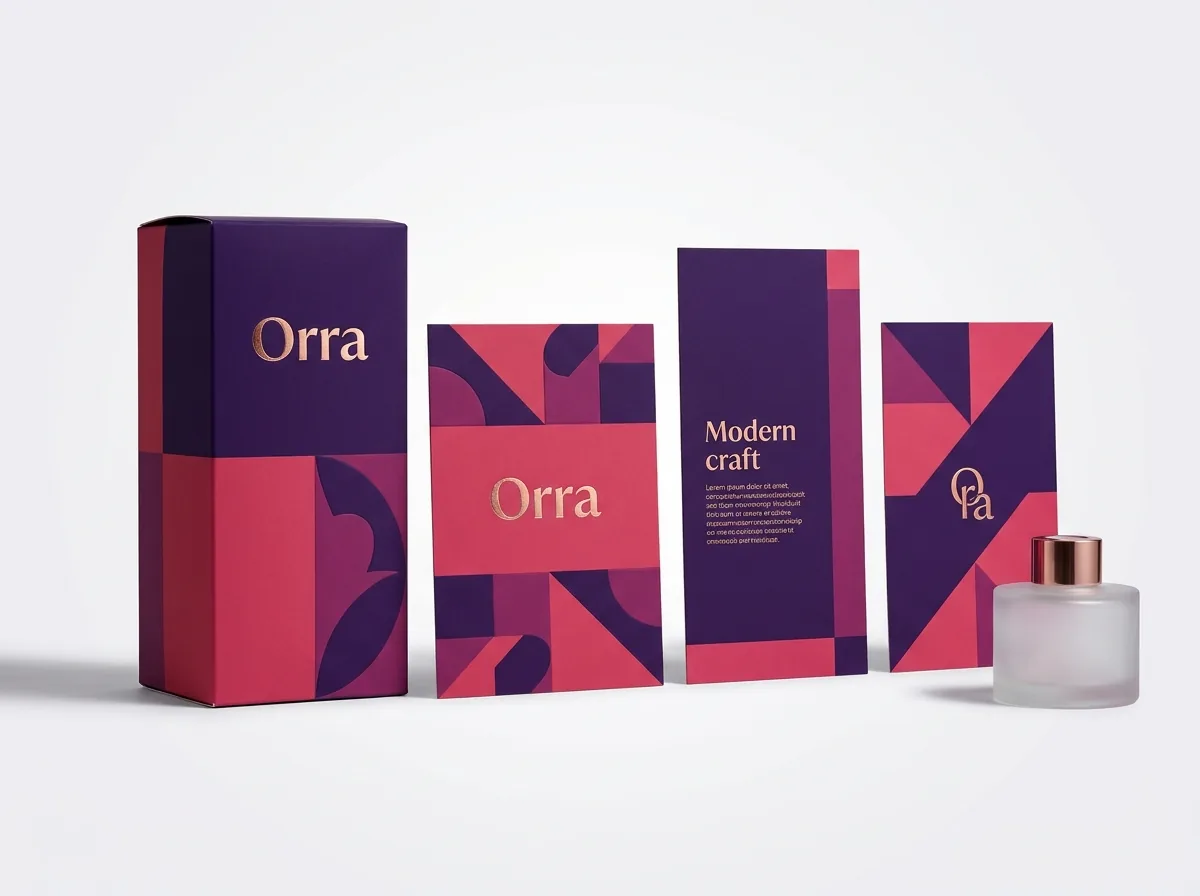
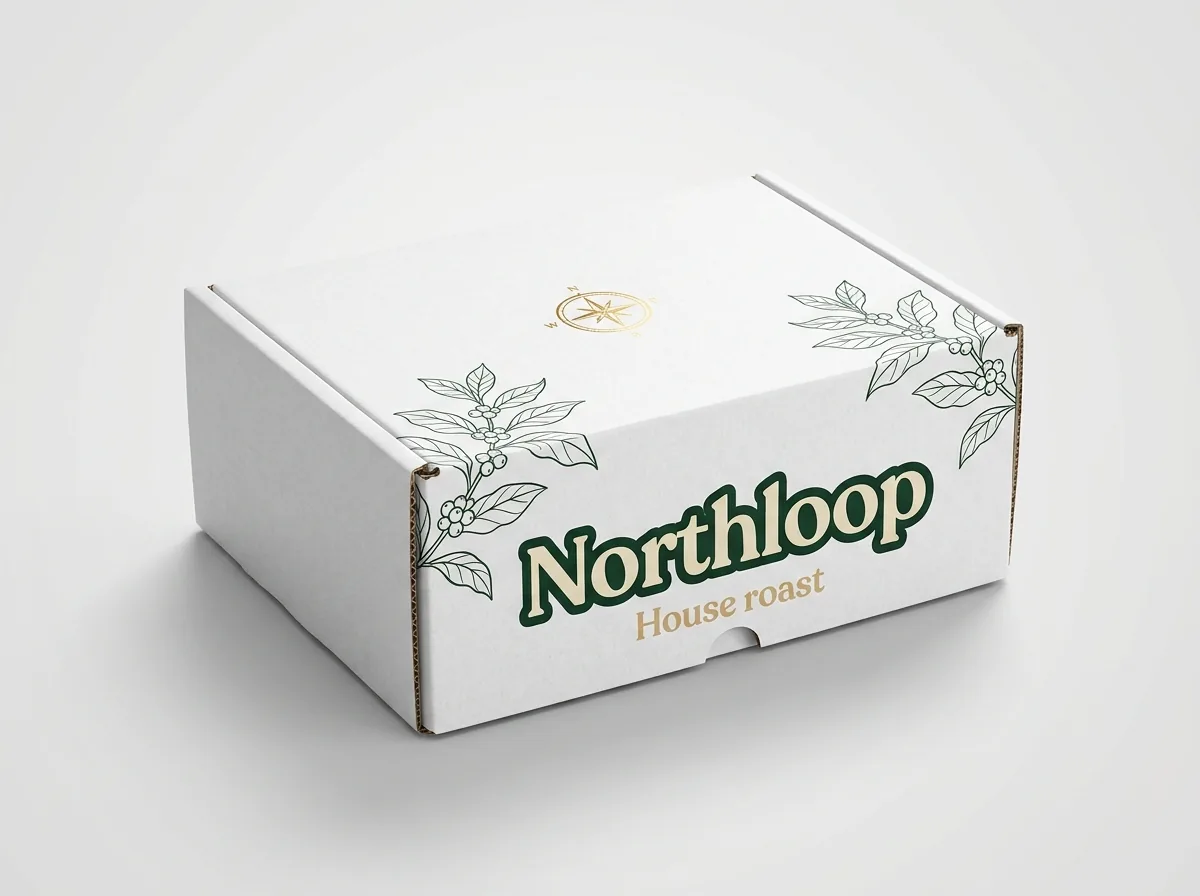
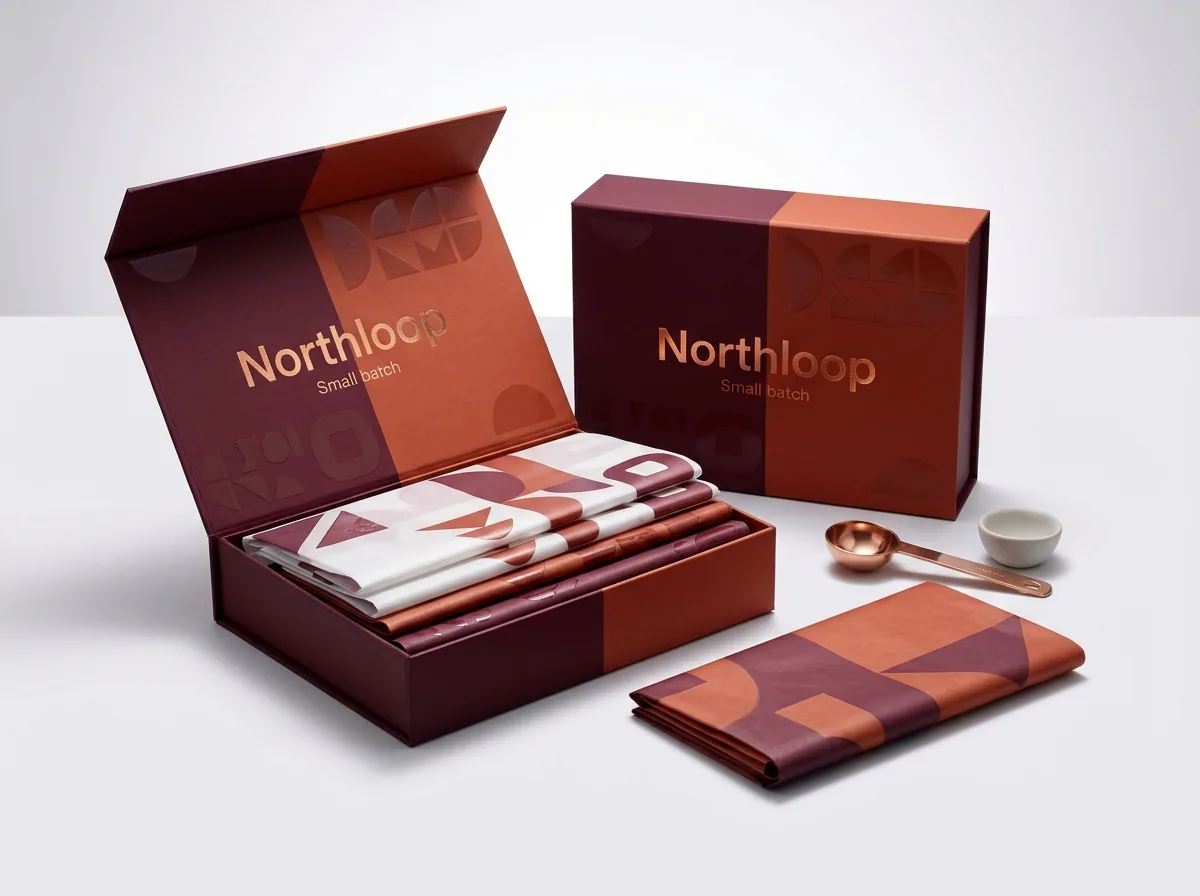
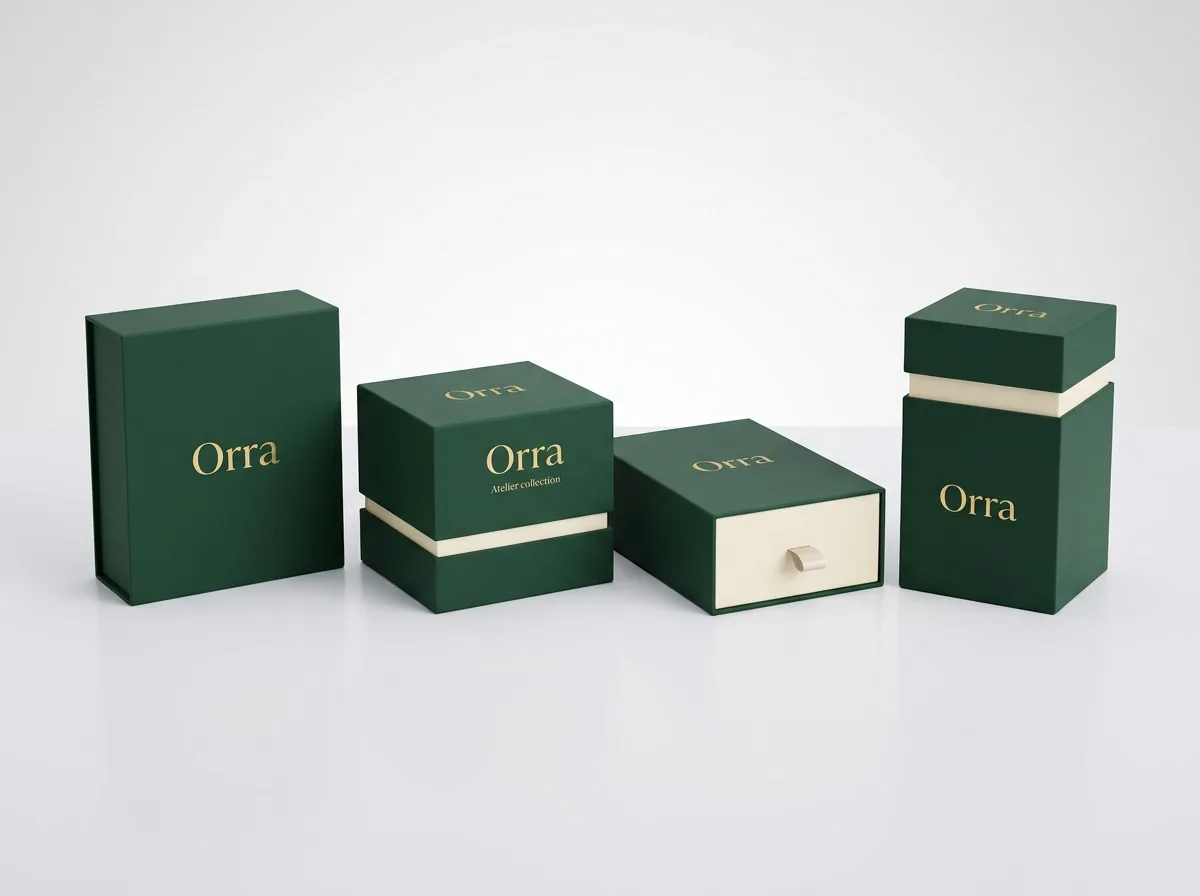
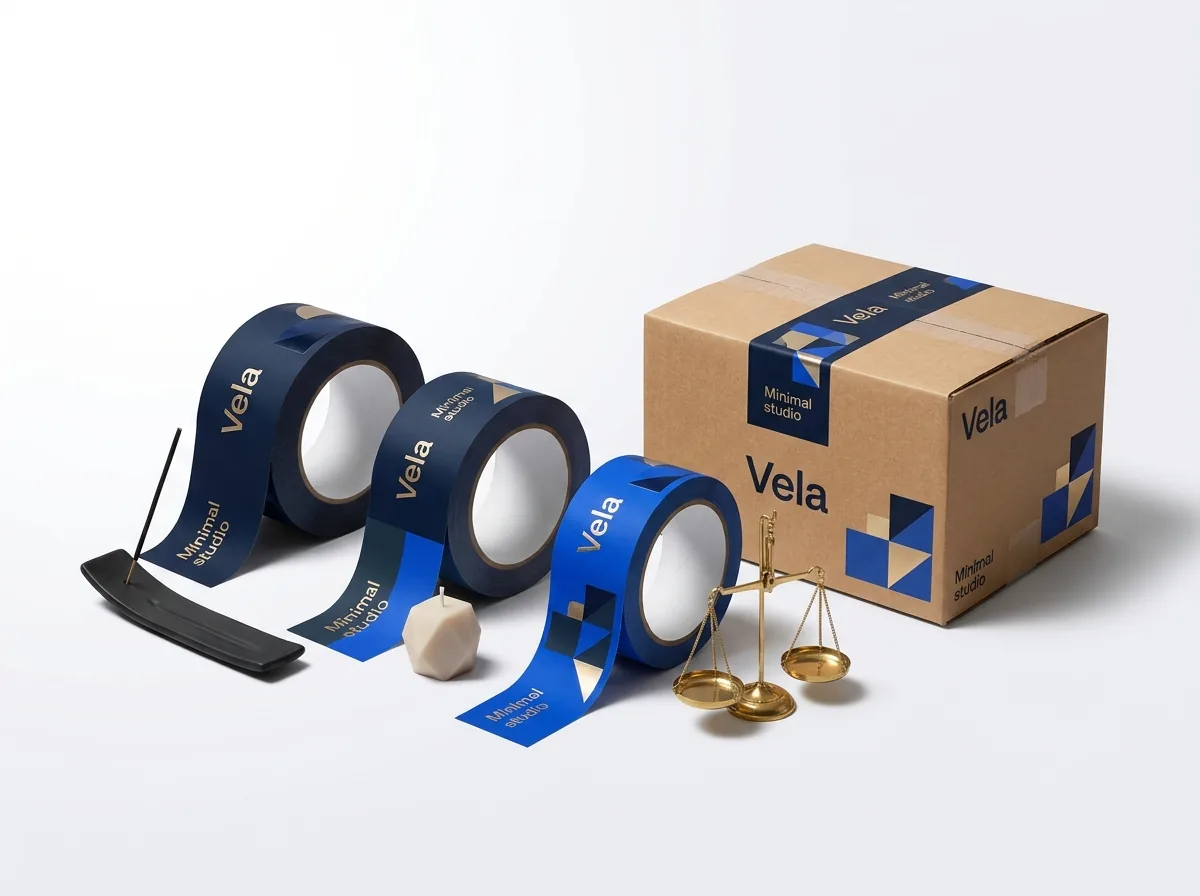
Ready to order thank you cards? Compare up to 3 quantities with a free 3D mockup.
Request a Quote →Questions about thank you cards
What is the difference between 14pt, 16pt and 18pt thank you cards?
14pt card stock is 0.014 inches thick (about 300 GSM) and feels like a classic heavy greeting card. 16pt is 0.016 inches thick (350 GSM) and is the stiff e-commerce standard for 4 x 6 inch flat inserts. 18pt is 0.018 inches thick (400 GSM), offering maximum rigidity for luxury soft-touch and foil-stamped cards.
Which thank you card finish is best if I want to write a personal note by hand?
Choose 14pt uncoated smooth cardstock if you write on both sides, or 16pt C1S (Coated One Side) if you want full-color coated photography or lamination on the front and a porous, smudge-free uncoated surface on the back.
Can I add gold foil or Spot UV to business thank you cards at CubitPack?
Yes. You can add metallic gold, silver, rose-gold, or holographic hot foil stamping, raised or flat Spot UV, embossing, debossing, and custom die-cut shapes or rounded corners with zero die or plate charges.
Does soft-touch lamination make a thank you card feel thicker?
Yes. Applying soft-touch BOPP film to both sides of a 16pt or 18pt card adds roughly 1.2 to 1.5 mil of tactile velvet film, dramatically increasing tear resistance, moisture protection, and flexural stiffness in the buyer's hand.
What is the minimum order and turnaround time for custom business thank you cards?
Standalone custom thank you cards start at 250 units (or match the minimum of your paired custom box order). Standard turnaround is 10 to 14 business days after proof approval and payment, with 4 to 5 business day rush available and free shipping across all 50 US states.
Can I test cardstock weights and finishes before placing a full order?
Yes. Every order includes a free digital proof and 3D mockup before payment, and you can order the $50 CubitPack Sample Kit (credited toward your first custom order) to feel paperboard calipers and laminations in person.
Still have a question? Ask a packaging specialist.
Request a Quote →Request your thank you cards quote
Tell us your size and quantities, and one dedicated account manager prepares pricing for each tier.
- Free design & AI-to-print studio + 3D mockup
- No die or plate charges · 4–5 day rush available
- Free shipping to all 50 states
- 10% off your first order
The caliper conversions (14pt to 18pt / 300 to 400 GSM), C1S/C2S writeability rules, and QR code prepress tolerances in this guide come from CubitPack's published card specifications and prepress standards, verified by a packaging specialist. Spot something off? Tell us and we will fix it.
Sources
What changed
- November 18, 2026: First published.
More guides
New packaging guides by email
Sizes, materials and design tips. Unsubscribe anytime.