
Unit folding carton vs corrugated SIOC mailer for Amazon sellers: which fits your ASIN?
Short answer: Choose a paperboard folding carton (from 1,000 units) for small, non-fragile products that fulfillment centers place inside an outer shipping box. Choose an E-flute or B-flute corrugated mailer (from 250 units) when your custom Amazon seller boxes hold fragile glass, multi-packs, FBM orders or SIOC candidates.
On this page
- How do paperboard unit cartons and corrugated mailers compare side by side
- When should an FBA seller choose a thin paperboard folding carton
- When do you need an E-flute or B-flute corrugated mailer box
- How do corrugated mailers work for SIOC enrollment and FBM shipping
- Can I launch a new ASIN with 250 corrugated mailers and switch later
- Common mistakes
- FAQs
Request a custom quoteFree dieline & 3D mockup
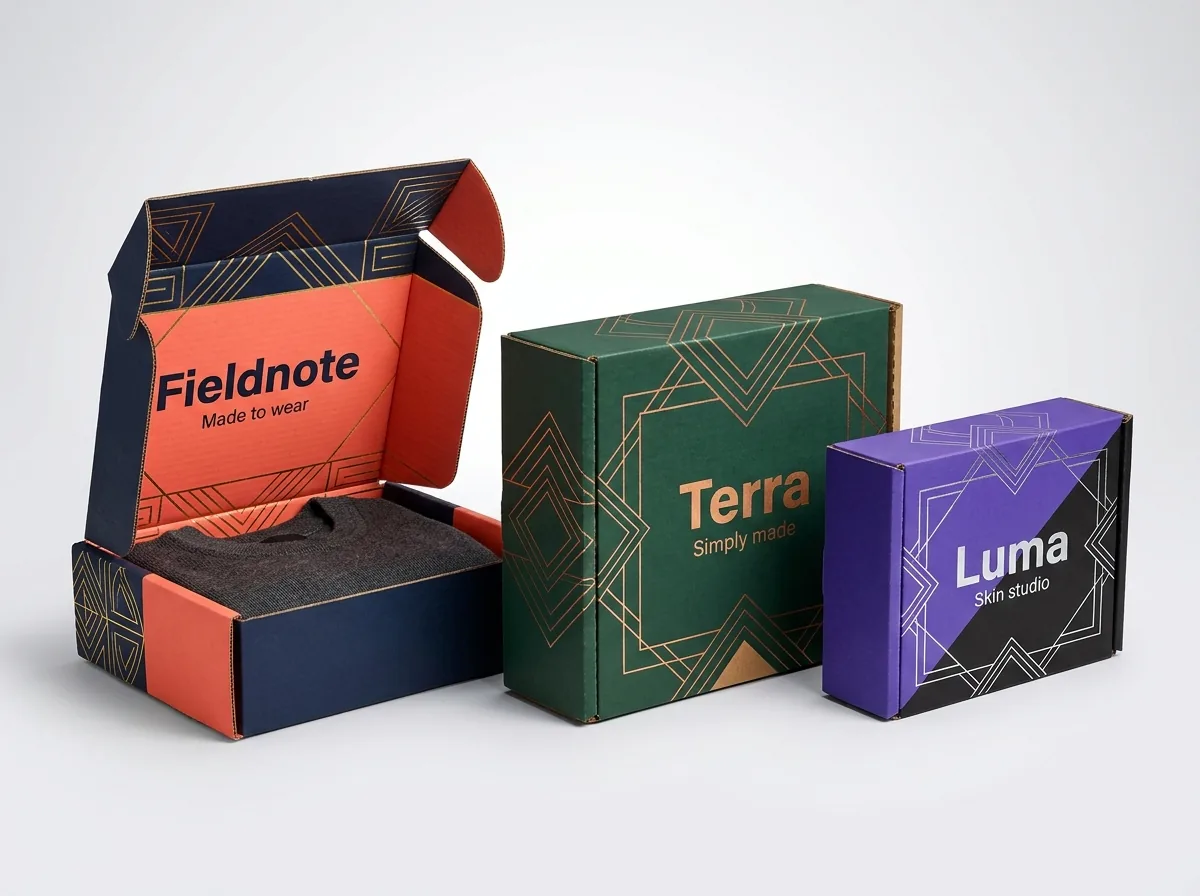
Private-label sellers have two primary board structures to choose from: thin single-layer paperboard folding cartons and fluted corrugated mailers. A paperboard folding carton (18 pt to 24 pt card) adds only about 1/16 inch to your product's thickness, making it the smart choice when you need to keep a small item inside the lowest fulfillment size tier and know the marketplace will ship it inside an outer parcel box or mailer bag. A corrugated mailer box (E-flute or B-flute) has a fluted structural air core between two linerboards. It starts at just 250 units, adds fluted protection for glass bottles and multi-piece sets, and you can order a prototype with drop and crush testing before sending it to fulfillment centers, and can be sized for Fulfilled by Merchant (FBM) parcel transit or Ships in Own Container (SIOC) enrollment in Seller Central.
How do paperboard unit cartons and corrugated mailers compare side by side?
When selecting printed Amazon seller boxes, the right board depends on how your ASIN travels from the fulfillment shelf to the buyer's doorstep and how many units you plan to order in your first run. Paperboard folding cartons minimize outer dimensions and unit cost at scale, while corrugated mailers maximize drop protection and allow smaller 250-unit launch runs. Use the table below to compare both structures across minimum order quantity, wall thickness addition, drop resistance, solo shipping capability and FNSKU barcode readiness.
| Comparison factor | Paperboard unit folding carton | Corrugated mailer box (E or B flute) |
|---|---|---|
| CubitPack minimum | 1,000 boxes | 250 boxes |
| Wall thickness added | +0.06 to 0.12 in (keeps thickness minimal) | +0.25 to 0.375 in (double-locked side walls) |
| Fulfillment journey | Placed inside an outer box or polybag by FBA | Overboxed if small, or ships solo (FBM / SIOC) |
| Warehouse drop protection | Light scuff protection for non-fragile items | High crush & 3-foot drop protection for glass/kits |
| Best closure styles | Auto-lock bottom, seal end, slit-lock tuck | Roll end tuck front (RETF) + tamper seal |
| Multi-pack & insert fit | Light card dividers for tubes or sachets | E-flute partitions or EVA foam for heavy bundles |
When should an FBA seller choose a thin paperboard folding carton?
If you sell a single lightweight plastic supplement bottle, a silicone kitchen tool, a phone case, a cosmetic tube or a deck of cards, a paperboard custom folding carton is almost always the most economical unit box. Because 18 pt or 20 pt SBS white card is less than 1/32 inch thick per wall, it barely changes your product's outside Cubiscan dimensions. That slim profile is vital when your product sits right near the 0.75 inch thickness cutoff or the 15 × 12 × 0.75 inch boundary. To make sure your paperboard unit carton survives automated fulfillment center conveyors without spilling its contents in a storage tote, avoid standard friction flaps on anything heavier than 6 ounces. Upgrade the base to a pre-glued custom auto lock bottom box or a glue-sealed custom seal end box, and use slit-lock ear tabs or a round wafer seal sticker on the top tuck flap.
- Supplements, beauty tubes and small gadgets under 12 oz that travel inside an outer marketplace parcel box.
- Flat accessories where adding ¼ inch of corrugated flute thickness would push the ASIN into a higher fee tier.
- High-volume SKUs (1,000 to 10,000+ units) where minimizing unit packaging cost and master carton volume is priority one.
- Powders, tea bags or small kits packed in a glue-sealed carton (check Seller Central for whether your item still needs a polybag).
When do you need an E-flute or B-flute corrugated mailer box?
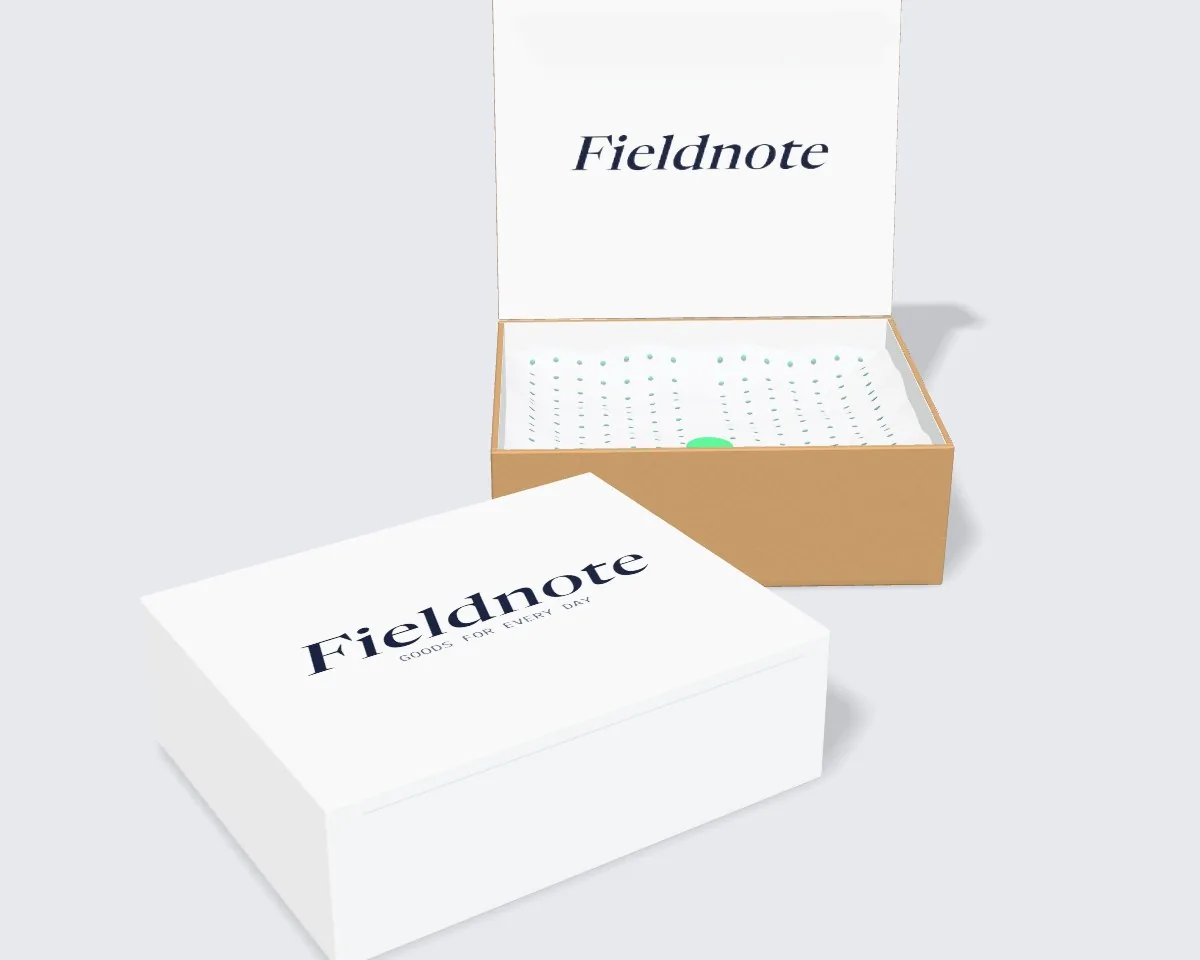
Step up to a fluted custom mailer box whenever your product is fragile, weighs more than 1 pound, combines multiple items into a bundle, or launches with a 250-to-500-unit test batch. In an automated fulfillment warehouse, unit boxes slide down spiral chutes and tumble into plastic totes alongside heavier items. A thin paperboard carton around a glass dropper bottle or ceramic mug will crush on impact unless it has a fluted corrugated wall and an internal buffer. A roll-end tuck front (RETF) corrugated mailer folds its side walls over twice, putting two layers of E-flute or B-flute board around the perimeter of your product. When paired with a die-cut corrugated divider or foam tray, a corrugated mailer lets you ship glass jars, 2-pack supplement bundles and electronics sets to the warehouse ready for check-in without paying a prep center to wrap every unit in bubble wrap.
Know your size? Compare pricing across up to 3 quantities.
Request a Quote →How do corrugated mailers work for SIOC enrollment and FBM shipping?
For larger items (typically measuring at least 6 × 4 × 0.375 inches or larger depending on current program rules), sellers can enroll eligible products in Ships in Own Container (SIOC) through Seller Central, or ship orders directly from their own 3PL via Fulfilled by Merchant (FBM). In both workflows, no outer marketplace box is used: the 4 × 6 inch carrier shipping label goes straight onto your custom box. CubitPack does not issue official Amazon SIOC certification, as every ASIN must be tested and approved through your Seller Central account. However, our structural team designs custom corrugated mailers and shippers with minimal void space, self-locking flaps, internal dividers and a 4 × 6 inch label zone; order a prototype with drop and crush testing before you submit in Seller Central.
- Six-sided rigid enclosure: no exposed product cutouts or windows that could puncture on a parcel conveyor.
- Zero loose movement: internal corrugated partitions keep parts from shifting during a multi-drop parcel test.
- Dedicated carrier label zone: leave a 6 × 4 inch unprinted or light-colored rectangle on the top or bottom face.
- Physical prototype testing: order a prototype or run drop and crush testing with CubitPack before submitting your package in Seller Central.
Can I launch a new ASIN with 250 corrugated mailers and switch later?
Many private-label sellers use CubitPack's 250-box mailer minimum as a low-risk launch bridge. When testing a brand-new product or a 2-pack seasonal bundle, ordering 250 custom printed E-flute mailers lets you validate click-through rate, conversion and customer reviews without committing to 1,000 units upfront. Once the ASIN proves steady velocity, you can either reorder your corrugated mailer at 1,000 or 2,500 units for a much lower per-box price, or transition lightweight single items into a 1,000-unit paperboard folding carton. Because we never charge die or plate fees on either structure, switching or scaling your dieline costs zero tooling overhead. Many established catalog sellers also keep both structures active at the same time: they pack individual replacement units in slim paperboard folding cartons and pack 2-pack or 3-pack value bundles in E-flute corrugated mailers with internal dividers.
- Stage 1 (Launch test, 250-500 units): order E-flute corrugated mailers to validate your new ASIN with minimal inventory cash tied up.
- Stage 2 (Scale up, 1,000+ units): move small, non-fragile single items to 18 pt or 20 pt paperboard folding cartons to minimize unit cost.
- Stage 3 (Bundle expansion): use corrugated mailers with dividers to launch high-AOV 2-pack and 3-pack variations.
What are the most common mistakes when choosing between unit cartons and mailers?
Matching the wrong board grade to your fulfillment method leads to crushed inventory or avoidable fee tier jumps. Check these five mistakes
- Packing glass bottles or heavy 2-packs in thin 18 pt paperboard without corrugated walls, resulting in broken units in warehouse bins.
- Using a standard reverse-tuck bottom on a 1 lb+ supplement carton instead of a pre-glued auto-lock bottom or seal-end base.
- Adding a die-cut viewing window to a box intended for solo parcel or SIOC shipping, where exposed film can tear on conveyor belts.
- Ordering a thick B-flute corrugated mailer for a tiny 0.5 inch flat item that could fit in the Small Standard tier inside a paperboard carton.
- Forgetting to seal the front flap of a roll-end corrugated mailer with a wafer sticker or tape strip before inbound check-in.
Find your size
Suggested inside size: 5.5 × 3.5 × 0.6 in
A starting point. Your account manager confirms the size with you before the proof.
Quote this size →Packaging for this
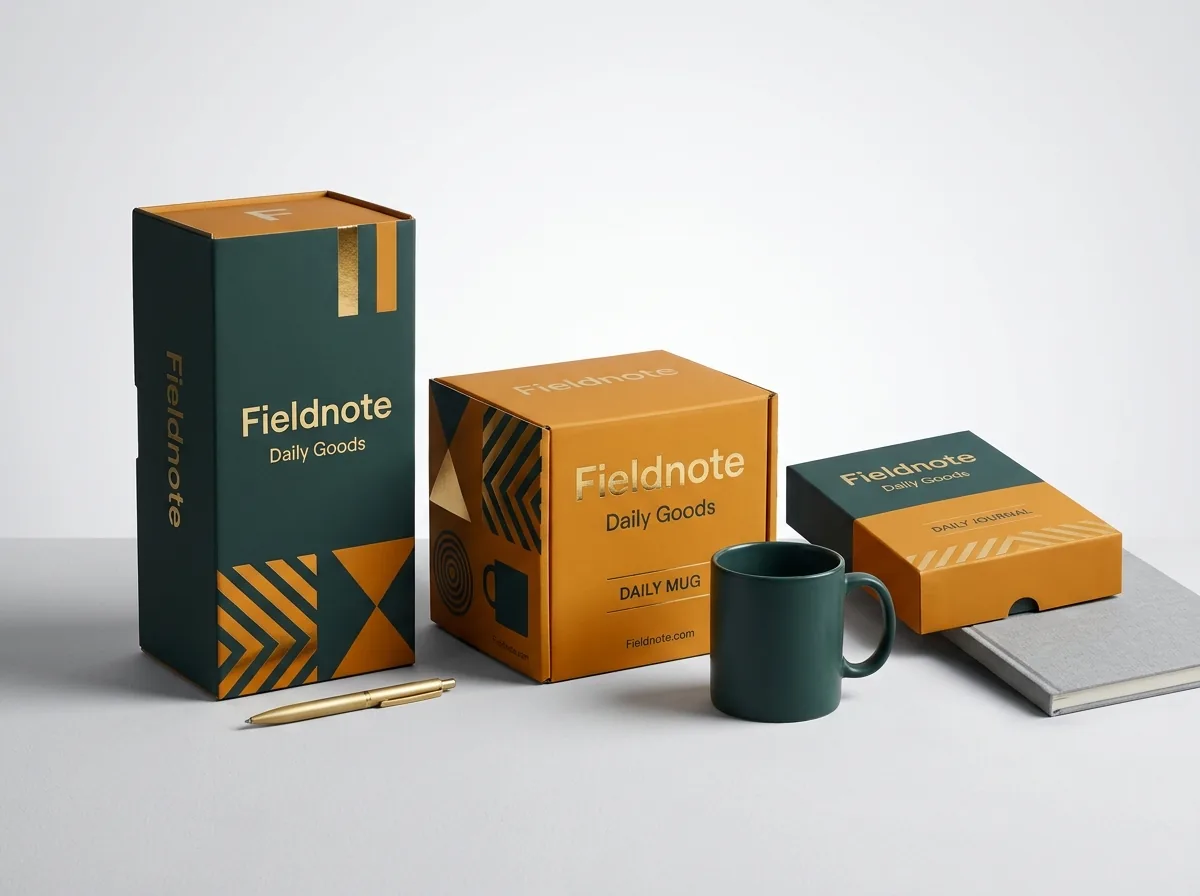
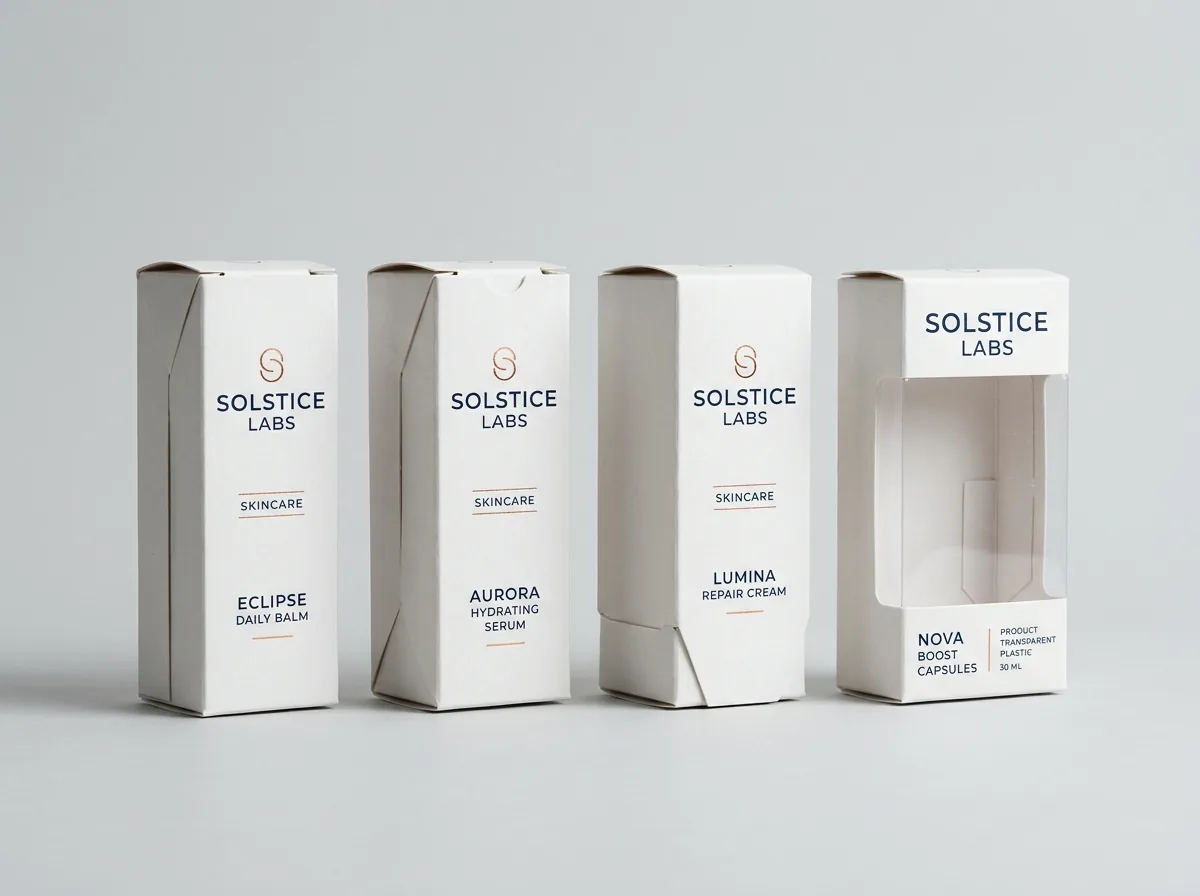
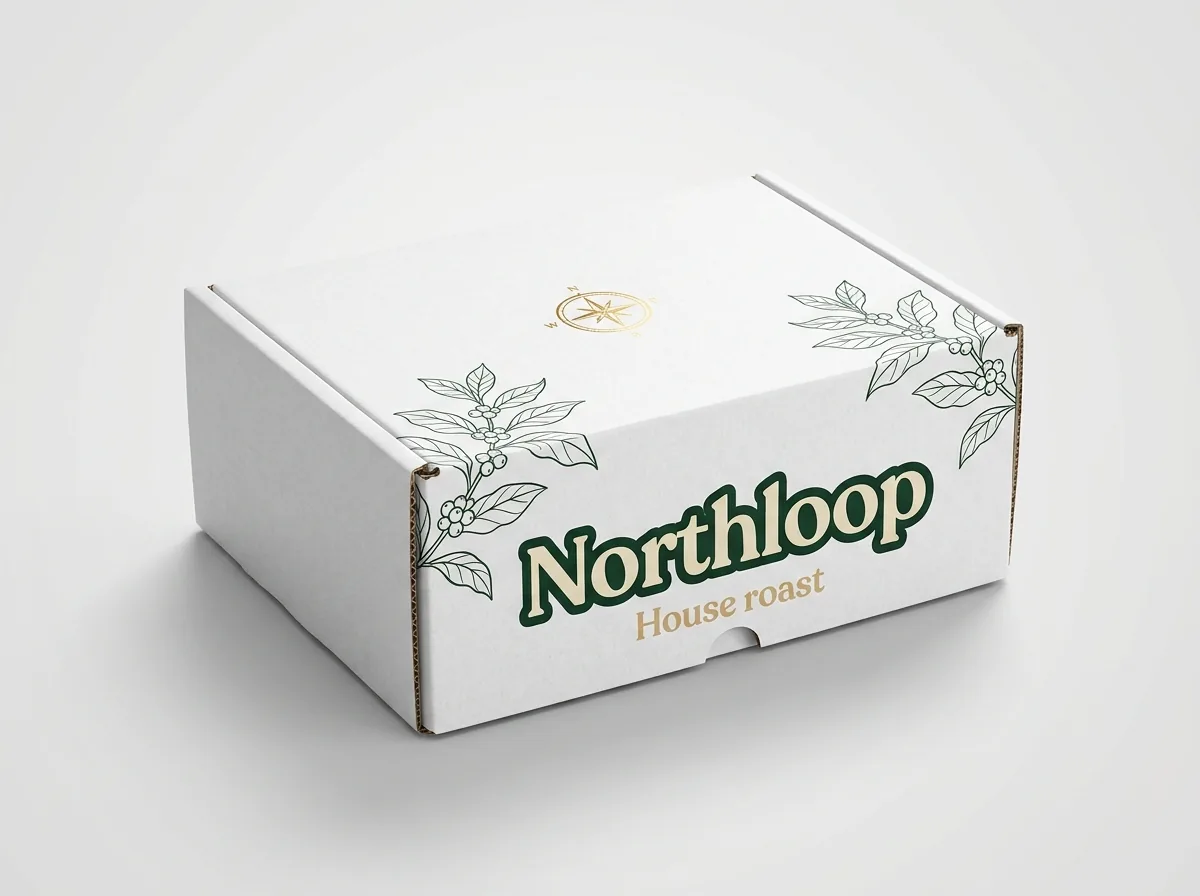
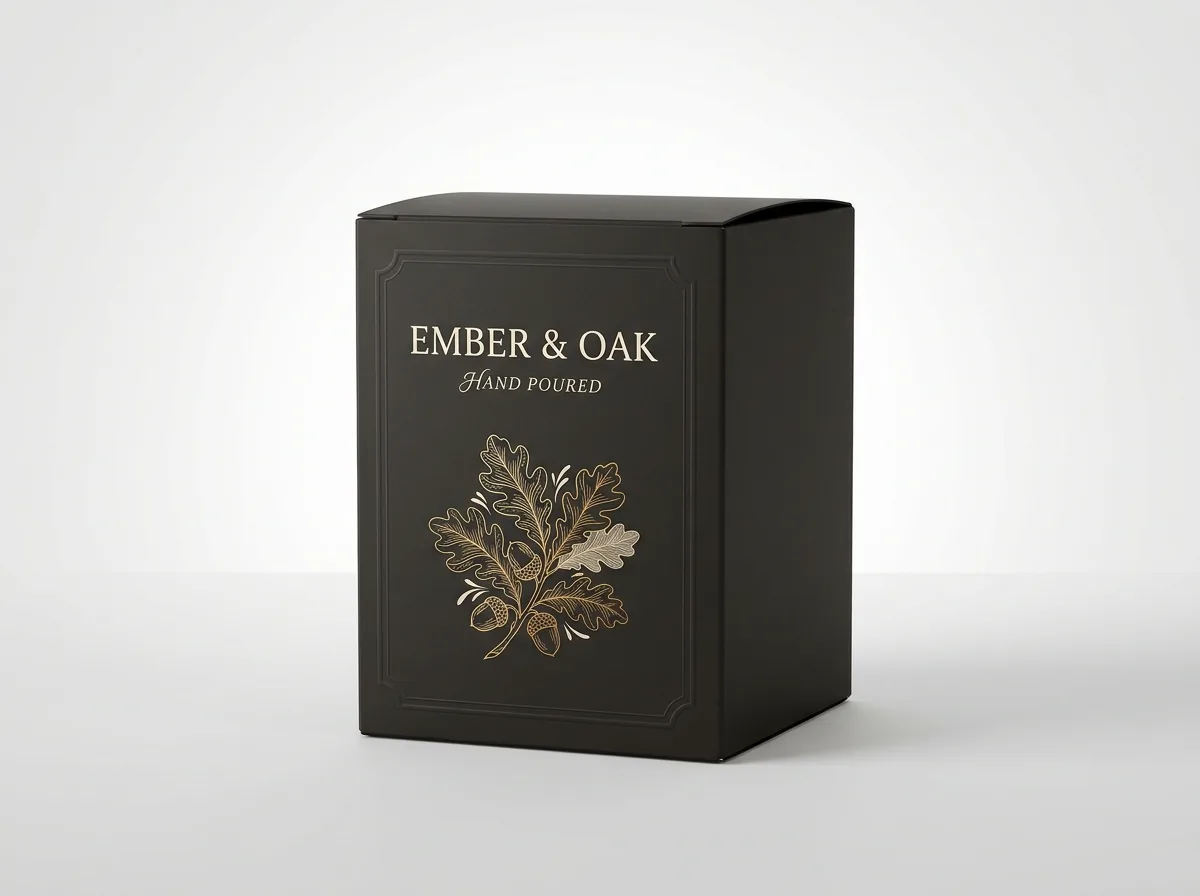
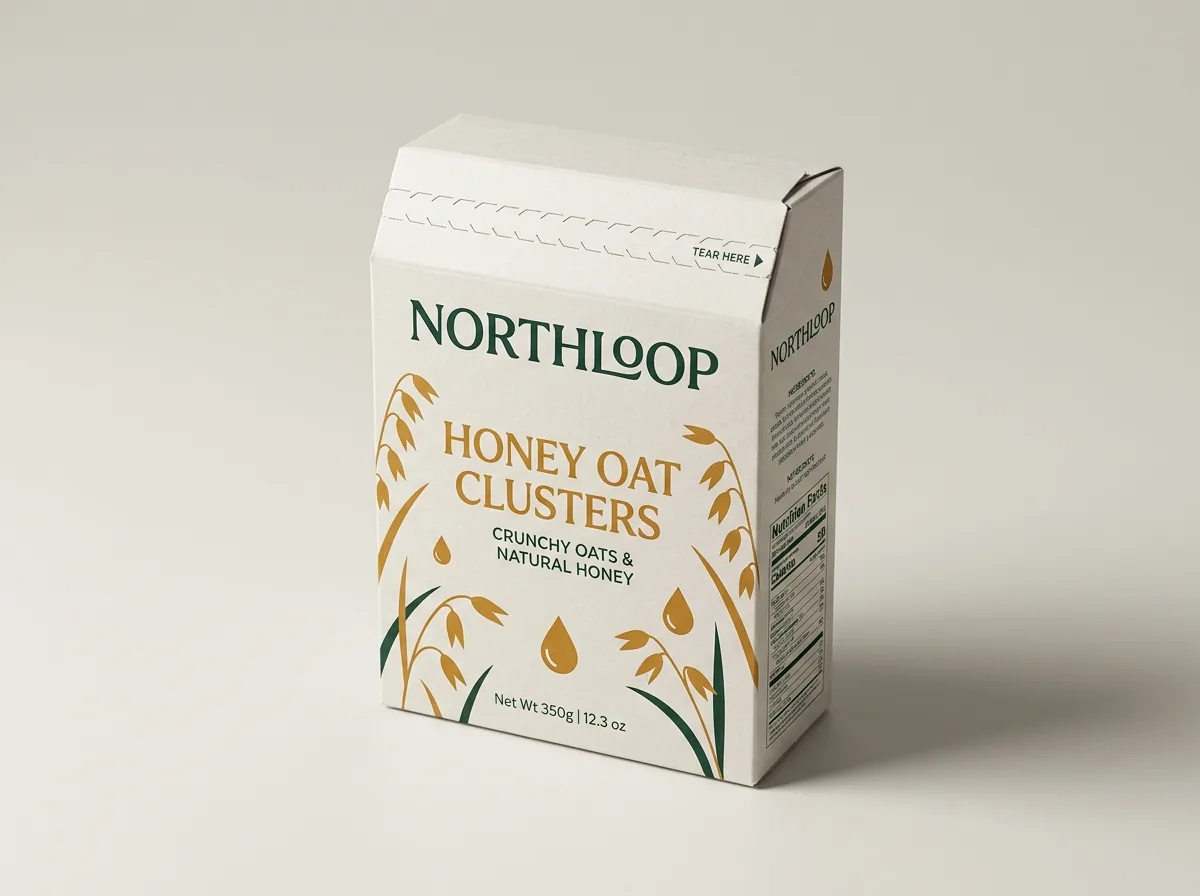
Ready to order amazon seller boxes? Compare up to 3 quantities with a free 3D mockup.
Request a Quote →Questions about amazon seller boxes
What is the minimum order for paperboard unit cartons vs corrugated mailers?
Custom corrugated mailer boxes start at 250 units, while custom paperboard folding cartons start at 1,000 units, and the minimum for regular slotted shipping cartons (RSC) is. Small trial runs are also considered case by case if you are testing a new product launch.
Can a corrugated mailer box go into standard FBA inventory even if it is not enrolled in SIOC?
Yes. Thousands of sellers use E-flute corrugated mailers as their standard FBA unit box for glass bottles, multi-packs, ceramics, electronics and starter kits. The corrugated walls protect the item inside fulfillment center bins, and the marketplace simply places the unit mailer inside an outer shipping box or bag when a customer orders.
Does CubitPack certify boxes for Amazon SIOC or Frustration-Free Packaging?
No. CubitPack is an independent packaging supplier and does not issue official Amazon certifications, which must be submitted and approved through Seller Central. We build custom corrugated boxes to your exact dimensions and offer physical prototypes and drop/crush testing to help you prepare your package.
Which folding carton style is safest against popping open in warehouse chutes?
A seal-end carton (where both top and bottom flaps are glued shut) is the most tamper-evident option. If you want a reclosable box, pair a pre-glued auto-lock bottom with a top tuck flap that has slit-lock tabs and a round tamper-evident seal sticker.
Can I get a custom insert inside both a folding carton and a corrugated mailer?
Yes. We engineer custom paperboard, E-flute corrugated, EVA foam, EPE foam and honeycomb inserts for both folding cartons and corrugated mailers. Dieline design for both the box and the insert is included free with your order.
Can I compare both board types in person before placing my order?
Yes. You can order our $50 sample kit to feel paperboard folding cartons and corrugated mailers side by side, or request a custom printed sample of your box. Both are credited toward your full production order.
Still have a question? Ask a packaging specialist.
Request a Quote →Request your amazon seller boxes quote
Tell us your size and quantities, and one dedicated account manager prepares pricing for each tier.
- Free design & AI-to-print studio + 3D mockup
- No die or plate charges · 4–5 day rush available
- Free shipping to all 50 states
- 10% off your first order
This comparison uses CubitPack's decided minimums (250 mailers, 1,000 folding cartons), standard paperboard and E/B-flute structural properties, and ISTA single-parcel protection principles. CubitPack is not affiliated with Amazon; sellers confirm SIOC and FBA requirements in Seller Central. Spot something wrong? Tell us and we will fix it.
Sources
What changed
- October 22, 2026: First published.
- October 22, 2026: Updated specifications, terminology, and verified source links.
More guides
New packaging guides by email
Sizes, materials and design tips. Unsubscribe anytime.