
Mailer boxes vs shipping boxes for ecommerce: which should you choose?
Short answer: Choose corrugated mailer boxes for direct-to-consumer orders under 8 to 10 pounds where presentation, inside-lid printing and tape-free structural locking matter most. Choose regular slotted shipping cartons (RSC) for heavier multi-item orders, bulk wholesale cases and larger footprints. Both styles of custom ecommerce boxes ship safely without an overbox.
On this page
- How do mailer boxes and shipping boxes compare side by side
- When is a corrugated mailer box the better choice for online orders
- When should you use a regular slotted shipping box (RSC) instead
- Which box style packs faster at a warehouse or 3PL station
- How do you keep branding consistent across mailers and shipping cartons
- Common mistakes
- FAQs
Request a custom quoteFree dieline & 3D mockup
Both mailer boxes and shipping boxes are made from fluted corrugated board designed to travel directly through USPS, UPS and FedEx, but they fold and close very differently. A mailer box (usually a roll-end tuck front or RETF style) is die-cut from a single sheet that folds into double-thick side walls and closes with a hinged top lid and front locking tabs, giving customers a clean, gift-like presentation when they open the lid. A shipping box (usually a regular slotted container or RSC) has four top flaps and four bottom flaps that meet in the center and require packaging tape across both seams. At CubitPack, custom mailer boxes start at 250 units and custom corrugated shipping boxes start at 1,000 units, with 10-14 business day turnaround (4-5 days rush), free design help, no die or plate charges, and free shipping to all 50 states.
How do mailer boxes and shipping boxes compare side by side?
When you order branded ecommerce boxes, the first structural decision is whether your package should open like a presentation chest (a die-cut mailer) or like a classic parcel carton (a slotted shipping box). While both protect products in transit, their board usage, assembly steps, packing table workflow and minimum quantities differ significantly. Use the comparison table below to match each structure against your average order weight, unboxing goals and fulfillment setup. Many online stores use both styles in tandem: a printed roll-end mailer for everyday one-to-four item customer orders where social media unboxing matters, and a taped RSC shipping box for large multi-item bundles, heavy home goods and wholesale retail restocks.
| Feature | Corrugated mailer box (RETF) | Corrugated shipping box (RSC) |
|---|---|---|
| How it assembles | Folds and locks into place without bottom tape | Bottom and top flaps must be sealed with H-tape |
| Customer unboxing | Full top lid lifts open to reveal inside print and neat tray | Four top flaps fold back; deeper reach-in cavity |
| Side wall strength | Double-layered corrugated side walls and dust flaps | Single-wall or double-wall vertical panels |
| Ideal order weight | Under 1 lb up to ~10 lbs | 5 lbs up to 40+ lbs (depending on board spec) |
| Typical size range | Compact to medium (e.g. 6 × 4 × 2 in to 14 × 10 × 4 in) | Medium to large (e.g. 12 × 10 × 6 in to 24 × 18 × 18 in) |
| CubitPack minimum | From 250 boxes | From 1,000 boxes (trial runs case by case) |
| Die & plate charges | None (free) | None (free) |
When is a corrugated mailer box the better choice for online orders?
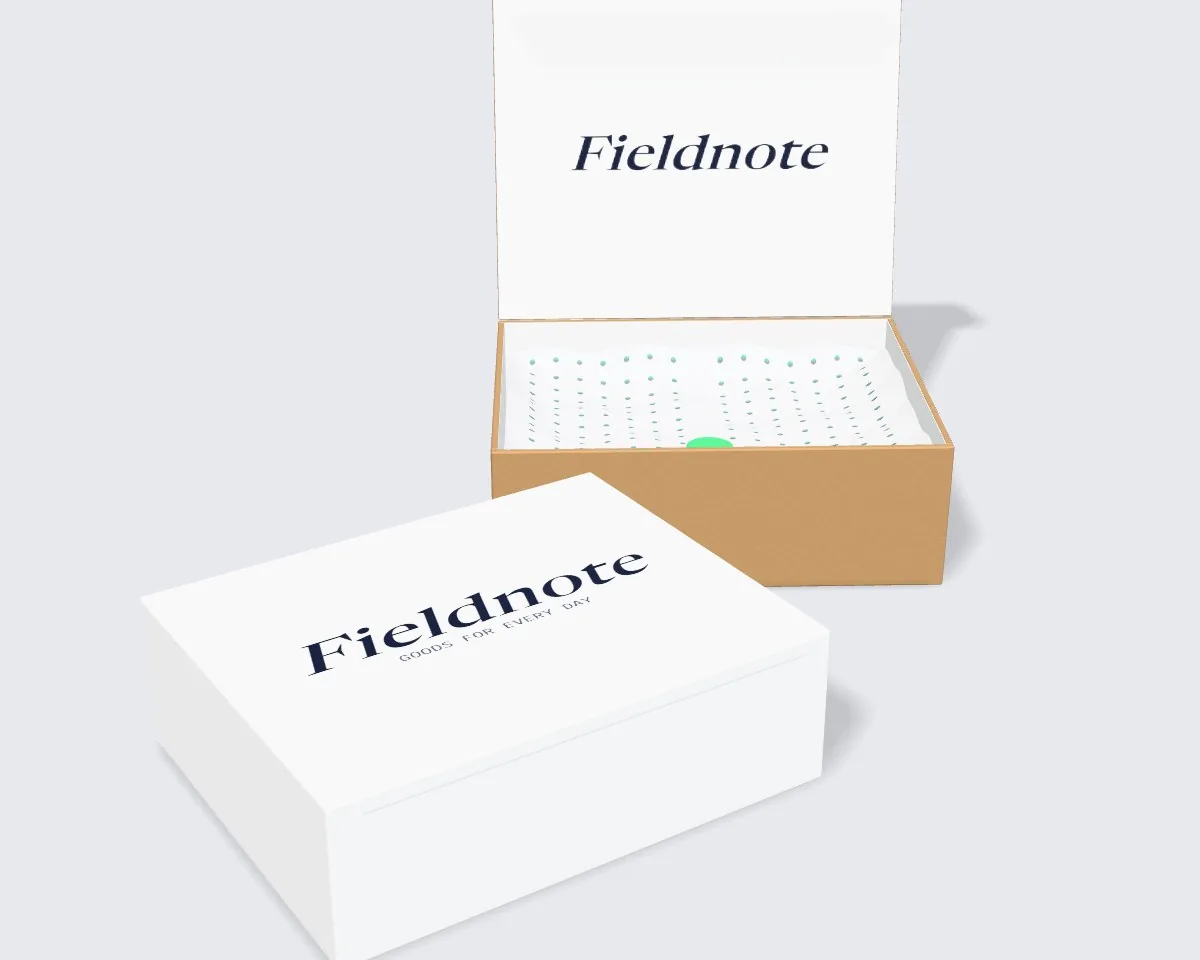
A custom mailer box is the gold standard for direct-to-consumer (DTC) brands selling skincare, cosmetics, supplements, apparel, coffee, candles, tech accessories and subscription kits. Because the hinged top lid opens across the entire footprint of the box, your customer sees every item framed neatly at eye level together with whatever welcome message, care routine or QR code you print inside the lid. That wide, shallow tray shape makes it effortless to lift products out without digging through crumpled packing paper. Structurally, a roll-end tuck front (RETF) mailer folds its left and right walls over twice and tucks two dust flaps into the front edge. That creates triple-layered corners that strongly resist vertical crushing when stacked under heavier parcels in a delivery van. You also need zero tape on the bottom of the box during assembly, and only a single strip of tape or a tamper sticker on the front lip before applying your postage label. For new launches and seasonal sets, mailers also have a lower starting quantity of 250 boxes.
When should you use a regular slotted shipping box (RSC) instead?
While a die-cut mailer shines on presentation, its double-folded walls and full overlapping lid use more square inches of corrugated board per cubic inch of interior volume. Once your box dimensions climb past 14 × 12 × 6 inches or your order weight exceeds 10 to 12 pounds, a custom shipping box built in the regular slotted container (RSC) style becomes more economical and structurally practical for parcel transit. An RSC shipping carton uses straight vertical walls and four meeting flaps on top and bottom, which wastes almost no board on the press sheet and keeps the per-box material cost lower on tall or deep cartons. That makes RSC cartons ideal for bulky hoodies, shoe boxes, kitchenware, multi-jar pantry packs, pet food bags and B2B wholesale case packs going to retail boutiques. For extra-heavy or fragile shipments, you can also step up to custom double wall boxes that pair two layers of fluting for superior stacking strength across long freight zones.
Know your size? Compare pricing across up to 3 quantities.
Request a Quote →Which box style packs faster at a warehouse or 3PL station?
Packing bench ergonomics look different depending on whether you fulfill 30 orders a day in your studio or 3,000 orders a day at a third-party logistics (3PL) warehouse. With a roll-end mailer, a packer pre-folds the creases along the score lines, locks the side tabs into the base slots in about five seconds without reaching for a tape gun, places the products inside, tucks the front dust flaps, and applies one seal sticker. Because a fitted mailer holds items snugly, packers spend far less time tearing and stuffing void-fill paper. With an RSC shipping carton, the packer pops the flat tube open, folds the four bottom flaps, runs a strip of water-activated or pressure-sensitive custom printed tape across the bottom seam, loads the items and void fill, and tapes the top seam shut. If your 3PL uses automated case erectors and bottom-taping machines, RSC boxes fly down the conveyor line. If your team packs by hand at individual tables and wants a clean presentation without loose dunnage, die-cut mailers with fitted custom box inserts are usually faster and cleaner.
- Hand-packing under 500 orders/day: roll-end mailers save bottom-taping time and eliminate messy loose fill when right-sized.
- Automated conveyor lines: RSC shipping cartons feed smoothly through standard bottom-and-top case tapers.
- Flat storage space: both styles ship flat in strapped bundles, though RSC cartons have a slightly smaller flat blank per cubic inch.
- Return-friendly packing: mailers allow customers to re-tuck the lid and apply a return strip cleanly.
How do you keep branding consistent across mailers and shipping cartons?
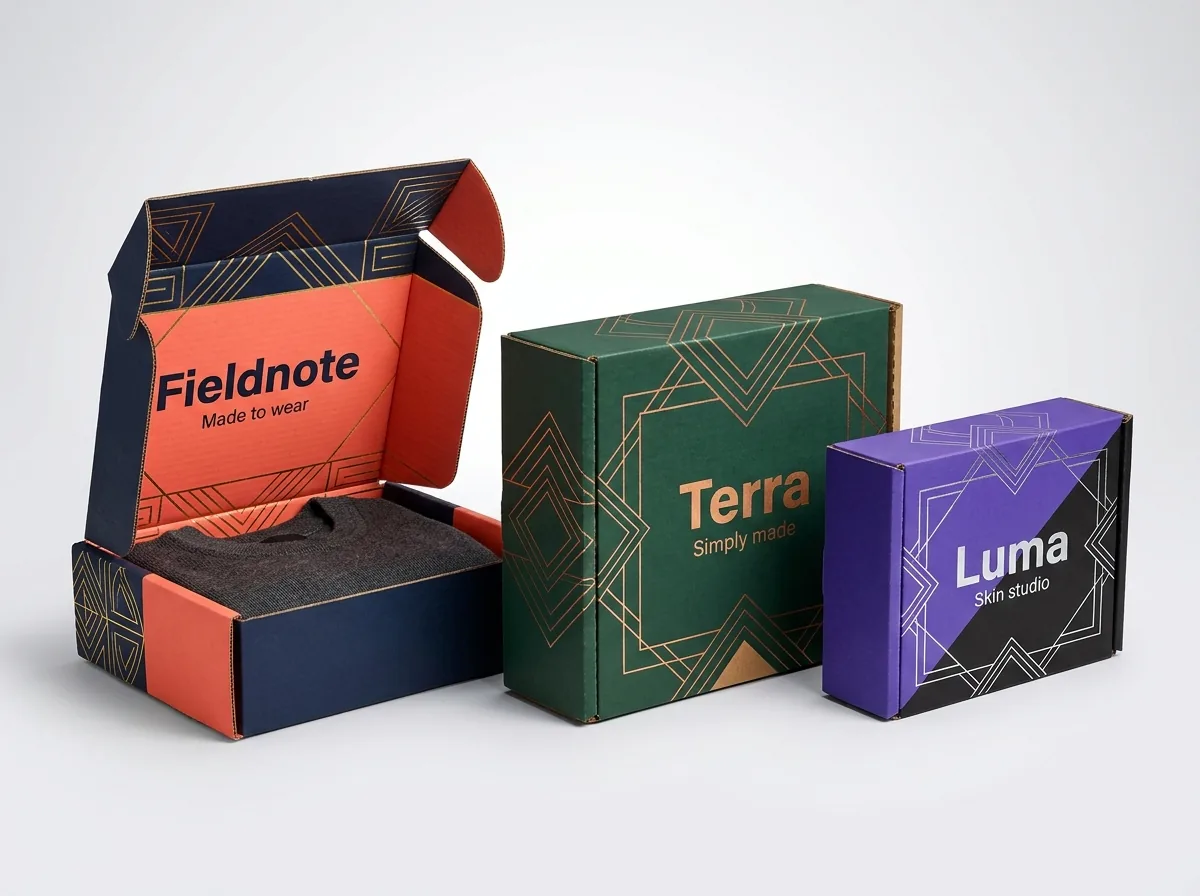
Growing e-commerce brands rarely stay with just one box style forever. Most start with a 250-unit run of custom mailer boxes for their core single and double-item orders, then add a larger RSC shipping box or branded tape for oversized carts. Because CubitPack produces your mailers, shipping boxes, inserts, tissue paper and packaging tape under one roof with a dedicated account manager, we match your exact Pantone ink code across every corrugated stock. To keep unit costs low across your whole packaging line, many brands print a bold, full-bleed interior inside their small and medium printed inside mailer boxes, and use a clean 1-color Pantone logo with branded kraft tape on their large RSC shipping cartons. Every item comes with a free digital proof and 3D mockup before payment, and our Pantone color match is guaranteed so your brand color looks identical whether a customer orders one jar or a twelve-pack.
- Start with a 250-box mailer run for your core 1-to-3 item online orders to establish your unboxing experience.
- Add a 1,000-box RSC shipping carton or custom printed tape for bulky multi-item carts and retail wholesale cases.
- Share the same Pantone ink specification and kraft or white liner choice across both box styles.
- Request up to three quantities in one quote to see volume price breaks for each size.
What are the most common mistakes when choosing between mailers and shipping boxes?
Picking the wrong structure for your product weight or fulfillment setup leads to crushed corners or wasted packing labor. Watch out for these five mistakes
- Using a thin paperboard folding carton as a parcel mailer instead of choosing a fluted corrugated mailer box.
- Packing 15+ pounds of heavy liquid bottles in a wide roll-end mailer instead of switching to a taped RSC or double-wall shipping carton.
- Leaving the front lip of a roll-end mailer completely unsealed in the mail stream: always secure the front edge with a sticker or strip of tape.
- Buying oversized RSC shipping boxes for small single items and spending more on bubble wrap and DIM weight than a fitted mailer would cost.
- Forgetting to ask your 3PL warehouse whether they charge extra assembly fees for multi-fold inserts.
Find your size
Suggested inside size: 6 × 4 × 2 in
A starting point. Your account manager confirms the size with you before the proof.
Quote this size →Packaging for this
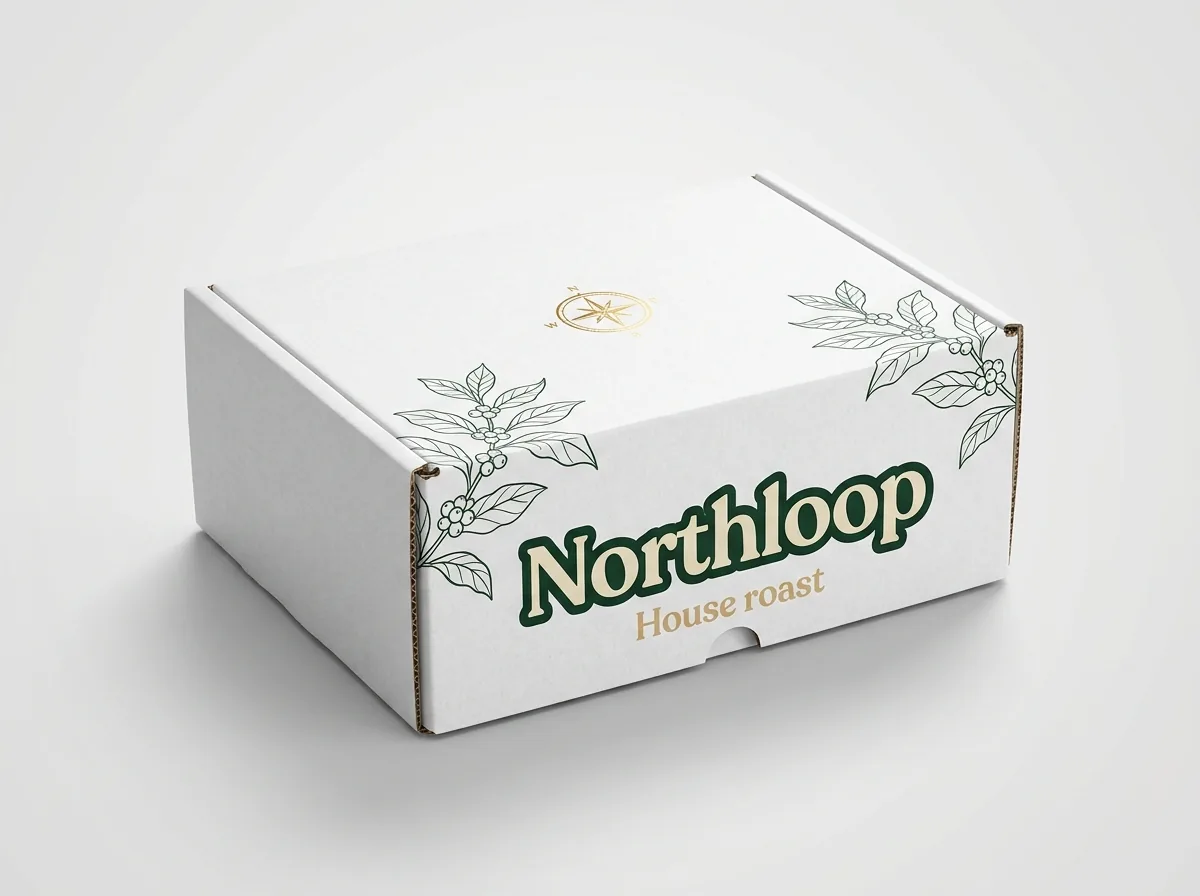
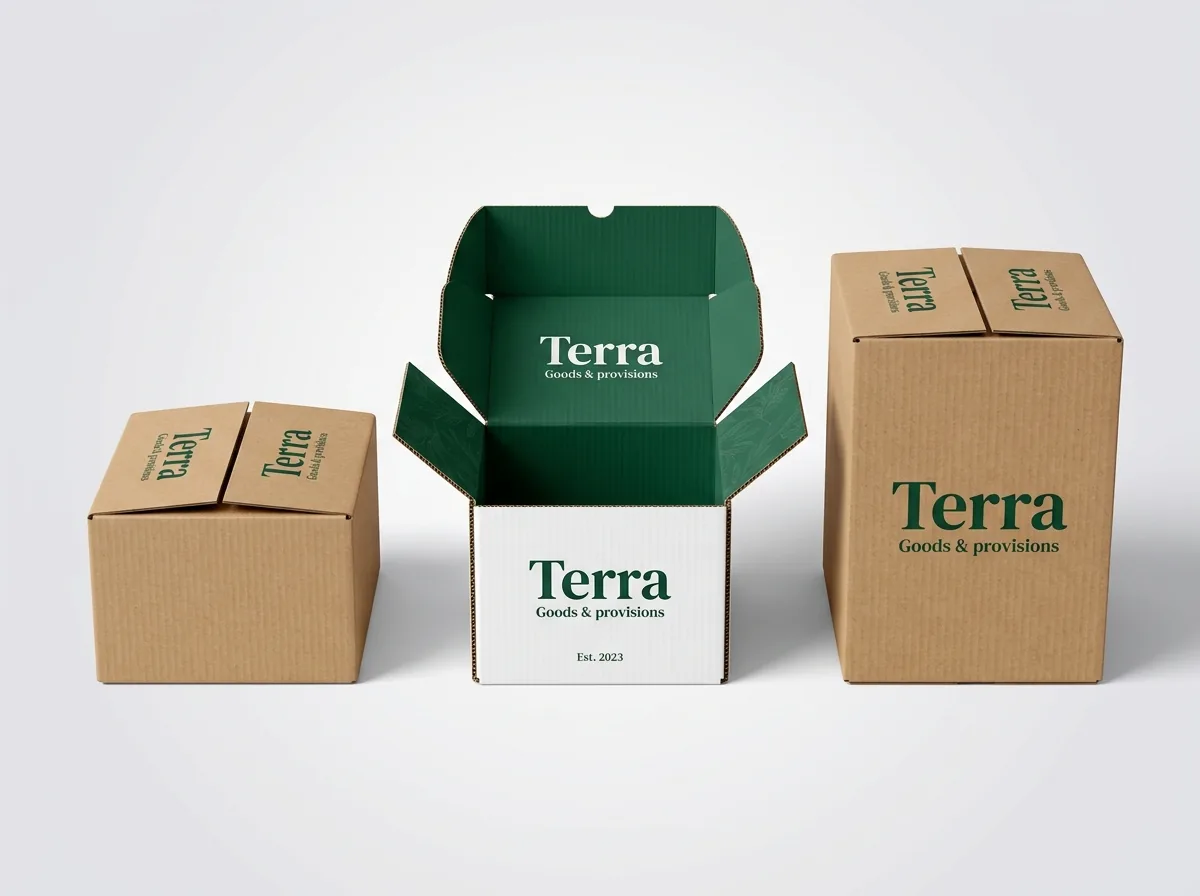
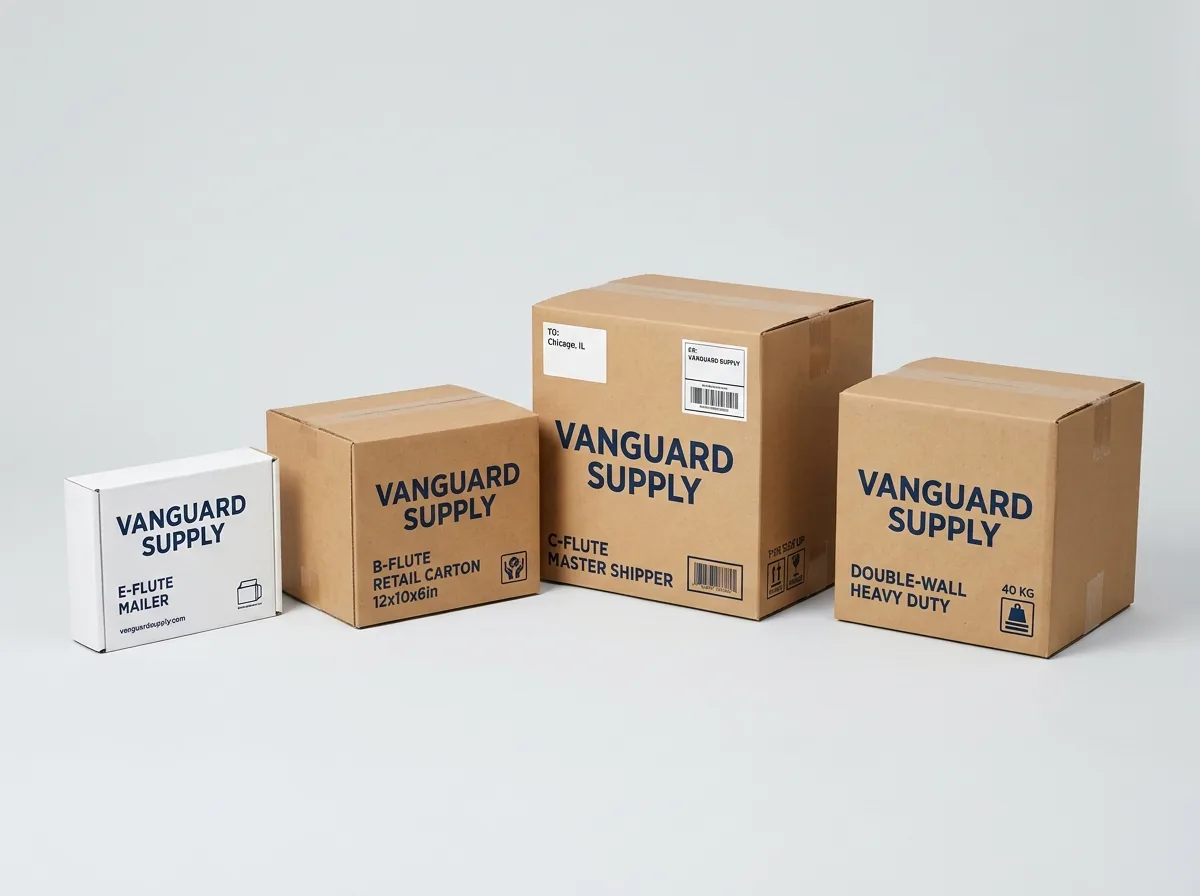
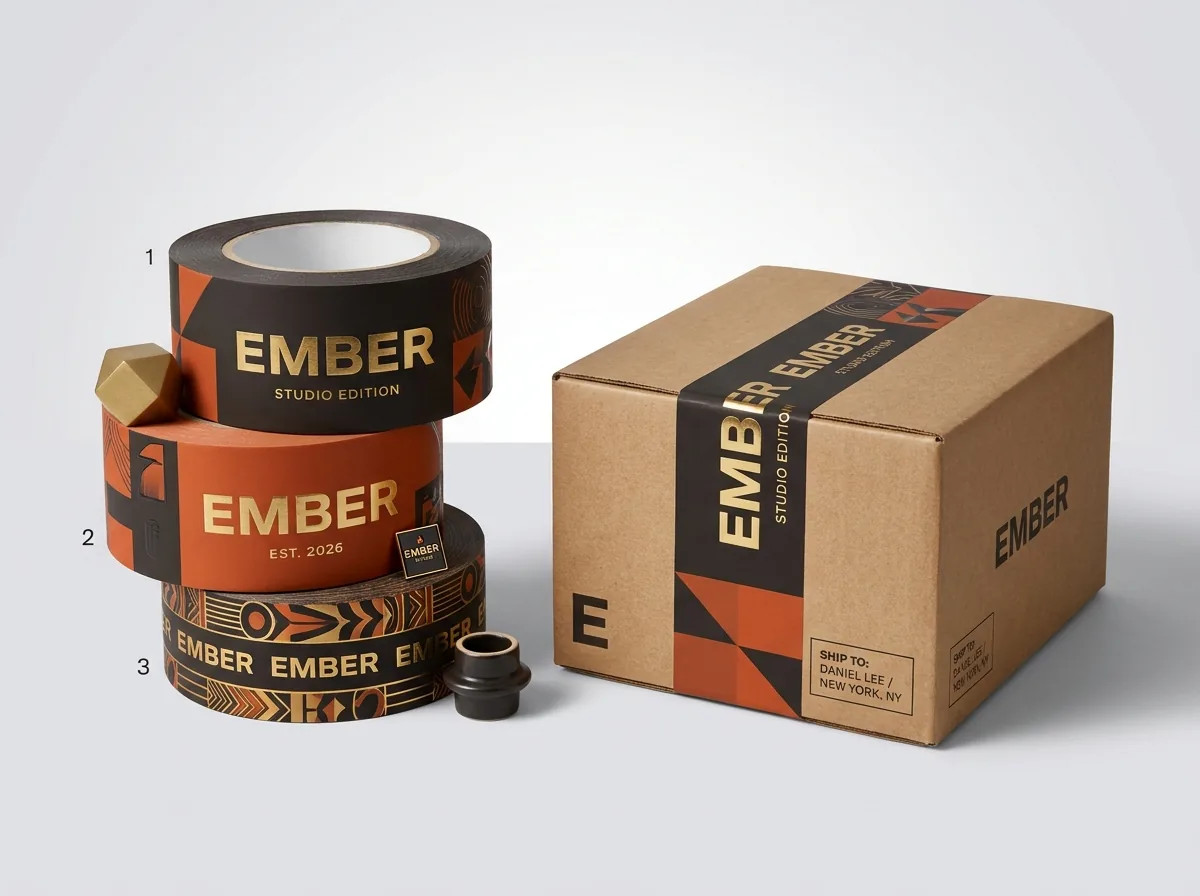

Ready to order ecommerce boxes? Compare up to 3 quantities with a free 3D mockup.
Request a Quote →Questions about ecommerce boxes
Can a corrugated mailer box go straight through the mail without an outer box?
Yes. Corrugated roll-end tuck front (RETF) mailers are built with fluted corrugated board and double-thick side walls specifically to ship as the outer parcel container through USPS, UPS, FedEx and DHL. Simply place your 4 × 6 inch shipping label on the top or bottom panel and seal the front flap.
What is the minimum order quantity for mailer boxes vs shipping boxes?
At CubitPack, custom corrugated mailer boxes start at 250 boxes, while custom regular slotted shipping cartons (RSC) start at 1,000 boxes. If you need a smaller trial run to test a new shipping carton size, ask your account manager and we will review it case by case.
Why does a mailer box cost slightly more per square inch than an RSC shipping box?
A roll-end mailer uses a larger flat sheet of corrugated board for the same interior volume because its side walls fold over twice and its hinged lid covers the entire top and front face. That extra board is what gives a mailer its tape-free assembly, crush-resistant corners and presentation reveal.
Can I print inside an RSC shipping box just like a mailer box?
Yes. We offer outside-only and outside-plus-inside printing on both corrugated mailer boxes and RSC shipping cartons. Many brands print a welcome line or return instructions on the inside top flaps of an RSC box so customers see it as soon as they slice the tape.
Do I need custom dies for a roll-end mailer box?
Every roll-end mailer is cut with a precision dieline matched to your exact inside length, width and height, and CubitPack never charges die or plate fees. You get a free custom dieline, a 2D digital proof and a 3D mockup to approve before you pay.
How can I compare both styles in my hands before ordering?
You can order our $50 sample kit, which is credited toward your first order and includes board and finish samples, or request a paid printed sample of your exact mailer or shipping carton design (also credited when you place the full run).
Still have a question? Ask a packaging specialist.
Request a Quote →Request your ecommerce boxes quote
Tell us your size and quantities, and one dedicated account manager prepares pricing for each tier.
- Free design & AI-to-print studio + 3D mockup
- No die or plate charges · 4–5 day rush available
- Free shipping to all 50 states
- 10% off your first order
This comparison draws on standard FEFCO corrugated box styles (FEFCO 0427 roll-end tuck front mailer vs FEFCO 0201 regular slotted container) and CubitPack's decided minimums and turnaround specs. Checked by a packaging specialist. Spot something wrong? Tell us and we will fix it.
Sources
What changed
- October 22, 2026: First published.
- October 22, 2026: Updated specifications, terminology, and verified source links.
More guides
New packaging guides by email
Sizes, materials and design tips. Unsubscribe anytime.