
Tuck box vs two-piece rigid vs magnetic playing card boxes: which suits your deck?
Short answer: Choose folding paperboard tuck boxes (from 1,000 units) for pocket 54-card Poker, Bridge and cardistry decks, two-piece telescoping rigid boxes (from 50 units) for 78-card Tarot decks with guidebooks, and magnetic book-style custom playing card boxes (from 50 units) for double-deck sets and party games.
On this page
- How do folding tuck, tray-and-sleeve, two-piece rigid and magnetic card boxes compare
- Why is the straight tuck end box the gold standard for 54-card poker and magic decks
- When should a 78-card Tarot deck or party game step up to a two-piece rigid box
- Why do deluxe Tarot editions and double-deck Bridge sets love magnetic book boxes
- How do 6-deck half-brick and 12-deck brick boxes work alongside individual decks
- Common mistakes
- FAQs
Request a custom quoteFree dieline & 3D mockup
Every card deck has a different life after it leaves the shrink wrap. A 54-card poker, magic or cardistry deck is slipped in and out of a jacket pocket hundreds of times, so it needs a slim, flexible one-piece folding tuck carton that adds almost zero bulk to the stack. By contrast, a 78-card gilded Tarot deck bundled with a 120-page guidebook, a double-deck Bridge gift set, or a 400-card tabletop party game lives on a bookshelf or coffee table for years. If you pack a heavy 78-card Tarot deck plus a thick bound booklet inside a thin single-wall tuck box, the top flap wears out and the side walls bow outward after a few dozen readings. Matching your deck's card count, booklet weight and edition tier across folding tuck boxes (1,000 minimum), E-flute brick cartons (250 minimum) and two-piece or magnetic rigid boxes (50 minimum) ensures your printed playing card boxes hold up for the life of the game.
How do folding tuck, tray-and-sleeve, two-piece rigid and magnetic card boxes compare?
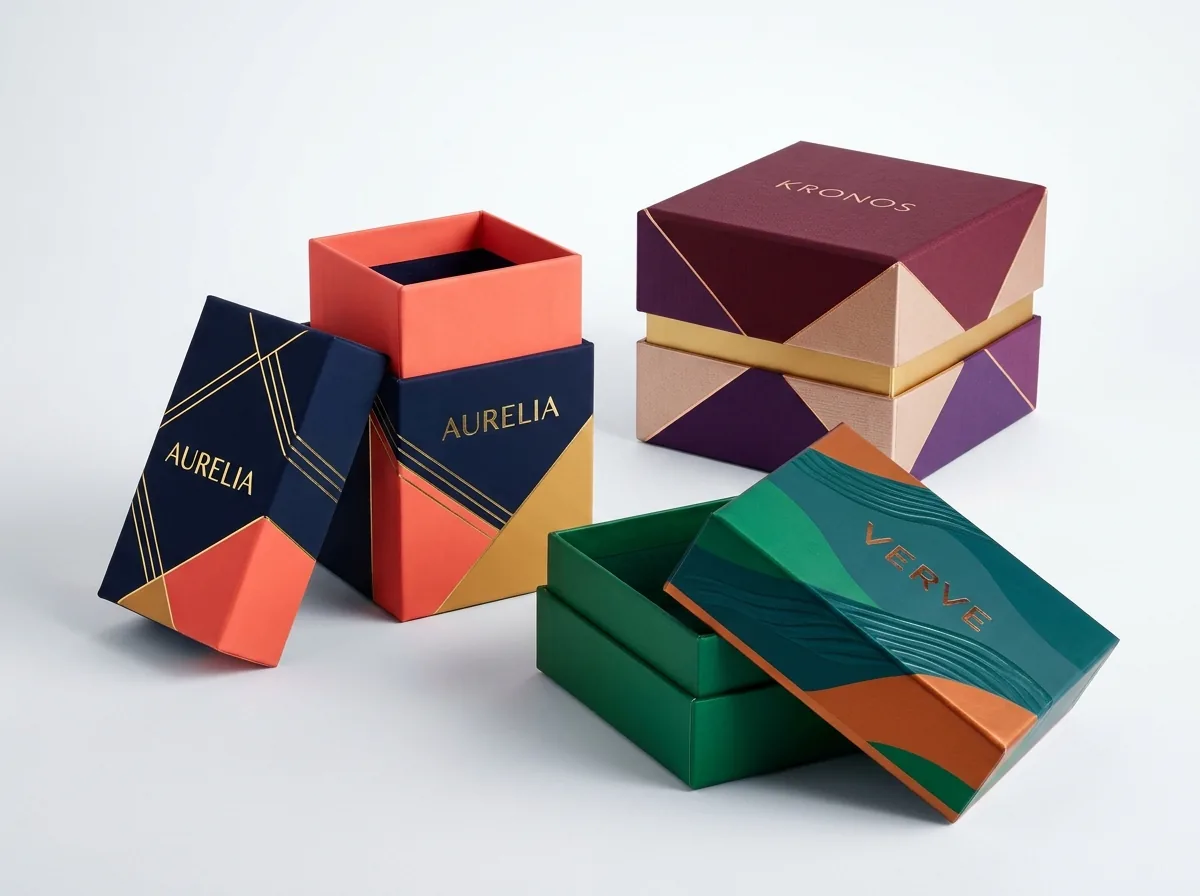
Card creators typically compare five box structures when planning a retail game, a Kickstarter campaign or a collector tarot release. Folding paperboard cartons (straight tuck and tray-and-sleeve) ship flat and minimize unit cost at 1,000+ units, whereas rigid chipboard constructions (two-piece telescoping and magnetic book-style) ship set up and start at just 50 units. Use the comparison table below to match your card count, companion booklet and budget to the right structure before requesting dielines for your custom playing card packaging.
| Card box structure | Best deck format & card count | Feel, shipping & minimum order |
|---|---|---|
| Straight tuck end (STE) tuck box | 36 to 110 cards: 54-card Poker, Bridge, Magic, Cardistry & trivia decks | Pocket-slim paperboard · ships flat · 1,000 box minimum |
| Tray and sleeve (drawer) carton | 54 to 120 cards: collector poker decks, affirmation cards, TCG sets | Double-wall drawer slide · ships flat · 1,000 box minimum |
| Two-piece telescoping rigid box | 60 to 500 cards: 78-card Tarot + guidebook, multi-well party games | Hardcover chipboard lid & base · ships set up · 50 box minimum |
| Magnetic book-style rigid box | 78 to 400 cards: deluxe Tarot sets, double-deck Bridge gift boxes | Hinged spine + hidden magnet flap · ships set up · 50 box minimum |
| E-flute / heavy card 12-deck Brick box | 6 or 12 tuck boxes: Kickstarter half-brick & full-brick collector sets | Flip-top or pop-up display · ships flat · 250–1,000 minimum |
Why is the straight tuck end box the gold standard for 54-card poker and magic decks?
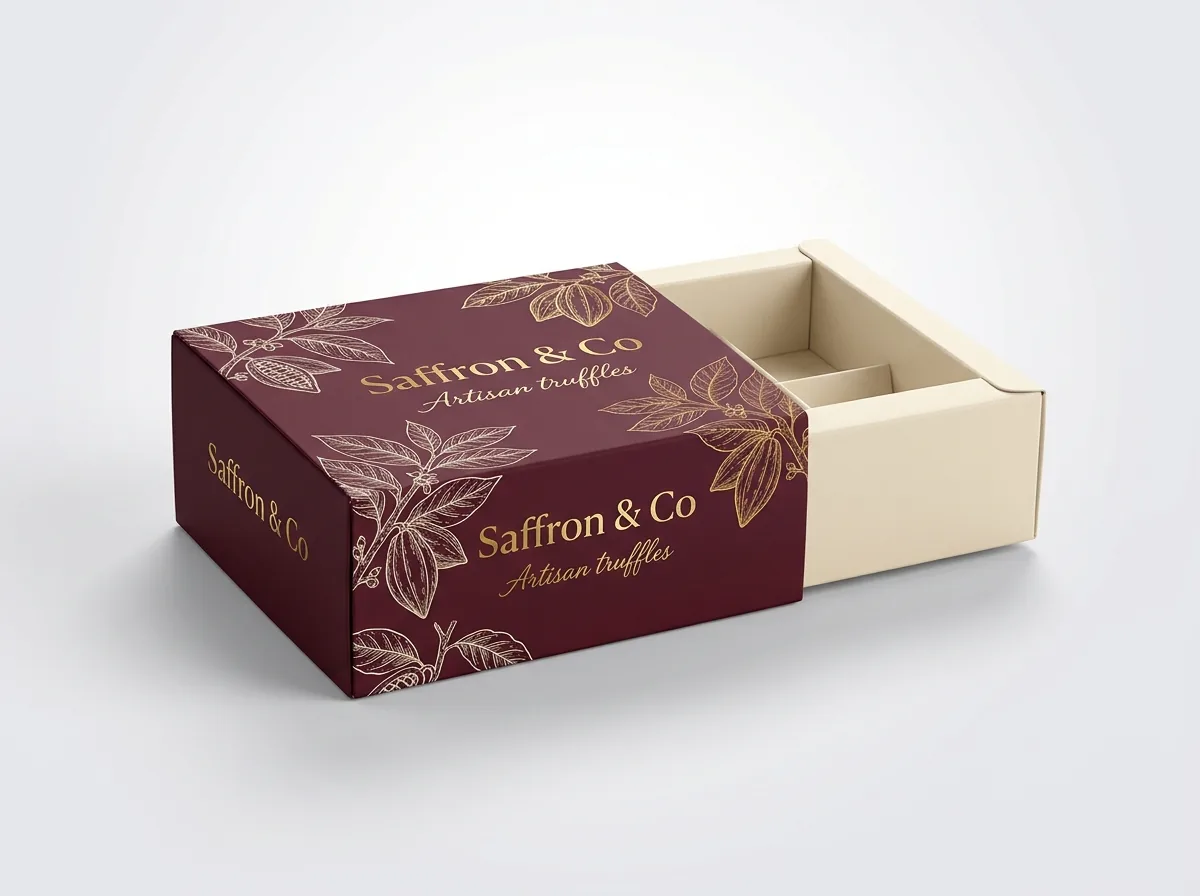
Walk into any magic shop, casino gift store or cardistry collection and 95% of single 54-card poker decks sit inside a custom straight tuck end box. Because both the top and bottom flaps hinge from the back panel and tuck into the rear wall, the entire front face and both side spines are completely free of raw cut board edges. When we die-cut a straight tuck playing card box from high-density coated white paperboard or natural kraft board, we add a half-moon thumb cutout along the top back rim, bevel the top inner dust flaps so card corners never snag, and extend the top tuck tongue so it stays closed in a pocket even after the tax-stamp seal is broken.
- Pocket-friendly footprint: adds less than 1.5 mm to the length and width of the 54-card stack.
- Sculpted luxury at low unit cost: accepts multi-color metallic foil stamping, deep embossing and full inside printing.
- Flat shipping & storage: 1,000 flat-glued tuck boxes fit in a single compact master carton.
- Drawer alternative: step up to a custom tray and sleeve box when you want a slide-out collector unboxing that still ships flat.
When should a 78-card Tarot deck or party game step up to a two-piece rigid box?
Once a card stack grows past 80 to 100 cards, or pairs 78 large 2.75 × 4.75 inch Tarot cards with a 64- to 160-page guidebook, the deck weighs between 8 and 16 ounces. Over years of daily draws, pulling a heavy stack and booklet out of a thin paperboard tuck box wears down the top crease and splits the corners. A custom two-piece rigid box solves that permanently by wrapping printed paper over solid non-bending chipboard (gray board) (chipboard). The telescoping lid lifts straight off the base (or rests on a center neck in a shoulder-neck box), and a satin ribbon pull tab anchored under the bottom of the card well lifts the 78 cards out effortlessly. For 300- to 500-card party games like trivia or family storytelling sets, a two-piece rigid box with a 2-well or 3-well divider keeps every deck organized on the gaming table without tipping over.
- Full-depth or thumb-notch lid: choose a full-telescope lid with twin side thumb notches or a 3/4-depth lid that shows a contrasting base band.
- Satin ribbon pull tab: a 10 mm grosgrain or satin ribbon anchored beneath the deck lifts 78 tarot cards without pinching the edges.
- Guidebook top shelf: size the interior depth so your 64- or 128-page booklet rests flat on top of the cards right beneath the lid.
Know your size? Compare pricing across up to 3 quantities.
Request a Quote →Why do deluxe Tarot editions and double-deck Bridge sets love magnetic book boxes?
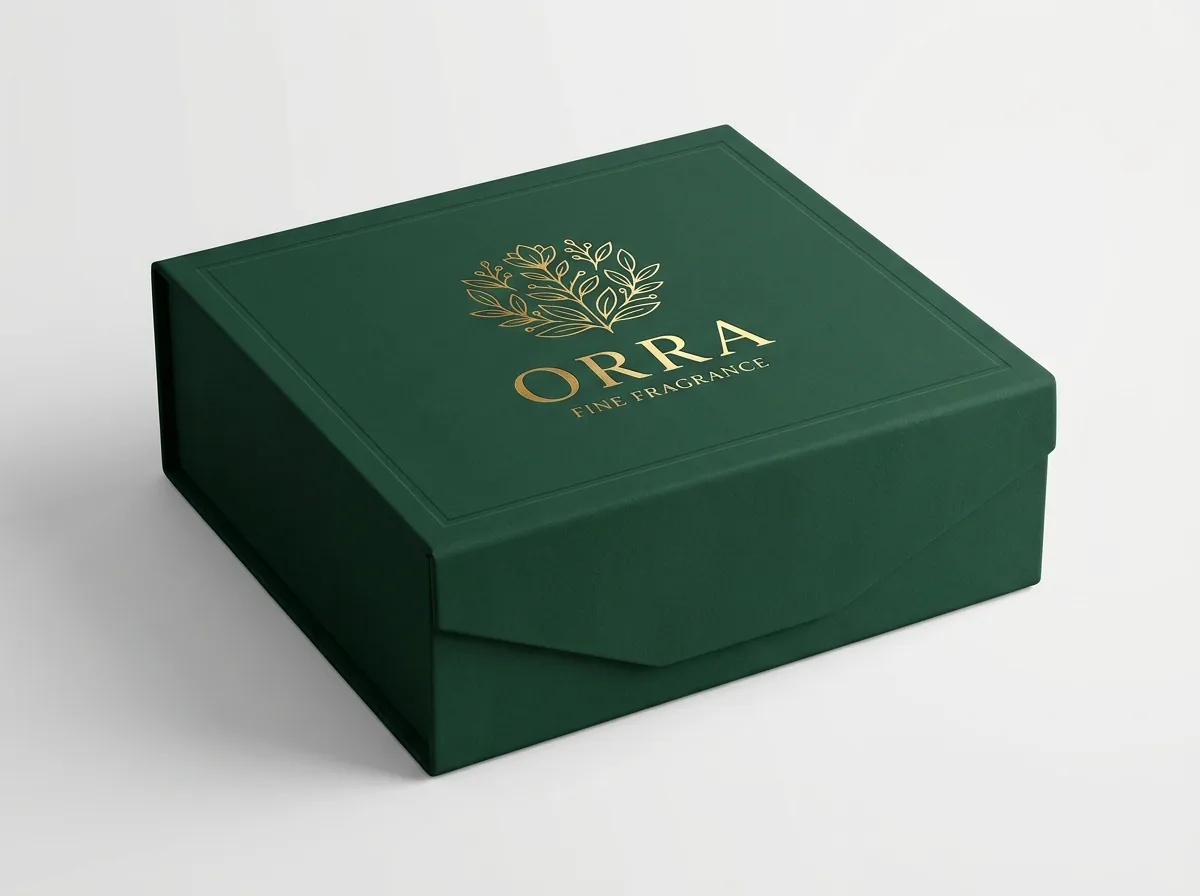
A custom magnetic closure box (often called a clamshell or book-style rigid box) is built from one continuous outer rigid cover that wraps around three sides and snaps shut with concealed neodymium magnets embedded in the front lip. When placed vertically on a bookshelf, the flat spine reads just like a hardcover book. Inside the magnetic cover, we mount a die-cut paperboard or velvet-wrapped EVA foam insert with one deep well for a 78-card Tarot deck, two side-by-side wells for a double-deck Bridge or Canasta set, or recessed slots for metal dealer coins, dice and score pads.
- Bookshelf spine presence: stands upright next to art books with foil-stamped spine lettering.
- One-piece hinged lid: the lid never gets misplaced on the gaming table during a reading or bridge match.
- Audible magnetic snap: hidden magnets hold the front flap securely shut in a backpack or travel bag.
- 50-unit minimum order: ideal for deluxe Kickstarter tiers, gilded editions and VIP gift sets.
How do 6-deck half-brick and 12-deck brick boxes work alongside individual decks?
Card collectors, magicians and game stores rarely buy single decks in isolation; instead, they buy 6-deck half-bricks or 12-deck full-bricks. Rather than shipping 12 loose decks in bubble wrap, you can add a matching 12-deck brick box (or a pop-up custom counter display box) to your production run. For heavy 12-deck poker bricks (which weigh around 2.5 pounds total), an E-flute corrugated flip-top mailer starting at 250 units protects the corners of all 12 inner tuck boxes during parcel fulfillment and doubles as a collector display case on the shelf. We can also add a die-cut window or custom foam dividers inside the brick box for signed limited releases.
- 12-deck full brick (6 × 2 grid): E-flute corrugated flip-top box (from 250 units) or heavy paperboard display carton.
- 6-deck half brick (3 × 2 or 6 × 1 grid): popular reward tier for Kickstarter backers ordering a half-dozen decks.
- Retail PDQ booster tray: perforated pop-up header box that displays 24 or 36 TCG booster packs on hobby store counters.
- Custom foam or cardboard dividers: individual slots that keep foil-stamped tuck boxes from rubbing against each other in transit.
What are the most common mistakes when choosing a playing card box style?
Picking the wrong box construction for your card count or edition size leads to split tuck seams or stuck tarot decks. Avoid these five mistakes
- Packing a heavy 78-card Tarot deck plus a thick 128-page guidebook into a light single-wall tuck box that bulges and tears at the top flap.
- Ordering a reverse tuck end box instead of a straight tuck end box for a collector poker deck, leaving a raw board seam across the front face.
- Designing a snug two-piece rigid tarot or party game box without thumb cutouts on the lid or a satin ribbon pull tab under the cards.
- Shipping 12 collector poker decks loose in a shipping carton instead of housing them in a fitted 6 × 2 E-flute 12-deck brick box.
- Thinking you must order 1,000 rigid boxes for a limited gilded edition when custom two-piece and magnetic rigid boxes start at 50 units.
Find your size
Suggested inside size: 2.31 × 0.70 × 3.56 in
A starting point. Your account manager confirms the size with you before the proof.
Quote this size →Packaging for this
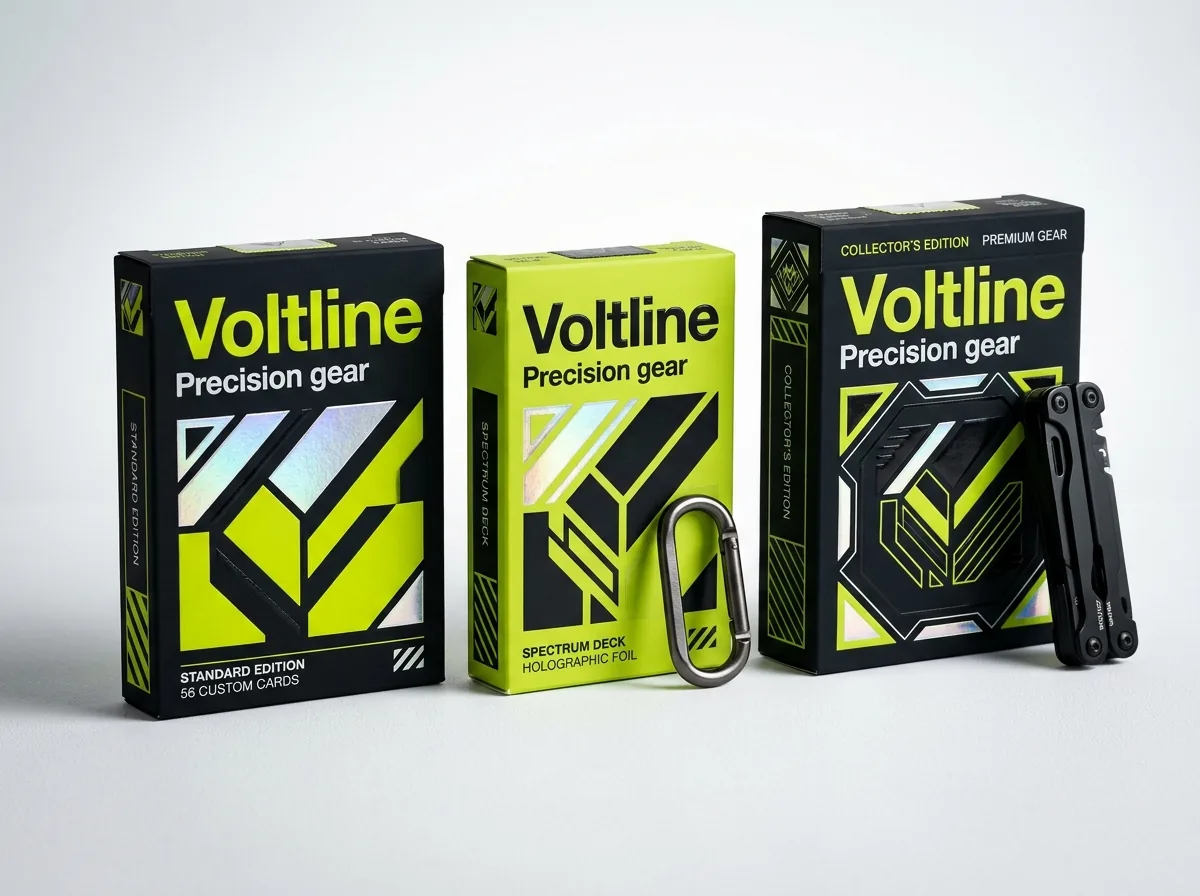

Ready to order playing card boxes? Compare up to 3 quantities with a free 3D mockup.
Request a Quote →Questions about playing card boxes
What is the minimum order quantity for folding tuck boxes vs rigid playing card boxes?
Custom paperboard folding tuck boxes (including straight tuck end and tray-and-sleeve boxes) start at 1,000 units. E-flute corrugated 12-deck brick boxes start at 250 units, and two-piece or magnetic book-style rigid boxes start at just 50 units.
Can I order 1,000 folding tuck boxes and 100 magnetic rigid collector boxes in one project?
Yes. Many Kickstarter and tabletop creators order 1,000+ folding tuck boxes for their Standard Edition deck alongside 50 to 250 magnetic book boxes or two-piece rigid boxes for their Deluxe Collector Tier, and our team quotes and coordinates both together.
Why do tarot decks in two-piece rigid boxes need a satin ribbon pull tab?
Because rigid chipboard walls do not flex outward like a paperboard tuck box, a 78-card tarot deck fits snugly inside the base well. A satin ribbon anchored under the stack lets the reader lift the cards up smoothly without dumping the box upside down.
Do folding tuck boxes and rigid tarot boxes both support foil stamping and embossing?
Yes. Both coated paperboard tuck boxes and litho-wrapped rigid boxes accept multi-color metallic or holographic foil stamping, 3D embossing, debossing, Spot UV, matte lamination, soft-touch coating and full-color inside printing.
What box style works best for a 300-card or 400-card party game?
For 300 to 500 cards, a two-piece telescoping rigid box, magnetic book box or E-flute mailer fitted with a 2-well or 3-well divider tray works best. Dividing the cards into side-by-side wells keeps the box compact and prevents tall stacks from toppling.
Can I inspect physical tuck box and rigid box samples before placing my order?
Yes. You can order our $50 material and style sample kit (credited toward your first order) to feel paperboard tuck boxes, rigid setup boxes and specialty finishes in your hands, or request a custom prototype sized to your deck.
Still have a question? Ask a packaging specialist.
Request a Quote →Request your playing card boxes quote
Tell us your size and quantities, and one dedicated account manager prepares pricing for each tier.
- Free design & AI-to-print studio + 3D mockup
- No die or plate charges · 4–5 day rush available
- Free shipping to all 50 states
- 10% off your first order
The structural comparisons, card-count thresholds and minimum order quantities in this guide come from standard poker, bridge, tarot and party game manufacturing specs plus CubitPack's decided facts in our published product specifications. A packaging specialist reviewed every row. Spot an error? Tell us and we will fix it.
Sources
What changed
- October 22, 2026: First published.
- October 22, 2026: Updated specifications, terminology, and verified source links.
More guides
New packaging guides by email
Sizes, materials and design tips. Unsubscribe anytime.