
Tray and sleeve vs window tuck macaron boxes: which should you choose?
Short answer: Choose tray-and-sleeve custom macaron boxes when you want a sliding boutique drawer and double-wall side stiffness for gifting or shipping. Choose single-piece window tuck boxes when you want the lowest unit cost, fastest one-piece assembly at the cafe counter, and a hinged top lid.
On this page
- How do tray-and-sleeve, window tuck, and two-piece macaron boxes compare
- Why do French patisseries love tray-and-sleeve macaron drawers
- When is a single-piece window tuck box the smarter choice
- Should you choose a patched film window or an open die-cut window
- How do two-piece lift-off lid boxes and card dividers work for large assortments
- Common mistakes
- FAQs
Request a custom quoteFree dieline & 3D mockup
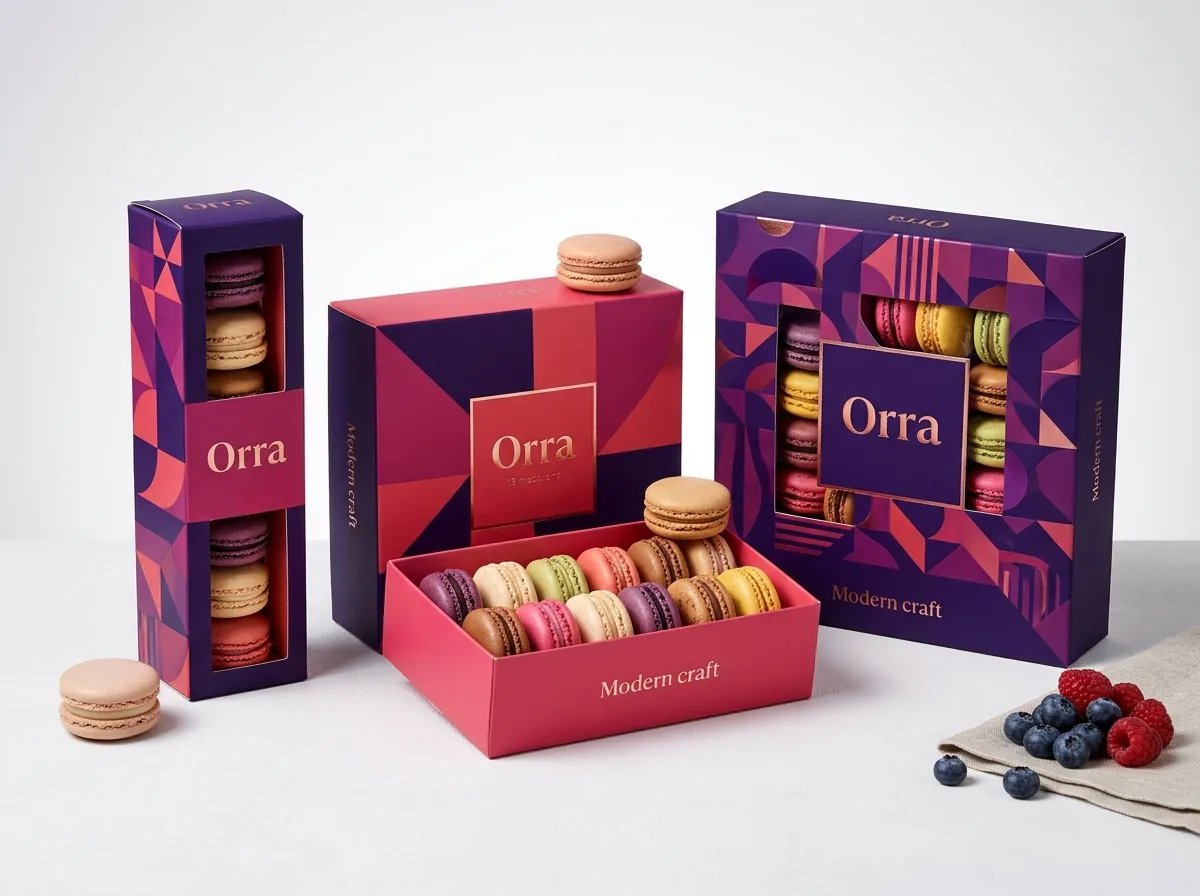
Patisseries and confectioners rely on two primary structures for 6-piece and 12-piece macarons: a two-part tray-and-sleeve box (where an open inner tray or plastic cavity insert slides horizontally into a printed outer wrap sleeve) and a single-piece window tuck box (where the floor, four walls, and hinged top lid fold from one flat sheet of paperboard). Tray-and-sleeve boxes deliver a dramatic horizontal unboxing reveal and double up the paperboard along the long side walls once closed, making them noticeably stiffer for stacked cold-case displays, luxury gift sets, and e-commerce mailers. Single-piece window tuck boxes use less board and only one glue seam, which lowers your per-box cost at the 1,000-unit minimum and lets counter staff pop open, fill with tongs, and close orders in seconds. At CubitPack, both styles include free custom dielines, digital proofs, 3D mockups, and zero die charges.
How do tray-and-sleeve, window tuck, and two-piece macaron boxes compare?
Picking the right structure comes down to how you sell and pack your macarons: pre-packed in a refrigerated grab-and-go case, hand-picked to order at a busy cafe counter, or assembled into luxury holiday gift sets. A two-part custom tray and sleeve box acts like a matchbox drawer, keeping the top face completely uninterrupted by tuck flap seams. A single-piece custom window box folds from one flat blank and opens from the top or end so staff can drop macarons directly in with tongs. For 12-piece, 18-piece, and 24-piece corporate or holiday assortments, many chocolatiers and patisseries add a third contender: a custom two-piece box with a telescoping lift-off lid that reveals all rows at once. Review the side-by-side comparison below before selecting your structure on our printed macaron packaging quote form.
| Feature | Tray & sleeve drawer | Single-piece window tuck |
|---|---|---|
| Number of parts | 2 parts (inner tray + outer sleeve) or sleeve over PET tray | 1 flat piece with pre-glued side seam |
| Side-wall crush strength | High (tray wall + sleeve wall overlap) | Moderate (single paperboard wall) |
| Unboxing experience | Horizontal drawer slide reveal | End tuck or hinged top lid flip |
| Counter packing speed | Moderate (fold tray, fill, slide into sleeve) | Fast (pop open one carton, fill, tuck shut) |
| Finger access to shells | Excellent (open tray has low cut-down sides) | Good on top-tuck; tight on end-tuck tubes |
| Relative unit cost | Moderate (two die-cut pieces unless using PET tray) | Lowest (single die-cut blank) |
| Best applications | Boutique 6 & 12 packs, gifts, mail-order | Cafe counter takeaway, 2-piece favors, markets |
Why do French patisseries love tray-and-sleeve macaron drawers?
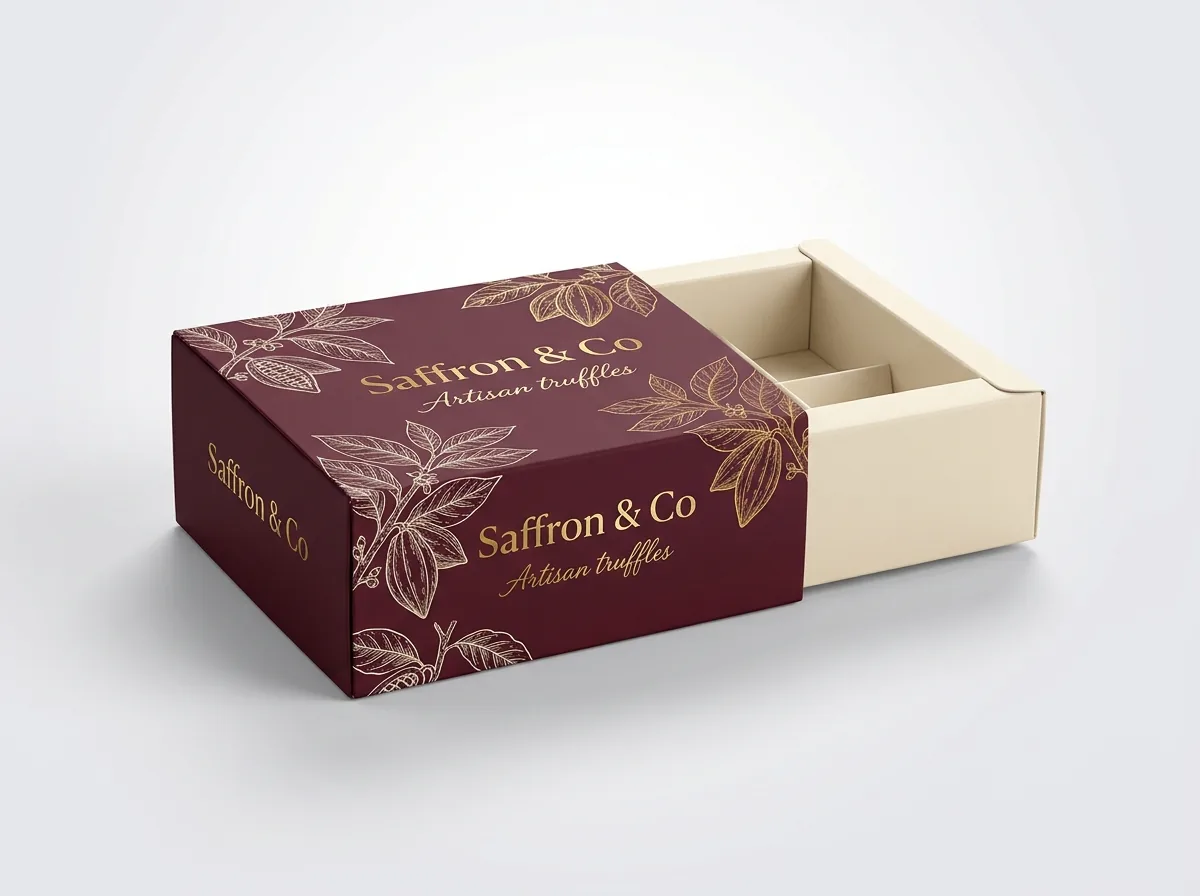
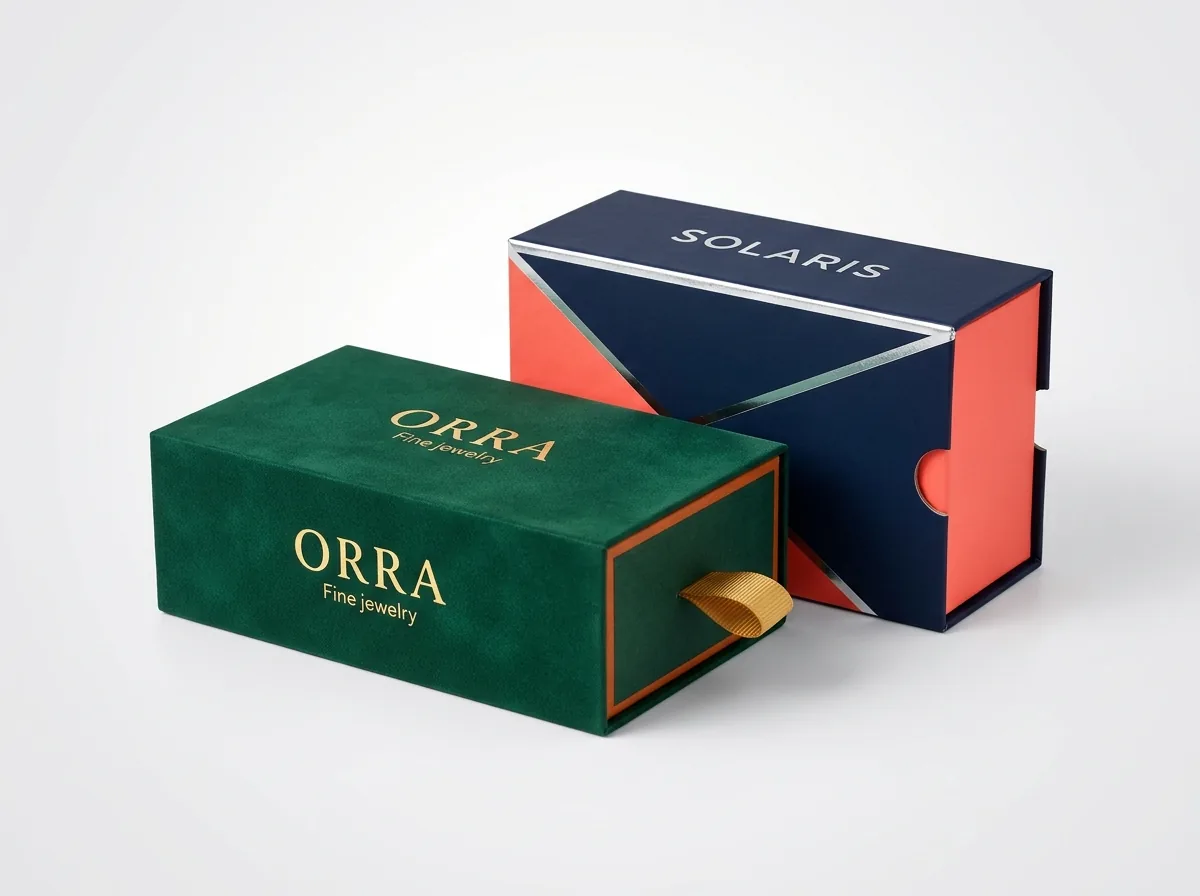
Walk into any classic Parisian patisserie and you will see 6-piece and 12-piece macarons presented in long, slender tray-and-sleeve boxes. When the customer slides the inner tray out of the sleeve, all six or twelve pastel shells glide into view in one smooth motion without a hinged lid flopping backward on the table. Even more important is finger clearance: we can die-cut semicircular thumb notches or lower the long side walls of the inner paperboard tray so guests can pinch a single macaron by its sturdy filled center rather than crushing its fragile top dome. Structurally, a tray and sleeve creates a double-wall beam along the long sides where tray walls and sleeve walls overlap. That extra rigidity keeps a 7.25 inch baton box from bowing in the middle when stacked six high inside a refrigerated display case or carried home in a boutique bag. You can also add a satin ribbon pull tab to the end of the tray to turn the box into a keepsake custom drawer box, or print a flavor key along the inside tray wall so customers can match each pastel shell to its fruit curd or ganache filling.
When is a single-piece window tuck box the smarter choice?
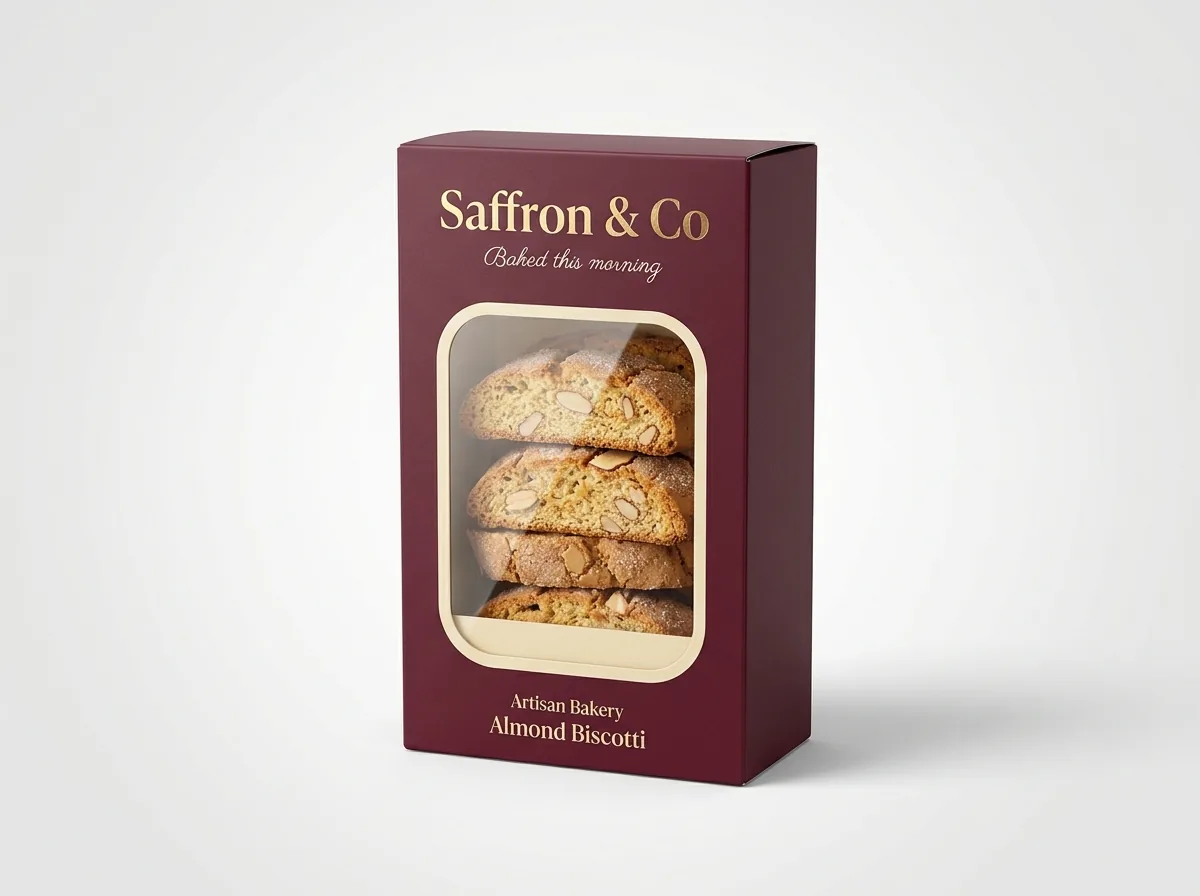
If your team packs macarons to order while a line of customers waits at the espresso bar, folding a separate inner tray and sliding it into an outer sleeve takes extra seconds on every transaction. A single-piece window tuck box ships pre-glued along its long seam and pops into a 3D rectangle with one squeeze. For 2-piece wedding favors, 3-piece cafe samplers, and 6-piece market packs, a compact custom straight tuck end box with a front or top window is the most economical structure you can print. For 6-piece and 12-piece counter boxes, ask our structural team for a hinged top-tuck (bakery style) opening rather than a narrow end-tuck tube. Opening the entire top roof of the box lets your staff set six macarons directly into the channel from above with pastry tongs instead of pushing fragile shells sideways down a narrow tunnel where fillings can smear.
- Ships flat as a single pre-glued piece - no matching separate trays and sleeves in your back room.
- Uses the smallest flat sheet area of paperboard, keeping unit cost down at the 1,000-box minimum.
- Hinged top-tuck lid opens wide so staff can load delicate shells from above with tongs.
- Ideal for 2-piece event favors, 3-piece tasting trios, and high-volume farmers market stands.
Know your size? Compare pricing across up to 3 quantities.
Request a Quote →Should you choose a patched film window or an open die-cut window?
Both tray-and-sleeve boxes and single-piece tuck boxes usually feature a top viewing window so shoppers can admire your raspberry, pistachio, salted caramel, and lavender shells at the bakery counter. When designing that window, you have two technical options: a patched window (where a clear plastic film sheet is glued across the inside of the hole) or an open die-cut window (an unsealed cutout hole with no film). If your macarons sit directly inside a paperboard tray or on a folded custom cardboard insert, you must use a patched film window to protect the shells from air, dust, and fingers while keeping refrigerator moisture balanced. However, if your macarons are already sealed inside a clear thermoformed plastic blister tray with a clear snap cover, the plastic tray itself provides the barrier and condensation shield. Leaving the paperboard sleeve window as an open die-cut cutout eliminates the window-patching film step, reduces unit cost, and gives shoppers an unobstructed view of the shells without double-glare through two layers of plastic.
How do two-piece lift-off lid boxes and card dividers work for large assortments?
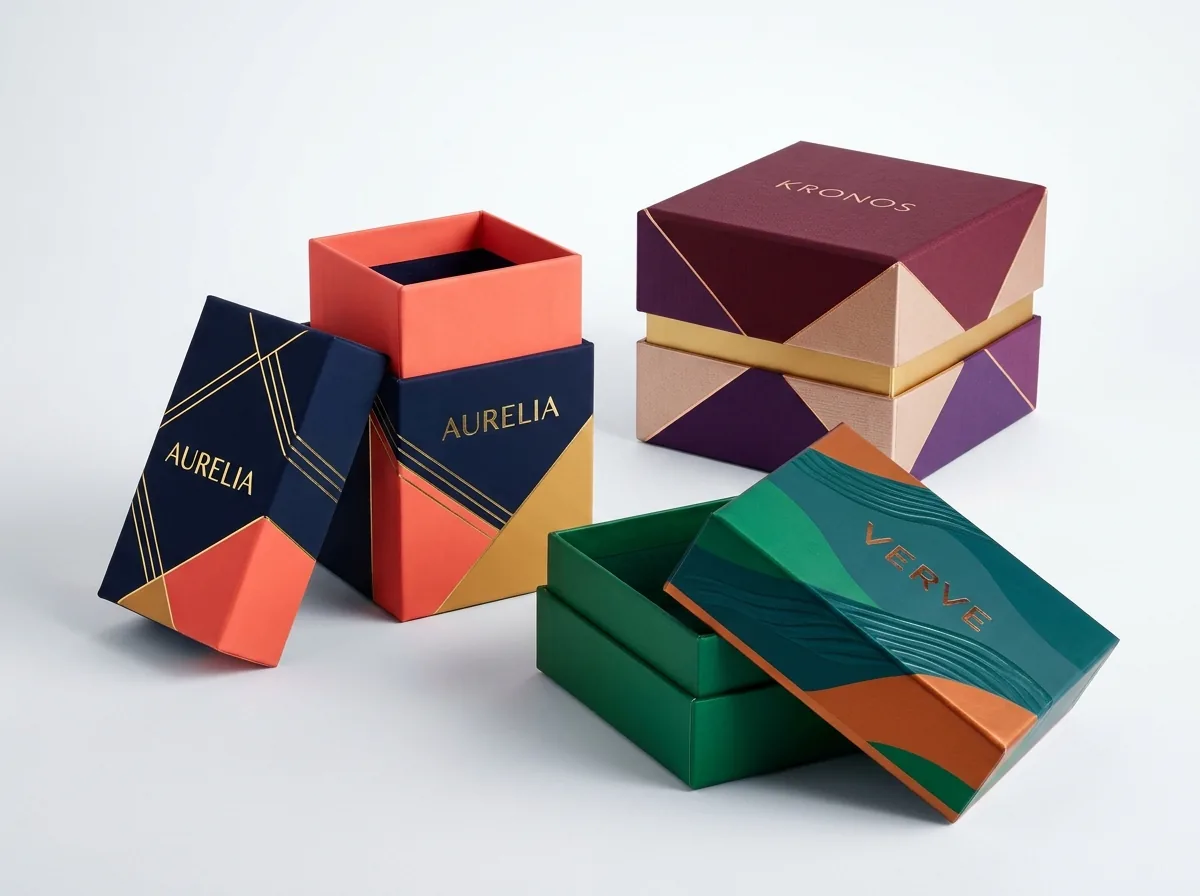
Once an assortment grows to 16, 24, or 36 macarons for corporate gifting, hotel welcome amenities, wedding favors, or holiday hampers, sliding a wide four-row tray out of a paperboard sleeve can feel awkward if the tray twists slightly on the table. A telescoping two-piece box - where a full-depth printed lid lifts straight upward off a matching base tray - prevents any horizontal sliding friction and doubles the wall thickness around all four sides of the box for superior stacking strength. Inside the base, you can choose between molded plastic cavity trays or folded paperboard lane dividers. Plastic cavity trays immobilize each individual cookie in a recessed pocket so shells never collide, making them essential for UPS, FedEx, and USPS parcel shipping across state lines. Folded paperboard lane dividers create clean 2-inch channels that hold rows upright for boutique retail cases, local courier delivery, and plastic-free brand positioning. When your macarons sit directly against paperboard trays or lane dividers without a plastic blister, ask your CubitPack account manager for food-safe interior liners and grease-resistant barriers on request.
What are the most common mistakes when choosing a macaron box style?
Selecting the wrong opening mechanism can slow down your counter staff or damage delicate shells during packing. Avoid these five structural mistakes
- Using a narrow end-tuck tube for 6 unwrapped macarons without a sliding tray, forcing staff to push fragile shells down a tunnel.
- Paying for a patched film window on an outer sleeve when your macarons are already covered by a lidded clear plastic blister tray.
- Making the inner tray walls of a drawer box the full 2.0 inch height with no finger notches, so customers pinch and crack the top domes.
- Using a single-wall tuck box without an outer mailer or cavity tray for nationwide parcel shipping.
- Forgetting to request food-safe liners on your quote when macarons sit directly against a paperboard tray or lane divider.
Find your size
Suggested inside size: 2.25 × 2.25 × 2.0 in
A starting point. Your account manager confirms the size with you before the proof.
Quote this size →Packaging for this

Ready to order macaron boxes? Compare up to 3 quantities with a free 3D mockup.
Request a Quote →Questions about macaron boxes
Which is less expensive: a tray-and-sleeve macaron box or a window tuck box?
A single-piece window tuck box costs less per unit because it is die-cut and glued from a single flat sheet of paperboard. However, if you already use a clear plastic cavity tray and only order an outer paperboard sleeve (with no paperboard inner tray), the sleeve-only cost is just as economical.
Can a tray-and-sleeve macaron box ship flat to save storage space?
Yes. Both the outer sleeve and the foldable inner paperboard tray ship completely flat in master cartons. The outer sleeve is pre-glued along one seam so it pops open instantly, and the inner tray folds together along pre-scored locking tabs without tape or glue.
Which macaron box style is best for nationwide mail-order shipping?
For e-commerce shipping, pair a thermoformed plastic cavity tray (which locks each macaron in its own pocket) with a snug outer paperboard sleeve or two-piece box, then pack that retail box inside an insulated corrugated shipping mailer with cold packs.
Can I order an outer paperboard sleeve without an inner paperboard tray?
Yes. If you load your macarons into stock 5-cell, 6-cell, or 12-cell clear plastic trays, tell your CubitPack account manager you need an open-ended outer sleeve only. Send us the exact outer dimensions of your plastic tray so we match the fit.
How do thumb notches help on a macaron tray?
When macarons sit side by side in a 2-inch-deep paperboard tray, tall side walls make it hard for customers to reach the first shell without touching its top dome. Low cut-down sides or half-moon thumb notches let fingers grasp the cookie gently by its edges.
Can I compare samples of both styles before placing my 1,000-box order?
Yes. You can order our $50 sample kit (credited toward your box order) to feel our board stocks and finishes, and every order includes a free digital dieline proof and 3D mockup before payment. Paid physical prototypes of your custom size are also available.
Still have a question? Ask a packaging specialist.
Request a Quote →Request your macaron boxes quote
Tell us your size and quantities, and one dedicated account manager prepares pricing for each tier.
- Free design & AI-to-print studio + 3D mockup
- No die or plate charges · 4–5 day rush available
- Free shipping to all 50 states
- 10% off your first order
This structural comparison draws on CubitPack dieline engineering for two-part tray-and-sleeve drawers, hinged bakery tuck cartons, and telescoping two-piece gift boxes. A packaging specialist reviewed all style recommendations. Spot something wrong? Let us know and we will fix it.
Sources
What changed
- October 22, 2026: First published.
- October 22, 2026: Updated specifications, terminology, and verified source links.
More guides
New packaging guides by email
Sizes, materials and design tips. Unsubscribe anytime.