
Stand-up mylar bags vs flat mylar pouches: which should you choose?
Short answer: Choose stand-up custom mylar bags with a bottom gusset when your product weighs 2 oz or more, contains chunky pieces, or needs to stand upright on retail shelves without a display tray. Choose flat 3-side-seal mylar pouches for single-serve samples, flat goods or fills under 2 oz that hang on peg hooks or ship inside thin mailers.
On this page
- How do stand-up mylar bags and flat mylar pouches compare side by side
- When should you use a bottom-gusset stand-up mylar bag
- When does a flat 3-side-seal mylar pouch work better
- Do stand-up and flat mylar bags have the same barrier and closure options
- How do brands combine both pouch styles across their product line
- Common mistakes
- FAQs
Request a custom quoteFree dieline & 3D mockup
Stand-up mylar bags (bottom-gusset pouches) and flat mylar pouches (3-side-seal bags) are built from the exact same high-barrier multi-layer films and offer identical protection against moisture, oxygen, UV light and odor. The difference lies in how the bottom edge is constructed. A stand-up mylar bag includes a W-folded bottom gusset that pushes open into a flat oval base as the pouch fills, letting 2 oz to 5 lb packages stand upright like a rigid billboard on store shelves. A flat 3-side-seal mylar pouch seals the front and back sheets directly together along three edges with no bottom fold, using less film per bag to lower unit cost and stay thin inside envelopes or countertop display caddies. Both styles accept resealable zippers, tear notches, clear windows and full-color printing at CubitPack with no die or plate charges.
How do stand-up mylar bags and flat mylar pouches compare side by side?
When configuring custom printed mylar bags in Step 1 of our quote form, your first structural choice is selecting between Stand-up mylar (also known as a Doypack or bottom-gusset pouch) and Flat mylar (also known as a 3-side-seal or pillow-flat pouch). Both formats can be converted from the same metallic, white, clear or kraft barrier film stack, and both ship flat in master cartons so they take up minimal room in your warehouse before filling. Where they diverge is how the base expands under load, how much cubic volume the bag can hold for a given front width and height, and how customers interact with the package on a retail shelf or inside an e-commerce parcel.
| Feature | Stand-up mylar bag (bottom gusset) | Flat mylar pouch (3-side-seal) |
|---|---|---|
| Base construction | W-folded bottom gusset welded around a curved or K-seal perimeter | Single flat horizontal heat seal across the bottom edge (or folded base) |
| Best fill weight range | 2 oz to 5 lbs (56 g to 2.2 kg) of snacks, coffee, powders or pet treats | 1 g to 2 oz (single servings, sheet masks, samples, trading cards, seeds) |
| Retail shelf posture | Stands upright unassisted once filled to 60% or more of usable height | Lies flat, hangs from a peg hook, or stands inside a countertop display box |
| Printable panels | Front panel, back panel and bottom gusset panel | Front panel and back panel only |
| Film usage & unit cost | Uses more barrier film per bag due to the W-folded bottom gusset | Lowest film square inches per bag; most economical per-unit pouch format |
| E-commerce shipping profile | Expands into a 1.5 to 4 inch deep oval base when filled | Stays thin and flat; slips easily into rigid mailers or shallow kits |
When should you use a bottom-gusset stand-up mylar bag?
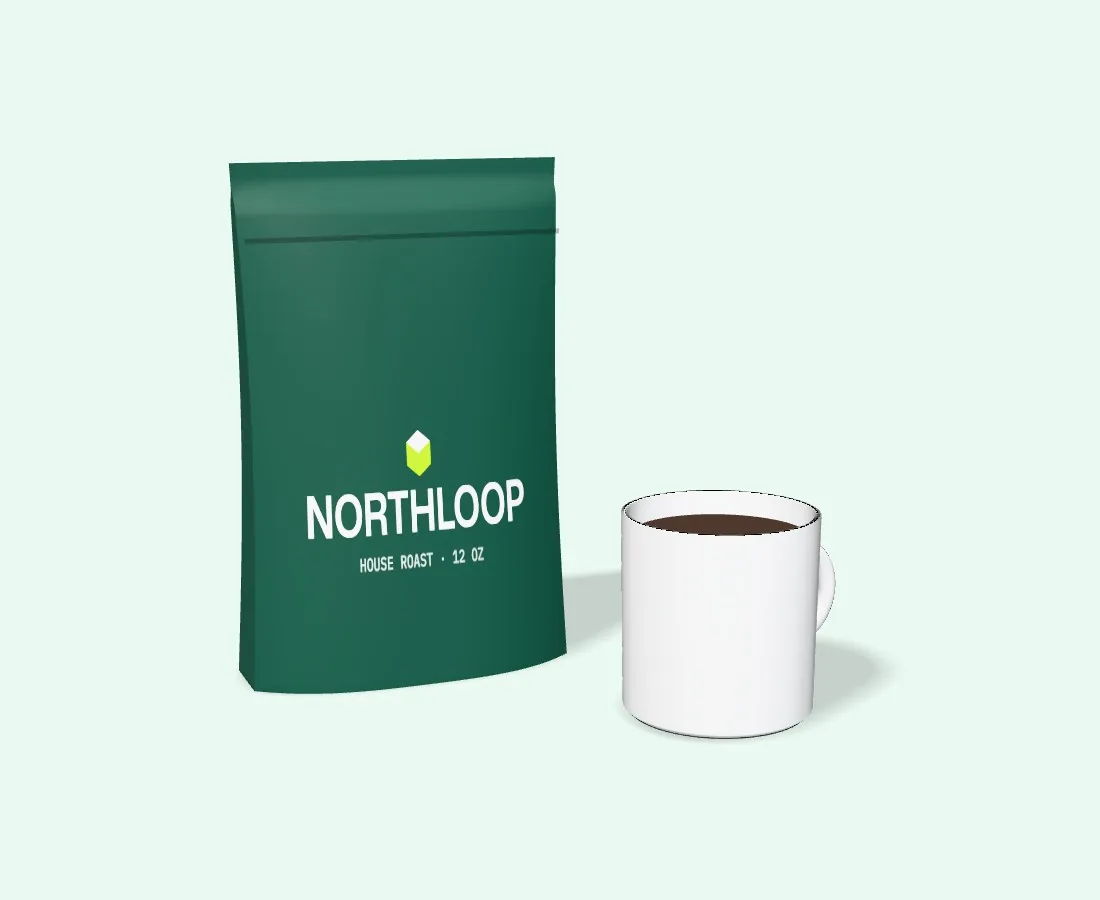
A custom stand-up pouch joins the front and back barrier walls at the base with an inverted W-shaped fold called a bottom gusset. When you pour granular, powdered or chunky product into the open top, the weight of the fill pushes that W-fold down into a flat oval floor. Once filled to at least 60% of its usable height, the pouch stands upright on its own with a wide, flat front panel facing the shopper. That self-standing billboard is the primary reason snack, coffee, supplement, bath soak and pet treat brands choose stand-up mylar bags for their flagship multi-serving sizes. A bottom gusset also gives your designer a third printable panel on the underside of the pouch. Many brands place their UPC barcode, batch lot code stamp box or recycling icons on the bottom gusset so the front and back panels stay clean for brand storytelling and nutrition tables.
- Multi-serving capacity: ideal for 4 oz, 8 oz, 12 oz, 16 oz and larger bags that customers open, scoop from and reseal over several weeks.
- Chunky or irregular contents: accommodates cookies, freeze-dried fruit, bath bombs, pet chews and whole-bean coffee without pulling the side seams inward.
- Window and valve integration: pairs naturally with knocked-out clear windows (custom mylar bags with a window) or one-way coffee degassing valves.
When does a flat 3-side-seal mylar pouch work better?
A custom flat pouch eliminates the bottom gusset fold completely. Two flat sheets of barrier film (or one folded web) are heat-sealed directly together along the left vertical edge, right vertical edge and bottom horizontal edge, leaving the top open so you can fill the packet and run an impulse heat sealer across the header. Because there is no bottom gusset to fold or die-punch, flat 3-side-seal mylar pouches consume less barrier film per unit and run at higher converting speeds, lowering your per-bag cost. They are the standard choice for single-serve hydration or protein powders, facial sheet masks, jerky slabs, flower or vegetable seeds, small electronic parts, collector trading cards and 3.5g to 7g trial packs. Flat pouches can still include every closure feature available on a stand-up bag, including press-to-close zippers, child-resistant zippers, tear notches, rounded corners and hang holes.
- Small or thin fills (1 g to 2 oz): keeps thin items and small powder doses snug instead of rattling around in the bottom of a gusseted bag.
- Flat parcel fulfillment: stays under ½ inch thick when filled, sliding neatly into flat rigid mailers, subscription boxes or welcome folders.
- Countertop PDQ and pegboard display: stands upright inside a corrugated display tray at checkout counters or hangs cleanly from a sombrero euro hang hole.
Know your size? Compare pricing across up to 3 quantities.
Request a Quote →Do stand-up and flat mylar bags have the same barrier and closure options?
First-time buyers sometimes worry that a flat 3-side-seal pouch is thinner or less protective than a stand-up mylar bag. In reality, oxygen, moisture, UV and aroma protection depend on the multi-layer film laminate and the integrity of the heat seal, not on whether the bottom edge is folded or flat. When produced on the same metallized BoPET, foil or high-barrier clear film stack, a flat mylar pouch and a stand-up mylar bag deliver identical shelf-life protection. Both pouch styles arrive open at the top (or open at the bottom on request for specialized filling lines) and weld shut in two seconds on any standard tabletop impulse sealer or continuous band sealer. If your product is food, coffee, tea, supplements or pet treats, both styles are available with food-safe inner seal layers produced in a certified partner facility, with certificates and lab tests shared on request.
How do brands combine both pouch styles across their product line?
You do not have to lock your entire brand into a single pouch format. One of the smartest merchandising plays in food, wellness and personal care is pairing a stand-up bottom-gusset mylar bag for your full-size retail SKU with a matching flat 3-side-seal mylar pouch for single-serve samples and starter kits. For example, a functional beverage or supplement brand might pack its 30-serving canister replacement in a 6 × 9 × 3 inch matte stand-up zipper mylar bag while packing single-serving travel sticks or 5-day discovery packs in 3 × 4.5 inch flat tear-open mylar sachets. Because CubitPack never charges die or plate fees and includes free design help, you can request a combined quote for both your full-size stand-up bags and your flat sample pouches, check both on free 2D dielines and 3D mockups before payment, and keep Pantone colors matched across the entire family.
- Full-size anchor SKU: 4 oz to 16 oz stand-up bottom-gusset mylar bag with resealable zipper for retail shelves and repeat buyers.
- Trial & sample SKU: 3 × 4.5 in or 3.5 × 5 in flat 3-side-seal tear-open mylar pouch for first-time customer acquisition and bundles.
- Refill SKU: large 16 oz+ stand-up mylar pouch designed to refill a customer's countertop glass jar at a fraction of the shipping weight.
What are the most common mistakes when choosing between stand-up and flat mylar bags?
Avoid these five structural mismatches before locking in your custom mylar bag quote
- Ordering a bottom-gusset stand-up bag for a single flat item like a sheet mask or jerky strip that cannot push the W-fold open.
- Expecting a flat 3-side-seal pouch to stand upright on an open store shelf without a countertop display caddy or pegboard hang hole.
- Forgetting that a flat pouch loses usable width and height when a thick product makes the center of the bag belly outward.
- Skipping tear notches on heat-sealed flat sample sachets, which forces customers to hunt for scissors to open the barrier film.
- Putting small ingredient text or a barcode right across the curved fold line where a stand-up pouch panel meets the bottom gusset.
Packaging for this
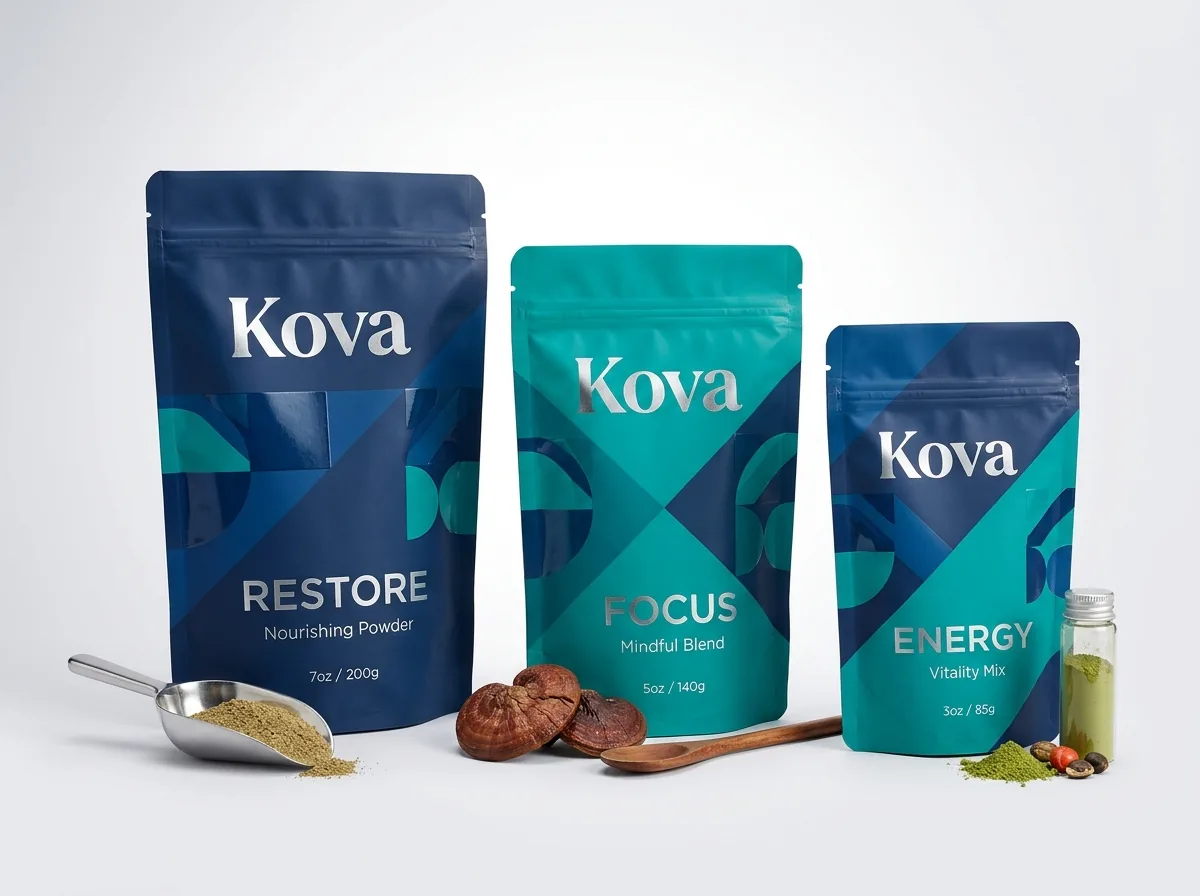
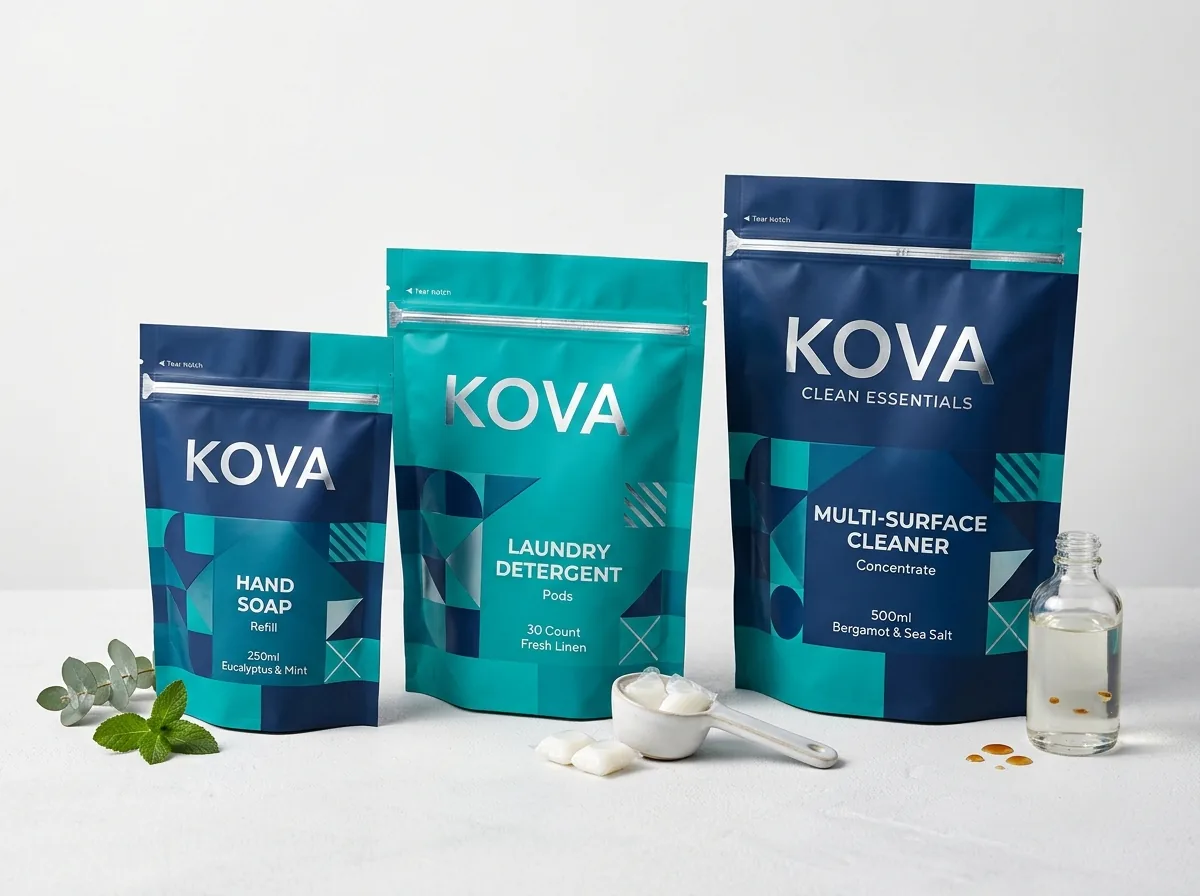
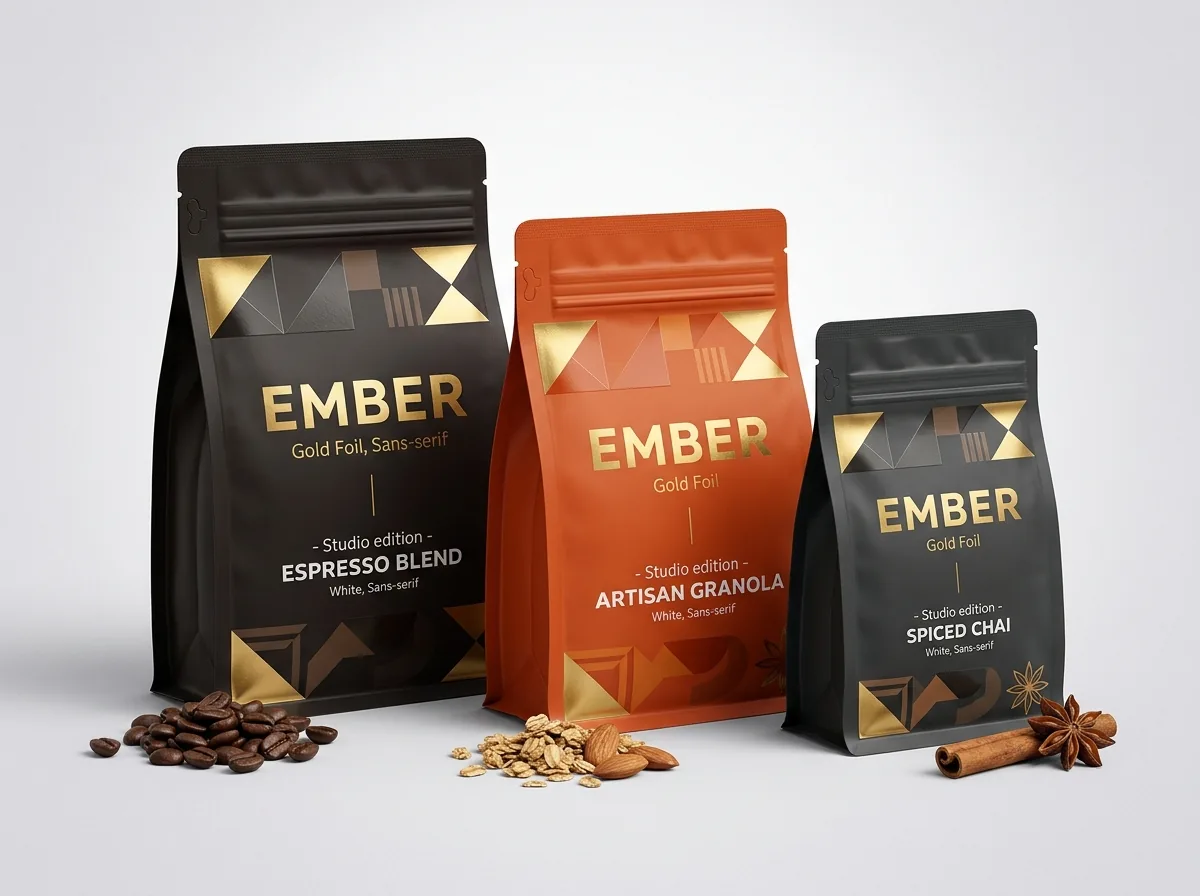
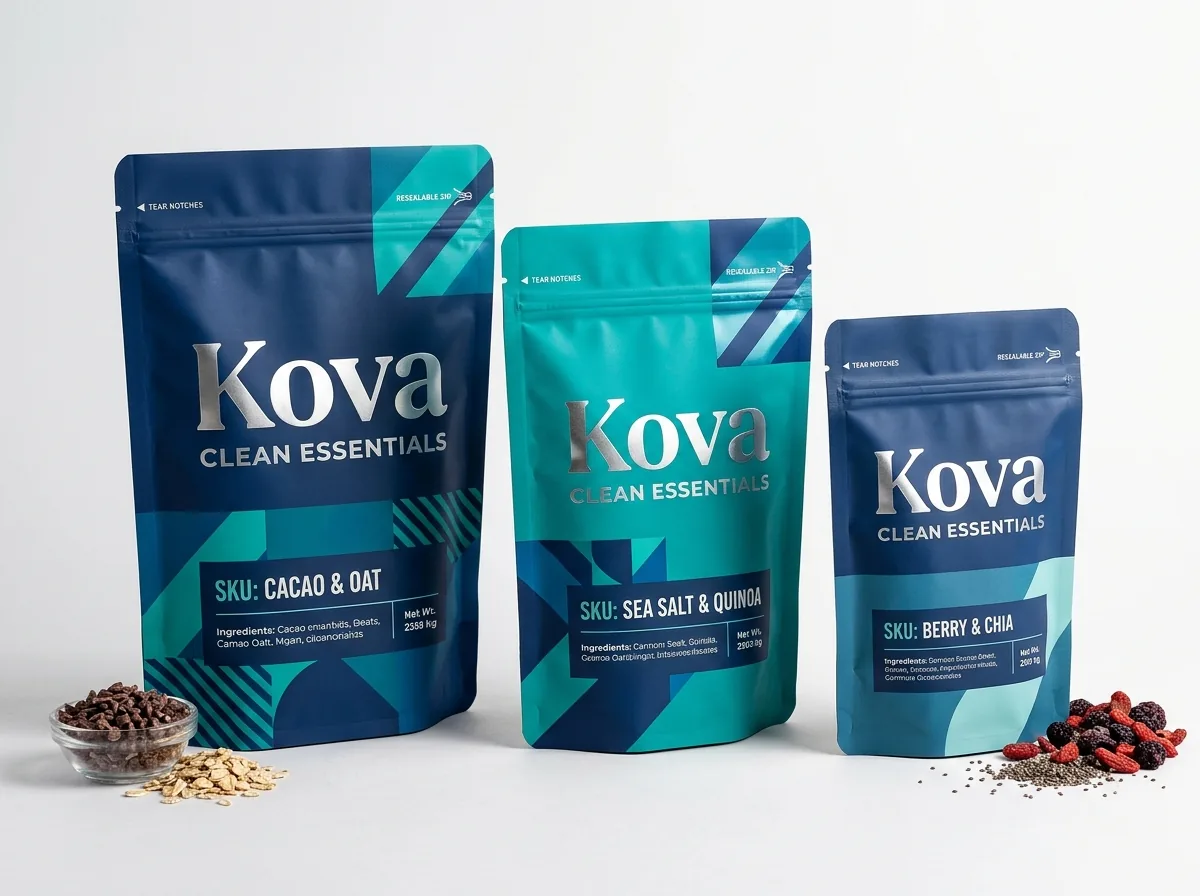
Ready to order mylar bags? Compare up to 3 quantities with a free 3D mockup.
Request a Quote →Questions about mylar bags
Are flat mylar pouches less expensive than stand-up mylar bags?
Yes. For the same outside width and height, a flat 3-side-seal mylar pouch uses less barrier film and fewer folding and sealing welds than a bottom-gusset stand-up bag, giving it a lower per-unit cost at the same run size.
Can a flat 3-side-seal mylar pouch have a resealable zipper?
Yes. Flat mylar pouches can be converted as tear-open single-use sachets with no zipper, or built with a press-to-close or child-resistant zipper track plus tear notches and a heat-sealable top header.
Do stand-up and flat mylar bags offer the same smell and moisture barrier?
Yes. Barrier performance comes from the multi-layer laminated film structure and the perimeter heat seal, which are identical whether the bottom of the pouch is flat-sealed or gusset-folded.
What is the minimum fill weight needed for a stand-up mylar bag to stand upright?
Most products need at least 1.5 to 2 oz of fill volume (or enough bulk to fill 60% of the pouch height) to push the bottom W-gusset open into a flat, stable footprint.
Can I quote both a stand-up bag and a flat sample pouch on the same order?
Yes. Mention both styles and sizes in your quote request, and your account manager will price both options side by side within 5-7 minutes during business hours.
Can I compare physical samples of stand-up and flat mylar bags before ordering?
Yes. You can order our $50 sample kit or a paid custom printed sample of your own pouch design, and both are credited toward your full production order.
Still have a question? Ask a packaging specialist.
Request a Quote →Request your mylar bags quote
Tell us your size and quantities, and one dedicated account manager prepares pricing for each tier.
- Free design & AI-to-print studio + 3D mockup
- No die or plate charges · 4–5 day rush available
- Free shipping to all 50 states
- 10% off your first order
The structural comparisons in this guide are based on standard Doypack bottom-gusset converting and 3-side-seal pouch engineering. A CubitPack packaging specialist reviewed every comparison row. Spot something wrong? Tell us and we will fix it.
What changed
- October 22, 2026: First published.
- October 22, 2026: Updated specifications, terminology, and verified source links.
More guides
New packaging guides by email
Sizes, materials and design tips. Unsubscribe anytime.