
Should you choose Pantone PMS spot ink or CMYK flood coats for custom colored mailer boxes?
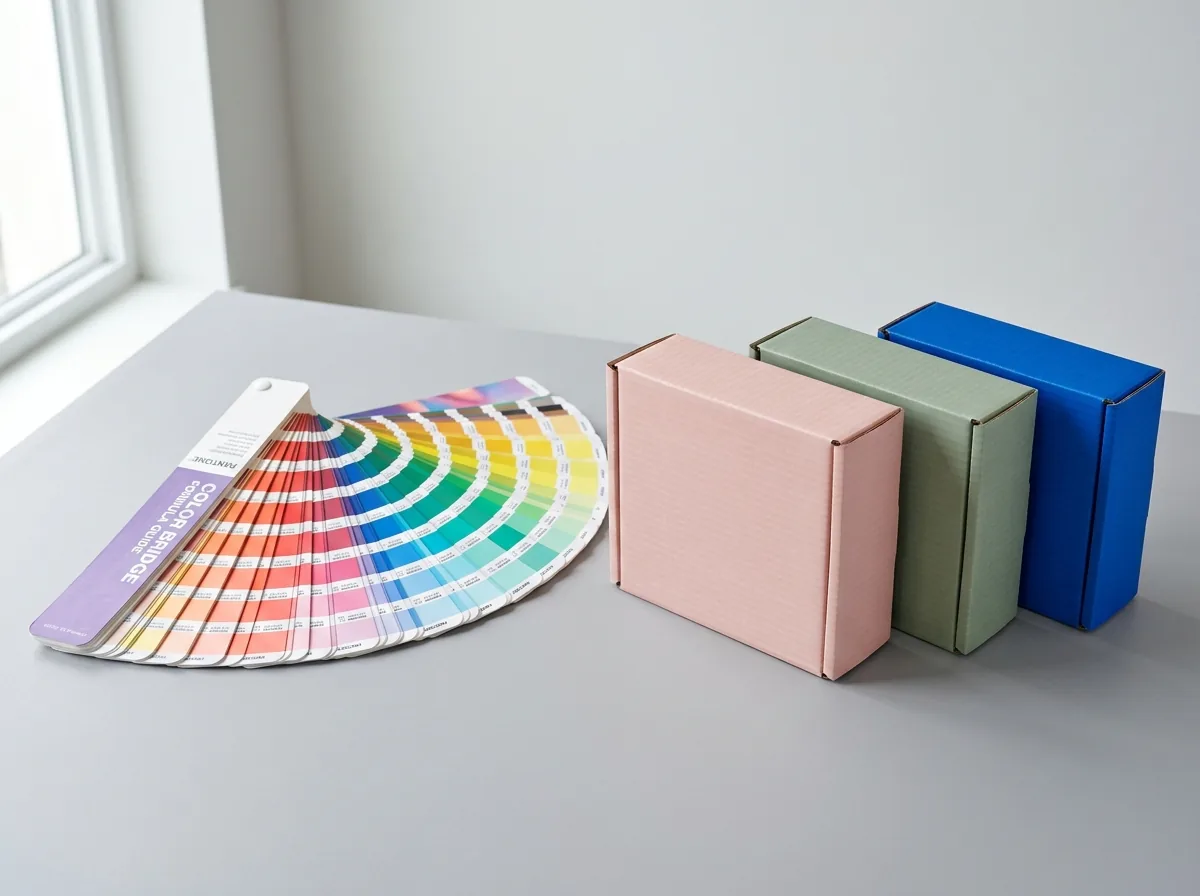
Short answer: Choose Pantone PMS spot ink when your mailer box relies on a single solid brand background color (such as blush pink, sage green, or robin's egg blue) requiring zero halftone dots and Delta-E under 2.0 across reorders; choose 4-color CMYK process when your artwork includes multi-color gradients, botanical illustrations, or photography.
On this page
- How do Pantone PMS spot flood coats compare to 4-color CMYK process on corrugated mailers
- How do you set up Pantone spot swatches and CMYK Total Area Coverage (TAC) in Illustrator
- How is Delta-E color accuracy measured across colored mailer box reorders
- How do you request a Pantone or CMYK colored mailer quote and 3D proof
- Common mistakes
- FAQs
Request a custom quoteFree dieline & 3D mockup
Selecting the right ink system for custom colored mailer boxes determines whether your doorstep parcel matches your digital brand guidelines or shifts across production runs. Pre-mixed Pantone Matching System (PMS) spot inks lay down a 100% continuous solid pigment film across a bleached white corrugated liner, eliminating halftone screen dots and holding spectrophotometer Delta-E color variance under 2.0 from batch to batch. Four-color CMYK process printing builds hues by overlapping microscopic Cyan, Magenta, Yellow, and Black dots, making it the cost-effective choice for multi-hue gradients, illustrations, and digital or offset runs from 250 boxes. When you request a quote from 250 units, CubitPack's prepress team evaluates your artwork and provides a free 2D vector CAD dieline and interactive 3D color proof before payment. Every production batch is checked under D50 standard lighting with a calibrated spectrophotometer to confirm that solid spot backgrounds, reversed knock-out white typography, and protective satin or matte overcoats hold uniform color density across the entire flat blank.
How do Pantone PMS spot flood coats compare to 4-color CMYK process on corrugated mailers?
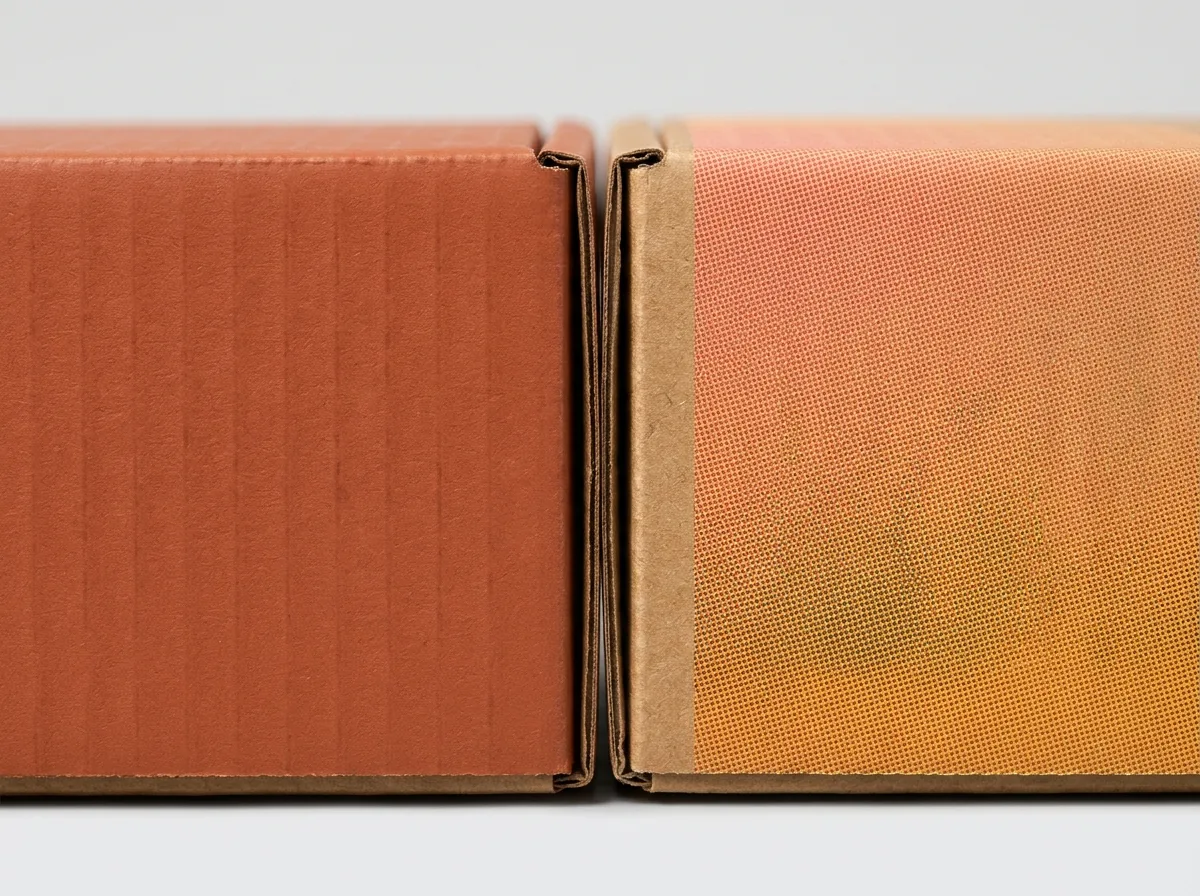
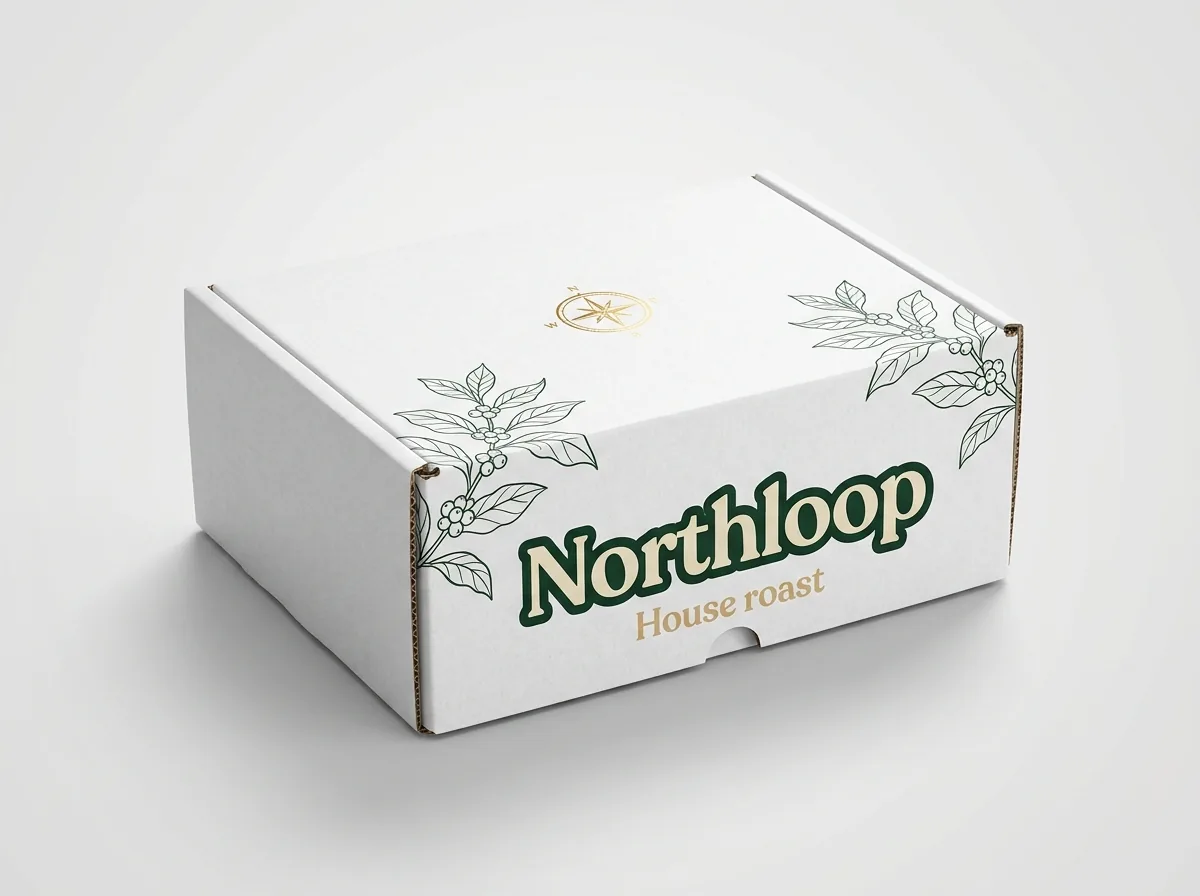
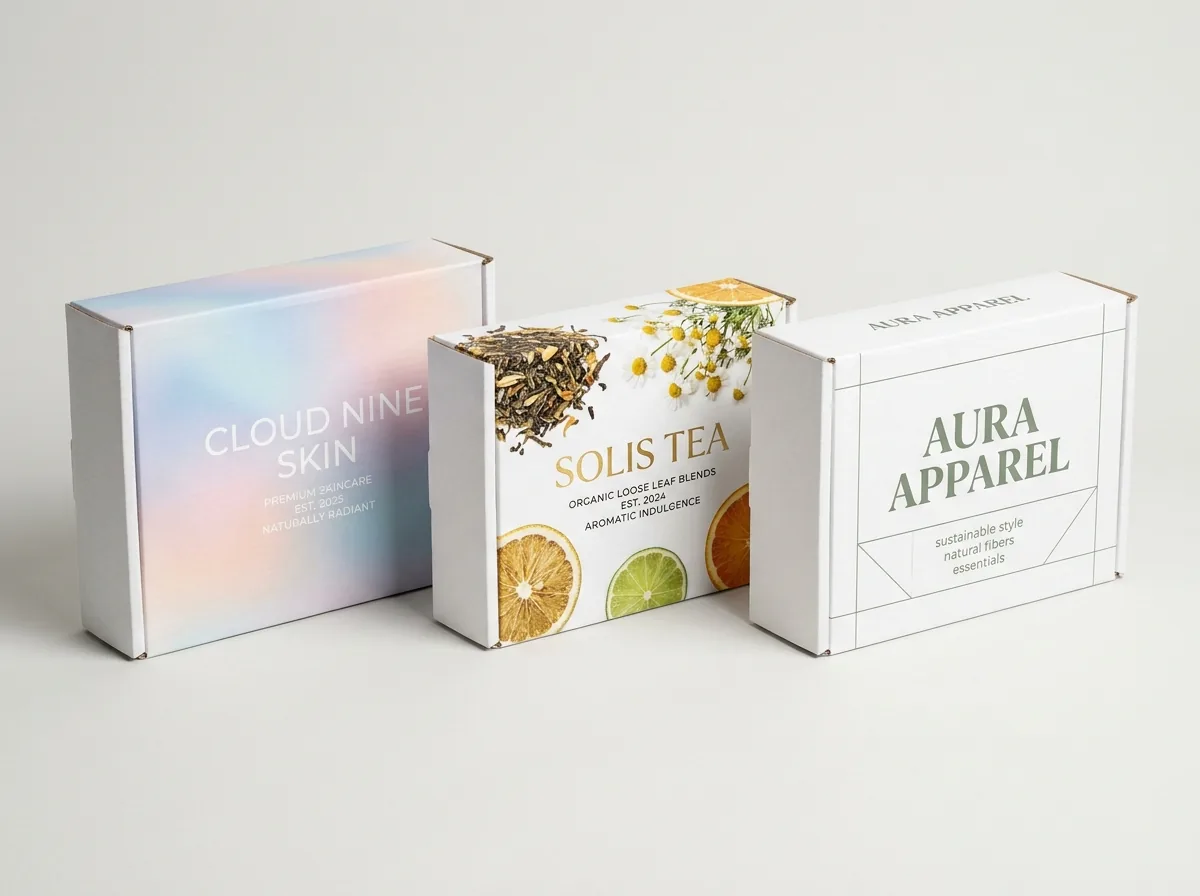
When printing edge-to-edge color across a FEFCO 0427 roll-end tuck-front blank for full-bleed colored mailer boxes, the difference between spot ink and process ink shows up in three places: solid area smoothness, batch-to-batch Delta-E stability, and special gamut reach (such as reflex blues, dusty pastels, and neons). Use this engineering comparison table to match your brand artwork to the optimal press method across custom subscription boxes, custom PR boxes, and custom cosmetic boxes: Notice how pastel tints behave differently under a loupe. A pale blush pink built from 4% Cyan, 18% Magenta, and 6% Yellow relies on widely spaced halftone dots; viewed at arm's length on a smooth Kemi white liner it looks clean, but a pre-mixed Pantone pastel spot ink covers 100% of the paper fibers with continuous pigment for a paint-like finish. In addition to solid area smoothness, evaluate how your brand typography and secondary graphics interact with the background ink film. On a Pantone PMS spot flood coat, the colored background is laid down by a single dedicated printing plate, which means reversed knock-out white text or fine line art only has to register against one ink unit. On a 4-color CMYK process flood coat, three or four separate plates (Cyan, Magenta, Yellow, and Black) overlap to build the background shade; keeping reversed white typography at 8 pt bold or larger ensures clean edge definition even across normal corrugated press sheet movement.
- Choose Pantone PMS Coated (C) swatches when your colored mailer will be finished with gloss lamination or UV coating, and Pantone PMS Uncoated (U) when pairing with matte lamination or aqueous satin seal.
- Choose 4-color CMYK process when your box combines 3 or more blended colors, watercolor washes, or full-color product photography.
- Choose a 5th-channel Pantone spot plate alongside CMYK when you need photographic imagery framed inside an unshifting signature brand color.
| Color engineering factor | Pantone PMS Spot Ink Flood | 4-Color CMYK Process Flood | Hybrid CMYK + 5th Spot Channel |
|---|---|---|---|
| Ink laydown structure | 100% solid continuous wet pigment film | Halftone screen rosette (150–175 LPI) | 100% solid background + halftone art |
| Batch Delta-E tolerance | Delta-E <= 2.0 against Pantone swatch | Delta-E <= 3.0–3.5 across press runs | Delta-E <= 2.0 on brand background |
| Pastel & pale tint smoothness | Zero visible dots; smooth paint-like tone | Light screen tint dots visible up close | Zero dots on background; crisp photos |
| Out-of-gamut colors | Reaches bright oranges, teals, and neons | Simulates within standard GRACoL gamut | Full CMYK gamut + exact brand spot hue |
| Best artwork application | 1- to 2-color solid flood + knockout logo | Multi-color gradients, murals & photos | Photographic SKU box with signature flood |
How do you set up Pantone spot swatches and CMYK Total Area Coverage (TAC) in Illustrator?
Whether your order runs as a spot-color flood or a 4-color CMYK build on our custom mailer boxes line, proper Adobe Illustrator swatch setup prevents unexpected color shifts and slow ink drying on press: When planning a multi-SKU product line where three or four box sizes share the same signature brand background color, or when matching a mailer box to an interior paperboard insert tray, Pantone PMS spot ink eliminates cross-run drift. Because spot ink is mixed by weight from base pigments before mounting on the press station, a small 6 x 4 x 2 in cosmetic mailer and a large 14 x 10 x 4 in apparel bundle box printed months apart will display the exact same hue, chroma, and lightness on the customer's porch. If your budget or artwork calls for 4-color CMYK process printing instead of a dedicated spot channel, ask our prepress team to lock in a master CMYK recipe on your 2D dieline proof (for example, specifying an exact 0C / 32M / 18Y / 0K build for warm blush pink) and keep the same bleached Kemi white outer liner and protective coating across every reorder.
- Assign official Pantone Solid Coated or Solid Uncoated library swatches to solid background layers rather than typing custom RGB or hex codes.
- When converting a Pantone hue to CMYK process, check the Pantone Color Bridge equivalent and keep Total Area Coverage (C+M+Y+K sum) below 260% to 280%.
- Set white logos and text over a colored flood coat to 'Knockout' (never Overprint Fill) so the bright white Kemi base liner shines cleanly through the ink layer.
- Extend all background flood plates a full 0.125 in to 0.25 in (3.2 to 6.0 mm) past every outer cut line and floor locking slot.
How is Delta-E color accuracy measured across colored mailer box reorders?
Brands shipping monthly custom subscription boxes or retail replenishment cartons need their boxes in November to match the boxes printed in May. Press operators measure color accuracy using an X-Rite spectrophotometer that calculates Delta-E (dE 2000), the numerical distance between the target L*a*b* color value and the printed sheet: Holding tight Delta-E tolerances also depends on controlling the optical brightness of the underlying corrugated top liner and the gloss level of the protective overcoat. Because laminating a 1.2 mil matte BOPP film over wet or dry ink lowers light reflectance and slightly softens dark saturation, the press operators measure L*a*b* values both wet at the press console and post-lamination so the finished box matches your approved target.
- Keep the same base liner specification (such as Kemi bleached white E-flute) across every reorder so substrate brightness never shifts your ink reading.
- Keep the same protective topcoat (aqueous satin vs matte BOPP lamination) across reorders, because changing from gloss to matte alters visual color depth.
- Save your approved digital press proof and Pantone callouts in your CubitPack account profile for one-click repeat runs.
| Delta-E (dE 2000) range | Visual perception to human eye | Production standard on colored mailers |
|---|---|---|
| dE < 1.0 | Imperceptible difference even side by side | Laboratory reference target |
| dE 1.0 – 2.0 | Barely perceptible under D50 booth lighting | Target for Pantone PMS spot flood coats |
| dE 2.0 – 3.5 | Minor warmth/coolness shift if held touching | Commercial tolerance for 4-color CMYK floods |
| dE > 4.0 | Visible shade shift across separate batches | Rejected by prepress quality check |
Know your size? Compare pricing across up to 3 quantities.
Request a Quote →How do you request a Pantone or CMYK colored mailer quote and 3D proof?
Pair this color-system guide with our companion guides on pastel, neon, and dark colored mailer box substrates and coatings and preventing scuffing, cracking, and color shift on colored mailer boxes. You can also check parcel dimensions in our box size calculator and dimensional weight calculator. Follow these four steps to launch your custom colored mailer boxes from 250 units: Every order is backed by our free prepress file audit, ensuring your spot channels, CMYK ink densities, knock-out white text, and 0.125 in bleeds are press-ready before production starts.
- Step 1: Enter your usable Inside Dimensions (L × W × H) and quantity (from 250 boxes) in CubitPack's quote form.
- Step 2: Share your target Pantone PMS swatch code or upload your CMYK artwork on our custom 2D vector CAD dieline.
- Step 3: Review your free interactive 3D digital color proof showing exterior, interior, and folded edges before payment.
- Step 4: Approve your proof for 10–14 business day production (4–5 day rush) with zero die or plate fees and free US shipping.
What 5 prepress and production mistakes happen most often on colored mailers?
Our prepress engineers audit every file before plating, catching and fixing these five common colored mailer box mistakes
- Submitting RGB hex codes for a signature brand color without specifying whether to match Pantone PMS spot ink or convert to 4-color CMYK.
- Using a 4-channel CMYK build exceeding 300% Total Area Coverage for dark navy or espresso flood coats, leading to slow drying and crease cracking.
- Comparing an unlaminated paper swatch against a matte BOPP laminated mailer box without accounting for the soft matte sheen shift.
- Setting knock-out white logos over a Pantone spot flood to Overprint Fill, causing the white logo to vanish on press.
- Ordering a pale pastel tint on unbleached brown kraft board instead of specifying a bleached white Kemi outer liner.
Packaging for this
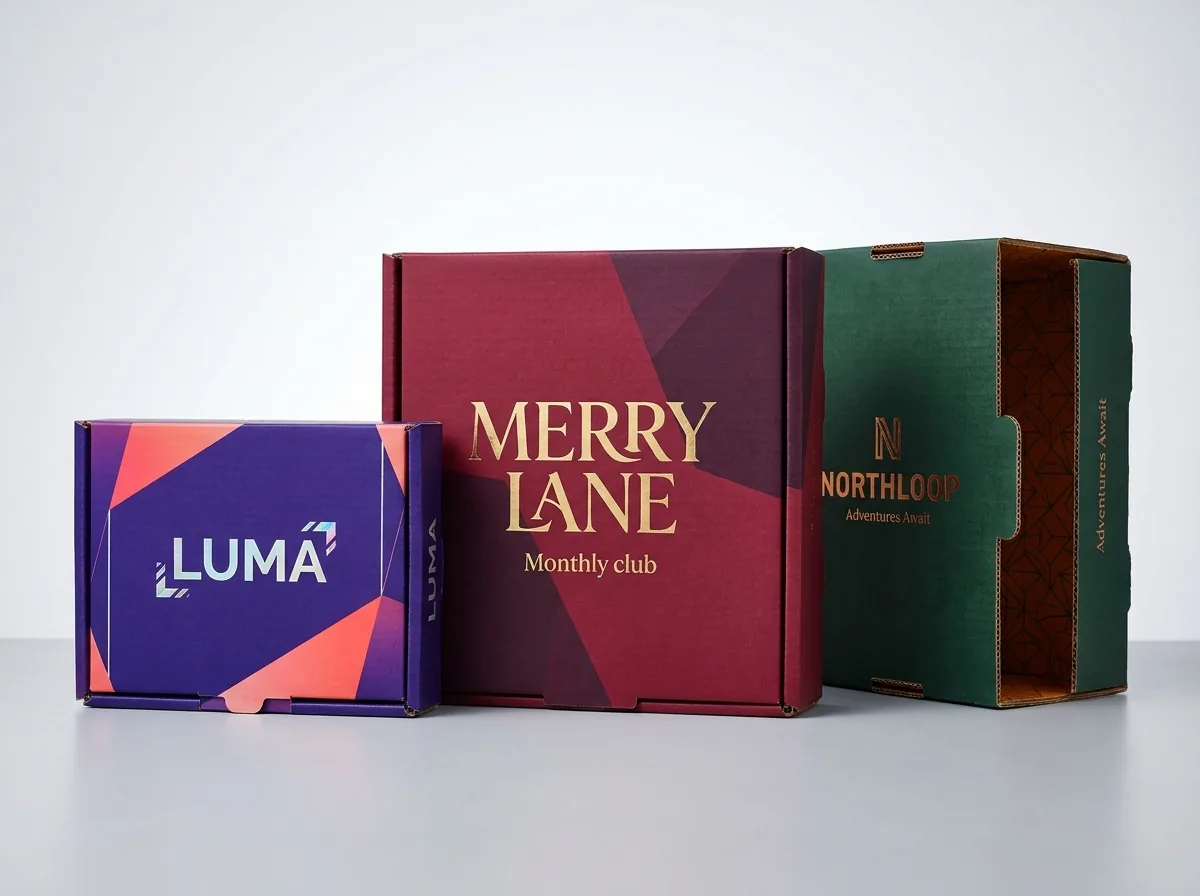
Ready to order colored mailer boxes? Compare up to 3 quantities with a free 3D mockup.
Request a Quote →Questions about colored mailer boxes
When should I choose Pantone PMS spot ink instead of 4-color CMYK for colored mailer boxes?
Choose Pantone PMS spot ink whenever your mailer box features a single solid signature background color and you want zero halftone dots and strict Delta-E under 2.0 consistency across reorders. Choose CMYK when your design includes multi-color gradients, illustrations, or photography. Every order includes a free 2D vector CAD dieline and interactive 3D digital proof before payment.
What Delta-E color tolerance can I expect on corrugated mailer flood coats?
Pantone PMS spot flood coats on bleached white Kemi linerboard are held to a commercial target of Delta-E under 2.0, while 4-color CMYK process flood coats are held to Delta-E under 3.5. Every order includes a free 2D vector CAD dieline and interactive 3D digital proof before payment.
Why do light pastel CMYK builds sometimes show visible halftone dots on corrugated board?
In 4-color CMYK printing, pale tints are created by printing tiny Cyan, Magenta, and Yellow dots spaced across the white paper. A pre-mixed Pantone pastel spot ink prints at 100% solid coverage, eliminating halftone dots completely. Every order includes a free 2D vector CAD dieline and interactive 3D digital proof before payment.
Can I combine a Pantone 5th-channel flood coat with CMYK product photography?
Yes. Multi-station offset litho-laminated presses can run four CMYK channels for your full-color photography plus a 5th Pantone spot channel for an unshifting solid brand background flood. Every order includes a free 2D vector CAD dieline and interactive 3D digital proof before payment.
Does CubitPack check my Pantone and CMYK swatches before printing?
Yes. Every order from 250 boxes includes a free prepress color audit, a custom 2D vector CAD dieline, and a free interactive 3D digital color proof before payment. Every order includes a free 2D vector CAD dieline and interactive 3D digital proof before payment.
Still have a question? Ask a packaging specialist.
Request a Quote →Request your colored mailer boxes quote
Tell us your size and quantities, and one dedicated account manager prepares pricing for each tier.
- Free design & AI-to-print studio + 3D mockup
- No die or plate charges · 4–5 day rush available
- Free shipping to all 50 states
- 10% off your first order
We verified FEFCO 0427 full-bleed blank geometry, Pantone PMS vs CMYK Delta-E tolerances, bleached Kemi white vs brown kraft optical brightness, and TAPPI T 830 Sutherland Rub test standards against FEFCO Case Code standards and Fibre Box Association (FBA) guidelines. Spot something wrong? Tell us and we fix it.
Sources
What changed
- November 11, 2026: First published with comparative specification tables, SVG engineering diagrams, and prepress checklist.
More guides
New packaging guides by email
Sizes, materials and design tips. Unsubscribe anytime.