
How do you print pastel CMYK gradients, photography, and anti-scuff finishes on custom white mailer boxes?
Short answer: Print pastel gradients, skin tones, and full-color CMYK photography on clay-coated white corrugated mailer boxes in CMYK color mode at 300 DPI with 0.125-inch outer bleed. Add matte or gloss film lamination when shipping directly through USPS, UPS, or FedEx so rubber conveyor marks wipe off easily.
On this page
- How do uncoated white, matte lamination, gloss lamination, and soft-touch film compare on white mailer boxes
- Why does clay-coated white linerboard outperform standard mottled white board for fine gradients and photos
- How do you set up outside and inside printing on a FEFCO 0427 white mailer dieline
- How do you finalize your custom white mailer box artwork in 4 steps
- Common mistakes
- FAQs
Request a custom quoteFree dieline & 3D mockup
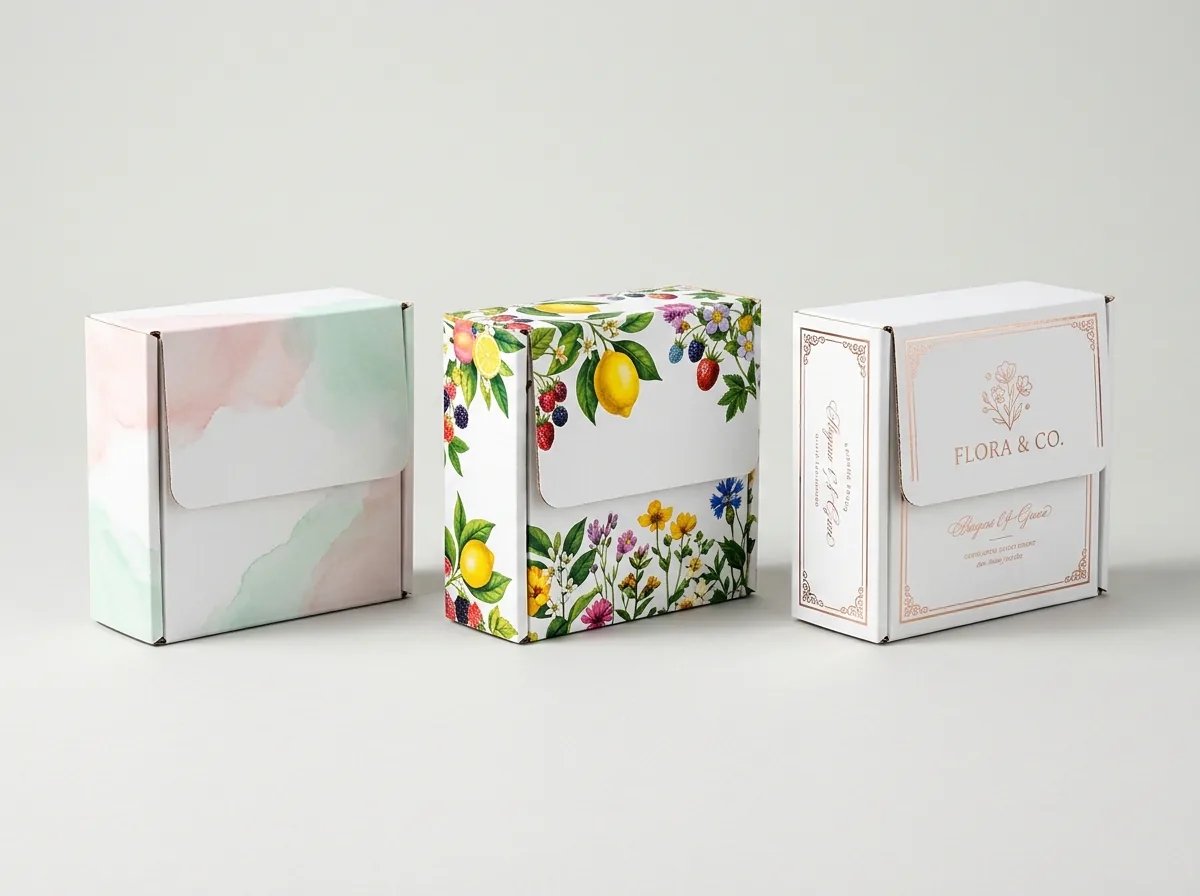
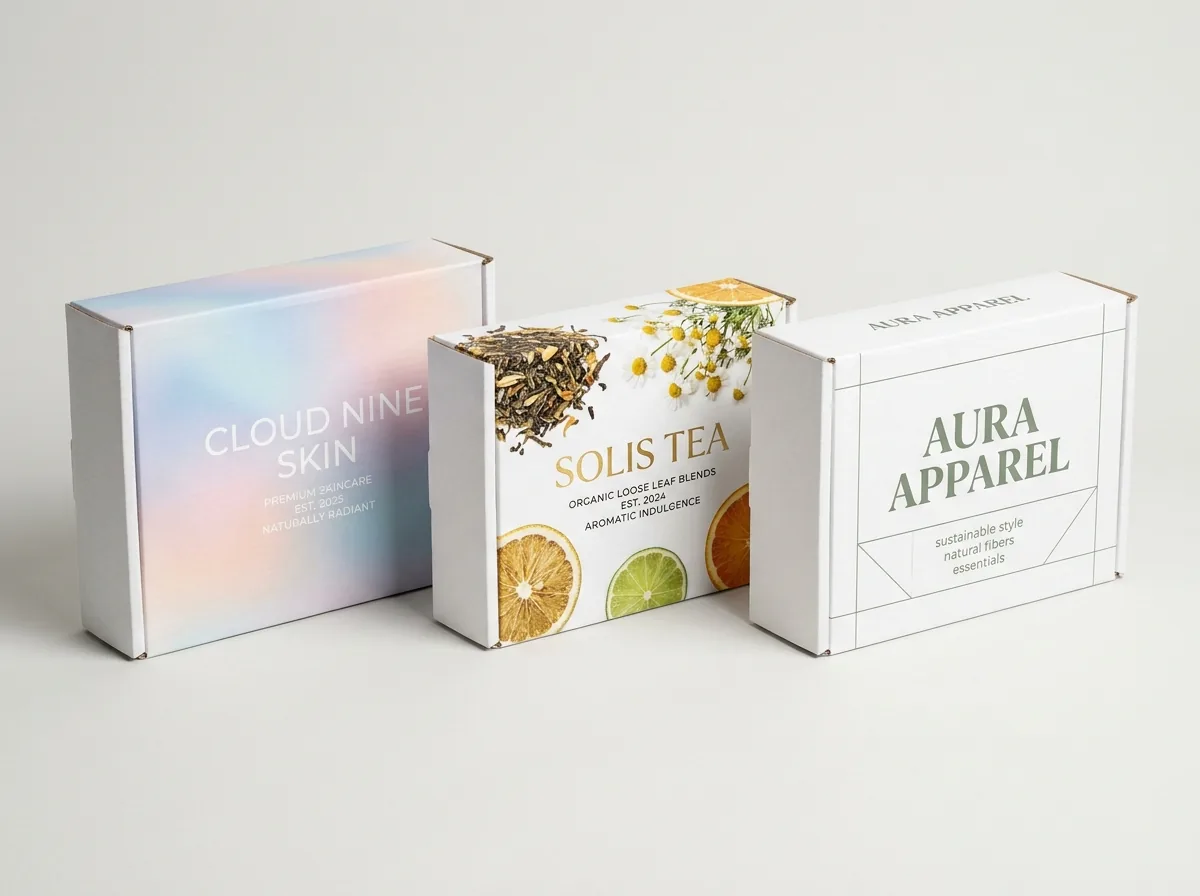
Preparing print-ready artwork for custom white mailer boxes gives designers complete freedom across the entire CMYK and Pantone color spectrum. Because standard four-color process inks (Cyan, Magenta, Yellow, and Key/Black) are translucent, they rely on the paper surface underneath acting as a white light reflector. Unlike unbleached brown kraft board that absorbs blue wavelengths and shifts light tints muddy tan, bleached and clay-coated white corrugated linerboard (rated at 82 to 88+ TAPPI brightness) reflects light evenly across every wavelength. That optical purity preserves delicate 5% to 20% pastel tints, clinical skincare typography, and studio product photography. Every order from 250 units at CubitPack includes a free prepress check, custom 2D CAD dieline, and interactive 3D digital proof before payment. When artwork includes both exterior pastel backgrounds and high-density interior graphics, specifying two-sided lithography on clay-coated white-inside/white-outside E-flute prevents moisture curl and keeps registration within 0.5 mm across every fold line and locking tab.
How do uncoated white, matte lamination, gloss lamination, and soft-touch film compare on white mailer boxes?
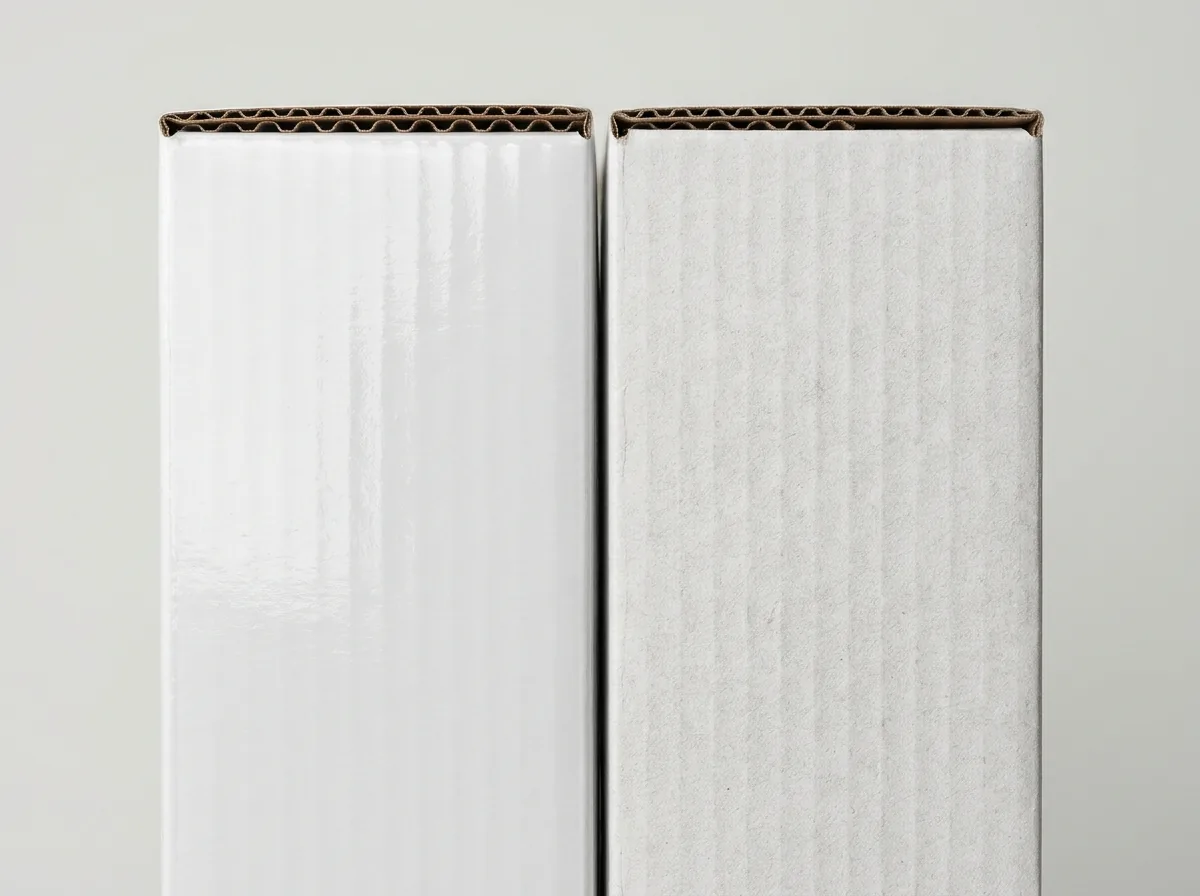
Compare the four surface and coating setups available on printed white mailer boxes, custom cosmetic boxes, and custom subscription boxes: Choosing the right coating over your white outer linerboard determines both how vibrant your CMYK colors look under indoor lighting and how cleanly the box survives parcel sorting hubs. While an uncoated white liner works well for minimalist logos or poly-bagged shipments, adding a thin BOPP lamination film seals the mineral clay coating against moisture, rain splashes, and rubber diverter belts: When evaluating press proofs for pastel CMYK builds, always view the printed clay-coated sheet under standardized D50 (5000K) daylight lighting before signing off on bulk lamination. Warm office lighting can make pale blush, cream, and lavender tints appear richer than they actually measure on a spectrophotometer, whereas D50 illumination reveals whether a 10% cyan or magenta screen has enough dot density to hold up after matte film lamination softens its contrast. If a pastel tint looks slightly washed out under D50 light prior to lamination, increasing the dominant tint channel by 3% to 4% or converting the background flood to a dedicated solid Pantone ink guarantees uniform shelf presence across every production lot.
- Convert all RGB files to CMYK before uploading: Neon screen blues and fluorescent RGB pinks outside the CMYK gamut will shift softer unless you specify a dedicated Pantone spot ink.
- Keep delicate pastel tints between 8% and 25% total ink density: On clay-coated white board, a 10% Magenta / 5% Yellow blush tint prints smoothly without disappearing into the paper grain.
- Embed 300 DPI raster photography at 1:1 print scale: Low-resolution 72 DPI web graphics will look pixelated when stretched across a 10 x 8 inch mailer lid.
| White mailer surface finish | Visual sheen & tactile feel | Postal scuff & moisture defense | Best graphic & ink style | Top D2C category fit |
|---|---|---|---|---|
| Matte Laminated White Board | Smooth, low-glare satin gallery finish | High - conveyor rub marks wipe off cleanly | Pastel gradients, clinical type, Spot UV accents | Skincare, wellness clubs, modern apparel |
| Gloss Laminated White Board | High-shine mirror coat that boosts color pop | Highest - repels rain, condensation & dirt | Full-bleed photography, saturated food & beauty art | Cosmetics, gourmet gift baskets, beverage kits |
| Soft-Touch Laminated White Board | Velvety, petal-soft ultra-matte luxury texture | High - resists fingerprints and chute abrasion | Rose-gold/gold hot foil, blind embossing, pastel art | VIP influencer PR kits, luxury beauty, jewelry |
| Uncoated Bleached White Board | Natural matte paper feel with zero plastic film | Moderate - best for light ink coverage or poly-bagged | 1- to 2-color Pantone logos, botanical illustrations | Eco-conscious apparel, stationery, books, tea |
Why does clay-coated white linerboard outperform standard mottled white board for fine gradients and photos?
Not all white corrugated boxes use the same outer paper sheet. When specifying white corrugated mailer boxes for custom PR boxes or custom ecommerce boxes, understanding how the top white liner is manufactured explains why high-resolution lithography and digital printing look so sharp
- Clay-Coated White Linerboard (Kemi / CCNB): A bright bleached cellulose sheet sealed with a microscopic mineral kaolin clay coating and calendered between polished steel rollers. Because the clay fills in the microscopic valleys between wood fibers, halftone ink dots sit on top of the surface rather than soaking in, producing magazine-grade gradients and razor-sharp 6 pt typography.
- Standard Mottled or Uncoated Bleached White: Bleached white wood pulp without a mineral clay topcoat. It offers a natural, toothy paper texture that works well for bold vector logos and geometric patterns.
- Zero Underlying Flute Washboarding on E-Flute: Pairing a clay-coated white outer liner with closely spaced 1/16-inch E-flute (90 flutes per linear foot) eliminates the ribbed 'washboard' striping often seen on coarse shipping cartons.
How do you set up outside and inside printing on a FEFCO 0427 white mailer dieline?
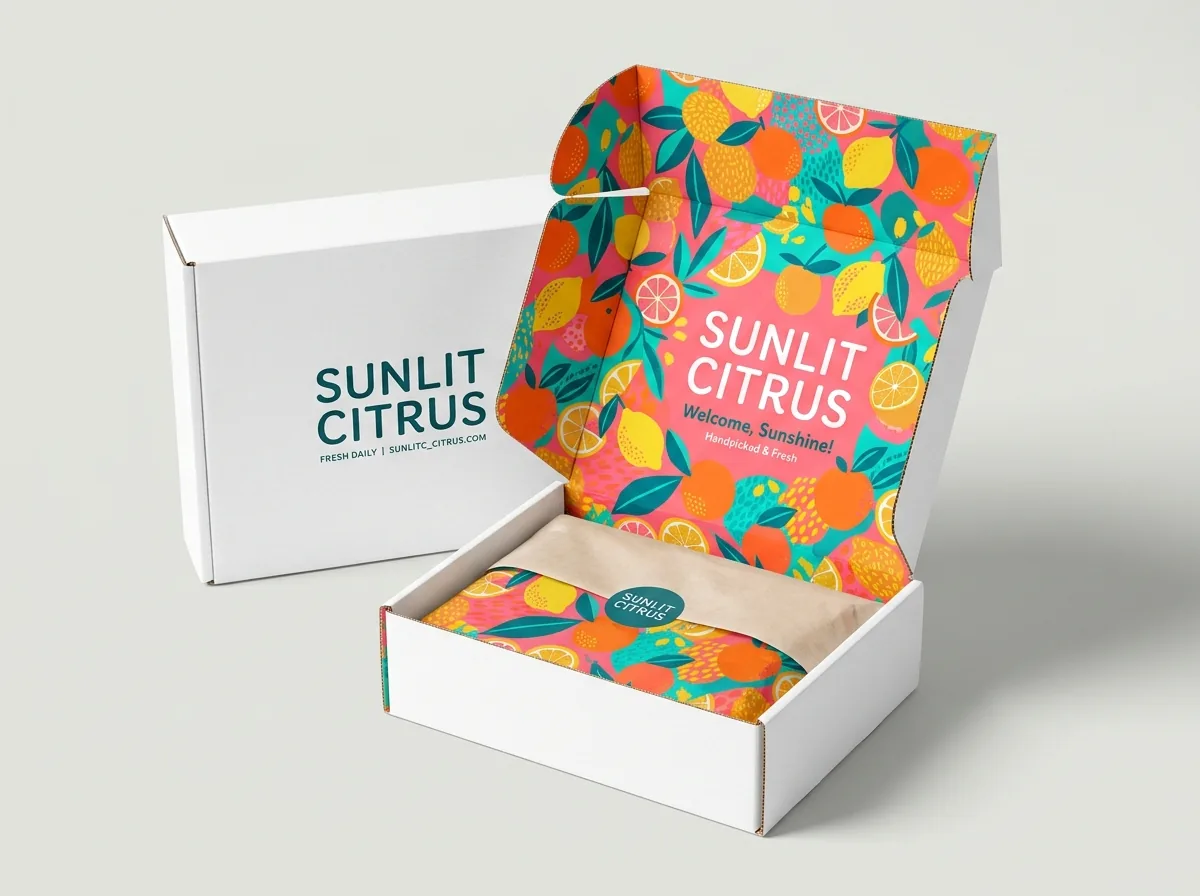
One of the most popular unboxing formats across custom unboxing boxes and custom printed inside mailer boxes is a minimalist white exterior paired with a full-bleed colorful interior. Because the outer white lid keeps branding subtle on the customer's porch while the inner cavity explodes with color when opened, setting up your two-artboard CAD file properly is essential. Follow these prepress specifications across your OUTSIDE_PRINT and INSIDE_PRINT layers: Beyond exterior scuff defense, laminating the printed outer liner also stabilizes the paper fibers along the 90-degree score lines of the hinged lid and dust flaps. Uncoated or aqueous-coated sheets folded across the grain with heavy 200%+ CMYK ink coverage can occasionally show micro-fractures exposing the white paper fibers underneath, whereas a 18-micron matte or soft-touch BOPP film bridges the crease and stretches smoothly around the fold without cracking. For two-sided prints where the interior is flooded with dark brand colors, adding an interior aqueous satin seal prevents ink rub-off against white tissue paper, garment bags, or frosted cosmetic jars during parcel vibration.
- Keep the 6 bottom floor locking slots clear of tiny text: The rolled side wall tabs click into three rectangular slots along each side of the floor.
- Leave a 4.25 x 6.25 in flat zone on the bottom exterior for carrier labels: Standard 4 x 6 in USPS, UPS, and FedEx thermal labels blend cleanly onto white mailer bases.
- Download starter dielines or request a custom CAD file: Explore our dieline templates or request a custom size in our quote form.
| Prepress parameter | White mailer specification | Why it matters on press |
|---|---|---|
| Outer bleed extension | 0.125 in to 0.25 in (3.18 to 6.35 mm) past cut lines | Prevents unprinted white edge slivers on full-bleed lids |
| Inner score-line safe zone | 0.25 in (6.35 mm) clear of all creases and slots | Keeps logos, text, and QR codes off 90/180-deg folds |
| Minimum typography size | 6 pt positive dark ink / 8 pt reverse knock-out text | Clay-coated white holds finer serifs than porous kraft |
| Minimum line stroke weight | 0.5 pt positive stroke / 0.75 pt reverse knock-out | Ensures delicate botanical line art prints unbroken |
| Inside lid artwork orientation | Point top of interior lid graphic toward front tuck lip | Reads right-side up when customer hinges the lid open |
Know your size? Compare pricing across up to 3 quantities.
Request a Quote →How do you finalize your custom white mailer box artwork in 4 steps?
Combine this prepress walkthrough with our comparison of white mailer boxes vs kraft and black mailer boxes, our sizing guide on white mailer box sizes, flute options, and inserts, and our parent tutorial on roll-end tuck-front mailer box dielines explained: Every order at CubitPack includes a complimentary prepress audit where our specialists inspect your CMYK ink percentages, image resolution, and inside-lid orientation before generating your 3D proof: Finally, double-check that all barcodes, QR codes, and small regulatory typography on the bottom panel are set in 100% black-only (0C/0M/0Y/100K) rather than four-color rich black, and positioned at least 6 mm away from score lines and slot cutouts. Keeping fine linework on a single black plate prevents multi-channel registration blur on high-speed offset presses and ensures warehouse optical scanners read every SKU code on the first pass.
- Step 1: Set your Illustrator or PDF document to CMYK color mode, embed all raster photos at 300 DPI, and convert all typography to vector outlines.
- Step 2: Extend background colors and patterns 0.125 inches past all outer cut lines and keep logos 0.25 inches inside score lines.
- Step 3: Choose matte, gloss, or soft-touch lamination if your white mailer ships directly through parcel carriers without an outer poly bag.
- Step 4: Upload your artwork in CubitPack's quote form (from 250 boxes) to receive a free prepress check and interactive 3D digital proof before payment.
What printing and prepress mistakes happen most often on custom white mailer boxes?
Avoid dull RGB color shifts, scuffed unlaminated lids, and upside-down interior messages by preventing these five prepress errors
- Uploading artwork in RGB color mode with neon screen colors instead of converting to CMYK or specifying Pantone spot inks before proofing.
- Skipping matte or gloss lamination on a mostly unprinted white mailer that ships nationwide without an outer poly bag, leaving the white paper exposed to rubber conveyor belt marks.
- Orienting the inside lid welcome graphic in the same direction as the outside lid on the flat CAD sheet, which causes the interior print to appear upside down when opened.
- Stopping full-bleed background colors exactly on the blue cut line instead of extending 0.125 inches into the bleed zone, which can leave a thin white hairline along the edge.
- Placing 72 DPI web screenshots on the lid instead of 300 DPI print-resolution photography or vector illustrations.
Packaging for this
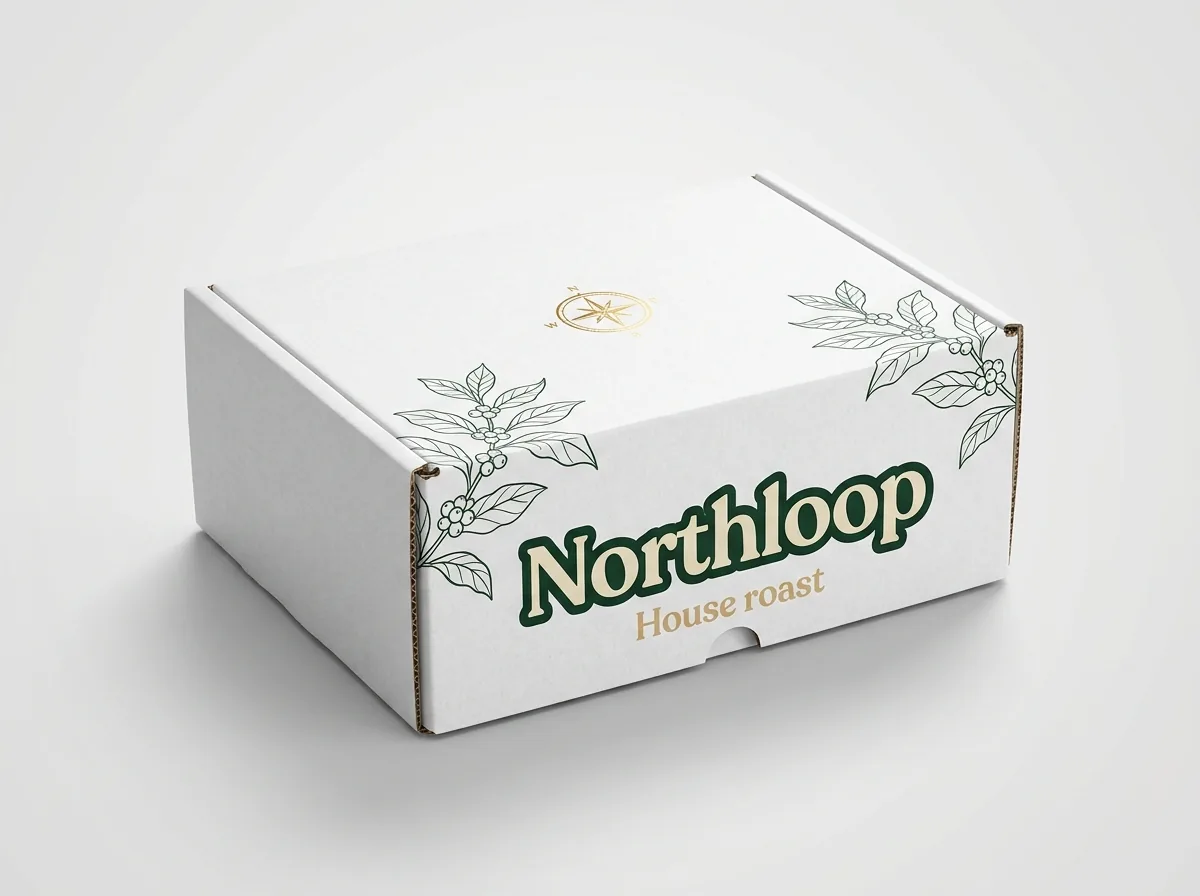
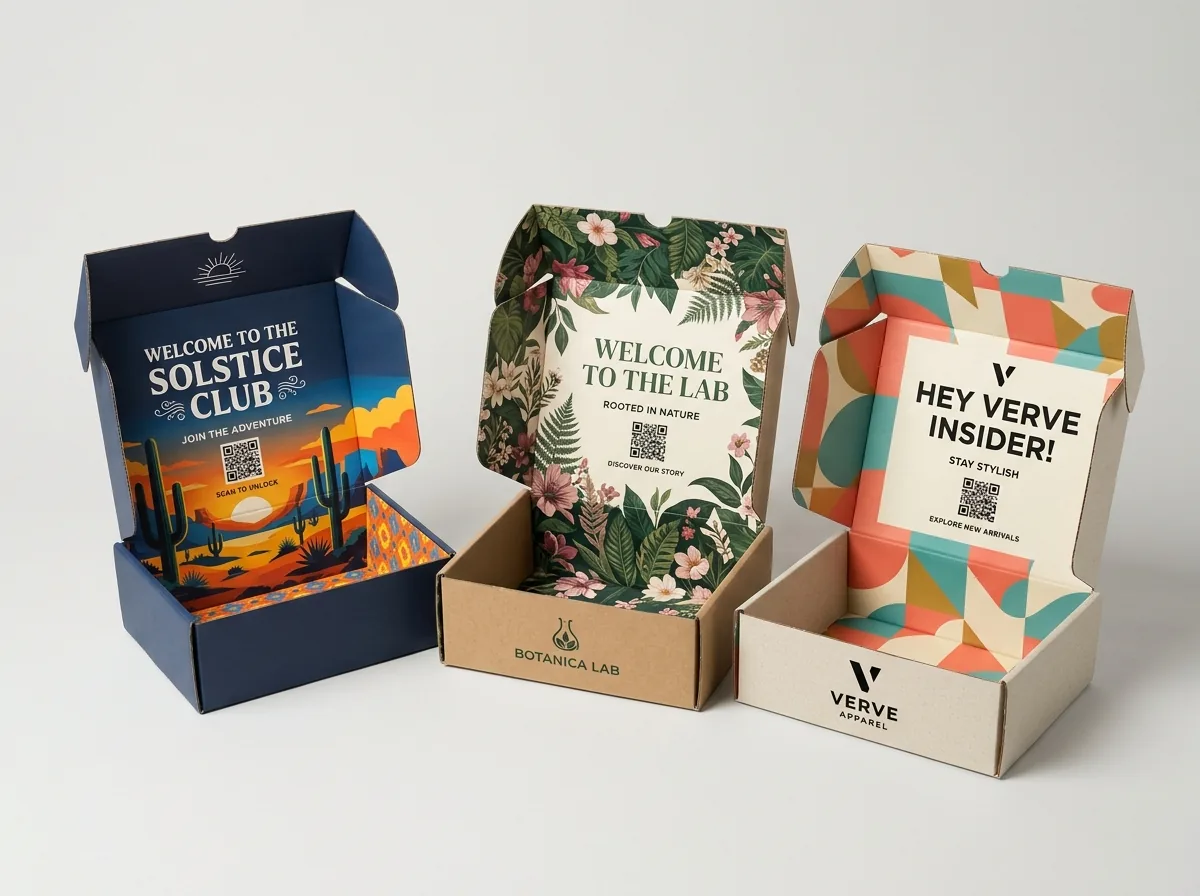
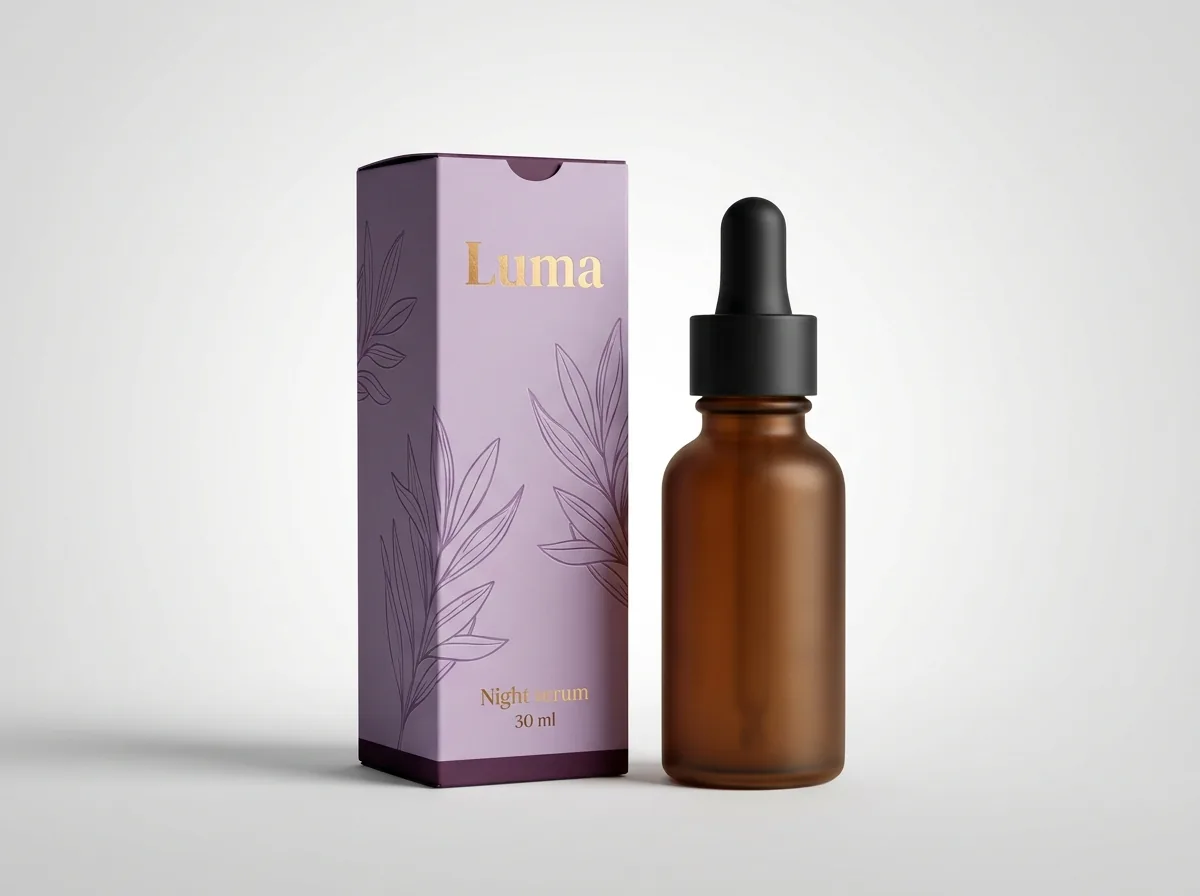
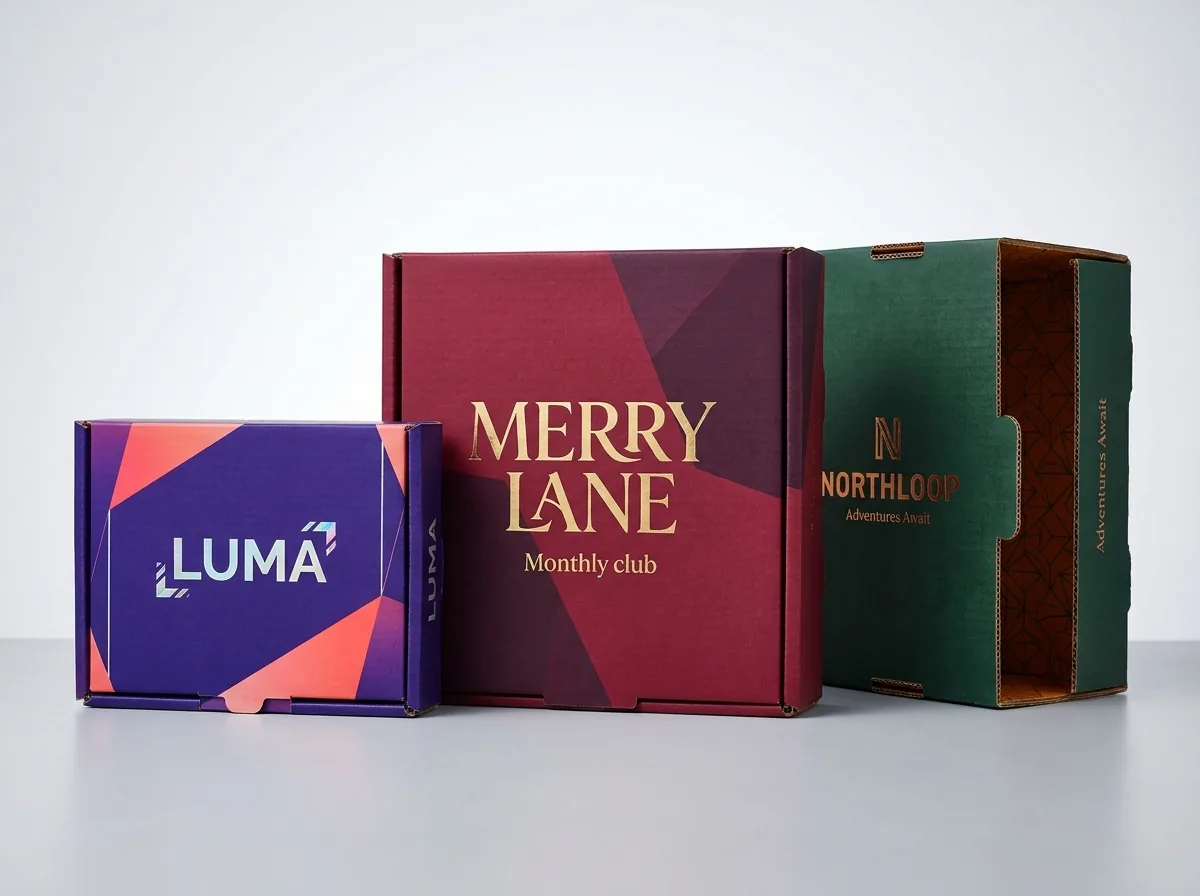
Ready to order white mailer boxes? Compare up to 3 quantities with a free 3D mockup.
Request a Quote →Questions about white mailer boxes
Why do pastel colors and photographs look brighter on white mailer boxes than on kraft?
CMYK inks are translucent and depend on white light reflecting back from the paperboard beneath the ink. Clay-coated white linerboard (82–88+ TAPPI brightness) reflects full-spectrum light evenly without the warm brown cast of unbleached kraft, keeping soft blush pinks, mint greens, sky blues, and skin tones true to screen.
Should I choose matte or gloss lamination on my custom white mailer boxes?
Choose matte lamination for a modern, low-glare gallery finish that pairs beautifully with pastel skincare and apparel branding. Choose gloss lamination for maximum color vibrancy, moisture resistance, and photographic depth. Both protect white boxes from postal sorting scuffs. On bleached clay-coated white liners, keeping total ink coverage between 240% and 280% prevents slow drying, sheet blocking, and crease cracking while still delivering a deep, uniform dark flood across the outer and inner panels.
How do I orient artwork on the inside lid of a white mailer box?
On a flat FEFCO 0427 dieline where the front tuck lip sits at the top of the drawing, orient your inside lid artwork with its top edge pointing toward the front tuck lip so it reads right-side up when the customer lifts the lid.
Can I add metallic foil or Spot UV to a custom white mailer box?
Yes. Hot-stamped gold, rose-gold, silver, or holographic foil and selective high-gloss Spot UV look striking against matte or soft-touch laminated white mailer boxes. On bleached clay-coated white liners, keeping total ink coverage between 240% and 280% prevents slow drying, sheet blocking, and crease cracking while still delivering a deep, uniform dark flood across the outer and inner panels.
Does CubitPack check my white mailer artwork before I pay?
Yes. Every order from 250 boxes includes a free prepress review of your CMYK colors, resolution, bleed, and panel orientation, plus a custom 2D CAD dieline and interactive 3D digital proof before payment. On bleached clay-coated white liners, keeping total ink coverage between 240% and 280% prevents slow drying, sheet blocking, and crease cracking while still delivering a deep, uniform dark flood across the outer and inner panels.
Still have a question? Ask a packaging specialist.
Request a Quote →Request your white mailer boxes quote
Tell us your size and quantities, and one dedicated account manager prepares pricing for each tier.
- Free design & AI-to-print studio + 3D mockup
- No die or plate charges · 4–5 day rush available
- Free shipping to all 50 states
- 10% off your first order
We verified bleached and clay-coated white linerboard optical reflectance (TAPPI T 452), halftone pastel dot reproduction, BOPP film lamination scuff resistance, and FEFCO 0427 two-sided dieline orientation rules against TAPPI standards, FEFCO Case Code specifications, and Fibre Box Association (FBA) prepress manuals. Spot something wrong? Tell us and we fix it.
Sources
What changed
- November 11, 2026: First published with 4-finish comparison table on white mailers, clay-coated vs mottled white linerboard breakdown, and two-sided CMYK prepress rules.
More guides
New packaging guides by email
Sizes, materials and design tips. Unsubscribe anytime.