
How do you choose between paperboard card, E-flute corrugated, EVA foam, and EPE foam inserts for custom mailer boxes?
Short answer: Choose 18–24 pt folded paperboard card for cosmetics and tubes under 8 oz, 32 ECT E-flute corrugated cradles for glass bottles and jars up to 3.5 lb requiring 100% curbside recyclability, high-density EVA foam for luxury PR kits and fragile flacons, or closed-cell EPE foam for heavy electronics.
On this page
- How do paperboard card, E-flute corrugated, EVA foam, and EPE foam inserts compare side by side
- When should you choose curbside recyclable paperboard or E-flute corrugated inserts
- How do EVA foam and EPE foam inserts work, and why add a printed card or velvet topper
- How do you finalize your mailer box and insert material specification in 4 steps
- Common mistakes
- FAQs
Request a custom quoteFree dieline & 3D mockup
Selecting the right interior insert material for custom mailer boxes with inserts comes down to four engineering variables: individual SKU weight, glass or electronic fragility, warehouse storage space, and whether your brand requires 100% curbside paper recyclability. Folded 18–24 pt paperboard card and die-cut 32 ECT E-flute corrugated inserts ship completely flat alongside your flat FEFCO 0427 mailer blanks, fold into rigid 3D trays in seconds without tape, print edge-to-edge in CMYK or metallic foil, and go straight into residential paper recycling bins. Closed-cell EVA foam (38–70 kg/m³) and EPE polyethylene foam (25–35 kg/m³) arrive pre-laminated to a solid bottom cushion pad, grip bottles and devices by gentle −0.5 mm to −1.0 mm compression friction, and absorb repeated multi-drop parcel shocks across USPS, UPS, and FedEx networks. In CubitPack's quote form (from 250 sets), we co-engineer both the outer mailer and the insert on one shared CAD file with free US shipping.
How do paperboard card, E-flute corrugated, EVA foam, and EPE foam inserts compare side by side?
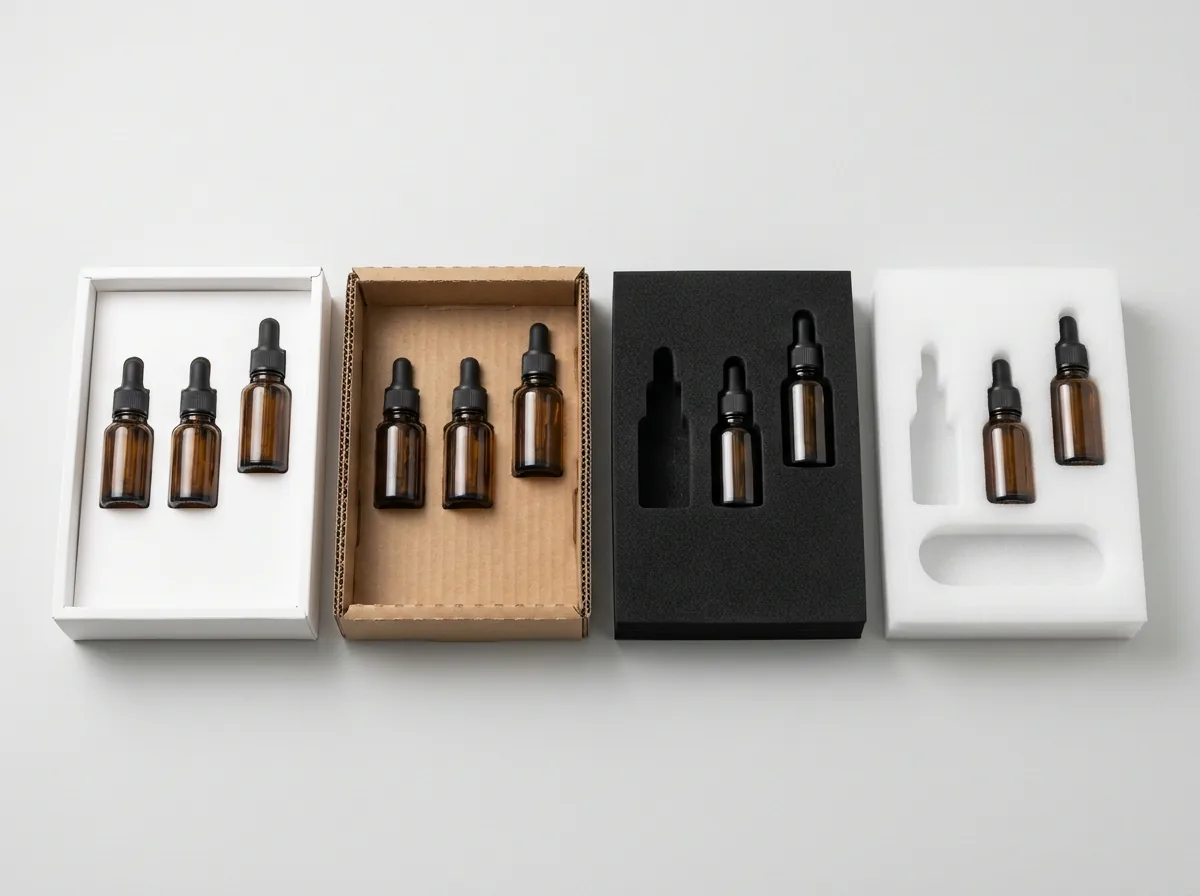
Every insert inside a FEFCO 0427 roll-end tuck-front mailer serves two jobs at once: isolating each product from lateral and vertical parcel shock, and staging the product face-up so the customer reads every label the instant the lid opens. Compare the four primary insert substrates used across fitted-insert mailer boxes, custom cosmetic boxes, custom PR boxes, and custom electronics boxes: Matching the insert caliper and density to the mass of your heaviest SKU prevents two common transit failures: thin card bridges tearing under heavy glass jars, and overly stiff foam failing to compress during a light parcel drop. When shipping mixed-weight kits, such as a heavy 8 oz glass serum bottle alongside a lightweight 1 oz lip balm tube, engineers size the substrate for the heaviest vessel and adjust pocket clearance around each individual cavity.
- 18–24 pt Folded Paperboard Card: Ideal when visual print quality on the insert deck is paramount and individual items weigh under 8 oz (mascara wands, lipsticks, miniature dropper vials, blister packs, and sample sachets).
- 32 ECT E-Flute Corrugated Board: The workhorse for D2C subscription boxes, skincare jars, soy candles, and beverage bottles. The fluted inner medium acts like a miniature I-beam between pockets while keeping the entire package plastic-free.
- EVA vs EPE Foam: Choose fine-cell EVA foam when the insert is visible in luxury influencer or PR kits; choose lower-density EPE foam (often topped with a printed card face) when cushioning heavy metal electronics or tools.
| Insert substrate | Thickness & density | Best SKU weight range | Warehouse storage & assembly | Curbside recyclable? |
|---|---|---|---|---|
| 18–24 pt Folded Paperboard Card (SBS / Kraft) | 0.45–0.60 mm solid card | Up to 8 oz (225 g) per pocket | Ships 100% flat; folds in 8–12 sec | Yes (100% paper bin recyclable) |
| 32 ECT E-Flute Corrugated Cradle (White / Kraft) | 1.5–1.8 mm micro-flute (90 flutes/ft) | 6 oz to 3.5 lb (170 g – 1.6 kg) | Ships 100% flat; self-locking folds | Yes (100% paper bin recyclable) |
| High-Density Closed-Cell EVA Foam | 15–45 mm · 38–70 kg/m³ fine cell | Fragile glass, PR kits, tech up to 8 lb | Ships pre-bonded as 3D tray; 2-sec drop-in | No (reusable elastomeric foam) |
| Closed-Cell EPE Polyethylene Foam | 20–60 mm · 25–35 kg/m³ poly cell | Heavy hardware & kits (2 lb – 15 lb) | Ships pre-bonded as 3D tray; 2-sec drop-in | Specialist LDPE #4 drop-off only |
When should you choose curbside recyclable paperboard or E-flute corrugated inserts?
More than 70% of direct-to-consumer skincare, wellness, and subscription brands specify paper-based inserts, either 18–24 pt solid bleached sulfate (SBS) / kraft card or 32 ECT E-flute corrugated board, because they deliver three operational advantages for custom subscription boxes and custom candle boxes: First, flat-packed paperboard and corrugated inserts occupy roughly one-eighth the pallet volume of pre-expanded foam trays in your fulfillment center. Second, because the insert is printed on the same offset litho or digital press line as your outer custom mailer boxes, you can flood-print the insert deck in exact Pantone or CMYK brand colors, add matte or soft-touch lamination, and print Step 1, Step 2, and Step 3 usage callouts right beside each pocket. Third, the customer can toss both the outer box and the inner tray into their residential recycling bin without separating plastic foam.
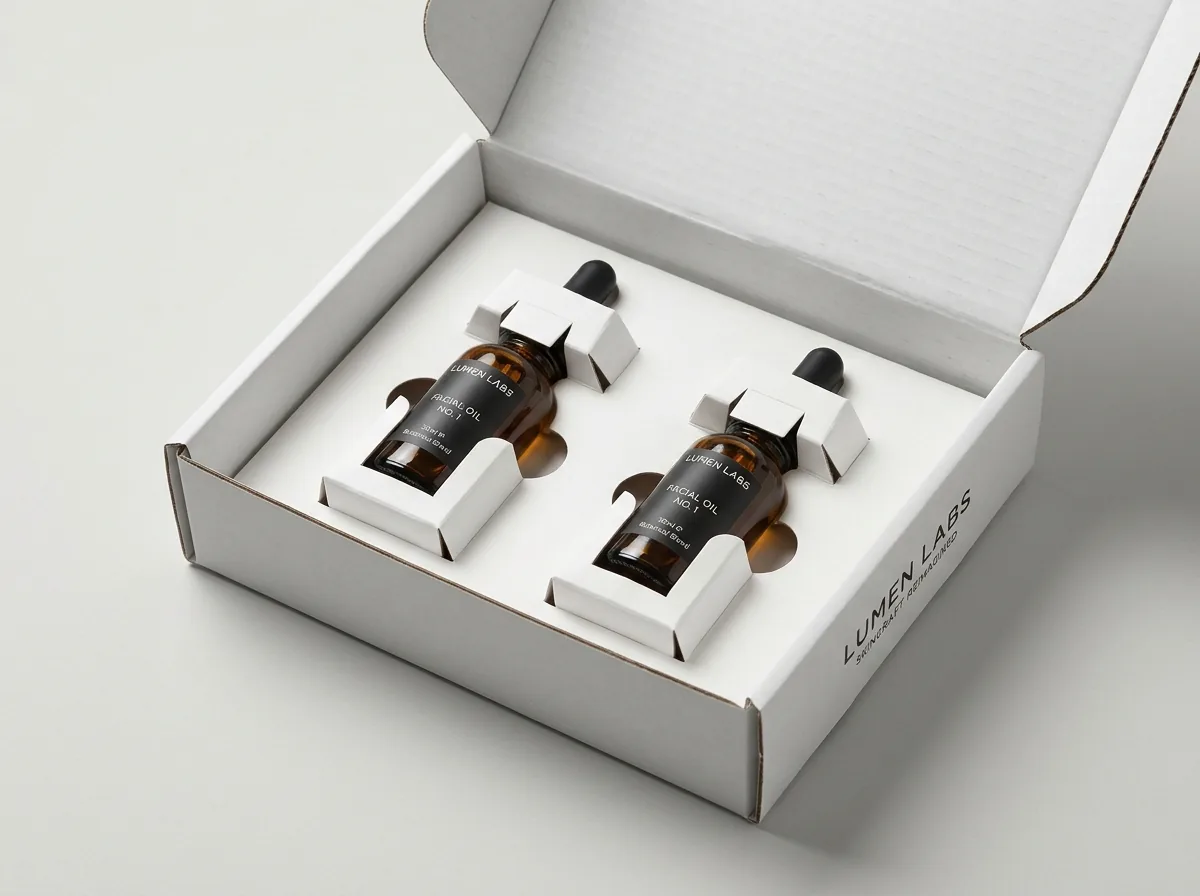
- Riser-leg suspension geometry: By folding four perimeter flaps downward 90 degrees around the edges of a card or E-flute insert, the main deck sits suspended 10 mm to 25 mm above the floor of the mailer box, creating an air-spring crush zone beneath fragile jars.
- Stepped neck-lock tabs for dropper bottles: A narrowed cutout collar around the shoulder of a glass serum bottle prevents the heavier glass base from sliding upward and crushing the rubber dropper bulb during inverted drops.
- Semicircular 16–20 mm finger pull notches: Because paperboard and corrugated pockets do not stretch like foam, our CAD specialists add twin thumb cutouts on opposite sides of every pocket so customers lift snug bottles out effortlessly.
How do EVA foam and EPE foam inserts work, and why add a printed card or velvet topper?
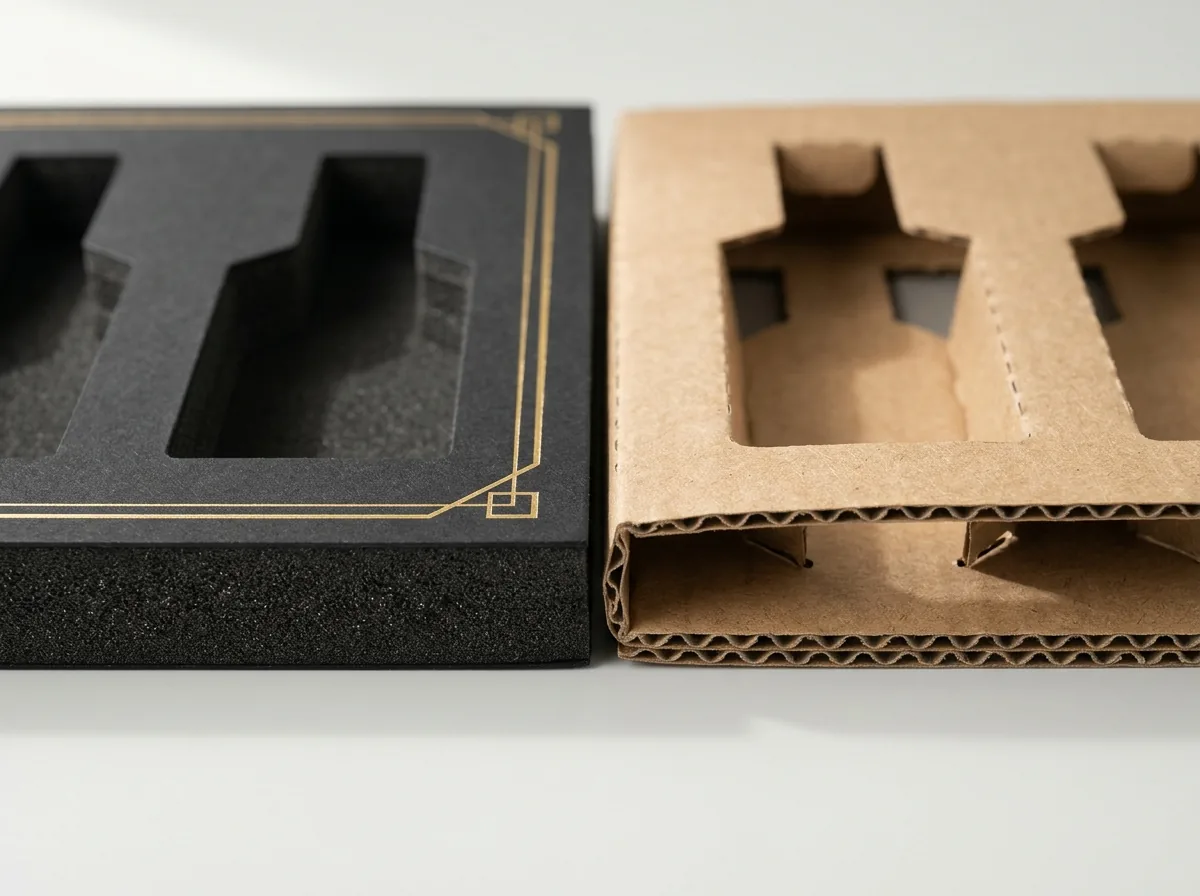
When shipping high-value influencer seeding kits, delicate glass perfume flacons, medical diagnostic kits, or dense electronic devices, closed-cell foam provides multi-drop elastic recovery that rigid paper fibers cannot match. Every foam insert is built as a two-layer (or multi-layer) laminated assembly: a top collar layer die-cut with through-pockets for your products, heat-bonded or adhesive-laminated onto a solid 5 mm to 10 mm bottom base pad that prevents items from bottoming out against the corrugated floor. To combine the shock absorption of foam with the crisp graphic presentation of printed paperboard, we laminate a custom-printed 18 pt paperboard face sheet (or plush velvet flocking) directly onto the top surface of the EVA or EPE foam block before die-cutting the product cavities
- Eliminates bridge bowing: A rigid 18 pt card topper bonded to EVA or EPE foam prevents narrow 12 mm foam bridges between adjacent bottles from stretching or deflecting when items are pressed in.
- Color-matches your interior lid: Print the card topper on the exact same sheet and press run as your interior mailer lid so pastel tints, dark floods, or metallic foil stamps align across the entire open box.
- Fastest fulfillment kitting: Because laminated foam trays arrive pre-assembled in cartons, packers simply drop the one-piece foam block into the erected mailer base in 2 seconds.
| Foam insert feature | High-Density EVA Foam | Closed-Cell EPE Foam | Card-Laminated Foam (EVA or EPE) |
|---|---|---|---|
| Cell texture & visual finish | Ultra-fine, smooth matte pores (velvety look) | Visible larger closed cells (industrial look) | 100% hidden under printed matte/foil 18 pt card |
| Pocket fit engineering | −0.5 mm compression grip fit | −0.5 to −1.0 mm compression grip fit | −0.5 mm foam grip + flush card rim |
| Surface branding options | Unprinted black/white or velvet flocking | Unprinted black/white | Full CMYK, Pantone, matte/soft-touch, hot foil |
| Best application | Luxury beauty PR, watches, fragrances, tech | Heavy smart-home hardware, metal tools, audio | VIP launch boxes needing both print & drop safety |
Know your size? Compare pricing across up to 3 quantities.
Request a Quote →How do you finalize your mailer box and insert material specification in 4 steps?
Pair this material guide with our step-by-step tutorial on how to measure products for custom mailer boxes with inserts and our comparison of fitted mailer inserts vs partition dividers and loose void fill. You can also check outer box board weights with our box size calculator and dimensional weight calculator. When you request a quote from 250 sets, our packaging specialists review your SKU weights and recommend the most cost-effective combination of outer flute (E-flute vs B-flute) and interior insert substrate
- Step 1: Weigh your heaviest individual item and total kit weight, under 8 oz per pocket suits 18–24 pt card; 6 oz to 3.5 lb suits 32 ECT E-flute corrugated; fragile glass PR kits or heavy electronics suit EVA or EPE foam.
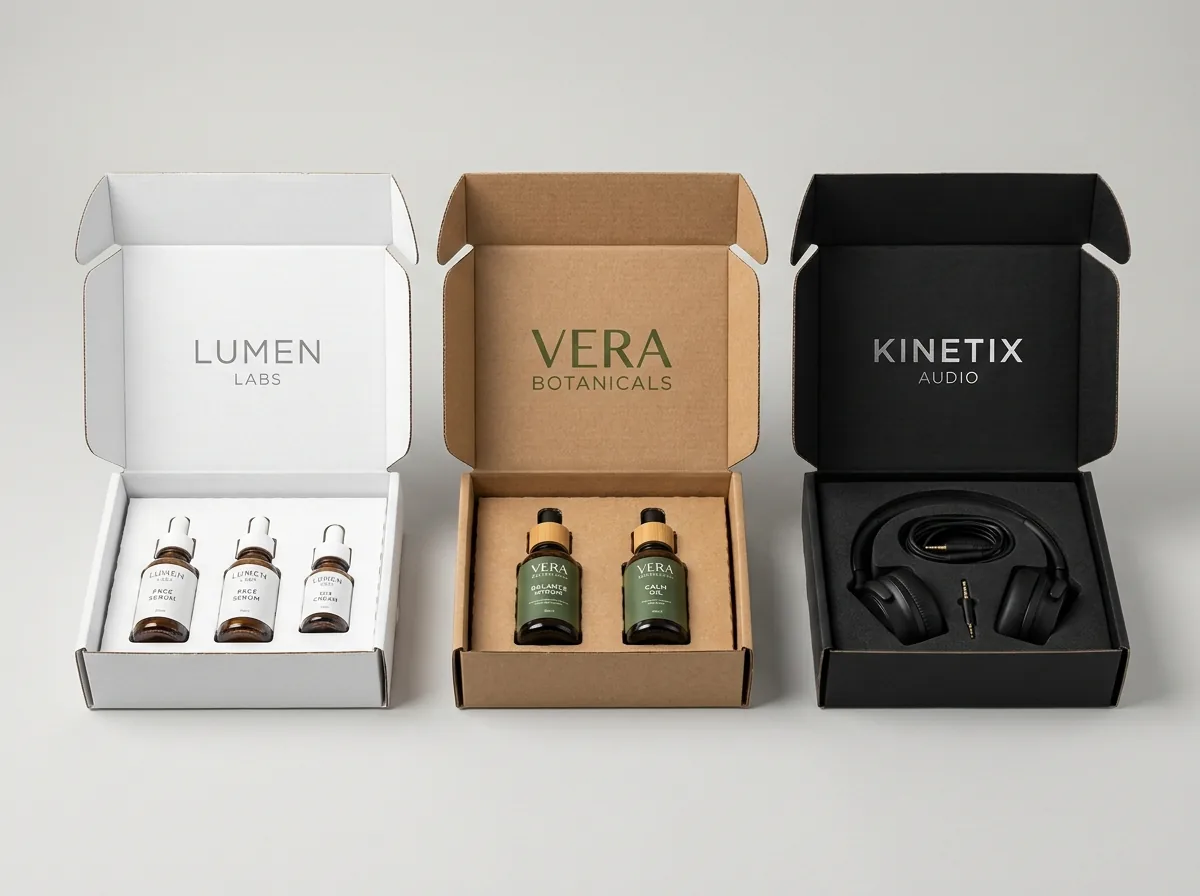
- Step 2: Choose your outer mailer linerboard, custom white mailer boxes for pastel CMYK, custom kraft mailer boxes for natural eco appeal, or custom black mailer boxes for luxury foil contrast.
- Step 3: Decide whether your insert deck should be unprinted, flood-printed in CMYK/Pantone, or laminated as a printed 18 pt card topper over EVA/EPE foam.
- Step 4: Submit your product dimensions in CubitPack's quote form (from 250 sets) to receive your two-piece 2D vector CAD dieline and interactive 3D digital proof before payment, with 10–14 business day turnaround and free US shipping.
What material selection mistakes happen most often on mailer box inserts?
Avoid torn insert decks, scuffed glass labels, and mismatched colors by steering clear of these five insert material mistakes
- Specifying thin 16–18 pt folding carton card for heavy 10 oz glass jars or candles, causing the suspended deck to sag and tear along the score lines during parcel drops.
- Using raw, unlaminated white or black EPE polyethylene foam in a luxury influencer PR box where the coarse poly cell texture looks industrial next to premium cosmetics (use fine-cell EVA foam or add a printed 18 pt card topper instead).
- Printing dark solid CMYK ink floods on an uncoated paperboard insert without a matte lamination or aqueous seal, which can rub ink onto frosted glass bottles during transit vibration.
- Designing foam pockets with positive clearance (+1.0 mm) like paperboard instead of negative compression grip (−0.5 mm to −1.0 mm), allowing bottles to fall out when the lid opens.
- Mixing a plastic foam insert into a package marketed as 100% curbside recyclable instead of using a die-cut 32 ECT E-flute corrugated cradle.
Packaging for this
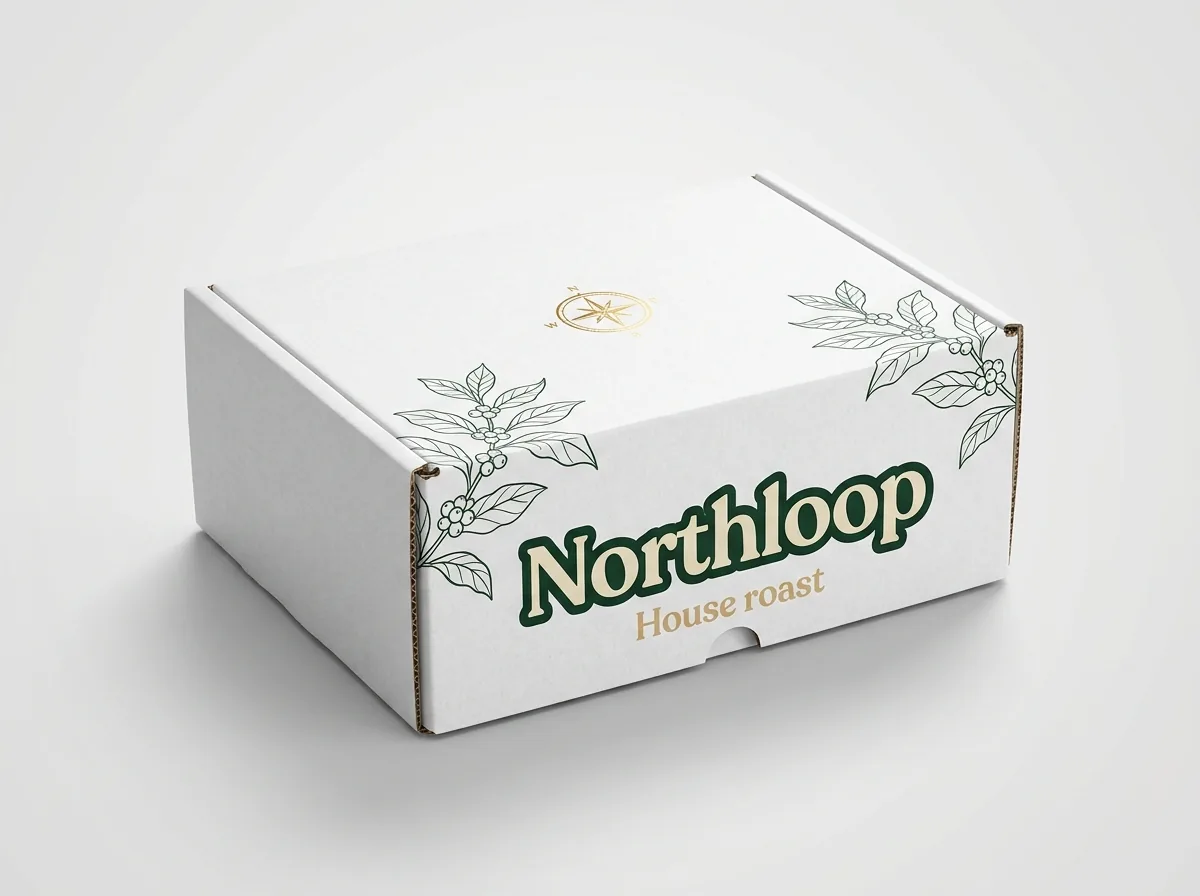
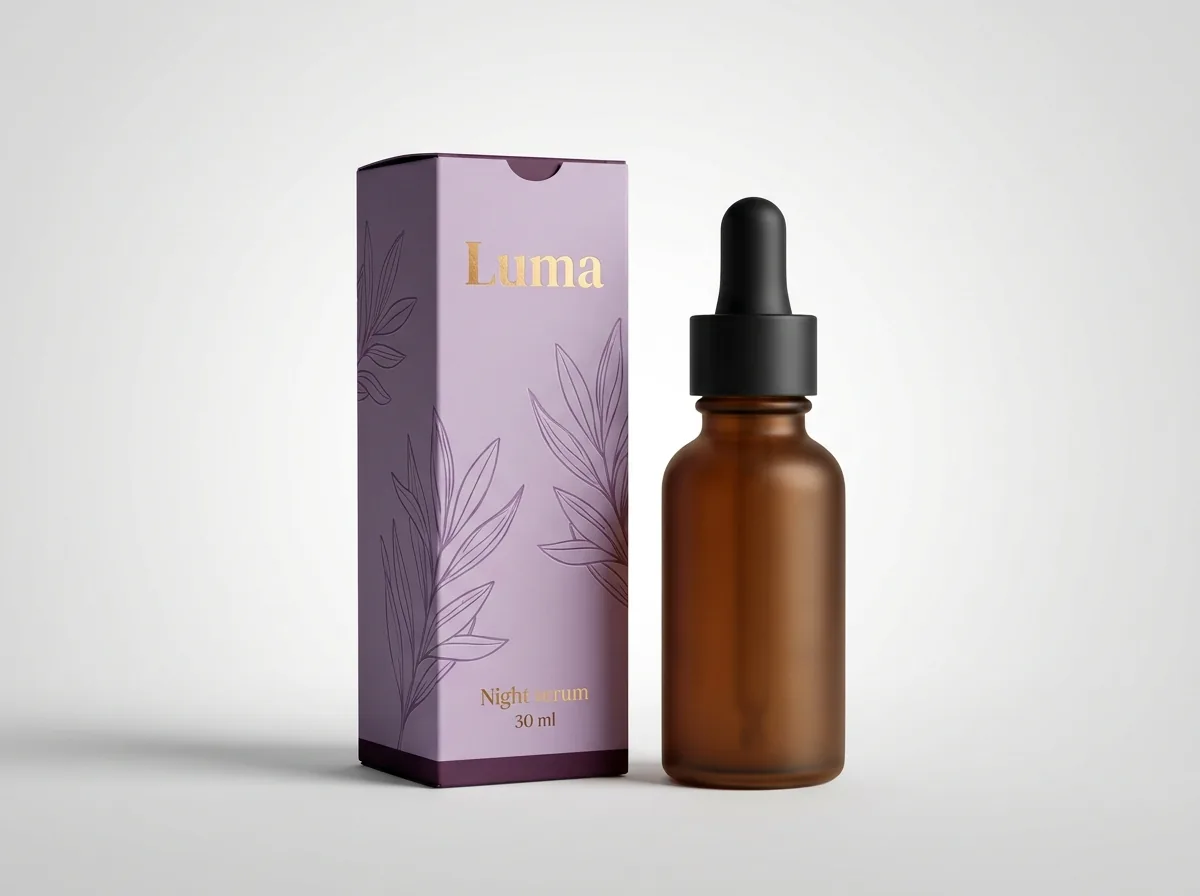
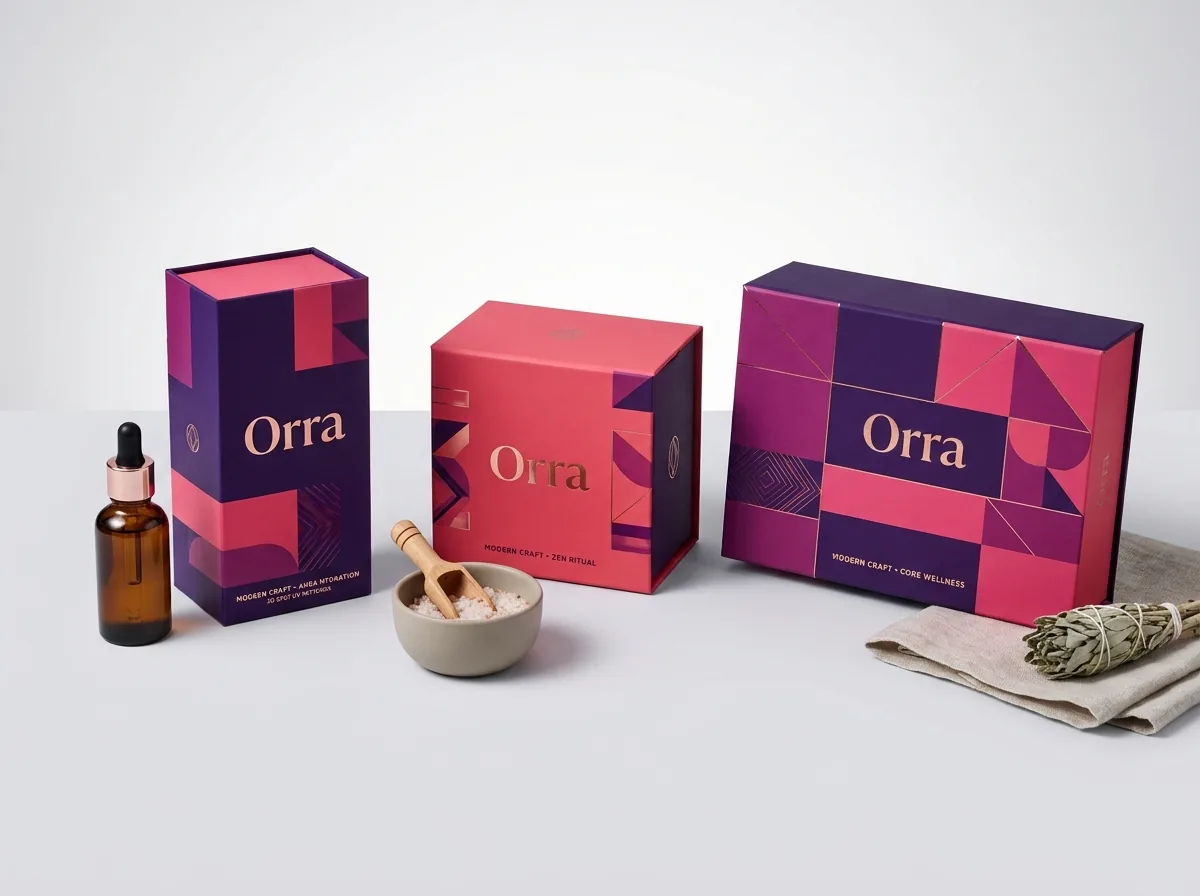
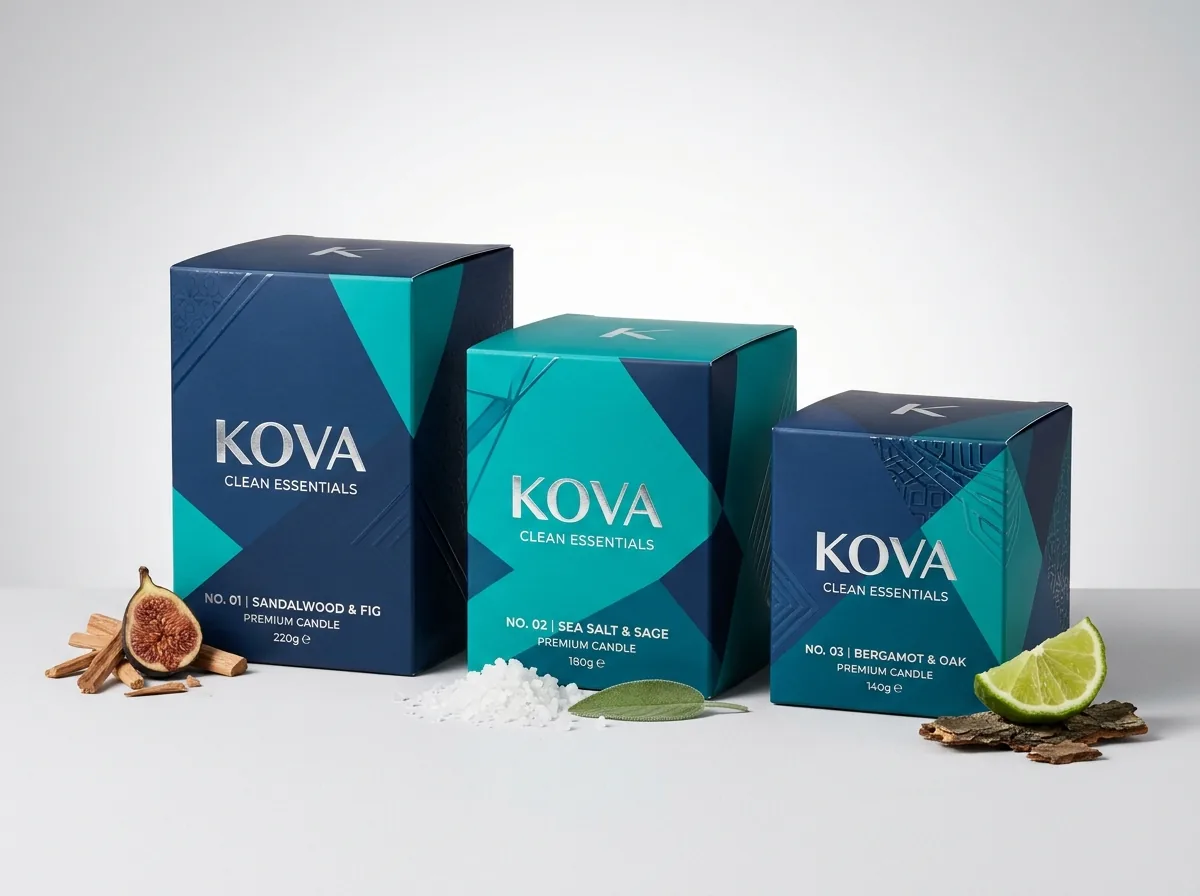
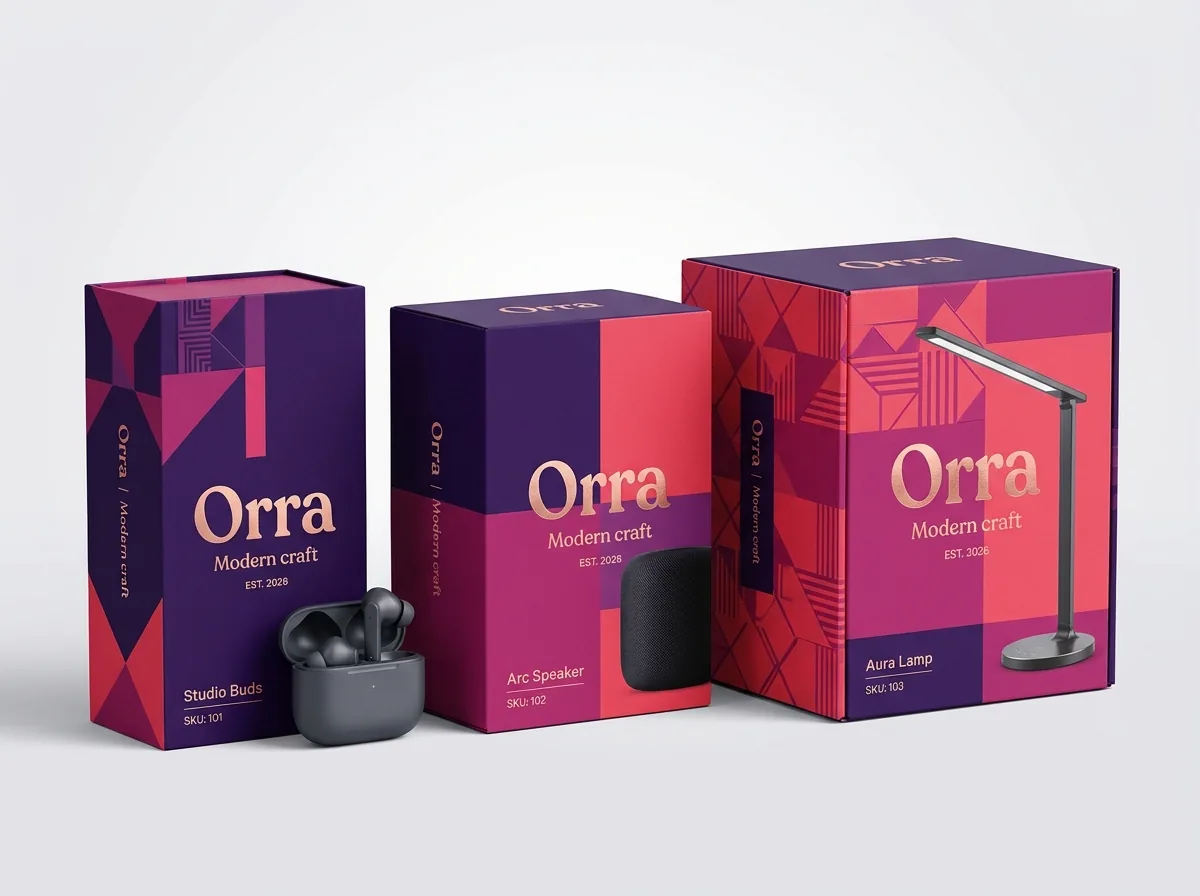
Ready to order mailer boxes with inserts? Compare up to 3 quantities with a free 3D mockup.
Request a Quote →Questions about mailer boxes with inserts
What are the four main insert materials used inside custom mailer boxes?
The four primary insert materials are 18–24 pt folded paperboard card (for lightweight tubes and cosmetics under 8 oz), 32 ECT E-flute die-cut corrugated board (for glass bottles, candles, and jars up to 3.5 lb), high-density closed-cell EVA foam (for luxury PR kits and fragile flacons), and closed-cell EPE polyethylene foam (for heavy electronics and hardware).
Are paperboard and E-flute corrugated mailer inserts 100% curbside recyclable?
Yes. Both 18–24 pt paperboard card inserts and 32 ECT E-flute corrugated cradles are 100% paper-based and curbside recyclable across the United States, allowing customers to recycle the outer mailer box and the interior insert together in one bin.
What is the difference between EVA foam and EPE foam mailer box inserts?
EVA (ethylene-vinyl acetate) foam has a higher density (38–70 kg/m³) and an ultra-fine, smooth matte cell structure that looks sleek and luxurious in PR and retail kits. EPE (expanded polyethylene) foam has a lower density (25–35 kg/m³) with slightly larger visible cells, offering economical shock cushioning for heavier hardware or serving as the base core beneath a printed card topper.
Can you print artwork or onboarding steps on a foam insert?
While raw foam cannot be offset-printed directly with fine halftones, we laminate a custom-printed 18 pt paperboard face sheet (with matte or soft-touch lamination, CMYK color, or metallic foil) onto the top of the EVA or EPE foam block before die-cutting the cavities.
What is the minimum order quantity for custom mailer boxes with fitted inserts?
CubitPack's minimum order quantity is 250 complete sets (250 custom outer mailer boxes + 250 matching paperboard, corrugated, EVA foam, or EPE foam inserts), including a free two-piece 2D CAD dieline, 3D proof before payment, and free US ground shipping.
Still have a question? Ask a packaging specialist.
Request a Quote →Request your mailer boxes with inserts quote
Tell us your size and quantities, and one dedicated account manager prepares pricing for each tier.
- Free design & AI-to-print studio + 3D mockup
- No die or plate charges · 4–5 day rush available
- Free shipping to all 50 states
- 10% off your first order
We verified FEFCO 0900 interior fitment classifications, 18–24 pt paperboard vs 32 ECT E-flute corrugated structural load limits, and EVA vs EPE closed-cell foam cushioning characteristics against FEFCO Case Code standards, Fibre Box Association (FBA) handbooks, and ISTA 3A parcel testing protocols. Spot something wrong? Tell us and we fix it.
Sources
What changed
- November 11, 2026: First published with 4-material comparison table, two-layer card-laminated foam diagram, and weight/fragility selection matrix.
More guides
New packaging guides by email
Sizes, materials and design tips. Unsubscribe anytime.