
How do you measure products and calculate cavity tolerances for custom mailer boxes with inserts?
Short answer: Measure every dressed product across Length, Width, and Seated Depth with digital calipers, add 12–15 mm bridges between cavities and 15–18 mm perimeter crush buffers around the edges, and size the insert platform 1.5 to 3.0 mm smaller than the outer FEFCO 0427 mailer's usable inside Length × Width.
On this page
- How do you measure each dressed product across 3 axes before laying out the insert
- How do inter-cavity bridges and perimeter buffers determine the outer mailer box size
- What 6 benchmark mailer-with-insert sizes fit popular 2-piece to 6-piece D2C kits
- How do you submit your product dimensions for a co-engineered 2-piece CAD dieline
- Common mistakes
- FAQs
Request a custom quoteFree dieline & 3D mockup
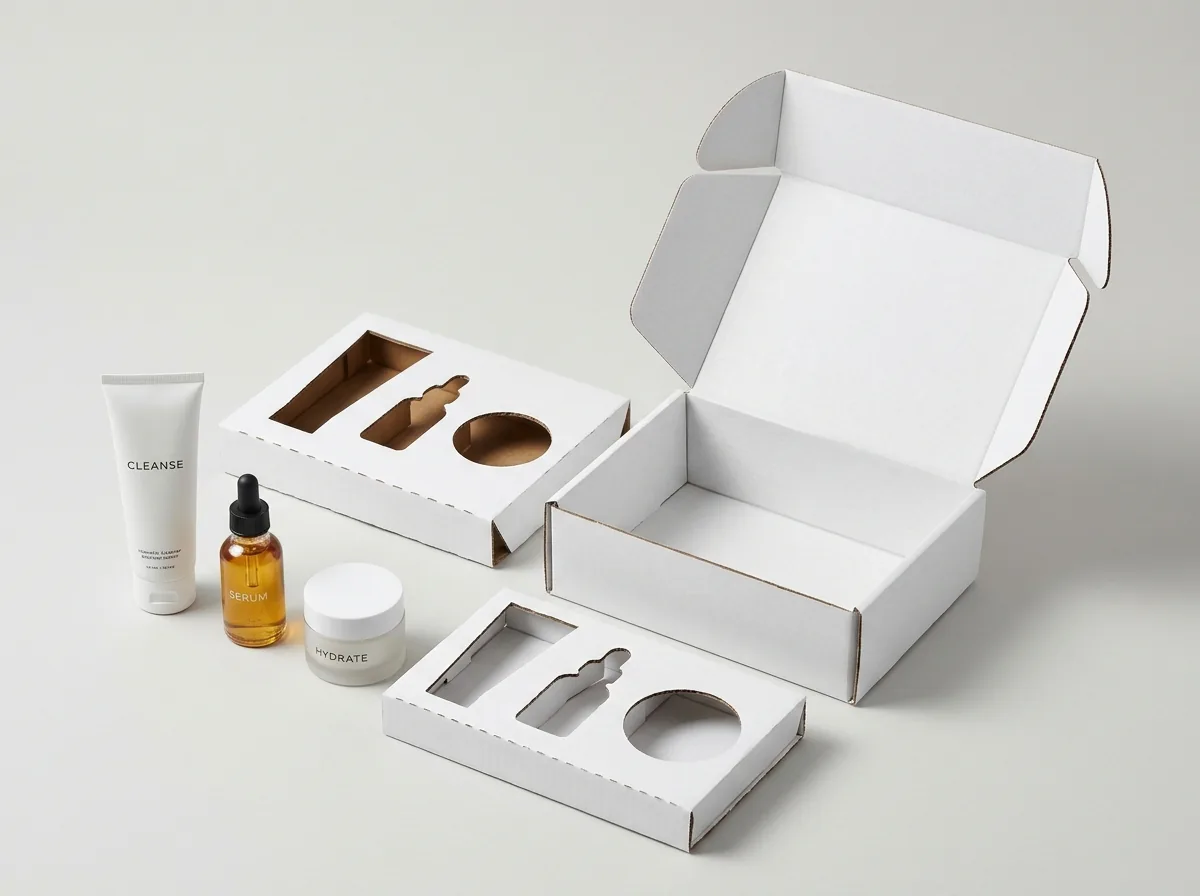
Engineering custom mailer boxes with inserts always runs from the inside out: you first measure each fully dressed product with digital calipers, then space the pockets with structural bridges and perimeter crush zones to determine the exact usable Inside Dimensions (Length L × Width W × Height H) of the outer FEFCO 0427 mailer. Because a roll-end tuck-front mailer folds its double side walls 180 degrees over the corner end flaps, the side walls consume roughly 3/8 inch (9.5 mm) of width in E-flute and 5/8 inch (16 mm) in B-flute. Rigid paperboard and E-flute inserts require a +0.5 to +1.0 mm slip-fit cutout with finger notches, whereas closed-cell EVA and EPE foam inserts use a −0.5 to −1.0 mm compression fit. When you submit your product measurements in CubitPack's quote form (from 250 sets), our packaging specialists build both CAD dielines together with free 3D proofs before payment.
How do you measure each dressed product across 3 axes before laying out the insert?
Never design a custom die-cut insert from nominal bottle vendor drawings alone. Glass cosmetic jars, ceramic vessels, and dropper caps routinely vary by ±1.0 mm to ±1.5 mm from mold to mold, and outer shrink bands or wrap-around labels add measurable thickness. Before requesting a dieline for mailer boxes with custom inserts, custom cosmetic boxes, or custom starter kit boxes, measure 3 to 5 dressed units from your production batch with digital calipers: When laying out a multi-SKU kit containing items of different thicknesses, such as a 54 mm diameter cream jar next to a slim 22 mm lip gloss tube, our CAD specialists use stepped sub-risers under the thinner items so the top label faces of all products sit flush on one presentation plane. When measuring glass dropper bottles or pump dispensers, always verify whether the cap assembly threads down to a hard mechanical stop or varies by half a turn depending on capping torque on your filling line. Adding an extra 1.0 mm of longitudinal clearance at the top of the cap recess prevents tight-tolerance paperboard or E-flute cutouts from pressing against the dropper bulb during parcel vibration. Similarly, if your product carries a wrap-around pressure-sensitive label or matte shrink sleeve, measure the diameter after labeling so the paperboard or foam pocket never scuffs the label edge when the customer lifts the bottle out.
- Always measure products with caps, pumps, and shrink bands installed: A pump actuator lock-ring or tamper band often adds 1.5 mm to 3.0 mm to the shoulder or height of a bottle.
- Follow the 55%–65% pocket depth rule: If a cylindrical jar is 50 mm in diameter and the insert deck is only 15 mm deep (30%), the jar's center of gravity sits above the deck and will pop out during an inverted parcel drop. Setting the deck at 30 mm (60%) locks the jar in place.
- Add 16–20 mm semicircular finger notches on rigid trays: Twin thumb cutouts let customers pinch the midpoint of a bottle without tearing the paperboard rim.
| Product measurement axis | Where to place caliper jaws | Card / E-flute cutout rule | EVA / EPE foam cutout rule | Why it matters in transit |
|---|---|---|---|---|
| 1. Dressed Length (L_sku) | Top cap/actuator tip to bottom base heel | L_sku + 0.8 mm (+1/32 in) | L_sku − 0.5 mm (snug end grip) | Stops axial sliding into fragile pump/dropper heads |
| 2. Max Shoulder Width (W_sku) | Widest barrel diameter across label/shrink band | W_sku + 0.8 mm + 18 mm thumb notches | W_sku − 0.5 to − 1.0 mm friction grip | Prevents barrel rotation so labels stay facing up |
| 3. Seated Depth (D_sku) | Bottom resting face to highest front crest | Recess deck at 55%–65% of D_sku | Recess foam collar at 60%–75% of D_sku | Locks center of gravity so items cannot tip out |
| 4. Cap Neck Step (Optional) | Collar diameter just below pump or dropper cap | Narrow cutout by 6–10 mm at shoulder | Contoured neck recess + 4 mm cap clearance | Isolates delicate glass droppers from bottom impact |
How do inter-cavity bridges and perimeter buffers determine the outer mailer box size?
Once you have the dressed dimensions of each item, calculating the usable Inside Dimensions (L × W × H) of your outer custom mailer box is simple addition. You sum the widths of the pockets, add the inter-cavity bridges between adjacent cutouts, and add the perimeter crush buffers around the four outer edges: Walk through this real worked example for a 3-piece skincare regimen kit (1 cleanser tube, 1 glass serum dropper bottle, and 1 moisturizer jar) packed in a 32 ECT E-flute mailer with a die-cut E-flute cradle insert
- Horizontal Inside Box Length (L) = Left Perimeter Buffer (18 mm) + Cleanser Pocket (52 mm) + Bridge 1 (15 mm) + Serum Pocket (40 mm) + Bridge 2 (15 mm) + Jar Pocket (62 mm) + Right Perimeter Buffer (18 mm) = 220 mm (8.66 in).
- Front-to-Back Inside Box Width (W) = Front Buffer (18 mm) + Tallest Bottle Length (129 mm) + Rear Buffer (18 mm) = 165 mm (6.50 in).
- Vertical Inside Box Height (H) = Bottom Riser Air Gap (12 mm) + Tallest Jar Diameter (54 mm) + Top Headspace Clearance (3 mm) = 69 mm (2.72 in).
- Resulting Insert Platform Outer Footprint = (220 − 2.5 mm) × (165 − 2.5 mm) = 217.5 mm × 162.5 mm, ensuring the folded tray drops smoothly between the locked double side walls without buckling.
What 6 benchmark mailer-with-insert sizes fit popular 2-piece to 6-piece D2C kits?
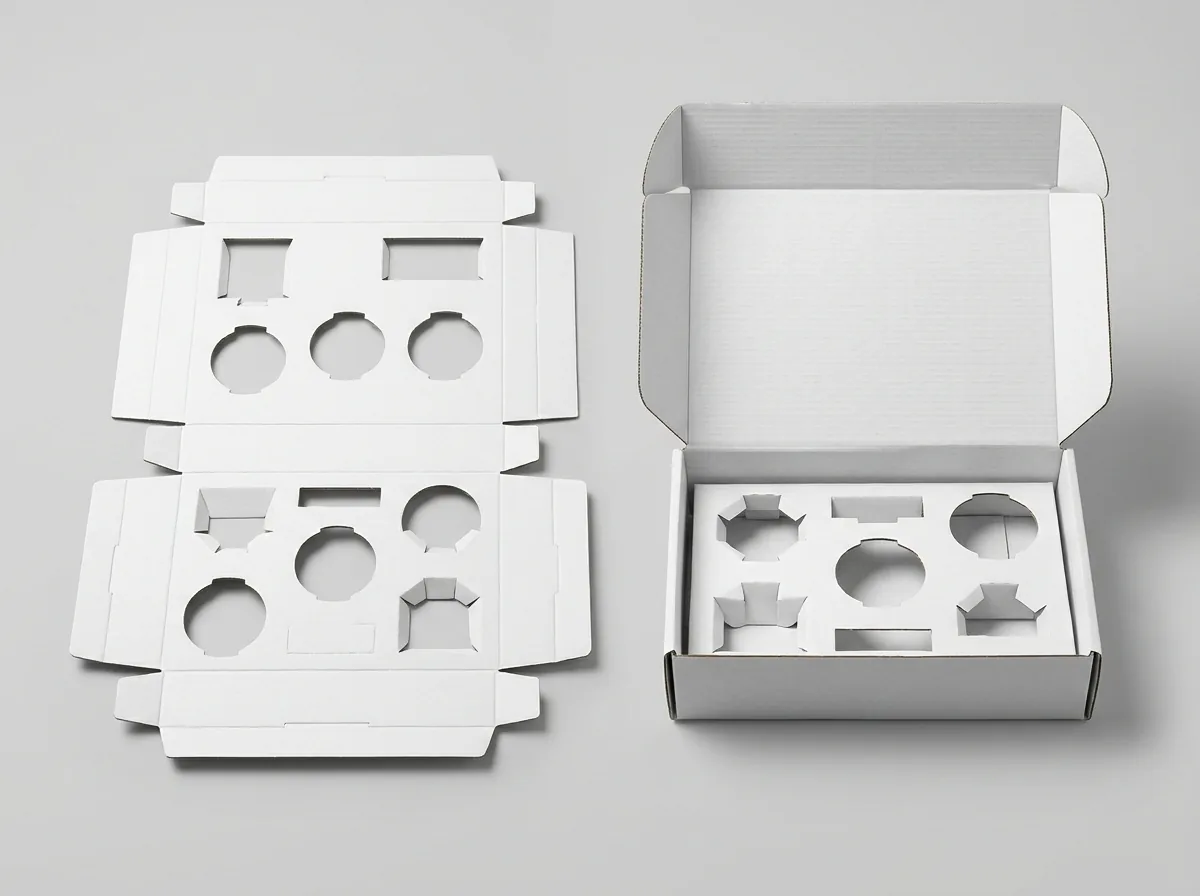
Use these six benchmark configurations across custom cosmetic boxes, custom candle boxes, custom PR boxes, and custom gift basket boxes to estimate your starting box footprint and billable dimensional weight
- Account for E-flute vs B-flute outer wall take-up: Outer shipping dimensions add ~3/8 in width in E-flute and ~5/8 in width in B-flute.
- Relief notches for front cherry-lock ears: Full-height inserts automatically include 3/16-inch front corner notches so the lid's locking ears click shut cleanly.
- Verify carrier DIM weight: Test your outer dimensions in our box size calculator and dimensional weight calculator.
| Kit configuration | Mailer inside L × W × H | Insert platform L × W | Recommended outer flute & insert | Typical SKU layout |
|---|---|---|---|---|
| 2-Piece Serum Duo Mailer | 6.5 × 4.5 × 2.25 in (165 × 114 × 57 mm) | 6.40 × 4.40 in (162.5 × 111.5 mm) | E-flute + 20 pt Folded Card Insert | Two 30 mL dropper bottles + 15 mm center bridge |
| 3-Piece Skincare Routine Box | 8.75 × 6.5 × 2.75 in (222 × 165 × 70 mm) | 8.65 × 6.40 in (219.5 × 162.5 mm) | E-flute + Die-Cut E-Flute Cradle | Cleanser tube, dropper serum, and 50 mL cream jar |
| Candle & Reed Diffuser Duo | 9.5 × 7.0 × 4.25 in (241 × 178 × 108 mm) | 9.38 × 6.88 in (238 × 175 mm) | B-flute + Heavy E-Flute Cradle | 9 oz glass candle tumbler + diffuser bottle + matches |
| Smart Hardware Starter Kit | 10.0 × 7.5 × 3.25 in (254 × 191 × 83 mm) | 9.90 × 7.40 in (251.5 × 188.5 mm) | E-flute + Two-Tier EPE Foam Tray | Smart device on top deck + cable/adapter well below |
| 4–5 SKU Influencer PR Box | 11.0 × 8.5 × 3.5 in (279 × 216 × 89 mm) | 10.90 × 8.40 in (276.5 × 213.5 mm) | E-flute + Card-Topped EVA Foam | Full cosmetic launch collection + lid booklet slot |
| 6-Jar Gourmet Taster Box | 12.0 × 9.0 × 4.0 in (305 × 229 × 102 mm) | 11.88 × 8.88 in (302 × 226 mm) | 44 ECT B-flute + Corrugated Cradle | Six 6–8 oz glass jam, honey, or hot sauce jars |
Know your size? Compare pricing across up to 3 quantities.
Request a Quote →How do you submit your product dimensions for a co-engineered 2-piece CAD dieline?
Combine this measurement guide with our mailer box insert materials guide (card, corrugated, EVA, and EPE foam) and our comparison of fitted mailer inserts vs partition dividers and void fill. Whether you enter your caliper measurements online or send us one physical product set, our team engineers the outer FEFCO 0427 mailer and the interior insert on one CAD sheet from 250 units: Before locking in bulk die tooling, test-fit your heaviest and lightest production bottles in a physical CAD-cut prototype of both the outer mailer and the interior tray. Checking the physical prototype verifies that the front cherry-lock ears clear the insert corners and that every pocket holds its SKU firmly when the closed box is shaken.
- Step 1: Measure each dressed item's Length, Width, and Seated Depth in millimeters or inches (and note each item's weight).
- Step 2: Sketch or describe your preferred left-to-right unboxing order (for example: Step 1 Cleanser on the left, Step 2 Serum in the center, Step 3 Cream on the right).
- Step 3: Enter your target box size or item list in CubitPack's quote form (from 250 sets) to receive a written quote, two-piece 2D vector CAD dieline, and interactive 3D digital proof before payment.
- Step 4: Approve your digital proof (or request a physical CAD-cut fit sample) and receive your flat-packed mailers and inserts in 10–14 business days with free US ground shipping.
What measurement mistakes cause mailer box inserts to buckle or fit poorly?
Avoid costly re-cuts and loose pockets by checking your spec against these five measurement errors
- Cutting the insert tray to the exact nominal inside width of the mailer box without subtracting 1.5 mm to 3.0 mm (1/16 to 1/8 inch) for drop-in clearance, causing the insert to bind against the rolled side walls.
- Measuring unlabelled bottles without their pump heads, dropper bulbs, or tamper shrink bands, leaving the die-cut pockets 2 mm too tight during fulfillment.
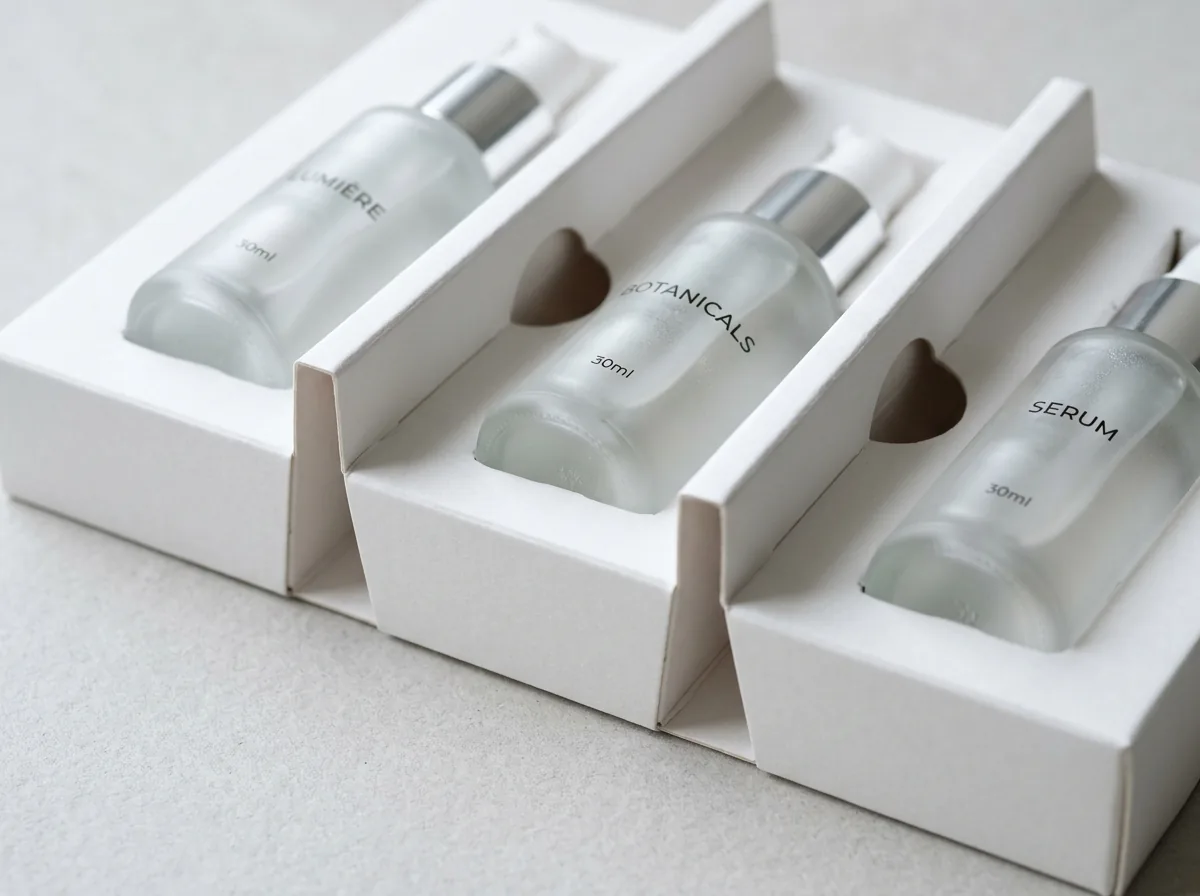
- Spacing adjacent cutouts only 5 mm apart instead of maintaining a 12 mm to 15 mm structural bridge, which causes paperboard webs to tear when packers press bottles in.
- Forgetting to add 1.5 mm to 3.0 mm of vertical headspace between the highest product face and the closed interior lid, causing heavy stack loads to press directly on glass droppers.
- Switching the outer mailer from 1.6 mm E-flute to 3.0 mm B-flute without resizing the insert tray for B-flute's wider 5/8-inch double-wall take-up.
Packaging for this
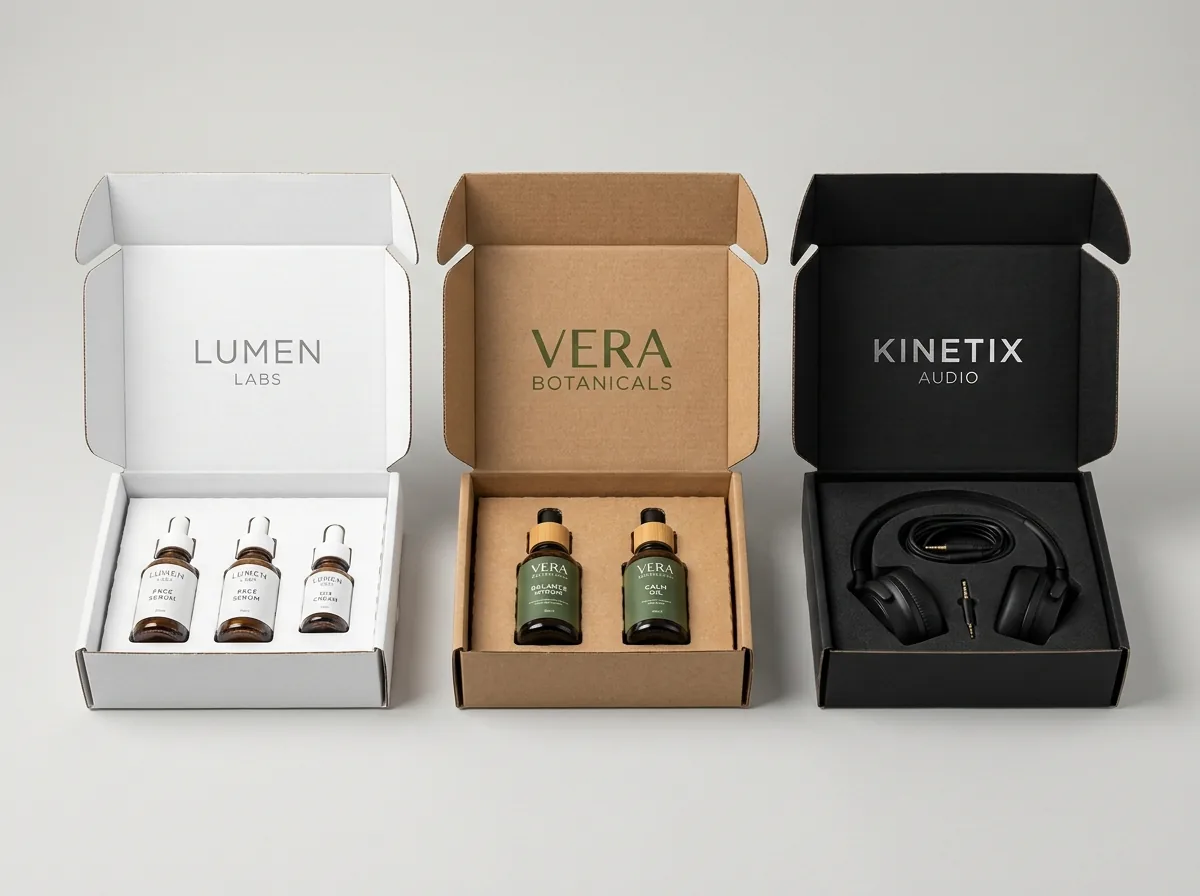
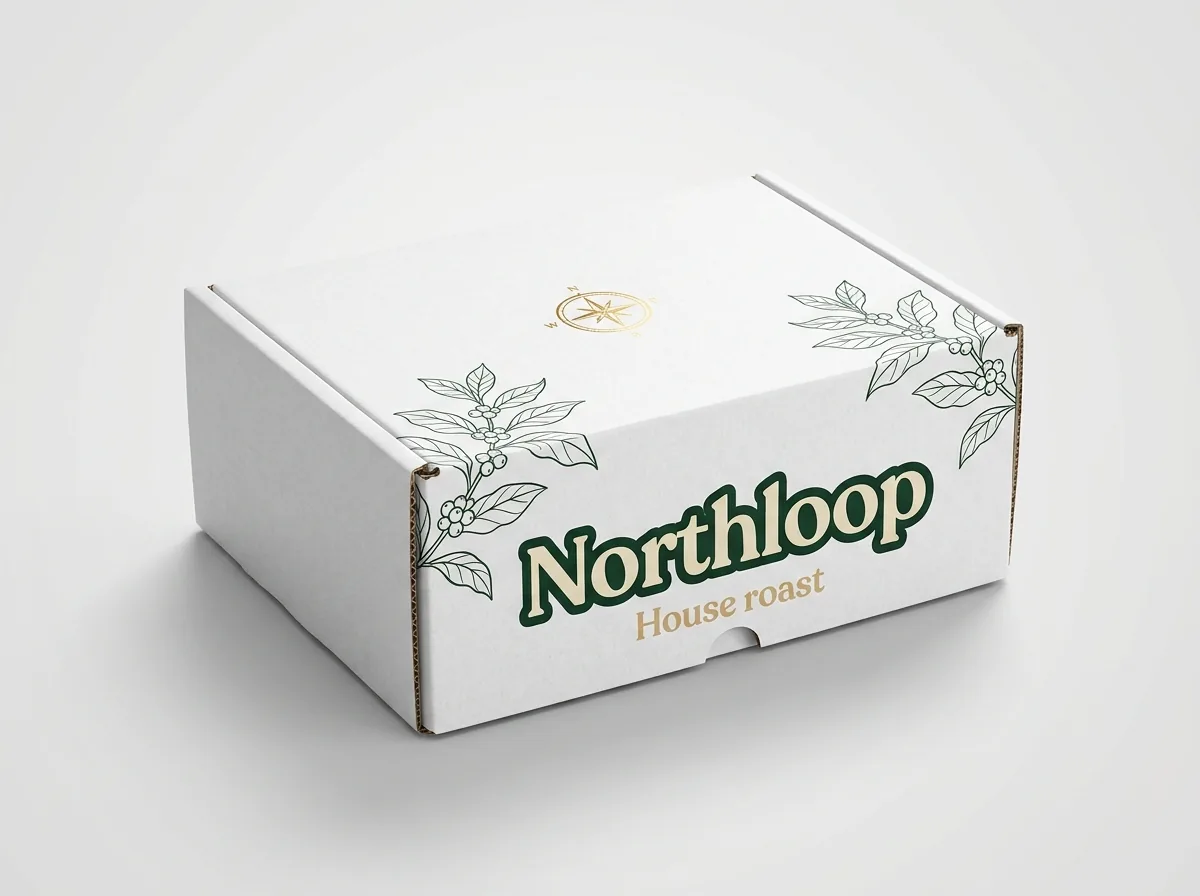

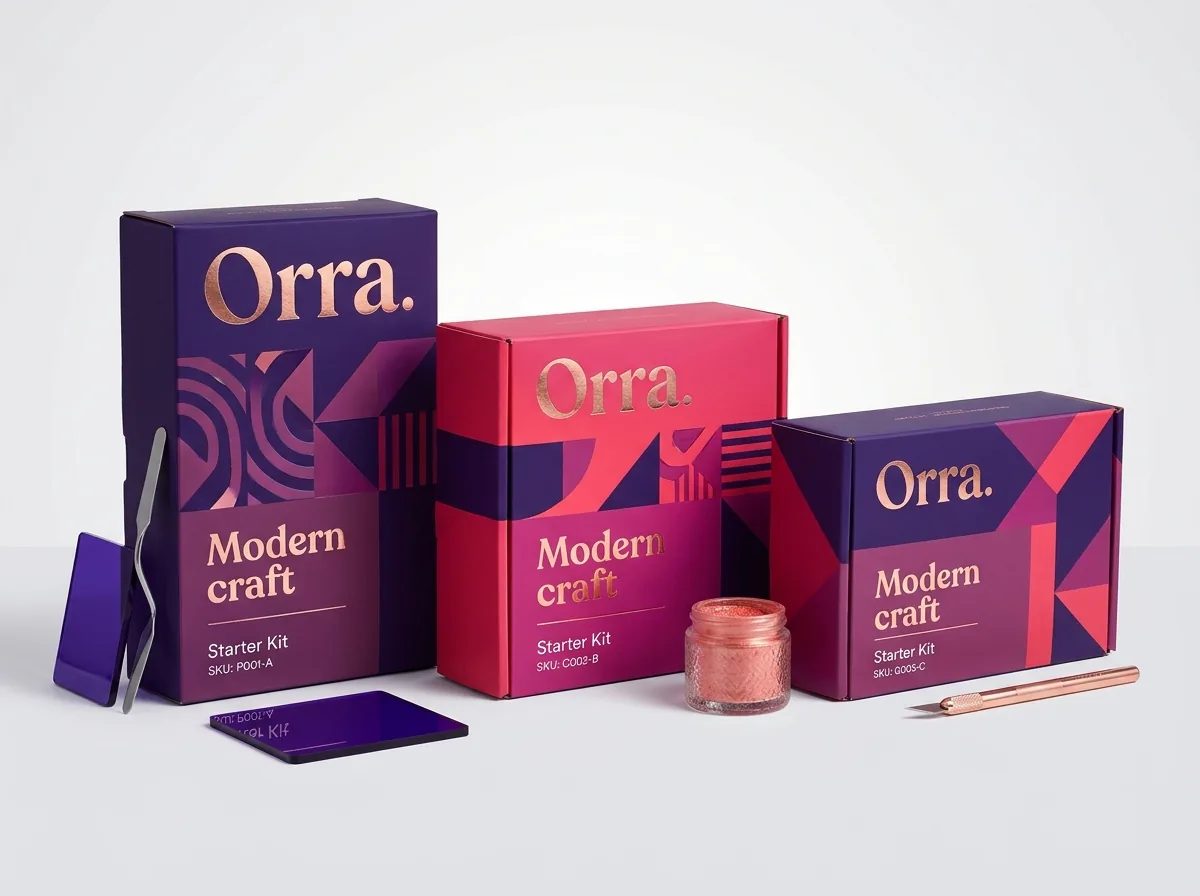

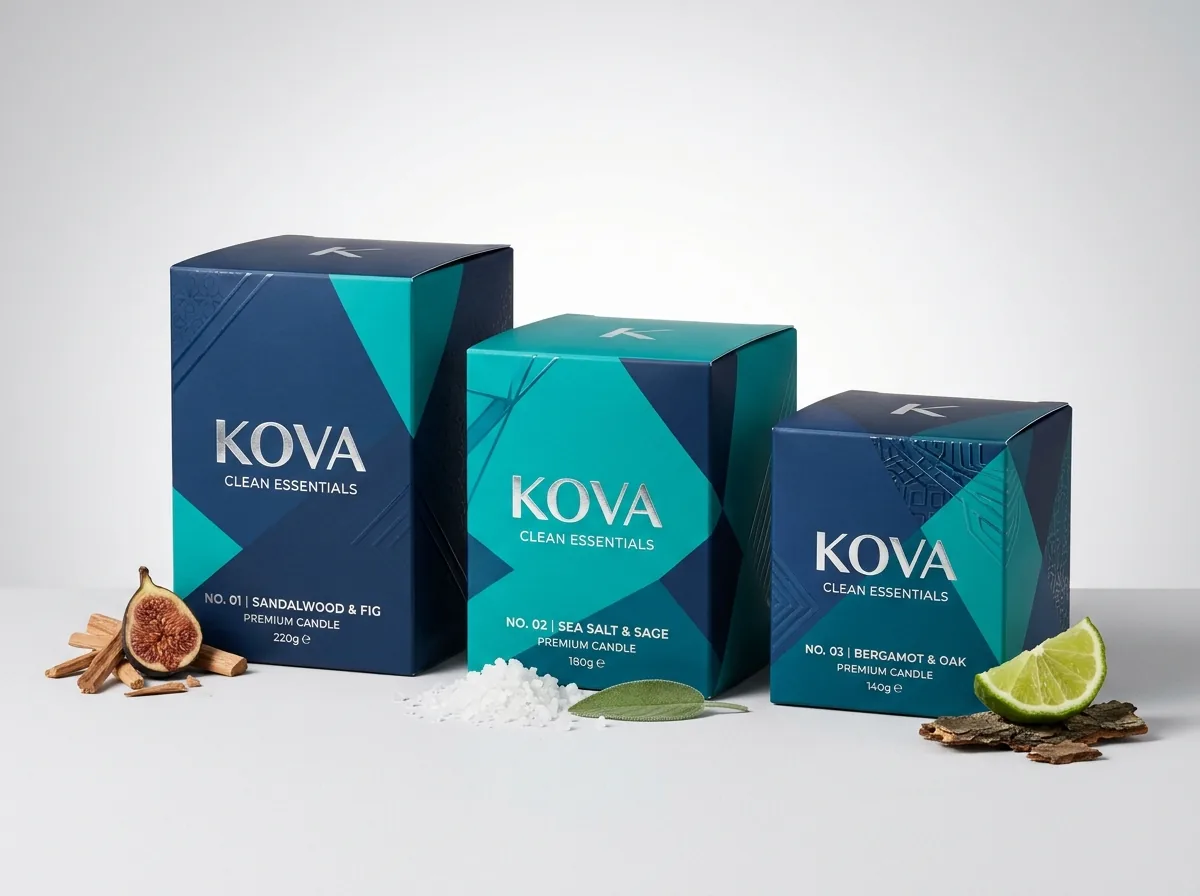
Ready to order mailer boxes with inserts? Compare up to 3 quantities with a free 3D mockup.
Request a Quote →Questions about mailer boxes with inserts
How do I measure my products for a custom mailer box with insert?
Use digital calipers to measure each fully dressed product (with cap, pump, label, and shrink band installed) across three axes: total Length from cap tip to base, maximum Width across the widest shoulder, and Seated Depth from the bottom resting surface to the highest front face.
What is the pocket clearance difference between cardboard/corrugated inserts and foam inserts?
Rigid 18–24 pt paperboard and 32 ECT E-flute corrugated inserts are cut +0.5 mm to +1.0 mm larger than the product (with semicircular finger notches for easy lifting). Closed-cell EVA and EPE foam inserts are cut −0.5 mm to −1.0 mm smaller than the product so the resilient foam walls grip the item by gentle compression.
How wide should the bridges between cavities be on a mailer box insert?
Maintain at least 12 mm (approx. 1/2 inch) between pockets on 18–24 pt paperboard card and high-density EVA foam inserts, and at least 15 mm (approx. 5/8 inch) on 32 ECT E-flute corrugated and EPE foam inserts so bridges never tear or allow glass bottles to clink together.
How much smaller than the box's inside dimensions is the insert tray cut?
Our CAD engineers size the outer footprint of a paperboard or E-flute insert 1.5 mm (1/16 inch) narrower than an E-flute mailer's post-fold inside Length × Width, and 3.0 mm (1/8 inch) narrower inside a B-flute mailer, ensuring smooth 3-second drop-in seating.
Can I ship my physical products to CubitPack to have the box and insert measured?
Yes. You can either enter your product caliper measurements in our quote form or mail us one physical set of your products, and our packaging specialists will engineer the two-piece 2D CAD dieline and 3D digital proof free before payment.
Still have a question? Ask a packaging specialist.
Request a Quote →Request your mailer boxes with inserts quote
Tell us your size and quantities, and one dedicated account manager prepares pricing for each tier.
- Free design & AI-to-print studio + 3D mockup
- No die or plate charges · 4–5 day rush available
- Free shipping to all 50 states
- 10% off your first order
We verified FEFCO 0427 double-wall rollover take-up math, FEFCO 0900 interior fitment slip-fit tolerances, closed-cell foam compression grip allowances, and minimum inter-cavity bridge widths against FEFCO Case Code standards and Fibre Box Association (FBA) engineering manuals. Spot something wrong? Tell us and we fix it.
Sources
What changed
- November 11, 2026: First published with 3-axis caliper measurement table, worked 3-SKU skincare kit math, and 6 benchmark multi-cavity kit sizes.
More guides
New packaging guides by email
Sizes, materials and design tips. Unsubscribe anytime.