
Matte vs gloss and foil finishes: which suits custom supplement labels?
Short answer: Choose matte lamination for clinical vitamins, herbal adaptogens and dense 6-point Supplement Facts tables that must read without overhead store glare. Choose gloss or metallic foil with spot UV for pre-workout tubs, gummies and high-contrast retail shelves. Compare custom supplement labels finishes below.
On this page
- How do matte, gloss, foil, spot UV and clear supplement labels compare
- Why do clinical vitamin and longevity brands favor matte finishes
- How do sports nutrition and nootropic brands use foil and spot UV
- When should you choose clear labels for gummies and colored capsules
- How do finishes affect co-packer lot coding and powder filling lines
- Common mistakes
- FAQs
Request a custom quoteFree dieline & 3D mockup
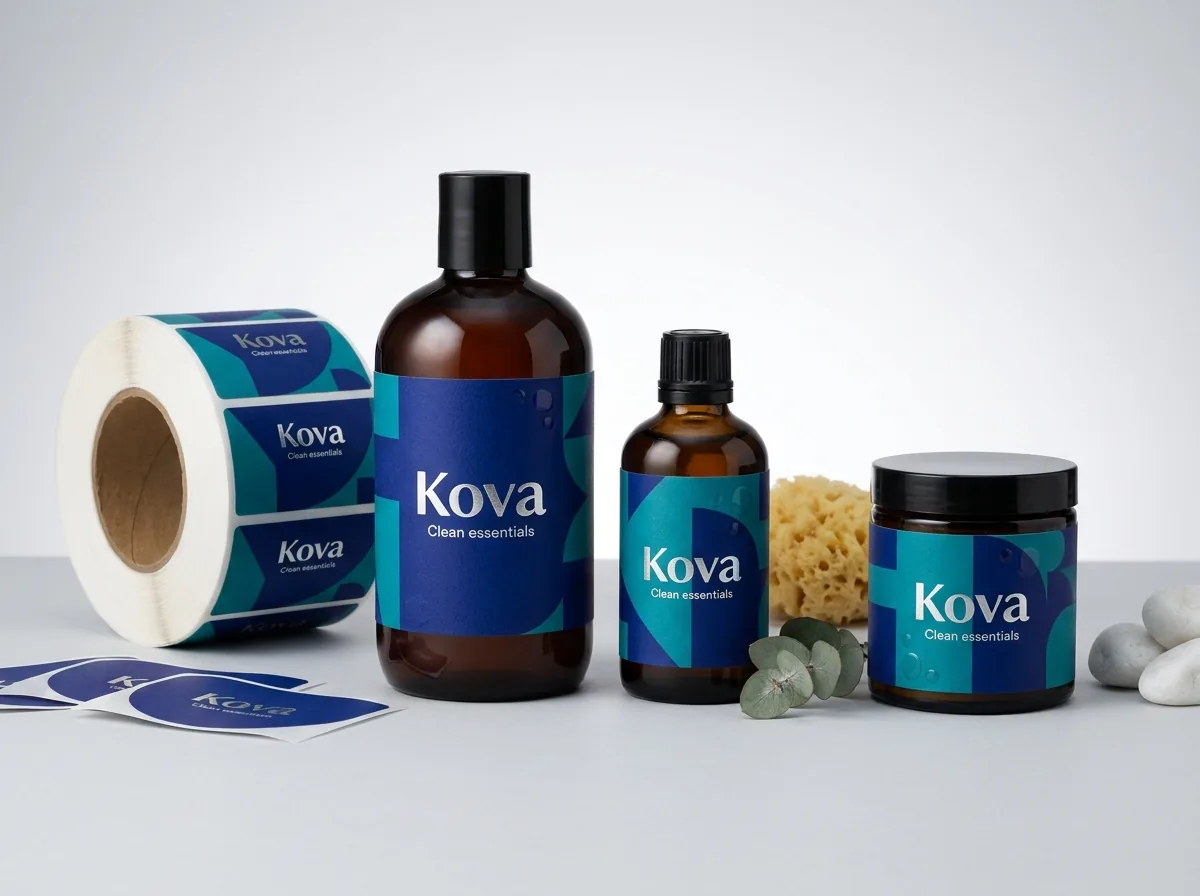
The finish and face stock you choose for a dietary supplement label control three practical things: how easily shoppers can read your 6-point Supplement Facts panel under bright pharmacy lights, how your brand is positioned between clinical wellness and high-energy sports nutrition, and how cleanly your co-packer can stamp batch lot and expiration dates. Matte finishes diffuse overhead light and feel calm and apothecary-inspired in the hand, making them the standard choice for daily vitamins, probiotics, longevity capsules and herbal tinctures. Gloss finishes deepen saturated fruit colors and wipe clean of fine powder dust on the filling line. Metallic foil stocks, hot foil stamping and spot UV add high-contrast shelf flash for pre-workout powders, amino acids and flagship nootropics, while clear labels show off colorful pectin gummies inside PET jars. Every CubitPack order includes a free 3D mockup before payment.
How do matte, gloss, foil, spot UV and clear supplement labels compare?
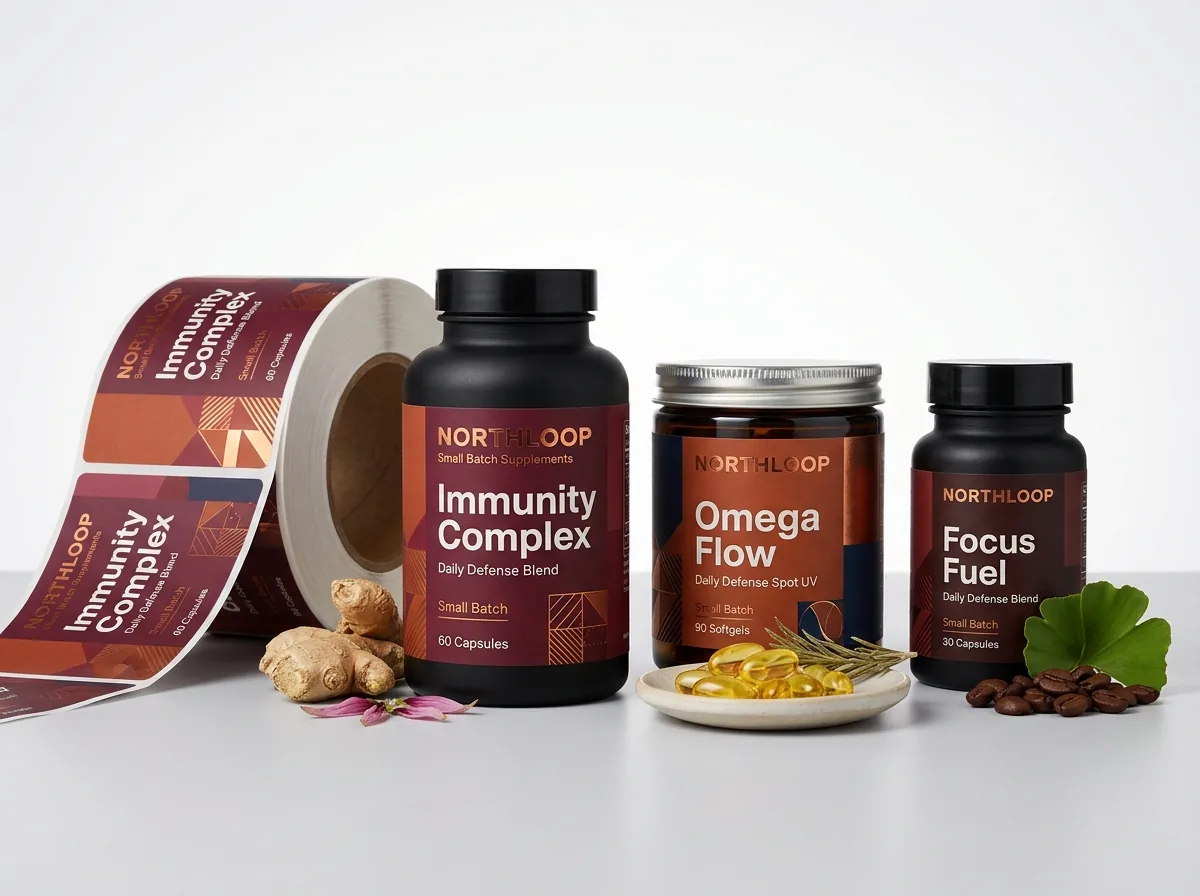
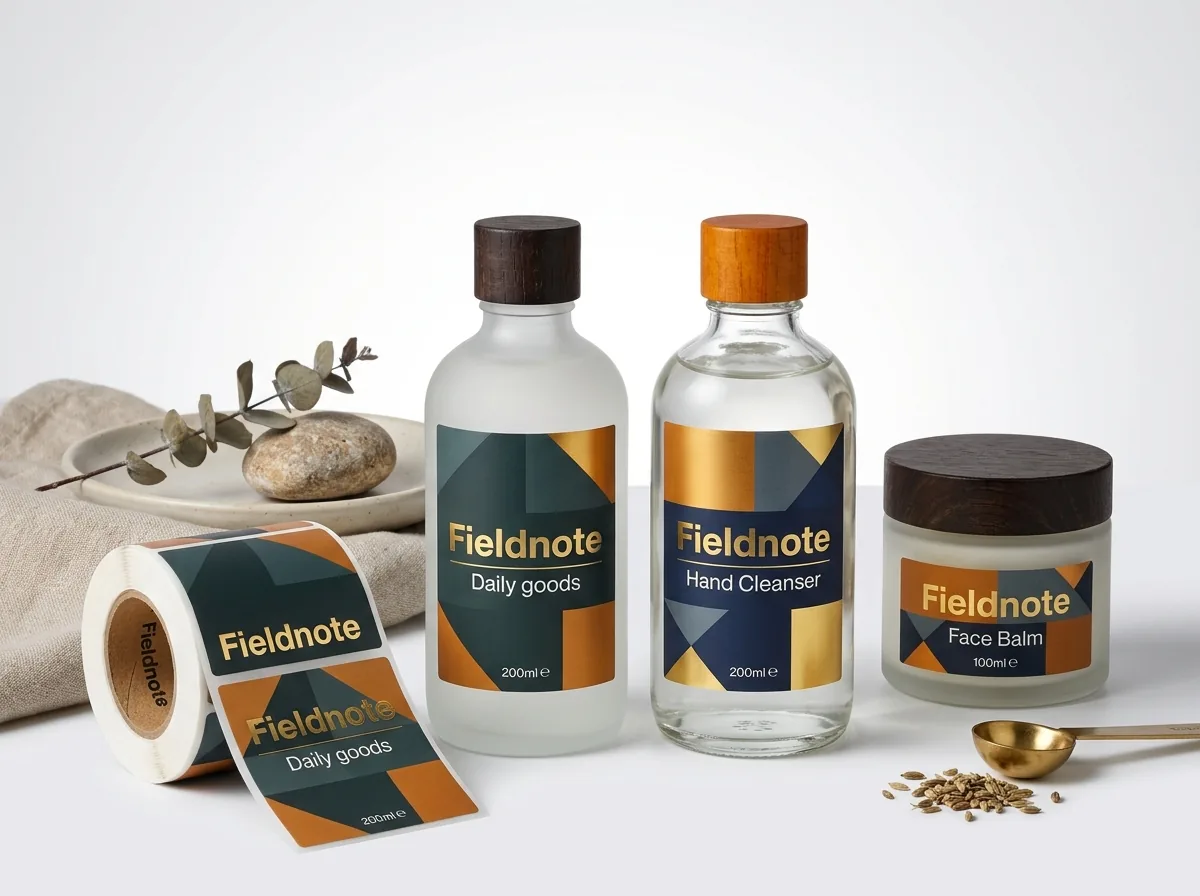
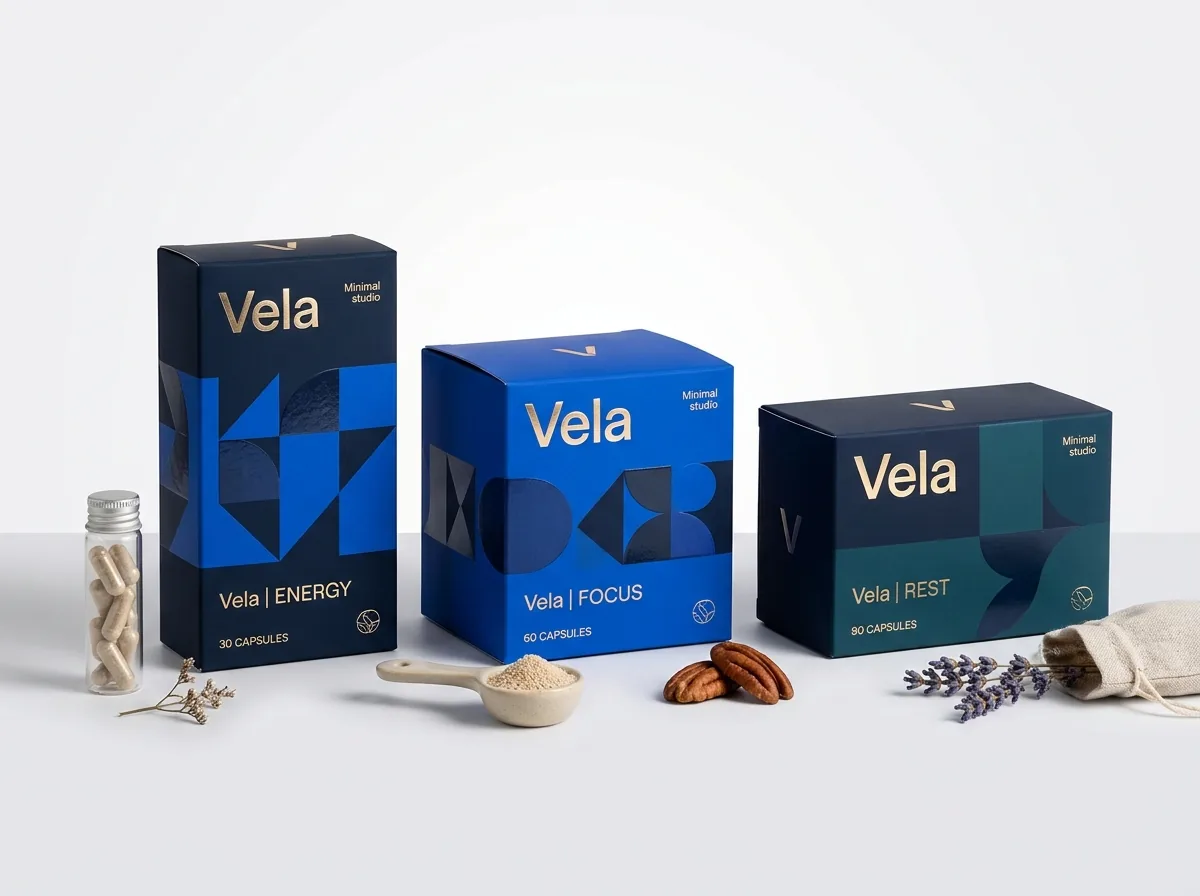
Every finish available on custom printed supplement labels protects your CMYK and Pantone inks from scuffing inside master shipping cases, gym bags and humid bathroom medicine cabinets, but each surface interacts differently with overhead lighting, studio cameras and co-packer date coders. Many growing wellness brands combine two finishes on the same label, such as a smooth matte lamination across the entire wrap paired with hot gold foil stamping on the brand crest or raised glossy spot UV over a molecular icon. That two-finish approach gives you glare-free legibility on the Supplement Facts panel while catching the shopper's eye from six feet away. Use the comparison table below to match your formula category to the right stock and finish combination.
| Stock or finish | Visual & tactile feel | Best supplement categories | Supplement Facts & lot code notes |
|---|---|---|---|
| Matte finish | Smooth, low-glare, modern clinical feel | Daily vitamins, probiotics, herbal adaptogens, tinctures | Zero glare on 6-pt text; photographs cleanly for e-commerce |
| Gloss finish | Crisp, reflective, high color saturation | Gummy vitamins, children's chewables, hydration powders | Sheds powder dust on filling lines; high color contrast |
| Foil stamping | Pressed metallic gold, silver or copper accents | Doctor-formulated lines, longevity capsules, seals | Use on front logo/borders; keep away from 6-pt text |
| Metallic foil stock | Full chrome, silver or rainbow metallic base | Pre-workout tubs, BCAA powders, thermogenic formulas | Requires solid white ink box behind Supplement Facts |
| Spot UV | Raised glossy varnish over selected areas | Nootropics, black-on-black tubs, flavor icons | Pairs with matte base for tactile contrast in the hand |
| Clear label stock | Transparent no-label window on glass or PET | Fruit gummies, liquid chlorophyll, colorful capsules | Requires white ink underbase behind all small text |
Why do clinical vitamin and longevity brands favor matte finishes?
Walk down the vitamin aisle of a natural grocery store or scroll through top direct-to-consumer wellness brands and you will notice that matte labels dominate capsule and tincture bottles. Under harsh overhead LED retail lighting, a curved cylindrical bottle acts like a convex mirror. A high-gloss coating throws a bright vertical glare line straight down the side of the bottle, forcing shoppers to tilt the container back and forth to read 6-point ingredient amounts. A matte finish scatters incoming light across the curve of the 150 cc or 200 cc bottle so the entire Supplement Facts panel and front Principal Display Panel stay readable from any angle. That same glare-free surface also makes studio and lifestyle product photography much easier for your website and Amazon listings, especially when paired with a matching matte custom supplement box.
- Glare-free legibility: 5- to 6-point dietary ingredient names and % Daily Values read cleanly under store lights.
- E-commerce studio friendly: no hot white specular reflections obscuring your brand name in product renders or photos.
- Apothecary feel: pairs naturally with amber glass packer bottles, bamboo-clad droppers and muted earth-tone palettes.
- Tactile canvas: creates a flat contrast base that makes hot foil stamping or raised spot UV pop.
How do sports nutrition and nootropic brands use foil and spot UV?
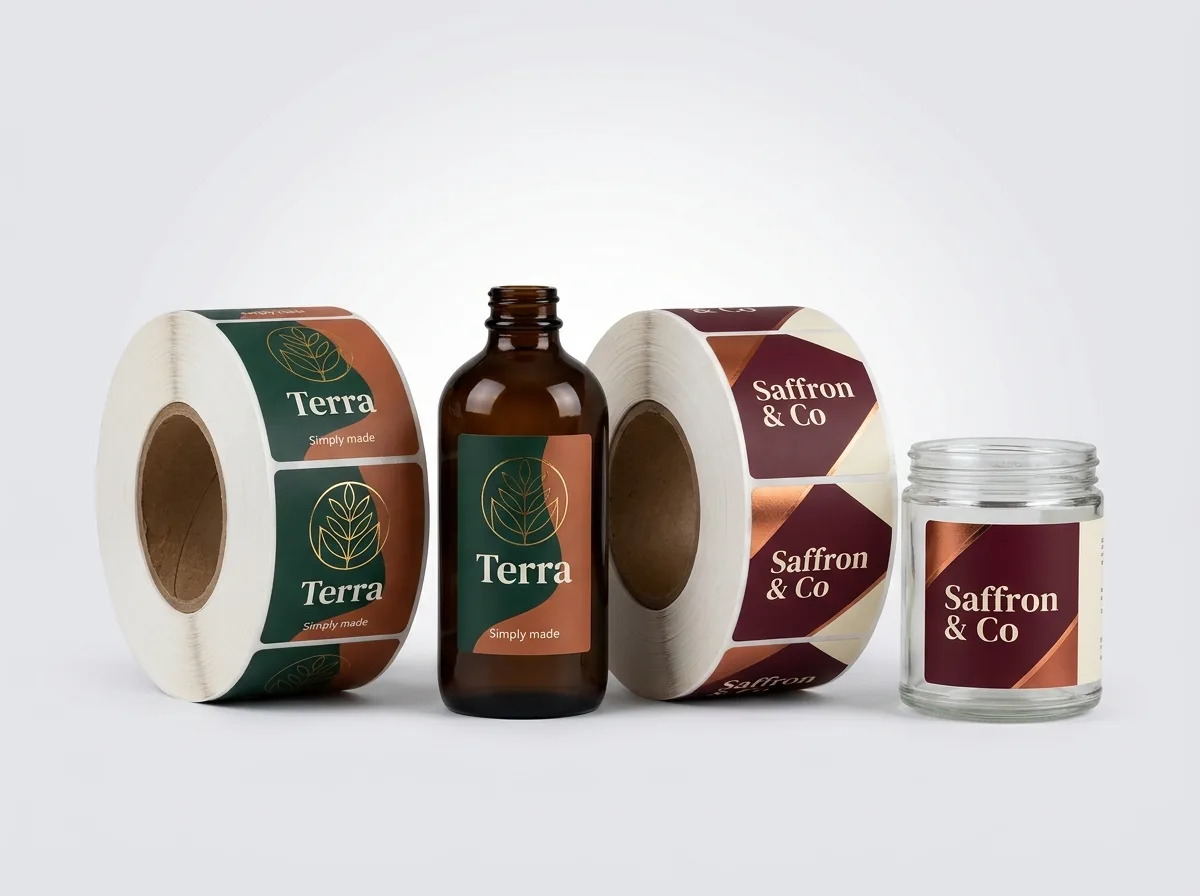
While daily multivitamins lean toward quiet clinical minimalism, pre-workout powders, intra-workout amino acids, creatine tubs and gaming nootropics compete in specialty nutrition shops where bold shelf presence wins attention. Printing on custom foil labels gives a 16 oz or 32 oz black HDPE tub an anodized metallic sheen across flavors like Sour Apple, Blue Raspberry or Blood Orange. By combining metallic foil stock with a selective white ink underbase and matte or gloss lamination, your designer can make lightning bolts, flavor bursts or potency numbers glow like brushed aluminum while keeping the surrounding brand panel solid and opaque. Adding raised spot UV over the product name or a geometric background pattern gives customers a physical ridge they feel the moment they lift the canister off the shelf. Because you can group multiple flavors on the same tub dieline, each flavor can feature its own metallic accent color without extra cutting die costs.
Know your size? Compare pricing across up to 3 quantities.
Request a Quote →When should you choose clear labels for gummies and colored capsules?
Pectin fruit gummies, liquid chlorophyll drops, saffron extracts and two-tone liquid-filled capsules have vibrant natural colors that help sell the product when visible through a clear PET jar or flint glass bottle. Ordering custom clear labels creates a clean 'printed-on-the-bottle' look that frames the gummies inside rather than hiding them behind a solid white wrap. The golden rule of clear supplement labels is never printing small regulatory text or barcodes directly on unbacked clear film. Once a clear jar is filled with dark elderberry gummies or amber capsules, black text without a white background disappears against the product inside. Our prepress team places a solid opaque white ink layer behind your Supplement Facts panel, barcode box and front logo so you get both a transparent window and effortless readability under store lights.
How do finishes affect co-packer lot coding and powder filling lines?
During contract manufacturing, empty or filled supplement bottles pass through dusty capsule counters or powder augers and then through an inline date coder that stamps the batch lot number and expiration date (LOT # / EXP). When choosing between matte and gloss finishes on custom roll labels, ask your co-packer two questions: how dusty is the filling room, and what type of date coder do they run? On powder tub lines where fine whey, collagen or greens dust floats in the air, gloss lamination wipes clean with a dry air knife or cloth more easily than unlaminated paper. For date coding, continuous inkjet (CIJ) and UV laser coders mark cleanly on most matte and gloss surfaces, whereas some wax-resin thermal-transfer ribbons bond best to an unvarnished or specially receptive LOT/EXP zone. Tell your account manager how your filler codes bottles so we set up your digital proof and 3D mockup to match your production line.
- Continuous inkjet (CIJ) coders: print fast on both matte and gloss finishes; always provide a white or light background box for contrast.
- UV or CO2 laser coders: ablate a crisp, permanent date code into a dark ink patch without needing ink ribbons or solvents.
- Thermal-transfer ribbon coders: let us know if your co-packer needs an unvarnished knockout window for wax-resin ribbons.
- Powder-room wipe down: laminated finishes protect labels when tubs are wiped or air-blasted after auger filling and induction sealing.
What mistakes do brands make when picking supplement label finishes?
A finish that looks great on a flat computer screen can make 6-point text unreadable on a curved bottle if applied in the wrong spot. Watch out for these five finish mistakes
- Printing 6-point Supplement Facts text in metallic foil or directly over unbacked silver foil stock, where reflection makes the table unreadable.
- Using unbacked black text on a clear label over dark berry gummies or amber glass without a solid white ink underbase.
- Placing a dark, heavily varnished graphic inside the LOT/EXP box where the co-packer's black inkjet date stamp needs high contrast.
- Applying raised spot UV or hot foil stamping right up to the ⅛ inch cut edge, where the die blade can crack or lift the raised layer.
- Choosing an unlaminated paper stock for a bathroom-counter tincture or oil-based softgel bottle that gets handled with damp or oily fingers.
Find your label size
Suggested label size: 9⅛ × 2¾ in (width × height)
A typical starting point. Your account manager confirms the size on the proof.
Quote this size →Packaging for this
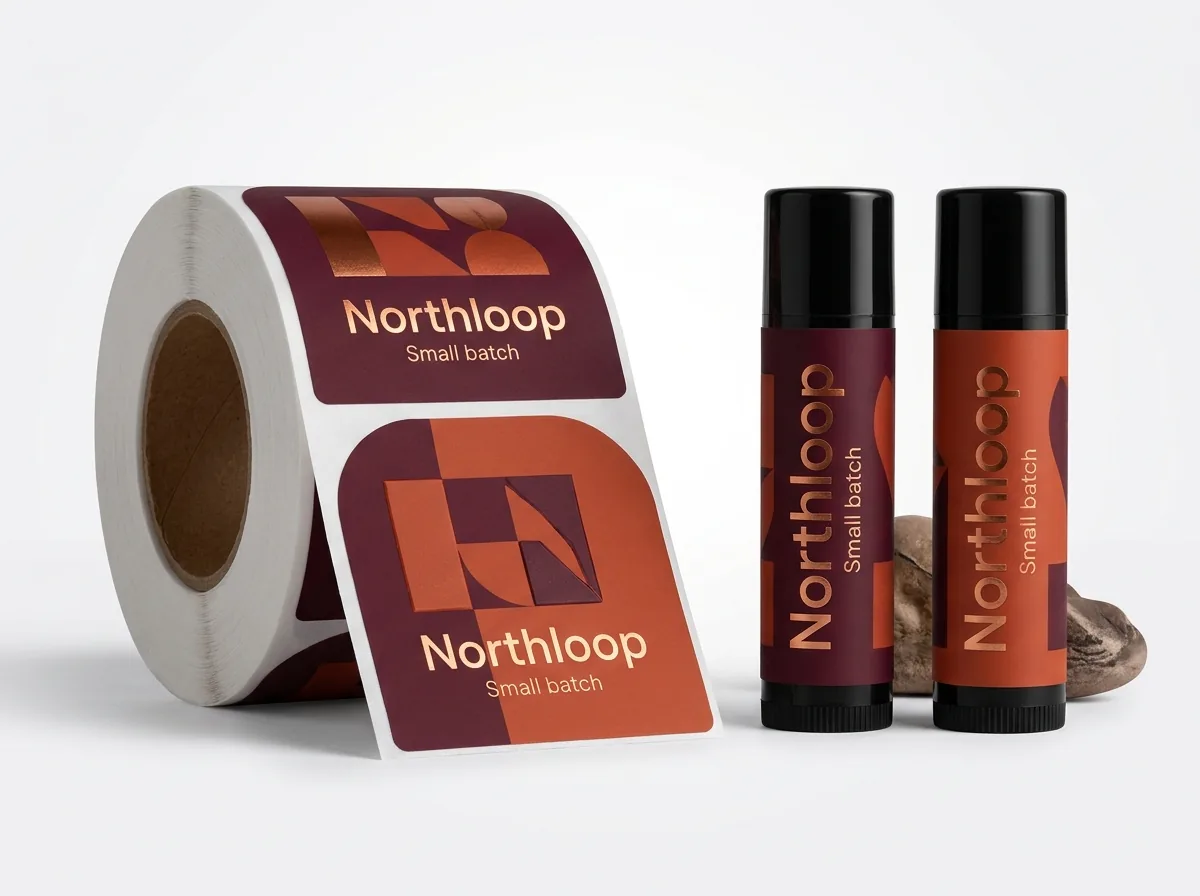
Ready to order supplement labels? Compare up to 3 quantities with a free 3D mockup.
Request a Quote →Questions about supplement labels
Is matte or gloss better for reading a small Supplement Facts table?
Matte is usually better for dense 5- to 6-point Supplement Facts tables on curved bottles because it diffuses overhead store lighting instead of reflecting a bright glare line across the numbers.
Can I combine a matte finish with gold foil stamping or spot UV?
Yes. Pairing a smooth matte finish across the label with hot foil stamping on your logo or raised spot UV on flavor icons is one of the most popular combinations for premium vitamins and nootropics.
What is the difference between foil stamping and metallic foil label stock?
Foil stamping presses a metallic ribbon (like gold or silver) onto specific vector shapes over a standard label stock. Metallic foil label stock starts with an all-over chrome or silver base layer that you print CMYK and white ink over.
How do you keep a Supplement Facts panel readable on a clear gummy jar label?
We print a solid opaque white ink layer directly behind the Supplement Facts rectangle and barcode box before printing the black text on top, while leaving the rest of the label transparent to show the gummies.
Can I order a sample kit to feel matte, gloss, foil and spot UV finishes in person?
Yes. You can order our $50 sample kit to feel our stocks and finishes in your hand before deciding, or request a paid printed sample of your own supplement label design (credited toward your production order).
Do matte or gloss finishes change the 10-14 business day turnaround?
No. Standard production for custom supplement labels with matte, gloss, foil stamping or spot UV is 10-14 business days after proof approval, with 4-5 business day rush available.
Still have a question? Ask a packaging specialist.
Request a Quote →Request your supplement labels quote
Tell us your size and quantities, and one dedicated account manager prepares pricing for each tier.
- Free design & AI-to-print studio + 3D mockup
- No die or plate charges · 4–5 day rush available
- Free shipping to all 50 states
- 10% off your first order
This finish comparison is based on CubitPack's decided finishes (Matte, Gloss, Foil stamping, Spot UV) and label stocks (Clear, Foil), plus standard contract nutraceutical filling and date-coding practices. Checked by a packaging specialist.
Sources
What changed
- October 22, 2026: First published.
- October 22, 2026: Updated specifications, terminology, and verified source links.
More guides
New packaging guides by email
Sizes, materials and design tips. Unsubscribe anytime.