
How do I design custom perfume boxes, EVA foam cavities and recessed label plaques?
Short answer: Design your EVA foam cavity with a stepped neck bridge so heavy caps cannot slip off, pair blind debossing with hot foil stamping on the front crest, and place regulatory alcohol and allergen text on the back and bottom panels. CubitPack sets up your dielines for custom perfume boxes free.
On this page
- How do I design a stepped EVA foam insert that locks both the bottle and cap
- How does a blind-debossed label plaque let one rigid box serve multiple scents
- Where should I print the olfactory note pyramid and perfumer's story
- What FDA cosmetic, alcohol flammability and IFRA allergen rules apply to perfume boxes
- How do I prepare my perfume box artwork for hot foil, embossing and dielines
- Common mistakes
- FAQs
Request a custom quoteFree dieline & 3D mockup
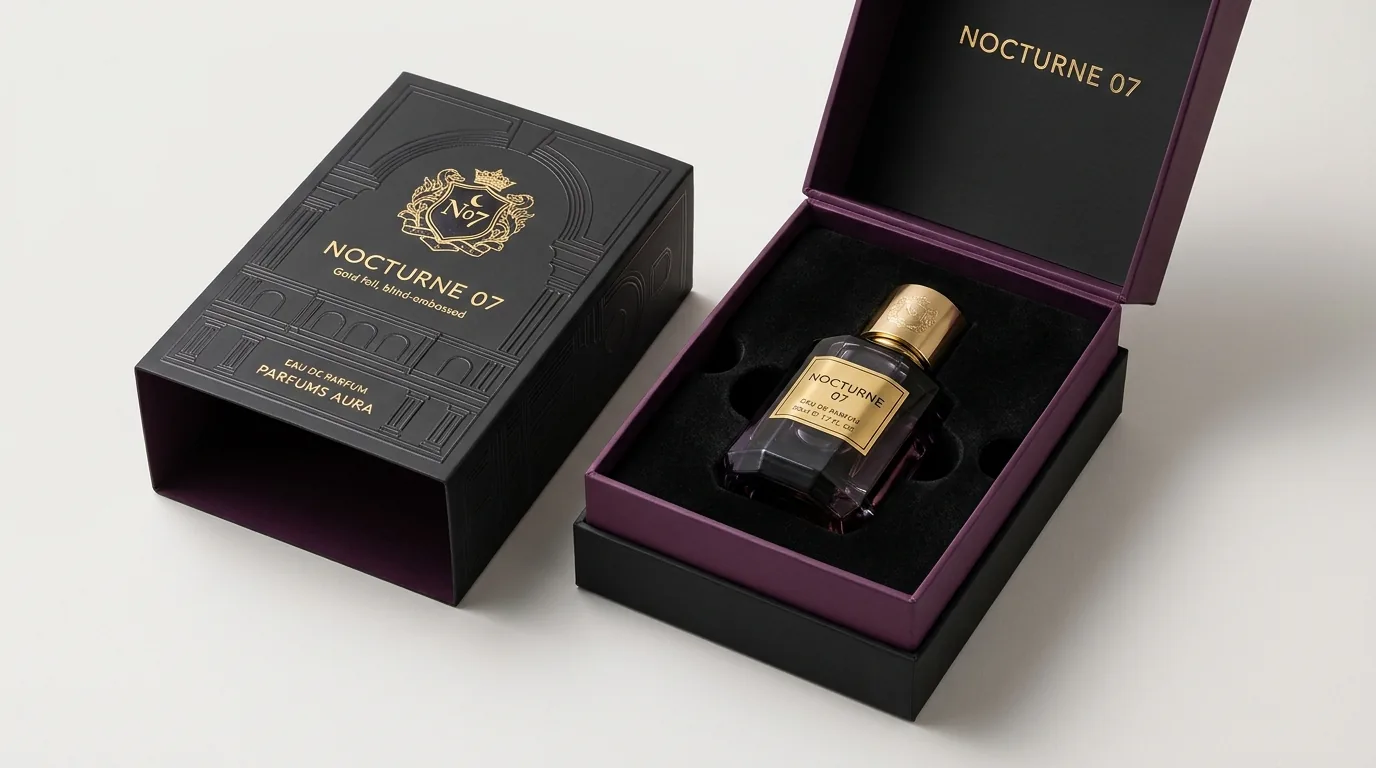
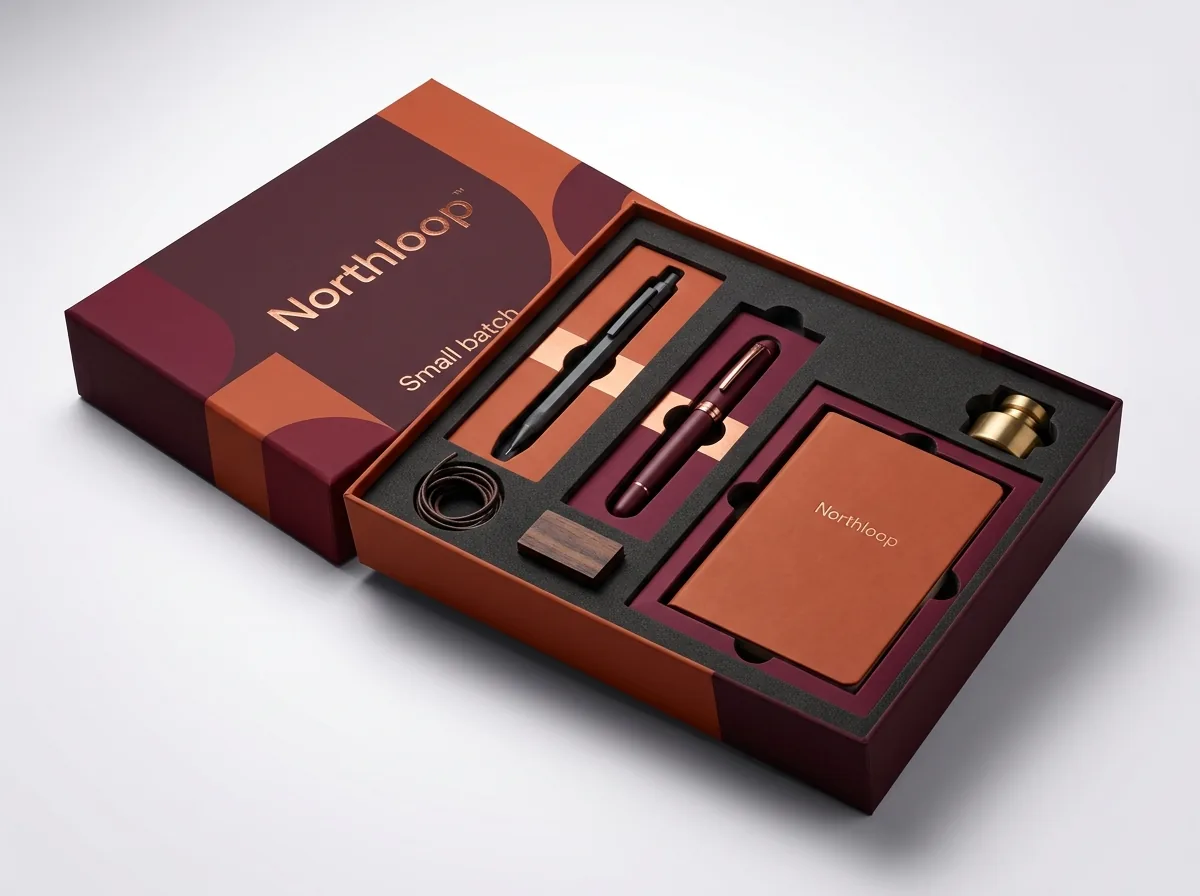
Luxury fragrance packaging relies on architectural restraint and precision interior engineering rather than busy graphics. On the outside, the most enduring perfume boxes combine a single tactile paper surface, such as matte soft-touch, warm cream card or debossed linen texture, with a blind-debossed border plaque and metallic hot foil stamping on the house monogram and scent title. On the inside, the insert must be engineered around the physics of a glass flacon and its weighted cap: a stepped EVA foam recess pinches inward at the atomizer collar so the cap cannot slide off in transit, while finger notches or a satin lifting ribbon let the customer raise the bottle smoothly. At CubitPack, our structural and prepress specialists build both your outer box dieline and insert drawing free, and you approve a 3D mockup before paying a cent.
How do I design a stepped EVA foam insert that locks both the bottle and cap?
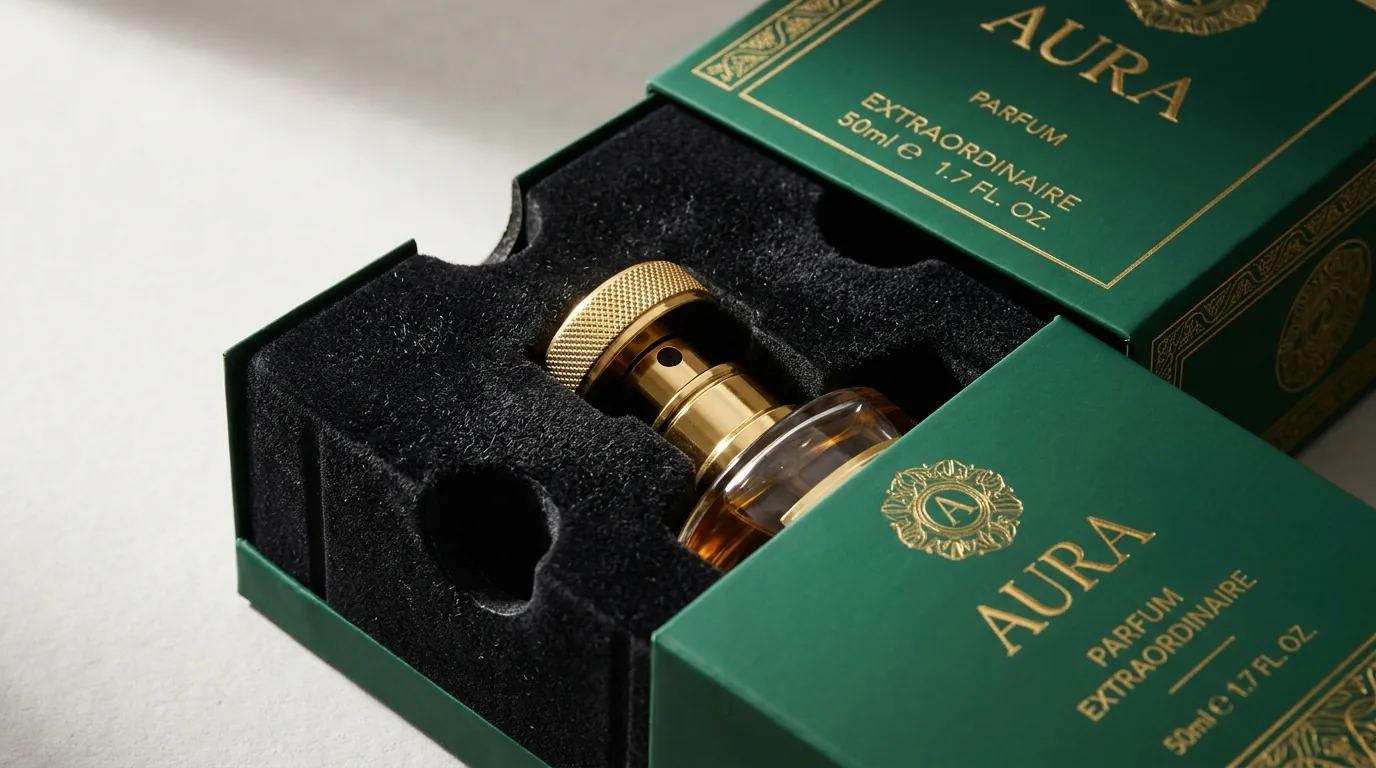
When a customer opens a flat-lay rigid coffret or shoulder-neck box, the custom EVA foam insert is the first interior surface they see-and the only barrier stopping a 10-ounce flint-glass flacon from shifting during parcel shipping. Beginner designs often cut a single rectangular hole big enough for the whole capped bottle. In transit, a heavy zamac or magnetic cap slides upward into that open space, pops off the crimp atomizer, and scratches the glass bottle face. To prevent cap separation, our design team trace a stepped silhouette around your bottle: the lower well matches the glass body width and depth, two foam 'shoulders' pinch inward at the narrow atomizer neck, and the upper well matches the exact cap dimensions. That stepped neck bridge locks the glass body and the heavy cap in separate zones so neither piece can move axially. Finish the top face of the EVA foam with black or cream velvet flocking, soft-touch matte paperboard or foil-stamped card so the raw foam cells stay hidden.
- Stepped neck bridge: pinch the foam cutout inward around the atomizer collar to trap both the bottle shoulder and the bottom of the cap.
- 60% to 70% depth profile: sink the bottle two-thirds deep into the foam so the top face of the glass rises above the tray.
- Ergonomic removal: add two half-moon finger notches beside the bottle waist OR anchor a grosgrain ribbon pull underneath the bottle.
- Top lid pad: on flat-lay magnetic boxes, add a thin foam or card pad inside the lid if your bottle has a raised front plaque.
How does a blind-debossed label plaque let one rigid box serve multiple scents?
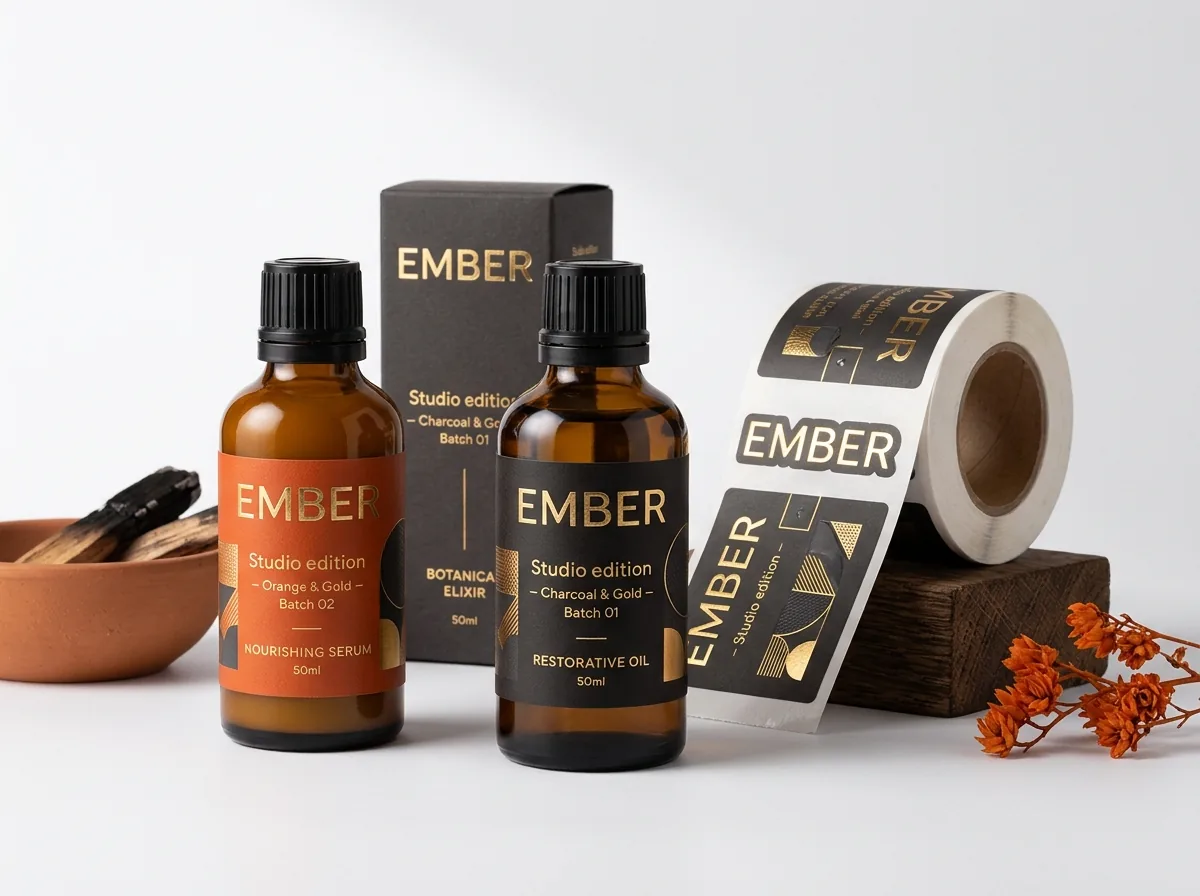
Many niche fragrance houses launch 4, 6 or 8 Eau de Parfum scents that all use the exact same 50 ml or 100 ml glass bottle mold. You have two smart ways to package a multi-scent line in custom printed perfume boxes. Option one is multi-design printing: use CubitPack's 2 designs or 3+ designs quote option to print the scent name, olfactory notes and barcode directly on each SKU within one combined order run. Option two-a classic heritage perfumery signature-is to wrap your rigid shoulder-neck or magnetic boxes in one timeless house color, and stamp a deep blind-debossed rectangular, oval or arched plaque (about 0.5 mm to 0.8 mm recessed) into the front face. You then apply a custom foil-stamped bottle label for each scent right inside that recessed frame. The debossed ledge guides hand-application so every label sits perfectly straight and flush with the surrounding box wall.
| Tactile finish combination | Visual & hand feel | Best fragrance house style |
|---|---|---|
| Blind debossed plaque + applied scent label | Sculptural recessed frame; flush wrap-around or front label | Niche apothecary, Parisian & multi-scent artisanal lines |
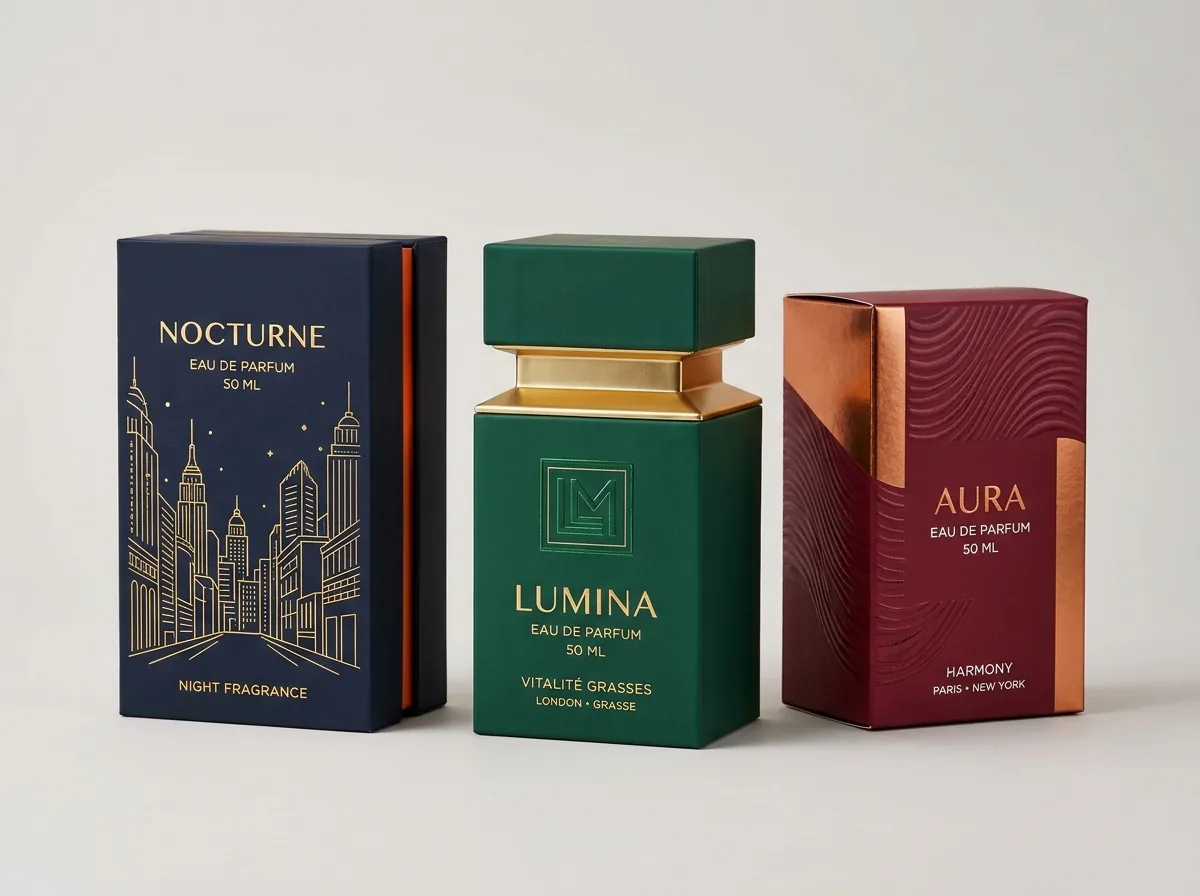
| Soft-touch matte + gold / copper hot foil | Velvety warm grip with mirror-bright metallic typography | Modern luxury, oud, amber & evening extraits |
| Multi-level embossing + Pantone flood coat | Raised 3D botanical crest or monogram you feel with your thumb | Heritage floral, botanical & cologne houses |
| Tone-on-tone spot UV over dead-matte black | Subtle gloss pattern that catches light only when tilted | Minimalist, avant-garde & gender-neutral scents |
| Natural kraft + crisp white ink + black foil | Raw organic fiber paired with sharp high-contrast lettering | Botanical parfum oils, solid perfumes & clean beauty |
Where should I print the olfactory note pyramid and perfumer's story?
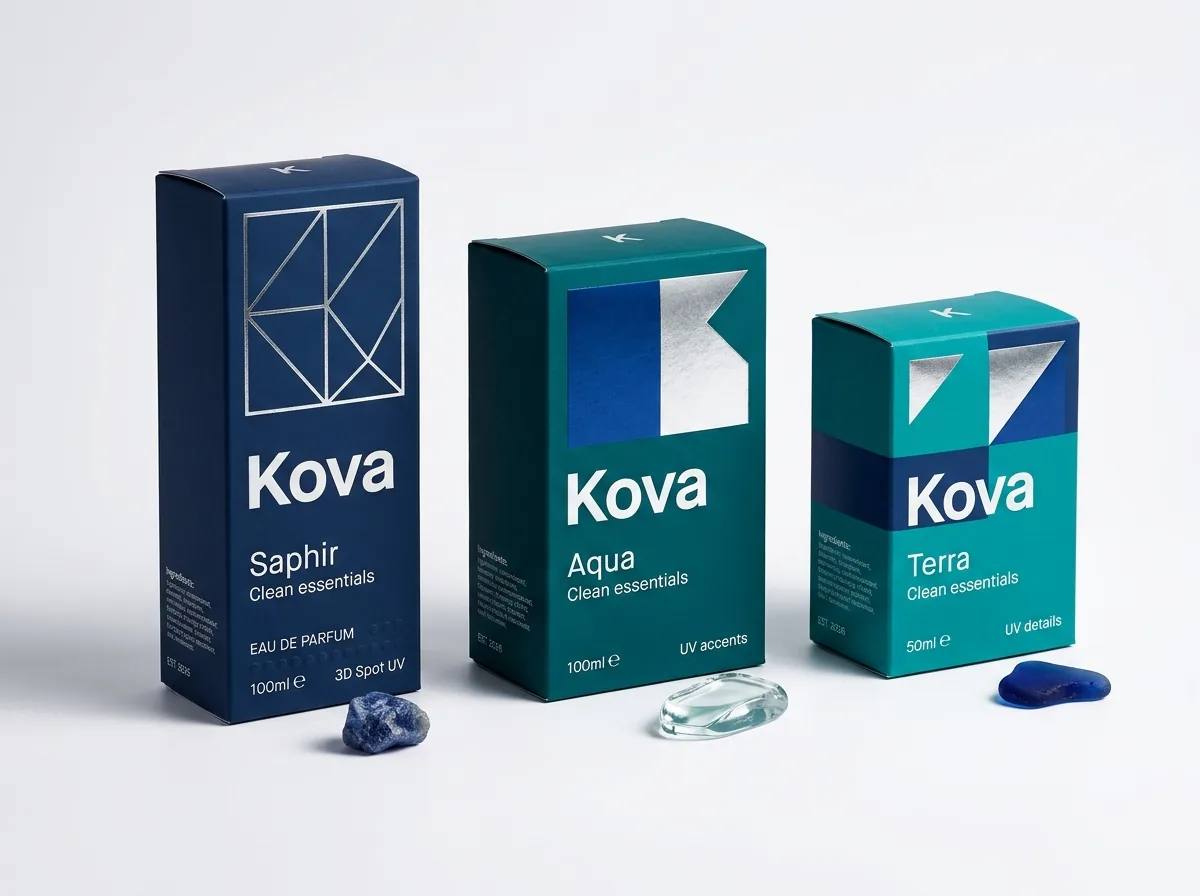
Shoppers buying fine fragrance online cannot smell the liquid through a screen, so the words and structure of your packaging do the sensory storytelling. Instead of crowding the front panel with long descriptions, keep the front face minimal: your house crest or wordmark, the fragrance name, the concentration ('Eau de Parfum' or 'Extrait de Parfum'), and the net volume ('50 mL · 1.7 FL. OZ.'). Move the olfactory note pyramid (Top Notes, Heart Notes, Base Notes), the inspiration story and the perfumer's signature to the inside lid of a magnetic book box, the inner sleeve of a discovery drawer, or a heavy card insert slipped on top of the bottle. When you select Outside + inside printing on a folding carton, printing a botanical illustration or poem on the inside walls turns opening the top flap into a second reveal.
Know your size? Compare pricing across up to 3 quantities.
Request a Quote →What FDA cosmetic, alcohol flammability and IFRA allergen rules apply to perfume boxes?
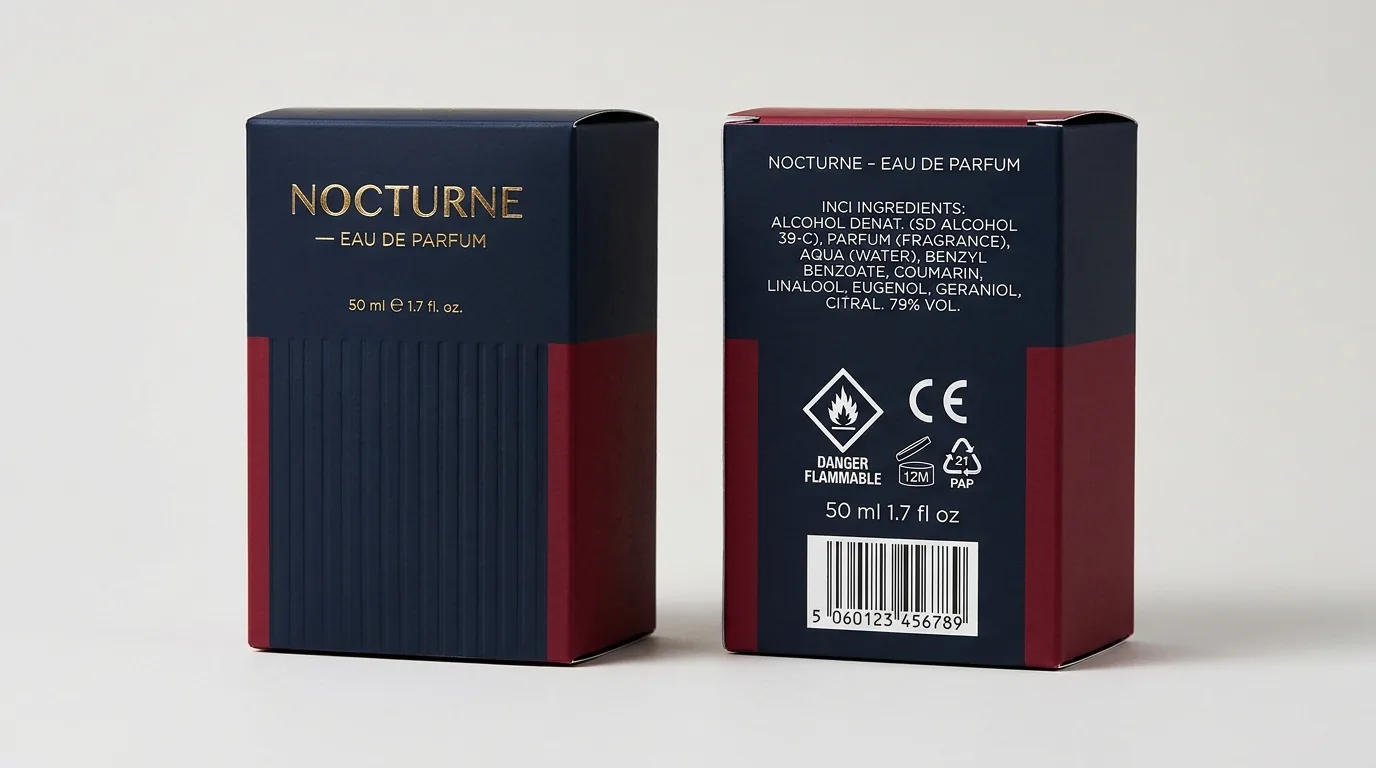
Fine fragrances formulated with perfumer's alcohol (SD Alcohol 40-B / Alcohol Denat.) are regulated as cosmetics in the United States under the FDA Fair Packaging and Labeling Act (21 CFR Parts 701 and 740) and carry specific transport and safety disclosures. Because glass perfume flacons are often kept minimal with only a small front label, the outer secondary box carries the mandatory regulatory copy. Reserve the back panel and bottom panel of your box for six required elements: (1) Product identity ('Eau de Parfum Spray' or 'Parfum Extrait'), (2) Net quantity in both US fluid ounces and metric milliliters at the bottom of the front panel ('1.7 FL. OZ. / 50 mL'), (3) Ingredient list starting with Alcohol Denat., Parfum (Fragrance), Aqua (Water), followed by any disclosed fragrance allergens (such as Limonene, Linalool, Citral, Coumarin or Geraniol) for US/EU/UK dual compliance, (4) Flammability caution ('CAUTION: Flammable until dry. Keep away from flames and heat'), (5) Company name and city/state address, and (6) UPC/EAN barcode and batch code zone on the bottom panel.
How do I prepare my perfume box artwork for hot foil, embossing and dielines?
When preparing artwork on your custom CubitPack dieline, extend all background colors and textures 1/8 inch (0.125 in) past the outer cut lines for folding cartons, or 3/4 inch (0.75 in) past the board edge on wrapped rigid boxes so the wrap paper folds cleanly around the inside of the rigid walls. Keep foil stamping, embossing and spot UV artwork on separate named vector layers in 100% solid black. Leave at least 1/8 inch of safe margin between foil or embossed crests and any fold crease or debossed plaque edge. If you only have a logo file, a bottle sketch or an AI concept image, our free design help team will build your complete box and insert dielines, separate your foil and emboss plates, and send a 3D mockup before you pay.
What are the most common custom perfume box design and prepress mistakes?
Small structural oversights in foam cutouts or foil placement can undermine a luxury fragrance launch. Check these five details before approving your proof
- Cutting a straight rectangular foam well without a stepped neck bridge, allowing a heavy magnetic or metal cap to slide off the atomizer in shipping.
- Placing a wide UPC barcode and batch sticker in the middle of the back panel instead of tucking them neatly onto the bottom base panel.
- Running delicate hot-foil serif text smaller than 7 pt over a deep linen or embossed texture where tiny strokes can fill in or break.
- Designing a snug EVA foam cavity with zero finger notches and no satin lifting ribbon, making it difficult to lift a smooth glass flacon out.
- Omitting the alcohol flammability caution or dual fluid-ounce / milliliter net volume statement on the outer retail carton.
Find your size
Suggested inside size: 4.5 × 3.25 × 0.75 in
A starting point. Your account manager confirms the size with you before the proof.
Quote this size →Packaging for this
Ready to order perfume boxes? Compare up to 3 quantities with a free 3D mockup.
Request a Quote →Questions about perfume boxes
Do you charge extra die or plate fees for custom EVA foam cutouts and foil crests?
No. CubitPack never charges die or plate fees on custom perfume boxes. Whether your design uses a custom bottle-contoured EVA foam well, a debossed front label plaque or hot foil stamping, tooling is included free in your quote.
Can I combine hot foil stamping and blind embossing on the same logo or border?
Yes. You can either combine foil and embossing in a single registered pass (foil embossing, which raises the metallic logo in 3D relief) or pair a blind-debossed recessed plaque with flat hot foil lettering inside the frame.
What wrap colors and linings are available for EVA foam perfume inserts?
High-density EVA foam comes in deep black or clean white and can be topped with plush velvet flocking (black, cream, burgundy, forest green or navy), matte or soft-touch laminated card, or metallic foil paper to match your box interior.
How much bleed do wrapped rigid perfume boxes need compared with folding cartons?
Folding paperboard cartons need standard 1/8 inch (0.125 in) bleed past the cut lines. Wrapped rigid boxes need about 3/4 inch (0.75 in) of wrap-around bleed on the outer paper sheet so the paper folds over the chipboard rim into the inside wall.
Can CubitPack design my perfume box and foam insert if I only have my bottle?
Yes. Send us your bottle measurements (or glass supplier drawing) plus your logo and scent names. Our structural and graphic designers will engineer the outer box, stepped foam or flute insert, and 3D mockup free before payment.
How can I check the foil finish and foam fit before ordering my full run?
Every order includes a free flat dieline proof and 3D mockup before payment. You can also order our $50 sample kit to touch real foil, embossing and rigid boards, or order a paid custom prototype credited toward your production run.
Still have a question? Ask a packaging specialist.
Request a Quote →Request your perfume boxes quote
Tell us your size and quantities, and one dedicated account manager prepares pricing for each tier.
- Free design & AI-to-print studio + 3D mockup
- No die or plate charges · 4–5 day rush available
- Free shipping to all 50 states
- 10% off your first order
The structural foam rules (stepped neck bridges, 60–70% bottle depth, 3/4 inch rigid wrap bleed) follow luxury rigid box manufacturing standards, and regulatory notes reference the US FDA Cosmetics Labeling Guide (21 CFR Parts 701/740) and IFRA allergen guidelines. Checked by a CubitPack packaging specialist. Spot an error? Tell us and we will fix it.
Sources
What changed
- October 22, 2026: First published.
- October 22, 2026: Updated specifications, terminology, and verified source links.
More guides
New packaging guides by email
Sizes, materials and design tips. Unsubscribe anytime.