
Gourmet food mailer boxes with inserts vs window sleeve trays: which should you choose?
Short answer: Choose E-flute mailer boxes with die-cut inserts when shipping glass jars, olive oil bottles, and pantry sets by parcel carrier, and choose sliding window sleeve trays for boutique shelf sets, tinned fish trios, and local charcuterie grazing kits. Both custom gourmet food boxes start at 1,000 units.
On this page
- How do fitted gourmet mailer boxes, window sleeve trays, and two-piece chests compare
- When should you choose an E-flute mailer box with a die-cut cradle insert
- When does a sliding tray-and-sleeve box beat a hinged mailer box
- Where do two-piece presentation chests and gable carry boxes fit in
- Should your internal gourmet food insert be folding paperboard or E-flute corrugated
- Common mistakes
- FAQs
Request a custom quoteFree dieline & 3D mockup
Selecting between a corrugated mailer box with a fitted insert and a sliding tray-and-sleeve box comes down to how your specialty foods are sold and how much glass weight sits inside. An E-flute corrugated mailer box folds double-thick side walls and locks shut with front dust wings, creating a crush-resistant chest that pairs with a die-cut corrugated cradle to ship heavy glass condiment jars, vinegar bottles, and pasta sets nationwide via UPS, FedEx, or USPS. A tray-and-sleeve box pairs a folded paperboard or kraft base tray with a wrap-around sliding sleeve (either solid or window-patched), letting specialty shop customers see artisan cheeses, cured meats, conservas tins, or preserve trios right on the counter before sliding the drawer open. At CubitPack, both structures are custom printed from 1,000 boxes with free dielines, digital proofs, 3D mockups, and no die charges.
How do fitted gourmet mailer boxes, window sleeve trays, and two-piece chests compare?
Specialty food brands rarely sell in only one channel: a farmstead creamery or olive mill might sell grab-and-go trios in their tasting room, stock regional gourmet grocers, and ship thousands of Q4 corporate holiday gifts via UPS or FedEx. Matching the structural style of your printed gourmet food boxes to the distribution channel prevents broken glass in e-commerce while avoiding over-boxed cartons on retail shelves. Compare the four core specialty food structures across glass protection, shelf visibility, and fulfillment speed in the table below.
| Feature | Mailer box with insert | Window tray & sleeve | Two-piece gift box |
|---|---|---|---|
| Best sales channel | DTC parcel shipping, subscriptions & corporate mail | Specialty grocery shelves, delis & local grazing pickup | Boutique gift displays, department stores & VIP handoff |
| Glass jar protection | Highest (E-flute walls + 0.5 in corrugated bridges) | Light (best for tins, dry goods, or retail carry-out) | Medium to High (when paired with a corrugated cradle) |
| Product visibility | Revealed on opening (full inside-lid tasting guide) | Immediate shelf view through clear window sleeve | Classic lift-off lid reveal or multi-pane window lid |
| Typical board stock | 32 ECT E-flute corrugated (white or natural kraft) | 18 pt–24 pt folding board or E-flute base tray | 20 pt–24 pt heavy card or laminated micro-flute |
| Storage & assembly | Ships 100% flat; folds without tape or glue | Ships flat; tray folds and sleeve slides over | Ships flat; base and lid fold separately |
When should you choose an E-flute mailer box with a die-cut cradle insert?
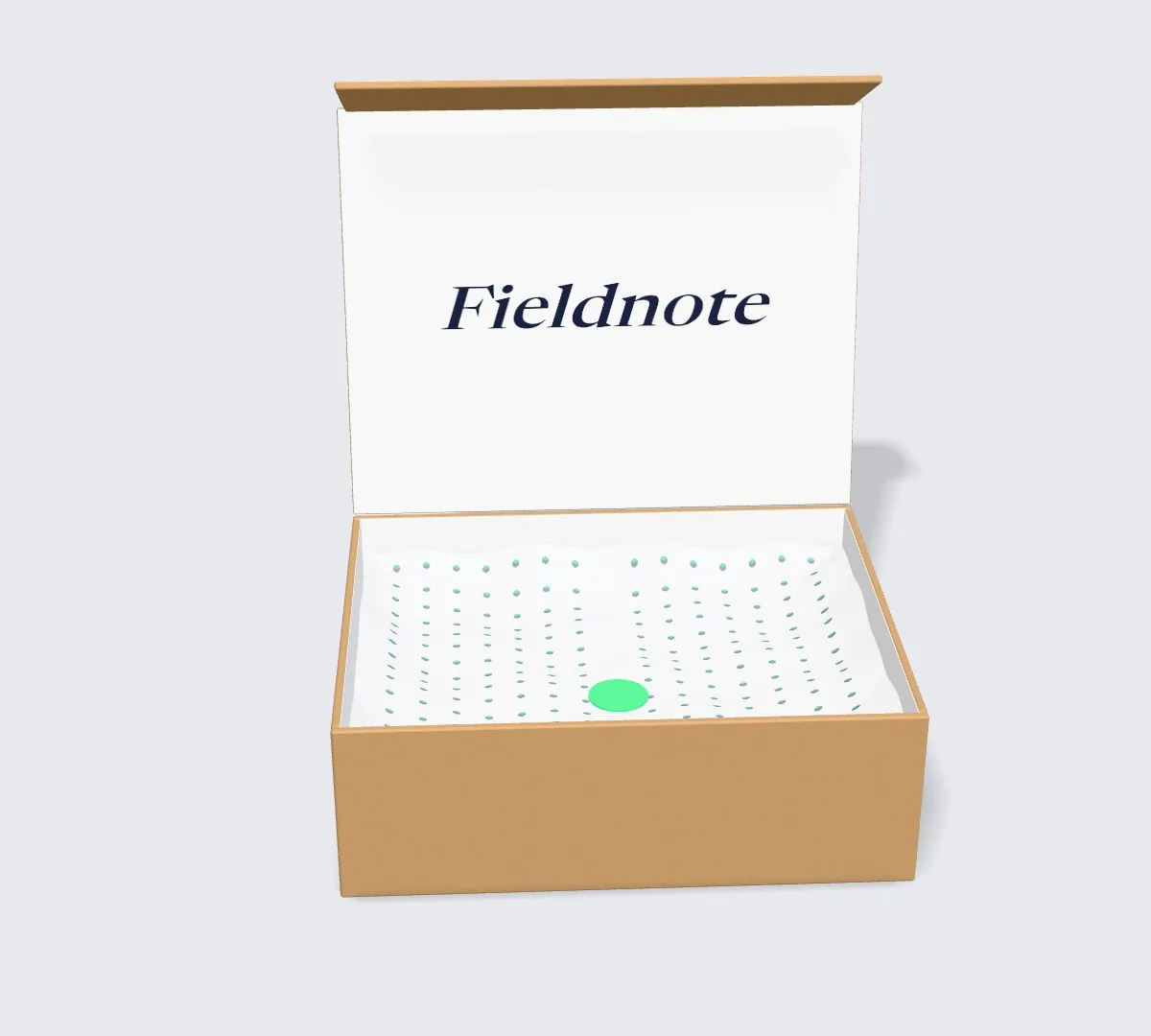
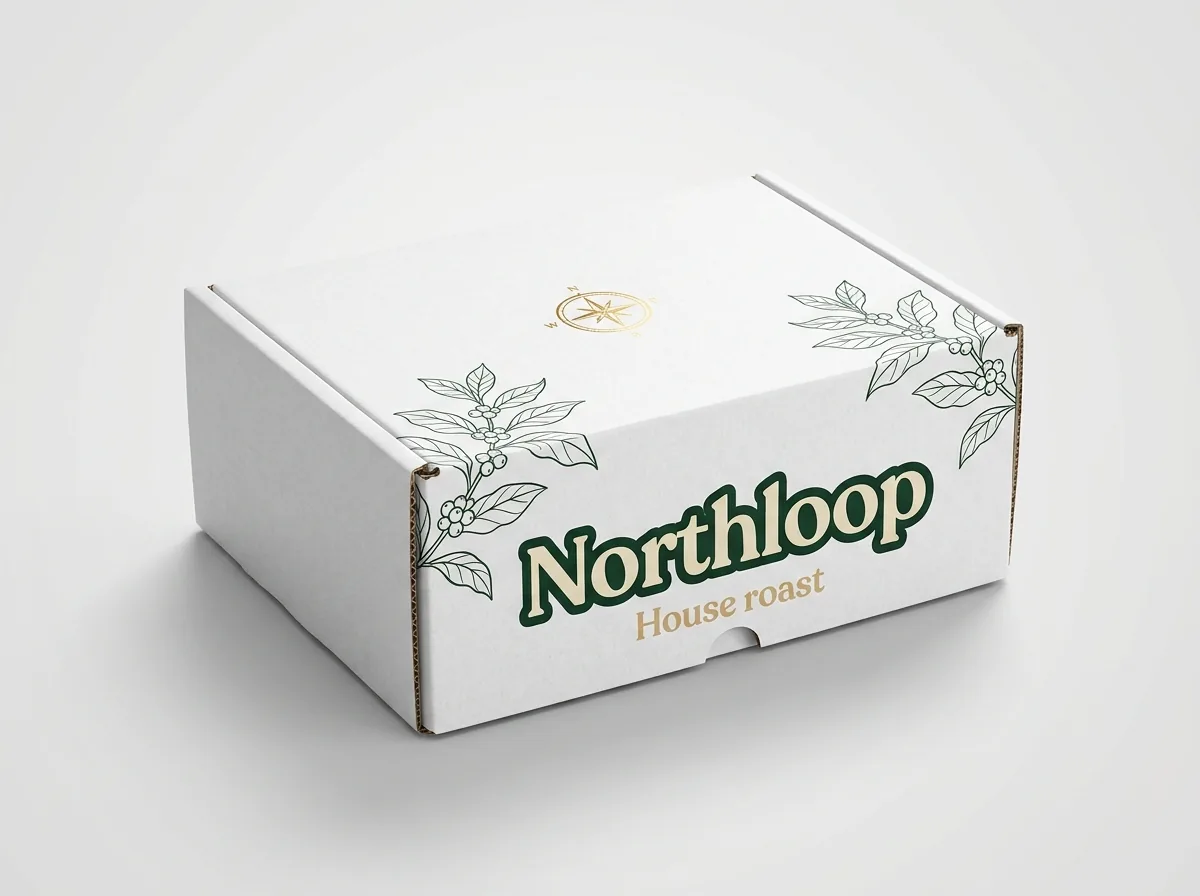
Whenever your gourmet food set includes glass jars of preserves, honey, tapenade, hot sauce, or glass bottles of olive oil and vinegar that travel through parcel sortation belts, an E-flute custom mailer box with a fitted corrugated insert is the safest engineering choice. As a one-piece roll-end tuck-front mailer folds together, its side walls double over to form two layers of fluted cushioning around the left and right edges, and its front locking ears keep the lid from popping open if the package tumbles. Inside the mailer, a custom die-cut E-flute cradle holds each jar, bottle, and cracker box in its own recessed well with at least 0.5 inch of corrugated bridge space between glass containers. Because the hinged lid opens like a treasure chest and stays attached to the back wall, you get a full-width interior billboard directly above the products to print your tasting order, maker portrait, and pairing recipes.
- Locks 2 to 8 mixed glass jars, bottles, tins, and dry-good packets in dedicated apertures.
- Eliminates the labor and mess of stuffing loose crinkle paper around fragile glass.
- Provides a built-in inside-lid canvas for tasting menus without printing a separate booklet.
- Packs flat in your warehouse and assembles by hand in seconds without tape.
When does a sliding tray-and-sleeve box beat a hinged mailer box?
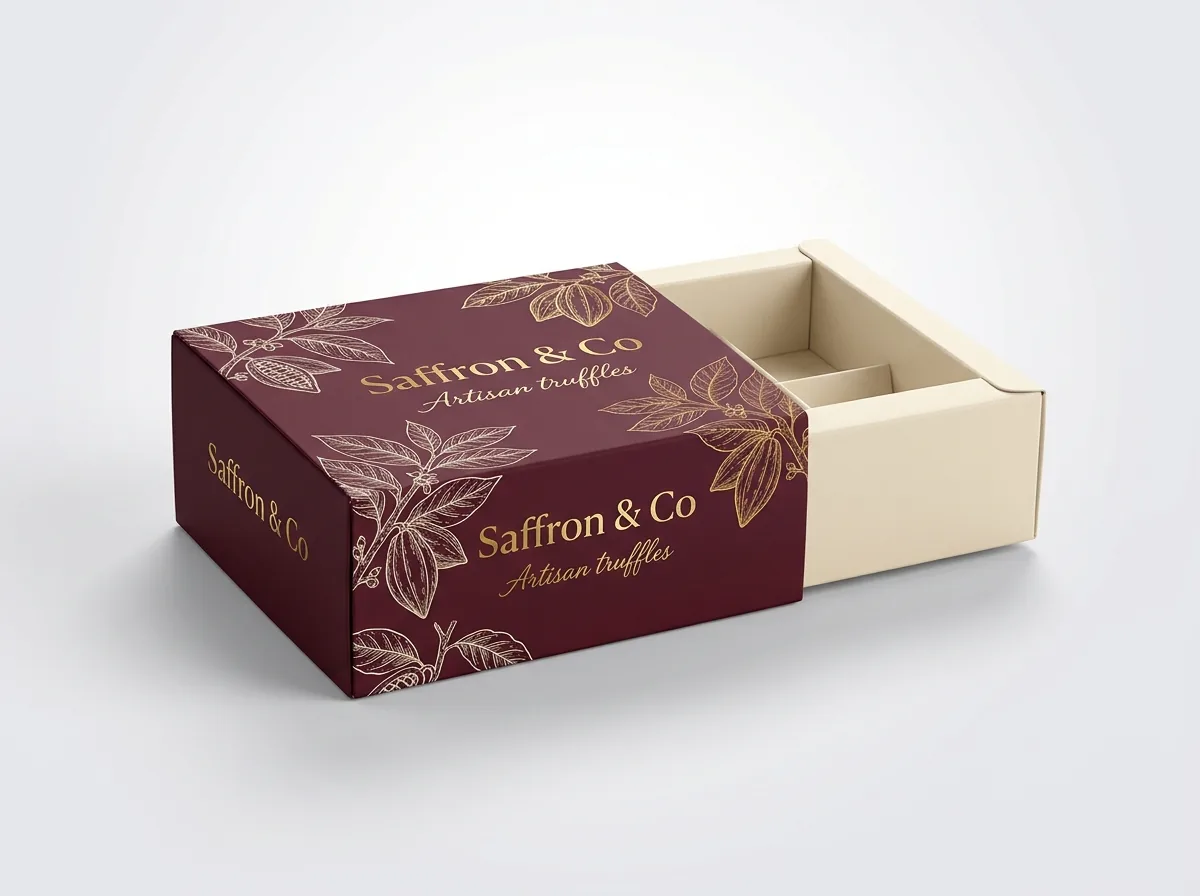
In a specialty grocery aisle, cheese shop, or gourmet market, shoppers will not buy a closed corrugated box if they cannot see the artisan contents inside. A custom tray and sleeve box solves retail merchandising by pairing a sturdy open-top base tray with a printed outer sleeve that slides horizontally over the tray. For charcuterie and artisan cheese grazing boxes, a clear patched window across the top of the sleeve frames the arranged cheeses, cured meats, nuts, and fruit while the sleeve holds the tray tightly closed without stickers or ribbon. For 3-jar condiment flights or tinned seafood trios, a die-cut window sleeve lets the shopper read the authentic front jar labels on the shelf while bundling all three items into a single higher-ticket gift purchase. Because the tray slides out like a drawer from either end, customers can place the open base tray directly on a dining table as a serving platter and slide the sleeve back on afterward to store leftovers in the refrigerator.
- Shows real product color, texture, and front jar labels on specialty retail shelves.
- Seals charcuterie and grazing boards cleanly without sticky tape or hand-tied twine.
- Lets you reuse one unprinted kraft base tray across multiple seasonal sleeve designs.
- Doubles as a rigid table serving tray once the customer slides off the outer sleeve.
Know your size? Compare pricing across up to 3 quantities.
Request a Quote →Where do two-piece presentation chests and gable carry boxes fit in?
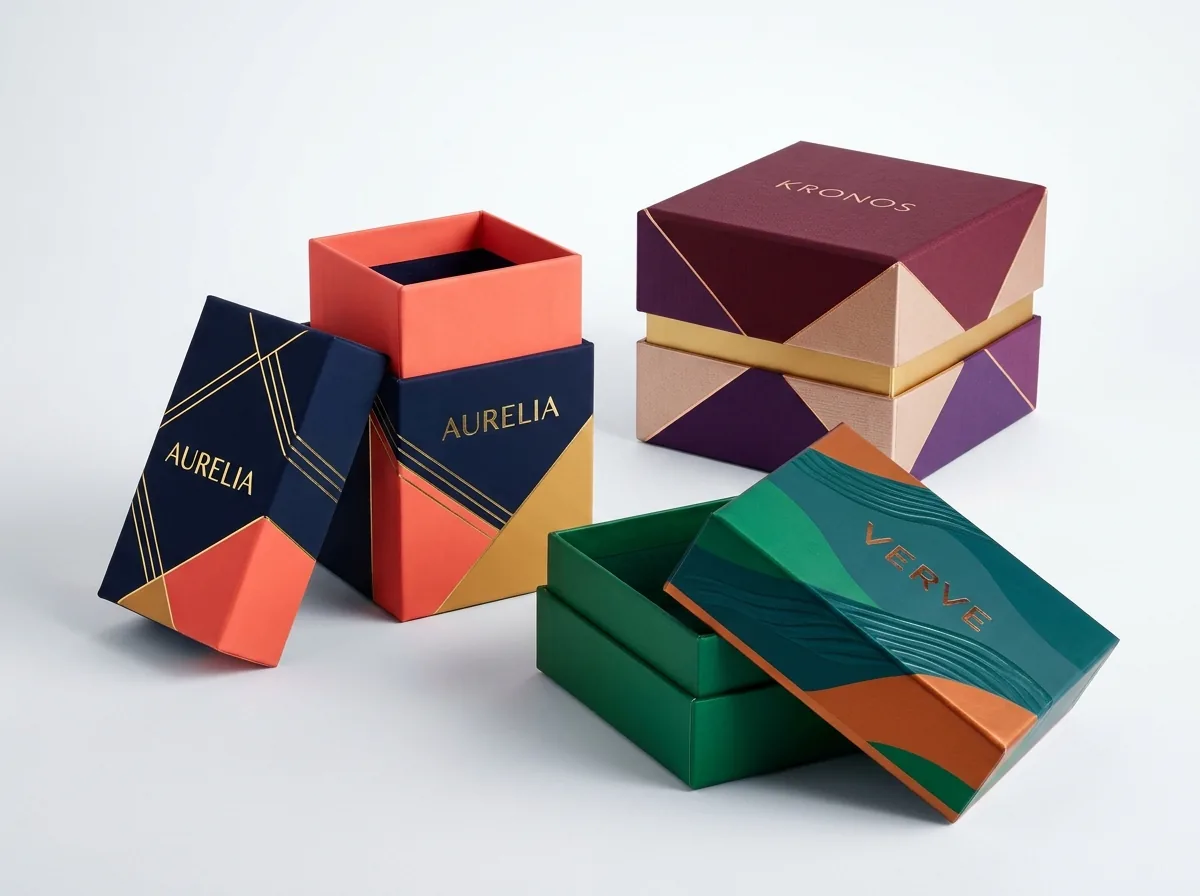
Two additional box styles play key roles in specialty food lines: telescoping custom two-piece boxes and handled custom gable boxes. A two-piece box uses a separate base tray and a full-depth lift-off lid. Because the lid walls slide all the way down over the base walls, the assembled box has double-wall rigidity on all four sides and delivers the classic ceremony of lifting a lid off a holiday hamper at the dinner table. A gable box folds from a single sheet of heavy kraft or white board into a hut-shaped carrier with a built-in top handle. It is the favorite grab-and-go package at estate wineries, farmstead creameries, olive mills, and holiday food markets where shoppers want to carry three jars of jam or an oil-and-vinegar duo out of the shop by hand without needing a separate shopping bag. We can also die-cut a 2-jar or 3-jar bottom divider pad that drops into the floor of the gable box so glass bottles never clink while a customer walks through the market.
Should your internal gourmet food insert be folding paperboard or E-flute corrugated?
The material of your internal custom box insert matters just as much as the outer box style. Use 18 pt to 24 pt folding paperboard inserts when separating lightweight dry goods - such as artisan tea tins, spice jars under 4 oz, chocolate bars, or charcuterie crackers - where crisp fold lines and matching Pantone or metallic ink printing are the priority. Step up to E-flute corrugated inserts whenever your set includes glass jars or bottles holding 6 oz or more. The 1/16 inch fluted medium inside E-flute acts like a shock absorber when a parcel is dropped on its corner, preventing heavy glass jars from tearing through the insert floor or slamming into adjacent compartments. If your gift set mixes tall 250 ml bottles with short 4 oz preserve jars, our structural team folds stepped riser shelves into the E-flute cradle so every front label sits flush at the same top level. You can compare both folding card and E-flute corrugated boards in person with our $50 sample kit (credited toward your first order).
What are the most common mistakes when choosing a gourmet food box style?
Mismatched sales channels and under-engineered inserts cause most specialty food packaging issues. Avoid these five mistakes
- Displaying a solid, windowless mailer box on a retail boutique shelf where shoppers cannot see the jars or artisan foods inside.
- Shipping heavy glass jars in a thin single-wall paperboard sleeve tray without a corrugated cradle or outer overbox.
- Ordering a thin 16 pt card insert for heavy 8 oz glass condiment jars, allowing the jars to tear the insert apertures in transit.
- Taping a charcuterie grazing box shut across the top lid instead of using a clean sliding belly band or full sleeve.
- Using loose paper shred as the sole divider between glass bottles instead of locking each bottle in a die-cut corrugated well.
Find your size
Suggested inside size: 3.25 × 3.25 × 4.0 in
A starting point. Your account manager confirms the size with you before the proof.
Quote this size →Packaging for this

Ready to order gourmet food boxes? Compare up to 3 quantities with a free 3D mockup.
Request a Quote →Questions about gourmet food boxes
Which gourmet food box style is best for shipping glass jars nationwide?
An E-flute corrugated mailer box paired with a custom die-cut E-flute insert cradle is the strongest choice for parcel shipping. It surrounds your jars with double-thick side walls and 0.5 inch corrugated bridges between every cavity.
Which box style works best for charcuterie and cheese grazing boxes?
A sliding tray-and-sleeve box with a clear patched window on the sleeve is the top choice for grazing boxes. Customers see the arranged cheeses and meats immediately, and the sleeve holds the tray closed without tape.
Can I order a gourmet mailer box and its custom die-cut insert together?
Yes. CubitPack engineers and produces the outer box and the internal die-cut cradle together from your container measurements so the insert drops into the base tray with zero rattle. Both have no die or plate charges.
Do sliding window sleeves hold up in refrigerated deli and cheese cases?
Yes, when finished with exterior matte or gloss lamination and paired with a moisture-resistant or grease-resistant interior liner on request so cooler condensation does not soften the board.
Can I split a 1,000-box order between different sleeve prints for seasonal holidays?
Yes. Many specialty food brands order one unprinted or classic kraft base tray and print seasonal sleeves (such as autumn harvest and winter holiday) in the same run. Ask your account manager to quote the split.
How long does it take to produce gourmet mailer boxes or sleeve trays with inserts?
Standard production takes 10 to 14 business days after you approve your digital dieline proof and 3D mockup, with 4 to 5 business day rush available. Shipping to all 50 US states is free.
Still have a question? Ask a packaging specialist.
Request a Quote →Request your gourmet food boxes quote
Tell us your size and quantities, and one dedicated account manager prepares pricing for each tier.
- Free design & AI-to-print studio + 3D mockup
- No die or plate charges · 4–5 day rush available
- Free shipping to all 50 states
- 10% off your first order
This comparison draws on structural drop-test performance for E-flute mailers with die-cut cradles versus folding paperboard tray-and-sleeve packages used in specialty retail and grazing catering. A CubitPack packaging specialist reviewed all specifications. Spot an error? Let us know and we will fix it.
Sources
What changed
- October 22, 2026: First published.
- October 22, 2026: Updated specifications, terminology, and verified source links.
More guides
New packaging guides by email
Sizes, materials and design tips. Unsubscribe anytime.