
Flat pinch-bottom vs side-gusseted merchandise bags vs square-bottom shopping bags: which fits your counter?
Short answer: Pick flat pinch-bottom bags for thin items under 0.5 inches thick (cards, prints, cookies), side-gusseted merchandise bags for items 0.5 to 2.5 inches thick (books, shirts, small boxes), and block-bottom shopping bags when items must stand flat on a floor on custom merchandise bags.
On this page
- How do pinch-bottom, side-gusseted and square-bottom bags differ in construction
- How do the four retail paper bag constructions compare side by side
- When should I choose a flat 0-gusset sleeve vs a side-gusseted merchandise bag
- How do die-cut patch handles compare with twisted paper cord handles
- Why do boutiques prefer folding the top of a merchandise bag and sealing it with a sticker
- Common mistakes
- FAQs
Request a custom quoteFree dieline & 3D mockup
Retail paper bags fall into three distinct structural families, and picking the right one for each checkout scenario saves both unit cost and under-counter storage space. A flat pinch-bottom sleeve has zero side gussets and a V-shaped bottom fold, behaving like a vertical paper envelope that holds prints, cards, jewelry pouches and cookies flat while stacking 1,000 bags into a single slim box. A side-gusseted merchandise bag keeps the space-saving V-pinch bottom but adds inward-folded pleats along the left and right walls that expand 1 to 3 inches around hardcover books, folded t-shirts and apothecary boxes. A square-bottom (block-bottom) shopping bag or SOS sack unfolds into a flat rectangular floor that stands upright on the counter and carries wide boxes or multi-item hauls. At CubitPack, every style ships with free design help and no plate charges.
How do pinch-bottom, side-gusseted and square-bottom bags differ in construction?
The difference between a merchandise bag and a shopping tote starts at the bottom fold. Both flat and side-gusseted printed paper merchandise bags are made with a pinch bottom (also called a V-bottom): the bottom of the paper tube is simply creased flat, folded upward once onto the lower back panel, and glued down. Because there is no multi-layer cardboard base block or protruding twisted cord handle, the finished bag is only two to four sheets of paper thick. A square-bottom (block-bottom) bag - whether it is a handle-free self-opening sack (SOS) or a twisted-handle shopping bag - has a diamond-folded rectangular base that pops open into a flat floor. While that flat floor is essential when carrying a 9-inch bakery box or three glass candle jars upright, the folded bottom block and glued handle patches make a stack of 250 twisted-handle bags taller than a stack of 1,000 pinch-bottom merchandise sleeves.
- Pinch-bottom (V-bottom) fold: tube bottom creases flat and glues up onto the lower back panel, storing 1,000 bags in minimal drawer height.
- Expandable side pleats: side-gusseted bags tuck two vertical accordion folds inside the left and right walls that open up to 3 inches wide.
- Extended back thumb lip: the back wall of a counter merchandise bag extends 0.375 to 0.5 inches above the front lip for fast one-handed opening.
- Square block bottom: SOS and corded shopping bags unfold into a flat horizontal floor so wide boxes and heavy jars never tilt.
How do the four retail paper bag constructions compare side by side?
Use the comparison table below to evaluate flat 0-gusset sleeves, pleated side-gusset merchandise bags, die-cut D-handle bags and block-bottom twisted-handle shopping bags across item thickness, counter storage, checkout speed and relative unit cost.
| Feature | Flat pinch-bottom (0 gusset) | Side-gusseted merch bag | Block-bottom shopping bag |
|---|---|---|---|
| Bottom construction | Pinched V-bottom (folds flat) | Pinched V-bottom with side pleats | Flat rectangular floor (stands upright) |
| Best item thickness | 0.1 to 0.5 in (flat goods) | 0.5 to 3.0 in (books, shirts, small boxes) | 3.0 to 10.0 in (wide boxes, multi-item orders) |
| Under-counter stack height | Ultra-compact (~1,000 bags per carton) | Compact (~500 to 1,000 bags per carton) | Bulky (~200 to 250 bags per carton) |
| Usual top closure | Fold-over lip + round logo sticker | Fold-over lip + sticker or die-cut handle | Twisted cord, flat tape or ribbon handles |
| Checkout packing motion | Flick extended lip open, slide item in | Expand side pleats, slide item in, fold top | Snap floor open on counter, load from top |
| Best retail categories | Cards, prints, stickers, pins, cookies | Bookstores, apparel, vinyl records, soaps | Gift bundles, footwear, takeout, heavy jars |
When should I choose a flat 0-gusset sleeve vs a side-gusseted merchandise bag?
Choose a flat 0-gusset merchandise sleeve when you want the bag to hold thin items snugly so they cannot slide around or bend at the corners. An 8 × 10 inch art print on backing board, a set of greeting cards, a vinyl sticker pack or a flat chocolate bar stays much crisper inside a 0-gusset envelope sleeve than in a wide gusseted bag. As soon as your product has more than half an inch of thickness - such as a 400-page paperback novel, a rolled t-shirt, a boxed 30 ml skincare dropper bottle or two croissants - switch to a 1 inch, 2 inch or 2.5 inch side-gusseted merchandise bag. When stored in the carton, the side pleats lie completely flat inside the front and back faces; when opened at the register, the pleats accordion outward so the front face stays flat and unwrinkled over your logo.
- Flat 0-gusset sleeve (0 in pleat): greeting cards, postcards, unframed art prints, comic books, sticker sheets, pins and flat cookies.
- Narrow side-gusset bag (1 to 1.5 in pleat): bar soaps, small cosmetic cartons, paperback novellas, scarves and pastry pairs.
- Medium side-gusset bag (2 to 2.5 in pleat): hardcover books, folded adult t-shirts, vinyl record bundles and boxed candles.
- Wide side-gusset bag (3 in pleat): fleece hoodies, knit sweaters, multi-book stacks and museum gift boxes.
Know your size? Compare pricing across up to 3 quantities.
Request a Quote →How do die-cut patch handles compare with twisted paper cord handles?
What if you want the slim under-counter footprint of a pinch-bottom merchandise bag, but your customers still need a handle to carry a 12-inch vinyl record, a trade-show catalog kit or a pair of jeans through a crowded street fair? That is exactly where a reinforced die-cut D-handle (patch handle) shines. Instead of gluing protruding twisted paper cords that double the stack height of the carton, we glue a flat rectangular reinforcement patch of heavy kraft paper inside the upper wall and die-cut a smooth oval hand-hole through both layers. The bag still stacks completely flat, yet comfortably supports records, books and apparel. When you need a wide flat floor and cord or ribbon handles for heavier multi-box purchases, pair your counter sleeves with our custom paper shopping bags, custom paper bags with handles or custom luxury shopping bags.
Why do boutiques prefer folding the top of a merchandise bag and sealing it with a sticker?
Open-top corded shopping bags expose your merchandise to rain, dust and crowded sidewalks unless you stuff the top with several sheets of tissue paper. A handle-free pinch-bottom or side-gusseted merchandise bag closes like a tailored gift parcel: the cashier slides the book or shirt inside, folds the top 1.5 inches of paper down twice into a crisp cuff, and presses a 1.5 inch or 2 inch custom logo sticker across the seam. That folded-and-stickered closure does three things at once: it locks small items inside so they never fall out in a customer's tote bag, it creates a tamper-evident receipt seal at checkout, and it gives the customer a tactile unsealing moment when they get home. You can order matching custom labels and custom gift bags from CubitPack using your exact Pantone ink numbers.
- Weather and dust protection: folding the top lip twice seals books, prints and apparel against light rain and sidewalk dust.
- Pocket-friendly security: small jewelry boxes, pins and cosmetics stay locked inside when the customer drops the parcel into a backpack.
- Fast gift presentation: adding a seasonal foil sticker or ribbon tie turns a standard counter bag into a holiday gift pouch in five seconds.
- Lower total packaging cost: a handle-free pinch-bottom bag plus a custom roll sticker costs less per checkout than a corded shopping bag stuffed with tissue.
What are the most common mistakes when choosing between merchandise and shopping bags?
Matching the wrong bag base or handle to your product either wastes counter space or tilts containers sideways. Watch out for these five mistakes
- Packing a flat takeout food clamshell or wide cake box into a V-pinch bottom merchandise bag, which forces the container to tip vertically on its side.
- Stocking only bulky twisted-handle shopping bags for tiny single items like lip balms, stickers or paperbacks, wasting both unit budget and under-register space.
- Choosing a 0-gusset flat sleeve for thick apparel or multi-book stacks that strain the side glue seams.
- Ordering die-cut handle bags without an internal glued reinforcement patch when carrying heavy hardcover books or vinyl records.
- Stapling the top of a custom printed merchandise bag with metal staples that scratch hands instead of sealing it with a branded roll sticker.
Packaging for this
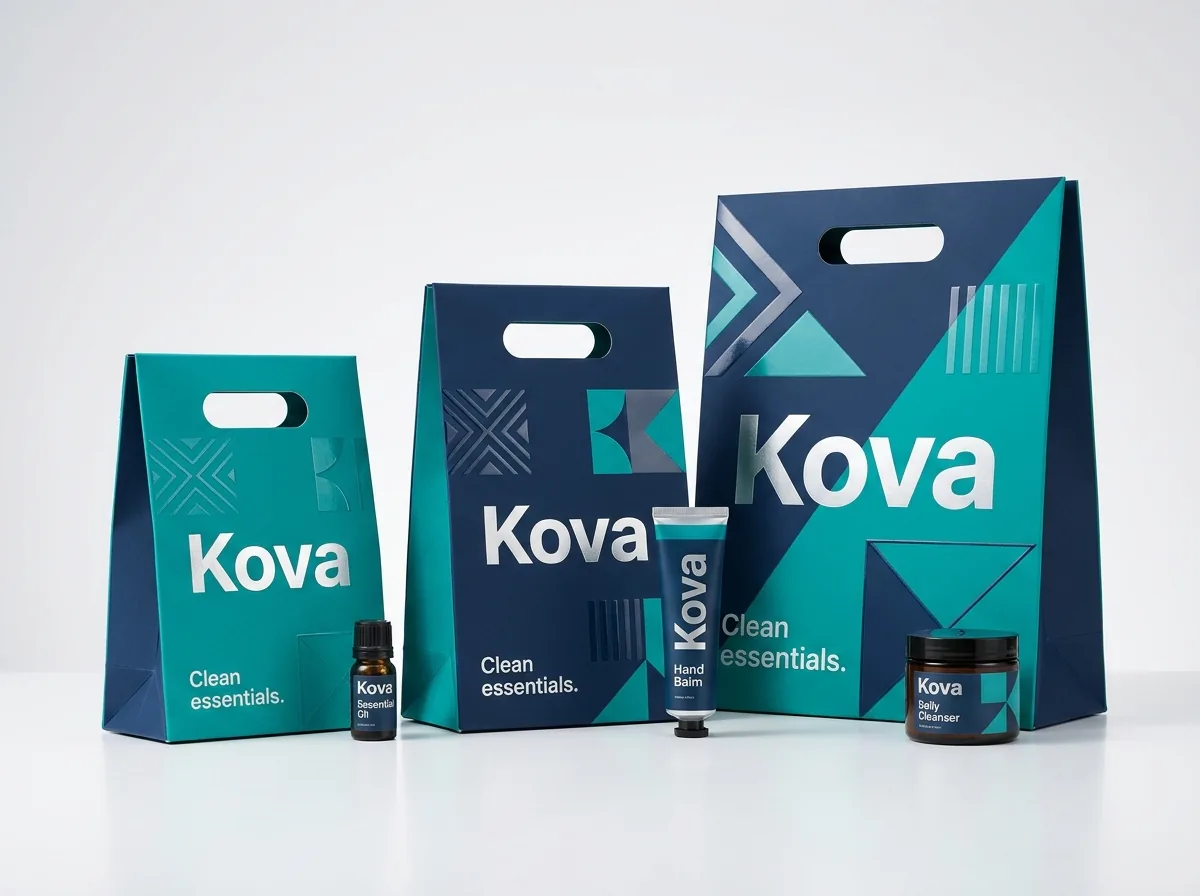
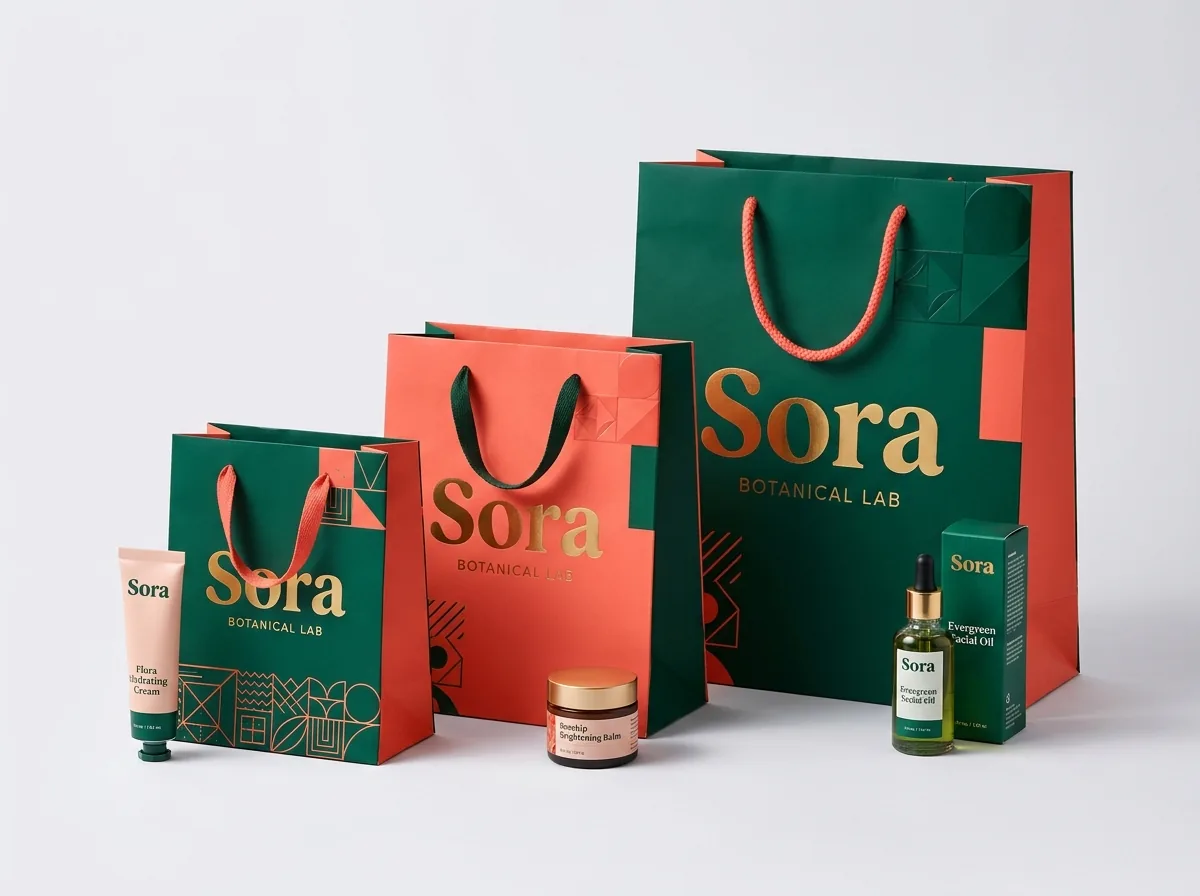

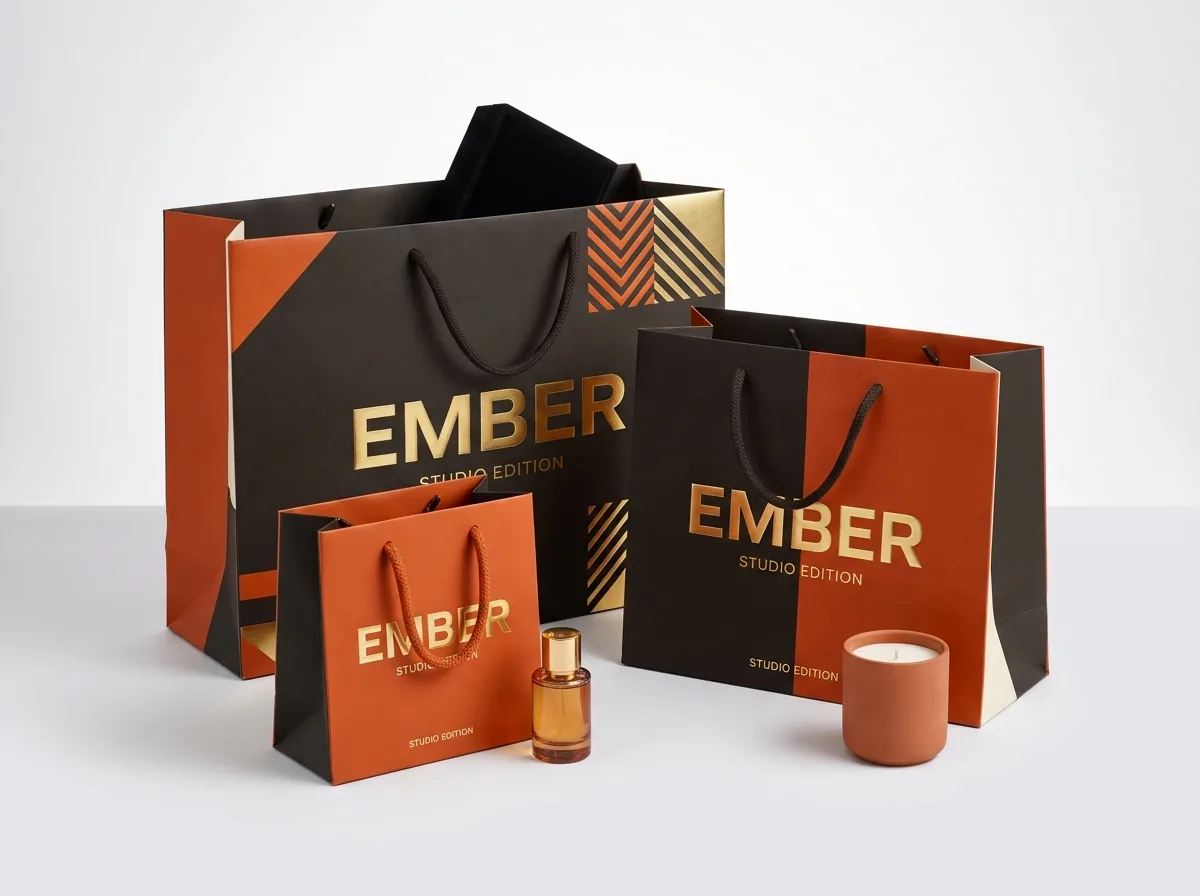

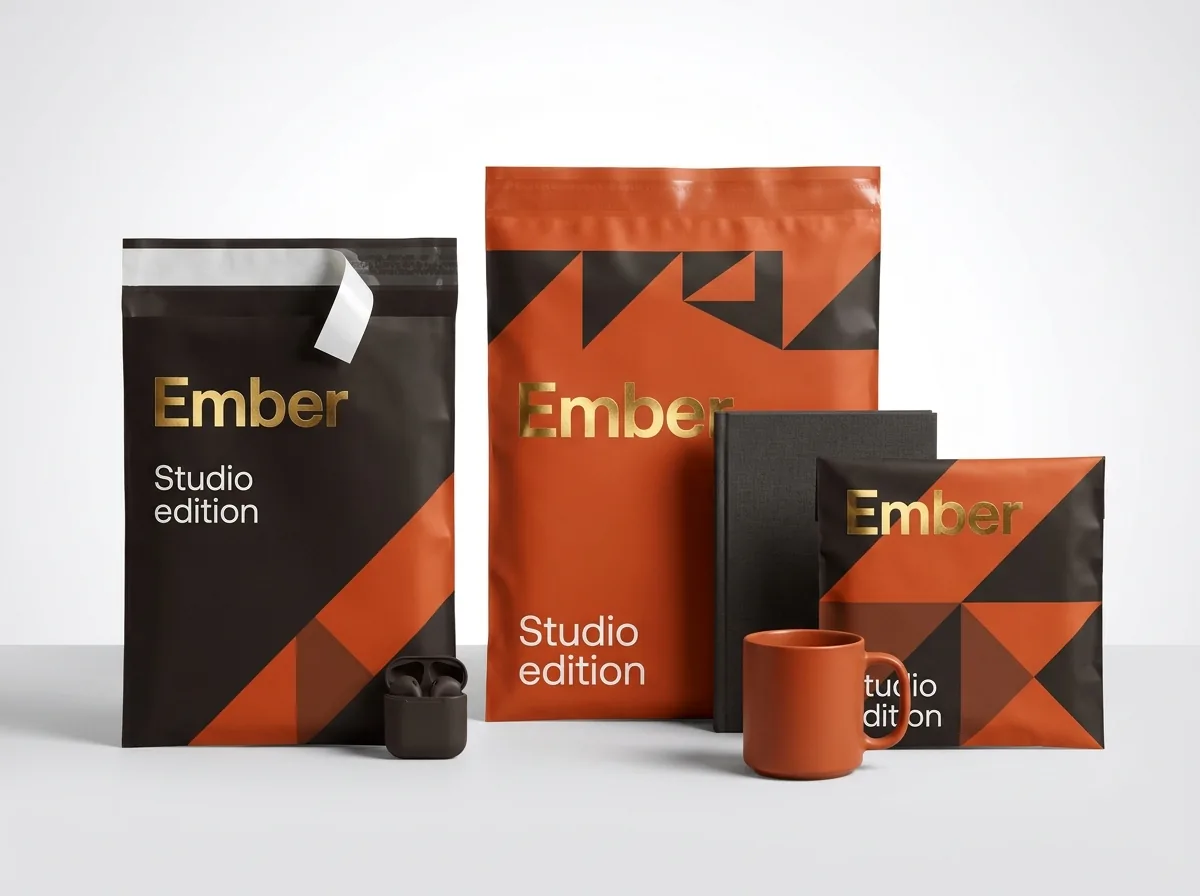
Ready to order merchandise bags? Compare up to 3 quantities with a free 3D mockup.
Request a Quote →Questions about merchandise bags
Can a pinch-bottom merchandise bag stand up on its own on a counter?
No. A pinch-bottom (V-bottom) merchandise bag is designed to lie flat under the counter and be held in one hand while loading, or rest flat on the counter after the item is inside. If you need a bag that stands open on its own, choose an SOS square-bottom sack or twisted-handle shopping bag.
How much less do handle-free merchandise bags cost compared with twisted-handle shopping bags?
Because handle-free pinch-bottom and side-gusseted merchandise bags use less paper surface area and skip the separate cord-handle manufacturing step, they have a noticeably lower unit cost than block-bottom twisted-handle bags. Enter your quantities in the quote form to compare both.
What is an SOS bag and how is it different from a pinch-bottom merchandise bag?
SOS stands for Self-Opening Sack (the classic flat-bottom grocery or pharmacy bag). Unlike a V-shaped pinch-bottom sleeve, an SOS bag has a folded rectangular floor that snaps open when flicked so it stands upright on the counter without handles.
Can you print inside the side gussets of a side-gusseted merchandise bag?
Yes. The left and right expandable pleats on a side-gusseted merchandise bag can be printed with a solid floods of your brand Pantone color, a repeating pattern, or your store's website URL and social handle.
Which paper weight should I choose for pinch-bottom vs die-cut handle bags?
Small flat sleeves for cards, cookies and jewelry typically use lighter 30# to 40# (50 to 65 GSM) kraft paper, while larger side-gusseted book bags and die-cut handle record bags step up to heavier 50# to 60#+ (80 to 100+ GSM) kraft with an inner handle patch.
Can I order both pinch-bottom merchandise bags and twisted-handle shopping bags in one order?
Yes. Many retail stores order a small or medium pinch-bottom merchandise bag alongside a large twisted-handle shopping bag printed with the exact same Pantone ink colors. Mention both styles in the Step 2 quote notes so we quote them together.
Still have a question? Ask a packaging specialist.
Request a Quote →Request your merchandise bags quote
Tell us your size and quantities, and one dedicated account manager prepares pricing for each tier.
- Free design & AI-to-print studio + 3D mockup
- No die or plate charges · 4–5 day rush available
- Free shipping to all 50 states
- 10% off your first order
The structural comparisons, carton stacking ratios and thickness capacities in this guide are based on standard tube-formed pinch-bottom vs block-bottom paper converting specifications, reviewed by a CubitPack packaging specialist. Spot something wrong? Tell us and we will fix it.
Sources
What changed
- October 22, 2026: First published.
- October 22, 2026: Updated specifications, terminology, and verified source links.
More guides
New packaging guides by email
Sizes, materials and design tips. Unsubscribe anytime.