
Clear vs foil vs kraft spice jar labels: which fits your line?
Short answer: Choose clear custom spice labels when you want colorful coarse spices like pink salt, turmeric, or chili flakes to show through glass jars. Pick metallic foil or laminated opaque stocks to block volatile spice oils and stovetop grease across dark and pale seasonings alike.
On this page
- How do clear, foil, white, and kraft spice label stocks compare
- Why do clove, cinnamon, and chili oils stain unlaminated paper labels
- When should I pick clear labels vs metallic foil labels on glass spice jars
- Matte vs gloss lamination: which finish reads better on spice racks
- How do filling-room spice dust and roll vs sheet formats affect adhesion
- Common mistakes
- FAQs
Request a custom quoteFree dieline & 3D mockup
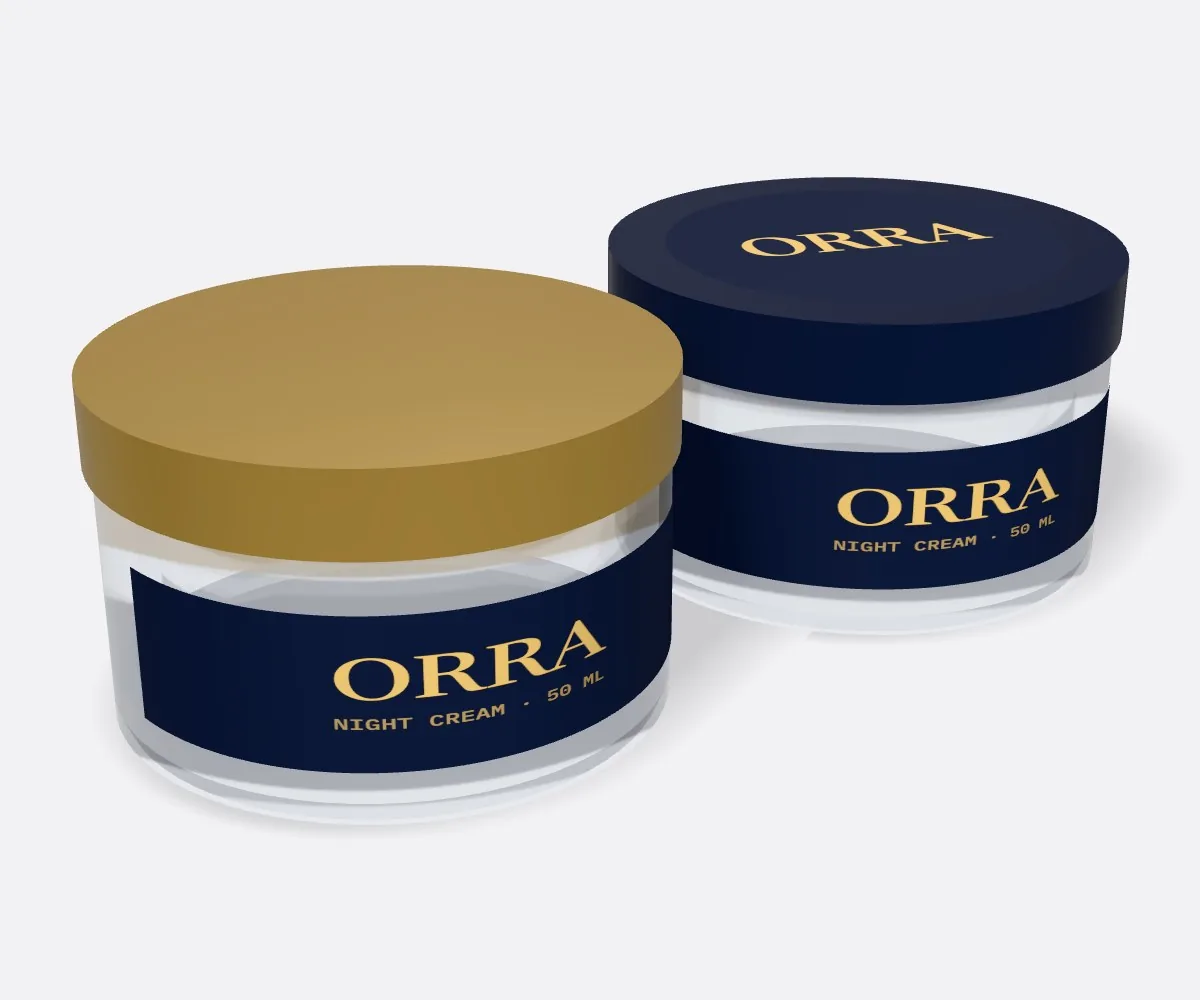
Picking the right material and finish for spice jar labels comes down to two things: how the color of the ground spice inside the jar interacts with your typography, and how much volatile essential oil or kitchen grease the container encounters. Clear label stock turns colorful whole peppercorns, crimson sumac, and golden turmeric into the background of your label, provided you print high-opacity ink or a solid color band behind small ingredient text. Metallic foil stock (or hot foil stamping on matte dark labels) gives reserve spices like saffron, truffle salt, and vanilla beans a high-contrast shelf presence that never absorbs oil. Opaque white and kraft stocks give uniform readability across 30+ SKUs, from pale garlic powder to black sesame. When you order printed spice labels from CubitPack, we help you match the stock and finish to your seasoning line.
How do clear, foil, white, and kraft spice label stocks compare?
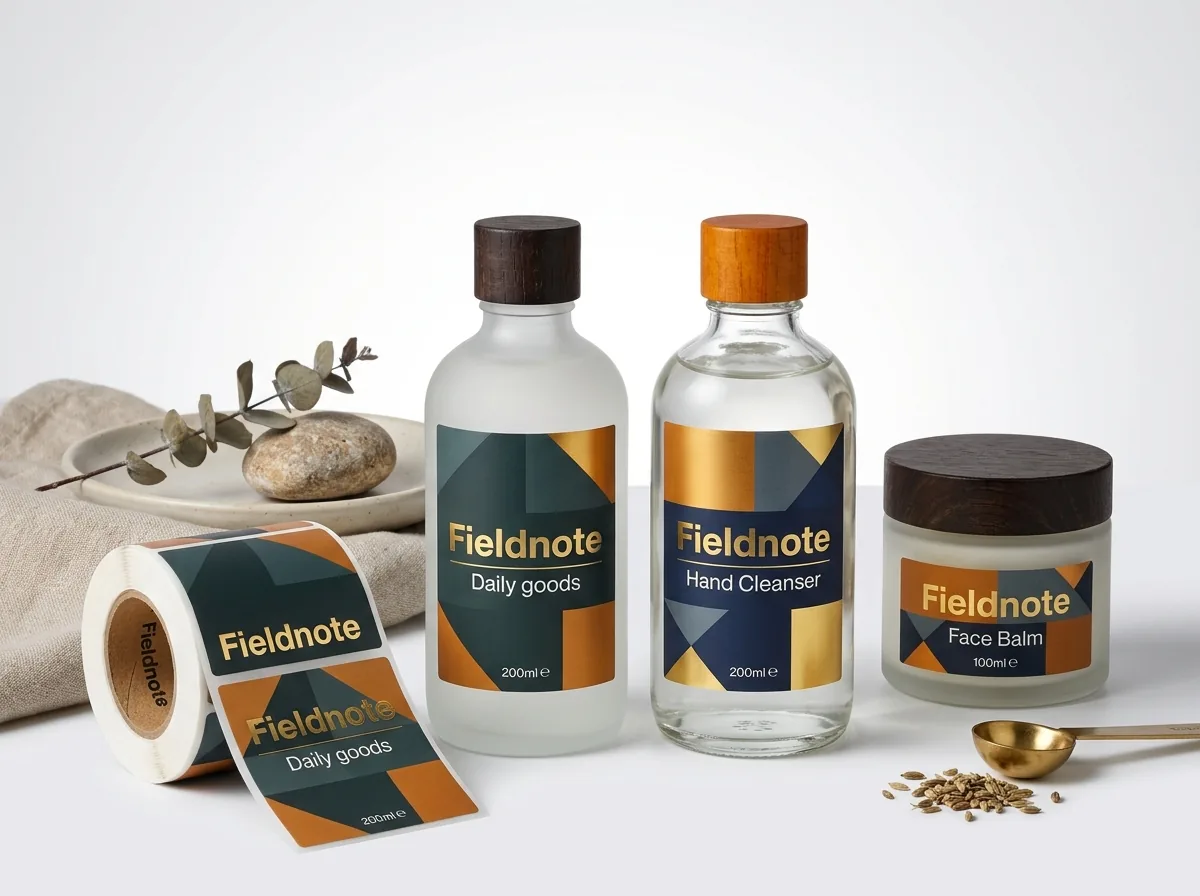
A seasoning catalog poses a unique visual challenge: some jars hold bright yellow curry powder or white sea salt, while others sit right beside them filled with jet-black Urfa chili or dark espresso rub. A stock that looks legible on a jar of flaky white salt can disappear completely on a jar of black peppercorns unless the label design accounts for the background. We currently offer Clear and Foil stocks along with Matte, Gloss, Foil stamping, and Spot UV finishes, while our full white paper, wipeable film, and kraft stock list is being finalized. Use the comparison table below to evaluate each option when requesting a quote for custom seasoning labels.
| Spice label stock & finish | Oil & kitchen grease defense | Best spice & seasoning match |
|---|---|---|
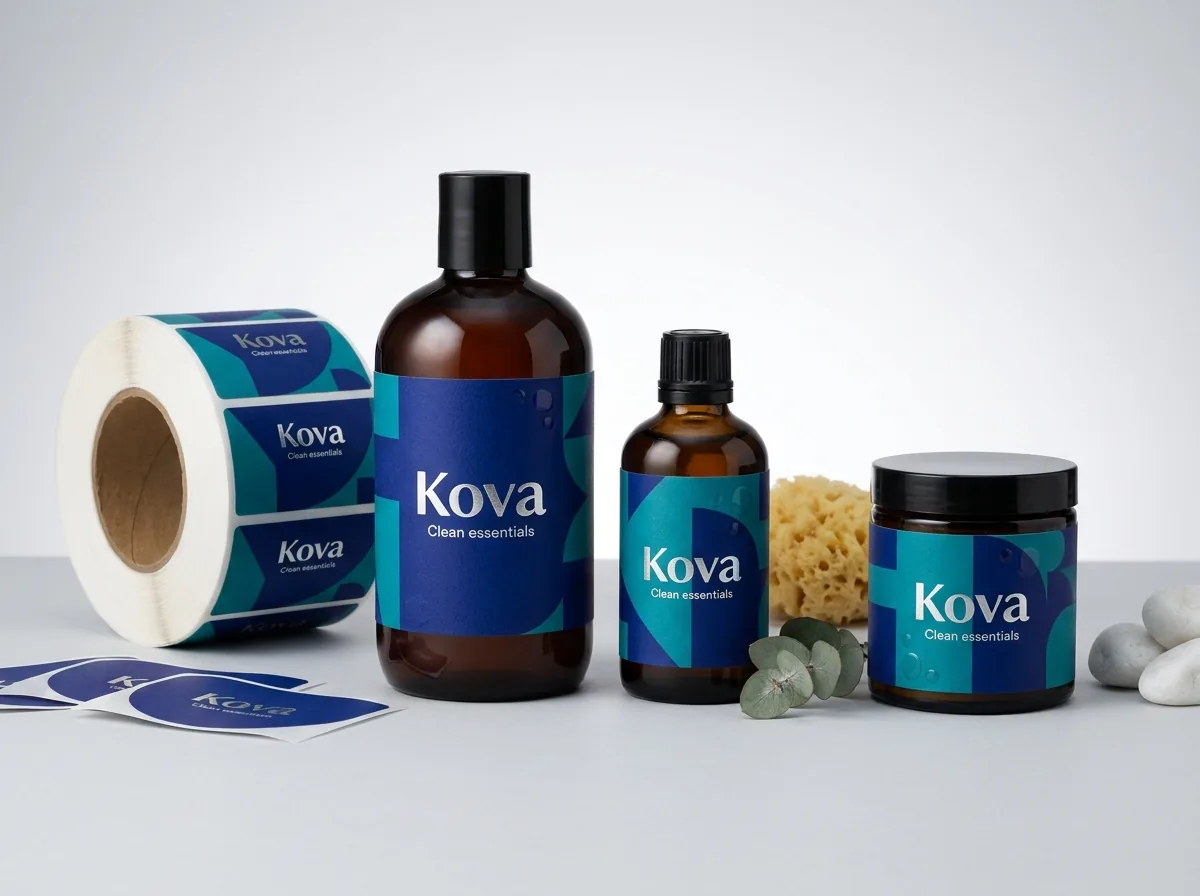
| Clear stock + gloss or matte finish | Non-porous film; wipes clean of oil | Colorful coarse spices, flaky salts & whole peppercorns |
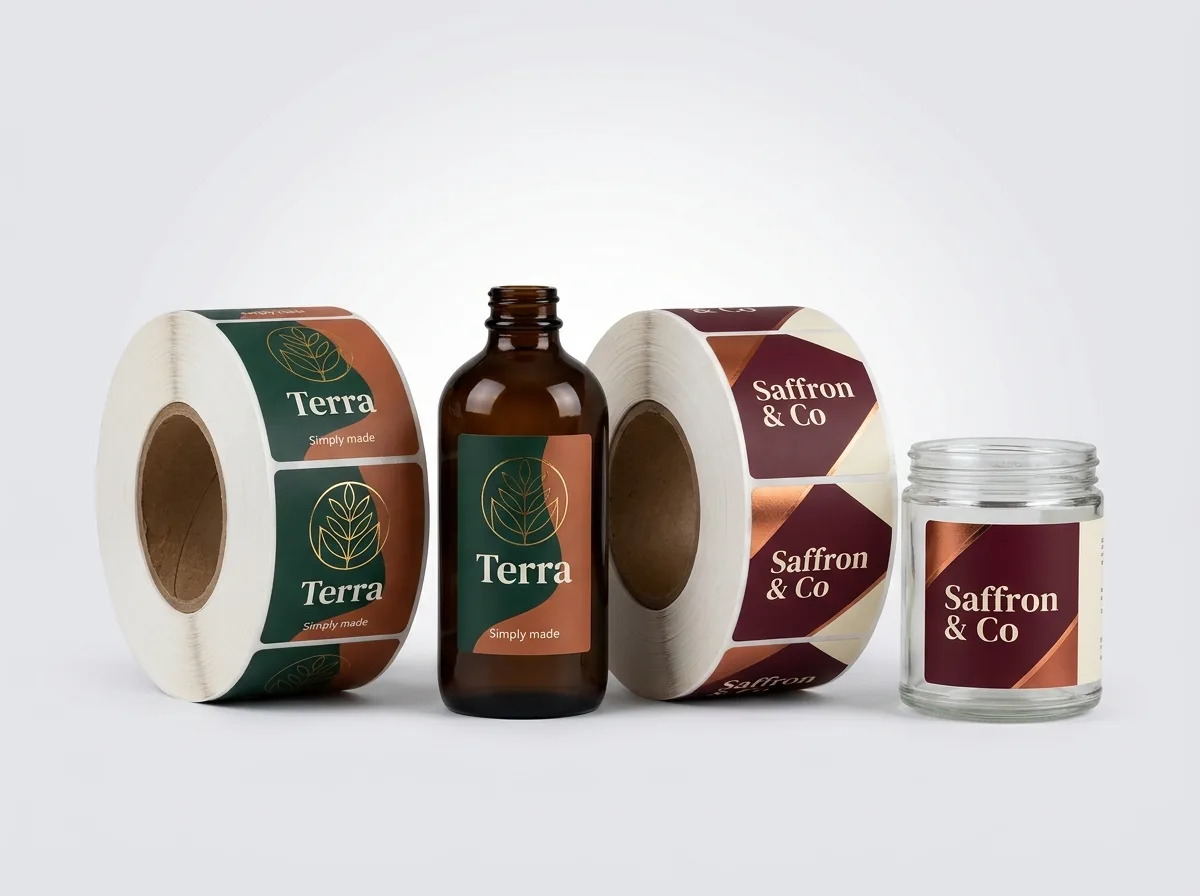
| Metallic foil stock or foil stamping | Blocks volatile spice oils & steam | Saffron, truffle salts, vanilla beans & holiday gift sets |
| Laminated white stock (matte or gloss) | Topcoat seals out greasy thumbprints | 20+ SKU retail spice lines & 8 oz BBQ dry rub shakers |
| Wipeable white film | Full oil, grease & moisture barrier | Foodservice dredge shakers & outdoor grilling rubs |
| Natural kraft stock | Best for dry low-oil herbs & blends | Farmers market herbs, mulling spices & rustic pantry jars |
Why do clove, cinnamon, and chili oils stain unlaminated paper labels?
Dry spices look powdery and dry in the jar, but many of the most popular culinary spices are packed with potent volatile essential oils. Ground cloves, Ceylon cinnamon, nutmeg, mace, cardamom, cumin, star anise, dried citrus peel, and crushed red chili flakes contain natural oils that slowly migrate if a speck of powder lands on the outside of the jar during filling. In a customer's kitchen, spice jars also sit within arm's reach of frying pans and outdoor smokers, where airborne cooking oil and damp fingers touch the label every week. If you print on unlaminated paper, those oils soak into the wood fibers and create dark translucent grease spots within days. Adding matte or gloss lamination over your labels (or choosing a clear, foil, or synthetic film stock) puts a sealed barrier over the ink so cooks can wipe the jar clean with a damp cloth.
When should I pick clear labels vs metallic foil labels on glass spice jars?
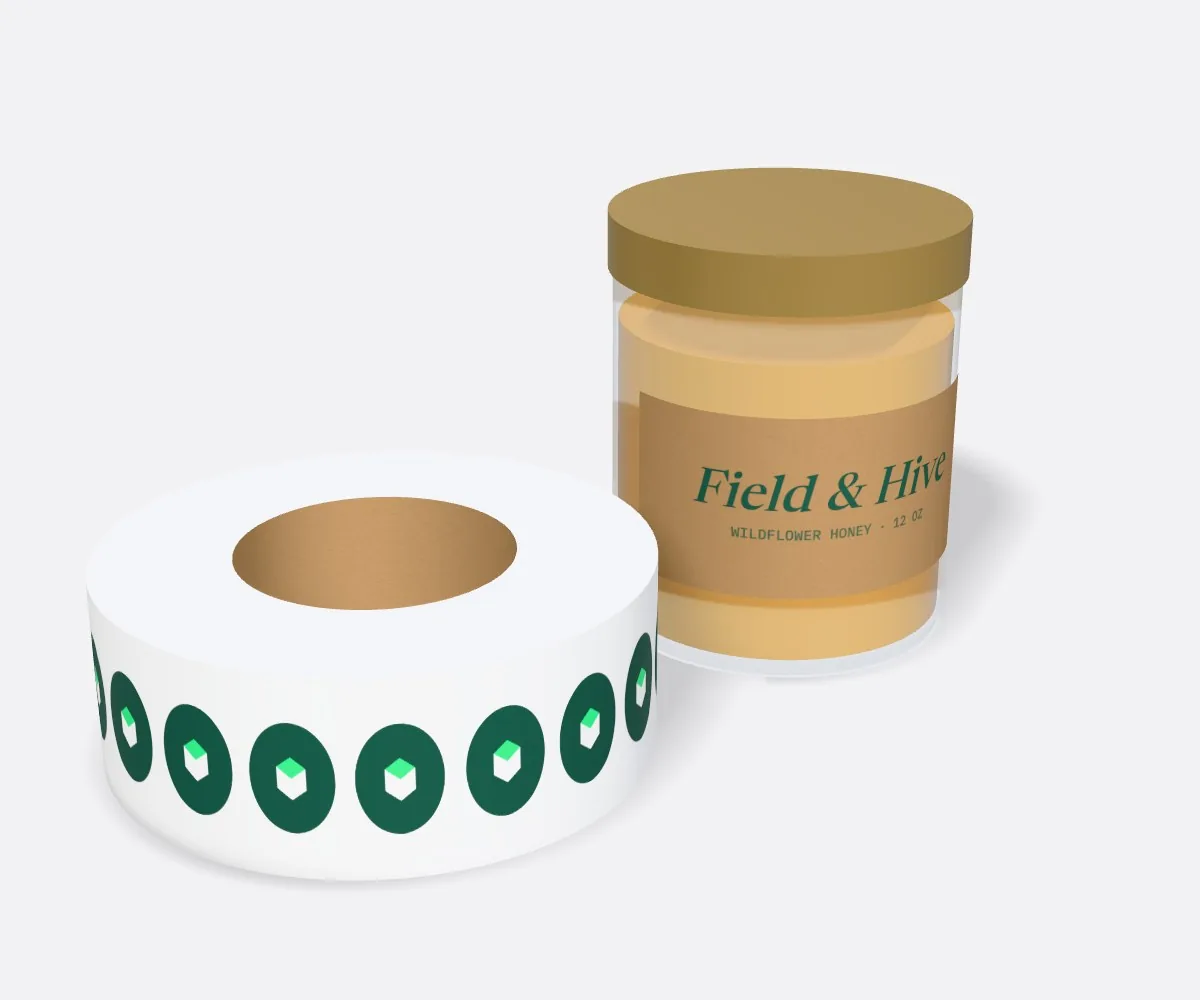
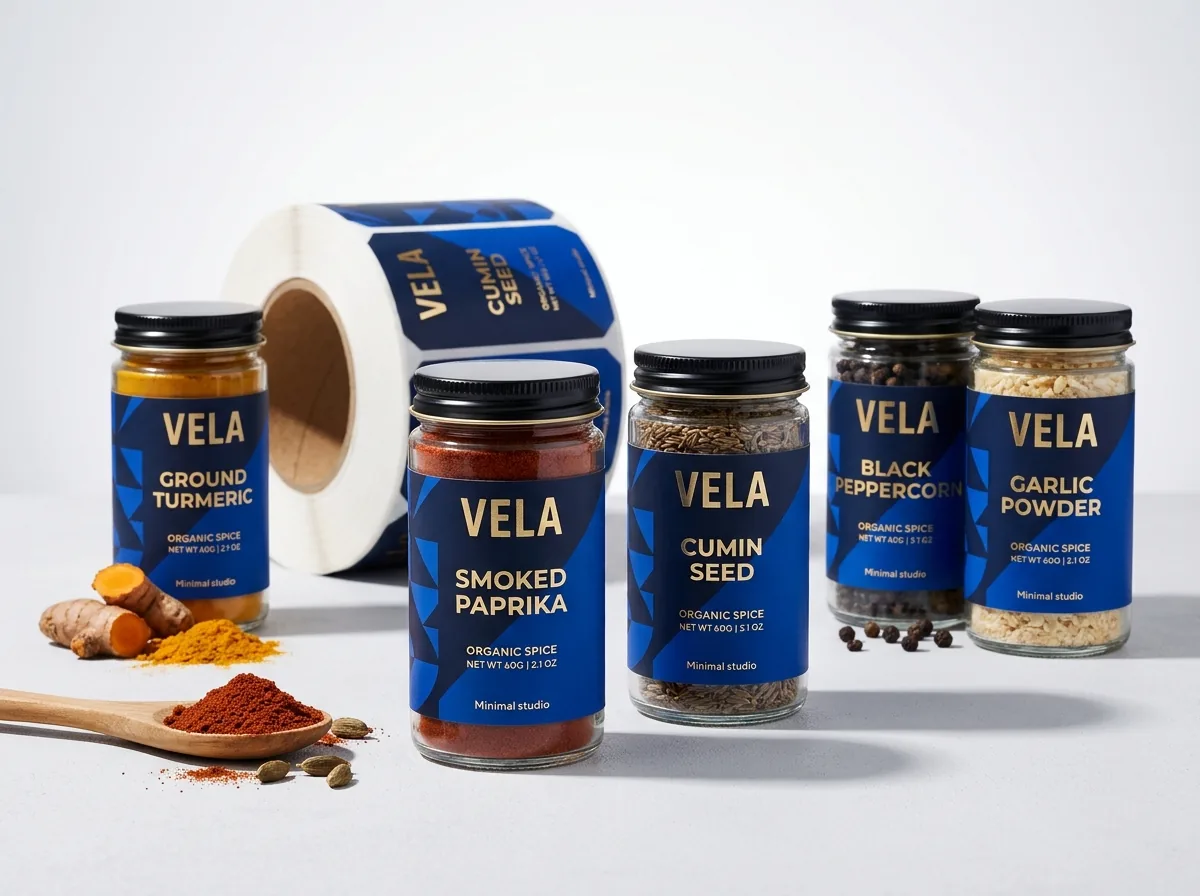
Custom clear labels are a favorite for modern pantry organization and specialty salts because the transparent film lets the natural color and coarse grind of the spice act as the hero visual. However, if you print black text directly on a clear label and stick it onto a jar of black peppercorns or dark chili powder, the text becomes invisible. On clear spice labels, always place a solid white or colored pill badge behind the spice name, ingredient list, and barcode so every SKU stays readable regardless of the spice color inside. Custom foil labels (or matte dark labels accented with hot gold, silver, or copper foil stamping) solve contrast automatically while signaling a gourmet tier. A matte charcoal or deep burgundy wrap band with copper foil stamping makes a 4 oz jar of smoked paprika or saffron stand out under boutique grocery spotlights.
Know your size? Compare pricing across up to 3 quantities.
Request a Quote →Matte vs gloss lamination: which finish reads better on spice racks?
Both matte and gloss lamination seal your printed ink against spice dust, volatile oils, and kitchen splatters, so the choice between them comes down to shelf personality and lighting. Matte lamination diffuses overhead kitchen and grocery store spotlights so there is zero glare across the curvature of a 2.0 inch round spice jar. That glare-free surface makes tiny 5.5 pt ingredient lists and origin notes easy to read and gives apothecary glass jars a soft, velvety feel in the hand. Gloss lamination reflects light sharply, which deepens rich reds, oranges, and blacks and makes food photography or flame illustrations pop. Championship BBQ dry rub brands packing 8 oz and 16 oz plastic shaker bottles almost always choose gloss lamination (or pair a matte background with raised glossy spot UV over the logo) so the bottle commands attention on crowded butcher-shop shelves.
- Matte finish: Zero glare under bright kitchen counter lights; ideal for apothecary glass jars and dense ingredient text.
- Gloss finish: High-shine color vibrancy and slick wipeability; ideal for bold BBQ dry rub shakers and fiery chili blends.
- Hot foil stamping: Metallic gold, silver, or copper pressed onto crests, heat icons, or reserve collection badges.
- Spot UV: Raised glossy pattern or logo contrast applied over a smooth matte base.
How do filling-room spice dust and roll vs sheet formats affect adhesion?
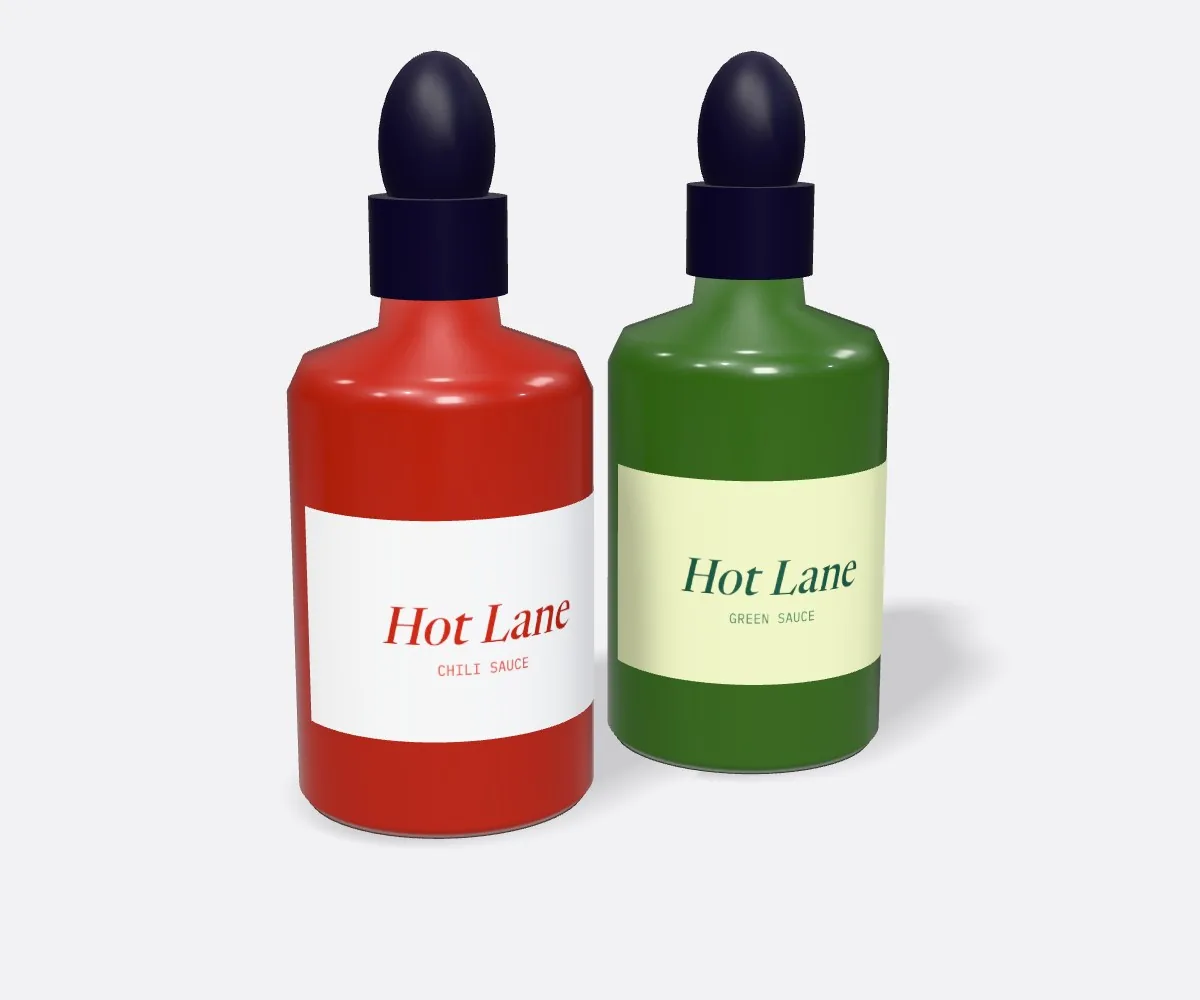
Even the strongest adhesive will lift at the corners if you apply labels onto glass or plastic jars coated in invisible airborne spice dust. When filling fine powders like garlic powder, onion powder, turmeric, or paprika, a microscopic veil of dry powder settles on the outside of the jars. That fine dust acts just like talcum powder on adhesive tape, blinding the glue before it can touch the glass. To prevent edge lifting, either label your clean empty spice jars BEFORE filling them (the standard practice on automated co-packer lines using custom roll labels), or wipe filled, capped jars with a clean microfiber cloth dampened with rubbing alcohol before applying labels from rolls or flat custom sticker sheets. Roll labels feed rapidly through tabletop dispensers for batches of 100+ jars, while flat kiss-cut sheets let small-batch makers pair a front panel and a round cap sticker on one convenient page. When storing your unused spice label rolls or flat sheets in a commercial kitchen or co-packing facility, keep them sealed inside their protective poly bags away from steam kettles, dehydrators, and spice grinders. Keeping the backing liner clean and at normal room humidity ensures every label peels smoothly and bonds tightly across all of your glass jars, plastic BBQ shakers, and metal tins.
- Label empty glass jars before powder filling whenever possible so airborne spice dust never touches the glass.
- If labeling after filling, wipe each capped jar with isopropyl alcohol and let it dry for 30 seconds before sticking.
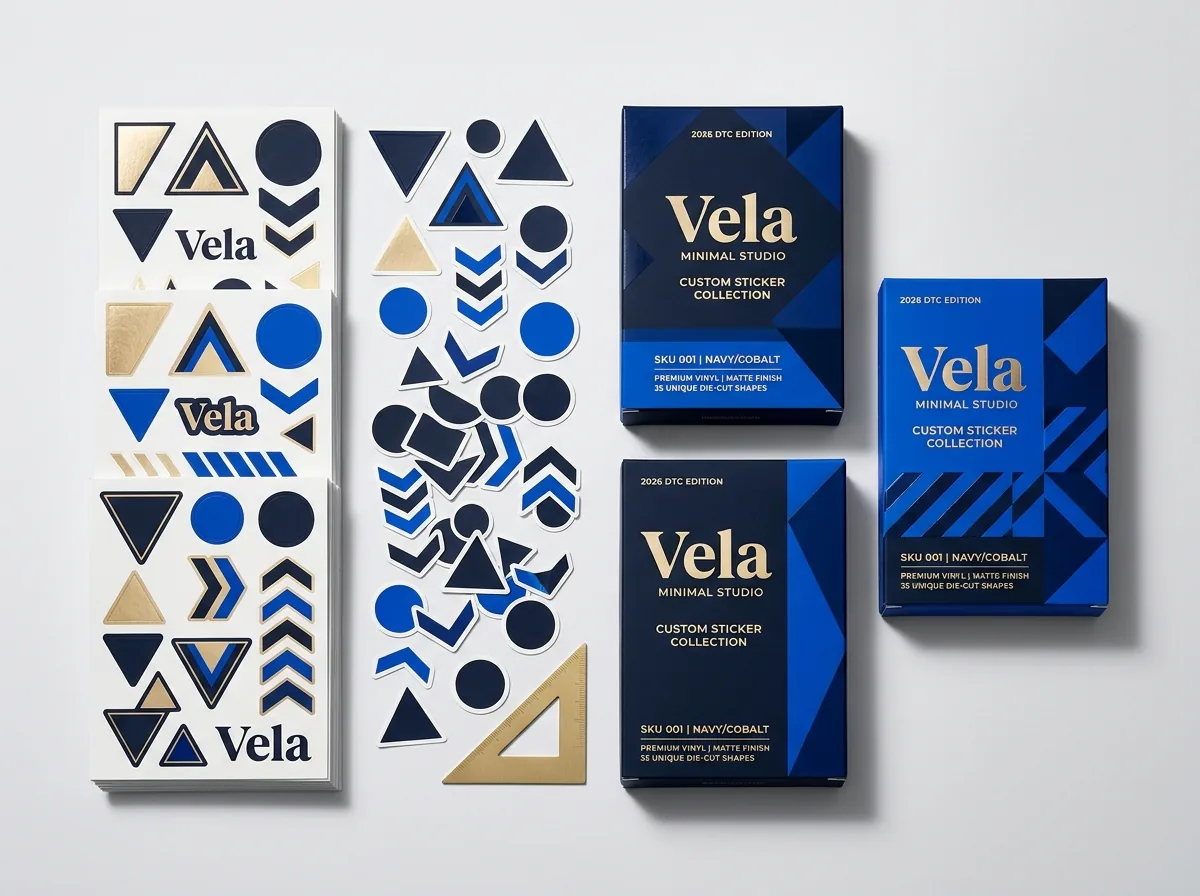
- Choose roll labels for 100+ jar runs and tabletop dispensers; choose flat sheets for small multi-spice test batches.
- Store unused label rolls and sheets sealed in poly bags away from spice-grinding dust and kitchen steam.
What are the most common spice label material and finish mistakes?
Volatile spice oils, dark seasonings, and filling-room powder challenge ordinary labels. Avoid these five material mistakes
- Printing dark text directly on a transparent clear label without a solid white backing band, making text vanish against black pepper or cloves.
- Using unlaminated paper on oily spices (clove, cinnamon, nutmeg, chili) or BBQ rubs where natural oils leave dark grease spots.
- Applying labels after filling powdery spices like turmeric or garlic powder without wiping airborne dust off the glass wall first.
- Putting high-glare metallic foil behind tiny 5 pt ingredient text, making allergen declarations hard to read under store lights.
- Ordering roll labels for an automatic jar labeling machine without specifying the required core diameter and unwind direction.
Find your label size
Suggested label size: 9⅛ × 2¾ in (width × height)
A typical starting point. Your account manager confirms the size on the proof.
Quote this size →Packaging for this
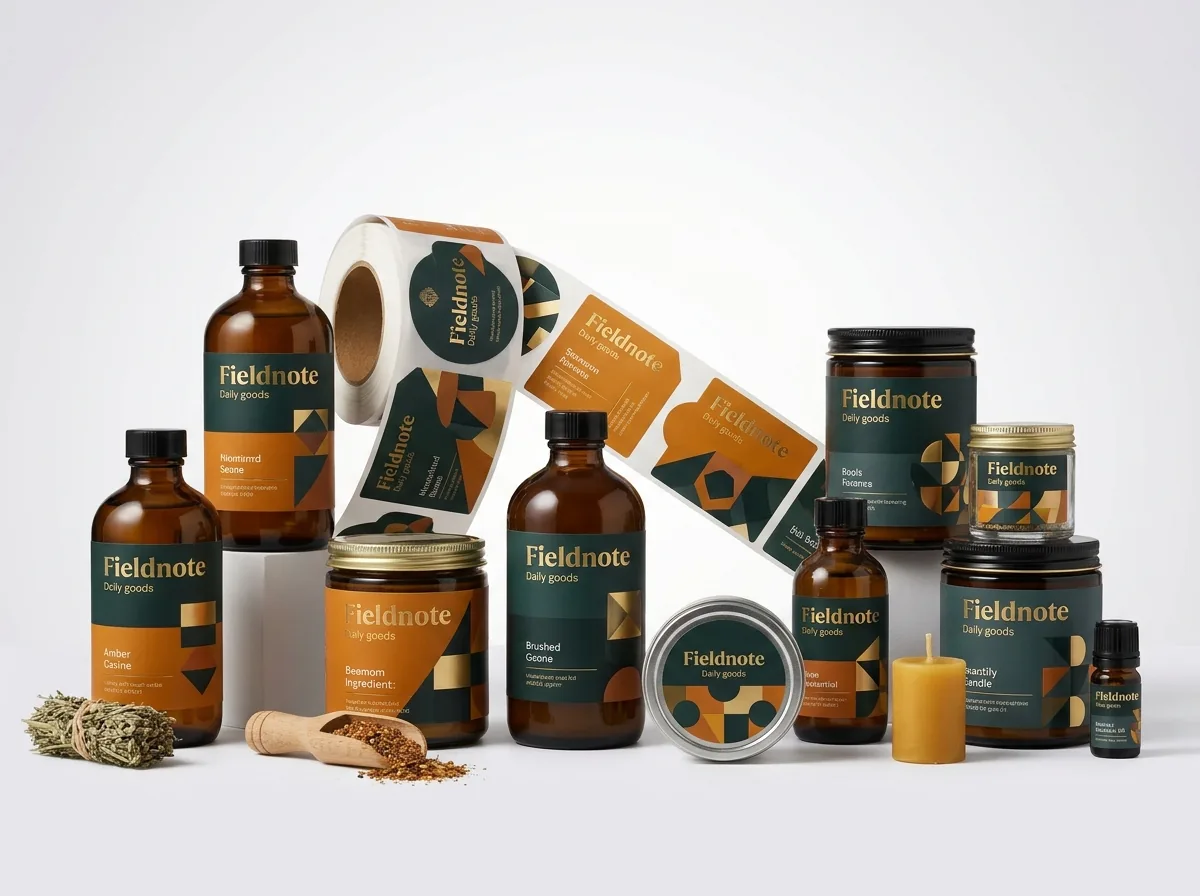
Ready to order spice labels? Compare up to 3 quantities with a free 3D mockup.
Request a Quote →Questions about spice labels
How do I keep spice oils and greasy fingers from staining my spice labels?
Choose matte or gloss lamination over your printed labels, or select a non-porous clear or foil stock. Protective lamination seals the ink and surface fibers so clove oil, chili oil, and stovetop splatters wipe clean with a damp cloth.
Do clear labels work on all spice jars?
Clear labels look striking on glass jars, provided your design includes an opaque white or colored box behind the text. Without an opaque backing panel, dark ink disappears on dark spices like black pepper and white ink disappears on white sea salt.
Should I label my spice jars before or after filling them with spices?
Labeling clean, empty jars right out of the glass case before filling is the easiest way to guarantee 100% dust-free adhesion. If you fill and cap your jars first, wipe the outside glass clean of airborne spice dust before sticking labels down.
Is matte or gloss finish better for 4 oz glass spice jars?
Most gourmet spice brands prefer matte lamination on 4 oz glass jars because it eliminates glare on the tight 2.0 inch curve and feels warm and natural. BBQ rub brands on 8 oz plastic shakers often prefer gloss for maximum color pop.
Can I combine clear, foil, and standard labels in one order?
Labels sharing a single gang-run order must use the same material stock and finish. If you want a metallic look on every SKU without switching stocks, print on a metallic foil base or add foil stamping across the set.
Can I see real samples of your clear, foil, and matte label finishes first?
Yes. Order our $50 sample kit (credited toward your production order) to inspect our stocks and finishes in your own kitchen, and review a free 2D proof and 3D jar mockup before you pay.
Still have a question? Ask a packaging specialist.
Request a Quote →Request your spice labels quote
Tell us your size and quantities, and one dedicated account manager prepares pricing for each tier.
- Free design & AI-to-print studio + 3D mockup
- No die or plate charges · 4–5 day rush available
- Free shipping to all 50 states
- 10% off your first order
This material comparison is built from CubitPack's decided stocks and finishes (Clear, Foil, Matte, Gloss, Foil stamping, Spot UV) in our published product specifications and culinary packaging best practices for volatile essential oils and powder filling lines. Checked by a packaging specialist. Spot an error? Tell us and we will fix it.
Sources
What changed
- October 22, 2026: First published.
- October 22, 2026: Updated specifications, terminology, and verified source links.
More guides
New packaging guides by email
Sizes, materials and design tips. Unsubscribe anytime.