
Circle labels vs square and oval labels: which shape fits best?
Short answer: Pick custom circle labels for round jar lids, candle tins, tissue seals and fast orientation-free hand labeling. Pick square labels when you need 27% more text area in the same width or a framed look on flat panels, and pick ovals for tall narrow bottles where wide circles wrinkle.
On this page
- How do circle, square and oval labels compare side by side
- Why do circle labels apply faster by hand than square labels
- How much text space do you trade away with a circle vs a square
- When should you pick an oval label instead of a circle on curved jars
- How do brands pair circle lid labels with square or rectangle wraps
- Common mistakes
- FAQs
Request a custom quoteFree dieline & 3D mockup
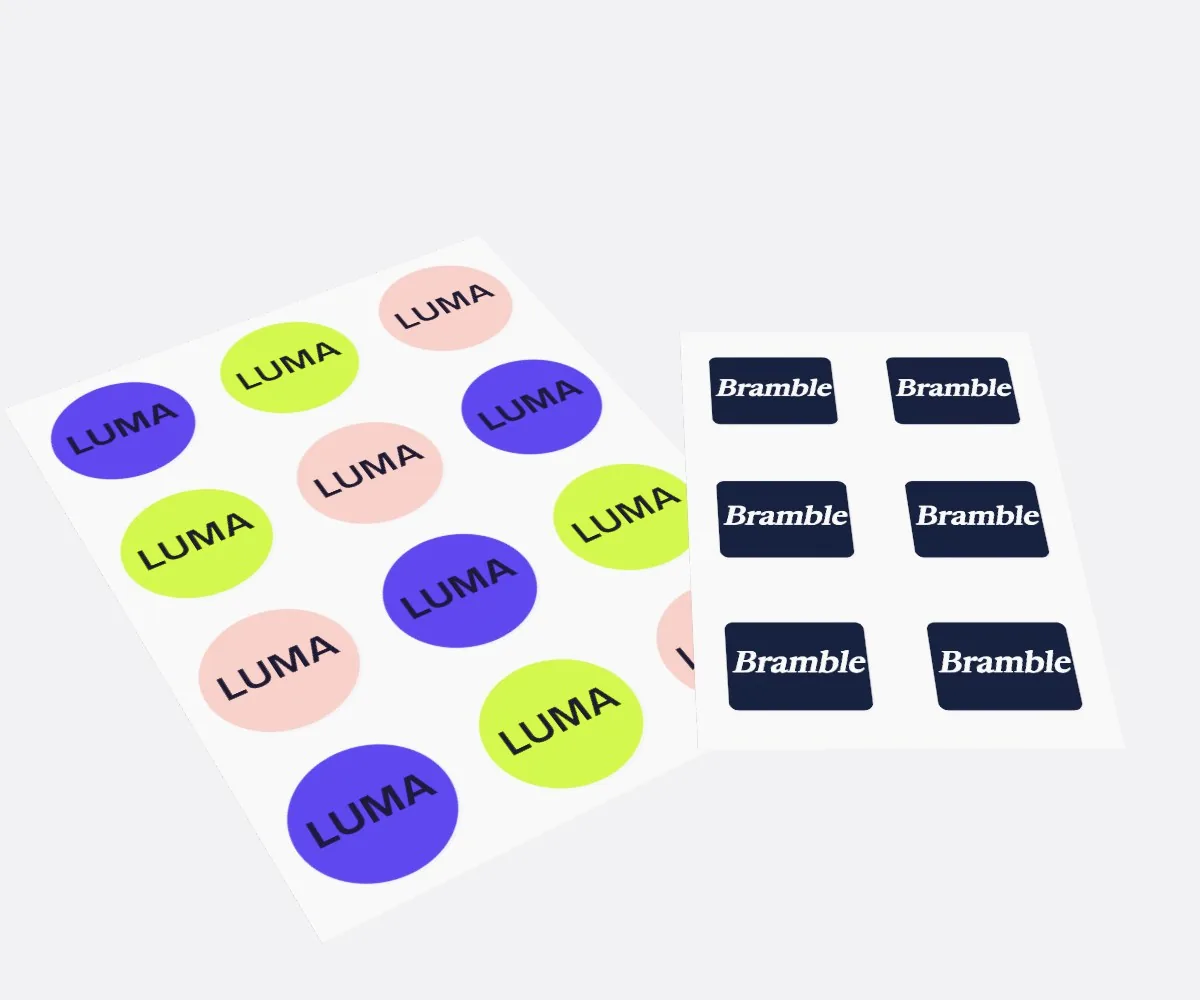
Choosing between circle, square and oval labels comes down to container geometry, text volume and how your team applies labels at the packing bench. A circle matches the round outline of jar caps, metal tins and bottle bases, and because it has no straight top or side edge to level against a container seam, a worker can stick it down rapidly without rotational alignment errors. A square label of the exact same width and height gives you those four missing corners back, increasing usable printable area by about 27% for ingredient lists, barcodes and multi-line directions, while demanding careful horizontal leveling during placement. An oval splits the difference: it keeps the continuous corner-free edge of a circle while narrowing one axis so it fits tall, slender bottles or short tapered jars. At CubitPack, custom printed circle labels, squares and ovals all start at 500 pieces with zero die fees.
How do circle, square and oval labels compare side by side?
Because CubitPack charges no cutting die fees on any outline, circle, square and oval labels of the same overall width and height cost the same to produce. That means you can select the shape strictly by how it behaves on your container wall and at your packing table. Use the comparison matrix below to weigh the four practical differences between these three shapes: how forgiving they are to place by hand, how much copy fits inside a 2 × 2 inch footprint, how their edges hold up against friction inside shipping dividers, and which containers each outline flatters most.
| Factor | Circle labels | Square & oval labels |
|---|---|---|
| Hand-labeling speed | Fastest: radial symmetry hides slight rotational tilt on lids and wraps | Slower: square edges and oval axes must be leveled against the container |
| Printable surface area | 78.5% of a bounding box (3.14 sq in on a 2 × 2 in circle) | Square = 100% (4.0 sq in); Oval = 78.5% stretched along one axis |
| Corner peel resistance | High: continuous 360° curved edge has no 90° corners to snag | Oval has no corners; square needs a 1/16 in corner radius to resist lifting |
| Tight bottle curves | Wrinkles if circle diameter exceeds 1/3 of bottle circumference | Vertical oval hugs narrow bottles; wide square wraps around 3 sides |
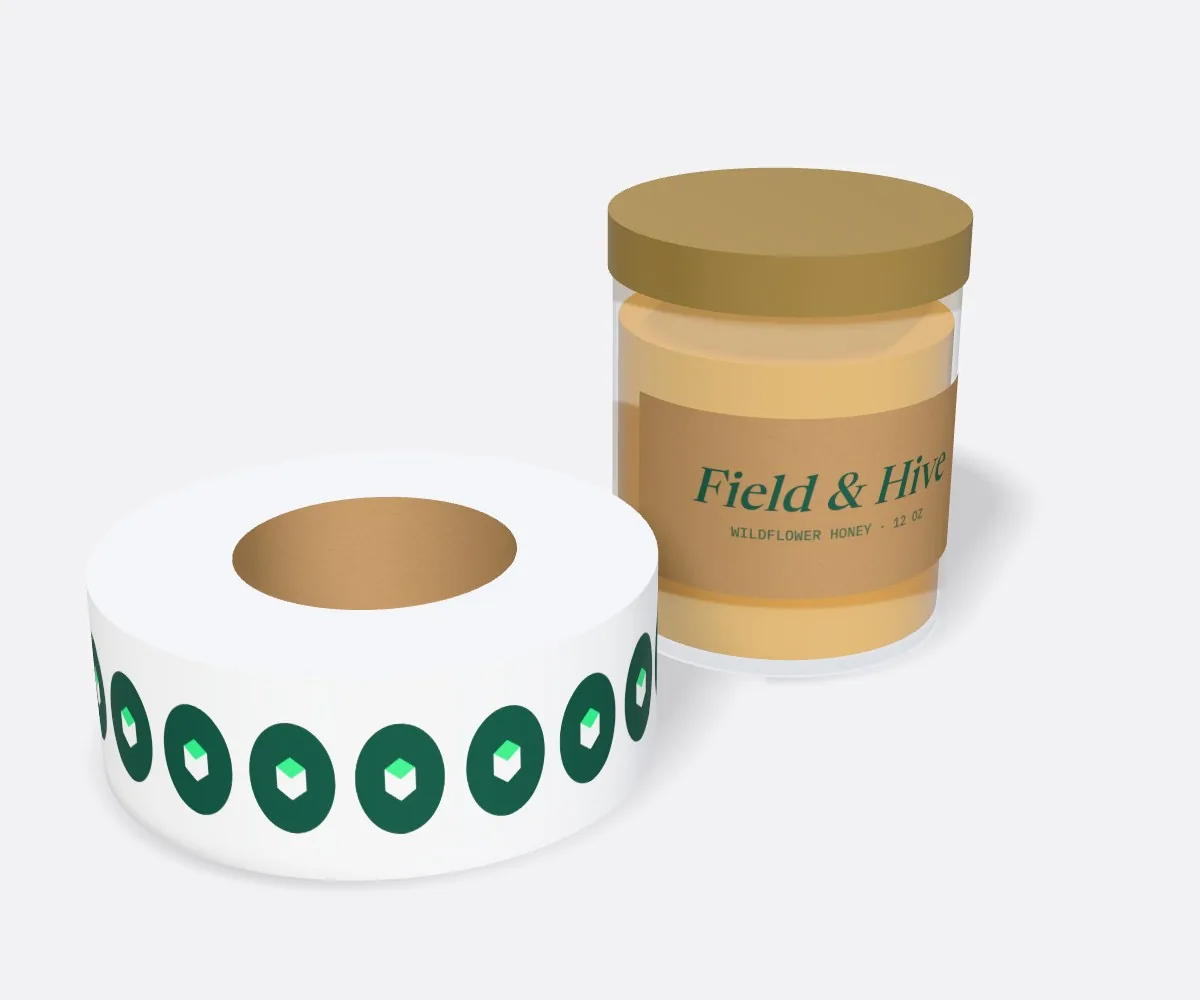
| Ideal placements | Jar lids, candle tins, tissue seals, box wafer tabs, pouch badges | Square: cube jars, cartons, tins; Oval: sauces, honey, soaps, wine |
| Minimum & die fees | From 500 labels, zero die fee at CubitPack | From 500 labels, zero die fee at CubitPack |
Why do circle labels apply faster by hand than square labels?
When your fulfillment team applies labels by hand to hundreds of jars, pouches or tissue-wrapped bundles, rotational alignment is the biggest hidden time sink. Place a custom square label just two degrees off level on a flat box lid or a straight-sided jar, and the human eye immediately spots that the top edge slopes away from the container rim. Workers instinctively slow down, hover over the surface, and sometimes peel and re-stick the square to get it level. A circular label eliminates that alignment pause on round lids, bottom warning recesses and tissue paper folds. Because every point on the perimeter sits at the exact same radius from the center, rotating a circular monogram or crest by five or ten degrees on a round cap looks completely natural. Even when a circle has horizontal text across the middle, the absence of straight left and right edges next to the container seams makes tiny tilts invisible.
How much text space do you trade away with a circle vs a square?
From geometry, a circle inscribed inside a square occupies π/4 (78.5%) of the square's surface area. For example, a 2 × 2 inch square gives you 4.0 square inches of layout room, whereas a 2 inch diameter circle gives you 3.14 square inches. More importantly for typography, the top and bottom of a circle narrow rapidly, which means long horizontal lines of ingredient text or nutrition facts must either wrap onto shorter lines or shrink in point size to stay inside the circular safe zone. When your label only carries a brand crest, scent name, net weight and a short tagline, that 21.5% area reduction is actually a design advantage: it strips away empty corner clutter and draws the shopper's eye straight to the center medallion. Conversely, if a single 2 × 2 inch decal must hold an FDA-style ingredient paragraph, a distributor address and a full-width UPC barcode, a custom square label or custom rectangle label gives your typesetter horizontal corners that fit rectangular blocks of copy cleanly.
Know your size? Compare pricing across up to 3 quantities.
Request a Quote →When should you pick an oval label instead of a circle on curved jars?
A true circle has equal width and height, which works beautifully on round flat lids and wide jars, but creates a dilemma on two common container shapes: tall, skinny bottles and short, wide jars with curved shoulders. On a narrow 2 oz hot sauce bottle or cosmetic pump, a 2 inch circle is too wide for the cylinder curve and flares at the left and right edges. Shrinking the circle to 1.25 inches fixes the curve problem but leaves very little vertical room for your brand name. A vertical custom oval label solves that problem by keeping the narrow 1.25 inch horizontal width while stretching the vertical height to 2.25 or 2.5 inches along the straight vertical wall of the bottle. Flip that same logic 90 degrees on a squat 4 oz bail-wire jam jar or bar of soap: a horizontal oval (such as 2.5 inches wide by 1.5 inches tall) gives you a wide brand banner that stays safely inside the short straight band between the top shoulder curve and bottom heel.
- Round jar lids, candle covers and base recesses: pick a true circle that mirrors the round container perimeter.
- Flat-sided cube jars, square tins and stand-up pouches: pick a square label for 27% more text area and crisp edge alignment.
- Tall, narrow dropper, sauce or lotion bottles: pick a vertical oval or narrow rectangle so side edges never wrap past one-third of the circumference.
- Short, wide jam jars, body butter tubs and soap bars: pick a horizontal oval that spans the front panel without hitting the shoulder curve.
How do brands pair circle lid labels with square or rectangle wraps?
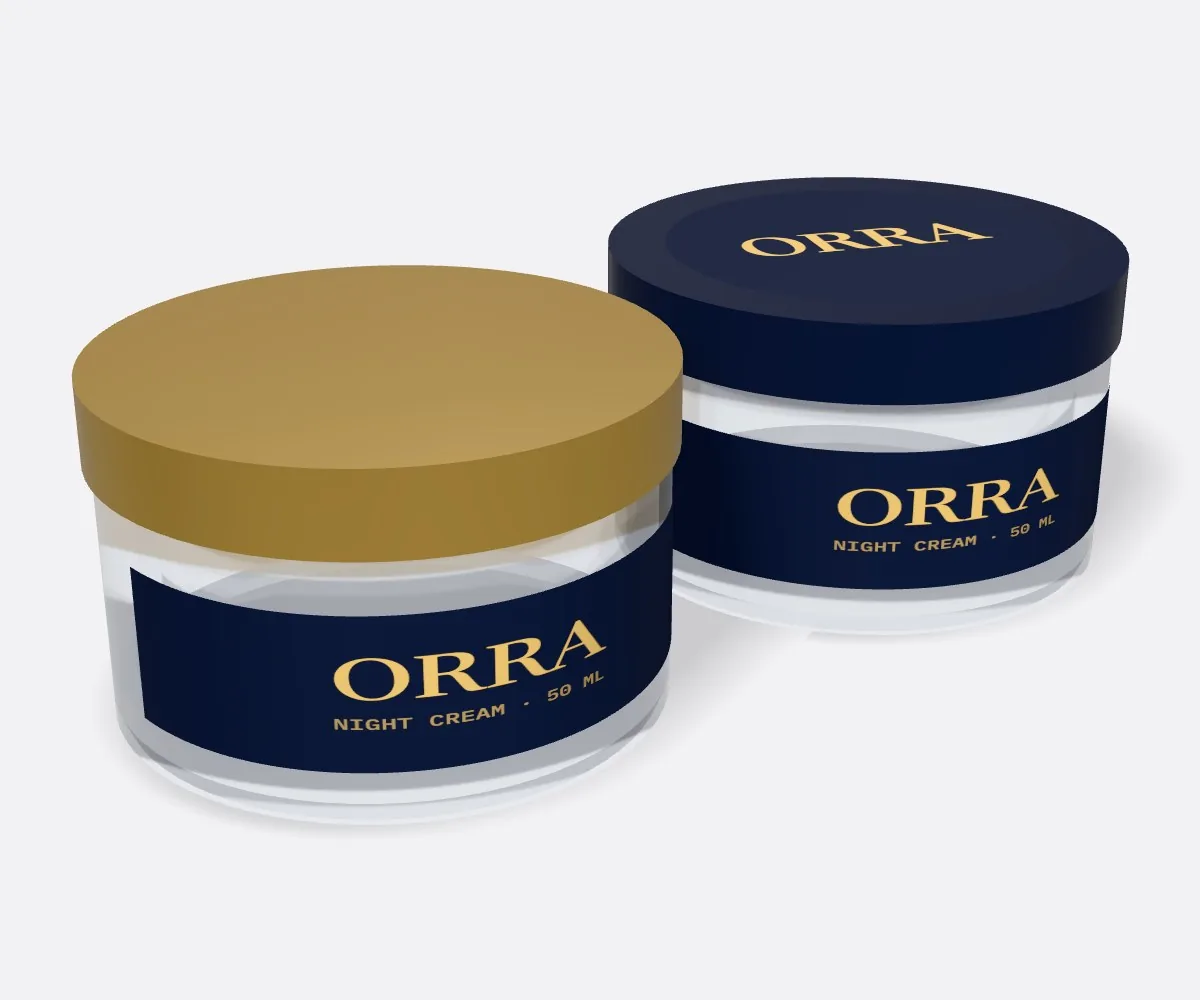
You rarely have to pick just one shape for the entire container. In retail food, candle and skincare lines, the highest-performing setup pairs two complementary shapes on the same vessel: a round lid or base label combined with a rectangular or square front panel on the side wall. In this two-label system, the top circle handles instant shelf and drawer recognition (brand monogram, flavor badge or color-coded scent dot) while also enjoying continuous corner-free edges that never catch when customers twist the cap. Meanwhile, the side rectangle or square handles the heavy horizontal reading load, including nutrition facts, usage instructions and scannable barcodes. You can order both shapes together at CubitPack by entering multiple designs on your quote form, matched to the exact same Pantone ink code. From a mechanical standpoint, continuous curved edges also perform differently than corners during transit. On a square sticker, peel stress concentrates at the four 90-degree tips whenever jars rub against cardboard partition slots or wet hands. While rounding the corners of a square to a 1/16 inch radius helps, a circular or oval perimeter eliminates corner tips altogether, spreading friction evenly along a smooth 360-degree arc.
- Top lid circle + side rectangle wrap: standard for honey, jam, hot sauce, spices and nutritional supplements.
- Top lid circle + bottom warning circle: popular on minimalist candle tins and cosmetic balm pots that keep the metal sides bare.
- Front square panel + top circle seal: common on apothecary glass jars and folding cartons that use a round wafer seal over the tuck flap.
- Master printed pouch + color-coded circle badge: lets coffee roasters and snack brands use one bulk pouch across ten roast or flavor SKUs.
What are the most common mistakes when choosing between circle, square and oval labels?
Most shape regrets happen when a brand picks an outline on a flat computer screen without checking how it wraps or aligns on the real container. Avoid these five mistakes
- Putting a square label on top of a round jar lid, where the four flat sides fight visually against the circular cap rim and look crooked.
- Cramming a wide rectangular UPC barcode and a 60-word ingredient block into a 1.5 inch circle instead of moving the barcode to a square or rectangle body wrap.
- Wrapping a wide 2.5 inch circle onto a narrow bottle neck or body where a vertical oval would hug the cylinder without side-edge lift.
- Ordering sharp 90-degree corners on square labels for friction-packed jars instead of standard 1/16 inch rounded corners or a circular outline.
- Using square stickers as high-speed hand-applied tissue paper seals, forcing packers to pause and level every sticker against the paper fold.
Find your label size
Suggested label size: 9⅛ × 2¾ in (width × height)
A typical starting point. Your account manager confirms the size on the proof.
Quote this size →Packaging for this
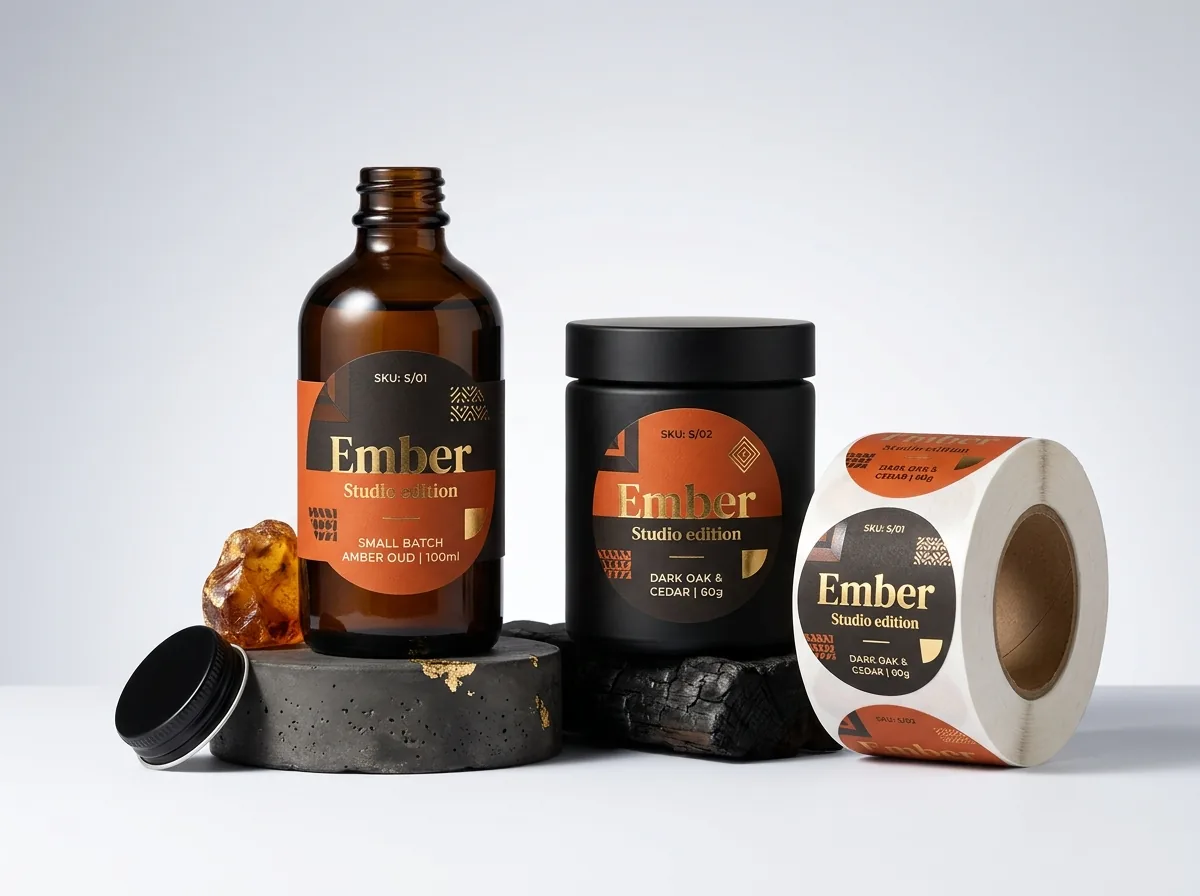
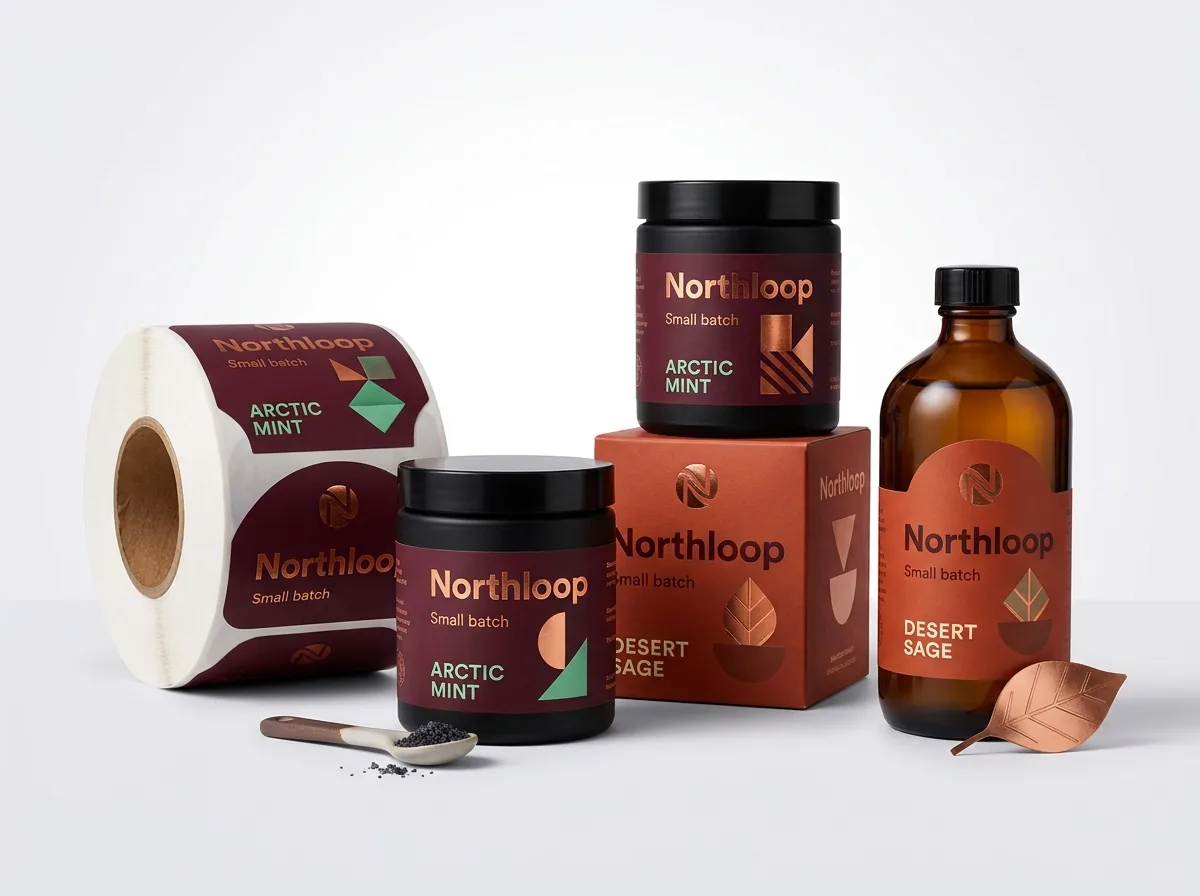
Ready to order circle labels? Compare up to 3 quantities with a free 3D mockup.
Request a Quote →Questions about circle labels
Do custom circle, square and oval labels cost the same per piece?
Yes. When a circle, square and oval have the same overall width and height, they use the same square inches of label web on the press. Because CubitPack never charges cutting die fees, the shape outline does not add extra cost.
Why do circle and oval labels resist edge lifting better than square labels?
Sharp 90-degree corners on a square label concentrate peel stress at a single point whenever the container rubs against carton dividers or hands. Circles and ovals distribute edge contact smoothly around a continuous curve with no corner tip to catch.
Should I put a circle or a square label on a round jar lid?
Always choose a circle label for a round jar lid or metal tin cover. A circle echoes the concentric geometry of the cap rim and hides any slight off-axis rotation, whereas a square inside a circle leaves awkward uneven crescents.
When is a square label better than a circle label on a jar or pouch?
Choose a square label when you are labeling flat-sided cube jars, square apothecary tins or stand-up pouches and need maximum room for multi-line ingredient text, nutrition panels or a corner-aligned minimalist grid.
How do I decide between a circle and an oval for the front of a bottle?
Check the ratio of your straight vertical wall height to one-third of the bottle's circumference. If both numbers are roughly equal, a circle fits nicely; if the bottle is tall and narrow, a vertical oval gives you more height without wrapping too far around.
Can I order round lid labels and rectangular body labels in one CubitPack order?
Yes. Select 2 designs or 3+ designs on the quote form and list your lid circle diameter alongside your body rectangle dimensions in the notes. We print both to the same guaranteed Pantone color match.
Still have a question? Ask a packaging specialist.
Request a Quote →Request your circle labels quote
Tell us your size and quantities, and one dedicated account manager prepares pricing for each tier.
- Free design & AI-to-print studio + 3D mockup
- No die or plate charges · 4–5 day rush available
- Free shipping to all 50 states
- 10% off your first order
Surface area comparisons in this guide use standard plane geometry (circle area = πr² = 0.785 × W² vs square area = W²) alongside cylinder wrap limits and TAPPI pressure-sensitive edge-peel principles. Checked by a CubitPack packaging specialist. Spot something wrong? Tell us and we will fix it.
Sources
What changed
- October 22, 2026: First published.
- October 22, 2026: Updated specifications, terminology, and verified source links.
More guides
New packaging guides by email
Sizes, materials and design tips. Unsubscribe anytime.