
What size tealight box do I need?
Short answer: Multiply your tealight cup diameter (usually 1.5 inches for standard cups or 2.25 inches for maxi cups) by the number of cups per row and column, then add 1/8 inch total perimeter clearance. A standard 6-pack (2×3) fits a 4.75 × 3.25 × 0.875 inch custom tealight boxes layout.
On this page
- How do I measure tealight cups and wicks before calculating box size
- What are standard tealight box dimensions for 4, 6, 9, 12 and 24 packs
- How do I size single-layer display grids vs double-stacked refill cartons
- How much extra width do cell dividers and die-cut cup trays require
- How do I size boxes for 2.25 inch maxi tealights, glass cups and ceramic warmers
- Common mistakes
- FAQs
Request a custom quoteFree dieline & 3D mockup
Sizing a tealight box comes down to grid arithmetic and strict vertical head-space control. A standard poured aluminum or polycarbonate tealight cup measures 1.5 inches (38 mm) in diameter and 0.625 to 0.75 inches tall, with an upright cotton wick that stands roughly 0.125 inches above the wax surface. To build a single-layer carton where cups cannot slide over one another or dent their thin metal rims, multiply 1.5 inches by the number of cups along the length and width, add 0.125 to 0.25 inches of total row clearance, and set the inside height to 0.875 inches. That formula yields 6.25 × 1.625 × 0.875 inches for a 1×4 strip, 4.75 × 3.25 × 0.875 inches for a 2×3 six-pack, and 6.375 × 4.75 × 0.875 inches for a 3×4 twelve-pack. At CubitPack, every grid carton and divider is cut to your exact inside dimensions with no die or plate charges and free shipping to all 50 states.
How do I measure tealight cups and wicks before calculating box size?
Before multiplying out a grid, measure one finished, poured tealight cup from your actual production batch rather than relying on nominal millimeter specs. While standard pressed aluminum tealight cups are nominally 38 mm (1.5 inches) wide by 16 mm (0.625 inches) tall, clear injection-molded polycarbonate cups often feature a slightly flared top rim closer to 1.53 inches, and 8-hour extended-burn tealight cups stand 0.875 to 0.95 inches tall. Measure three points on your finished candle: the widest outer diameter at the top rim, the cup wall height from base to rim, and the total standing height to the tip of the waxed cotton or wooden wick. When you order custom printed tealight cartons, giving us those three numbers lets our design team sets the exact inside Length × Width × Height so cups load smoothly without pinching or rattling.
- Standard 4-hour aluminum or plastic cup: 1.5 in (38 mm) diameter × 0.625 to 0.75 in cup height.
- Tall 6-hour to 8-hour polycarbonate cup: 1.5 in (38 mm) diameter × 0.875 to 0.95 in cup height.
- Jumbo 8-hour to 10-hour maxi tealight cup: 2.25 in (57 mm) diameter × 0.875 to 1.0 in cup height.
- Horizontal row allowance (no dividers): multiply cup diameter by cup count and add 1/8 to 1/4 in total clearance.
- Single-layer inside height: add 1/8 to 1/4 in above the cup rim (0.875 in standard) so upright wicks never rub the lid.
What are standard tealight box dimensions for 4, 6, 9, 12 and 24 packs?
Every CubitPack order is cut to your exact dieline with zero cutting die fees, but most candle makers organize their tealight packs into seven proven grid layouts. Use the chart below to compare single-layer display footprints against double-stacked refill cartons. Notice that 12-count packs can be built two ways: a flat 3×4 single-layer window box (6.375 × 4.75 × 0.875 inches) that displays all twelve cups at once on a boutique table, or a compact two-layer 2×3 carton (4.75 × 3.25 × 1.75 inches) that cuts shelf footprint in half by stacking two tiers of six cups separated by a card layer pad.
| Pack count & grid layout | Typical inside size (L × W × H) | Best box style & internal setup |
|---|---|---|
| 4-pack strip (1×4 standard 1.5 in cups) | 6.25 × 1.625 × 0.875 in | Tray and sleeve or aperture tuck box |
| 6-pack flat grid (2×3 standard 1.5 in cups) | 4.75 × 3.25 × 0.875 in | Window box or straight tuck end |
| 6-scent flight with dividers (2×3 + partitions) | 5.125 × 3.5 × 0.875 in | Tray and sleeve with 6-cell divider |
| 9-pack square grid (3×3 standard 1.5 in cups) | 4.75 × 4.75 × 0.875 in | Square window carton or two-piece box |
| 12-pack flat grid (3×4 standard 1.5 in cups) | 6.375 × 4.75 × 0.875 in | Window tuck box or tray and sleeve |
| 12-pack stacked (2 layers of 2×3 + layer pad) | 4.75 × 3.25 × 1.75 in | Straight tuck end + card layer pad |
| 24-pack stacked (2 layers of 3×4 + layer pad) | 6.375 × 4.75 × 1.75 in | Straight tuck end or E-flute carton |
| 6-pack jumbo maxi cups (2×3 of 2.25 in cups) | 7.0 × 4.75 × 1.125 in | Window box or reinforced tray and sleeve |
How do I size single-layer display grids vs double-stacked refill cartons?
Choosing between a single-layer 0.875 inch tall carton and a double-layer 1.75 inch tall carton depends on whether the customer is buying for visual gift appeal or everyday restocking. When shoppers browse a gift shop or market stall, a single-layer window box in a 2×3 (6-pack), 3×3 (9-pack) or 3×4 (12-pack) grid lets them see every pastel wax color and botanical topping through the top panel. For 12-count, 16-count and 24-count unscented beeswax or everyday soy refill packs, stacking two tiers cuts the horizontal board area by nearly 40 percent and creates a sturdy brick-shaped straight tuck end box that stacks neatly on retail shelves. When sizing a two-tier box, double the single-layer cup height (0.75 in × 2 = 1.50 in), add 0.03 inches for a flat die-cut paperboard layer pad between the tiers, and add 0.22 inches of total wick clearance to reach a 1.75 inch inside height.
Know your size? Compare pricing across up to 3 quantities.
Request a Quote →How much extra width do cell dividers and die-cut cup trays require?
In a single-scent 6-pack or 12-pack, tealight cups can sit rim-to-rim inside a snug outer carton without internal dividers. However, if you are building a multi-scent discovery set where six different fragrances share one box, or if you want each cup held inside a recessed card frame, you need to add structural allowance for internal cardboard inserts. For a slotted paperboard grid partition (like a miniature egg-carton divider), add 0.125 inches for each internal divider wall plus 0.0625 inches of clearance per cell. On a 2×3 six-pack with one longitudinal divider and two cross dividers, the inside footprint expands from 4.75 × 3.25 inches to 5.125 × 3.5 × 0.875 inches. If you prefer a die-cut false-bottom platform with circular 1.53 inch holes that cradle each cup with visible spacing around every rim, allow at least 0.25 inches of paperboard bridge between holes and around the outer perimeter, bringing a 2×3 presentation tray to roughly 5.5 × 3.75 × 1.0 inches.
How do I size boxes for 2.25 inch maxi tealights, glass cups and ceramic warmers?
Many luxury home fragrance brands pour jumbo 2.25 inch (57 mm) maxi tealights for long dinner parties, or pour standard tealights into reusable thick-walled glass or ceramic cups rather than disposable aluminum tins. Jumbo maxi cups hold roughly 1.5 to 2 oz of wax each, so a 6-pack weighs nearly three times as much as a standard aluminum 6-pack. For a 2×3 grid of 2.25 inch maxi tealights without dividers, multiply 2.25 by 3 (6.75 in) and 2.25 by 2 (4.5 in), then add 0.25 inches of clearance to reach 7.0 × 4.75 × 1.125 inches. If your tealights are poured into mini glass cups, never let the glass rims touch directly; add a slotted paperboard or E-flute divider grid (bringing a 2×3 glass tealight box to 5.25 × 3.625 × 1.125 inches) so glass vessels cannot clink and chip during parcel delivery. Finally, if you are sizing a gift set that pairs a ceramic oil burner or tealight warmer alongside a 4-pack of tealights, build a two-piece box or corrugated mailer box with a dual-compartment insert: one deep cavity cradling the ceramic warmer and a separate shallow lane holding the four tealight cups. Measure the ceramic warmer at its widest belly and full standing height, add 1/2 inch around the warmer for E-flute or foam cushioning, and add 1.75 inches along one side for the four-tealight sleeve.
What are the most common tealight box sizing mistakes?
Almost every damaged tealight shipment comes from loose row tolerances or excess vertical head-space that lets cups flip and overlap. Check these five details before approving your dieline
- Making a single-layer box 1.25 or 1.5 inches tall for 0.625 inch cups, giving thin aluminum cups enough vertical room to tilt sideways and ride over neighboring rims.
- Multiplying 1.5 inches by the cup count with zero clearance, which causes slightly flared polycarbonate cups or glue seam thickness to bow the carton walls outward.
- Stacking two tiers of 6 or 12 tealights without a flat paperboard layer pad, crushing the upright cotton wicks and scratching the wax on the lower row.
- Adding a 6-cell slotted divider to a 4.75 × 3.25 inch box without expanding the outer carton by 3/8 inch to account for the partition board thickness.
- Die-cutting circular top viewing holes at 1.5 inches instead of 1.3125 to 1.375 inches, allowing standard 1.5 inch cups to pop out through the lid.
Find your size
Suggested inside size: 6.25 × 1.625 × 0.875 in
A starting point. Your account manager confirms the size with you before the proof.
Quote this size →Packaging for this
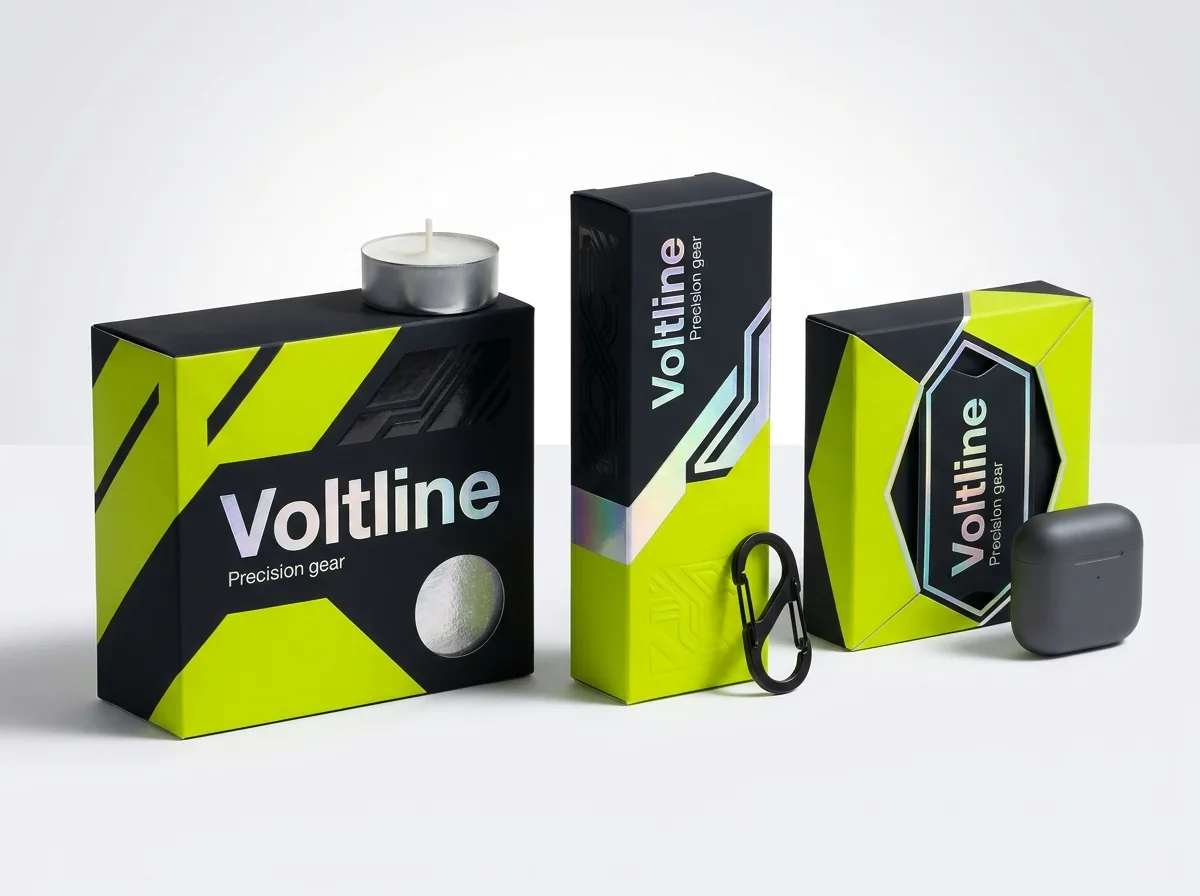
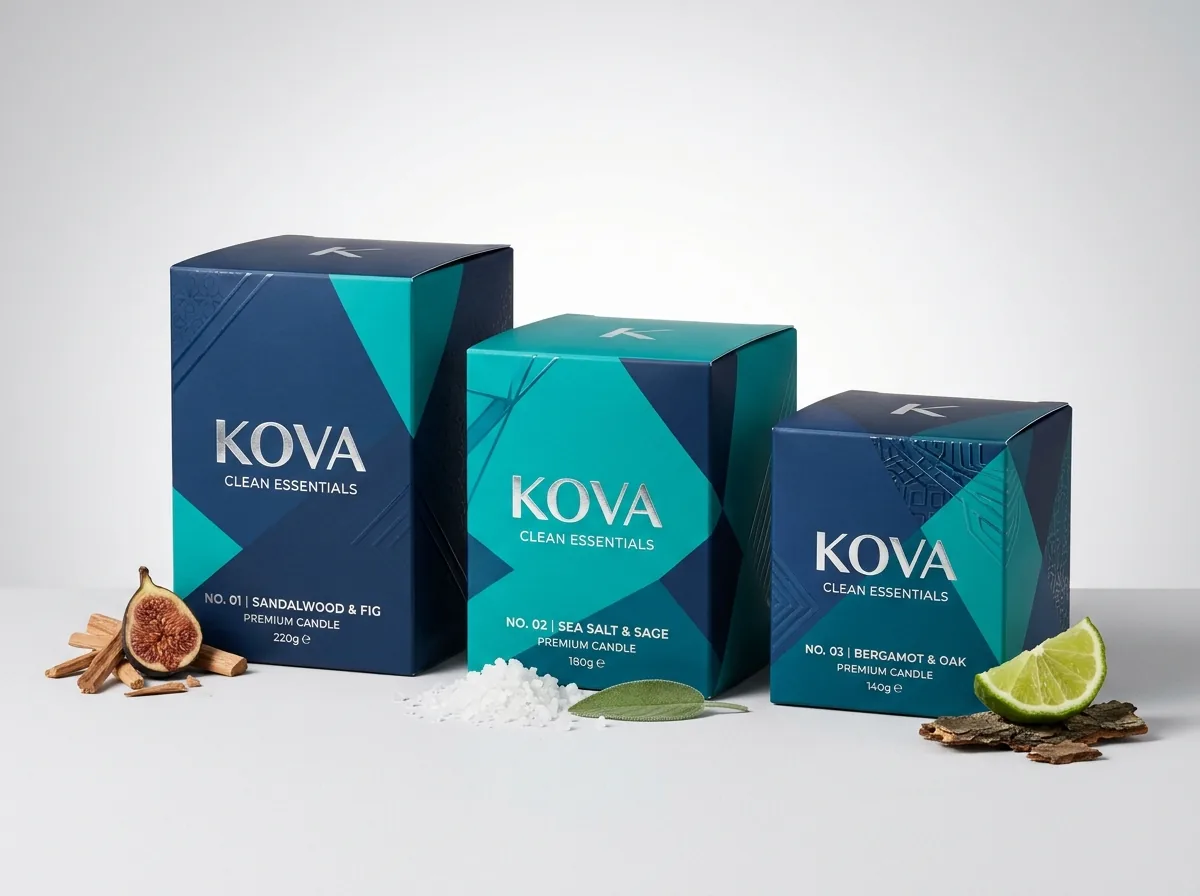

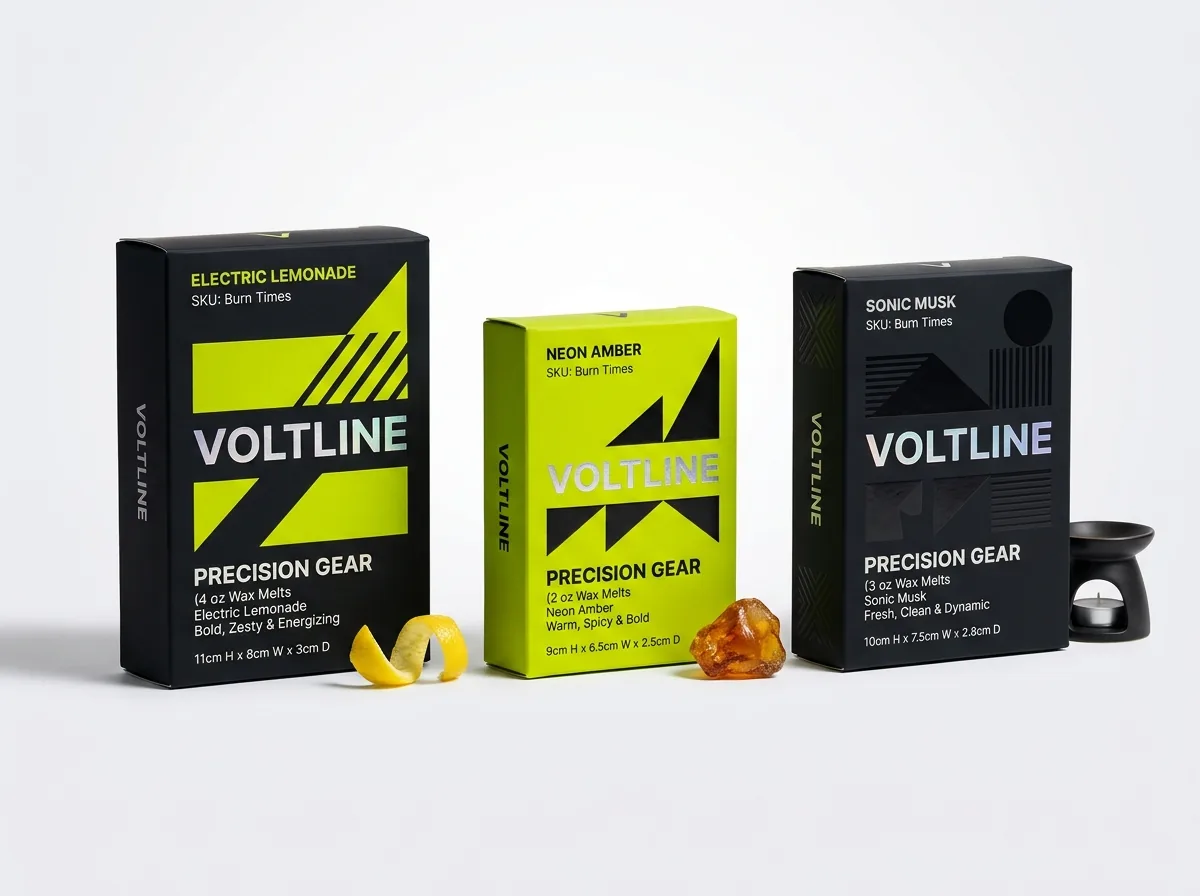

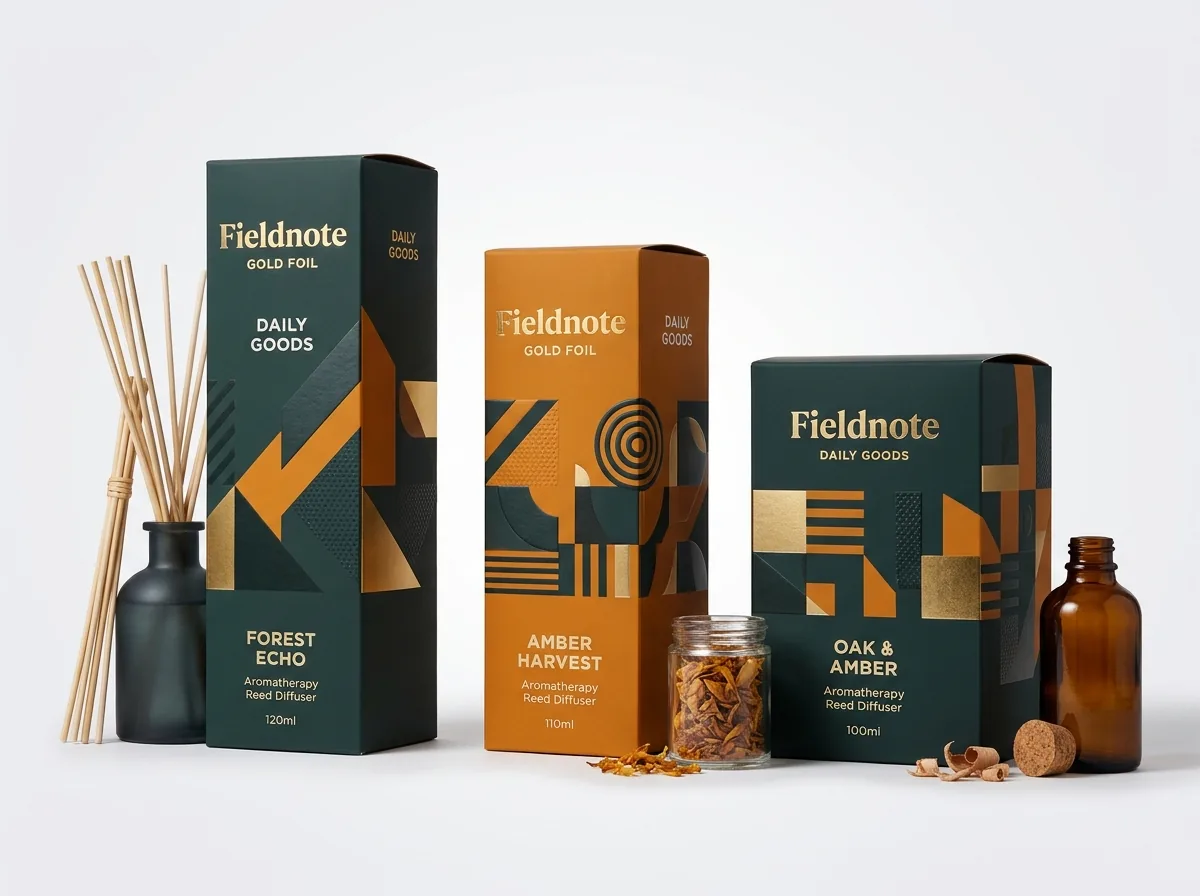
Ready to order tealight boxes? Compare up to 3 quantities with a free 3D mockup.
Request a Quote →Questions about tealight boxes
Are tealight box dimensions listed as inside or outside measurements?
All CubitPack box sizes are quoted as usable inside dimensions in the order of Length × Width × Height in inches. Quoting by inside measurements ensures your grid of 1.5 inch or 2.25 inch tealight cups fits flat across the floor without catching on the side glue flap.
What size box fits 4 standard tealights in a single row?
Four standard 1.5 inch (38 mm) tealight cups lined up in a 1×4 strip measure 6.0 inches end to end. Adding 1/4 inch of length clearance and 1/8 inch of width clearance gives an inside box size of 6.25 × 1.625 × 0.875 inches.
What size box fits 8 or 10 standard tealight candles?
Eight standard 1.5 inch tealights arranged in a flat 2×4 grid fit inside a 6.25 × 3.25 × 0.875 inch carton (or 3.25 × 3.25 × 1.75 inches when stacked in two 2×2 layers). Ten tealights in a 2×5 grid fit inside a 7.75 × 3.25 × 0.875 inch carton.
How wide should circular top holes be on a plastic-free aperture tealight box?
For standard 1.5 inch (38 mm) tealight cups, die-cut the circular top apertures at 1.3125 to 1.375 inches in diameter. Keeping the hole 1/8 to 3/16 inch narrower than the cup rim traps the metal or plastic rim underneath the paperboard while framing the wax and wick.
Does CubitPack charge tooling fees for custom grid dividers or circular lid cutouts?
No. CubitPack never charges cutting die or printing plate fees. Whether your box uses a single rectangular window, six circular top apertures or a slotted six-cell divider insert, we cut the exact dieline to your cup measurements at no extra tooling cost.
Can I test my aluminum or polycarbonate tealight cups in a physical sample box first?
Yes. You receive a free 2D dieline proof and 3D mockup before paying, and you can also order a paid physical sample cut to your exact grid and divider specs (with the sample cost credited toward your full order) or order our $50 sample kit.
Still have a question? Ask a packaging specialist.
Request a Quote →Request your tealight boxes quote
Tell us your size and quantities, and one dedicated account manager prepares pricing for each tier.
- Free design & AI-to-print studio + 3D mockup
- No die or plate charges · 4–5 day rush available
- Free shipping to all 50 states
- 10% off your first order
The grid formulas in this guide were calculated from standard 38 mm (1.5 in) and 57 mm (2.25 in) aluminum and polycarbonate tealight cup specifications, plus paperboard partition calipers and layer pad clearances. A CubitPack packaging specialist verified every row. Spot an error? Tell us and we will fix it.
Sources
What changed
- October 22, 2026: First published.
- October 22, 2026: Updated specifications, terminology, and verified source links.
More guides
New packaging guides by email
Sizes, materials and design tips. Unsubscribe anytime.