
What size greeting card box do I need for A2 and A7 cards?
Short answer: Always measure the matching envelope rather than the folded greeting card, then add 0.25 inches to both length and width for finger clearance. Standard custom greeting card boxes measure 6.0 × 4.625 × 0.75 in for an 8-pack of A2 cards and 7.5 × 5.5 × 1.0 in for a 12-pack of A7 cards.
On this page
- Why must you size a greeting card box to the envelope instead of the card
- What are the standard greeting card box sizes for 4bar, A2, A6 and A7 sets
- How do paper weight, letterpress cotton stock and envelope liners affect box depth
- How do I size side-by-side stationery suites and tabbed card organizer boxes
- What size should the front display window be on an A2 or A7 card box
- Common mistakes
- FAQs
Request a custom quoteFree dieline & 3D mockup
The golden rule of stationery packaging is that the envelope dictates the box footprint, not the folded card. Standard US greeting card envelopes (such as 4bar/A1, A2, A6 and A7) are cut 0.125 inches wider and 0.25 inches longer than the cards they hold. If you size a box to a 4.25 × 5.5 inch A2 card, the 4.375 × 5.75 inch A2 envelopes will buckle along every wall. To find your exact inside Length and Width, take the envelope dimensions and add 0.25 inches on both axes so cards lift out without dog-earing corners. Next, stack your full set of folded cards and envelopes on a flat table to measure the uncompressed stack height, and add 0.125 inches of headroom. CubitPack cuts rigid boxes from 50 units and window cartons from 1,000 units to your exact dimensions with zero die charges.
Why must you size a greeting card box to the envelope instead of the card?
First-time stationery publishers almost always look at their print spec sheet, which lists an A2 card as 4.25 × 5.5 inches or an A7 card as 5 × 7 inches, and type those exact numbers into a box quote form. When the boxes arrive, the folded cards drop in smoothly, but the matching envelopes are 0.125 inches wider and 0.25 inches longer, forcing the pointed flaps to curl against the walls. Before requesting a quote for custom printed greeting card boxes, measure the physical envelope flat on your desk. Add 0.25 inches to the envelope's length and 0.25 inches to its width. That extra 0.125-inch margin on all four sides prevents paper edges from scraping against the inside of a two-piece rigid tray or catching on the glue flap of a window folding carton, while keeping the stack centered behind a front display window. If your stationery sets are individually wrapped in crystal-clear protective cello sleeves before being boxed, measure over the sealed cello bag as well.
- Step 1 (Inside Length): take the horizontal length of your envelope in inches and add 0.25 in.
- Step 2 (Inside Width): take the vertical width of your envelope in inches and add 0.25 in.
- Step 3 (Stack Height): stack all folded cards, envelopes, belly bands and sticker sheets together on a flat table without pressing down.
- Step 4 (Inside Height): add 0.125 in to the natural stack height (or 0.25 in if adding a ribbon lifter or divider card).
- Deckle-edge cotton paper: add an extra 0.125 in to Length and Width so feathered handmade edges never brush the box walls.
What are the standard greeting card box sizes for 4bar, A2, A6 and A7 sets?
Every CubitPack box is cut to order with no die or plate charges, whether you publish petite 4bar enclosure notes, classic A2 everyday sets, A7 holiday collections or square cards. Still, US stationery envelopes follow strict postal dimensions, which means almost every boxed card collection uses one of the seven inside footprints below. Use this reference chart to match your card format and pack count with the right inside box dimensions (Length × Width × Height in inches) and structure. Remember that inside Length is the longer horizontal side of the envelope, inside Width is the shorter side, and inside Height is the vertical depth of the stacked cards and envelopes.
| Card & envelope format | Card & envelope size | Recommended inside box size (L × W × H) |
|---|---|---|
| 4bar / A1 thank-you notes (8–10 count) | 3.5 × 4.875 in card · 3.625 × 5.125 in env | 5.375 × 3.875 × 0.75 in |
| Standard A2 note card set (8–10 count) | 4.25 × 5.5 in card · 4.375 × 5.75 in env | 6.0 × 4.625 × 0.75 in |
| Deluxe A2 letterpress set (12–16 count) | 4.25 × 5.5 in cotton card + lined env | 6.0 × 4.625 × 1.25 in |
| A6 greeting card set (8–12 count) | 4.5 × 6.25 in card · 4.75 × 6.5 in env | 6.75 × 5.0 × 0.875 in |
| Standard A7 holiday or wedding set (10–12 count) | 5.0 × 7.0 in card · 5.25 × 7.25 in env | 7.5 × 5.5 × 1.0 in |
| Square 5.25 in card set (8–10 count) | 5.25 × 5.25 in card · 5.5 × 5.5 in env | 5.75 × 5.75 × 0.875 in |
| All-occasion A7/A2 card organizer (24–36 count) | Assorted A2 & A7 cards + index divider tabs | 7.75 × 5.75 × 2.5 in |
How do paper weight, letterpress cotton stock and envelope liners affect box depth?
Two greeting card sets that both contain 10 cards and 10 envelopes can require very different box heights depending on the paper caliper and embellishments. A folded card has two layers of card stock, and a standard envelope has two to three layers of paper where the back seams overlap plus the gummed flap fold. On smooth 100 lb or 110 lb cover stock (roughly 12 pt to 14 pt caliper), a single folded card plus one 70 lb text envelope stacks to about 0.065 to 0.075 inches thick, so a 10-pack fits comfortably inside a 0.75-inch or 0.875-inch box. By contrast, 220 lb (600 gsm) double-thick 100% cotton letterpress stock is nearly 40 pt thick per sheet; when paired with euro-flap envelopes lined with metallic foil paper, a 12-pack easily reaches 1.125 to 1.25 inches tall. Always stack a physical dummy set on your table before locking in your inside Height.
Know your size? Compare pricing across up to 3 quantities.
Request a Quote →How do I size side-by-side stationery suites and tabbed card organizer boxes?
Not every greeting card box holds a single vertical stack. Luxury letterpress studios often present flat or folded A2 correspondence cards in one well and envelopes or a brass wax-seal stamp in a second well side by side inside custom drawer boxes or custom two-piece rigid boxes. For a side-by-side two-well A2 tray (two 6.0 × 4.625 inch compartments separated by a 0.25-inch paperboard or foam divider wall), the total inside footprint comes to roughly 9.5 × 6.0 × 1.25 inches. If you are building an upright or flat all-occasion greeting card organizer box with printed index tabs ('Birthday', 'Thank You', 'Sympathy', 'Blank'), add 0.375 inches to the tab edge of the box so the projecting index tabs never crush against the lid.
- Two-well A2 stationery tray (cards on left, envelopes on right): 9.5 × 6.0 × 1.25 in inside.
- Correspondence + wax seal kit (A2 stack + 3 × 6 in brass seal & wax bay): 9.25 × 6.0 × 1.375 in inside.
- Flat keepsake A7 card organizer with tabbed dividers (24–36 cards): 7.75 × 5.75 × 2.5 in inside.
- Upright file-style A7 card organizer box (hinged magnetic book lid): 8.0 × 6.25 × 5.75 in inside.
What size should the front display window be on an A2 or A7 card box?
When adding a clear patched window or an open die-cut frame to custom window boxes or two-piece rigid lids, never make the window the same size as the card. A window cut too close to the box edges weakens the lid corners and exposes the raw edges of the larger envelopes sitting underneath. Use the 0.5-inch inset rule: make your window opening at least 1.0 inch narrower and 1.0 inch shorter than the folded greeting card (leaving a 0.5-inch border overlapping the card on all four sides). For an A2 card (4.25 × 5.5 in) inside a 6.0 × 4.625 in box, a 4.5 × 3.125 inch window frames the artwork cleanly while hiding every envelope edge. For an A7 card (5.0 × 7.0 in) inside a 7.5 × 5.5 in box, a 5.75 × 3.75 inch or 5.5 × 3.5 inch window leaves a generous 0.875 to 1.0 inch paperboard border around the lid for metallic foil stamping, blind debossed lines or your studio colophon.
What are the most common greeting card box sizing mistakes?
Almost every stationery box reprint happens because a designer used the card dimensions instead of the envelope dimensions or underestimated envelope flap bulk
- Typing the folded card size (4.25 × 5.5 in for A2) into the quote form instead of sizing to the larger A2 envelope (4.375 × 5.75 in) plus 0.25 in clearance.
- Forgetting that pointed euro-flap envelopes and inner foil liners add 25% to 35% more stack height than standard square-flap envelopes.
- Making the front die-cut window wider than the folded card so the bottom envelopes peek out around the edges of the top card.
- Skipping thumb notches or a satin ribbon lifter on a snug 0.25-inch-clearance two-piece rigid box.
- Forgetting to add 0.375 in of top or side clearance for projecting category tabs inside a greeting card organizer box.
Find your size
Suggested inside size: 5.375 × 3.875 × 0.75 in
A starting point. Your account manager confirms the size with you before the proof.
Quote this size →Packaging for this
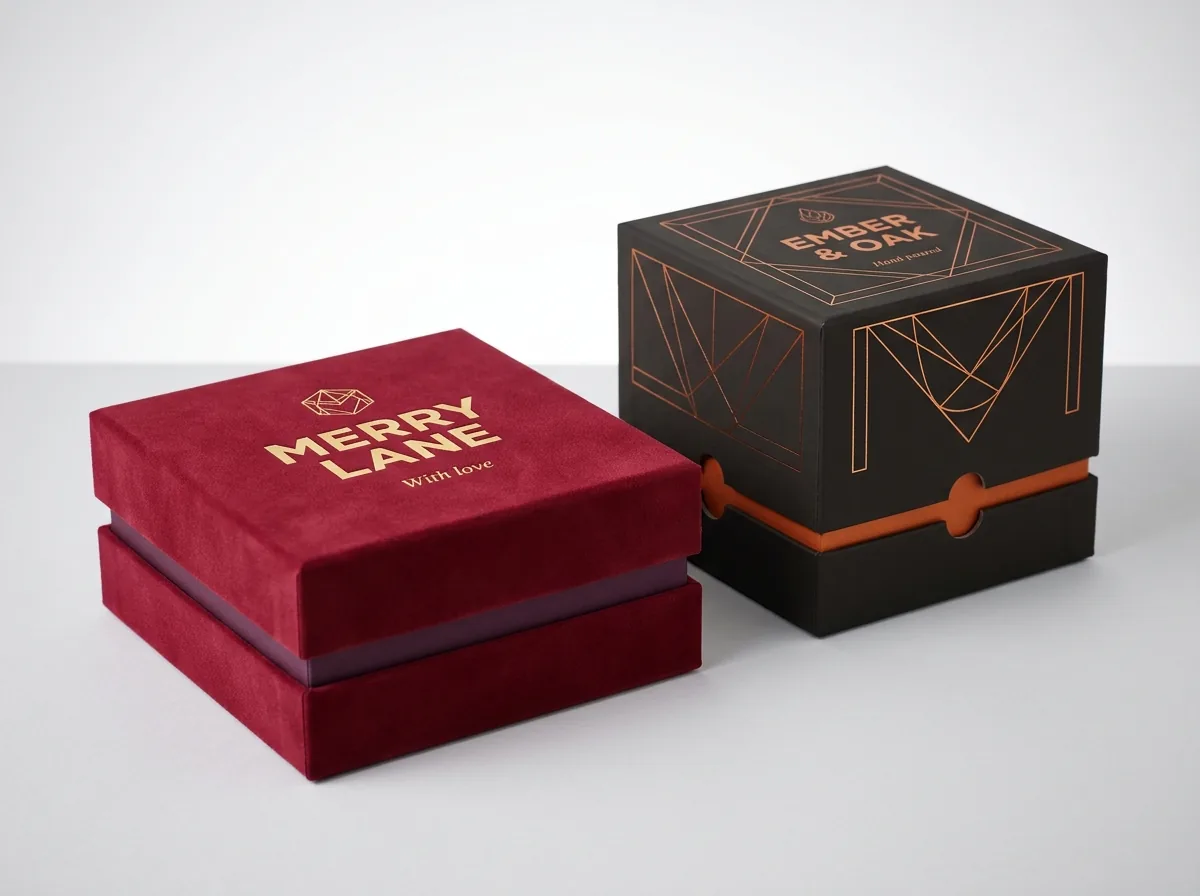
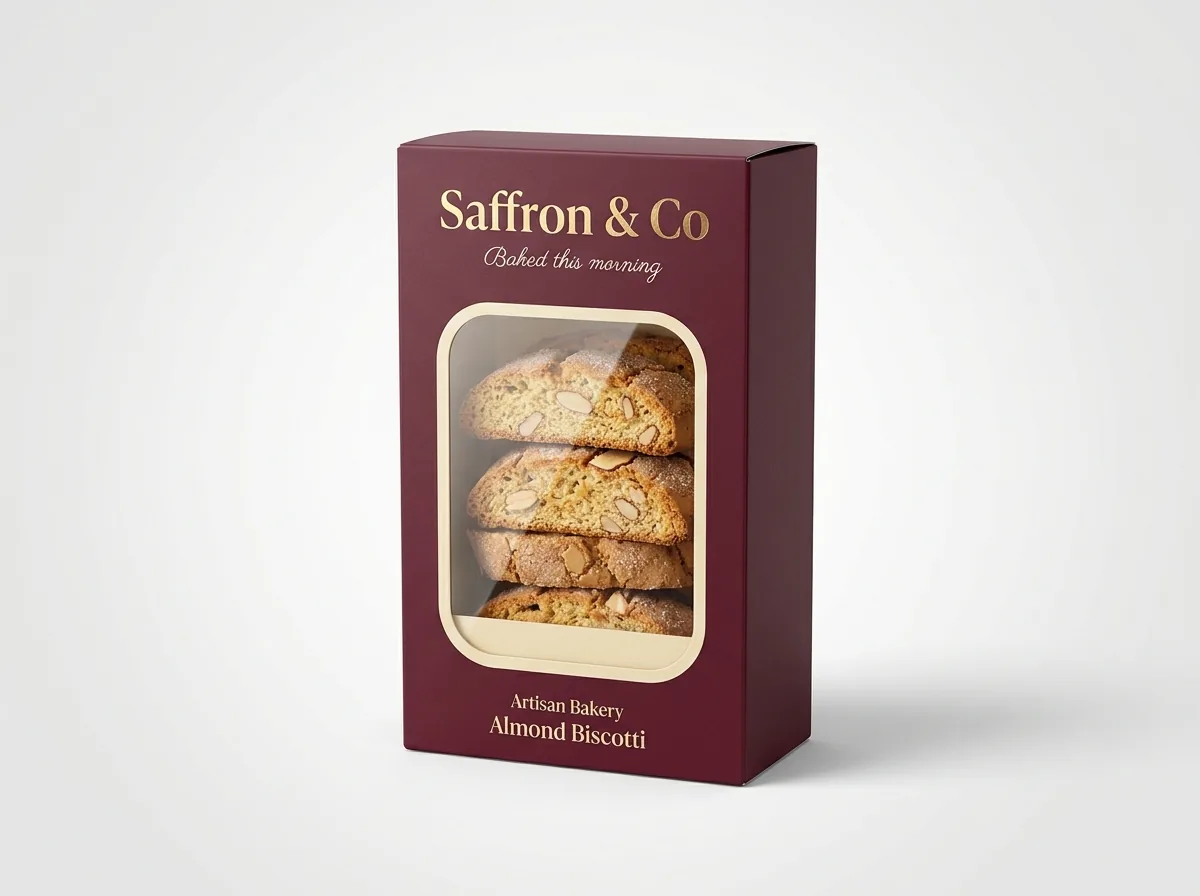
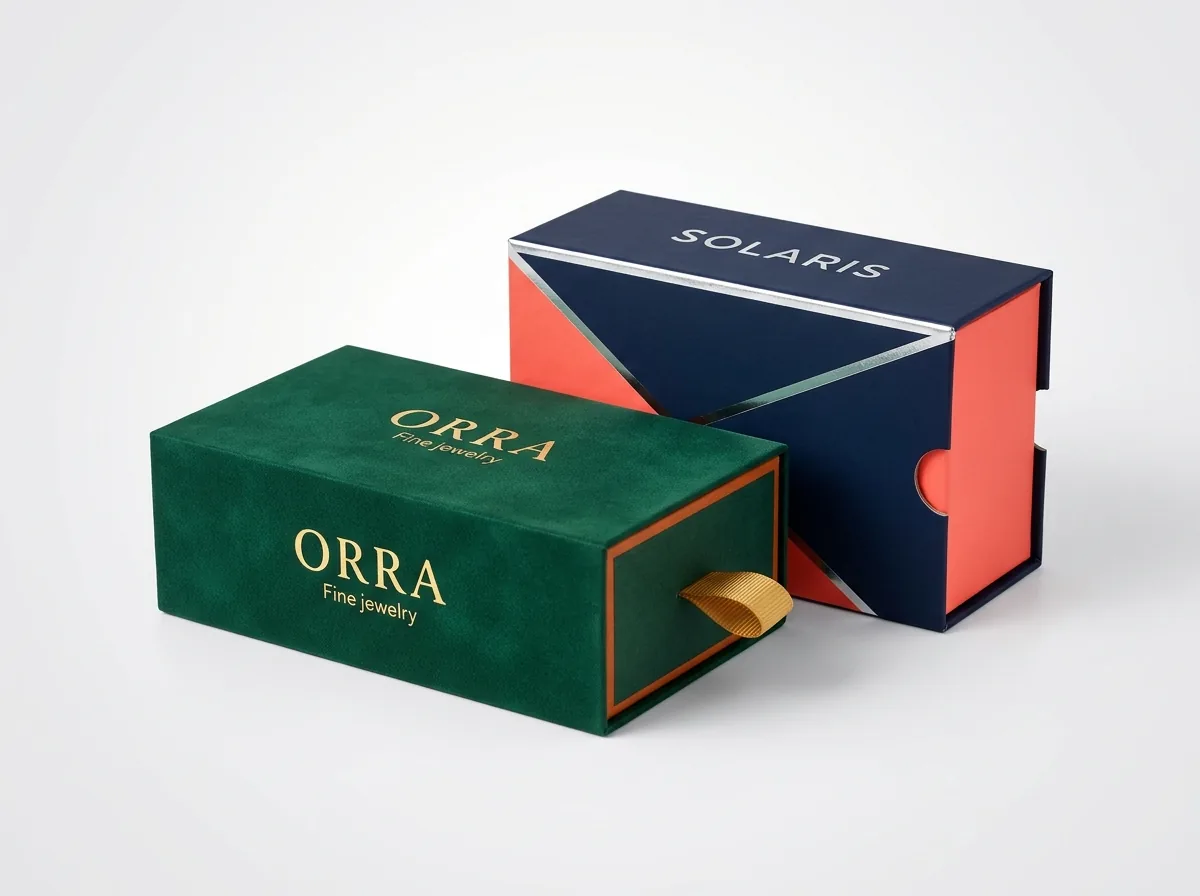
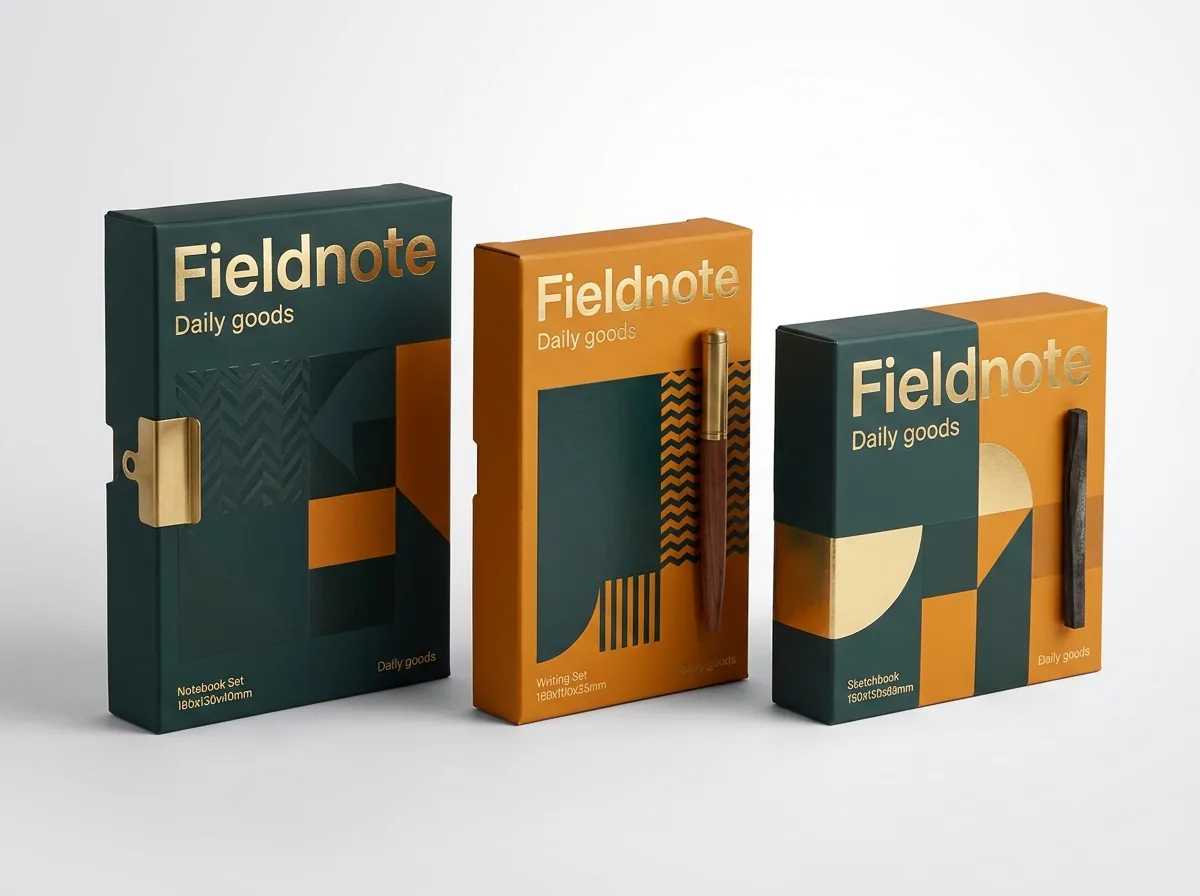
Ready to order greeting card boxes? Compare up to 3 quantities with a free 3D mockup.
Request a Quote →Questions about greeting card boxes
What is the exact box size for an 8-pack of A2 greeting cards and envelopes?
An 8-pack or 10-pack of standard A2 cards (4.25 × 5.5 in) with A2 envelopes (4.375 × 5.75 in) fits cleanly inside a 6.0 × 4.625 × 0.75 inch box. If you use heavy 220 lb cotton letterpress paper or lined envelopes, increase the inside height to 1.0 or 1.25 inches.
What size box do I need for 12 A7 (5 × 7 inch) holiday greeting cards?
A7 cards measure 5 × 7 inches and pair with 5.25 × 7.25 inch A7 envelopes. Adding 0.25 inches of clearance gives an inside box footprint of 7.5 × 5.5 inches, with a 1.0-inch depth for 10 to 12 standard cards and envelopes or 1.25 inches for foil-lined sets.
Are CubitPack greeting card boxes measured by inside or outside dimensions?
All CubitPack boxes are quoted and manufactured by their usable inside dimensions (Length × Width × Height in inches). When you give us a 6.0 × 4.625 × 0.75 inch inside size for A2 envelopes, our design team automatically add the paperboard or rigid chipboard (gray board) wall thickness on the outside.
How much clearance should I leave around envelopes in a two-piece rigid box?
Leave 0.25 inches total (0.125 inches on each side) beyond the envelope's length and width. That 0.25-inch allowance keeps the card stack centered behind a lid window while giving enough room to lift cards out when paired with thumb notches or a ribbon lifter.
What size box fits square 5 × 5 inch or 5.25 × 5.25 inch greeting cards?
A 5.0 × 5.0 inch card uses a 5.25 × 5.25 inch envelope (requiring a 5.5 × 5.5 inch box), while a 5.25 × 5.25 inch card uses a 5.5 × 5.5 inch envelope (requiring a 5.75 × 5.75 inch box), usually at 0.75 to 1.0 inch deep.
Can I test my actual cards and envelopes inside a sample box before printing?
Yes. Every order includes a free 2D dieline proof and 3D mockup before payment. You can also order our $50 sample kit to inspect rigid boards and window cartons, or request a paid custom structural prototype cut to your exact envelope size (credited toward your production order).
Still have a question? Ask a packaging specialist.
Request a Quote →Request your greeting card boxes quote
Tell us your size and quantities, and one dedicated account manager prepares pricing for each tier.
- Free design & AI-to-print studio + 3D mockup
- No die or plate charges · 4–5 day rush available
- Free shipping to all 50 states
- 10% off your first order
The envelope dimensions and stack-depth formulas in this guide follow standard US postal and stationery envelope specs (4bar/A1, A2, A6, A7) and TAPPI paper caliper standards. A CubitPack packaging specialist verified every row. Spot something wrong? Tell us and we will fix it.
Sources
What changed
- October 22, 2026: First published.
- October 22, 2026: Updated specifications, terminology, and verified source links.
More guides
New packaging guides by email
Sizes, materials and design tips. Unsubscribe anytime.