
Straight tuck vs auto-lock bottom vs two-piece cube boxes: which closure fits your product?
Short answer: Pick Straight Tuck End (STE) cube boxes for lightweight soaps, ornaments, and bath bombs under 12 ounces. Upgrade to a pre-glued Auto-Lock Bottom cube for 12 oz to 2.5 lb glass candles and mugs (cutting packing time to 2.5 seconds), or choose a Two-Piece telescoping cube for luxury keepsake reveals.
On this page
- How do straight tuck, auto-lock bottom, and two-piece cube closures compare
- Why do candle and mug brands switch to auto-lock bottom cubes at 1,000+ units
- When does a two-piece telescoping lid cube justify slower bench assembly
- Which closure matches each of the 8 most popular cube box products
- Common mistakes
- FAQs
Request a custom quoteFree dieline & 3D mockup
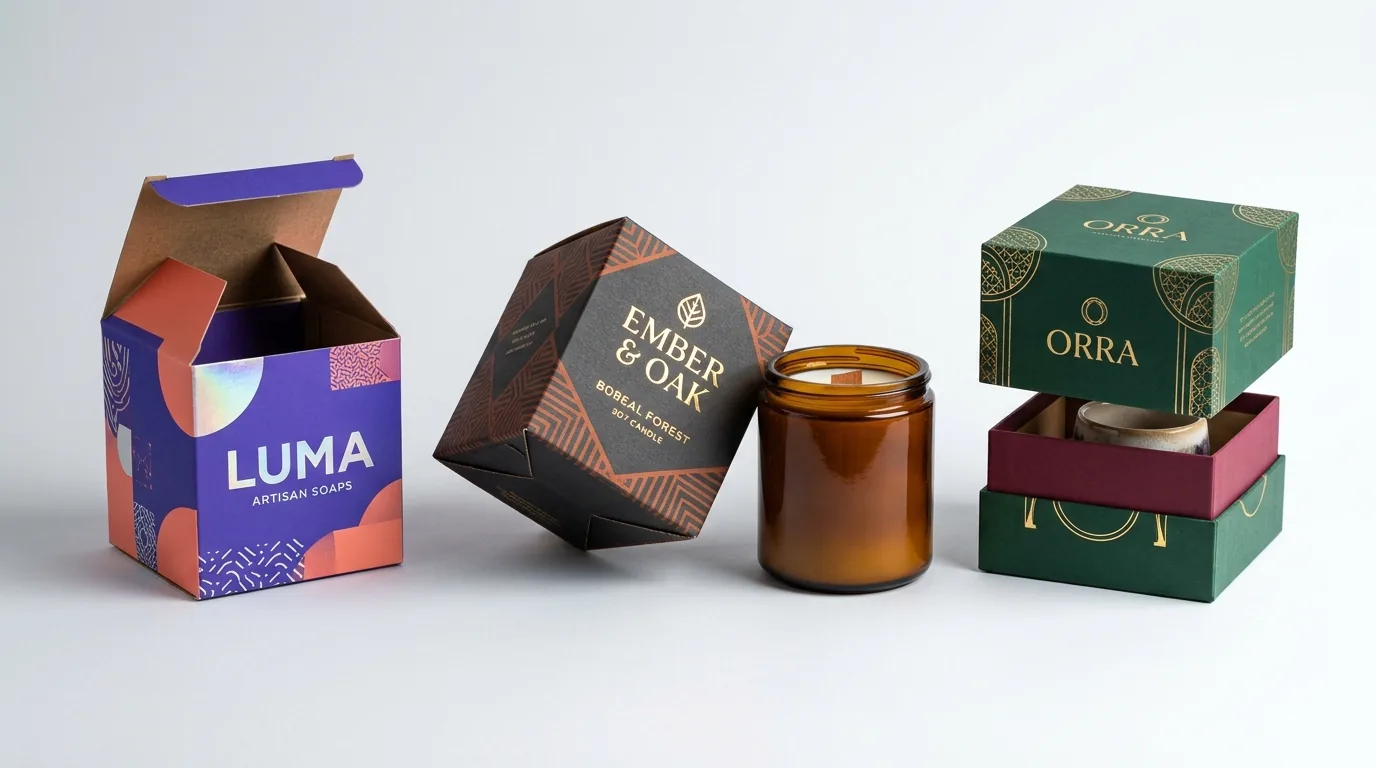
Every custom cube box shares the same unmistakable exterior geometry on a retail table: six equal 1:1 square panels that stack cleanly without tipping. Underneath and along the top rim, however, choosing between custom straight tuck end boxes, custom auto-lock bottom boxes, and custom two-piece boxes determines whether a heavy poured candle drops through the floor, how many hours your team spends folding cartons per thousand units, and how the gift feels in a customer's hands. Straight tuck cubes minimize press-sheet area and leave two clean folded edges on the front display square. Auto-lock crash-bottom cubes add factory-glued diagonal floor bonds that pop flat in two seconds and lock 2-pound jars safely inside. Two-piece cubes wrap a separate telescoping lid over a solid base tray for ceremonial unboxing. CubitPack custom-builds all three closures from 1,000 units.
How do straight tuck, auto-lock bottom, and two-piece cube closures compare?
Because all three closures fold into identical exterior squares once assembled, shoppers looking straight at your shelf display see a unified cube silhouette while your warehouse and customers experience three distinct mechanical behaviors. Choosing the wrong base for a heavy poured candle risks bottom drop-outs in a boutique aisle, whereas over-specifying a two-piece telescoping tray for a 5-ounce bath bomb doubles bench folding labor without adding shelf stability. Evaluating glue lines, floor interlock strength, flat pallet storage density, and bench setup seconds up front keeps unit economics predictable as order volumes scale from 1,000 cartons to nationwide retail rollouts. Compare base floor security, packing bench speed, flat warehouse storage, and unboxing motion across the six engineering benchmarks below
- Why STE beats Reverse Tuck End (RTE) on cubes: On an RTE carton, one closure hinges off the front square, leaving a visible raw cut slit right across your hero face; STE moves both hinges to the back wall.
- Consistent cross-SKU family pairing: Many home fragrance brands pack 2 oz votives in 18 pt STE cubes and 9 oz candles in 24 pt Auto-Lock cubes so both look identical side by side on boutique shelves.
- Zero steel-rule die charges: CubitPack includes custom CAD tooling free across all three cube closures starting at 1,000 units.
| Comparison factor | Straight tuck end (STE) cube | Auto-lock bottom (ALB) cube | Two-piece telescoping cube |
|---|---|---|---|
| Factory glue points | 1 glue line (vertical side seam) | 3 glue zones (side seam + 2 base flaps) | Fold-lock trays or pre-glued corners |
| Bottom load security | Slit-lock friction tuck (up to 12 oz) | Interlocked crash floor (12 oz to 4 lb) | Solid uncut base floor (1 to 5 lb) |
| Bench setup per box | 4 to 5 seconds (tuck base + top) | 2 to 3 seconds (squeeze open + tuck top) | 6 to 10 seconds (fold lid + base tray) |
| Front display edges | Clean top & bottom folds on front face | Clean top fold + pre-glued flat base | Lid rim step (full or partial overlap) |
| Flat storage density | Highest: single-layer flat tube stack | High: folded flat with pre-glued base | Two flat stacks (separate lids & bases) |
| Signature SKUs | Bar soaps, bath bombs, light ornaments | 9 oz candles, 11 oz mugs, rocks glasses | Collector candles, crystal ornaments, gifts |
Why do candle and mug brands switch to auto-lock bottom cubes at 1,000+ units?
Fulfillment speed and bottom drop-out protection drive almost every custom candle boxes, custom mug boxes, and custom tumbler boxes buyer toward pre-glued auto-lock bottoms once production reaches 1,000 units. On a manual straight tuck or 1-2-3 bottom carton, a packer has to square the tube, fold two dust flaps, tuck or interlock the bottom panel, flip the box upright, insert the jar, and close the lid. With a factory-glued crash-lock bottom on square custom cube cartons, squeezing opposite vertical creases snaps the floor flat automatically in one motion
- Save over 30 minutes per 1,000 boxes: Cutting bench assembly from 4.5 seconds to 2.5 seconds saves roughly 33 minutes of hand labor on every 1,000-unit batch (nearly 6 hours saved across a 10,000-unit holiday candle run).
- Eliminate retail pick-up drop-outs: When a boutique shopper picks up a 1.4-pound glass candle by pinching the upper box walls, the diagonal glue bonds underneath an auto-lock cube pull tighter instead of springing open.
- Flat barcode scan zone: Keep your retail UPC barcode inside the flat outer major bottom flap clear of the 45-degree diagonal crash-lock fold line.
- Zero wafer-seal requirement: Because auto-lock bottoms stay permanently glued underneath and slit-lock ears secure the top tuck flap, your fulfillment crew never wastes time sticking clear plastic tabs onto box bottoms.
When does a two-piece telescoping lid cube justify slower bench assembly?
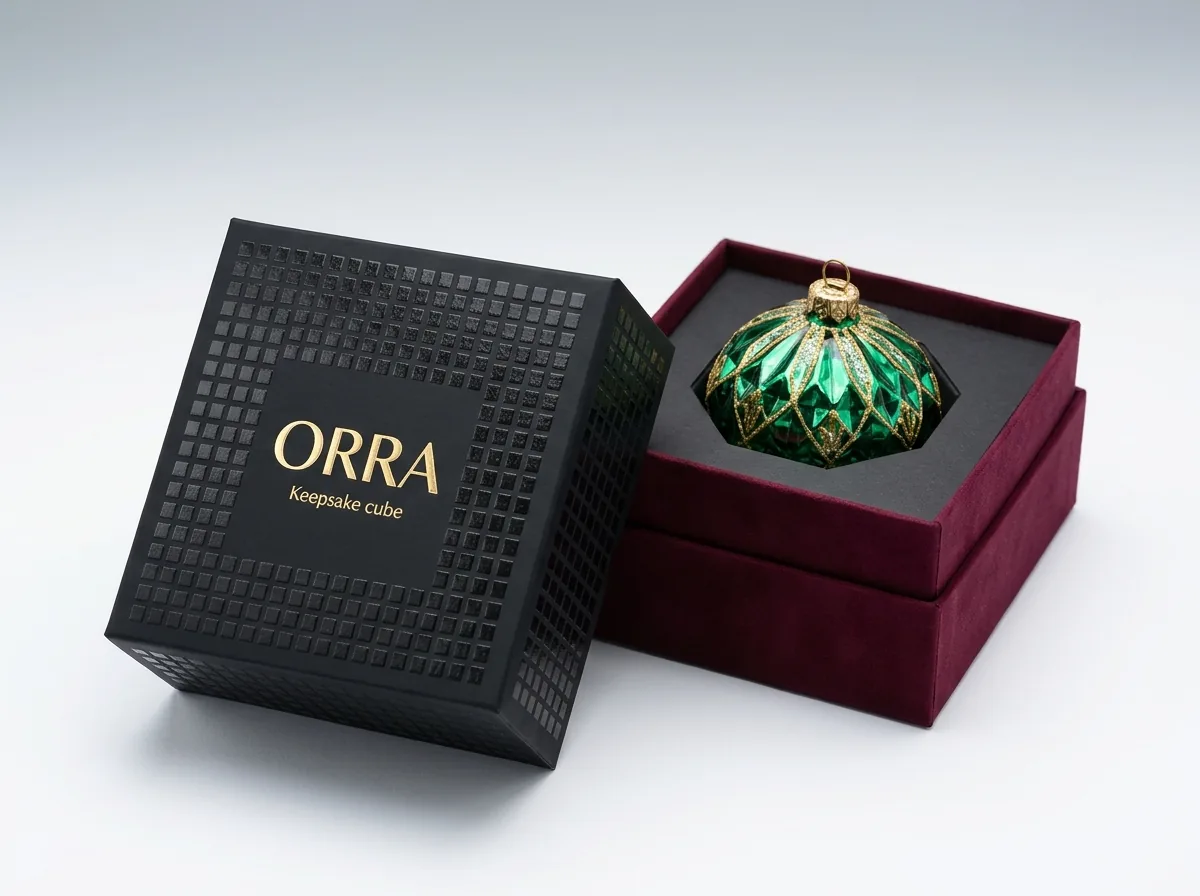
Hinged top tuck lids open briskly like everyday retail cartons, which is ideal for soaps, skincare jars, and coffee mugs. When your cube houses a collector ornament, luxury scented candle, or milestone keepsake across custom ornament boxes, custom gift basket boxes, and custom birthday boxes, switching to a folding or rigid two-piece telescoping cube transforms how the recipient interacts with the box. Instead of flipping a thin paperboard tab backward, the customer grips the upper square lid with one hand while the weighted lower cube glides downward on a cushion of air, turning the carton itself into a reusable dresser or desk keepsake box that stays in the customer's home long after unboxing
- Full-telescope double-wall strength: Dropping a full-height 4-inch lid all the way down over a 4-inch base tray doubles wall caliper on all four sides, creating extraordinary corner crush resistance.
- Partial-neck shoulder reveal: Cutting the top lid to cover 65% to 75% of the base height exposes a contrasting color band (such as gold or burgundy base paperboard peeking out beneath a matte black lid).
- Unobstructed 360-degree lift-out: Once the telescoping lid lifts off, no hinged rear flap leans over the opening, making it effortless to lift fragile glass ornaments or succulent pots straight upward.
Know your size? Compare pricing across up to 3 quantities.
Request a Quote →Which closure matches each of the 8 most popular cube box products?
Pair your chosen closure with exact interior dimensions from our custom cube box sizes, clearances, and weight guide and set up print files cleanly using our cube box dieline and six-face artwork guide, or compare candle rigid upgrades in two-piece rigid vs auto-lock candle boxes. Whether your team packs cartons in-house on a studio table or ships flat master cartons directly to a contract co-packer, aligning closure mechanics with product weight eliminates tape, wafer stickers, and broken glass across custom soap boxes and custom plant boxes. Use the product-by-product pairing guide below to choose the most dependable structure before requesting your free CAD template
- Artisan bar soaps & bath bombs (4 to 8 oz): 18–20 pt Straight Tuck End cube with optional scent-sniffing diamond cutout.
- Blown-glass & ceramic ornaments (3 to 10 oz): 20 pt Straight Tuck End cube with circular film window, or Two-Piece cube for heirloom keepsakes.
- 8 to 10 oz soy candle jars & rocks tumblers (14 to 24 oz): 24 pt laminated Auto-Lock Bottom cube + die-cut collar ring.
- 11 to 15 oz stoneware coffee mugs & mini potted succulents (1.2 to 3.0 lb): 24 pt or 1.5 mm E-flute Auto-Lock Bottom cube + corner handle or pot-ring insert.
- Compare samples in hand: Request free 2D vector CAD dielines and 3D digital proofs for two closures side by side, or order CubitPack's $50 sample kit (credited toward your first 1,000-unit run).
What closure mistakes happen most often on cube box runs?
Check your product weight and fulfillment workflow against these five closure errors before ordering
- Specifying Reverse Tuck End (RTE) instead of Straight Tuck End (STE) on a display cube and getting an unsightly raw cut tuck slot across the front top or bottom edge.
- Using unglued friction bottom tucks on 16 oz glass candles to shave pennies on gluing, then having to apply clear round wafer seals by hand so jars do not fall out.
- Ordering flat-packed two-piece folding cubes for a flash 5,000-unit mug launch without budgeting bench labor to fold both lids and bases.
- Designing a full-depth telescoping two-piece cube lid without thumb-notch cutouts or a 1/4-inch base reveal lip so tight air suction makes the lid awkward to grip.
- Placing a UPC barcode directly across the 45-degree diagonal fold seam underneath an auto-lock bottom cube.
Packaging for this
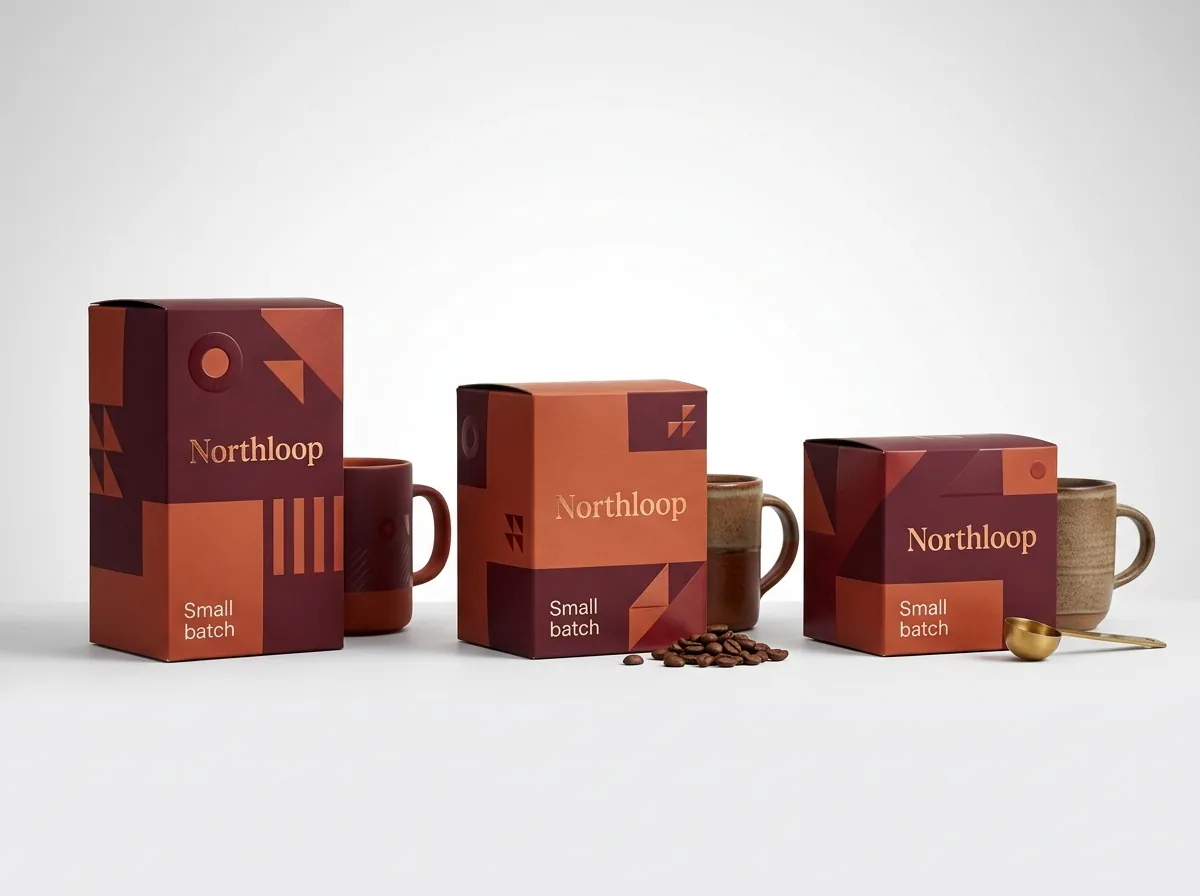
Ready to order cube boxes? Compare up to 3 quantities with a free 3D mockup.
Request a Quote →Questions about cube boxes
Why is Straight Tuck End preferred over Reverse Tuck End for custom cube boxes?
On a Straight Tuck End (STE) cube box, both the top and bottom tuck flaps hinge off the Rear panel, leaving the Front hero square framed by two clean, unbroken folded edges. Reverse Tuck End places one raw cut slot on the front edge, which is less clean on compact square gift displays.
Does an auto-lock bottom cube box require extra die fees compared with a straight tuck cube?
No. CubitPack charges zero steel-rule die or printing plate fees on straight tuck, auto-lock bottom, 1-2-3 snap-lock, and two-piece cube boxes starting at 1,000 units.
Can an auto-lock bottom cube box still have a clear front window and interior printing?
Yes. Auto-lock bottom cubes run through the exact same offset printing, lamination, foil stamping, interior flood printing, and window-patching lines before the side seam and crash-lock bottom are folded and glued.
How does a 1-2-3 snap-lock bottom compare to an auto-lock bottom on a cube box?
Both hold 12 oz to 2.5 lb jars without pushing open from underneath. An auto-lock bottom arrives factory pre-glued so it pops flat in 2 seconds, while a 1-2-3 bottom ships with only the side seam glued and interlocks manually in about 6 seconds.
Can two-piece cube boxes ship flat instead of taking up rigid box warehouse space?
Yes. Folding paperboard and E-flute two-piece cube boxes ship flat as die-cut lid and base blanks with double-wall fold-over side locks, taking up a fraction of the warehouse space required by pre-assembled rigid cubes.
Still have a question? Ask a packaging specialist.
Request a Quote →Request your cube boxes quote
Tell us your size and quantities, and one dedicated account manager prepares pricing for each tier.
- Free design & AI-to-print studio + 3D mockup
- No die or plate charges · 4–5 day rush available
- Free shipping to all 50 states
- 10% off your first order
We compared ECMA A20.20 Straight Tuck End, ECMA A60.21 Auto-Lock Bottom, and telescoping two-piece cube closures across floor load limits, bench packing cycle times, and press-sheet geometry using ECMA Folding Carton Design Codes, PPC structural manuals, and FEFCO micro-corrugated standards. Spot something wrong? Tell us and we fix it.
Sources
What changed
- November 6, 2026: First published with 6-factor cube closure comparison table, 1,000-unit packing bench labor chart, and category pairing guide.
More guides
New packaging guides by email
Sizes, materials and design tips. Unsubscribe anytime.