
Stapled vs adhesive tape fold-over header cards: which closure fits your retail bags?
Short answer: Fasten custom header cards with wire staples when packing heavy hardware, tackle or craft parts up to 16 oz at rapid bench speed, and switch to double-sided adhesive tape over pre-sealed bags for children's toys, snacks, pet treats and clean front graphics.
On this page
- How do wire staples, peel-and-seal adhesive tape, and heat-sealed bag combos compare
- Why do children's toy buyers and snack retailers restrict metal staples on bag toppers
- How much peg-hook weight can adhesive-taped vs stapled header cards support
- How does inside lamination affect double-sided adhesive tape and batch-stamp ink
- How fast can I order custom header cards engineered for stapling or taping
- Common mistakes
- FAQs
Request a custom quoteFree dieline & 3D mockup
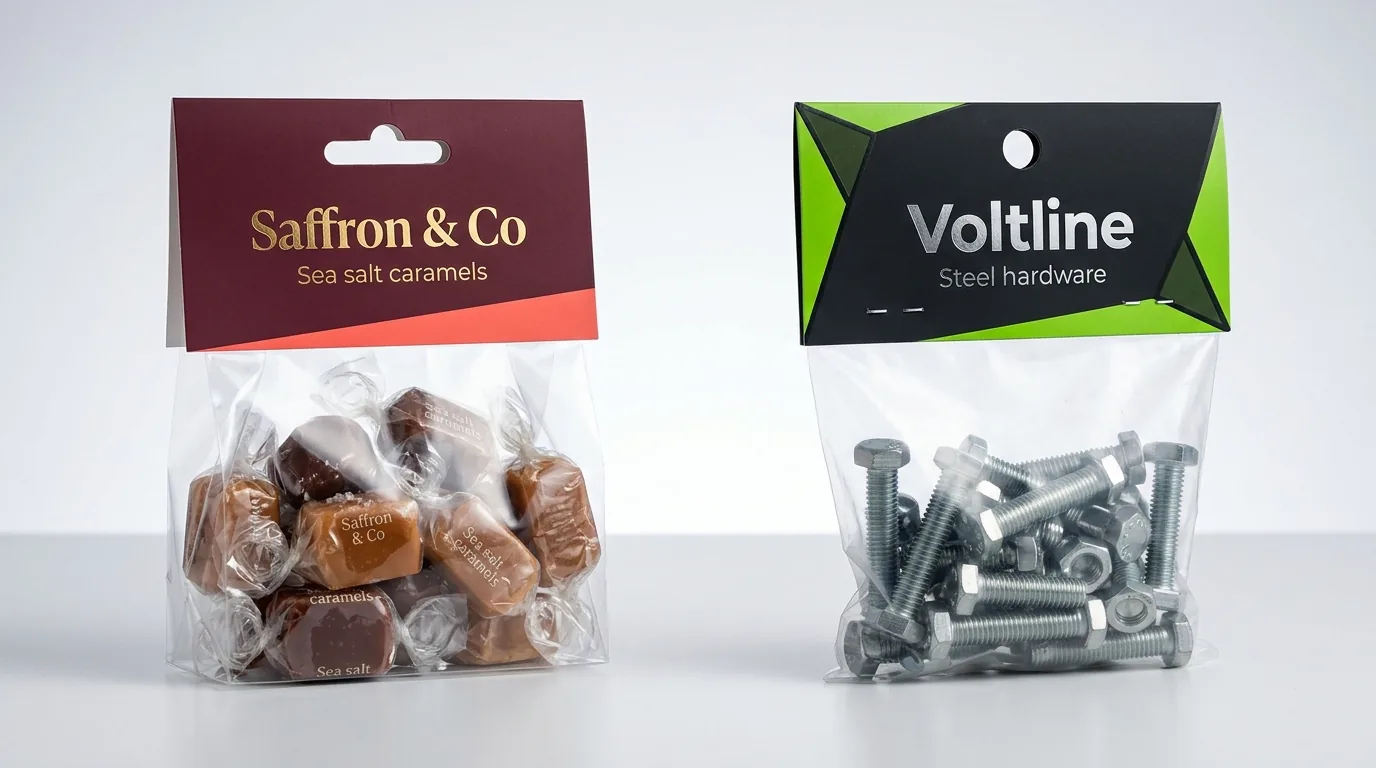
Choosing how a fold-over cardstock bag topper grips your clear poly or cellophane bag affects retail compliance, front-panel aesthetics, peg-hook load capacity, and kitting labor seconds per unit. Wire plier or electric saddle staplers drive steel legs straight through both cardstock plies and the upper plastic bag wall in under three seconds, mechanically locking heavier hardware bolts, fishing weights and automotive kits onto pegboards without adhesive creep. However, metal staples punch visible wire crowns across front artwork and introduce loose sharp-wire hazards when customers rip open snacks, pet chews or children's collectibles. Pairing a heat-sealed or lip-and-tape BOPP bag with double-sided transfer or acrylic foam tape inside uncoated cardstock flaps keeps front typography unmarred and metal-free. CubitPack produces custom header cards from 250 units in 10–14 business days with free US shipping.
How do wire staples, peel-and-seal adhesive tape, and heat-sealed bag combos compare?
Most bagged products actually rely on two separate seals: one closure that keeps air, crumbs or tiny parts inside the plastic bag, and a second mechanical or adhesive bond that attaches fold-over cardstock bag toppers to the top of that bag. Compare the four commercial assembly workflows alongside custom flat pouches and custom sticker packs
| Closure workflow | Practical peg-hook load | Retail safety & aesthetics | Packing line workflow |
|---|---|---|---|
| Direct wire staples through open bag | Up to 12 – 16 oz on 2 staples | Visible front wire crowns; not airtight; loose metal risk on tear-open | Fastest bench speed (~2–3 sec/bag) with manual plier or electric stapler |
| Heat-sealed bag + wire-stapled topper | Up to 12 – 16 oz on 2 staples | Airtight moisture barrier inside bag; visible staple crowns on topper | Two-step impulse heat seal + dual corner staples above the weld line |
| Lip-and-tape BOPP bag + transfer tape | Up to 3 – 5 oz light goods | Zero metal wires; clean uninterrupted front & back brand graphics | Peel release liner and press uncoated inner cardstock flaps (~6–8 sec) |
| Heat-sealed bag + high-tack acrylic tape | Up to 6 – 10 oz medium goods | Airtight bag + metal-free child/food retail compliance + clean front | Firm roller or pinch press along a 0.5 in unlaminated inner strip |
Why do children's toy buyers and snack retailers restrict metal staples on bag toppers?
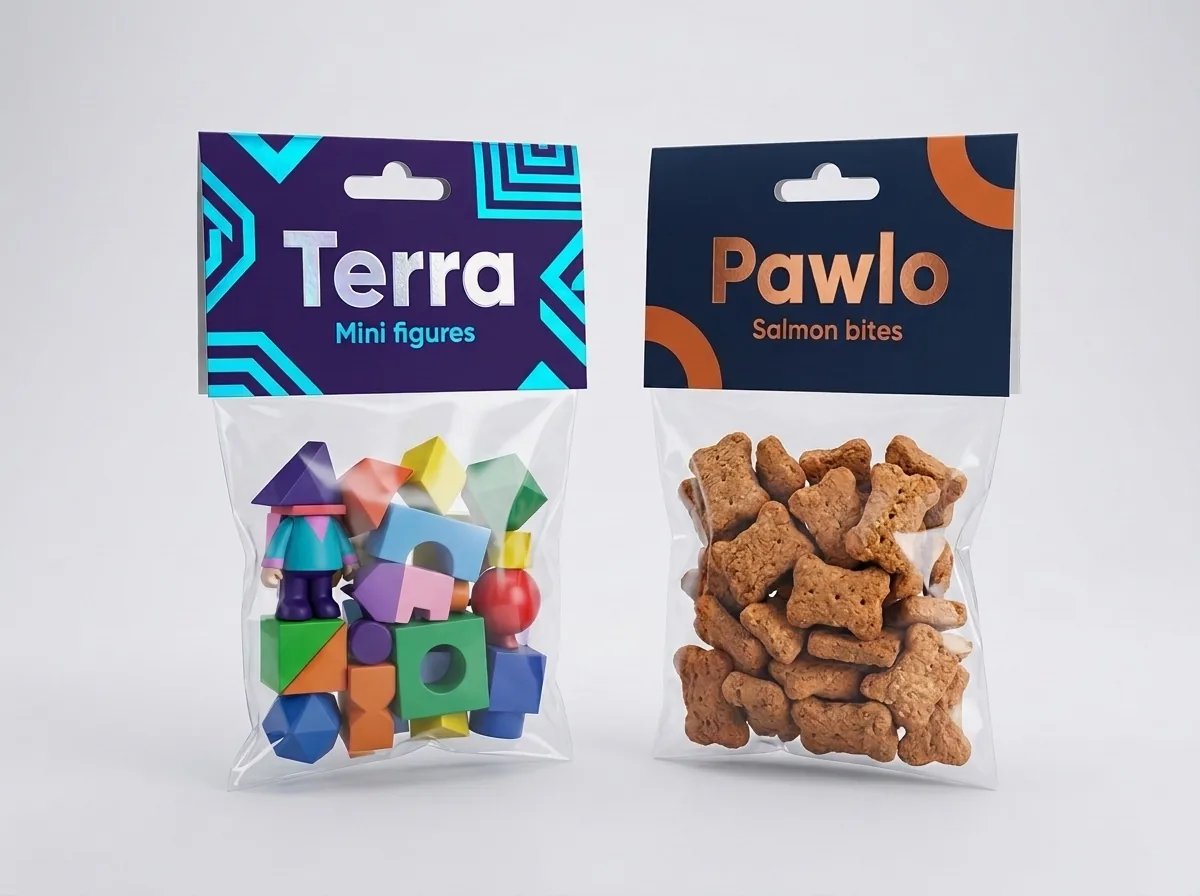
Before buying desktop staplers for a wholesale grocery or toy launch, check your retail buyer's vendor compliance manual. Major supermarkets, museum shops, pet boutiques and children's stores frequently reject wire-stapled bag toppers for three safety and merchandising reasons (compare enclosed carton options in custom candy boxes and custom toy boxes)
- Loose metal foreign-object hazard around food and pet treats: When a shopper pulls apart a stapled cookie, jerky or dog-biscuit bag topper, bent steel staples can pop loose and drop straight into the open snack bag. Co-packers and grocers strongly prefer heat-sealed food-grade cello bags topped with adhesive-taped header cards.
- Sharp wire points on children's blind bags and collectibles: Under US CPSC toy safety guidance, detached or partially bent wire staples create sharp-point puncture hazards for young children opening sticker packs, charms or mini figures.
- Pinhole punctures in barrier bags: Stapling directly through a bag pierces four tiny holes through the film. If you sell scented wax melts, spiced nuts or chewy gummies that stale or lose aroma, heat-seal the bag below the topper first and apply tape (or staple strictly above the heat-seal weld).
- Front-panel typography and barcode interference: Hand operators rushing through 500 bags per hour inevitably drive angled staples across front flavor badges or rear UPC barcode bars unless you print discreet corner staple crosshairs.
How much peg-hook weight can adhesive-taped vs stapled header cards support?
Adhesive tape fails in shear when a heavy poly bag hangs vertically inside a warm delivery van for days. Match your attachment method and bag dimensions (using our bag topper header card size chart) to the filled ounce weight of each unit
- Under 3 oz (vinyl sticker packs, enamel pins, charms, trading cards, seeds): A single strip of permanent acrylic transfer tape across the inside back flap bonds securely to crisp BOPP bags without slippage.
- 3 oz to 8 oz (cookies, gummy packs, wax melts, braided USB cables, socks): Seal the bag mouth first so product weight cannot wedge the bag walls apart, then apply high-tack double-coated film or thin acrylic foam tape across both inner front and inner back flaps - or use two 1/4-inch leg wire staples where metal fasteners are permitted.
- 8 oz to 16 oz (steel bolts, sinkers, multi-tool kits, bulk jerky): Wire staples clinched cleanly through thick LDPE poly bags and heavy cardstock provide positive mechanical shear lock. Place two staples 1/2 inch inward from the left and right edges, or add a third center staple on 6-inch+ wide toppers.
- Over 16 oz (1 lb+ heavy hardware or glass): Step up from bagged toppers to auto-lock custom hardware boxes or one-piece custom header card boxes.
Know your size? Compare pricing across up to 3 quantities.
Request a Quote →How does inside lamination affect double-sided adhesive tape and batch-stamp ink?
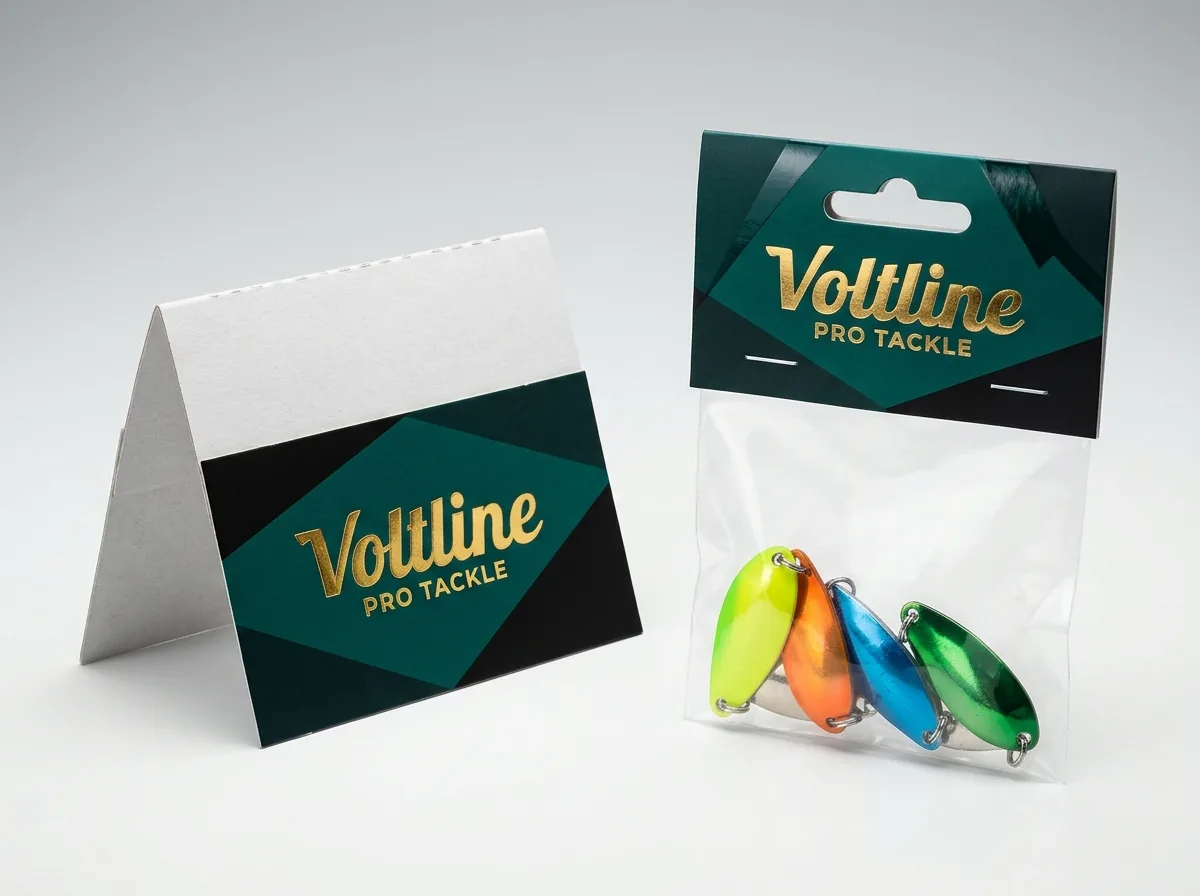
One of the most expensive kitting surprises happens when a brand orders soft-touch or gloss lamination on both sides of a header card and discovers that standard transfer tape peels right off the slick plastic film 24 hours later. Check your dieline finish zones alongside how to design 2-sided fold-over header cards and sombrero slots
- Laminate the outside, leave the inside uncoated: On a fold-over header card, Matte, Gloss or Soft-touch lamination belongs on the exterior press side (covering both outer front and outer back flaps) to resist peg-hook tearing and aisle scuffs, while leaving the interior side raw paperboard fiber so pressure-sensitive tape bites deeply.
- Match adhesive chemistry to poly vs cello film: Low-surface-energy polyethylene (LDPE) bags require modified acrylic high-LSE tape rather than cheap office rubber tape, which dries out and drops bags onto the retail floor.
- Extended back lip + tape alignment: Adding a 1/4-inch extended back lip gives hand packers a flat shelf to lay a 3/8-inch or 1/2-inch strip of release-liner tape cleanly along the inner bottom edge.
- Uncoated expiration and lot-stamp windows: If your food or supplement co-packer ink-jets or rubber-stamps lot numbers on the outer laminated back panel, reserve a white unlaminated rectangle above the bottom seal zone.
How fast can I order custom header cards engineered for stapling or taping?
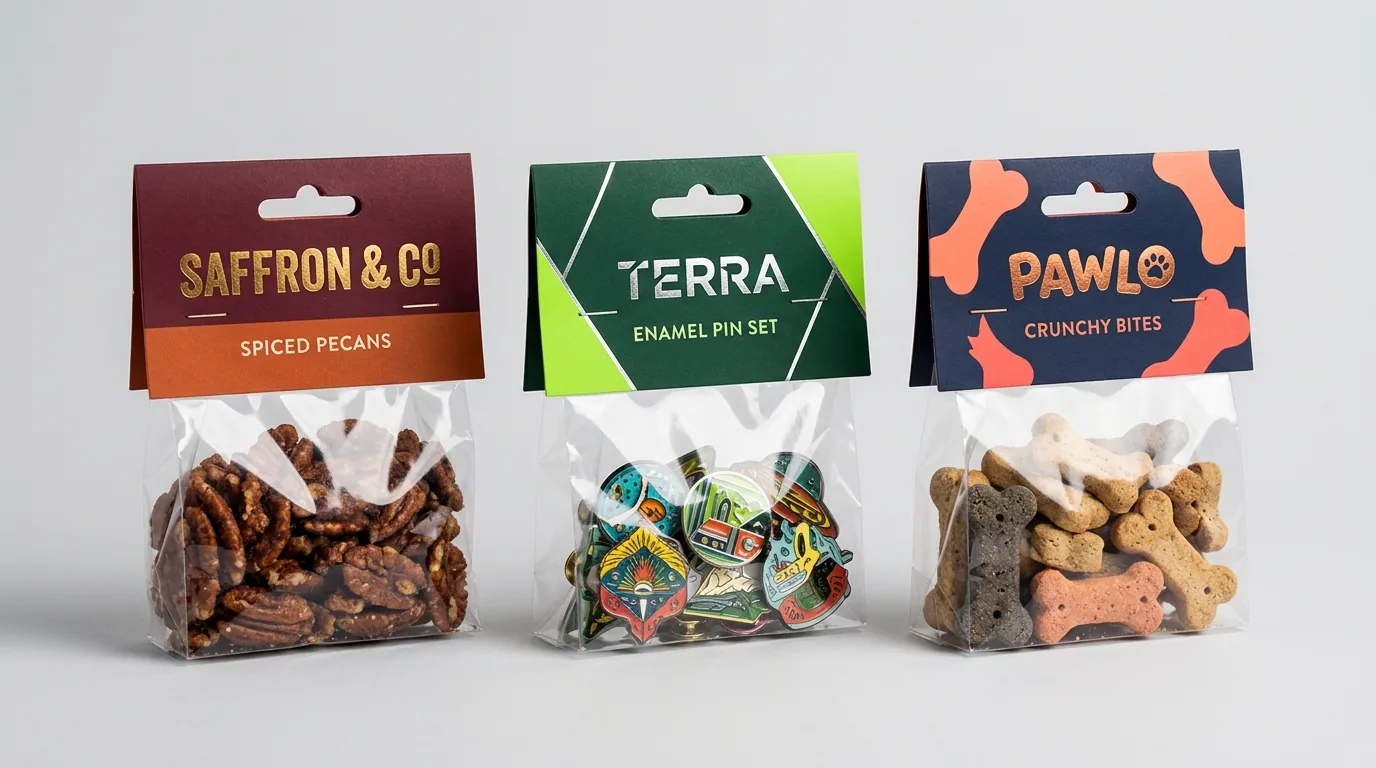
Whether your fulfillment team runs pneumatic saddle staplers on hardware kits or hand-applies clean adhesive strips on gourmet treats, ordering custom printed retail header cards at CubitPack keeps production fast and predictable
- Prepress-marked seal zones and zero die charges on Euro sombrero and round peg holes: Our designers add non-printing or micro-tick staple and tape clear zones on your custom dieline, align the center fold score with paperboard grain, and die-cut two-ply hang holes at zero die or printing plate cost.
- Start at 250 header cards with multi-SKU splits: Test a new retail pegboard display from 250 standalone cards (or match the quantity of a paired custom box run), and group 2 or 3+ flavor, size or color SKU designs sharing one flat card size to lower your cost per card across 500, 1,000, 2,500 and 5,000+ tiers.
- 10–14 business days standard (4–5 rush), Price Beat and free US shipping: Approve your 2D digital proof and interactive 3D mockup before paying, get standard delivery in 10–14 business days (or 4–5 business day rush, extra cost quoted), claim 10% off your first order or our written Price Beat, and receive free shipping to all 50 US states.
What mistakes cause stapled or taped bag toppers to fail on retail hooks?
Avoid these five closure mistakes when assembling bagged retail merchandise
- Applying standard office double-sided tape onto slick soft-touch or gloss lamination inside the fold, causing bags to slide off within hours.
- Using metal wire staples on children's toys, candy or pet treats sold into grocers or boutiques that prohibit loose metal fasteners.
- Stapling directly through the product cavity of a scented or perishable snack bag instead of heat-sealing the bag first and stapling above the weld.
- Driving staples haphazardly across front brand text or rear GS1 UPC barcode bars because no 0.5 in bottom clear zone was budgeted.
- Hanging a 12 oz bag of metal hardware from weak single-sided transfer tape instead of positive-lock wire staples or a header card box.
Packaging for this

Ready to order header cards? Compare up to 3 quantities with a free 3D mockup.
Request a Quote →Questions about header cards
Are stapled or taped header cards stronger for heavy hardware bags?
Wire staples are significantly stronger in vertical shear for heavy 8 to 16 oz poly bags of screws, sinkers or auto parts because steel legs mechanically clinch through both cardstock plies and the plastic bag. Adhesive tape suits light-to-medium 1 to 8 oz bags when paired with uncoated inner cardstock.
Should I heat-seal my cello or poly bag before attaching the header card?
Yes for all foods, pet treats, scented wax melts and tiny multi-piece items. Heat-sealing (or folding a lip-and-tape bag strip) makes the pouch airtight and carries internal bulk, leaving your stapled or taped header card dedicated strictly to pegboard suspension and branding.
Can CubitPack leave the inside of my header card unlaminated so tape sticks?
Yes. Standard exterior lamination (Matte, Gloss or Soft-touch) coats only the outer printed press side that forms both your front and back outer faces, leaving the interior paperboard surface uncoated and receptive to high-tack double-sided adhesive tape.
Where should staples be placed on a fold-over bag topper?
Place two horizontal wire staples inside the bottom 0.375 to 0.50 inch seal strip, positioned roughly 0.50 inch inward from the left and right side edges and above your bag's heat-seal line. Keep all logos, ingredients and UPC barcodes above that 0.50 inch zone.
What type of double-sided tape bonds to slick LDPE poly bags?
Choose a high-tack modified acrylic tape engineered specifically for low-surface-energy (LSE) plastics such as polyethylene and polypropylene, rather than stationary-grade rubber transfer tape. Press each folded cardstock topper firmly with a hand roller or bench squeegee to wet out the adhesive cleanly.
Can I order a sample kit to test our stapler and adhesive tape on your cardstock?
Yes. You can order our $50 sample kit (credited in full toward your first custom packaging order) to feel paperboard stocks and exterior laminations firsthand, or request a product-specific physical prototype before launching a multi-thousand-unit retail packing and kitting run.
Still have a question? Ask a packaging specialist.
Request a Quote →Request your header cards quote
Tell us your size and quantities, and one dedicated account manager prepares pricing for each tier.
- Free design & AI-to-print studio + 3D mockup
- No die or plate charges · 4–5 day rush available
- Free shipping to all 50 states
- 10% off your first order
We cross-checked retail wire-fastener restrictions, pressure-sensitive acrylic adhesion on coated vs uncoated paperboard, and peg-hook shear loads against US CPSC toy safety guidance, TAPPI paperboard standards, and ISTA retail suspension procedures. A packaging specialist reviewed every comparison row. Spot something off? Let us know and we fix it.
Sources
What changed
- November 16, 2026: First published comparing wire-stapled vs adhesive-taped fold-over header cards, CPSC/grocery safety rules, ounce weight thresholds, and inner-coating adhesion.
More guides
New packaging guides by email
Sizes, materials and design tips. Unsubscribe anytime.