
Oil- and water-resistant cosmetic labels vs paper labels: which should you pick?
Short answer: Choose oil- and water-resistant film, clear or foil stocks with a matte or gloss finish for facial serums, body oils, balms and shower bottles. Save paper and kraft stocks for dry powder compacts, bath salt caddies and outer cartons. Order custom cosmetic labels from 500 pieces.
On this page
- How do oil-resistant film, clear, foil and paper cosmetic labels compare
- Why do facial oils, balms and shower steam ruin unlaminated paper labels
- When should you pick clear labels, metallic foil labels or opaque white labels
- Should you choose a matte or gloss finish for skincare and makeup labels
- Where do paper and kraft cosmetic labels still make sense
- Common mistakes
- FAQs
Request a custom quoteFree dieline & 3D mockup
Cosmetic containers live in two very different environments: steamy bathroom showers and oily vanity countertops on one side, and dry bedroom drawers or outer retail folding cartons on the other. A single drop of jojoba, squalane or rosehip oil running down the neck of a 1 oz (30 ml) serum dropper bottle will wick into unlaminated paper fibers within 60 seconds, leaving a permanent dark translucent halo around the label edge. Similarly, 8 oz (240 ml) cleansers and shampoos exposed to daily 100°F to 110°F shower water and wet hands need a moisture-resistant stock paired with a protective matte or gloss finish so the surface never pills or peels. Paper and kraft stocks remain a warm, tactile choice when your product stays dry (such as pressed powders, dry clay masks, candle jars or outer carton seals), especially when paired with a protective top finish.
How do oil-resistant film, clear, foil and paper cosmetic labels compare?
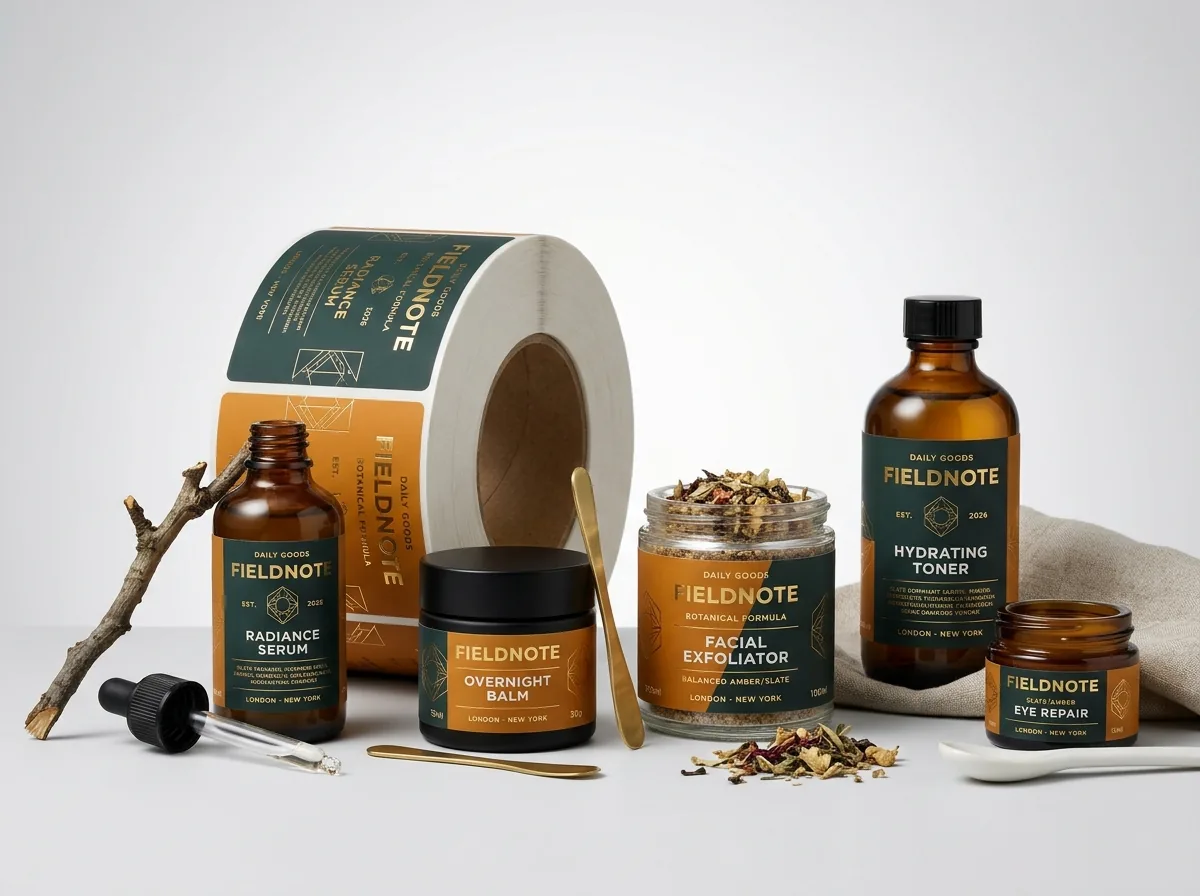
What is an oil-resistant cosmetic label? An oil-resistant cosmetic label is a pressure-sensitive label made with a non-absorbent face stock (such as clear, metallic foil or synthetic film ) and sealed with a protective matte or gloss finish so carrier oils, essential oils and water cannot wick into the label face or smear the printed ink. When matching a label stock to a beauty formula, look at both what is inside the bottle (carrier oils, essential oils, surfactants, alcohol or dry minerals) and how the customer uses it (with oily fingertips after applying serum, with wet hands in the shower, or dry at a makeup vanity). At CubitPack, our confirmed materials include clear and foil label stocks alongside matte, gloss, foil stamping and spot UV finishes, while our full paper, kraft and film stock list for labels is being finalized. Use the comparison matrix below to narrow down the right material and finish for each container in your line before requesting a quote on oil- and water-resistant cosmetic labels
| Label option | Oil & water behavior | Visual look on container | Best cosmetic containers |
|---|---|---|---|
| Clear label stock + matte or gloss | Resists water splashes and surface oil wipes | Transparent no-label screen-printed look | Frosted 30 ml serum droppers, clear gel cleansers, toners |
| Foil label stock + matte or gloss | Metallic barrier resists moisture and oil | Mirror gold, silver or rose-gold sheen | Luxury elixirs, perfume flacons, holiday beauty sets |
| White film stock + finish | Non-absorbent synthetic face for wet/oily use | Crisp opaque white for clinical 5-6 pt INCI text | Facial oils, 240 ml shower shampoos, lip balm tubes, sugar scrubs |
| White card / paper + finish | Lamination protects front; cut edge can wick oil | Smooth classic label feel | Dry powder jars, hair styling pomades, boxed glass jars |
| Kraft stock | Absorbs oil and water if unsealed | Earthy brown apothecary fiber texture | Dry bath tea tubes, handmade soap wraps, outer gift boxes |
Why do facial oils, balms and shower steam ruin unlaminated paper labels?
Skincare and haircare formulas are engineered to penetrate skin and hair cuticles, which means they also penetrate cellulose paper fibers effortlessly. Even if a customer never spills a 1 oz (30 ml) bottle of facial oil, three everyday habits expose the label to oil and water during a 30-day to 90-day usage cycle: First, pipette neck drips: every time a glass dropper is pulled from a 15 ml or 30 ml Boston round bottle, a 0.02 ml to 0.05 ml bead of carrier oil (squalane, argan, marula or rosehip oil) clings to the outside of the glass stem and touches the bottle rim when re-inserted. Over a week, that thin film creeps down the glass shoulder and hits the top edge of the 3.75 × 1.75 in label. Second, oily fingertips: customers dispense a drop of serum or scoop a 2 oz (50 ml) balm onto their fingers, rub their palms together, and immediately pick the bottle or jar back up to cap it. Unprotected paper absorbs skin oils and turns gray along the left and right grip zones. Third, bathroom humidity and squeeze flex: an 8 oz (240 ml) HDPE or PET cleanser bottle in a shower expands and contracts every time it is squeezed under warm water. Paper fibers swell when wet and tear along the crease, whereas a flexible film or custom clear label flexes with the bottle wall and wipes clean.
When should you pick clear labels, metallic foil labels or opaque white labels?
Once you know your formula needs moisture and oil protection, the choice between clear, metallic foil and opaque white comes down to the color of your container and the length of your ingredient panel: - Clear cosmetic labels (/custom-clear-labels): Ideal for frosted clear glass, tinted amber or emerald glass, and clear PET bottles where you want the serum or gel color to show through. Because printing inks are naturally semi-translucent, we print an opaque white ink underbase behind your logo, text and barcode so 5 pt to 6 pt INCI ingredients stay legible against dark liquids or amber glass. - Metallic foil labels (/custom-foil-labels): Built for prestige serums, eye creams, hair elixirs and eau de parfum bottles. You can either print on metallic foil stock (creating custom metallic tints across the label) or add hot foil stamping in gold, silver or rose gold onto a matte label. - Opaque white labels (): The cleanest choice for clinical dermatology and minimalist skincare lines. High-opacity white gives maximum contrast for black 5 pt INCI ingredient lists, Drug Facts panels on SPF moisturizers, and scannable UPC barcodes. (Clear cosmetic label with white ink on glass for a waterproof no-label look.)
Know your size? Compare pricing across up to 3 quantities.
Request a Quote →Should you choose a matte or gloss finish for skincare and makeup labels?
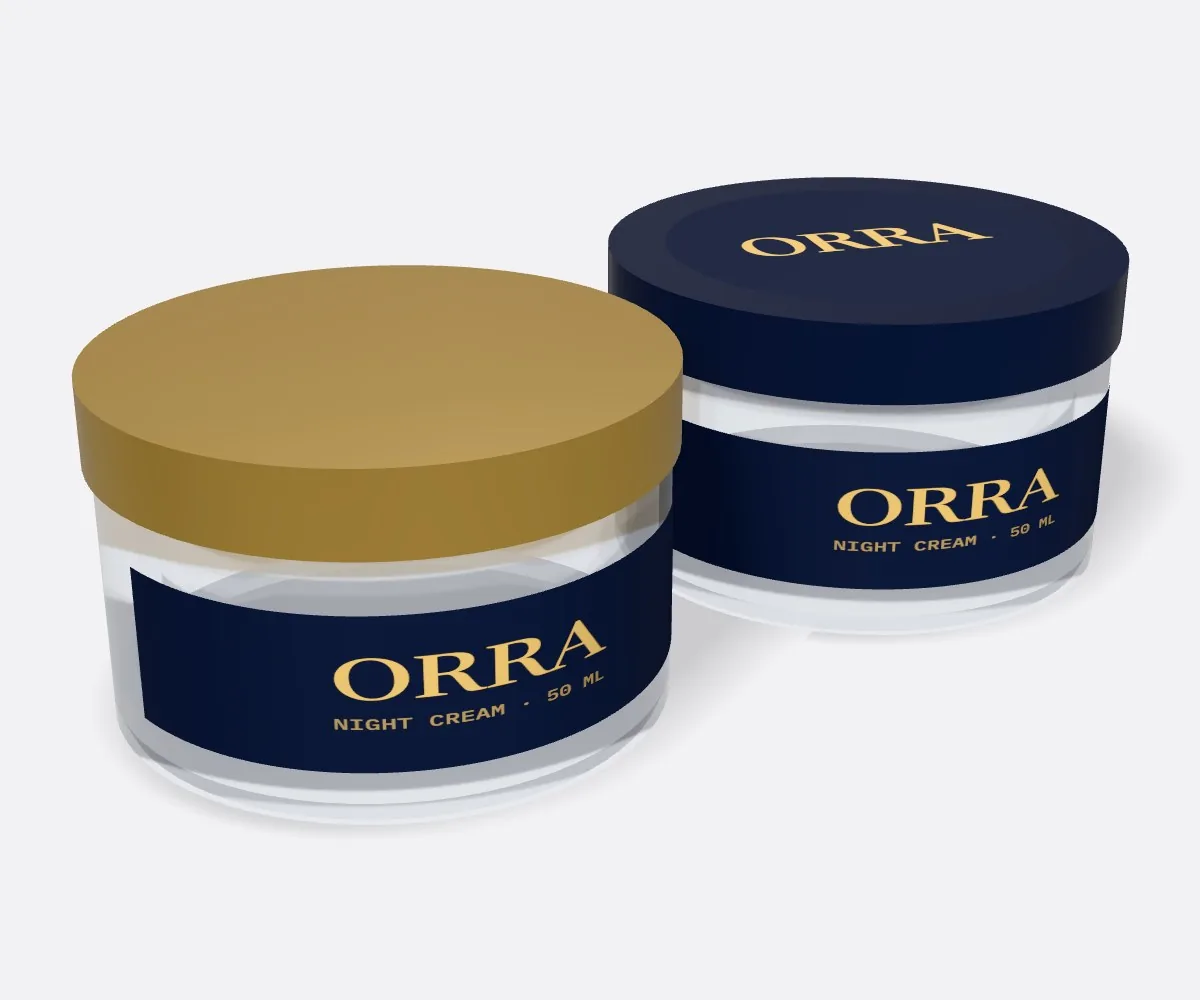
A top finish does more than set the visual mood of your packaging; it shields the printed CMYK and Pantone inks from rubbing off when exposed to essential oils, alcohol-based toners or cosmetic bag friction. Compare the four decided finishes available on CubitPack custom roll labels and sheet labels: (Deep navy matte cream jar labels with metallic gold foil logos.)
- Matte finish (/finishes/matte-lamination): Gives a soft, glare-free satin surface that nearly every modern skincare and clean-beauty brand prefers. Because matte scatters overhead vanity and ring-light glare, tiny 5 pt to 6 pt ingredient text is much easier to read on curved 1 oz and 2 oz bottles.
- Gloss finish (/finishes/gloss-lamination): Creates a slick, high-shine barrier that beads water droplets off 4 oz to 8 oz shower cleansers, shampoos and body scrubs, while making saturated makeup shade dots and fruit-inspired body care graphics pop.
- Foil stamping (/finishes/foil-stamping): Presses real metallic foil onto your brand crest, border or product name. Works beautifully over a matte label to match foil-stamped custom skincare boxes.
- Spot UV (/finishes/spot-uv): Applies a raised, glossy clear coat selectively over your logo or botanical pattern against a smooth matte background for tactile contrast in the hand.
Where do paper and kraft cosmetic labels still make sense?
You don't need synthetic waterproof film on every single item in a beauty catalog. Paper and kraft label stocks are practical and cost-effective in three dry-use applications: 1. Dry mineral, clay and bath products: Loose setting powders, dry French green clay masks mixed at home, bath salt caddies in glass apothecary jars, and dry botanical bath teas that stay on a dry shelf. 2. Handmade bar soap bands and dry wraps: Cigar bands and stickers applied over paper-wrapped cold-process soap bars before use (see custom soap labels). 3. Outer box shade stickers and tissue seals: A 0.75 in shade dot applied to the top flap of a folding carton, a barcode sticker on the bottom of a corrugated PR mailer, or a branded crest sealing tissue paper inside custom cosmetic boxes. If you want to feel the difference between clear, foil, matte and gloss before placing a 500-label production order, you can order our $50 sample kit or ask your account manager to review your container and formula in 5-7 minutes.
What are the most common cosmetic label material mistakes?
Choosing a label stock based only on how it looks dry on a desk, without testing how it handles oil drips, wet hands and alcohol, leads to four frequent packaging failures
- Putting unlaminated paper labels on 30 ml facial oil dropper bottles, where a single drop of squalane or rosehip oil creates a dark grease stain around the rim.
- Printing unsealed digital ink on alcohol-based toners, setting sprays or perfumes, allowing mist droplets to dissolve the ink when wiped.
- Applying stiff paper labels to squeezable 8 oz shower shampoo tubes or LDPE lotion bottles, causing the label to wrinkle and buckle after the first squeeze.
- Printing dark text directly on a clear label for an amber glass serum bottle without a white ink underbase, making the 6 pt ingredient list invisible.
Packaging for this
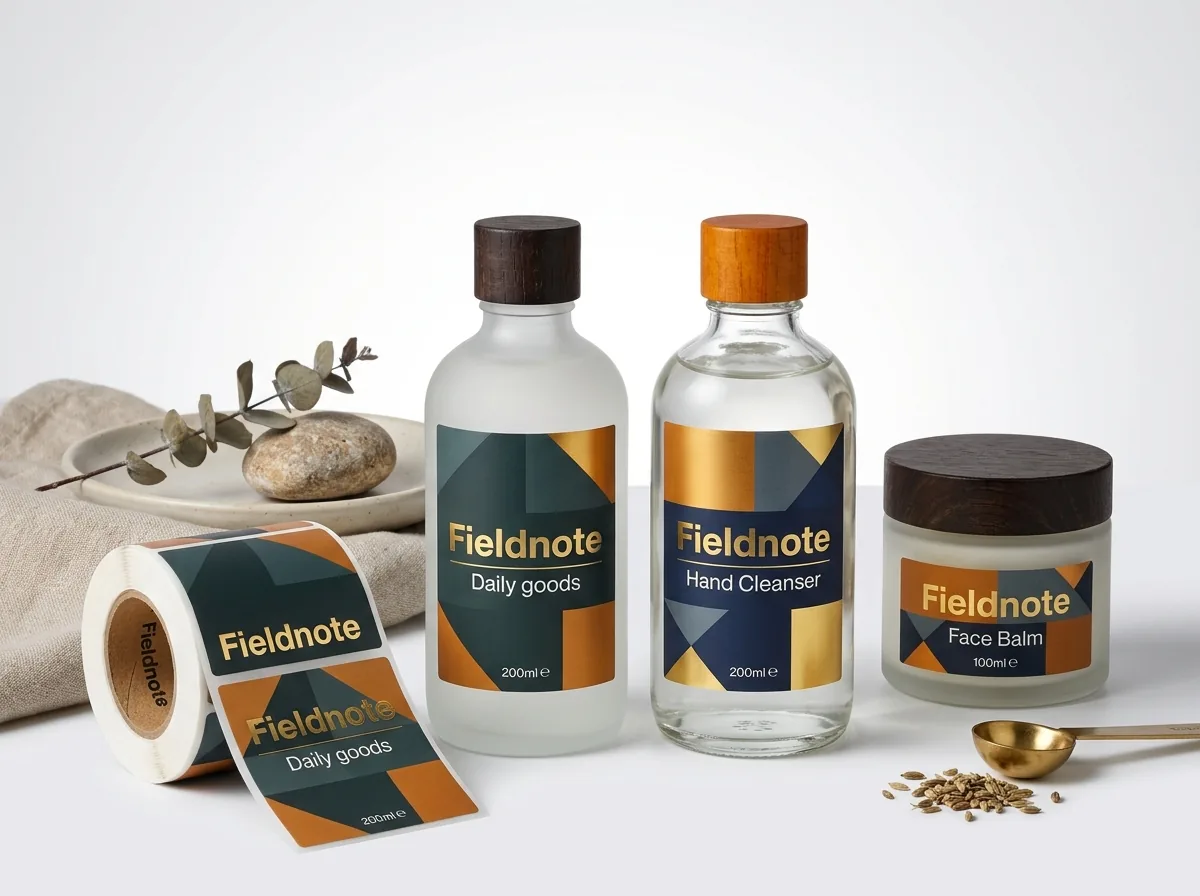
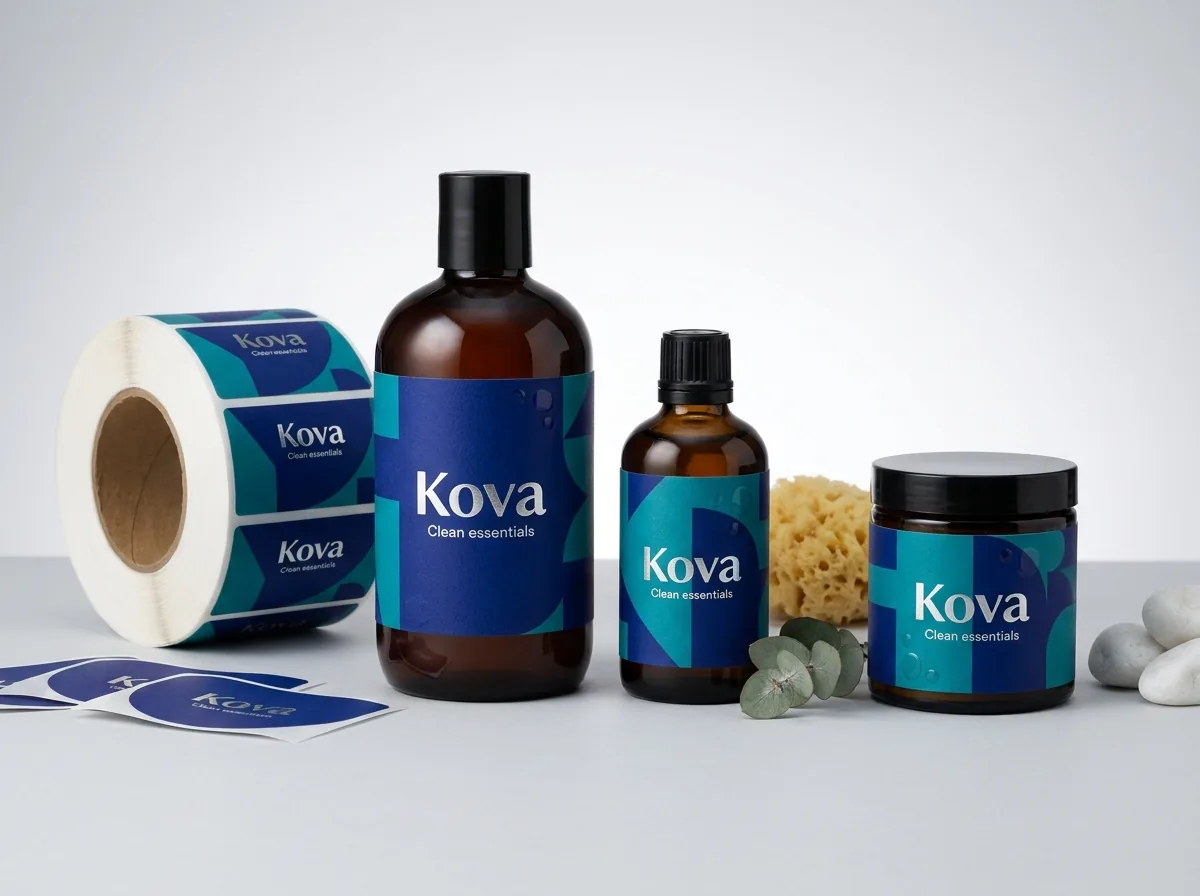
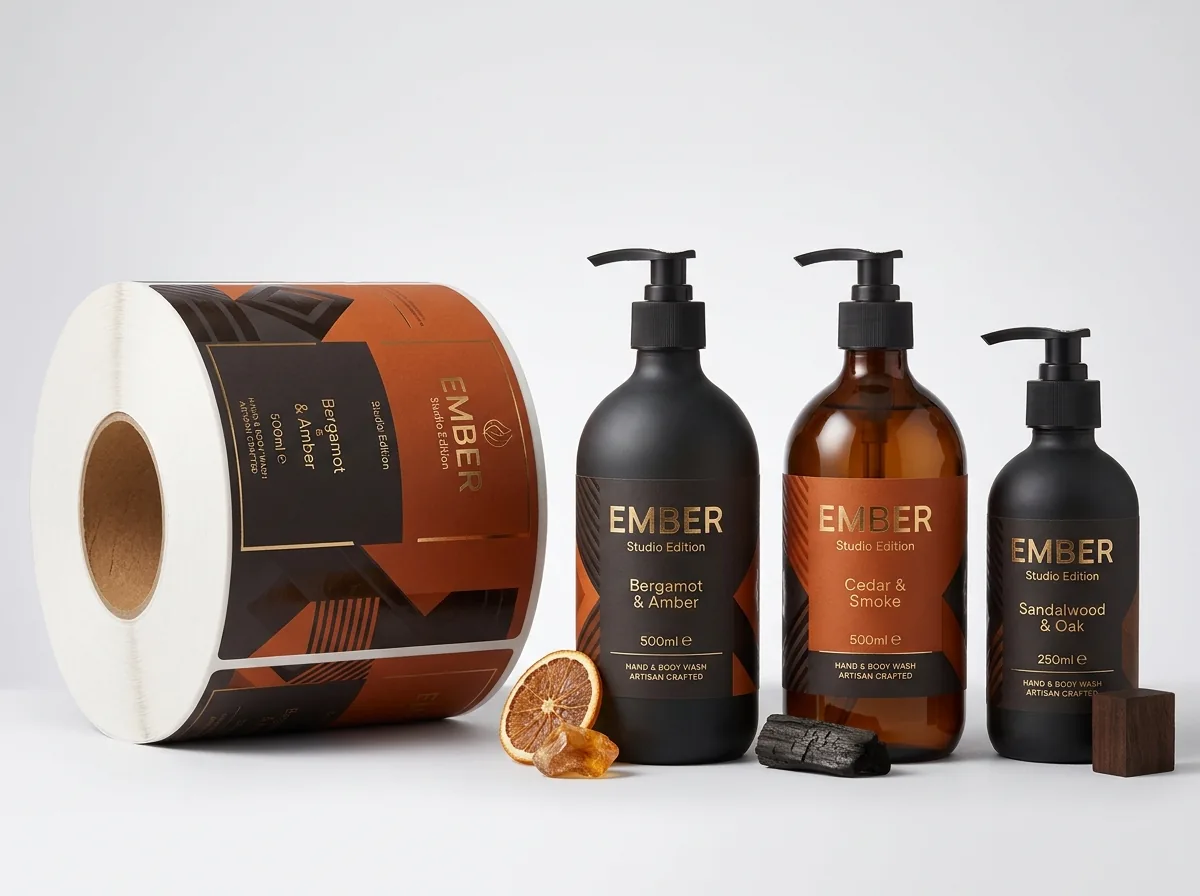
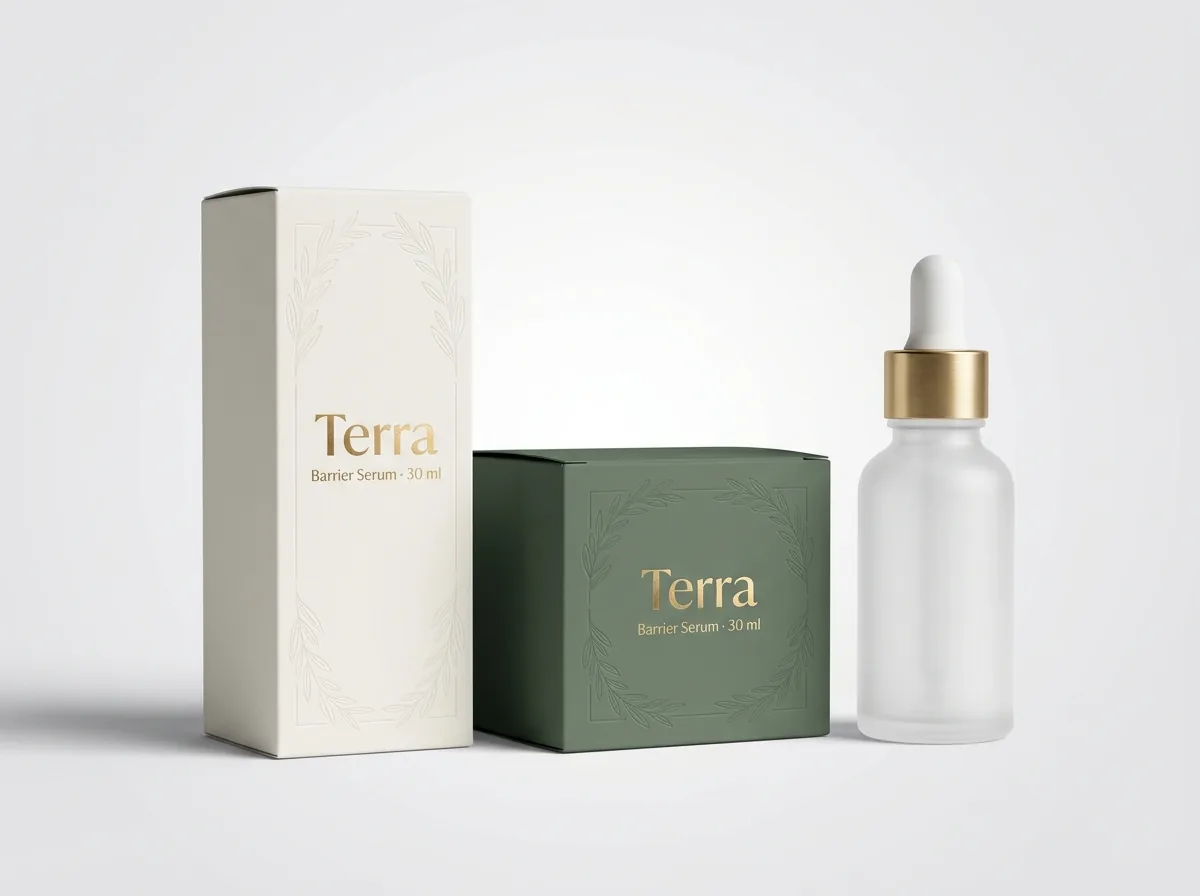
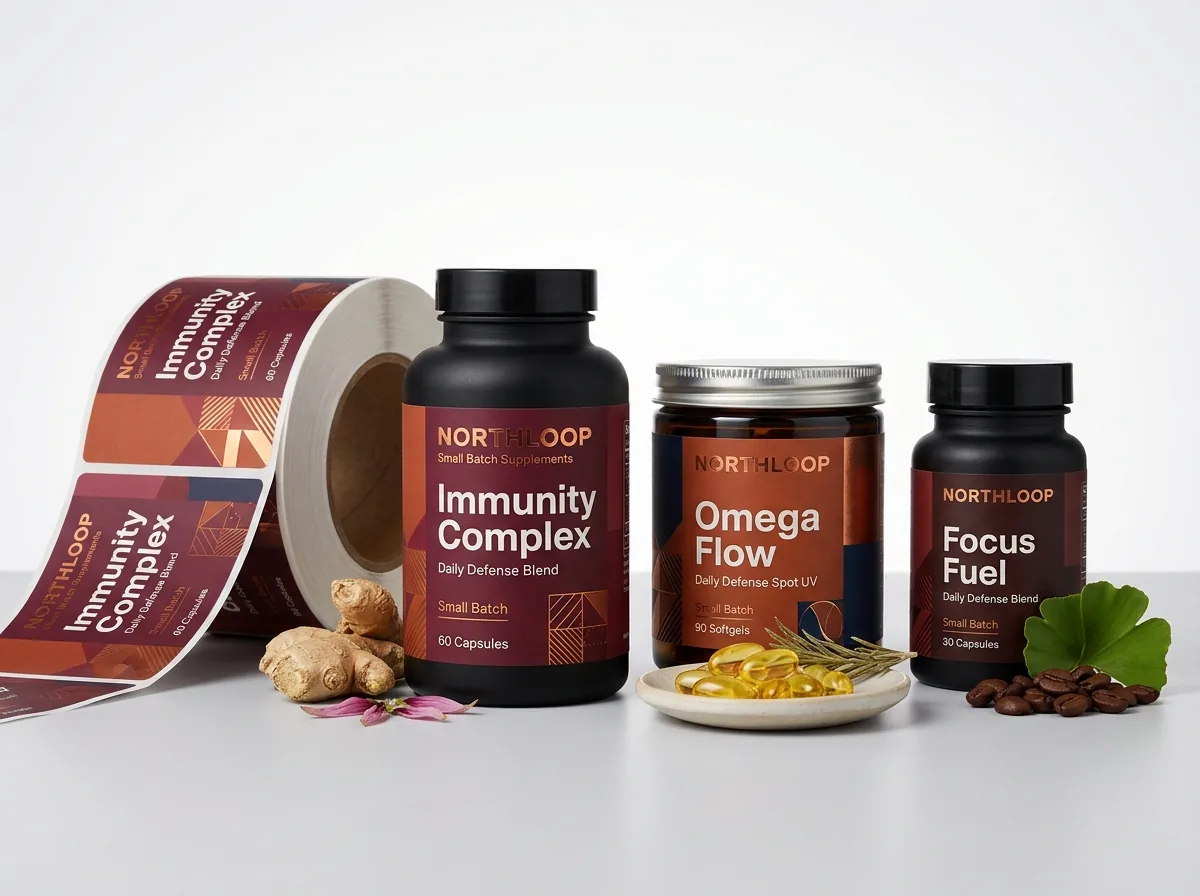
Ready to order cosmetic labels? Compare up to 3 quantities with a free 3D mockup.
Request a Quote →Questions about cosmetic labels
Will facial oils like jojoba, rosehip or squalane stain my cosmetic labels?
Facial oils quickly stain unlaminated paper labels because the oil wicks into the exposed paper fibers along the cut edge. Tell us in the quote notes that your bottle holds a facial oil so we pair a non-absorbent stock such as clear, foil or film with a protective matte or gloss finish.
Which cosmetic label finish is best for bottles kept in the shower?
Both matte and gloss lamination protect the printed ink from shower water and wet hands when paired with a moisture-resistant stock. Gloss sheds water droplets fastest on shampoo and body wash bottles, while matte gives a soft, non-slip velvet look.
Do clear cosmetic labels show fingerprints or oil smudges?
No, once a clear label is adhered to a clean glass or acrylic bottle and finished with matte or gloss lamination, surface oil drips wipe right off with a tissue. Just be sure to wipe the glass bottle with rubbing alcohol before sticking the label on so no oil is trapped underneath the adhesive.
Can I combine foil stamping with an oil- and water-resistant matte finish?
Yes. Combining a glare-free matte finish with hot gold, silver or rose-gold foil stamping is one of our most requested setups for 30 ml facial serums and 50 ml face cream jars. It resists oil smudges while catching vanity light on your logo.
Can I test your cosmetic label materials on my own bottles before ordering?
Yes. You can order our $50 sample kit to feel our materials and finishes in person, and every order includes a free digital proof and 3D mockup before payment. Standard production starts at 500 labels and ships in 10-14 business days.
How do I match my waterproof bottle label to my paperboard outer box?
Send both items in one quote request or mention your box in the notes. Because CubitPack prints both custom cosmetic labels and custom skincare boxes with guaranteed Pantone color matching, we calibrate the ink so your synthetic bottle label matches your paperboard carton.
Still have a question? Ask a packaging specialist.
Request a Quote →Request your cosmetic labels quote
Tell us your size and quantities, and one dedicated account manager prepares pricing for each tier.
- Free design & AI-to-print studio + 3D mockup
- No die or plate charges · 4–5 day rush available
- Free shipping to all 50 states
- 10% off your first order
This comparison is built from CubitPack's material and finish options (clear, foil, matte, gloss, foil stamping, spot UV) and real container conditions across facial oils, alcohol mists, shower bottles and dry cosmetics. Stocks still being finalized are marked. Spot something wrong? Tell us and we will fix it.
Sources
What changed
- October 22, 2026: First published.
- October 22, 2026: Updated specifications, terminology, and verified source links.
More guides
New packaging guides by email
Sizes, materials and design tips. Unsubscribe anytime.