
How do I prevent essential oil spots and moisture warping on custom soap boxes?
Short answer: To prevent oil stains and moisture warping on custom soap boxes, cure cold-process bars for a full 4 to 6 weeks before boxing, wrap high-superfat or heavy essential-oil bars in inner butter paper, use unlaminated breathable kraft for naked natural bars, and shrink-wrap humectant glycerin bars before boxing.
On this page
- Why do handmade soap bars leave oil spots or warp paperboard boxes
- Which board, finish and inner wrap match each soap formula
- How do inner butter paper wraps and exterior lamination work together
- How do I print vibrant colors and hide oil marks on kraft soap boxes
- What does the FDA require on a custom soap box vs a cosmetic cleanser box
- How do I keep soap boxes crisp at outdoor markets and humid bathrooms
- Common mistakes
- FAQs
Request a custom quoteFree dieline & 3D mockup
Bar soap remains chemically active long after it leaves the mold: handmade cold-process bars contain unsaponified moisturizing oils (superfat) and volatile essential oils that can wick into raw paper fibers during warm storage, while melt-and-pour glycerin bars pull moisture straight out of humid summer air and form water droplets ('glycerin dew') on the bar surface. If you pair the wrong paperboard or finish with your soap formula, uncoated boxes can develop translucent grease halos and sealed laminated boxes can suffocate uncured soap. Solving both problems takes a formula-first approach: cure cold-process loaves for a full 4 to 6 weeks before boxing, match breathable unlaminated kraft or inner butter paper wraps to natural oil-rich bars, pair matte or soft-touch exterior lamination with pre-wrapped glycerin and bathroom-counter bars, and use white ink underbases to keep pastel artwork crisp on brown kraft.
Why do handmade soap bars leave oil spots or warp paperboard boxes?
When a soap maker opens a master case of boxed bars in July and finds dark translucent spots on the front of the cartons, one of three culprits is almost always at work: uncured water weight, unsaponified superfat oils, or citrus and resinous essential oils. First, cold-process soaps formulated with 7% to 10% superfat (extra shea butter, olive oil, castor oil or cocoa butter) soften slightly when warehouse or market tent temperatures climb above 80°F (27°C). Where the high points of the bar press directly against raw paperboard, trace oils wick into the cellulose fibers. Second, high loads of citrus, patchouli, clove or pine essential oils act as natural solvents that migrate into uncoated card. Third, melt-and-pour glycerin soap is a strong humectant: in humid air, moisture condenses on the bar and wicks into the carton creases, softening the box corners. Choosing the right setup for your custom printed soap cartons stops all three issues before they start.
- Superfat migration: bars with >6% superfat or soft liquid oils (olive, sweet almond, sunflower) can transfer oil in warm weather.
- Essential oil wicking: citrus, lemongrass and resinous oils migrate faster if bars are boxed immediately after cutting.
- Unfinished curing: boxing cold-process soap at week 2 instead of week 4 to 6 traps evaporating water inside the carton.
- Glycerin dew: naked melt-and-pour bars pull humidity out of the air and wet the inside of uncoated paperboard.
Which board, finish and inner wrap match each soap formula?
There is no single 'universal' soap carton finish because cold-process soap needs to breathe out moisture while melt-and-pour glycerin soap needs to block outside humidity. Use the decision matrix below to pair your soap base with the right paperboard, interior barrier and exterior finish.
| Soap formula & superfat level | Best board & exterior finish | Recommended inner wrap or cutout |
|---|---|---|
| Cold-process bar (standard 4-5% superfat, well cured) | Unlaminated kraft board or matte white card | Naked bar + open die-cut sniff window |
| High-superfat (8-10%) or heavy essential-oil bar | Dark-printed matte laminated card or kraft | Wrap bar in custom butter paper first |
| Melt-and-pour glycerin soap (sweats in humidity) | White card with matte or gloss lamination | Shrink-wrap the bar first + clear or open window |
| Triple-milled luxury bath or facial bar | White card with soft-touch lamination + foil | Pleated butter paper or tissue wrap + closed tuck box |
| Solid shampoo or conditioner syndet puck | Recycled board or kraft with matte varnish | Naked puck in snug reverse tuck carton |
| Dead Sea salt or exfoliating scrub bar | Laminated white card (resists salt moisture) | Butter paper wrap + straight tuck end box |
How do inner butter paper wraps and exterior lamination work together?
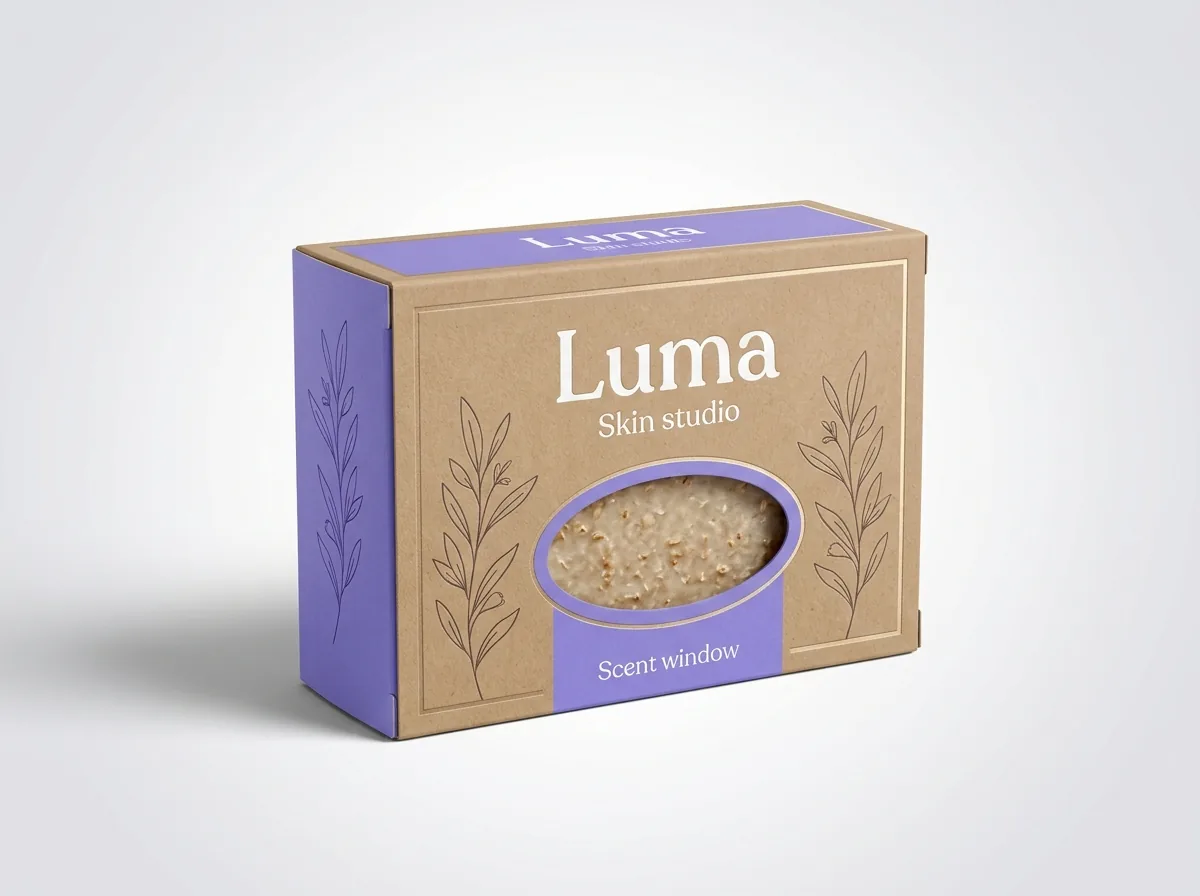
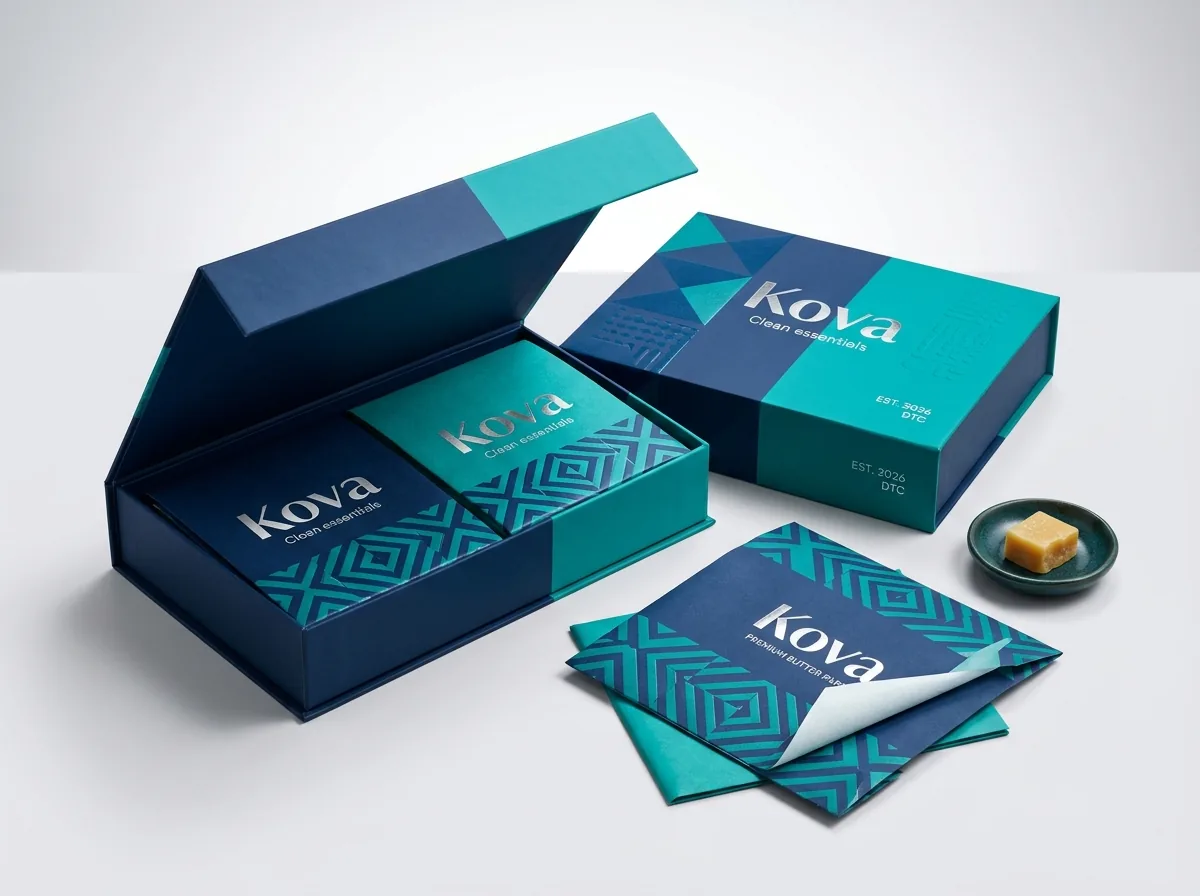
If you make rich moisturizing facial bars with 8% shea butter or heavy botanical infusions, you do not have to give up natural paperboard packaging. The classic apothecary solution is wrapping the bar in custom butter paper (grease-resistant parchment/wax paper) before sliding it into an unlaminated kraft carton or sleeve. The thin butter paper stops oils from touching the carton walls, keeps scented bars from cross-contaminating each other in shipping totes, and gives customers a luxury double-unwrapping experience when they open the top flap. On the outside of the carton, adding matte lamination or soft-touch lamination protects the printed ink from wet hands at bathroom sinks and summer farmers markets. Just remember: if you laminate the outside of a box that holds an unwrapped cold-process bar, always include an open die-cut sniff window so the bar still has ventilation.
Know your size? Compare pricing across up to 3 quantities.
Request a Quote →How do I print vibrant colors and hide oil marks on kraft soap boxes?
Natural brown kraft board is the signature look for handmade soap, but brown paper fibers absorb translucent ink like a sponge. If you print pale lavender, baby blue, mint green or yellow ink directly onto brown kraft, the brown fibers show through and turn the colors muddy. To make botanical colors pop on kraft soap boxes, ask our prepress team to print a layer of opaque white ink on kraft directly underneath your artwork, or use solid white ink typography paired with dark forest green, burgundy, navy or black accents. On white card soap boxes, printing a rich dark background color (such as deep botanical green, terracotta or charcoal) with matte lamination also naturally camouflages any minor rub marks during market transport.
What does the FDA require on a custom soap box vs a cosmetic cleanser box?
Before finalizing the back panel of your soap carton, check how your product is classified under US law. According to the US Food and Drug Administration (FDA), a bar is regulated as 'true soap' (under Consumer Product Safety Commission rules rather than FDA cosmetic rules) only if the bulk of its nonvolatile matter consists of alkali salts of fatty acids and you claim nothing more than 'cleanses' or 'soap'. The moment your box copy claims that the bar moisturizes, hydrates, exfoliates, clears acne, deodorizes, or softens skin, or if the bar is made with synthetic detergents (like a syndet shampoo bar), it is regulated as a cosmetic (or OTC drug) by the FDA. Cosmetic soap boxes must display a statement of identity on the front panel, net weight in both ounces and grams (e.g., Net Wt 4.5 oz / 128 g) at the bottom of the front panel, a full descending INCI ingredient declaration on the back panel, and your business name and address.
- Front panel (Principal Display Panel): brand name, statement of identity ('Handmade Soap' or 'Moisturizing Cleansing Bar'), and net weight in oz and g.
- Ingredient list style: either list the raw oils and lye ('Saponified oils of olive, coconut, shea butter...') or the resulting INCI sodium salts ('Sodium Olivate, Sodium Cocoate, Sodium Shea Butterate...').
- Essential oil & allergen callouts: list specific essential oils or fragrance clearly for sensitive-skin shoppers.
- Batch number & barcode: leave an unvarnished stamp box on the bottom flap if you ink-stamp batch numbers by hand.
How do I keep soap boxes crisp at outdoor markets and humid bathrooms?
Even if your soap formula is low-oil and fully cured, the environment outside the box can warp unlaminated paperboard. Outdoor summer craft fairs, coastal boutiques and steamy bathroom counters expose soap cartons to high relative humidity and damp fingers. If you sell primarily at outdoor markets or into hotel and spa bathrooms, choose white card with exterior matte lamination or soft-touch lamination paired with an open front sniff cutout. The exterior lamination acts like a raincoat against humid air and wet countertop splashes so the box corners stay crisp, while the unlaminated interior walls and open sniff hole still let the cured soap bar breathe naturally.
What are the most common moisture, oil and design mistakes on soap boxes?
A great soap box protects both the bar inside and the printed artwork outside. Avoid these five mistakes
- Boxing cold-process soap only 1 to 2 weeks after cutting, which traps evaporating water inside the carton and causes warped walls and soda ash.
- Packing naked melt-and-pour glycerin soap directly into raw paperboard in humid summer weather without shrink wrap, causing wet glycerin dew spots.
- Printing pastel pink, lavender or yellow CMYK ink directly on brown kraft board without a white ink underbase, leaving the colors dull and muddy.
- Making moisturizing or skincare claims on the front of the box without printing a full FDA-compliant INCI ingredient list on the back panel.
- Putting gloss or soft-touch lamination over the bottom batch-code box where you plan to stamp lot numbers with a rubber ink stamp.
Find your size
Suggested inside size: 3.5 × 2.25 × 1.0 in
A starting point. Your account manager confirms the size with you before the proof.
Quote this size →Packaging for this
Ready to order soap boxes? Compare up to 3 quantities with a free 3D mockup.
Request a Quote →Questions about soap boxes
Can I order custom butter paper and custom soap boxes together?
Yes. Wrapping high-superfat or triple-milled bars in custom printed butter paper before sliding them into a folding carton or belly sleeve is the cleanest way to prevent oil spots. Mention both items in your quote notes so we price them together.
Will matte lamination trap moisture inside a cold-process soap box?
Matte lamination covers only the outer printed surface of the paperboard, and if you include an open die-cut sniff window on the front panel, air circulates freely around a cured bar while the outer carton stays protected from damp hands.
How do I stamp batch numbers on laminated soap boxes?
Standard water-based rubber stamp ink smears on matte, gloss or soft-touch lamination. Tell our prepress team where you stamp your batch code, and we will leave a small unlaminated knock-out rectangle on the bottom flap that accepts ink stamps cleanly.
Does white ink on brown kraft soap boxes cost extra?
White ink on kraft is a standard printing option in our quote form. Whether you want 100% white ink typography or a white underbase beneath full-color botanical art, there are no plate charges and we show the result on your free 3D mockup.
How many soap scents can I print in one 1,000-box order?
You can split your 1,000-box minimum across multiple scent varieties as long as they share the same box size and dieline. Pick 2 designs or 3+ designs in the quote form and list your scent breakdown in the notes.
Can I feel the kraft and recycled paperboard stocks before I order?
Yes. Order our $50 sample kit (credited toward your first order) to test our kraft, white card, recycled board and lamination finishes in your own studio, or request a paid printed sample of your own artwork (also credited to your order).
Still have a question? Ask a packaging specialist.
Request a Quote →Request your soap boxes quote
Tell us your size and quantities, and one dedicated account manager prepares pricing for each tier.
- Free design & AI-to-print studio + 3D mockup
- No die or plate charges · 4–5 day rush available
- Free shipping to all 50 states
- 10% off your first order
This guide combines TAPPI paperboard moisture and grease-resistance principles with US FDA soap vs cosmetic regulatory guidelines (21 CFR 701.20). Checked by a CubitPack packaging specialist. Spot an error? Let us know and we will fix it.
Sources
What changed
- October 22, 2026: First published.
- October 22, 2026: Updated specifications, terminology, and verified source links.
More guides
New packaging guides by email
Sizes, materials and design tips. Unsubscribe anytime.