
How do you design repeating logo patterns and pick Pantone vs CMYK for custom tissue paper?
Short answer: For a balanced custom tissue paper pattern that reads cleanly from any fold angle, size your logo 1.25 to 2.0 inches wide, arrange it in a 45-degree diagonal brick repeat with 1.5 to 2.5 inches of spacing, keep strokes at 0.75 pt or thicker, and pick 1 or 2 Pantone colors or CMYK.
On this page
- What logo size and repeat spacing work best on custom tissue paper
- Why is a 45-degree diagonal brick repeat more forgiving than a straight grid
- Should I choose 1 Pantone, 2 Pantone or full-color CMYK for tissue paper
- What are the minimum line thickness and font size rules for tissue printing
- How do I match my tissue paper pattern with seal stickers and insert cards
- Common mistakes
- FAQs
Request a custom quoteFree dieline & 3D mockup
Designing artwork for lightweight wrapping tissue is very different from designing a flat box lid or postcard because the customer never sees the tissue sheet lying completely flat first. Instead, they see two folded flaps meeting down the center of a mailer box, or an upright crown of gathered pleats rising out of a retail shopping bag. If your logo is 5 inches wide or spaced 6 inches apart, every fold crease slices right through the letters and leaves blank patches on top. By scaling each logo mark to 1.25 to 2.0 inches wide and offsetting every second row by 50% in a 45-degree diagonal half-drop (brick) repeat with 1.5 to 2.5 inches of open paper between marks, at least three complete logos always land face-up on the top fold. Better yet, you only need to upload one vector logo file and our prepress team builds the entire repeat grid for free.
What logo size and repeat spacing work best on custom tissue paper?
When our packaging designers set up a step-and-repeat proof for custom printed tissue paper, we match the scale of your logo mark to the folded surface area of the box or bag it will line. On a small 10 × 15 inch jewelry sheet folded inside a 4 × 4 × 2 inch box, only a 4 × 4 inch square of tissue is visible when the lid lifts; a 1.0 to 1.25 inch logo with 1.25 inch spacing ensures four crisp marks appear in that window. On a large 20 × 30 inch apparel sheet lining a 14 × 10 × 4 inch hoodie box, scaling the logo up to 1.75 to 2.25 inches wide with 2.0 to 2.5 inches of breathing room keeps the pattern from looking busy. Use the prepress table below to pick your starting logo width, row-to-row gap and minimum stroke thickness before uploading your vector logo (or simply tell us which scale you prefer in the quote notes and our designers will build it for you).
| Pattern style / sheet size | Recommended logo width | Edge-to-edge gap spacing | Best unboxing application |
|---|---|---|---|
| Micro monogram (10 × 15 in sheet) | 0.75 to 1.25 in (19 to 32 mm) | 1.0 to 1.5 in (25 to 38 mm) | Jewelry boxes, ring pouches, lip glosses and travel candles |
| Classic boutique repeat (15 × 20 in) | 1.25 to 1.75 in (32 to 44 mm) | 1.5 to 2.0 in (38 to 51 mm) | Skincare mailers, cosmetics, mugs and subscription boxes |
| Standard fashion repeat (20 × 30 in) | 1.5 to 2.25 in (38 to 57 mm) | 2.0 to 2.75 in (51 to 70 mm) | Folded shirts, hoodies, shoe boxes and retail bag puffs |
| Alternating 2-icon scatter | 1.25 to 2.0 in per icon | 1.75 to 2.5 in between marks | Wordmark + brand emblem or seasonal icon combinations |
| Single centered crest (sheet only) | 3.5 to 5.0 in (89 to 127 mm) | Centered on top fold flap | Precision-folded luxury rigid boxes with fixed fold jigs |
Why is a 45-degree diagonal brick repeat more forgiving than a straight grid?
There are four classic ways to tile a logo across tissue paper: a straight horizontal grid, a 0-degree horizontal brick (half-drop) repeat, a 45-degree diagonal brick repeat, and an organic multi-angle scatter. If you place a horizontal wordmark in a strict 0-degree horizontal grid, any fold that isn't perfectly parallel to the bottom edge of the box will make the rows of text look crooked against the box walls. Rotating the entire step-and-repeat grid to a 45-degree diagonal angle solves that optical problem immediately. Because the logos already run at a purposeful 45-degree bias across the sheet, your packing crew can fold the corners inward at high speed without ever worrying about parallel alignment. Even when two sheets are pinched and flared upward inside a retail shopping tote, a 45-degree diagonal brick pattern keeps logos readable on every pleat. If your brand uses both a primary wordmark and a compact circular monogram crest, alternating the two marks in every second diagonal row creates a custom luxury fashion house pattern.
Should I choose 1 Pantone, 2 Pantone or full-color CMYK for tissue paper?
In Step 2 of our quote form, you can select 1 Pantone, 2 Pantone or Full color (CMYK). Here is how each option behaves on thin tissue fibers: - 1 Pantone spot ink: Uses a single custom-mixed Pantone ink plate on bare white or natural brown kraft tissue. Because 80% to 90% of the sheet remains unprinted bare paper, the tissue keeps its airy translucency, soft hand-feel and signature crinkle sound while giving you the lowest per-sheet price. - 2 Pantone spot inks: Ideal when your brand alternates a dark navy wordmark with a warm terracotta icon, or when you want a soft 15% pastel tint across the background with a solid 100% Pantone logo printed on top. - Full color (CMYK): Four-color process printing unlocks watercolor florals, multi-color holiday illustrations, photographic gradients and full edge-to-edge background floods. Keep in mind that a heavy 100% dark ink flood across the entire sheet adds ink weight to the thin paper fibers, making flood-printed tissue feel slightly firmer and more structured than an unflooded 1-Pantone sheet.
Know your size? Compare pricing across up to 3 quantities.
Request a Quote →What are the minimum line thickness and font size rules for tissue printing?
Because wrapping tissue is softer and more absorbent than coated paperboard or vinyl label stock, microscopic ink spread (dot gain) is slightly higher on press. To keep serif letters, crests and botanical line art crisp across 1,000 or 5,000 sheets, follow three simple prepress rules: 1. Positive lines (dark ink on white or kraft paper): Keep minimum stroke weight at 0.75 pt (0.26 mm) or thicker, and keep positive body text at 7 pt or larger. 2. Reverse knockouts (unprinted white letters knocked out of a dark ink flood): Increase minimum stroke thickness to 1.25 pt (0.44 mm) and minimum text size to 9 pt bold so surrounding flood ink cannot bridge across thin letter counters. 3. Convert all fonts to outlines: Before saving your AI, PDF, EPS or SVG vector logo, select all typography and click 'Create Outlines' so font substitutions never occur in prepress.
How do I match my tissue paper pattern with seal stickers and insert cards?
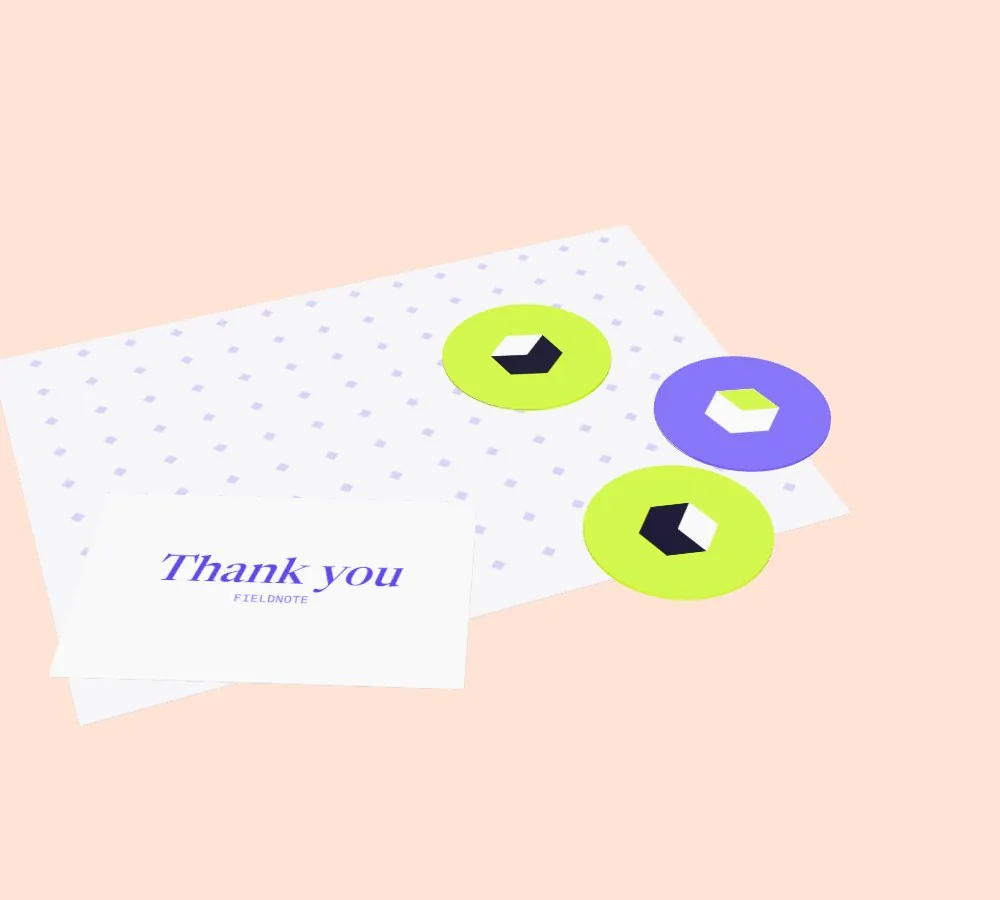
The secret to a cohesive unboxing experience is visual contrast between the tissue wrap and the seal sticker holding it shut. If your tissue paper features a busy, high-density CMYK botanical pattern or a tight 1.25 inch monogram grid, pair it with a solid-colored 1.5 inch or 2.0 inch custom circle label or die-cut custom sticker so the seal anchors the center of the box cleanly. Conversely, if your tissue is a minimalist 1-Pantone sage green logo repeat on white paper, you can top the sealed fold with a full-color 4 × 6 inch custom thank you card or custom insert card sitting over your custom box inserts. Because CubitPack guarantees Pantone color matching across boxes, tissue, cards and labels, specifying your exact Pantone U (Uncoated) code keeps your brand shade consistent across every substrate. Ordering your printed tissue sheets, seal stickers and thank you cards on the same production cycle also lets you review all three digital proofs side by side before approving press plates.
- Logo width: 1.25 to 2.0 in (32 to 51 mm) for most 15 × 20 in and 20 × 30 in sheets.
- Gap spacing: 1.5 to 2.5 in (38 to 64 mm) between adjacent logos.
- Pattern angle: 45-degree diagonal half-drop brick repeat for worry-free folding.
- Line weights: at least 0.75 pt for positive ink lines and 1.25 pt for reverse knockouts.
- Color match: specify Pantone Uncoated (U) codes for bare tissue paper.
What artwork mistakes ruin custom printed tissue paper?
Our prepress team checks every logo before making plates, and these five pattern errors are the ones we fix most often
- Scaling a repeating logo to 4 or 5 inches wide so every fold crease cuts the brand name in half.
- Packing logos only 0.5 inches apart, which turns a refined luxury sheet into a dark, cluttered wall of ink.
- Using hairline 0.25 pt strokes or tiny 5 pt serif taglines that blur or fill in on soft tissue fibers.
- Uploading a low-resolution 72 DPI website PNG screenshot instead of a clean vector AI, EPS, PDF or SVG logo.
- Specifying Pantone Coated (C) expectations on uncoated porous tissue without accounting for the softer matte ink absorption of Pantone Uncoated (U).
Packaging for this
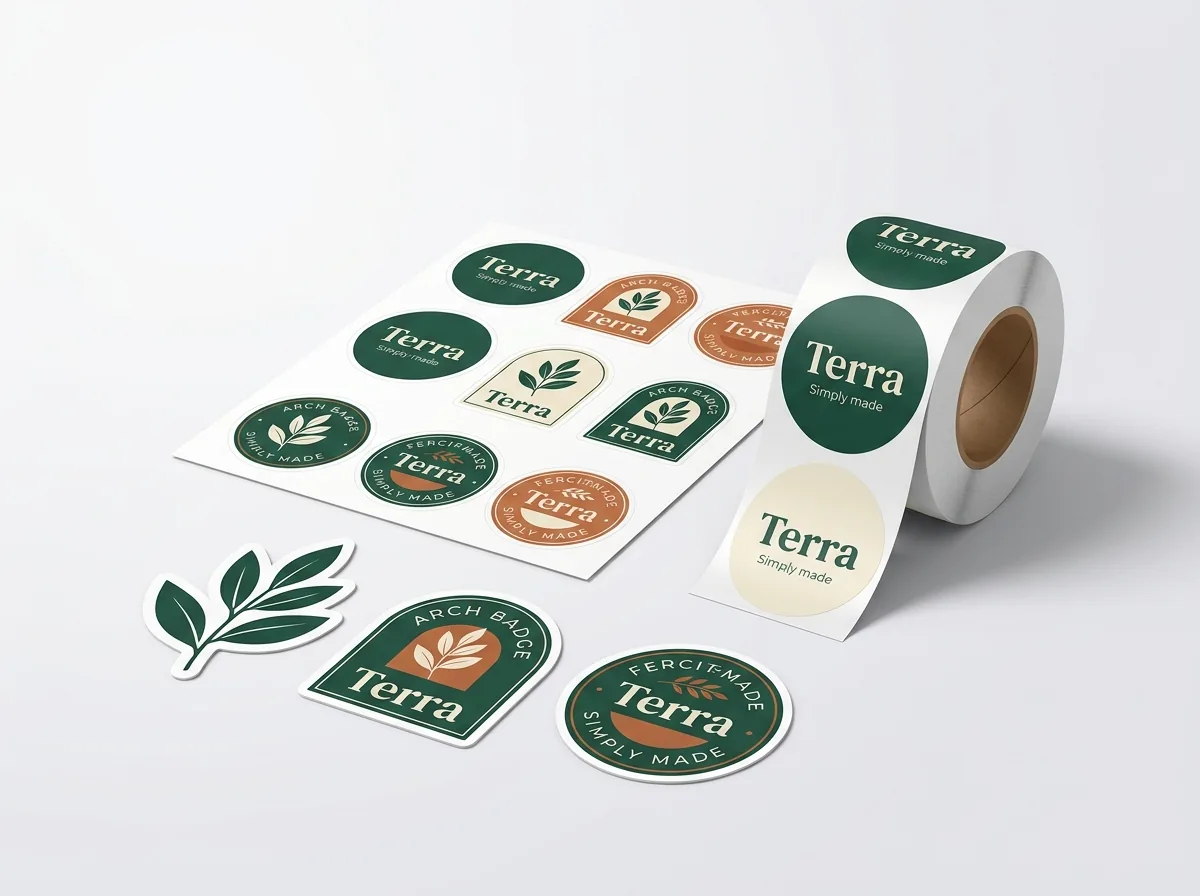
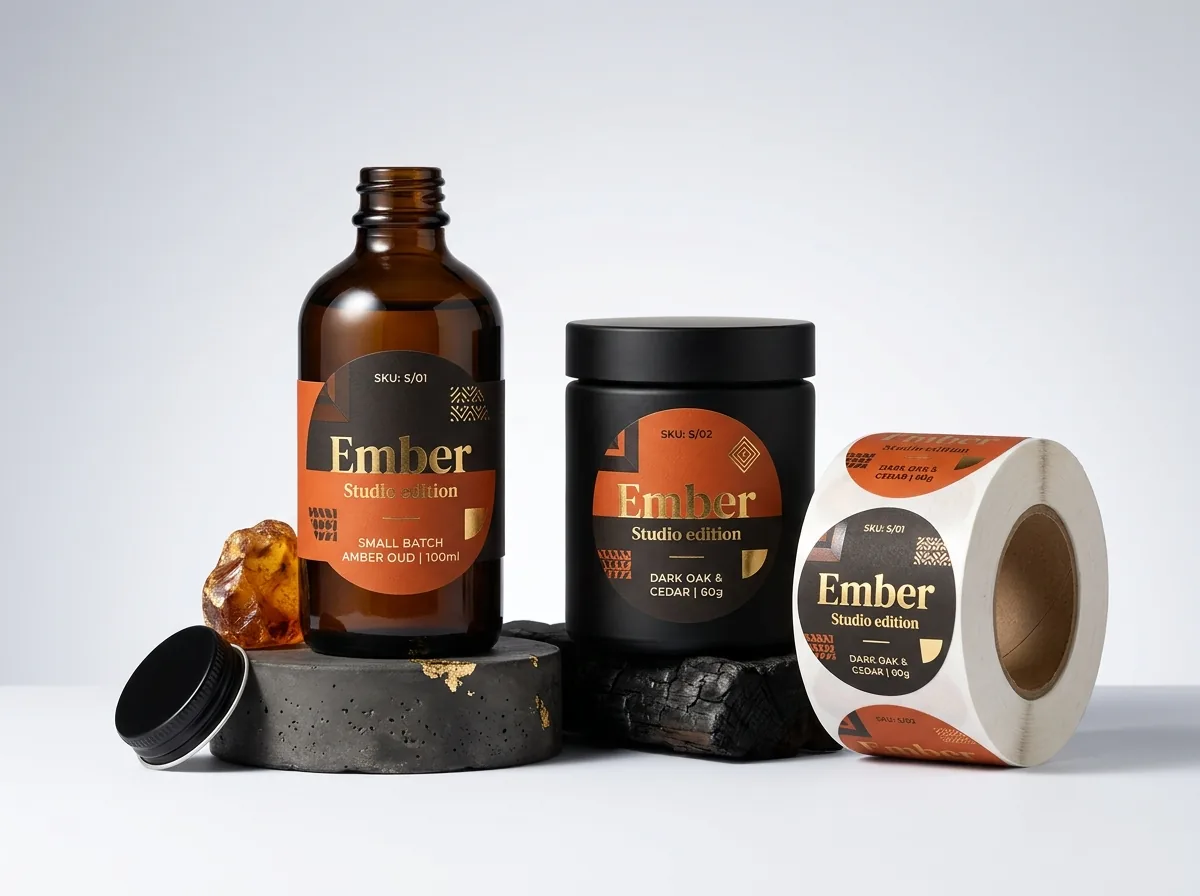
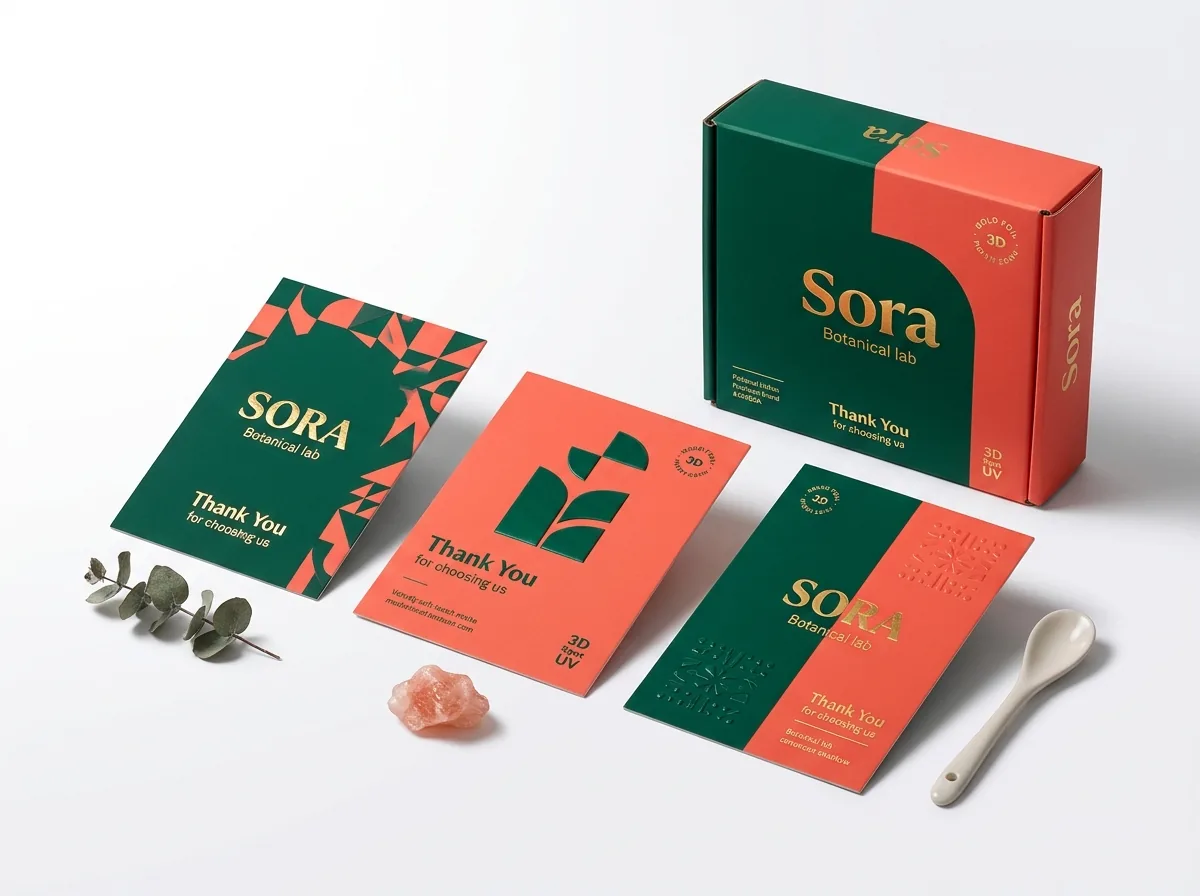
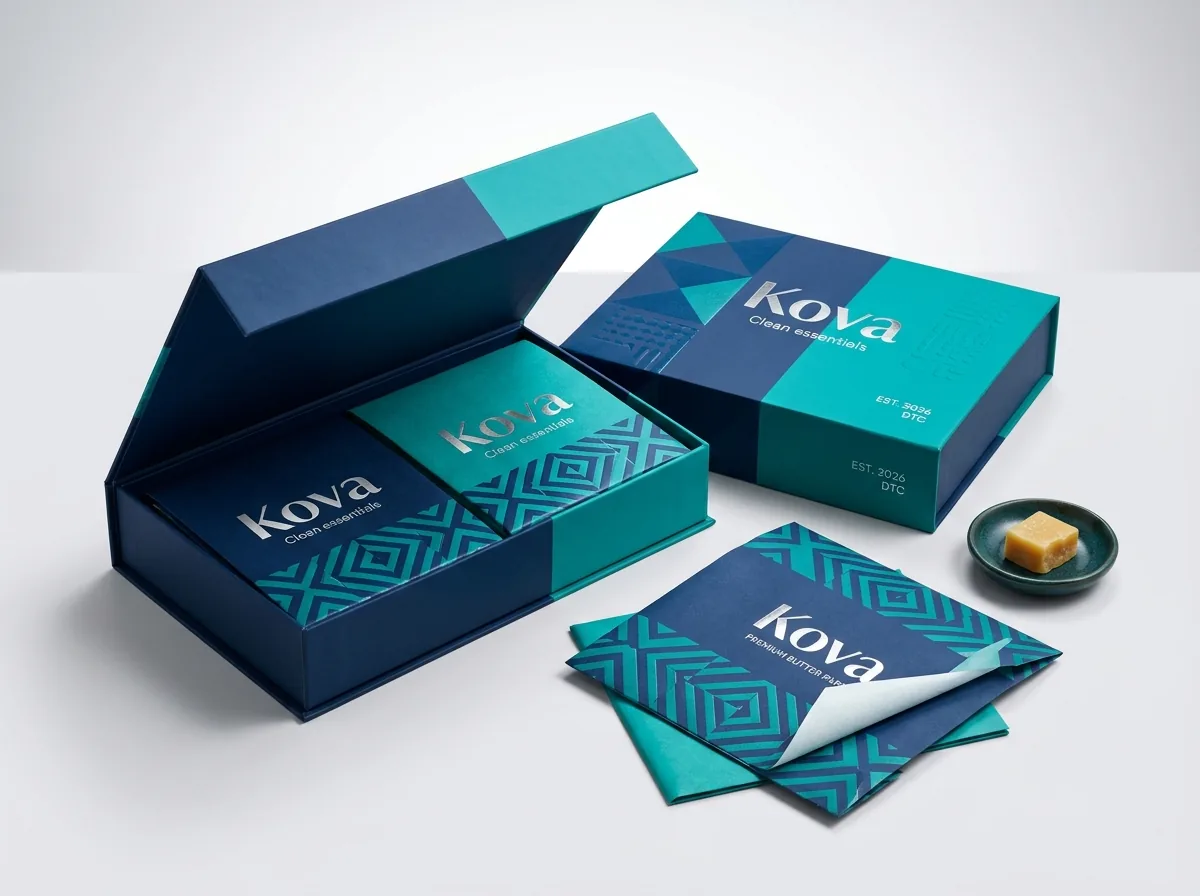
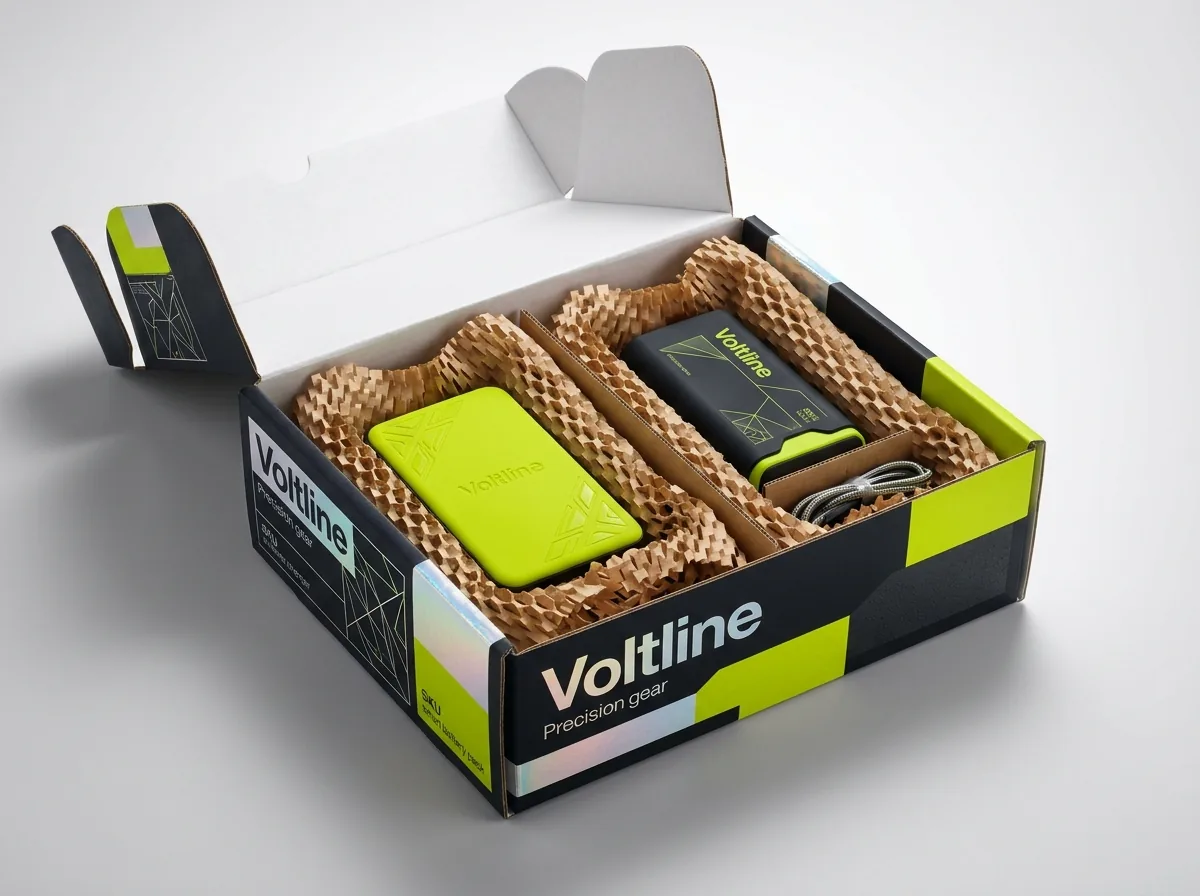
Ready to order tissue paper? Compare up to 3 quantities with a free 3D mockup.
Request a Quote →Questions about tissue paper
Do I have to create the full repeating pattern file myself?
No. Upload just one vector file of your logo (AI, PDF, EPS or SVG) in Step 3 of the quote form. Our packaging designers build the complete step-and-repeat pattern to your preferred logo size and send a scaled digital proof and 3D mockup for free.
Should I give you a Pantone Coated (C) or Pantone Uncoated (U) code for tissue paper?
Because wrapping tissue is an uncoated, porous paper fiber, inks dry with a soft matte finish that matches the Pantone Uncoated (U) book most closely. If you only have a Pantone C code or hex code, share it and we will match the closest Pantone U formula.
Can I combine two different logos or icons in one repeating tissue pattern?
Yes. Many brands alternate their primary wordmark on row 1 with their monogram emblem or a seasonal icon on row 2. Upload both vector files and our designers will stagger them in a balanced 45-degree brick grid at no extra charge.
Does CubitPack charge printing plate fees for 1-Pantone, 2-Pantone or CMYK tissue?
No. CubitPack never charges die or printing plate fees, whether you choose 1 Pantone, 2 Pantone or Full color (CMYK). Your quote includes prepress pattern setup, plate making, printing and free 50-state shipping.
Can you print metallic gold, metallic silver or white ink on tissue paper?
Yes. Opaque white ink on natural brown kraft tissue and metallic gold or silver ink accents on white or flood-colored tissue are popular luxury upgrades. Mention metallic or white ink in your quote notes.
What if I only have a PNG or AI-generated concept of the pattern I want?
Upload your high-resolution PNG or AI concept image in the quote form. Our design team will redraw simple monograms into crisp vector line art or prepare 300 DPI CMYK pattern tiles and send a proof for your approval before payment.
Still have a question? Ask a packaging specialist.
Request a Quote →Request your tissue paper quote
Tell us your size and quantities, and one dedicated account manager prepares pricing for each tier.
- Free design & AI-to-print studio + 3D mockup
- No die or plate charges · 4–5 day rush available
- Free shipping to all 50 states
- 10% off your first order
The logo scale, repeat spacing and stroke-weight specifications in this guide come from CubitPack's wrapping paper printing options (1 Pantone, 2 Pantone, Full color CMYK, no plate fees, free design help) and flexographic/offset tissue prepress standards, checked by a packaging specialist. Spot something wrong? Tell us and we will fix it.
Sources
What changed
- October 22, 2026: First published.
- October 22, 2026: Updated specifications, terminology, and verified source links.
More guides
New packaging guides by email
Sizes, materials and design tips. Unsubscribe anytime.