
How do I design oil-resistant and water-resistant soap labels?
Short answer: Seal bar soap cigar bands and liquid wash labels with matte or gloss lamination, or choose clear, foil, or film stocks that block essential oils and bathroom moisture. Divide cigar band artwork into front, spine, and back zones, and order custom soap labels with a 0.125 inch bleed.
On this page
- How do I stop essential oils and shower moisture from ruining soap labels
- How should I lay out the 4 zones of a bar soap cigar band
- What does the FDA or CPSC require on a soap label
- How do I set up bleed, safe margins, and small ingredient text
- How do I design 5 to 10 soap scents to print economically in one order
- Common mistakes
- FAQs
Request a custom quoteFree dieline & 3D mockup
Designing durable soap labels requires protecting your print against two everyday enemies: volatile essential oils in bar soaps and wet hands on sink-side pump bottles. Uncoated paper absorbs superfatting oils, citrus terpenes, and damp fingerprints, turning dark backgrounds blotchy within days. Pairing your artwork with matte or gloss lamination (or choosing clear, metallic foil, or waterproof film stocks) seals the ink and keeps small typography legible. At the same time, your layout must divide the label into clear reading zones for the front identity statement, net weight in ounces and grams, side scent spine, and back INCI ingredient list. When you order custom printed soap labels from CubitPack, production starts at 500 pieces in 10 to 14 business days, and our designers check your bleed, small font legibility, and panel folding lines for free on a digital proof and 3D mockup before you pay.
How do I stop essential oils and shower moisture from ruining soap labels?
Handmade cold-process soaps are formulated with 5% to 8% superfatting oils (unreacted olive, coconut, or shea butter) plus essential oils like sweet orange, lemongrass, eucalyptus, and patchouli. When those bars sit stacked in a warm market crate or bathroom cabinet, volatile fragrance compounds slowly migrate into raw paper fibers and leave dark grease halos around the edges of the band. On liquid castile hand soaps, shower gels, and foaming sink dispensers, every pump sends soapy water running down the outside of the bottle. To keep both bar bands and bottle wraps looking fresh, always specify a protective finish such as matte lamination or gloss lamination over your print, or choose non-absorbent custom clear labels or custom foil labels. Tell your account manager in the quote notes if your container lives inside a wet shower or holds heavy essential oil loads.
- Superfatted bar soaps: Add matte lamination over your cigar band so oily thumbs at craft fairs never leave dark smudges on solid colors.
- Sink and shower pump bottles: Specify wet-area exposure on your quote and pair film, clear, or foil stocks with a wipeable gloss or matte finish.
- Wipe dry before labeling: Always wipe liquid soap bottles with isopropyl alcohol after filling so trace soap drips do not weaken the adhesive bond.
- 24-hour adhesive cure: Apply bottle labels at room temperature at least 24 hours before placing containers in a humid bathroom.
How should I lay out the 4 zones of a bar soap cigar band?
Unlike a flat jar sticker that faces in one direction, a 1.5 × 7.5 inch or 2.0 × 8.5 inch soap cigar band folds around four 90-degree corners. If you design the strip as one continuous canvas without marking where the corners fall, your scent title or barcode will crease right over the edge of the bar. Divide your flat cigar band dieline into four distinct zones based on your cured bar's width and thickness, plus the 0.5 inch overlap tab at the end. When you request a quote for handmade soap labels, our prepress team maps your artwork onto a 3D mockup so you can verify every fold before printing.
| Cigar band zone | Width on a 2.25 × 1 in bar | What to print in this zone |
|---|---|---|
| Zone 1: Front display panel | 2.25 in (center safely inside 2.0 in) | Brand logo, scent name, product identity ('Bar Soap'), net weight (oz & g) |
| Zone 2: Top or right spine | 1.0 in (keep text inside 0.75 in) | Bold scent name & color band for stacked market crate browsing |
| Zone 3: Back panel | 2.25 in | Full INCI ingredient list, directions, maker name & city/state/ZIP, barcode |
| Zone 4: Bottom or left spine | 1.0 in | Batch/lot code stamp box, website URL, or botanical icon |
| Zone 5: Overlap tail tab | 0.5 in at the far end | Extend background bleed color; keep free of text so top end sticks over it |
What does the FDA or CPSC require on a soap label?
In the United States, bar and liquid soaps fall into two different regulatory categories depending on what they are made of and what claims you print on the label. Under FDA rules (21 CFR 701.20), a product is regulated as 'true soap' by the Consumer Product Safety Commission (CPSC) only if the bulk of the nonvolatile matter consists of alkali salts of fatty acids and the label makes no claim other than cleansing. The moment your label claims to moisturize, exfoliate, deodorize, soothe skin, or clear acne (or if your bar is a synthetic detergent syndet bar or melt-and-pour base with added detergents), the FDA regulates it as a cosmetic. Even when making true soap, almost all retail boutiques and wholesale buyers expect full cosmetic-style labeling for transparency: a statement of identity on the front, net weight in both US ounces and metric grams in the bottom 30% of the front panel, a descending INCI ingredient list on the back, and your business name and address.
Know your size? Compare pricing across up to 3 quantities.
Request a Quote →How do I set up bleed, safe margins, and small ingredient text?
Bar soap cigar bands are narrow, often just 1.5 inches tall, which means makers frequently try to squeeze 12 saponified oils, essential oils, clay colorants, and business contact details into a tiny 1.5 × 2.25 inch back panel. To keep 5.5 pt or 6 pt ingredient text crisp and readable, set small body text in 100% solid single-color ink (such as 100% K black) rather than four-color CMYK black or thin reverse white type on a dark background. Always extend your background color or botanical pattern 0.125 inches (1/8 inch) past the cut line on all four sides for bleed, and keep all text and borders at least 0.125 inches inside the cut line. If you want metallic highlights without sacrificing readability, pair foil stamping on the front scent title with high-contrast matte typography on the back.
How do I design 5 to 10 soap scents to print economically in one order?
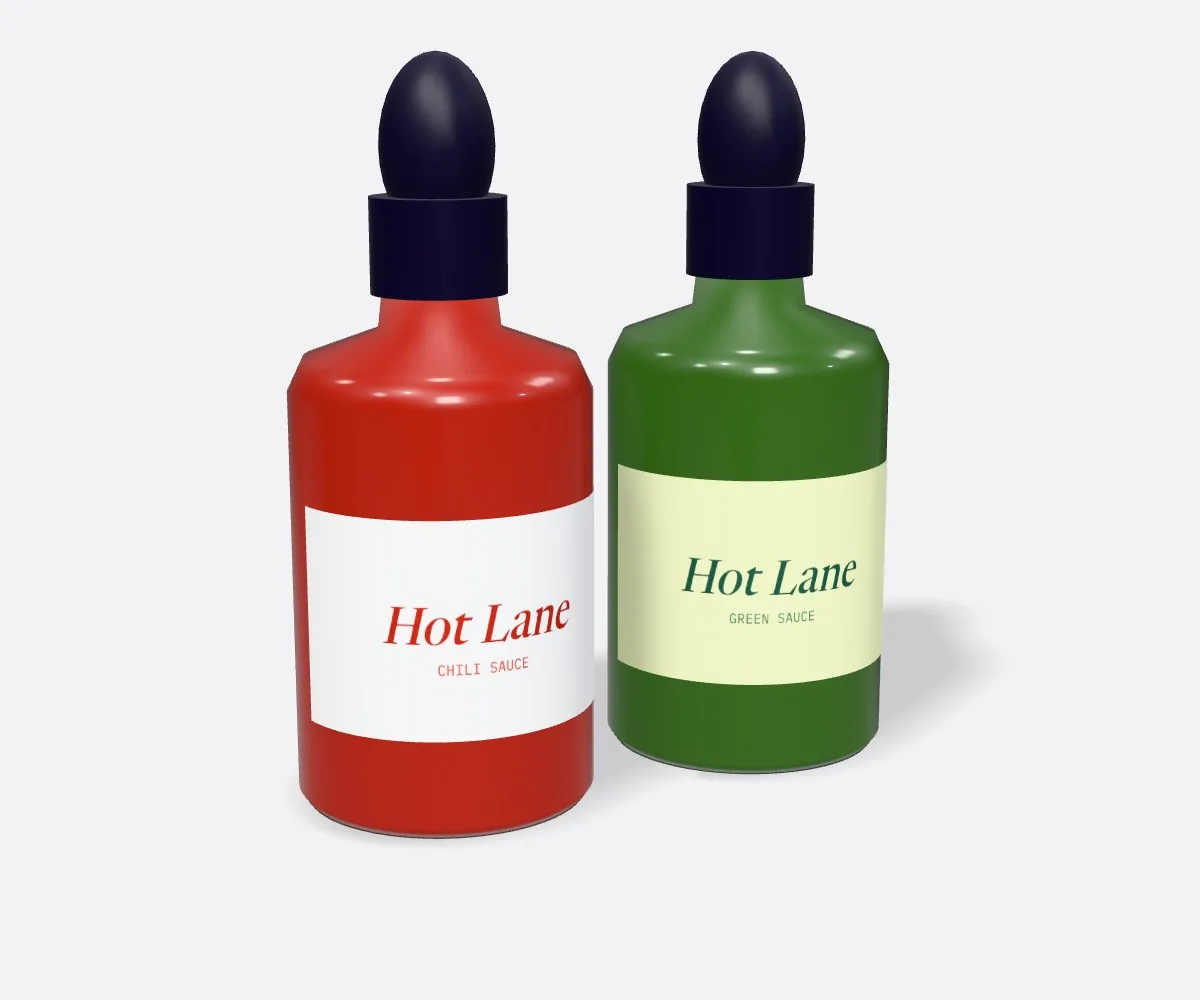
Most soapmakers sell a core lineup of six to twelve fragrances, such as Lavender Oat, Peppermint Charcoal, Sea Salt Eucalyptus, Lemongrass Clay, and Unscented Shea. The smartest way to lower your cost per label is to keep the exact same cigar band width, length, and corner layout across every single bar in your shop. Build one master dieline where the brand header, net weight position, and back formatting stay locked in place, and swap only the Pantone accent color band, scent title, and ingredient list for each SKU. When you submit your quote, select 2 designs or 3+ designs in Step 2 and list your scent breakdown in the notes. Because CubitPack never charges die or plate fees and guarantees Pantone color matching, you get a unified shelf display across your whole soap collection. To make packing even faster at your curing table, assign each scent a distinct color bar along the 1.0 inch top spine and print the last four digits of the SKU barcode in bold type on the back panel. That way, when your team stacks wrapped bars in wooden market crates or warehouse bins, anyone can pull the right fragrance at a glance without sliding bars out of the stack.
What are the most common soap label design and prepress mistakes?
A few small artwork adjustments prevent oil blotches, unreadable ingredients, and corner creases. Check these five mistakes before approving your proof
- Using unlaminated paper on heavily scented essential oil soaps, allowing citrus and clove oils to wick into the label and leave dark rings.
- Setting 5 pt back ingredient lists in thin white text knocked out of a rich four-color black background, where slight ink spread fills in the letters.
- Placing the front logo or barcode right across a 90-degree bar corner instead of centering each panel to the cured bar's width and thickness.
- Printing important ingredient text on the final 0.5 inch overlap tab at the end of a cigar band, where the opposite end of the label covers it up.
- Listing net weight only in ounces (such as '4.5 oz') without including the metric equivalent in grams ('4.5 oz / 127 g') on the bottom third of the front panel.
Find your label size
Suggested label size: 9⅛ × 2¾ in (width × height)
A typical starting point. Your account manager confirms the size on the proof.
Quote this size →Packaging for this
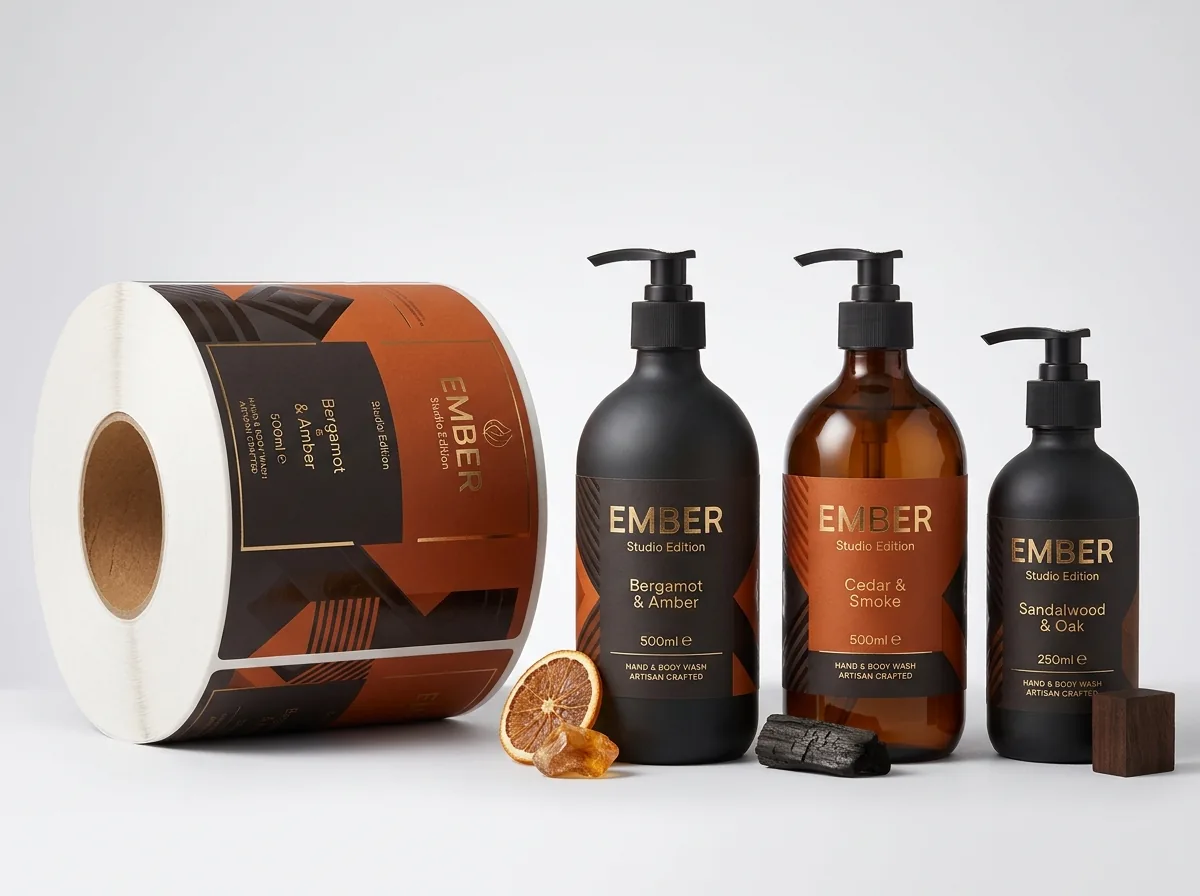
Ready to order soap labels? Compare up to 3 quantities with a free 3D mockup.
Request a Quote →Questions about soap labels
Which finish is better for bar soap cigar bands: matte or gloss?
Both matte and gloss finishes protect the ink from saponified oils and damp hands. Matte is the most popular choice for cold-process and botanical bar soaps because its low-glare surface feels natural and makes small ingredient text easy to read under bright market or store lights.
Why did my liquid soap bottle label peel up at the edge in the shower?
Labels peel on liquid soap bottles for two main reasons: microscopic soap residue left on the bottle during filling, or applying the label right before exposing it to water. Wipe filled bottles clean with rubbing alcohol, press the label down firmly, and let the adhesive cure for 24 hours.
Do I have to use INCI names on my handmade soap label?
If your soap makes any cosmetic claim (such as moisturizing, soothing, or exfoliating) or uses synthetic cleansing surfactants, FDA cosmetic rules (21 CFR 701.3) require an ingredient declaration using standardized INCI names. Even on true alkali-fat soap, most retail stores require full INCI lists.
Where must the net weight be placed on a soap label?
Under the Fair Packaging and Labeling Act, the net weight must appear in the bottom 30% of the Principal Display Panel (the front face of the bar or bottle) in lines parallel to the base, written in both US customary weight (oz) and metric weight (g).
Can I send a Canva file or AI-generated illustration for my soap label?
Yes. Upload your PDF, PNG, Illustrator file, or AI-generated artwork in Step 3 of the quote form. Our prepress designers add the 0.125 inch bleed, set up the cigar band fold guides, check small text sharpness, and send a 2D proof and 3D mockup for free.
What if I want to see and feel the label finishes before ordering 1,000 labels?
You can order our $50 sample kit to feel our materials and finishes (matte, gloss, foil stamping, and spot UV) in your hands, and the $50 is credited toward your first order. We can also produce a paid printed sample of your exact soap design credited to your order.
Still have a question? Ask a packaging specialist.
Request a Quote →Request your soap labels quote
Tell us your size and quantities, and one dedicated account manager prepares pricing for each tier.
- Free design & AI-to-print studio + 3D mockup
- No die or plate charges · 4–5 day rush available
- Free shipping to all 50 states
- 10% off your first order
This guide combines FDA 21 CFR Part 701 and CPSC soap regulatory standards, FTC Fair Packaging and Labeling Act net weight rules, and CubitPack's decided finishes and prepress tolerances (0.125 in bleed and safe margin). Checked by a packaging specialist. Spot something wrong? Tell us and we will fix it.
Sources
What changed
- October 22, 2026: First published.
- October 22, 2026: Updated specifications, terminology, and verified source links.
More guides
New packaging guides by email
Sizes, materials and design tips. Unsubscribe anytime.