
How do I design grease-resistant pet treat boxes with windows?
Short answer: Match your inner barrier to the treat's fat content, keep custom bone or paw window cutouts at least 0.5 inches from fold scores, and reserve the back panel for AAFCO Guaranteed Analysis and kcal-per-treat figures. Order custom pet treat boxes from 1,000 units with zero die fees.
On this page
- How do I stop peanut butter, cheese and meat oils from staining my box
- Which liner and window setup matches each type of pet treat
- What are the dieline rules for bone-shaped and paw-shaped windows
- How do I lay out AAFCO nutrition, ingredient and calorie panels on a treat box
- How can I print multiple treat flavors on one shared box dieline
- Common mistakes
- FAQs
Request a custom quoteFree dieline & 3D mockup
Designing a retail-ready pet treat carton requires balancing three technical details that ordinary product boxes never face: animal-fat oil migration, custom window structural strength, and FDA/AAFCO pet snack labeling rules. First, baked peanut butter biscuits, cheddar wafers, bacon strips and salmon bites release natural oils over time that wick into bare paperboard fibers and create dark blotches on the outside print unless you request a food-safe, grease-resistant inner liner or use a sealed inner barrier bag. Second, when adding a bone-shaped or paw-shaped viewing window, keep every cutout edge at least 0.5 inches inside the vertical fold scores so the carton walls do not buckle. Third, dedicate your side and back panels to the Guaranteed Analysis table, descending ingredient deck, kcal per treat statement and unvarnished lot-code stamp box, all checked on a free 3D mockup at CubitPack.
How do I stop peanut butter, cheese and meat oils from staining my box?
The most common quality complaint in pet bakery and dog biscuit packaging happens two weeks after packing: a carton that looked crisp on day one develops dark translucent oil halos along the bottom corners and fold creases. Even dry oven-baked biscuits often contain 8 to 18 percent crude fat from peanut butter, coconut oil, bacon drippings, cheddar cheese or salmon oil, and warm warehouse temperatures draw those lipids straight into unlined paperboard. When you order custom printed pet treat boxes from CubitPack, you have three clean ways to block oil migration depending on how you pack your treats. Tell your account manager what goes inside and whether it touches the board directly so we can specify the right food-contact and grease-resistant structure on your quote.
- Grease-resistant interior barrier coating: an aqueous or poly-lined interior surface applied to the inside of the carton so dry biscuits can be packed directly without staining.
- Bag-in-box inner poly liner: sealing treats inside a clear food-safe poly bag before sliding it into the carton blocks 100% of oil, moisture and aroma transfer.
- Parchment or butter-paper tissue wrap: for boutique gable bakery boxes holding fresh cookies, wrapping treats in greaseproof paper adds an unwrapping layer and protects the board.
- Exterior matte or gloss lamination: protects the outside print from greasy fingers or neighboring leaks in wholesale cases.
Which liner and window setup matches each type of pet treat?
Different pet treats have vastly different oil levels, moisture activity and crumb behavior. A low-fat pumpkin biscuit packed for a weekend farmers market does not need the same barrier stack as freeze-dried salmon cubes sold in national grocery chains. Use the reference matrix below to match your treat category to the recommended interior barrier and front window style.
| Pet treat category | Recommended interior barrier | Best window & closure setup |
|---|---|---|
| Low-fat baked oat or pumpkin biscuits | Food-safe inner coating on request | Glued clear film bone window + tuck top |
| Peanut butter, cheese or bacon biscuits | Grease-resistant inner liner or poly bag | Glued film window + auto-lock bottom |
| Iced pet bakery celebration cookies | Grease-resistant board + card divider | Gable or sleeve box with top peek window |
| Freeze-dried liver, heart or fish bites | Heat-sealed inner barrier pouch | Open die-cut paw window over clear bag |
| Soft semi-moist training chews | Resealable inner zipper pouch | Solid front or small peek window |
| Single-wrapped bully or dental sticks | Standard paperboard or E-flute (wrapped) | Perforated tear-away PDQ counter tray |
What are the dieline rules for bone-shaped and paw-shaped windows?
Pet parents love seeing the actual biscuit size, bake color and icing detail before they buy, which is why custom window boxes outsell solid cartons across pet boutiques and grocery aisles. Because CubitPack never charges die or plate fees, you can replace a plain rectangle window with a custom bone, doghouse, heart, fish or multi-toe paw print at zero extra tooling cost. To make sure your custom window runs smoothly on high-speed window-patching machines and keeps the carton sturdy, follow three simple structural rules on your dieline. First, keep all window cutouts at least 0.5 inches (12 mm) away from the left, right, top and bottom fold scores so the front panel retains its vertical column strength. Second, if you design a multi-part paw print (one main pad plus four toe pads), leave at least 0.25 inches of paperboard bridge between each toe cutout so the bridges do not tear during die-cutting. Third, position the top edge of the window at least 1 inch below your settled treat fill line so shoppers see treats rather than empty air at the top of the window.
Know your size? Compare pricing across up to 3 quantities.
Request a Quote →How do I lay out AAFCO nutrition, ingredient and calorie panels on a treat box?
In the United States, pet treats are regulated as animal food by the FDA Center for Veterinary Medicine (CVM) and state feed control officials following Association of American Feed Control Officials (AAFCO) model regulations. While treats do not need to meet full meal nutritional profiles, their carton panels must carry specific disclosures in clear, legible type. On the front Principal Display Panel (PDP), clearly state the brand name, product identity, intended species ('Dog Treats' or 'Cat Treats') and net weight in both US ounces/pounds and metric grams inside the lower 30 percent of the panel. On the side or back information panels, include your Guaranteed Analysis table (minimum crude protein, minimum crude fat, maximum crude fiber, maximum moisture), your ingredient list in descending order of predominance by weight, your business name and address, and a Calorie Content statement expressed both in kilocalories per kilogram (kcal/kg ME) and in familiar household units (for example, '28 kcal per biscuit'). Finally, include the AAFCO snack disclosure: 'Intended for intermittent or supplemental feeding only.'
- Front Principal Display Panel: brand logo, treat name, target species ('Dog Treats' or 'Cat Treats') and dual net weight (oz + g) in the bottom third.
- Guaranteed Analysis box: minimum % crude protein, minimum % crude fat, maximum % crude fiber, maximum % moisture, plus any nutrient claims.
- Calorie Content line: stated as 'Calorie Content (calculated): XXXX kcal ME/kg, XX kcal ME/treat' so pet owners can track daily reward calories.
- Supplemental feeding notice: 'Intended for intermittent or supplemental feeding only' alongside daily treat count guidance by pet weight.
- Lot & best-by knockout: a 1.5 × 0.75 inch unvarnished, unlaminated white rectangle on the bottom flap for co-packer date stamping.
How can I print multiple treat flavors on one shared box dieline?
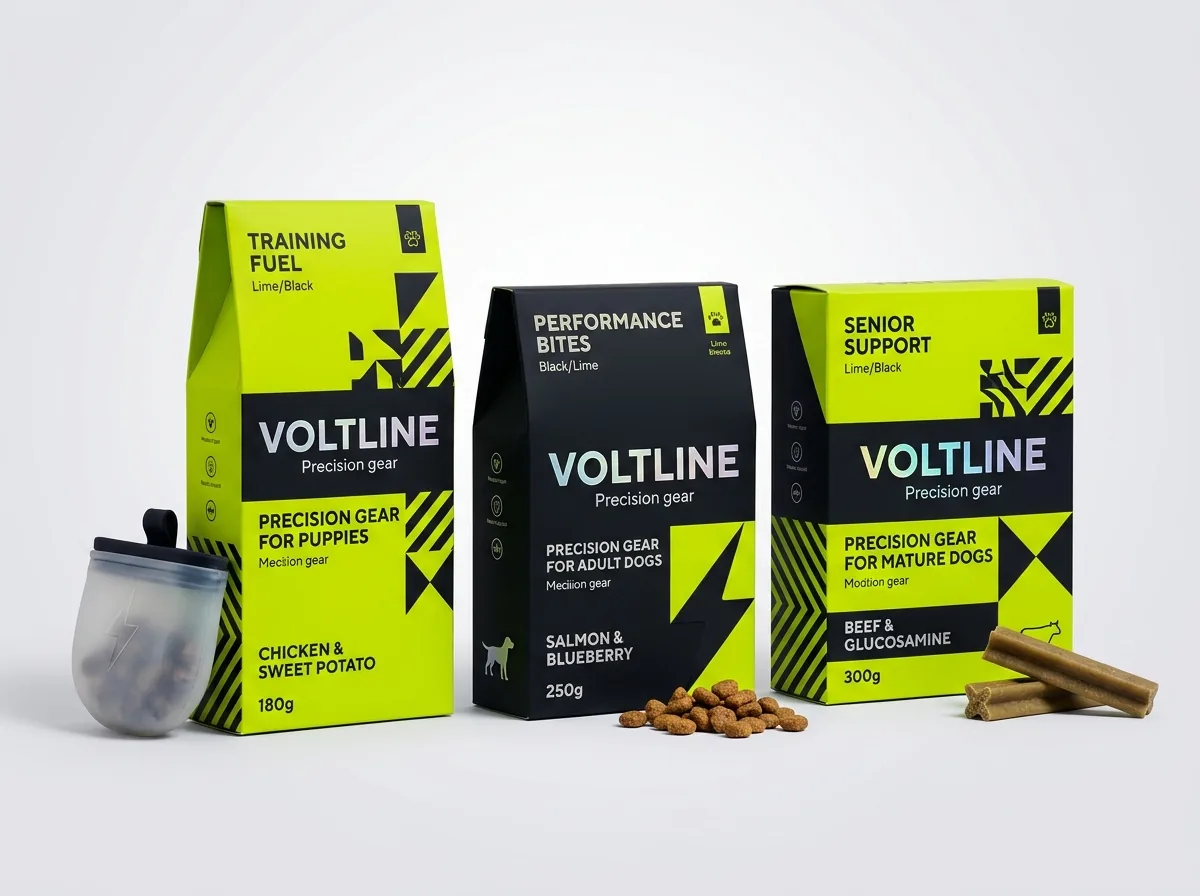
Most pet treat brands launch with three or four signature flavors, such as Peanut Butter & Banana, Pumpkin & Cinnamon, Bacon & Cheddar, and Wild Salmon, in the exact same ounce weight. Instead of ordering separate box sizes or different window shapes for each recipe, lock one shared inside dimension and one shared bone-window dieline across the entire line. Use color-coded horizontal bands across the top tuck flap and around the window frame to differentiate flavors at a glance, and pair your cartons with custom food labels or custom seal stickers for limited-batch seasonal bakes. Grouping all flavors in one quote lets you hit higher total quantity tiers (such as 2,500 or 5,000 boxes total), includes free design help and a 3D mockup for every SKU, gets you 10% off your first order, and qualifies for our US competitor price-beat guarantee.
What are the most common pet treat box design and prepress mistakes?
A great pet treat carton keeps oils inside, shows off the bake through a sturdy window, and passes retail buyer compliance checks on the first review. Avoid these five mistakes
- Packing peanut butter, cheese or jerky treats directly into uncoated paperboard without requesting a grease-resistant inner barrier or using a poly bag.
- Placing a wide bone-shaped window within 0.25 inches of the left and right fold scores, which causes the front panel to buckle when customers squeeze the box.
- Designing tiny 0.0625 inch paper bridges between the toes of a paw-print cutout that snap during high-speed die-cutting; keep bridges at least 0.25 inches wide.
- Omitting the 'kcal per treat' household unit or the 'Intended for intermittent or supplemental feeding only' statement on the back panel.
- Running gloss, matte or soft-touch lamination across the entire bottom flap with no knockout zone for stamping lot codes and expiration dates.
Find your size
Suggested inside size: 3.5 × 2 × 5 in
A starting point. Your account manager confirms the size with you before the proof.
Quote this size →Packaging for this
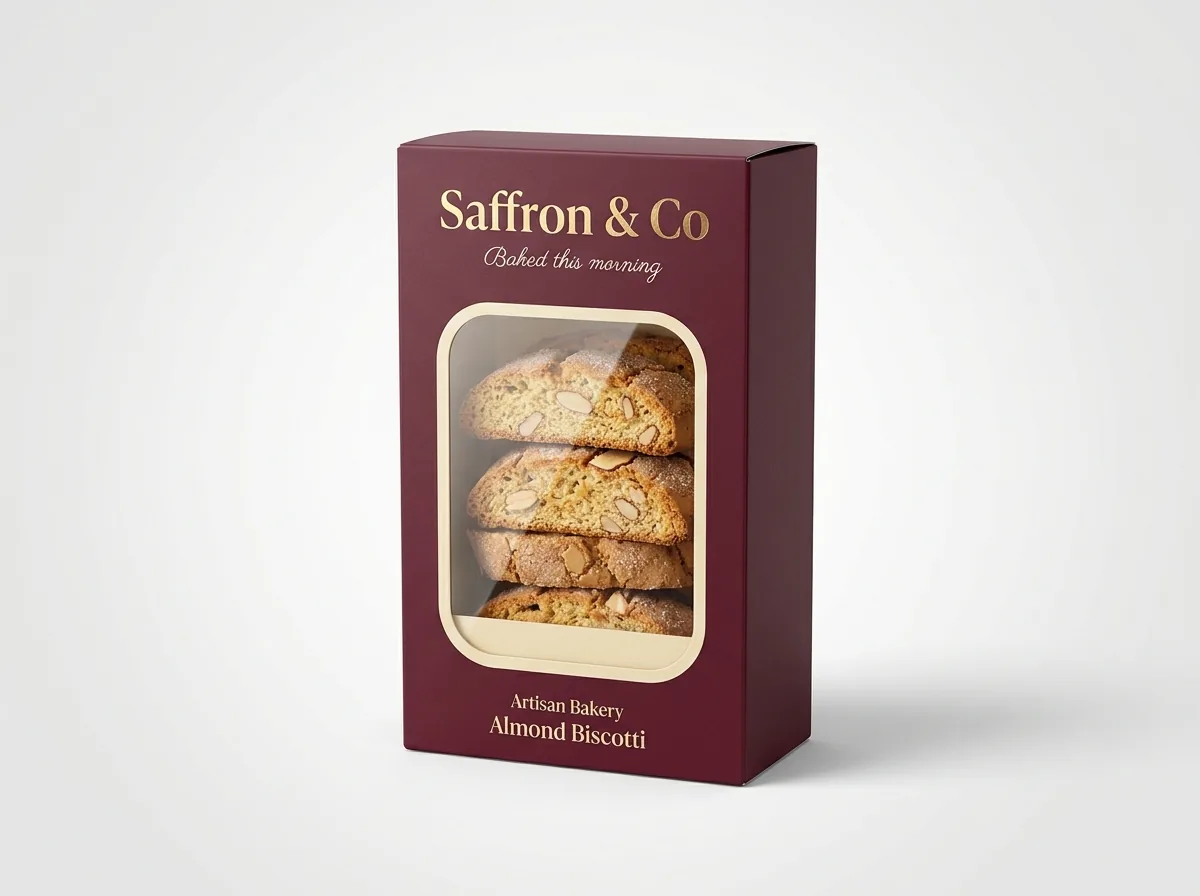
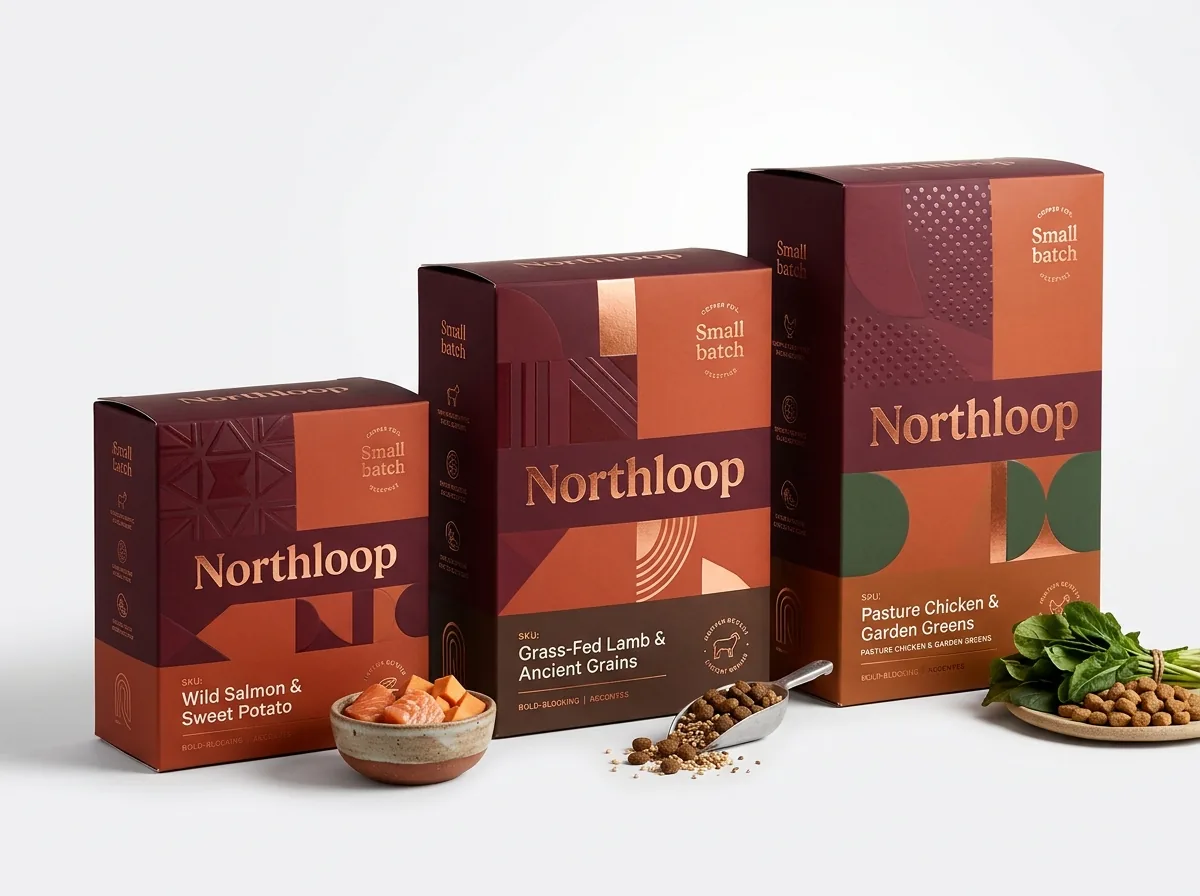
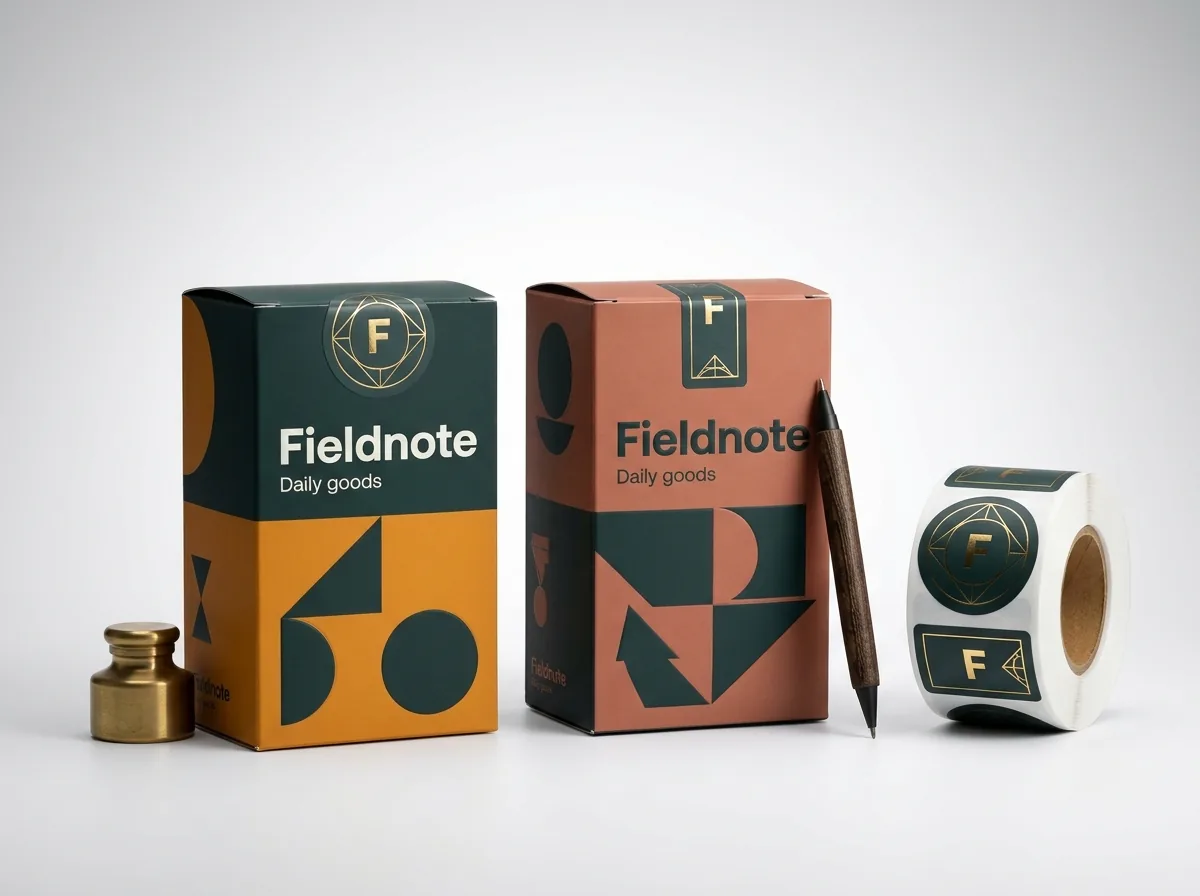
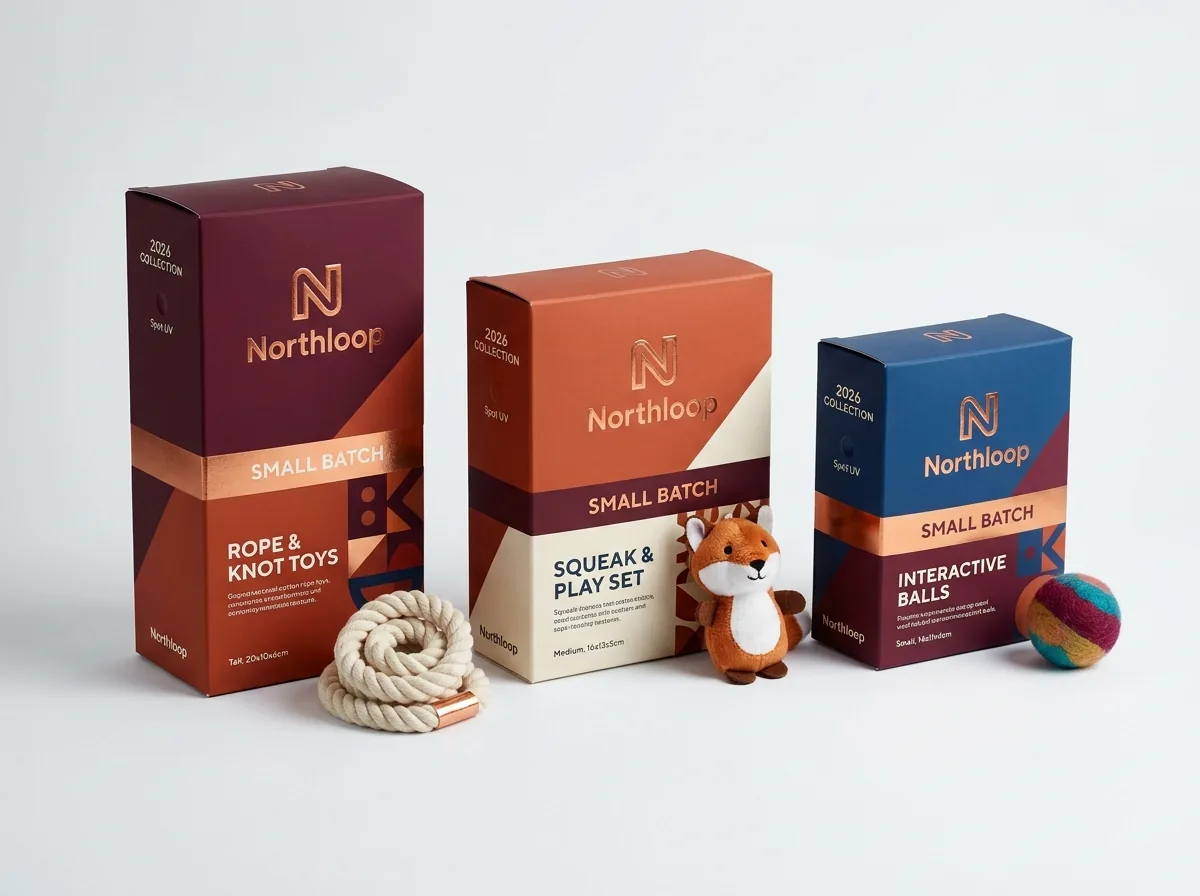
Ready to order pet treat boxes? Compare up to 3 quantities with a free 3D mockup.
Request a Quote →Questions about pet treat boxes
How do I request food-safe and grease-resistant board for my pet treat boxes?
Simply note in your quote request that your treats touch the inside of the carton directly and mention their oil or fat content. We produce food-contact orders in a certified partner facility with grease-resistant liners on request.
Does CubitPack charge extra for a custom bone or paw window die?
No. There are never any die or plate charges at CubitPack. Our designers can create a bone, paw print, heart or doghouse window on your front panel and patch it with clear film at no extra tooling fee.
How far from the fold lines should my window cutout sit?
Keep every edge of your window cutout at least 0.5 inches (12 mm) away from all fold scores and glue flaps. That 0.5 inch margin keeps the carton walls rigid and leaves room for the interior window film adhesive strip.
Do pet treat boxes need a Guaranteed Analysis and calorie statement?
Yes, retail pet treats sold in the US follow FDA CVM and state AAFCO labeling rules, which require a Guaranteed Analysis table, descending ingredient list, calorie content in kcal/kg and kcal per treat, and 'Intended for intermittent or supplemental feeding only'.
Can I print inside a custom pet treat box?
Yes. You can print brand patterns, feeding reward tips or a reorder QR code inside the top lid or across the interior walls using low-odor inks. Select 'Outside + inside' printing in the quote form.
Will your prepress team check my window margins and barcode before printing?
Yes. Every order receives a free prepress review, a 2D flat dieline proof and an interactive 3D mockup before you pay, verifying window margins, barcode contrast and lot-code knockout placement.
Still have a question? Ask a packaging specialist.
Request a Quote →Request your pet treat boxes quote
Tell us your size and quantities, and one dedicated account manager prepares pricing for each tier.
- Free design & AI-to-print studio + 3D mockup
- No die or plate charges · 4–5 day rush available
- Free shipping to all 50 states
- 10% off your first order
This design guide combines TAPPI paperboard oil-barrier principles, window-patching score clearance standards (0.5 in margin), and FDA CVM / AAFCO pet snack labeling conventions. Checked by a CubitPack packaging specialist. Spot an error? Tell us and we will fix it.
Sources
What changed
- October 22, 2026: First published.
- October 22, 2026: Updated specifications, terminology, and verified source links.
More guides
New packaging guides by email
Sizes, materials and design tips. Unsubscribe anytime.