
How do I design custom CBD boxes for scannable COA QR codes and batch labels?
Short answer: Reserve a 0.75 × 0.75 inch high-contrast white square with a 1/16 inch quiet border for your Certificate of Analysis (COA) QR code, and leave an unlaminated knockout patch on the back or bottom flap for batch and expiry coding. On custom CBD boxes, pair matte or soft-touch film with Pantone strength bands.
On this page
- What size and contrast does a CBD Certificate of Analysis (COA) QR code need
- What are the prepress dimensions for every compliance zone on a CBD carton
- Why do inkjet batch codes smear on laminated boxes and how do knockout windows work
- How do I color-code milligram strengths and gang-run SKUs to lower cost
- What should I print on the inside walls of a custom CBD box
- Common mistakes
- FAQs
Request a custom quoteFree dieline & 3D mockup
Designing a CBD carton requires more than picking a botanical color palette and placing a logo on the front panel. Every hemp wellness package has to survive three practical tests on the bottling line and at the retail counter: smartphone cameras must scan your third-party Certificate of Analysis (COA) QR code under bright overhead store lights, thermal inkjet or laser coders must print batch numbers and expiration dates that dry without smearing, and residual MCT or hemp carrier oil must not leave translucent grease spots on the paperboard. By engineering a dedicated QR quiet zone, an unvarnished lot-code knockout window and a laminated exterior directly into your vector dieline, you avoid hand-applying secondary stickers across thousands of cartons. At CubitPack, our prepress team checks all three zones for free before you approve your digital proof and 3D mockup.
What size and contrast does a CBD Certificate of Analysis (COA) QR code need?
Almost every hemp market and major retail chain expects a scannable QR code on the outer carton that links directly to a batch-specific third-party lab Certificate of Analysis. When a QR code fails to scan in a store, the culprit is almost always one of three artwork errors: printing the matrix smaller than 0.5 inches, placing it over metallic foil or dark background colors with low contrast, or running a fold score right through the corner finder squares. When laying out printed CBD cartons, size your QR code square between 0.625 × 0.625 inches and 0.875 × 0.875 inches, with 0.75 × 0.75 inches as the everyday sweet spot for narrow 1.375 inch tincture walls. Keep a 1/16 inch (0.0625 in) solid white quiet border around all four sides of the matrix, print the modules in 100% K (black) rather than 4-color rich black so fine squares never misregister, and finish the carton in matte or soft-touch lamination so overhead LED store lights do not bounce into the phone camera lens.
- Target QR size: 0.75 × 0.75 in (never smaller than 0.625 × 0.625 in including the white quiet border).
- Ink build: 100% black (0C 0M 0Y 100K) on a solid white background for maximum camera contrast.
- Crease clearance: keep the outer edge of the white QR box at least 1/8 inch away from any fold score or cut line.
- Anti-glare finish: pair with matte or soft-touch lamination; never apply spot UV or metallic foil over a barcode or QR square.
- Dynamic URL tip: encode a short redirect URL so the QR matrix has fewer, larger modules that scan from further away.
What are the prepress dimensions for every compliance zone on a CBD carton?
Fitting your brand story, total milligram callout, Supplement Facts or hemp extract panel, state warning text, UPC barcode, COA QR code and batch number onto a 1.375 inch wide tincture box takes disciplined panel allocation. Most brands assign the front panel to brand identity and milligram strength, the left panel to ingredients and suggested use, the right panel to warnings and the COA QR code, and the back or bottom flap to the UPC barcode and batch knockout window. Use the prepress table below to check the minimum size and surface treatment for each functional zone before sending your artwork files. Remember that state hemp and cannabis labeling rules vary by jurisdiction; child-resistant locking mechanisms and certified partner facilities are available on request.
| Carton panel zone | Recommended size / clearance | Best ink & coating setup |
|---|---|---|
| COA lab report QR code | 0.75 × 0.75 in (+ 1/16 in white quiet zone) | 100% K black on white; matte or soft-touch (no spot UV) |
| Batch / lot & expiry window | 1.00 × 0.375 in on back or bottom tuck flap | Unlaminated, unvarnished raw paperboard knockout |
| Retail UPC-A barcode | 1.18 × 0.75 in (80% magnification minimum) | 100% K black bars on white; bars oriented perpendicular to press |
| Cannabinoid & ingredient table | 5.5 pt to 6 pt minimum type; 1/8 in inside fold scores | Single-color 100% K black text or clean white knockout type |
| Tamper-evident seal landing zone | 0.75 × 1.50 in across top and front panel seam | Gloss or smooth matte lamination so security seals bond tight |
| Glue flap (side seam) | 0.50 to 0.625 in wide along side edge | Unprinted, unlaminated bare board so carton adhesive cures |
Why do inkjet batch codes smear on laminated boxes and how do knockout windows work?
Polypropylene matte, gloss and soft-touch laminations are non-porous plastic films. They are fantastic for keeping MCT carrier oil, hemp seed oil and essential oils from soaking into the outside of your carton during bottling. However, if your co-packer runs finished cartons past a thermal inkjet (TIJ) coder or rubber stamp to print LOT # and EXP, standard water- or solvent-based coding ink sits on top of plastic lamination like water on a waxed car hood and rubs right off. The clean prepress fix is a varnish and lamination knockout window (or placing the coding box on the unlaminated bottom dust or tuck flap). On our dieline, we mask out a crisp 1.00 × 0.375 inch white rectangle where bare paperboard fibers remain exposed. When the carton passes your inkjet head or laser coder, the ink absorbs into the uncoated board immediately. If your co-packer prefers applying pre-printed batch and QR stickers after each lab test comes back, you can also pair your boxes with custom cannabis labels or custom roll labels.
Know your size? Compare pricing across up to 3 quantities.
Request a Quote →How do I color-code milligram strengths and gang-run SKUs to lower cost?
A typical hemp extract line includes three to six variations of the exact same 1 oz (30 ml) bottle or 2 oz salve jar: for example, 500 mg Lavender, 1,000 mg Natural, 1,500 mg Mint and 2,500 mg Berry. If you keep the physical container and carton dieline 100% identical across all four products, you can gang-run them together in a single production order. To make sure warehouse pickers and retail shoppers never confuse a 500 mg carton with a 2,500 mg carton, build a master layout grid where the logo, ingredient panel border and QR code box stay locked in place, and only a bold wrap-around Pantone color band and foil-stamped milligram badge change from SKU to SKU. Because CubitPack charges zero die or plate fees and guarantees Pantone color matching, you get sharp visual differentiation across every strength without paying separate tooling charges.
What should I print on the inside walls of a custom CBD box?
Small 1 oz tincture cartons and 2 oz salve boxes have limited exterior square inches, and crowding the front panel with six paragraphs of dosing advice makes a premium extract look cluttered. Printing on the inside of the carton solves that problem without adding a separate folded paper leaflet. When a customer opens the top flap or slides out a tray and sleeve carton, the interior lid and side walls can display a dropper pipette chart, brand story or the serving and use directions your brand and regulatory team supply. That keeps your outside panels clean and calm while giving customers the product information your brand provides.
- Visual pipette scale: show how many milligrams of CBD equal ¼, ½ and 1 full dropper for each strength.
- Use text: room for the serving and use directions your brand and your regulatory team supply.
- Storage reminder: note to store the glass bottle upright in a cool, dark cabinet away from direct sunlight.
- Reorder QR code: place a second interior QR code that links straight to your subscription refill checkout.
What are the most common custom CBD box artwork and prepress mistakes?
Most printing delays and bottling-line headaches trace back to five preventable prepress mistakes on the dieline
- Printing a COA QR code over metallic foil, dark green backgrounds or glossy spot UV where store lights block phone cameras.
- Placing a QR code or UPC barcode closer than 1/8 inch to a vertical fold score, causing the corner squares to bend out of view.
- Applying full soft-touch or matte lamination over the batch/expiry stamp box without leaving an unvarnished knockout window.
- Setting 5.5 pt cannabinoid or ingredient text in 4-color CMYK black instead of 100% K black, which softens tiny serif letters.
- Hard-coding a single lab batch number into the main offset print run instead of leaving an inkjet window or batch label zone.
Find your size
Suggested inside size: 1.375 × 1.375 × 4.25 in
A starting point. Your account manager confirms the size with you before the proof.
Quote this size →Packaging for this
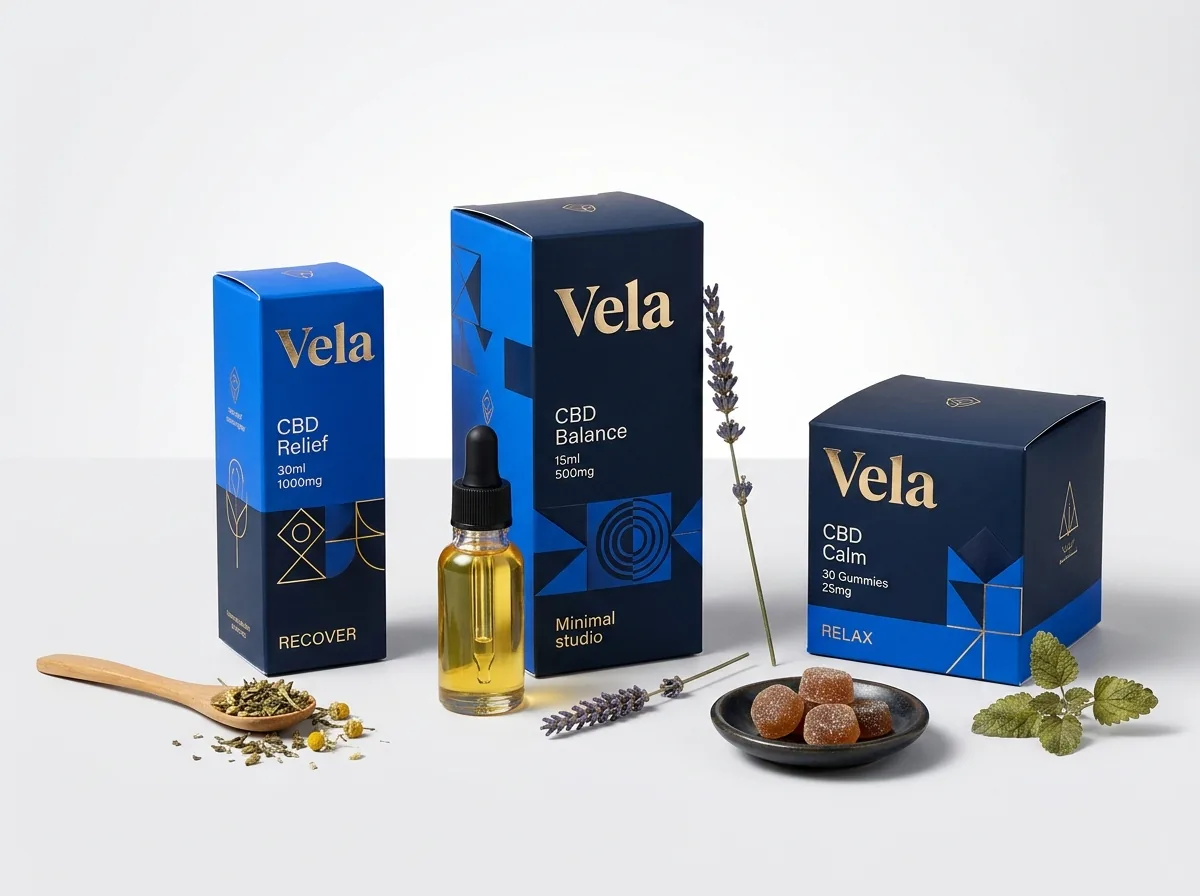
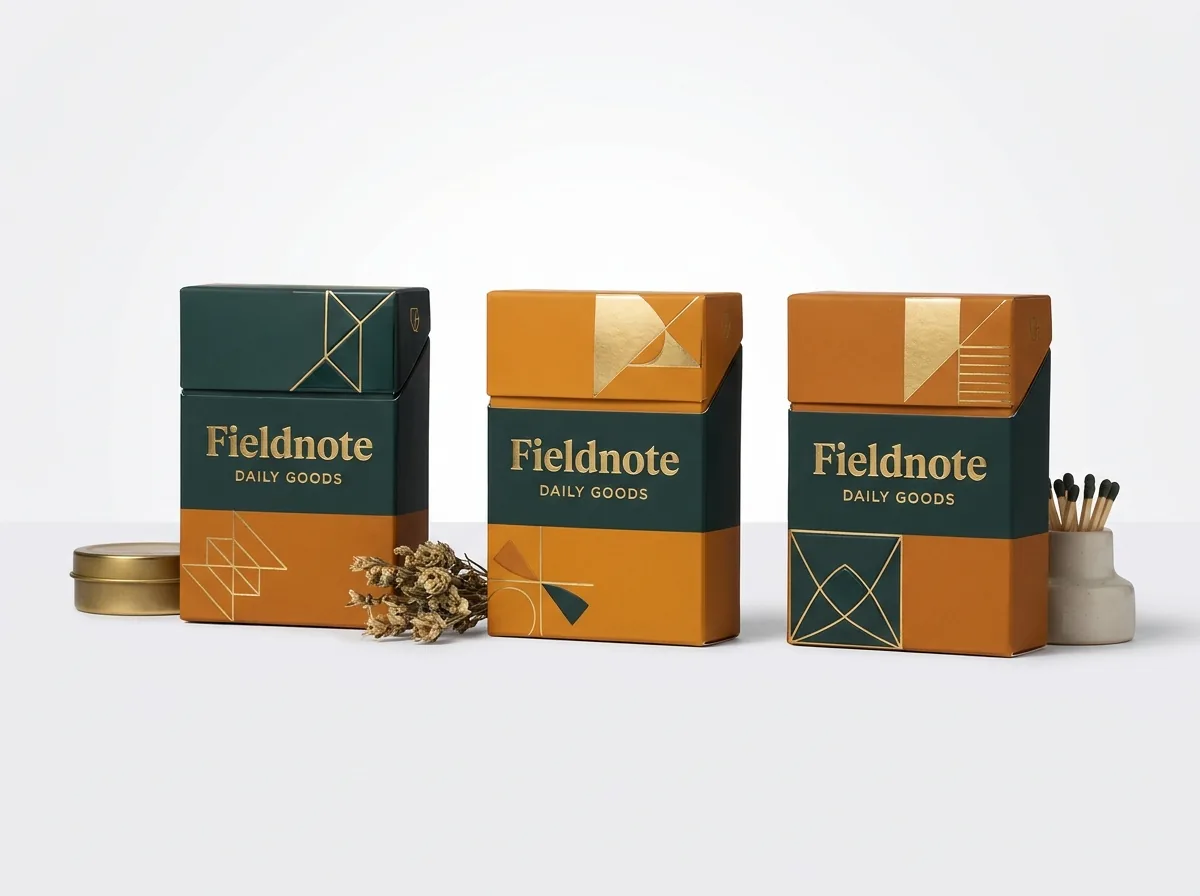
Ready to order cbd boxes? Compare up to 3 quantities with a free 3D mockup.
Request a Quote →Questions about cbd boxes
What is the minimum scannable size for a COA QR code on a CBD box?
We recommend sizing your Certificate of Analysis QR code at 0.75 × 0.75 inches (and never smaller than 0.625 × 0.625 inches), including a 1/16 inch solid white quiet border around all four sides, printed in 100% black ink on white card.
Should I use a static PDF link or a dynamic redirect URL for my CBD QR code?
Always use a dynamic redirect URL or a batch lookup landing page on your domain. Every harvest batch produces a new lab report PDF, and a redirect URL lets you update the linked COA online without reprinting your cartons.
How do I keep MCT oil from staining my CBD boxes during filling?
Choose matte, gloss or soft-touch lamination on the exterior of your paperboard carton. Lamination forms an oil- and moisture-resistant film that wipes clean if residual carrier oil on bottle threads touches the outside of the box.
Can CubitPack set up the dieline and compliance panels for me if I only have a logo?
Yes. Design help and custom vector dielines are free with every order. Send us your logo, bottle measurements and panel text, or bring an AI-generated concept via our Print your AI design service, and we will prepare press-ready files.
Can I split a 1,000-box order across different CBD milligram strengths?
Yes, if your 500 mg, 1,000 mg and 2,500 mg bottles share the exact same inside box dimensions, ask your account manager about gang-running your SKUs together and comparing up to three total quantities on your quote.
Do you verify state hemp warning symbols and child-resistant requirements?
Our prepress team checks print resolution, barcode contrast, bleed and fold clearances, and we offer child-resistant locking mechanisms and certified partner facilities on request. Your regulatory team confirms state-specific legal text.
Still have a question? Ask a packaging specialist.
Request a Quote →Request your cbd boxes quote
Tell us your size and quantities, and one dedicated account manager prepares pricing for each tier.
- Free design & AI-to-print studio + 3D mockup
- No die or plate charges · 4–5 day rush available
- Free shipping to all 50 states
- 10% off your first order
The QR code, barcode and knockout window specifications in this guide follow standard offset prepress rules (100% K black line art, 0.125 inch bleed and score safety margins, unvarnished coding zones) alongside CubitPack's decided services in our published product specifications. A packaging specialist checked every specification. Spot an error? Tell us and we will fix it.
Sources
What changed
- October 22, 2026: First published.
- October 22, 2026: Updated specifications, terminology, and verified source links.
More guides
New packaging guides by email
Sizes, materials and design tips. Unsubscribe anytime.