
How do steam vents, liners, and artwork keep delivery pizza crisp?
Short answer: Position die-cut steam vents along the rear hinge and upper side walls rather than on the flat top lid, leave the exterior board unlaminated so moisture can breathe, and pair an unbleached virgin kraft interior with a grease barrier or fluted pad on your custom pizza boxes.
On this page
- Where should steam vents sit on a pizza box so delivery bags do not block them
- Which inner liner, grease barrier, and ink setup fits each pizza style
- Why do pizzerias pair a white outer liner with an unbleached brown kraft interior
- How do you stop pepperoni and olive oil from soaking through the bottom
- What artwork, checkboxes, and reheating guides turn a pizza box into a repeat-order tool
- Common mistakes
- FAQs
Request a custom quoteFree dieline & 3D mockup
A fresh pizza pulled from a 550°F deck oven or 850°F wood-fired hearth is a battleground between crispness and steam. The charred bottom undercarriage of the crust has almost zero moisture, while the bubbling tomato sauce and fresh mozzarella on top release a heavy plume of water vapor for the first ten minutes inside the carton. If that steam cannot escape, relative humidity inside the box hits 95% within three minutes, turning the crispy crust rim soggy and softening the corrugated lid until it sags. At the same time, hot pepperoni rendering and olive oil drizzle try to wick through the bottom board. Combining rear-wall convective venting, a breathable unbleached kraft inner liner, an optional food-safe grease barrier or fluted parchment circle, and smart inside-lid reheating artwork keeps every delivery pie pizzeria-crisp.
Where should steam vents sit on a pizza box so delivery bags do not block them?
Many generic stock pizza boxes punch two small round holes in the middle of the flat top lid. As soon as your kitchen expo stacks a second pizza box on top of the first one - or slides the box under the insulated roof of a courier delivery bag - those top-lid holes are sealed completely shut. When we engineer the custom dieline for your printed corrugated pizza boxes, we place semicircular or oblong steam vents along the rear hinge crease and at the upper corners of the left and right side walls. Because hot vapor rises to the ceiling of the box and flows outward toward the perimeter walls, rear and side vents exhaust moisture horizontally into the side channels of the delivery bag even when five boxes are stacked tightly on top of one another. And because CubitPack charges zero die fees, customizing the size and position of your rear and side vents costs nothing extra.
- Rear hinge crease slots: two 1.5-in semicircular cutouts along the back fold let steam escape behind the stack.
- Upper side-wall thumb vents: angled slots near the top corners create cross-flow ventilation inside thermal bags.
- Front tuck-lip gap: a slight 1/16-in breather relief along the front flap prevents vacuum condensation.
- Zero top-lid holes: keeping the flat top lid solid prevents heat loss and stops upper boxes from blocking airflow.
Which inner liner, grease barrier, and ink setup fits each pizza style?
Corrugated pizza board is built from three paper layers: the outside liner (what the customer sees), the fluted middle arch, and the inside liner (what faces the pizza). You can independently pick the outer and inner liner colors and pair them with food-safe inner barriers on request. Use the reference table below to match your pizza style to the optimal board combination, grease protection, and exterior ink coverage.
| Pizza style | Best outer / inner liner combo | Grease & moisture strategy |
|---|---|---|
| New York & classic 14–18 in pizzeria pies | White-top outside / brown kraft inside (B-flute) | Grease-resistant inner liner or fluted pizza pad |
| Wood-fired Neapolitan 10–12 in pies | Brown kraft inside & out (E-flute or B-flute) | Rear hinge vents + branded custom butter paper sheet |
| Detroit-style, Sicilian & pan deep dish | Heavy B-flute with food-safe grease barrier | On-request oil barrier coating + 2.5 in tall side vents |
| Single pizza slice counter clamshells | E-flute or heavy card with inner grease barrier | Oil-resistant interior so customers hold box on lap |
| White garlic, pesto & olive-oil flatbreads | White-top or kraft E-flute oblong box | Custom butter paper liner + side thumb vents |
| Retail grocery frozen pizzas | Solid white paperboard (inside & out) | Exterior matte/gloss lamination + shrink-wrapped pie |
Why do pizzerias pair a white outer liner with an unbleached brown kraft interior?
When you open almost any classic pizzeria box, you will notice that even if the outside lid is bright white printed with tomato-red and basil-green graphics, the inside floor and inner walls are natural unbleached brown kraft. That two-tone board is called white-top (or mottled white) kraft corrugated. Pairing a white clay-coated outer liner with a virgin brown kraft inner liner gives you the best of both worlds. On the outside, your Pantone spot colors or CMYK artwork pop against a clean white canvas without needing a base coat of white ink. On the inside, unbleached virgin kraft fibers naturally absorb trace condensation drops from the bottom of the hot crust so the undercarriage stays dry and crispy instead of sitting in a puddle of water. If your brand aesthetic leans rustic and artisanal, you can also choose natural brown kraft on both the inside and the outside and print opaque white ink paired with deep red or black. Either way, keeping both the inner and outer paper surfaces free of plastic film allows residual heat vapor to transpire cleanly through the corrugated board walls during transit.
Know your size? Compare pricing across up to 3 quantities.
Request a Quote →How do you stop pepperoni and olive oil from soaking through the bottom?
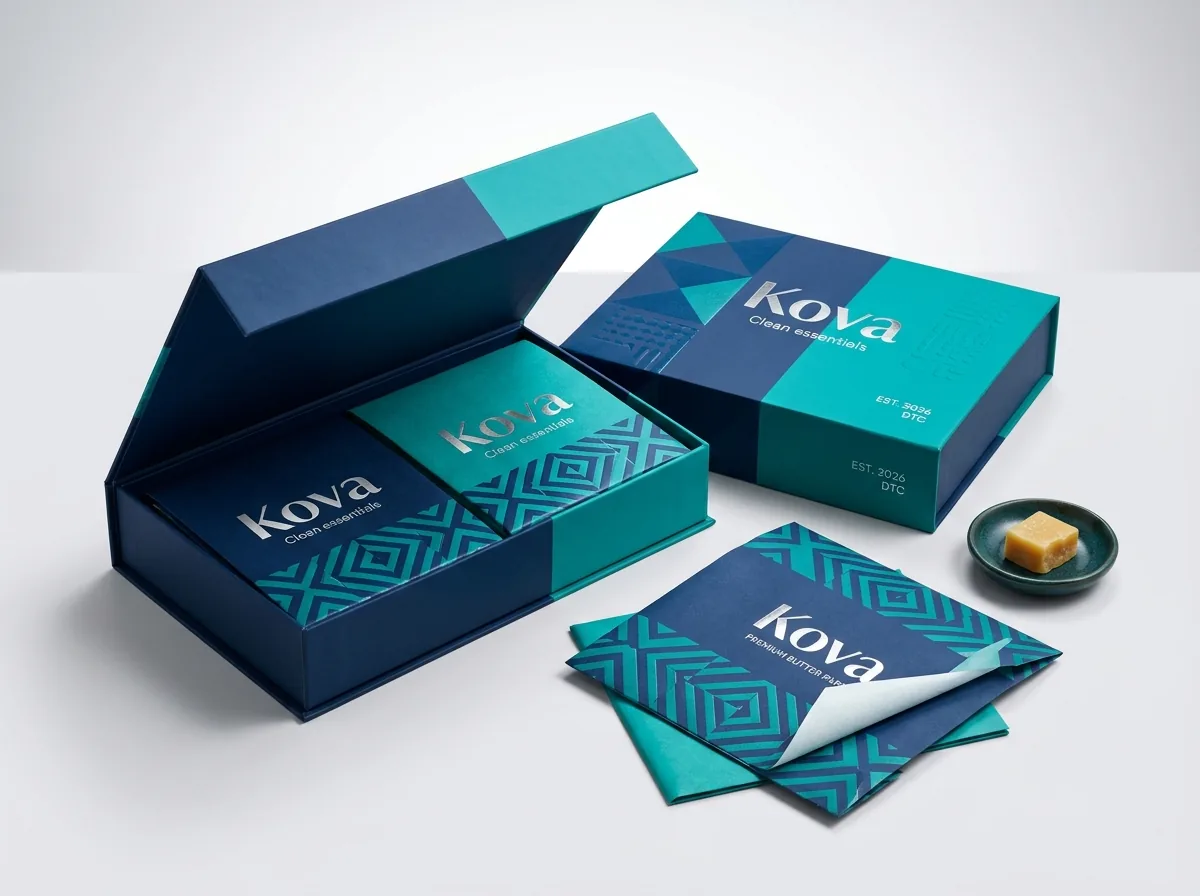
While trace water absorption helps keep crust crisp, hot rendered fat from cup-and-char pepperoni, sausage, cheddar frico edges, and finishing olive oil will soak straight through untreated paper fibers and leave an oily square on your customer's dining table or car seat. You can block oil bleed-through in three ways: first, request a food-safe, grease-resistant interior barrier coating on your corrugated board through our certified partner facilities. Second, drop a single-face corrugated pizza circle (with raised flutes that hold the crust 1/8 inch above pooled oil and allow warm air under the slice) onto the floor. Third, line the box with a sheet of custom butter paper printed with your pizzeria repeat pattern, which blocks grease while making every box open like an artisan bakery gift and keeping crumbs neatly contained.
What artwork, checkboxes, and reheating guides turn a pizza box into a repeat-order tool?
A pizza box sits in the center of the kitchen counter or living-room coffee table for forty-five minutes while friends and family eat, and half of it stays in the refrigerator overnight with leftover slices. That makes your pizza carton the single highest-visibility piece of advertising your restaurant owns. To maximize repeat direct orders (and move customers off high-commission delivery apps), print a bold "Order Direct & Save" QR code and loyalty perk right on the inside of the lid or on a perforated box-top tear coupon. Beside it, print a two-step cast-iron skillet and oven leftover reheating guide so day-old slices taste crisp again, and include a row of unvarnished topping checkboxes and customer-name lines along the front vertical edge for fast expo stacking. Our prepress team sets up all front-wall checkboxes, inside-lid reheating diagrams, and QR codes at zero extra artwork charge so your proof is ready to review before you pay.
- Front vertical wall (2 in high): customer name line, table/order #, and topping checkboxes (Cheese, Pep, Veg, Special) visible in a 10-box stack.
- Top lid centerpiece: bold 1- to 2-color Pantone mascot or vintage pizzeria crest (plus optional white ink on brown kraft).
- Inside lid panel: cast-iron skillet + oven reheating guide, catering menu callout, and direct-ordering QR code.
- Courier security: pair the front lock tab with a branded tamper-evident custom seal sticker for third-party deliveries.
What design and liner mistakes ruin delivery pizza quality?
Check these five frequent packaging errors before approving your custom pizza box proof
- Punching steam vents in the flat center of the top lid where stacked boxes and insulated delivery bags block them completely.
- Adding exterior gloss or matte plastic lamination to hot takeout pizza boxes, trapping steam inside the corrugated walls.
- Packing high-oil Detroit pan pizzas or double-pepperoni pies on raw unlined board without a grease barrier, butter paper, or fluted pad.
- Printing 100% heavy ink coverage across the front flap without leaving a clean unprinted box for expo markers and order tickets.
- Leaving the inside lid blank instead of printing a skillet reheating guide and a direct-order QR code that bypasses third-party app fees.
Find your size
Suggested inside size: 8.5 × 7.5 × 1.75 in
A starting point. Your account manager confirms the size with you before the proof.
Quote this size →Packaging for this
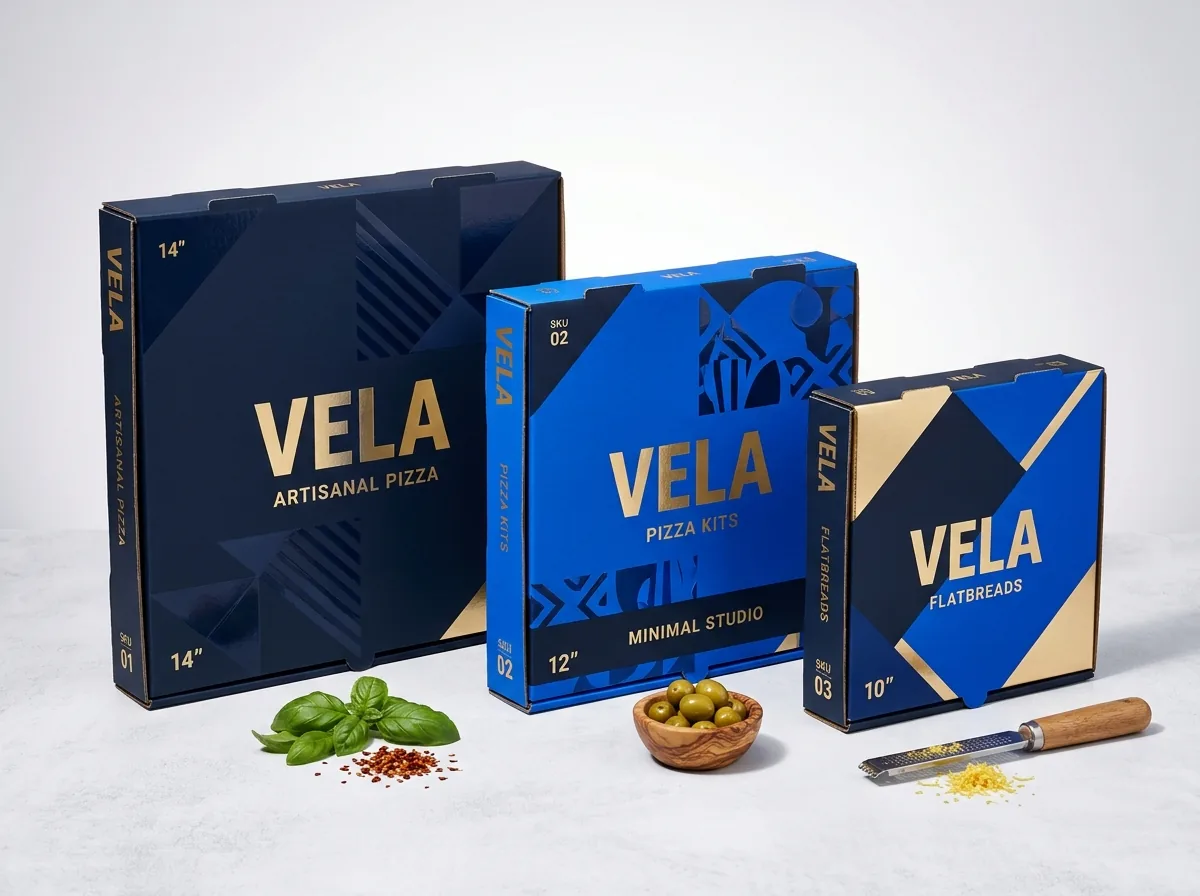

Ready to order pizza boxes? Compare up to 3 quantities with a free 3D mockup.
Request a Quote →Questions about pizza boxes
Do custom rear and side steam vents cost extra on CubitPack pizza boxes?
No. Because CubitPack never charges die or plate fees, adding semicircular rear hinge vents, side thumb slots, or perforated box-top coupons to your dieline is completely free.
Are your pizza boxes made with food-safe inks and inner liners?
Yes. Food-safe virgin inner kraft liners, grease-resistant barriers, and low-migration inks are available on request through our certified partner facilities. Tell us on your quote if pizzas sit directly on the box floor.
Should I choose 1- or 2-color Pantone printing or full-color CMYK for pizza boxes?
Most pizzerias choose 1 or 2 bold Pantone (PMS) spot colors - such as classic tomato red, forest green, or black on white-top or brown kraft board - because spot inks give solid, vibrant coverage at the lowest unit cost. Full-color CMYK is also available for detailed illustrations.
Can you print inside the lid of a corrugated pizza box?
Yes. Inside-lid printing is available on both B-flute and E-flute pizza boxes. We keep inside printing on the upper lid panel away from direct contact with the hot crust below.
Can I order matching custom butter paper and tamper-evident delivery stickers?
Yes. Many pizzerias pair their custom pizza boxes with grease-resistant custom butter paper sheets and roll seal stickers that bridge across the front lock tab so delivery customers know their pie was never opened in transit.
Do I see a digital proof and 3D mockup before paying for my pizza boxes?
Yes. Every order includes free artwork help, a custom dieline showing your exact vent cutouts, a flat digital proof, and a 3D mockup before you pay.
Still have a question? Ask a packaging specialist.
Request a Quote →Request your pizza boxes quote
Tell us your size and quantities, and one dedicated account manager prepares pricing for each tier.
- Free design & AI-to-print studio + 3D mockup
- No die or plate charges · 4–5 day rush available
- Free shipping to all 50 states
- 10% off your first order
The convective steam-venting principles, white-top versus unbleached kraft liner behavior, and grease-barrier options in this guide follow commercial corrugated foodservice standards. A CubitPack packaging specialist verified every section. Spot something wrong? Tell us and we will fix it.
Sources
What changed
- October 22, 2026: First published.
- October 22, 2026: Updated specifications, terminology, and verified source links.
More guides
New packaging guides by email
Sizes, materials and design tips. Unsubscribe anytime.