
How do I design custom belt boxes and inserts that protect leather straps?
Short answer: Isolate the metal buckle prong from the leather strap using a slotted cardboard coil collar or a two-cavity EVA foam tray, match your lid foil stamping to the buckle hardware (brass, silver or gunmetal), and get a free custom dieline with our custom belt boxes.
On this page
- How do cardboard coil collars and EVA foam inserts prevent buckle scratches
- Which board, foil and finish combinations match each belt niche
- How do I match foil stamping and embossing to my buckle hardware
- Where should I place waist-size callouts and cut-to-fit instructions
- What drives the unit cost of custom belt boxes and how can I save
- How do I build a matching packaging family for belts, wallets and ties
- Common mistakes
- FAQs
Request a custom quoteFree dieline & 3D mockup
A great belt box solves a mechanical problem while telling a leathercraft story: when you coil a smooth calfskin or vegetable-tanned bridle strap inside a 5.5 × 5.5 inch square, the heavy metal buckle and its sharp tongue prong sit right against the outer wrap of leather. Without an internal barrier, parcel vibration causes the metal hardware to dent or scratch the aniline leather finish before the customer ever opens the lid. Adding a simple die-cut paperboard coil collar with a buckle-guard tab, or a recessed EVA foam tray for reversible sets, keeps metal and leather cleanly separated while holding the coil centered in the box. On the outside, matching hot foil stamping and embossing to your buckle finish and stitch detailing turns the box into a permanent closet keepsake, backed by free design help and zero cutting die or plate fees at CubitPack.
How do cardboard coil collars and EVA foam inserts prevent buckle scratches?
Two forces act on a coiled belt inside a box: the spring tension of the leather trying to uncoil against the four corners, and the weight of the metal buckle knocking against the outer strap layer. When our structural team engineers custom printed belt boxes, we match the interior insert to your belt price point and buckle mechanism. For single coiled belts in folding cartons, two-piece boxes or corrugated mailers, a die-cut custom cardboard insert coil collar is the cleanest, lowest-cost solution. It is a flat strip or base card with a circular pop-up wall and a fold-over tongue flap that slips between the metal buckle frame and the leather coil. For luxury dress belts and reversible two-buckle gift sets, a die-cut custom EVA foam insert (topped with matte paper or velvet flock) gives the coiled strap and each buckle their own separate recessed pocket.
- Cardboard coil collar: circular or octagonal ring holds the coil round and prevents unspooling behind a front window.
- Buckle-guard divider tab: a folded paperboard shield positioned directly behind the metal buckle prong and frame.
- Center spindle post: a small pop-up cardboard cylinder in the center of the coil that keeps the inner belt tip from collapsing.
- Recessed EVA foam tray: dense foam with separate custom cutouts for a reversible strap and two clamp-on buckles.
Which board, foil and finish combinations match each belt niche?
Belt buyers judge leather quality by sight and touch before they ever try the belt on. If you sell vegetable-tanned saddle leather, English bridle straps or rugged work belts, an unbleached kraft box with blind embossing or dark espresso ink echoes the raw hide. If you sell Italian calfskin dress belts or tuxedo accessories, a charcoal or deep navy soft-touch rigid box with metallic foil stamping mirrors a fine watch box. Use the design recipe table below to coordinate your box board, surface finish and interior insert with your belt collection.
| Belt category | Recommended board & finish | Signature insert & structural detail |
|---|---|---|
| Full-grain dress calfskin & suiting belts | Charcoal or navy rigid/card + soft-touch + foil | Slide-out drawer + ribbon pull + card collar |
| Vegetable-tanned bridle, work & denim belts | Unbleached kraft board + embossed saddlery crest | Two-piece box + buckle-guard divider tab |
| Reversible strap + 2-buckle gift sets | Matte black magnetic closure rigid box | Velvet-topped EVA foam with 3 recessed cavities |
| Braided elastic golf & woven webbing belts | Bleached white card + matte lamination + spot UV | Front window carton + auto-lock base + Euro hang tab |
| Western tooled leather & trophy buckle belts | 6.5 × 6.5 × 3 in kraft or rigid + copper/gold foil | Two-cavity insert displaying buckle beside coil |
| DTC e-commerce everyday belts | 5.5 × 5.5 × 2.25 in corrugated roll-end mailer | Inside-lid waist sizing chart + pop-up coil ring |
How do I match foil stamping and embossing to my buckle hardware?
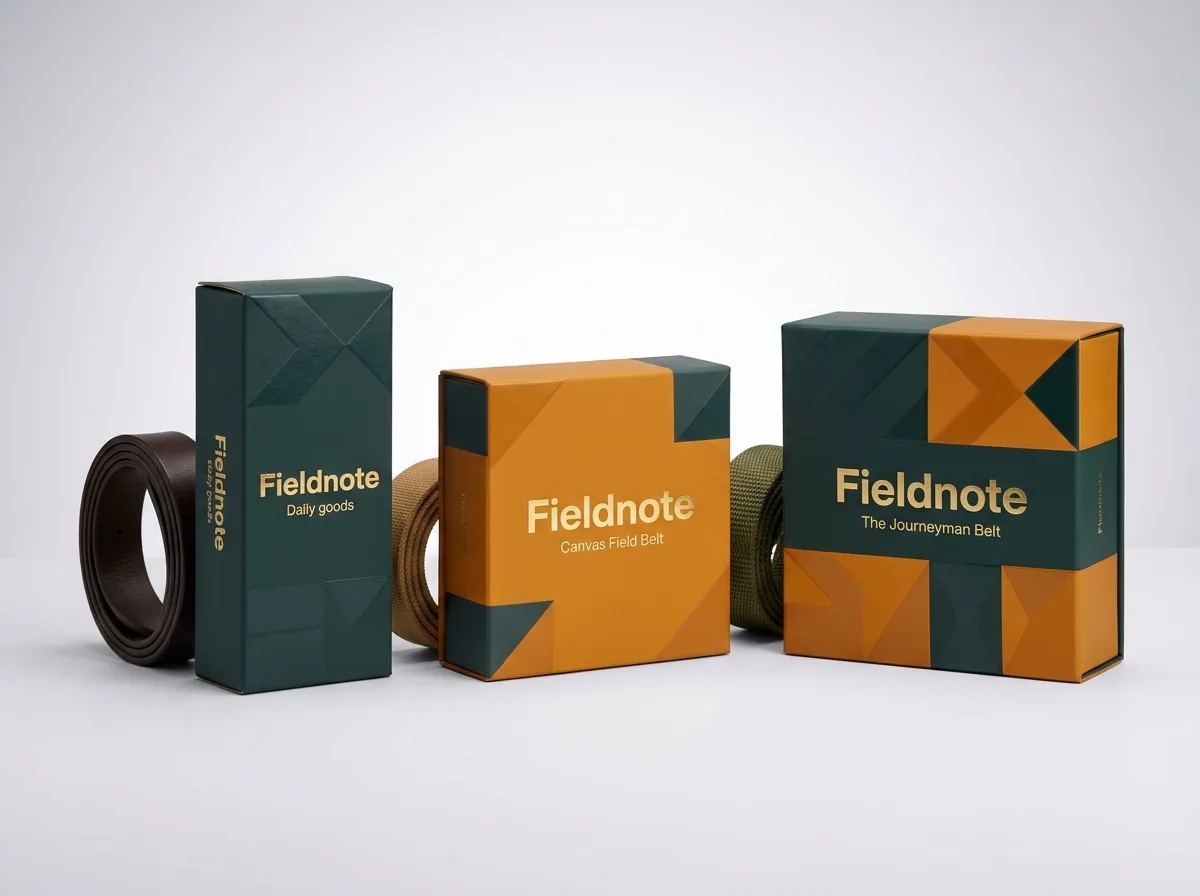
Every belt has a dominant metal tone on its buckle: warm solid brass, bright polished silver/nickel, brushed satin nickel, antique bronze or matte black gunmetal. Matching the foil stamping shade on your box lid to the metal tone of the buckle inside creates an immediate visual harmony when the customer lifts the lid or looks through the window. To reinforce the leathercraft feel without adding a second ink color, add a blind embossing or debossing border around the outer edge of the lid that mimics the saddle stitching along the edges of your belt strap. On dark navy, espresso or matte black rigid boxes, pairing soft-touch lamination with a deeply debossed heraldic crest gives the box lid the tactile warmth of dressed calfskin.
Know your size? Compare pricing across up to 3 quantities.
Request a Quote →Where should I place waist-size callouts and cut-to-fit instructions?
Belt sizing confuses shoppers more than almost any other accessory because most brands order belt size 2 inches larger than trouser waist size (a 34 pant waist wears a Size 36 belt). Printing a clear one-line conversion chart ('Order 2 inches up from your pant size: 34 Waist = 36 Belt') on the back panel or inside the lid reduces e-commerce size exchanges. If you sell ratcheting track belts or reversible clamp-buckle belts that the customer trims to length at home with scissors, print a step-by-step 'How to Trim Your Strap' diagram directly inside the lid of your box. Printing the guide via inside printing eliminates the cost of a separate paper instruction leaflet that can get lost or crumpled during packing.
- Front or spine size badge: clear 'Belt Size 36 (Fits 34 Pant Waist)' callout for fast retail browsing.
- Inside-lid trim ruler: printed inch/centimeter marks and 3-step clamp instructions for cut-to-fit belts.
- Leather care notes: short guidance on conditioning full-grain leather and avoiding moisture.
What drives the unit cost of custom belt boxes and how can I save?
Four factors shape your per-box cost: structure family (folding window carton from 1,000 units vs corrugated mailer from 250 units vs rigid drawer/magnetic box from 50 units), footprint size (a 5 × 5 × 2 in single cube vs an 8.5 × 5.5 × 2.25 in gift set), insert material (die-cut paperboard collar vs multi-layer EVA foam), and total order quantity. Because CubitPack never charges cutting die or printing plate fees, custom window shapes, Euro hang slots and cardboard coil collars add zero tooling cost. To maximize volume discounts, use one universal 5.5 × 5.5 × 2.25 inch box across all leather colors and waist sizes, and apply a small variable barcode and size sticker on the side panel so all SKUs combine into one production tier.
How do I build a matching packaging family for belts, wallets and ties?
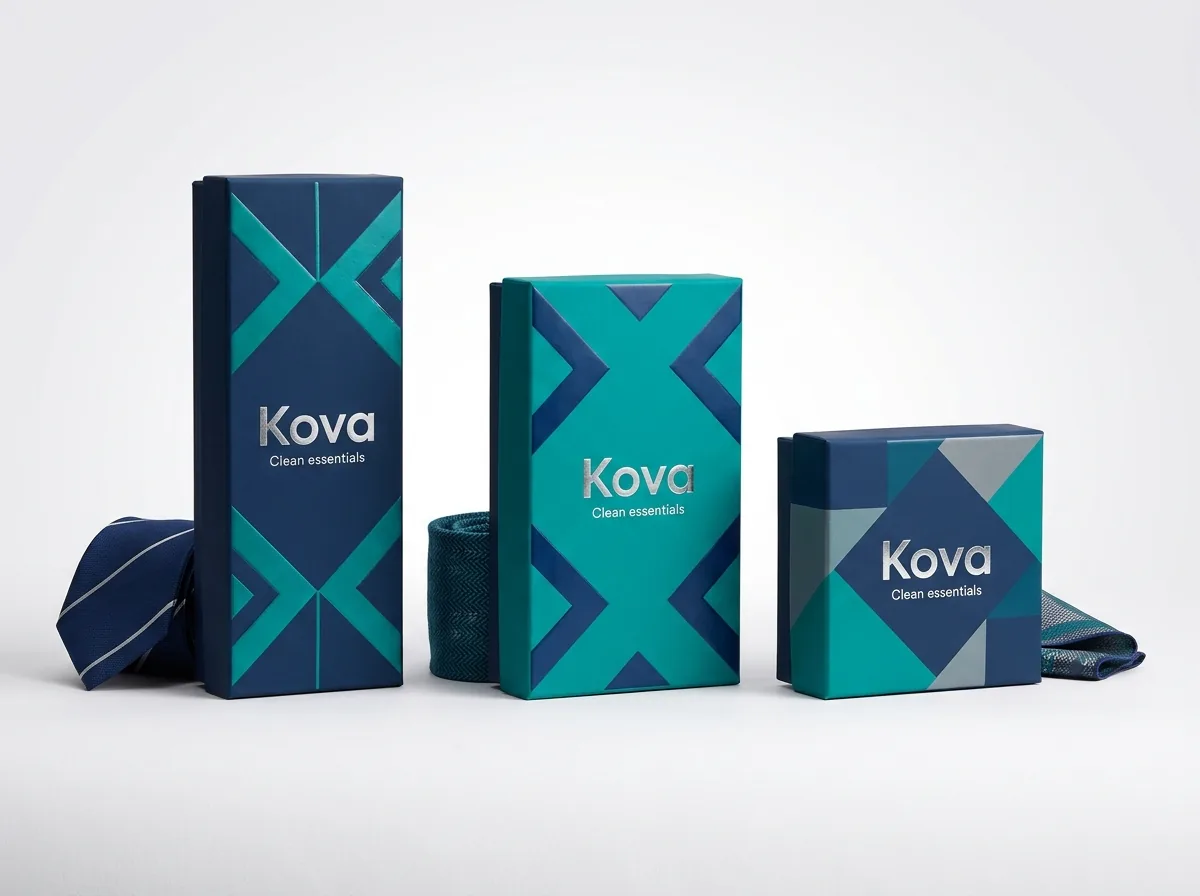
Menswear and leather workshops rarely stop at belts alone; customers frequently bundle a belt with a bifold wallet, cardholder, watch strap or silk necktie for weddings and holidays. Sharing the same paper stock, Pantone background shade and foil crest across your custom tie boxes and belt boxes makes your retail shelf or gift bundle look cohesive. When you request a quote at CubitPack, our designers can lay out a 5.5 × 5.5 × 2.25 inch single belt box, a 4.5 × 3.75 × 1 inch wallet box and a 10 × 7 × 2.5 inch combined belt-and-wallet gift box using the same guaranteed Pantone inks and matching insert liners so every piece in your leather goods collection shares one signature unboxing.
- Use one shared paper wrap, linen texture or kraft board across belt boxes, wallet boxes and tie boxes for a unified display.
- Standardize on blind debossing or one universal foil shade so boxes work with any buckle metal.
- Apply coordinated custom labels on the side spine for quick stockroom waist-size picking.
What are the most common custom belt box design mistakes?
A handsome box exterior loses its impact if the buckle scratches the strap or shoppers cannot read the waist size. Watch out for these five prepress errors
- Packing a sharp metal buckle prong directly against full-grain leather with no cardboard guard tab or foam barrier.
- Cutting the front display window too wide on a folding carton, allowing the springy leather coil to push out through the hole.
- Printing only the strap length (38) without explaining the pant-waist conversion (Fits 36 Pant Waist), driving up return rates.
- Using bright yellow-gold foil on a box that holds a cool brushed-nickel buckle when silver or blind debossing would match better.
- Leaving dark matte black or navy belt cartons unlaminated, causing pegboard friction to scuff the edges in retail stores.
Find your size
Suggested inside size: 4.5 × 4.5 × 1.75 in
A starting point. Your account manager confirms the size with you before the proof.
Quote this size →Packaging for this
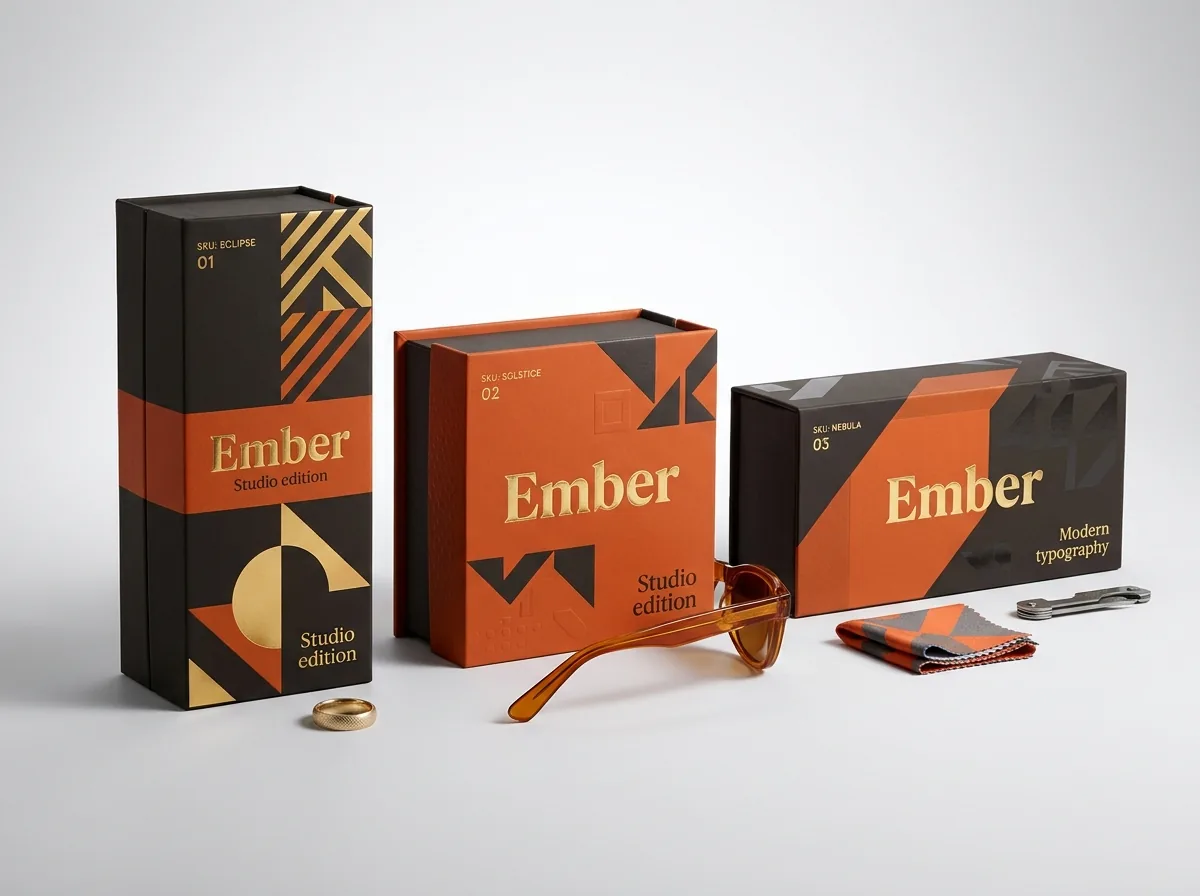
Ready to order belt boxes? Compare up to 3 quantities with a free 3D mockup.
Request a Quote →Questions about belt boxes
Can your designers engineer both the belt box and the internal buckle-guard insert for free?
Yes. Free structural and graphic design support is included with every CubitPack order, and we never charge cutting die or printing plate fees. Tell us your coiled belt diameter, strap width and buckle size, and we design the box and insert together.
Should I choose a cardboard insert or an EVA foam insert for my belt boxes?
Choose a die-cut cardboard coil collar or divider tab for single coiled belts in folding cartons or corrugated mailers when you want a recyclable, low-cost insert. Choose a die-cut EVA foam tray for luxury rigid boxes and reversible two-buckle gift sets.
How do you guarantee my brand's leather tan, burgundy or navy ink color matches?
Share your Pantone (PMS) color codes when requesting your quote. CubitPack backs every order with our Pantone color match guarantee: if a printed Pantone shade is clearly off from the approved specification, we reprint at no cost.
Can I print cut-to-fit instructions inside the lid of my belt box?
Yes. Inside printing is available on folding cartons, corrugated mailers and rigid box lids. Printing your trim-to-fit ruler guide or leather care tips directly inside the lid saves the cost of a separate paper insert card.
Will I see a 3D mockup of my belt box and window before production starts?
Every order includes a free 2D digital dieline proof and an interactive 3D mockup before you pay. You can also order our $50 sample kit or a paid custom printed prototype (credited toward your production order) to test your physical belt fit.
How long does production take for custom belt boxes with inserts?
Standard production takes 10 to 14 business days after you approve your digital proof and complete payment, with free shipping to all 50 states. Rush production in 4 to 5 business days is also available and quoted per order.
Still have a question? Ask a packaging specialist.
Request a Quote →Request your belt boxes quote
Tell us your size and quantities, and one dedicated account manager prepares pricing for each tier.
- Free design & AI-to-print studio + 3D mockup
- No die or plate charges · 4–5 day rush available
- Free shipping to all 50 states
- 10% off your first order
The buckle-isolation engineering, foil-matching tips and waist-conversion callouts in this guide combine leather goods packaging practices, ISTA transit rules and CubitPack's decided policies in our published product specifications. A CubitPack packaging specialist reviewed every section. Spot something wrong? Tell us and we will fix it.
Sources
What changed
- October 22, 2026: First published.
- October 22, 2026: Updated specifications, terminology, and verified source links.
More guides
New packaging guides by email
Sizes, materials and design tips. Unsubscribe anytime.