
How do I design custom sock boxes that sell on shelves and pegboards?
Short answer: Frame your best jacquard pattern inside a front die-cut touch window, print the sock cut and US shoe-size bar on both the front panel and top flap, and use a neutral exterior palette so one custom sock box run works across multiple colorways.
On this page
- Where should I place the die-cut window and size callouts on a sock box
- Which board, ink and finish combinations fit each hosiery niche
- How can one universal sock box work across 10 or 20 sock colorways
- What FTC textile rules and technical diagrams belong on the back panel
- What drives the unit price of custom printed sock boxes
- How do I eliminate plastic barb tags and polybags from my sock line
- Common mistakes
- FAQs
Request a custom quoteFree dieline & 3D mockup
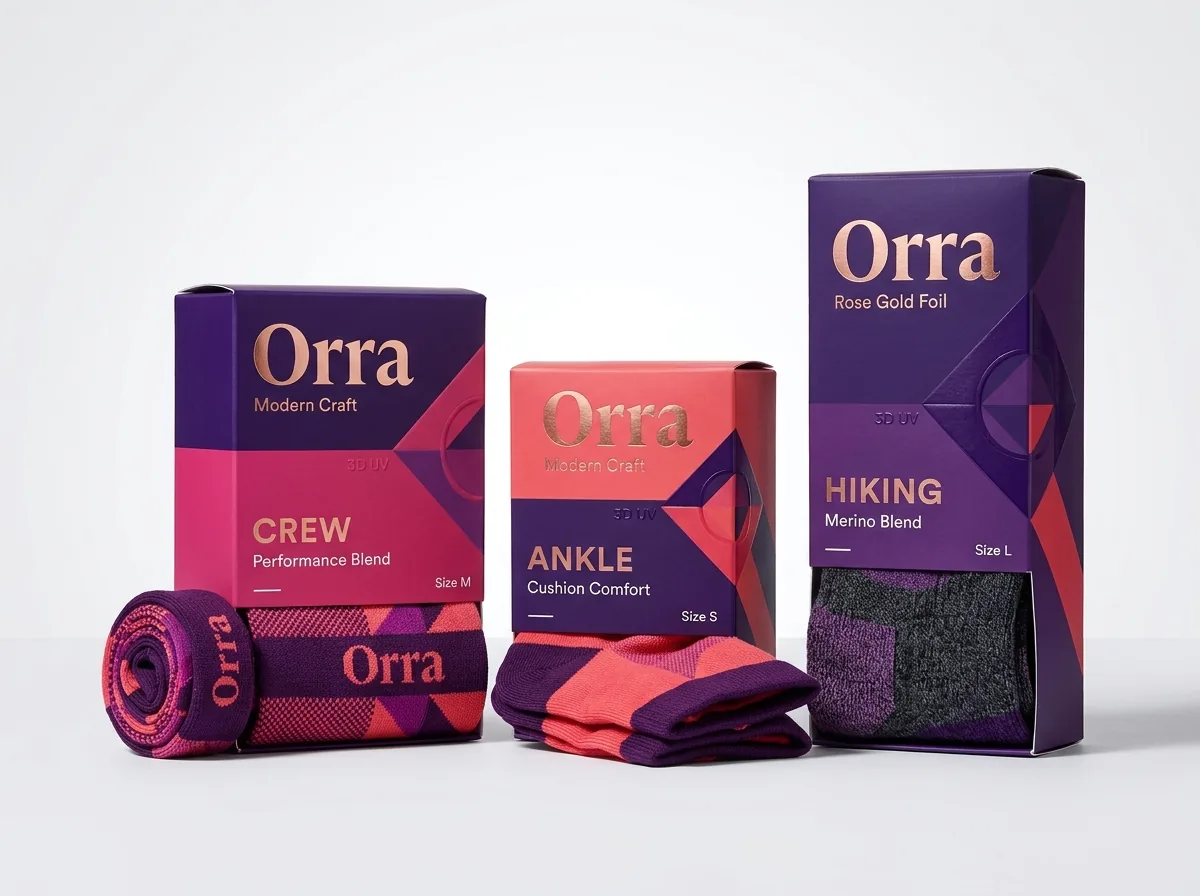
Great hosiery packaging does not compete with the pattern knitted into the sock; it acts like a gallery frame around the yarn while answering three shopper questions in two seconds: what cut is this sock, what shoe size does it fit, and how soft does it feel? On retail pegboards and counter bins, placing an open die-cut window over the mid-calf or instep lets buyers touch the combed cotton or merino wool without tearing open the box. Printing a bold color-coded size bar across both the lower front face and the top tuck flap ensures customers can find their size whether the cartons hang vertically on hooks or sit upright in a deep tray. When you order custom sock boxes from CubitPack, free design help, zero die fees and guaranteed Pantone color matching make it easy to build a retail-ready hosiery line.
Where should I place the die-cut window and size callouts on a sock box?
When shoppers scan a wall of 40 sock hooks in a sporting goods store or boutique, their eyes lock onto two zones: the fabric showing through the window and the size/cut badge. Before laying out artwork for custom printed sock boxes, fold a real pair of your socks to see where the hero stripe, embroidered icon or heel cushion sits. Position your die-cut window directly over that focal point rather than high near the top flap where only the plain ribbed welt is visible. Keep the front panel hierarchy down to four scannable elements: your brand wordmark at the top, the die-cut window in the center, the sock cut height (No-Show, Quarter, Crew, Over-the-Calf) right below the window, and the US shoe-size range (plus EU/UK equivalents) at the bottom edge. Repeat the sock cut and size on the top tuck flap so shoppers looking down into a counter bin never have to pull out every carton.
- Top zone: brand logo and yarn headline (such as '80% Merino Wool' or '200-Needle Combed Cotton').
- Center zone: open touch window or custom silhouette cutout positioned over the main knit pattern.
- Lower front bar: high-contrast sock cut badge (Crew, Quarter, Ankle) and US shoe-size range.
- Top tuck flap: repeated size and cut badge for top-down browsing in countertop display bins.
Which board, ink and finish combinations fit each hosiery niche?
Because socks span everything from impulse novelty prints to luxury cashmere dress hosiery and technical marathon compression gear, your board stock and finish immediately signal which tier you play in. Unbleached kraft paperboard printed with crisp white ink and one dark Pantone color tells an instant outdoor and natural-fiber story for merino trail socks. For menswear dress socks and groomsmen boxes, deep navy, charcoal or burgundy card coated in matte or soft-touch lamination with metallic gold foil stamping feels like a tailored suit box. Use the table below to match your hosiery category to proven board and finish pairings.
| Hosiery category | Recommended board & finish | Signature structural detail |
|---|---|---|
| Merino wool hiking, trail & boot socks | Unbleached kraft board + white & dark green ink | Open touch window + integrated Euro hang tab |
| Men's luxury dress & tuxedo hosiery | Charcoal or navy card + soft-touch + gold foil | Slim 1 in straight-tuck carton or drawer set |
| Athletic running, cycling & compression socks | Bleached white card + matte lamination + spot UV | Technical cushion diagram on back + Euro hook |
| Novelty pattern, pop-art & museum gift socks | Bright white card + CMYK print + gloss or matte | Sock-shaped die-cut window or curved pillow box |
| Organic cotton basics & everyday multipacks | Recycled kraft or cream card + minimal Soy/Pantone look | Wrap-around belly band sleeve replacing plastic tags |
| Holiday 3-pack to 7-day gift assortments | Burgundy or forest rigid/card + foil crest | Tray-and-sleeve drawer with ribbon pull & dividers |
How can one universal sock box work across 10 or 20 sock colorways?
Sock brands almost always launch collections with 8 to 20 different jacquard patterns, stripes and seasonal colors. Printing a separate color-matched box for every single sock pattern splits your packaging order into tiny runs. Instead, smart hosiery brands design one universal matte black, warm cream or natural kraft window carton whose neutral frame flatters every sock color in the line. When the actual sock shows through a generous front die-cut window, the product itself provides the color differentiation on the shelf. On the back panel, leave a clean 2 × 1.25 inch white rectangle where your knitting mill applies a variable barcode, colorway name and size sticker from a roll of custom labels. That strategy lets you combine all 10 or 20 colorways into one larger box quantity tier.
Know your size? Compare pricing across up to 3 quantities.
Request a Quote →What FTC textile rules and technical diagrams belong on the back panel?
Under US Federal Trade Commission (FTC) Textile and Wool Acts rules, hosiery sold in packaging where the consumer views the package before purchase must display three required facts on the outside of the box or sleeve: the generic fiber names and percentages by weight in descending order (for example, '76% Combed Cotton, 21% Nylon, 3% Spandex'), the country of origin (such as 'Made in Italy' or 'Made in Portugal'), and the registered company name or FTC RN number. Alongside those required lines and your laundry care icons, use the upper half of the back panel to draw a simple callout diagram of your sock construction, pointing out the hand-linked flat toe seam, arch support band, Y-stitched heel pocket and stay-up welt. Shoppers happily pay more for technical socks when the back of the carton explains why the pair fits better and lasts longer through repeated washes.
What drives the unit price of custom printed sock boxes?
Four variables control your per-pair packaging cost: board surface area, structure complexity, finishing steps and total order quantity. A wrap-around custom sleeve box belly band uses the least paperboard and glues in a single pass, making it the lowest-cost option per pair. A curved custom pillow box or a straight-tuck window carton uses more board to enclose all sides of the sock. Notice what does not add cost at CubitPack: custom die-cut window shapes, integrated Euro hang tabs, Pantone color matching and prepress design support are all free with zero die or plate charges. Choosing an open touch window instead of a clear plastic film patch also trims a window-patching step while letting customers feel the yarn directly in the retail aisle, and you can compare up to three quantity tiers on a single quote.
How do I eliminate plastic barb tags and polybags from my sock line?
Traditional hosiery mills shoot a plastic T-tag (swiftach barb) through the top ribbed cuff to pin a cardboard hook hanger onto the pair, then slip the socks into a clear polybag. That plastic barb leaves a small hole in fine dress cotton or merino wool and frustrates customers who have to snip it with scissors before wearing the socks. Switching to a paperboard window carton, a pillow box or a wrap-around belly band with an inner paperboard folding card holds the pair together by gentle tension alone. If you need a hanging hook, an integrated paperboard Euro-slot or fold-over header tab hangs cleanly on retail pegs with zero plastic hardware, giving your brand a 100% paperboard presentation from hook to toe.
- Replace plastic swiftach barbs with an inner folding card and outer belly band or carton.
- Use an integrated paperboard Euro-slot or J-hook top flap instead of clip-on plastic hooks.
- Seal gift drawers or tissue-wrapped multipacks with paper custom seal stickers.
What are the most common custom sock box design mistakes?
Even eye-catching artwork can struggle on retail shelves if the window weakens the box or hides the size. Check these five prepress errors
- Cutting the front window too close to the vertical fold scores, which makes the side walls bow outward when packed.
- Printing a separate carton design for every single sock pattern instead of using a universal window box with SKU stickers.
- Hiding the shoe-size range in tiny 6-point type on the back panel instead of putting a bold badge on the front and top.
- Omitting FTC fiber content percentages, country of origin or RN/company identification on outer retail cartons.
- Leaving dark navy or black boxes unlaminated, allowing friction in pegboard bins to scuff the ink along fold edges.
Find your size
Suggested inside size: 6.5 × 3.5 × 1 in
A starting point. Your account manager confirms the size with you before the proof.
Quote this size →Packaging for this
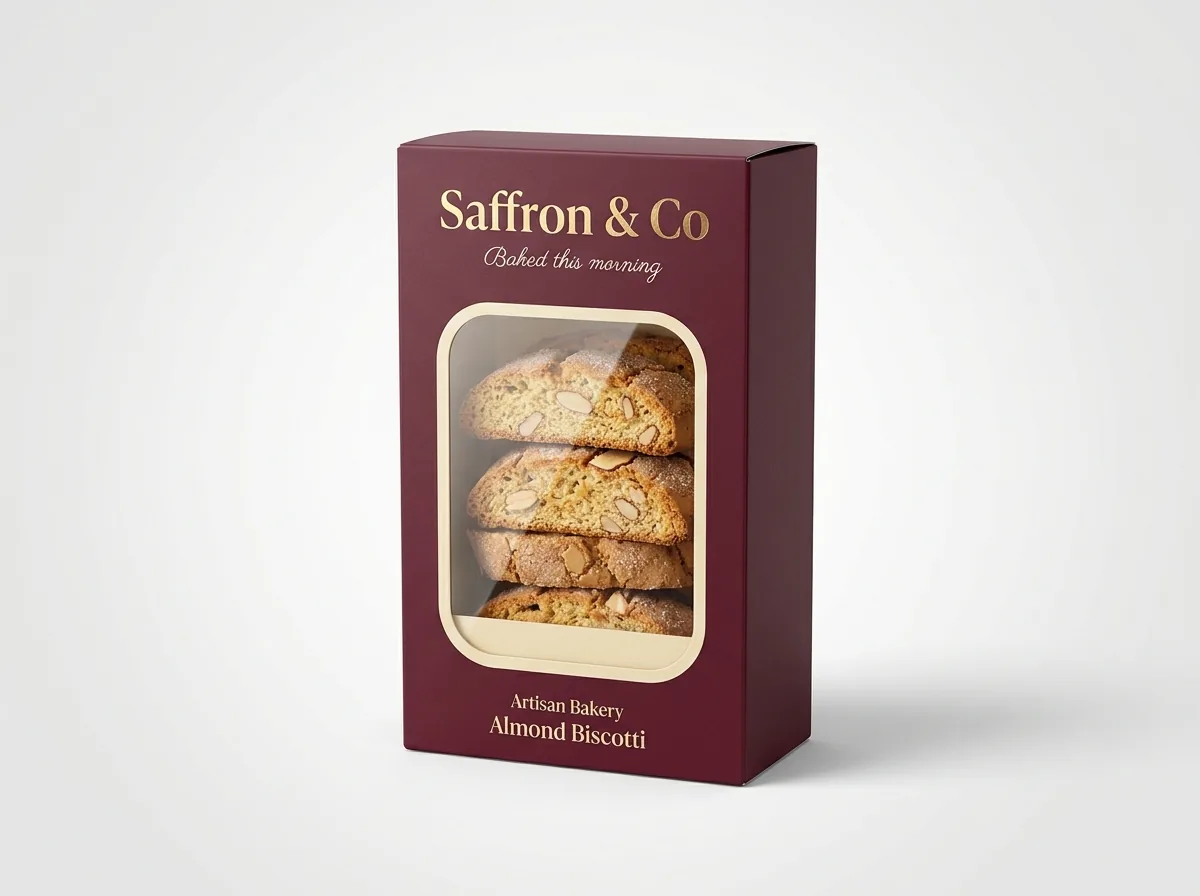
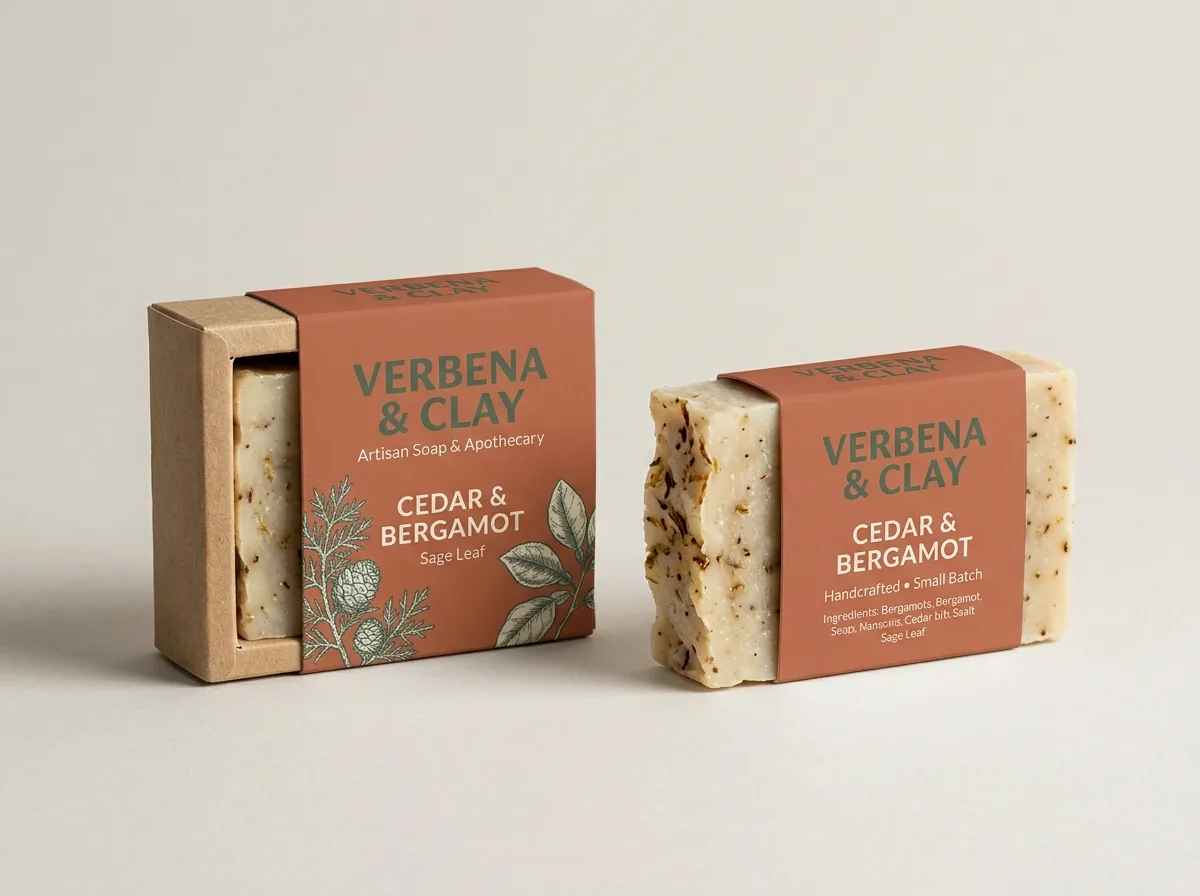
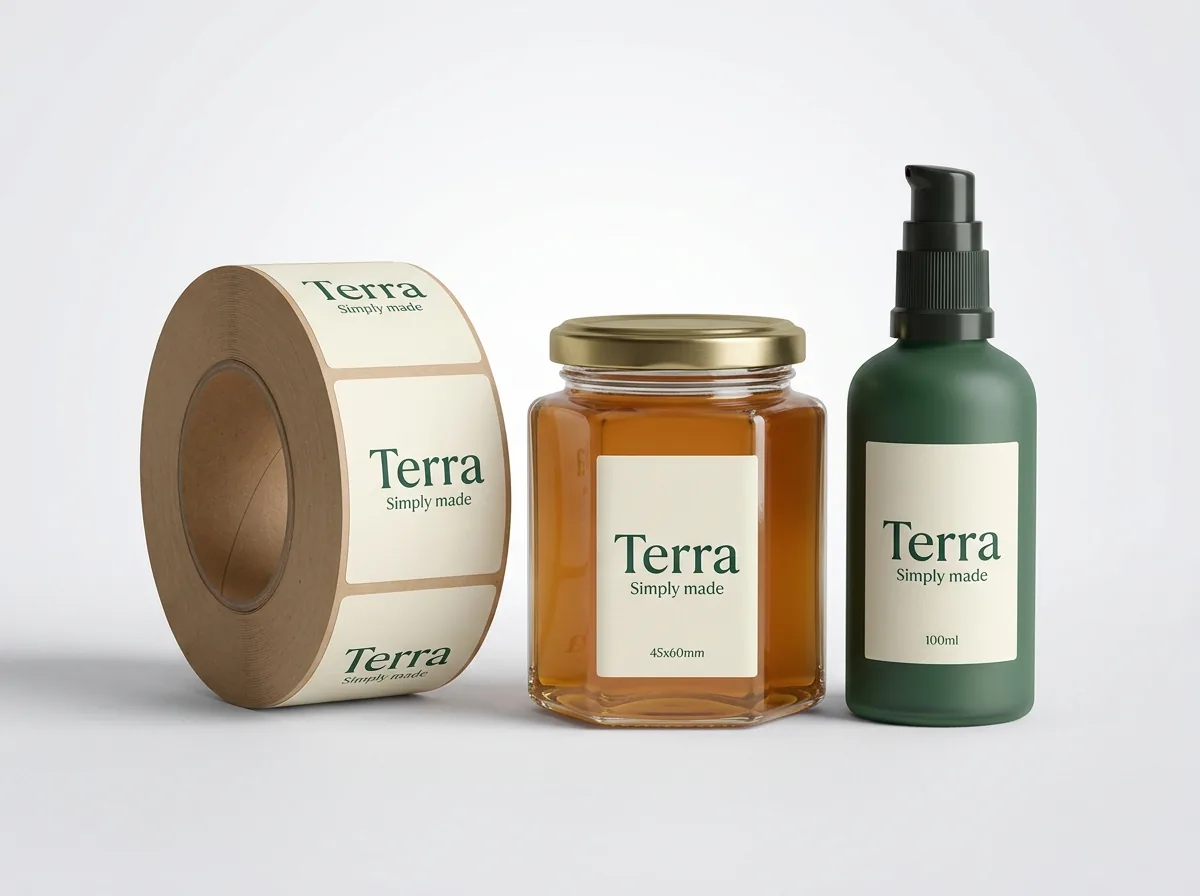
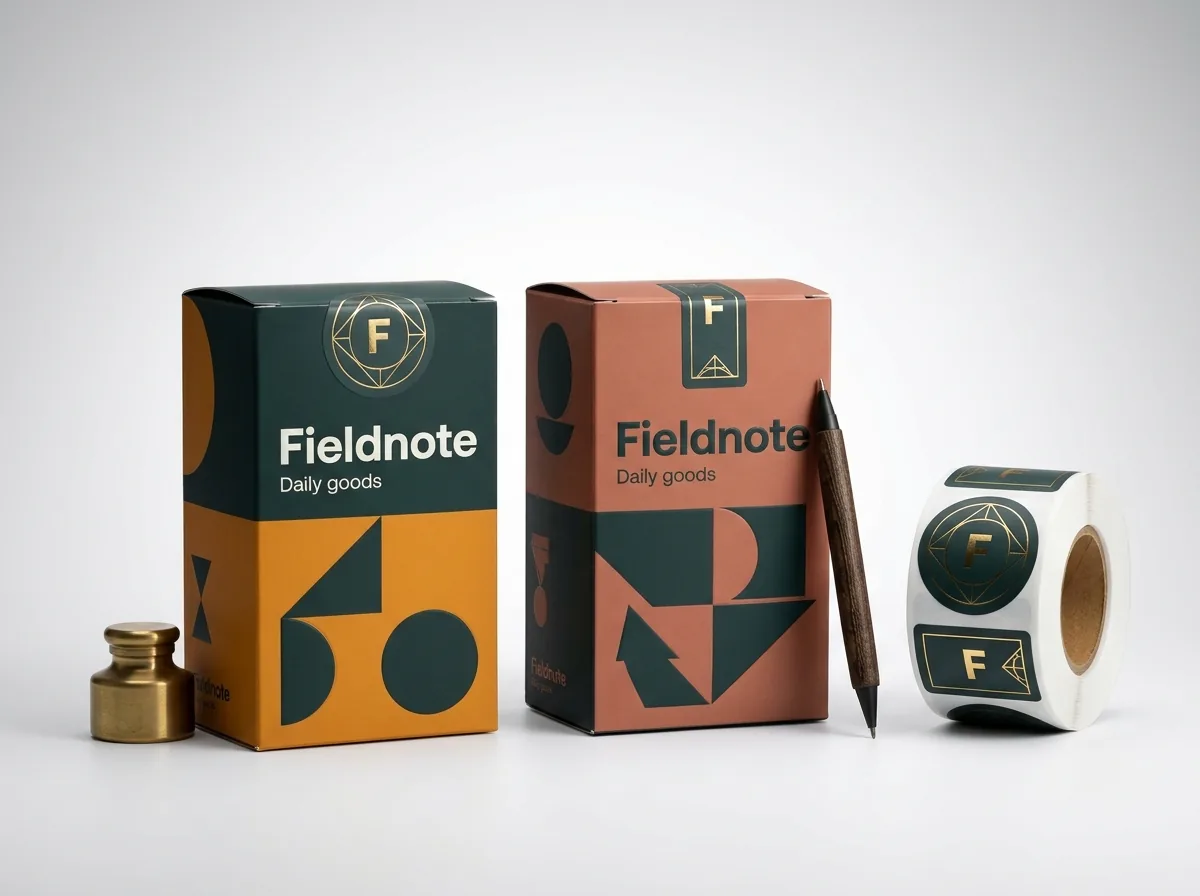
Ready to order sock boxes? Compare up to 3 quantities with a free 3D mockup.
Request a Quote →Questions about sock boxes
Can I get a custom-shaped die-cut window on my sock box without paying a die fee?
Yes. CubitPack never charges cutting die or printing plate fees. Our designers can shape your front window into a rounded rectangle, circle, arch, sock silhouette or your brand emblem at the exact same cost as a standard square cutout.
How do you guarantee my brand colors match across sock boxes and belly bands?
Provide your Pantone (PMS) color codes when requesting your quote. CubitPack guarantees Pantone color accuracy: if a printed Pantone ink on your boxes or sleeves is clearly off from the approved specification, we reprint at no cost.
Can I split a 1,000-unit sock box order across multiple artwork designs?
Yes. If your boxes share the same dieline dimensions (such as 8 × 3.75 × 1.25 in) and you want different artwork for Crew, Quarter and No-Show cuts, select 2 designs or 3+ designs in Step 2 of the quote form so we quote them together.
What file format do I need to send for my sock box artwork?
Vector PDF, AI or EPS files with fonts outlined and a ⅛ inch bleed work best. If you only have a logo file, a sketch or an AI-generated design concept, our in-house designers will lay out your dieline, window and back callouts for free.
Should I add matte or soft-touch lamination to dark-colored sock boxes?
Yes. Deep navy, black, forest green and burgundy ink coverage can show fold-line cracking or pegboard rub marks on uncoated paperboard. Adding matte or soft-touch lamination protects the score lines and gives the box a smooth retail finish.
Will I see how the window and hang tab look before my sock boxes print?
Every order includes a free 2D digital dieline proof and an interactive 3D mockup showing your exact window cutout, inside print and hang tab before you pay. Physical custom printed samples are also available and credited toward your order.
Still have a question? Ask a packaging specialist.
Request a Quote →Request your sock boxes quote
Tell us your size and quantities, and one dedicated account manager prepares pricing for each tier.
- Free design & AI-to-print studio + 3D mockup
- No die or plate charges · 4–5 day rush available
- Free shipping to all 50 states
- 10% off your first order
The design guidelines in this article combine US FTC textile labeling rules, paperboard window-margin engineering and CubitPack's decided policies in our published product specifications. A CubitPack packaging specialist reviewed every section. Spot something wrong? Tell us and we will fix it.
Sources
What changed
- October 22, 2026: First published.
- October 22, 2026: Updated specifications, terminology, and verified source links.
More guides
New packaging guides by email
Sizes, materials and design tips. Unsubscribe anytime.